Western Sahara Airspace Update

On May 4, the GCCC/Canarias FIR updated their airspace warning for Western Sahara, due to the ongoing conflict there.

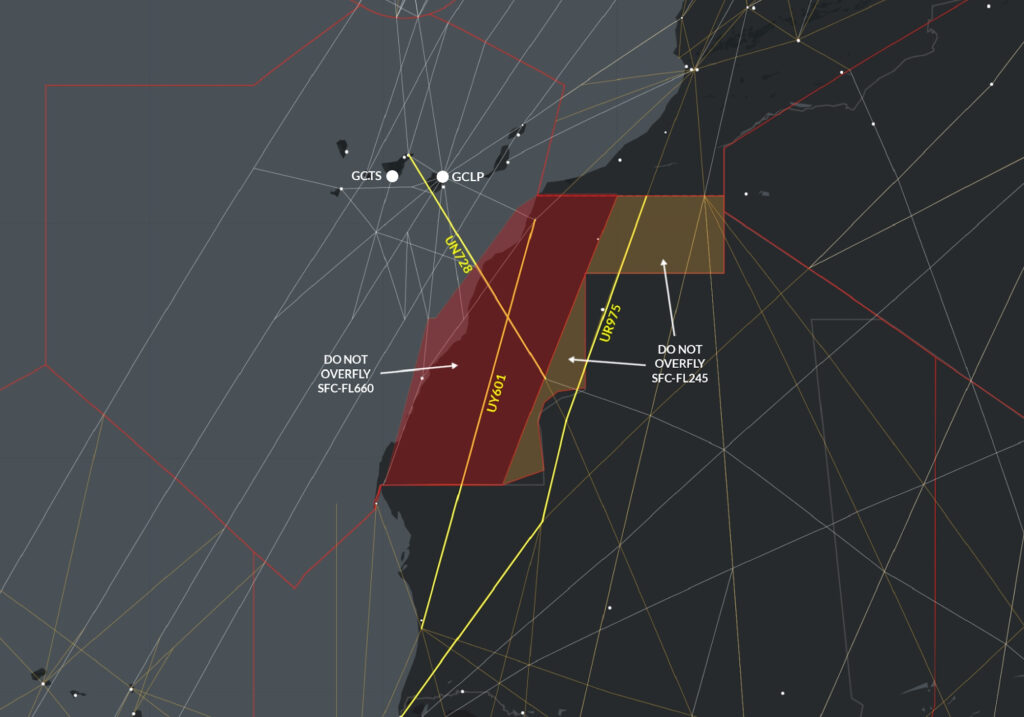
Previously, they said that aircraft overflights should be completely avoided in the eastern part of the country (i.e. airways UY601 and UN728), and should not be below FL245 in the western part. Here’s how that looked:

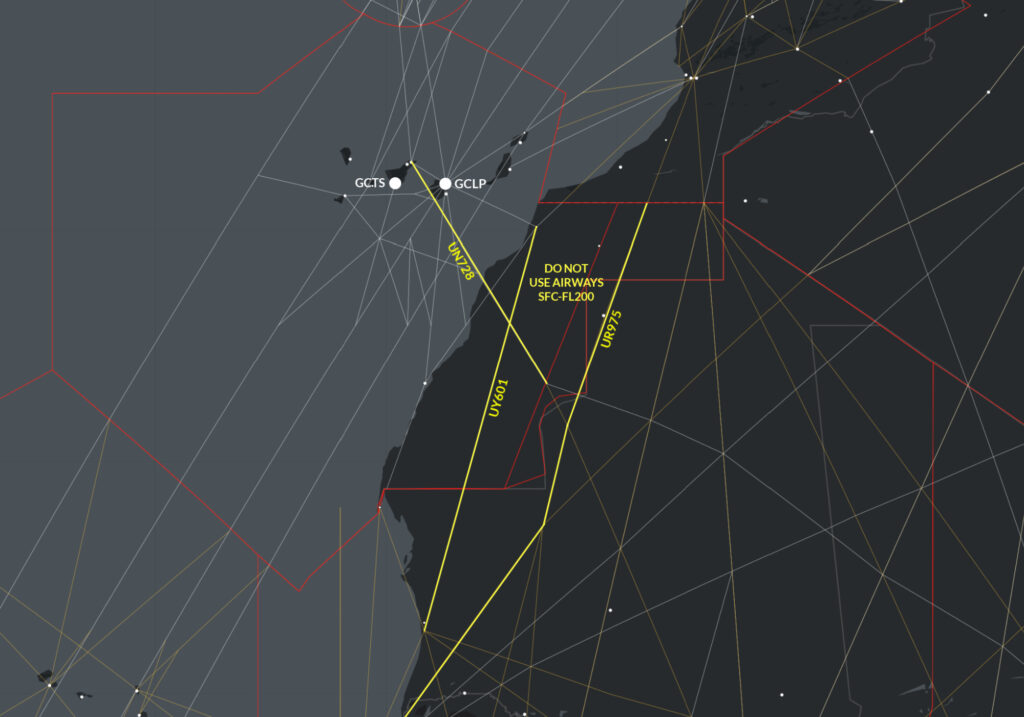
However, the updated warning issued on May 4 simply advises operators to avoid using the airways over Western Sahara below FL200:

Here’s the Notam:

GCCC B3323/21  - OPERATORS ARE REQUESTED TO EXERCISE PARTICULAR CAUTION 
DURING FLIGHT OPERATIONS IN WESTERN SAHARA AS PART OF FIR CANARIAS. 
IT IS RECOMMENDED TO AVOID OVERFLIGHT AT FLIGHT LEVELS BELOW FL200 
ON THE FOLLOWING ROUTES: UY601, UN728 AND UT975. 
04 MAY 08:53 2021 UNTIL 04 JUN 23:59 2021 ESTIMATED. 
CREATED: 04 MAY 08:54 2021

Still, not much of a warning. What’s really important is exactly what is missing: why.

The answer: Because the airways are over an active conflict zone, with a known threat of anti-aircraft fire.

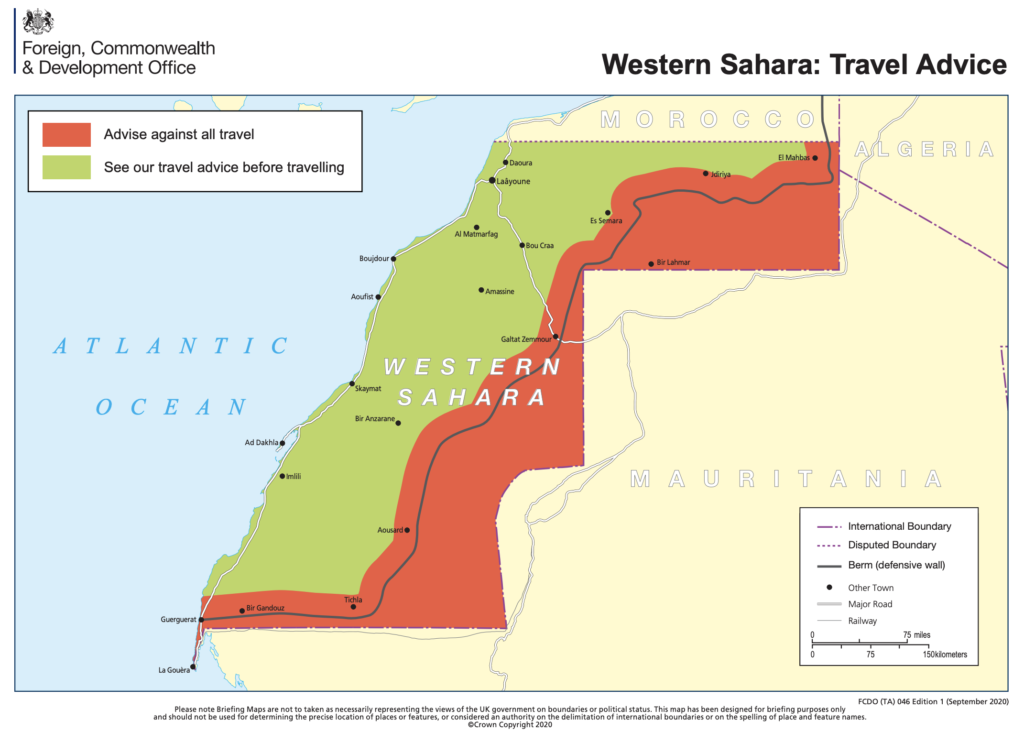
Western Sahara is effectively divided straight down the middle, literally by a wall. Morocco controls one side, while the region’s independence movement (the Polisario) controls the other. In Nov 2020, the Polisario declared war on Morocco.

Why do they want to fight?

The two have never gotten along. The Polisario want independence and were at war with the Moroccan Government for a very long time, until a fragile ceasefire agreement in 1991. Since then there has always been tension.

In early Nov 2020, a Polisario protest blocked a whole bunch of Moroccan truck drivers at the border with Mauritania, shutting down an essential route that connects Morocco to the rest of Sub-Saharan Africa. Morocco weren’t happy, and breached the ceasefire agreement by sending forces into the demilitarized zone to remove them.

The Polisario immediately declared war on Morocco, and clashes began straight away.

Why does it matter?

The FAA were onto it when they immediately carried out a risk assessment and published a notice. The big deal is that the Polisario are likely to have access to anti-aircraft weaponry left over from the previous war. This includes man-portable air defence systems (MANPADS) and surface-to-air missiles. The FAA think these weapons pose a risk to aircraft as high as 12,000 feet.

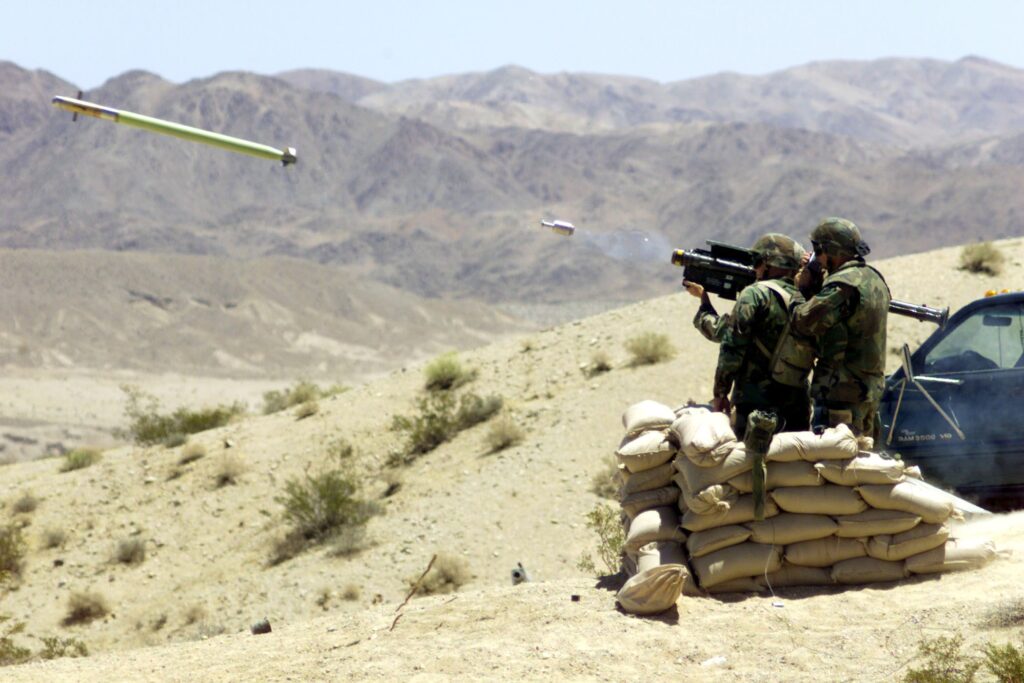
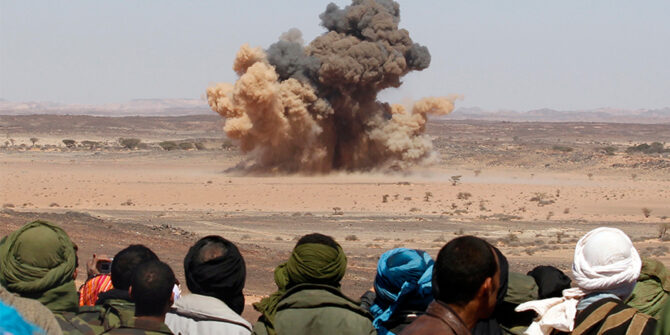
Example of a MANPAD system in action.

To make matters worse, they are suspicious that Morocco are flying drones over their territory – something that has been denied by Morocco. It wouldn’t be the first time an aircraft has been shot down there either – the Polisario downed two DC-7 airliners with missiles back in 1988.

What about airspace?

The sky over Western Sahara airspace is split between two FIRs –GCCC/Canarias and GOOO/Dakar. If the conflict escalates further, this is likely to complicate things.

So far there has been only one warning from the Canarias side – the NOTAM above. Nothing from Dakar yet.

There are currently three major airways affected. Two of them (UY601 and UT975) run the length of the region in a south westerly direction – likely to be used by aircraft transiting some routes between Europe and South America. The other airway, UN728 is a direct track from the coast to GCTS/Tenerife which may be used by smaller aircraft or those doing tech stops in the Canary Islands.

So if you’re  planning flights to the Canaries, or overflying central Africa, pay close attention to the risks involved. Continue to monitor Safeairspace.net as the situation develops.


SafeAirspace: 2021 Update

2020 was a heck of a ride. But therein lies the risk – what else might you have missed amongst all the Covid-related noise? Sadly, conflicts and their risks to civil aviation have not taken a break during the pandemic.

As it’s a new year, we thought a summary of Airspace Risk was called for. Here’s what’s making headlines at the moment:

Saudi Arabia & Yemen

Houthi rebels in Yemen are regularly firing explosive drones and rockets across the border into Saudi Arabia, and these usually target airports in the south such as OEAH/Abha and OEGN/Jizan. Their latest attack was on OYAA/Aden airport in late December which resulted in mass casualties.

Saudi Arabia continues to retaliate with airstrikes. The latest was in the capital Sanaa just weeks ago, where multiple munitions landed near the airport.

The risk to aviation is that overflying aircraft may get caught in the crossfire or might be misidentified by Saudi air defences. Active terrorist groups in Yemen may also use anti-aircraft weaponry to target foreign interests.

The FAA prohibit all US operators from entering most of the OYSC/Sanaa FIR at any level. Only two airways are allowed, and they are well off the coast – UT702 and M999.
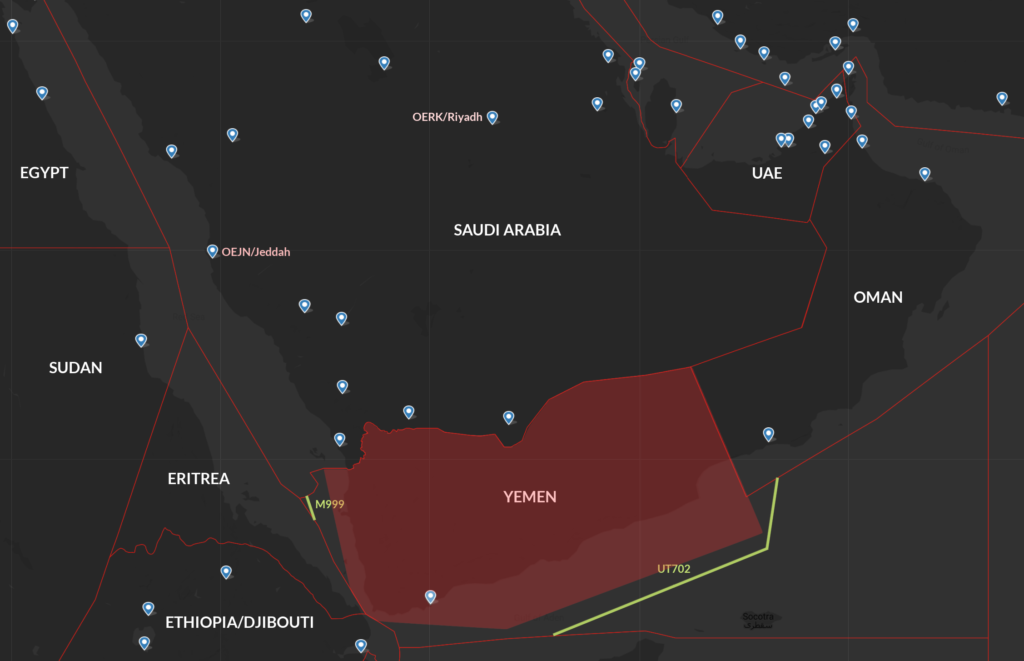
There are no restrictions on Saudi Arabia but use caution in the southern regions. France and Germany have issued their own warnings.

SafeAirspace Yemen page – click here.
SafeAirspace Saudi Arabia page – click here.

Iraq

Rocket attacks on military interests at airports have become a common occurrence. They are generally fired by local militia without warning. ORBI/Baghdad is frequently targeted, along with other airports including ORER/Erbil. There is a clear risk to aircraft at low levels.

US relations were further strained through 2020 with multiple attacks on the US embassy in Baghdad. The tensions escalated to a point where the US considering closing it.

Foreign aircraft continue to be at risk from armed militia who have access to portable anti-aircraft weaponry, while misidentification by the air defence systems of multiple foreign forces in the country is also possible.

The FAA has extended its ban on US operators entering the Baghdad FIR at any level. Even though the SFAR says you can enter above FL320, the long-running Notam KICZ A0036/30 says otherwise.

SafeAirspace Iraq page – click here.

Syria

There have been several recent Israeli airstrikes on targets throughout Syria. In late December there are reports that Israeli fighters transited Lebanese airspace at low level causing alarm in Beirut before attacking targets in Western Syria. Just weeks ago, several sites around Damascus were targeted by Israeli missiles.

The primary risk is that aircraft may be misidentified by Syrian air defence systems which are regularly activated. Civil operators may get caught in the crossfire as missiles may erroneously lock on to the wrong aircraft.
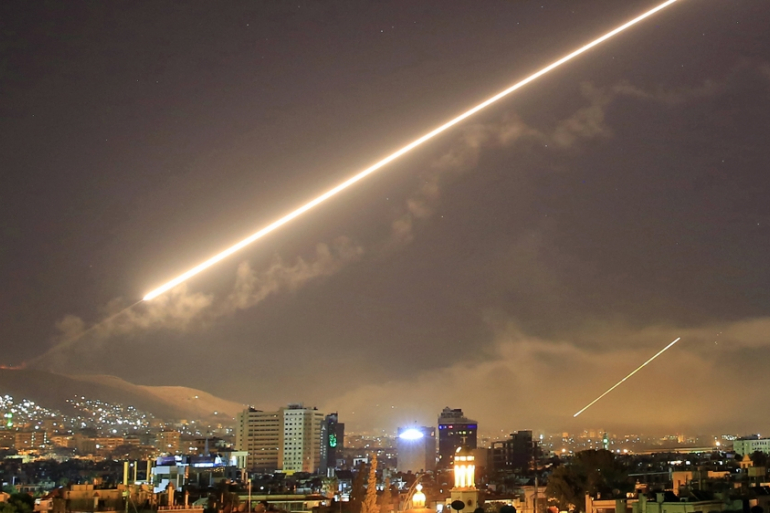
The FAA are taking no chances – the ban on US operators entering the OSTT/Damascus FIR at any level has been extended a full three years to 2023.

SafeAirspace Syria page – click here.

South Sudan

Just this week ICAO issued a concerning warning about the risk to aircraft operating below FL245 in the HSSX/Khartoum FIR over South Sudan, or flying in and out of HSSJ/Juba. They are ‘gravely’ concerned about ATC disruptions, a lack of contingencies, inadequate training of controllers, limited info about equipment outages and a lack of co-ordination with other ATS units.

SafeAirspace South Sudan page – click here.

Emerging Conflict Zones

2020 saw three new conflict zones emerge, here is what is happening with them now.

Ethiopia

A civil conflict erupted in October last year in the Tigray region of Northern Ethiopia. The government went to war with the TPLF – a regional force seeking independence.

The region’s airports were closed and TPLF showed an intent to internationalise the conflict by attacking aviation interests. They fired rockets into Eritrea targeting HHAS/Asmara, and also attacked multiple airports to the South of the Tigray region.

Two airways were closed (T124, and M308) with no explanation of the risk.  Other airways remained open but uncomfortably close to the fight – especially UG300, UN321 and UL432. No airspace warnings were issued despite the dangers.

What’s the latest?

In late November Ethiopian forces captured the region’s capital Mekelle and regained control. Remaining TPLF forces have retreated leaving behind a humanitarian disaster and a vow to continue the fight. Since then, the airway closures have been removed and things have gone quiet, but an airspace risk remains – armed militia continue to be active in Northern regions and may be looking to make a statement. Be wary of operating in the area.

Western Sahara

Late last year the region’s independence movement (the Polisario) declared war on Morocco for breaching a ceasefire agreement. The FAA published a warning that the Polisario might have access to anti-aircraft weaponry left over from previous conflicts.
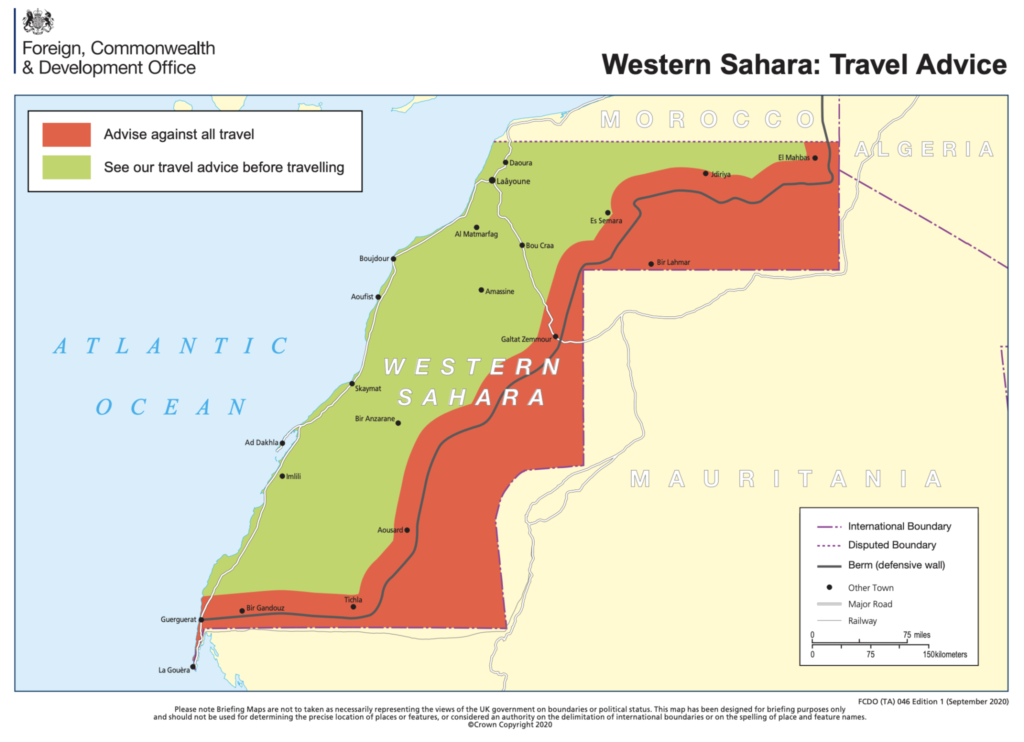
What’s the latest?

It is still an active conflict zone.  The fight has reached the international stage after the US declared their support for Morocco. The Polisario have indicated they are willing to at least talk, but so far have not put down their weapons. So, it is a wait-and-see type deal.

The risk to overflying aircraft remains. The GCCC/Canarias FIR keep extending a Notam advising operators to not fly below FL200 on the following airways: UY601, UN728 and UT975.  However, the reason is still missing: because of the risk of anti-aircraft fire. The GOOO/Dakar FIR haven’t issued any warnings despite the threat. Take care if operating in the area.

Armenia-Azerbaijan

In September last year, an ethnic conflict erupted over a disputed territory in Western Azerbaijan – Nagorno-Karabakh. The fight was between Azerbaijan and Armenia.

As a major air corridor for en-route traffic, there were significant flight disruptions. Azerbaijan swiftly closed all but one west/eastbound airway and routed traffic via Georgia. Armenia asked aircraft to take extra fuel and expect re-routes. The conflict was short but intense, with heavy artillery fire from both sides. The conflict eventually spread beyond the contested regions with longer range weapons. The entire border region posed a risk for civil aircraft.

What’s the latest?

For once the news is good. In November a ceasefire agreement was signed with the help of Russia. Armenia effectively lost and withdrew from the region and the conflict was officially over. Armenia removed its airspace warning, while Azerbaijan re-opened the affected airways and a large section of airspace near the border.

With the conflict now over, and no new reports of significant fighting since the peace agreement in November, direct crossing traffic between the two countries is now technically possible again.  However, most East-West flights are currently still electing to go further north instead, connecting between Azerbaijan and Georgia’s airspace, avoiding Armenia.

What about Safeairspace.net?

Our conflict zone and risk database is updated constantly. We assess risk with official sources and build a simple picture for you of those need-to know-places.

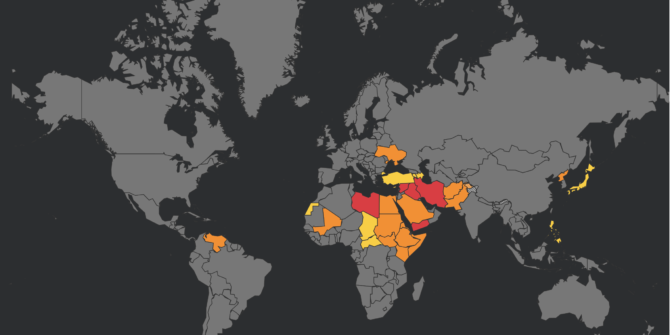
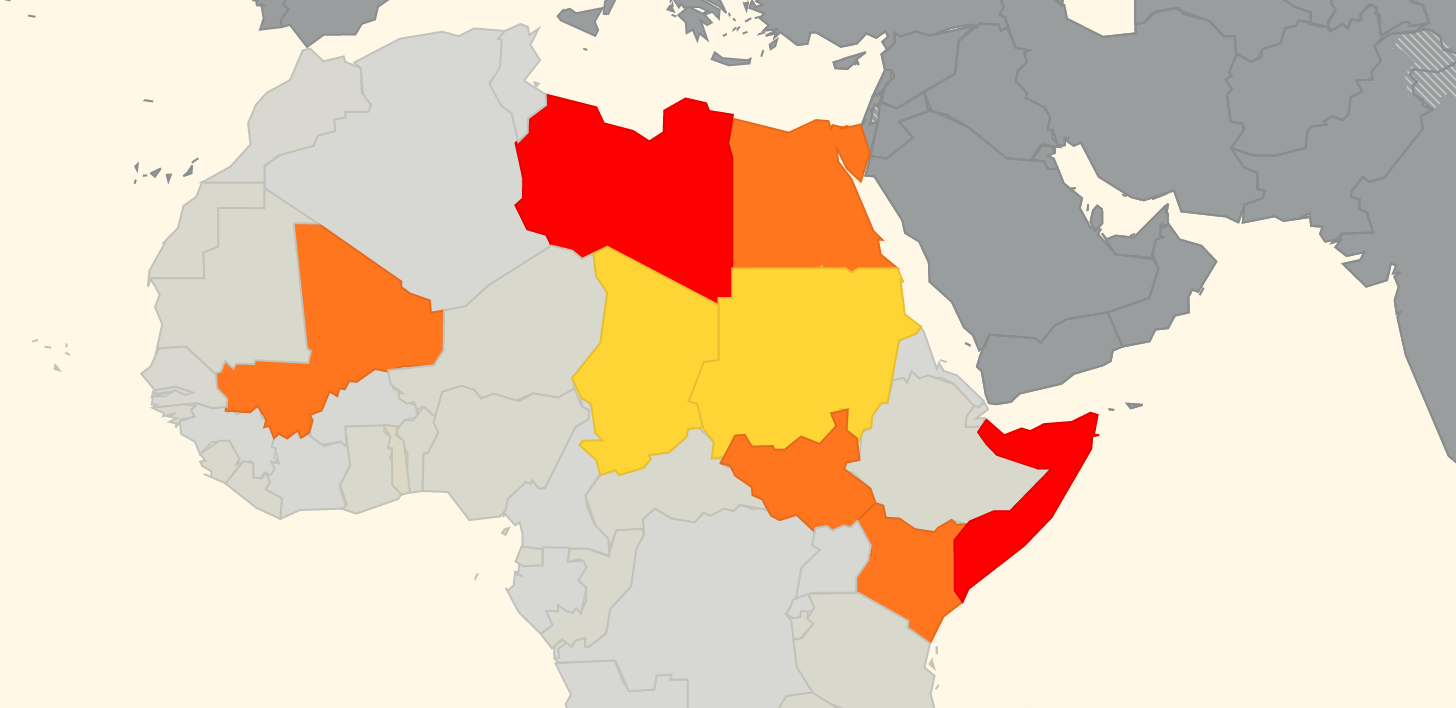
There are currently 5 regions which are assessed as a Level 1 Risk – No Fly. These are: Iraq, Iran, Yemen, Libya, and Syria.
Head over to SafeAirspace.net and take a look. With a single click you can download a risk briefing of the entire world in just a few pages of nice simple English.

The mission of SafeAirspace is this: to provide a single, independent, and eternally free resource for all airspace risk warnings, so that airlines and aircraft operators can easily see the current risk picture for unfamiliar airspace. If you know of a risk not listed on the site, or you have anything else to add, please get in touch with us at news@ops.group
UIA flight 752: Iran military shot down plane after chain of errors

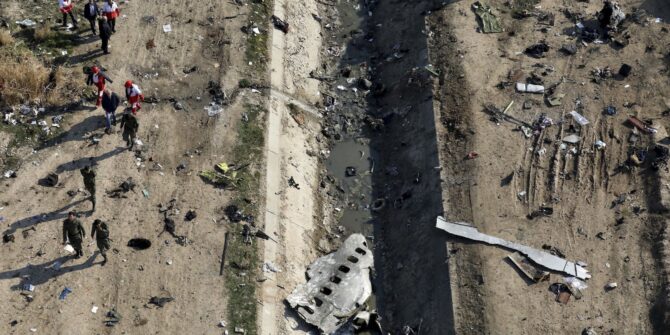
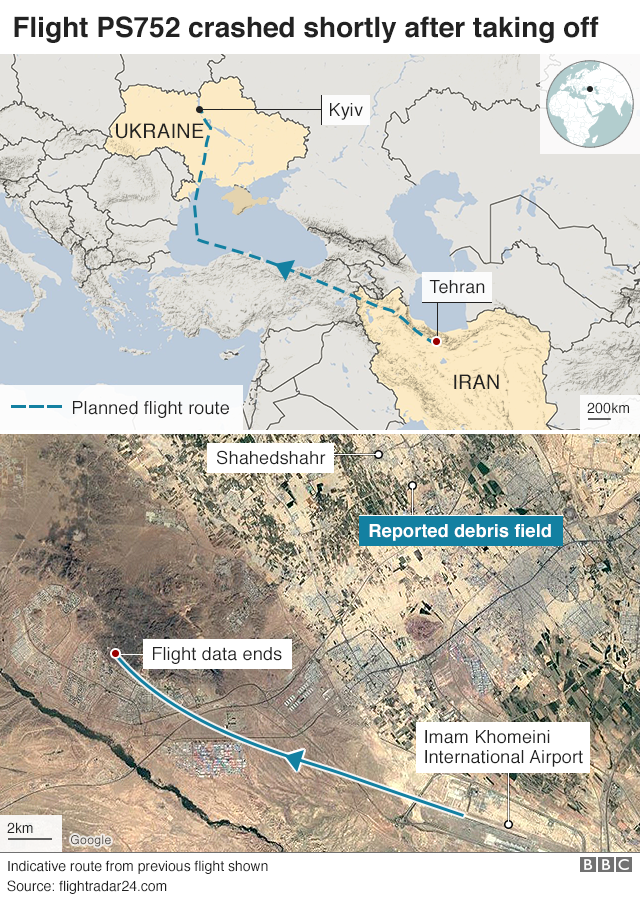
Iran has released its first official report into the shoot-down of UIA flight 752 in Tehran on Jan 9. They blame a misaligned missile battery, miscommunication between troops and their commanders, and a decision to fire without authorization as the major factors which led to the shoot-down of the plane by Iran’s Revolutionary Guard.

All 176 people on board were killed when the plane was hit by two missiles shortly after take-off in Tehran.

Iran initially denied responsibility for the incident, only admitting fault days later after Western nations presented extensive evidence that Iran had shot down the plane.

Iran’s air defences had been on high alert at the time. Just hours prior to the shoot-down, the US FAA issued “Emergency Order” Notams banning all US operators from overflying the airspace of Iraq and Iran. This was in response to an Iranian missile strike on US military bases in Iraq, which had just occurred the same night.

A full version of the report has not been made publicly available, but excerpts have been published by state news agency Fars. It places the blame entirely on those manning the missile system, and details a series of key moments where the shoot-down could have been avoided, the main two being:

  • The surface-to-air missile system had recently been relocated and was not properly calibrated. As a result, it misidentified the civilian plane as a hostile object.
  • Those manning the system could not communicate with their command centre, and fired on the plane without receiving official approval.

“If each had not arisen, the aircraft would not have been targeted,” the report said.

It also notes that the flight had done nothing unusual prior to the missile launch, with its transponder and other data being broadcast. It claims that the troops manning the missile system tried to contact the Coordination Centre with details of a potential target but they did not manage to get through, and that firing on the aircraft under these circumstances was against approved protocol:

“The system operator began analysing the observable information and categorised the detected target as a threat… At 02:44:41, without receiving any response from the Coordination Centre, the air defence unit operator fired a missile at the threatening target he had detected… Under the applicable procedures, if the defence system operator cannot establish communication with the Coordination Centre and does not receive the fire command, they are not authorised to fire.”

After repeated delays, Iran has said it will release the aircraft’s black box to officials in France on July 20, where Ukrainian and French experts are expected to examine it.

Airspace warnings

In the days and weeks following the shoot-down, several other countries followed the US in issuing airspace warnings of their own for Iran, including: the UK, Ukraine, Canada, Germany, and France. The US and Ukraine are the only countries to have issued outright flight bans on Iranian airspace, but all the others advise against landing or overflying the country at the lower flight levels. Check SafeAirspace.net for a full summary.

Traffic flows

It’s worth considering that most airlines other than Middle Eastern carriers are still avoiding Iran. For traffic that normally operates through the Tehran FIR, a predominant alternative for east-west flights into the Dubai area is a southerly routing via Saudi Arabia and Egypt. There are warnings for both of these airspaces as well. Northerly reroutes for Europe-Asia flights are predominantly using a Turkey-Armenia-Azerbaijan-Turkmenistan routing. If entering Afghanistan airspace, note the current warnings there too.

Unfamiliar routes

For many operators wanting to avoid Iran, you may be using routes that are unfamiliar. Take the time to ensure you have the full package of charts, are aware of the risks in each FIR, are aware of the potential for GPS outages en-route (especially in the Turkish, Tel Aviv, Amman, and Jeddah FIRs), and have considered drift down over mountainous areas on the northerly routes.

Advice

Every air operation different. We know OPSGROUP has a huge variety of members – some conducting routine airline flights, some business aviation, charter flights, private ops, military, government flights. Therefore, offering blanket advice is difficult. You must undertake you own risk assessment, but paying close attention to the international warnings as well as what other carriers are doing is a good place to start.

On SafeAirspace.net, we continue to list Iran as Level One: Do Not Fly. The same goes for Iraq. Outside those two countries, just consider carefully what connections to the current situation there may be. Nowhere in the Middle East is without some level of risk.


Kenya airspace threat downgraded

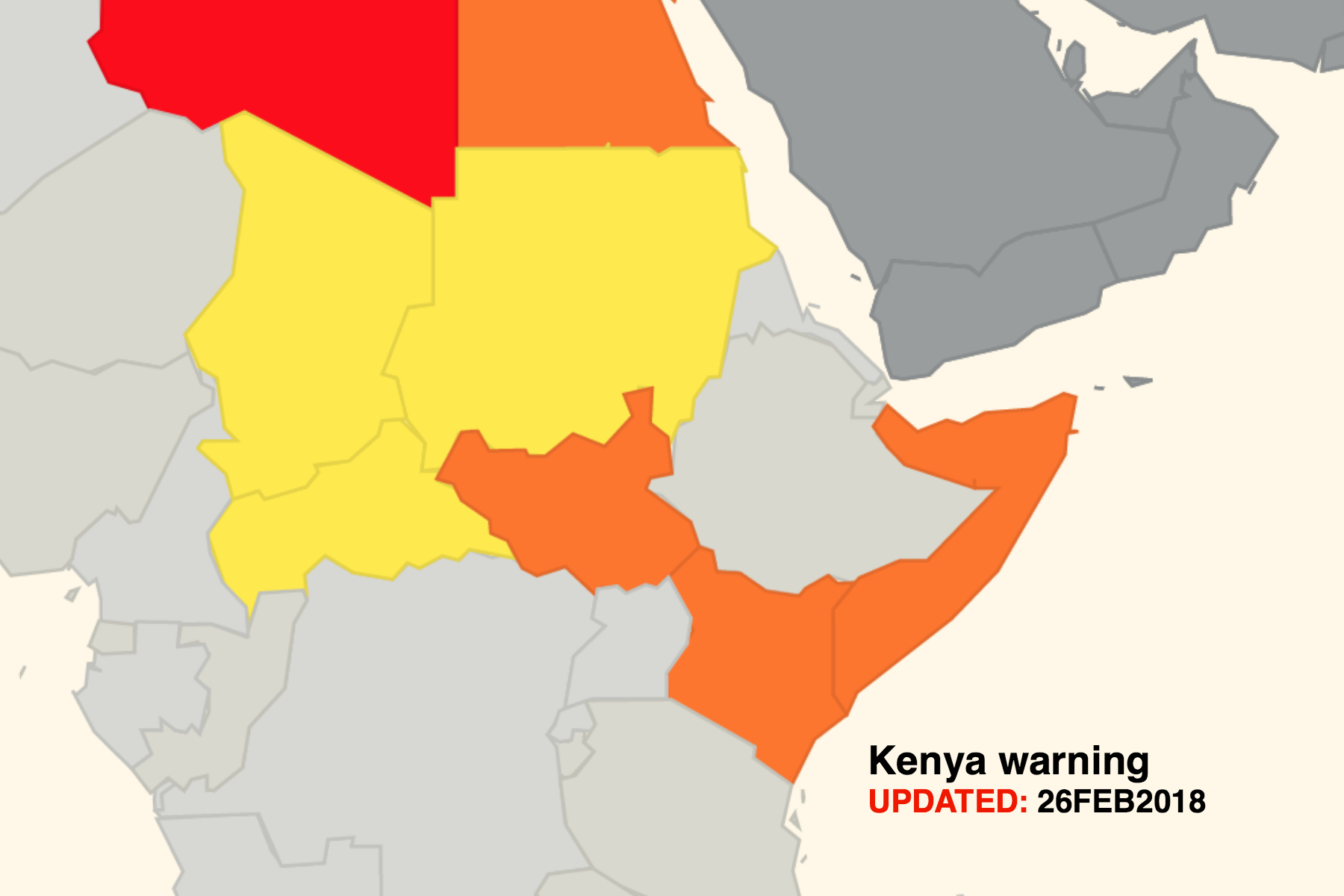
The FAA has revised its warning for Kenyan airspace – the area to ‘exercise caution’ is now limited only to that airspace east of 40 degrees East longitude below FL260 (i.e. the border region with Somalia, and 12nm off the east coast of Kenya). Prior to this, their warning applied to all airspace in Kenya below FL260.

Published on 26 Feb 2018, the warning maintains the same wording to clarify the type of weapons and phases of flight that the FAA is concerned about, specifically:

  • fire from small arms,
  • indirect fire weapons (such as mortars and rockets), and
  • anti-aircraft weapons such as MANPADS.

The scenarios considered highest risk include :

  • landings and takeoffs,
  • low altitudes, and
  • aircraft on the ground.

The updated guidance is intended for US operators and FAA License holders, but in reality is used by most International Operators including EU and Asian carriers, since only four countries currently provide useful information on airspace security and conflict zones.

The Notam uses FL260 as the minimum safe level, though we would suggest, as usual, that a higher level closer to FL300 is more sensible.

You can read the NOTAM in full on our Kenya page on SafeAirspace.net, a collaborative and information sharing tool used by airlines, business jet operators, state agencies, military, and private members of OPSGROUP.


Fresh warnings as FAA clarifies weapons risk in Kenya, Mali airspace

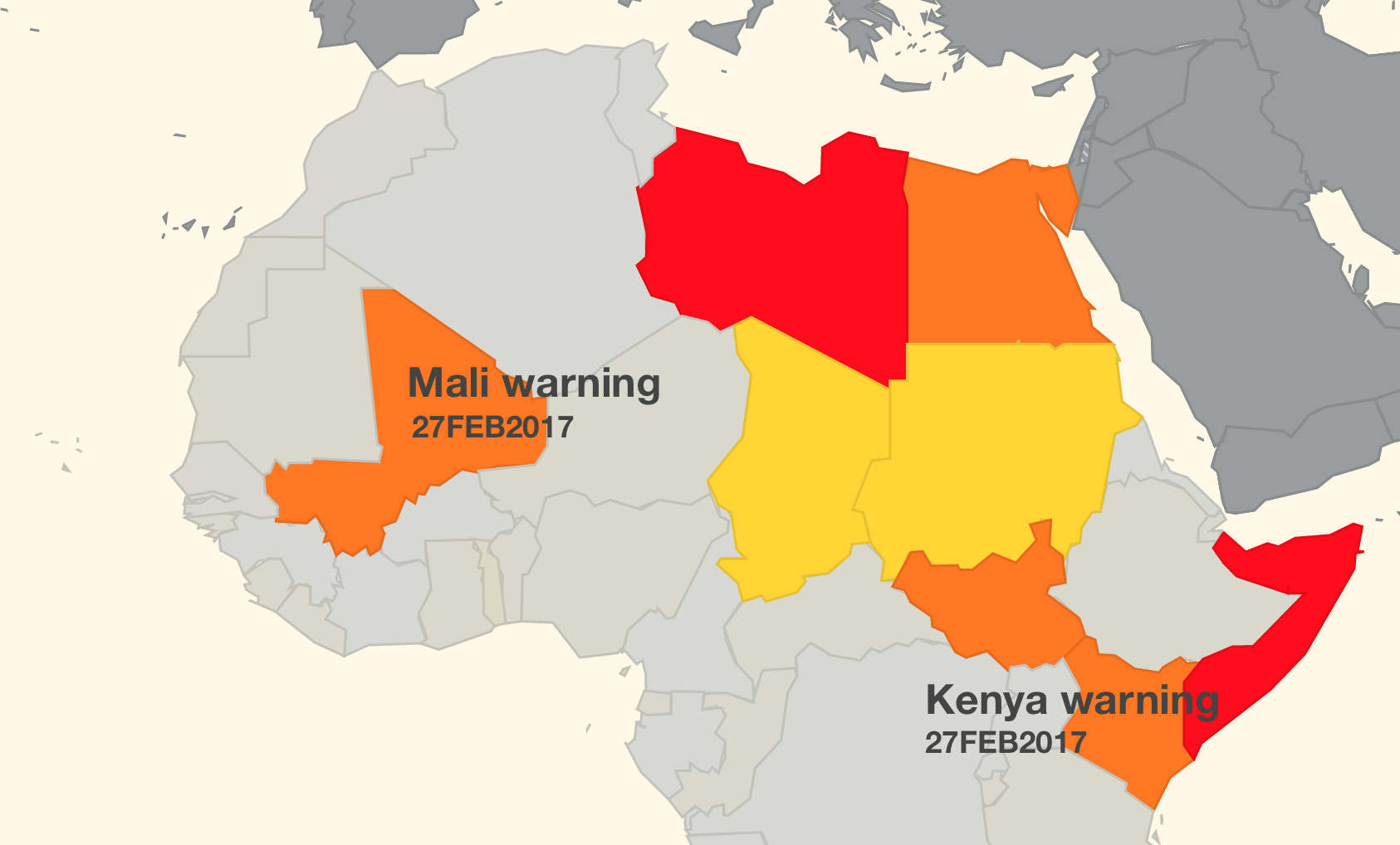
Feb 27th, 2017: The FAA has issued fresh warnings for Kenyan and Malian airspace, warning US operators of the potential dangers in operating through both the Nairobi and Malian FIR’s.

Published on Feb 26th, the new advice also adds new language with clarification of the type of weapons and phases of flight that the FAA is concerned about, specifically:

  • fire from small arms,
  • indirect fire weapons (such as mortars and rockets), and
  • anti-aircraft weapons such as MANPADS.

The scenarios considered highest risk include :

  • landings and takeoffs,
  • low altitudes, and
  • aircraft on the ground.

The FAA uses the same wording for both Kenya and Mali. Additionally for Mali, the Algerian CAA has concurrently published airspace closures along their southern border due to the conflict, and the FAA’s background notes on the Mali conflict still stand.

The updated guidance is intended for US operators and FAA License holders, but in reality is used by most International Operators including EU and Asian carriers, since only four countries currently provide useful information on airspace security and conflict zones.

The Notams both use FL260 as the minimum safe level, though we would suggest, as usual, that a higher level closer to FL300 is more sensible.

These updates have been notified through SafeAirspace.net, a collaborative and information sharing tool used by airlines, business jet operators, state agencies, military, and private members of  OPSGROUP.

This is the new wording in the latest FAA Notams on Mali and Kenya:

POSSIBILITY OF ATTACKS ON CIVIL AVIATION BY EXTREMISTS/MILITANTS.
AIRCRAFT MAY ENCOUNTER FIRE FROM SMALL ARMS; INDIRECT FIRE WEAPONS,
SUCH AS MORTARS AND ROCKETS; AND ANTI-AIRCRAFT CAPABLE WEAPONS,
INCLUDING MAN-PORTABLE AIR DEFENSE SYSTEMS (MANPADS).SUCH WEAPONS 
COULD TARGET AIRCRAFT AT LOW ALTITUDES, INCLUDING DURING THE ARRIVAL
AND DEPARTURE PHASES OF FLIGHT, AND/OR AIRPORTS AND AIRCRAFT ON THE
GROUND.

The NOTAMs in full are on our Kenya and Mali pages respectively.

References:

  • Kenya country information page at safeairspace.net
  • Mali country information page at safeairspace.net
  • OPSGROUP collaborative project


Updated airspace warnings for Egypt, South Sudan, North Korea

Germany has issued fresh warnings on the airspace of Egypt, South Sudan, and North Korea, in three separate Notams issued in the last week. Germany is one of four states that provides Aircraft Operators with conflict zone and risk advice. We have updated the SafeAirspace.net country information pages with the specifics.

The current Flight Service Bureau summary of each country follows:

Egypt Since the Arab Spring, Egypt’s stability and security situation as a state has declined. In October 2015 a Russian A321 was brought down over the Sinai peninsula by a bomb loaded at HESH/Sharm El Sheikh. In the aftermath, it was initially feared that a missile had caused the crash. Multiple warnings still in place from that fear. 19 May 2016 EgyptAir Flight MS804 from Paris to Cairo disappeared over the Mediterranean, cause unknown. GPS jamming reported at HECA/Cairo several times in 2016. High threat from terrorism in Egypt. Further attacks are likely. Not recommended as a tech stop. [Read full country information]

South Sudan Conflict Zone. South Sudanese Civil War since 2013. The security situation in Juba has been relatively calm since the July 2016 crisis. Daily reports of fighting throughout the rest of the country. The security situation is especially unstable in the Equatorias in the south. MANPADS risk to overflights. In addition, the South Sudanese army has declared intention to shoot down Aircraft without permits. Most Authority guidance recommends min FL260. We think FL300 is a better minimum for overflights. [Read full country information]

North Korea The level of tension on the Korean peninsula can change with little notice. Multiple missile launches in 2016, increasingly without prior notice to ICAO. The range of these has increased – previously safe airways B467 and G711 are now at risk. Over 1000 reports of GPS jamming issues reported by operators in the vicinity of the North/South Korean border. SFAR79 prevents US operators from operating west of 132E, other Authorities restrict operations east of that line. [Read full country information]


References:


Sharm El Sheikh reopens to international traffic, conflicting views on that …

HESH/Sharm El Sheikh, Egypt has reopened to international traffic, with a large number of airlines starting services again on 01NOV.

Before the bombing of Metrojet 9268 one year ago, Sharm was the 3rd busiest airport in Egypt.

However, there are conflicting views on security at the airport, depending on your state of registry. Operators from Germany, Poland, Russia have now started operations, but UK government policy keeps HESH on the ban list.

Our overflight advice for the Sinai Peninsula remains in place, on the basis of FAA Notam KICZ 6/16, and EASA SIB 2014-30R2 (UK and Germany) . View safeairspace.net for the current map.

At the same time, Egyptian newspapers are carrying stories that Tourism levels will return to pre-2011 levels within the next few months. Now that’s optimistic.

opg-safeairspace


New airspace warnings – Turkey, Iran

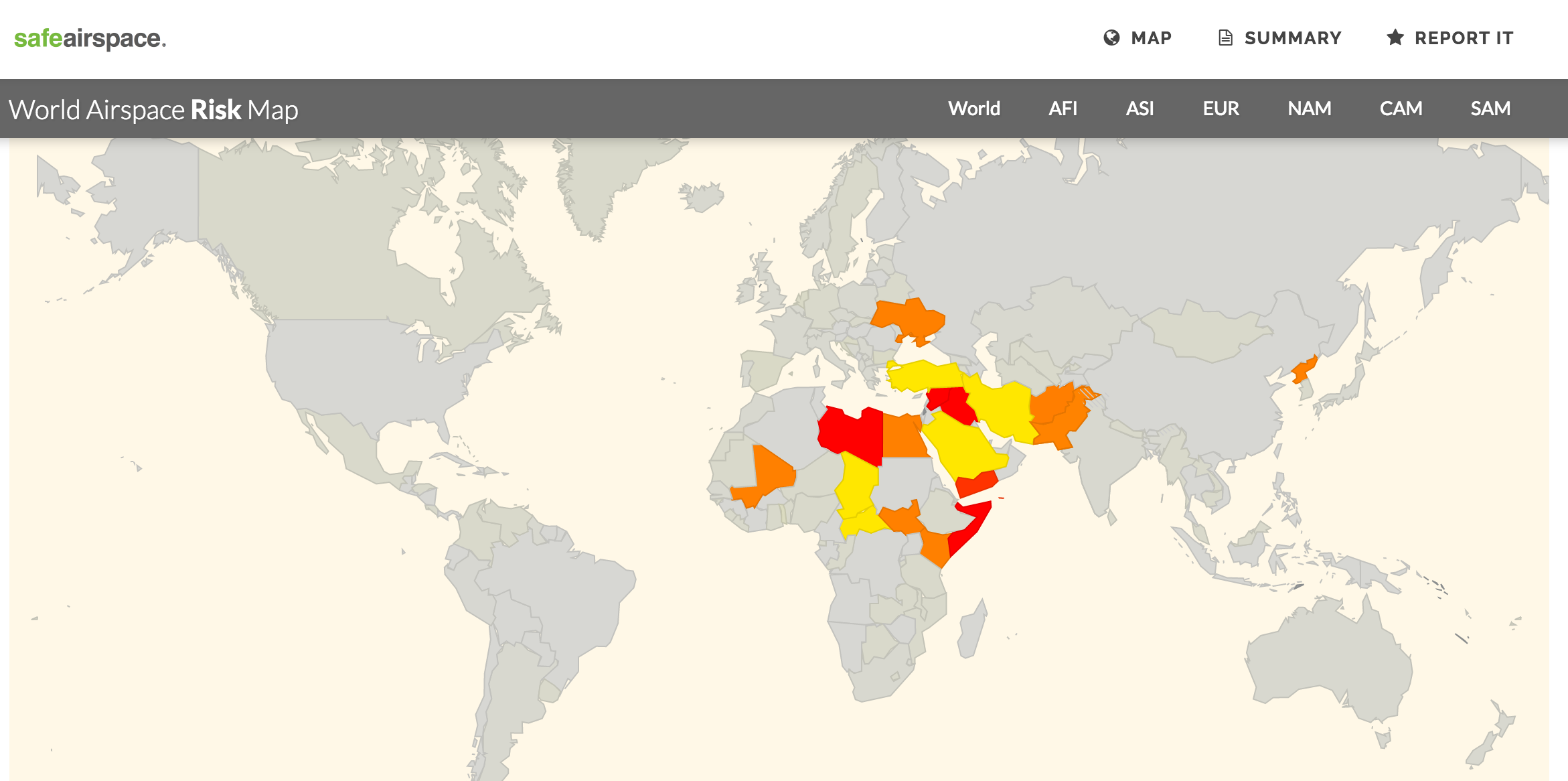
Today Flight Service Bureau has published ION05/16 – an updated Unsafe Airspace Summary, with new warnings for Turkey, and Iran, and a new map at safeairspace.net. This replaces 04/16 issued in August.

Turkey: 23SEP16 Germany B1289/16 Do not plan flights to LTAJ due potential ground to ground firing in the vicinity of LTAJ/Gaziantep Airport.

Iran: 09SEP16 FAA Notam KICZ 19/16 Exercise caution within Tehran FIR due military activity.

New information in the PDF is marked with a   I   beside it. Please distribute the PDF to anyone you like, we are keen to make sure as many operators as possible are aware of the risks.


opg-safeairspace


Pan Am, 727’s, and 1977 …

This afternoon I took a boat across the river to the Jersey side  and looked back at New York City; amongst the skyscrapers in Midtown one stood out – the MetLife building. It seemed familiar – and I wondered why. I realised it was once the PanAm building: in a different era, this was the headquarters of Pan American World Airways.

pan-am-3

Most interestingly, there was once a helicopter service, operated by PanAm in 1977, that connected downtown Manhattan with JFK, if you had a First or ‘Clipper Class’ ticket on a PanAm flight. The helicopter transfer, from the helipad on the roof of the PanAm building, took about 7 minutes – compare this to the 1 hour and 7 minutes it takes to get out to JFK these days – if you’re lucky.

1984-ad-pan-am-one-free

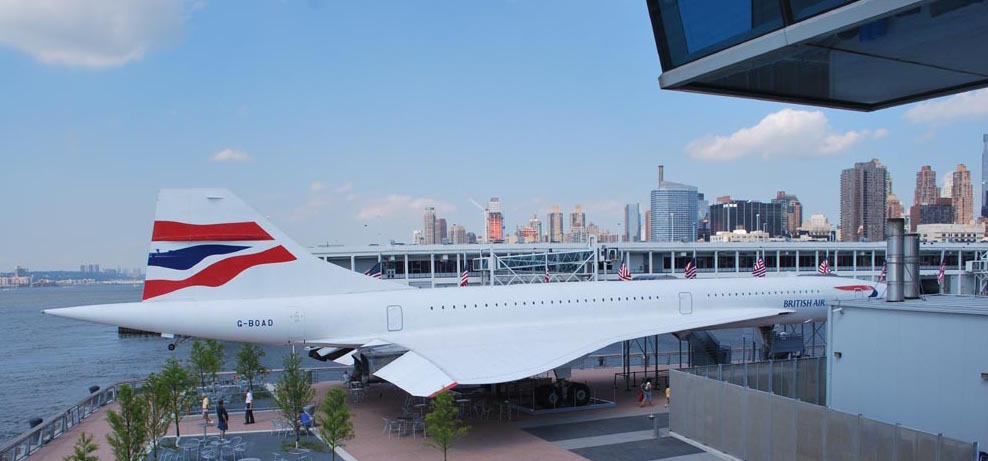
Today, a couple of blocks west of the former PanAm building sits a lonely Concorde beside the Hudson, another nod to a time when aviation seems to have offered more convenience and speed than it does today.

intrepidtws11

So, the question is whether this is nothing more than nostalgia, or whether things were indeed, in some way, better back then. Everyone will have their own answer to that – we’ve lost  Tristars with elevators, DC-8’s with their chrome and diesel and smoke and crackle, 727’s and Bac 1-11’s with their rear airstairs – and what have we gained? The newest arrivals – the C Series, the A350, the 787 – are sleek, fuel efficient, and open up new routes that weren’t possible before – but are pretty unspectacular.

No doubt though, the generation that got to fly and operate these aircraft looked back on the days of Flying Boats and DC-3 with equal fondness. I wonder whether the aircraft coming off the production lines today will evoke the same thoughts.

In International Flight Operations, though, it must be said that things are much improved. Compared to the era that spans the 70’s to the 90s, we’ve now got vastly improved flight planning systems, more direct routes, much better navigation systems, and we’ve largely moved from SITA, phone calls and fax machines to email when it comes to organising those flights. For the Dispatcher and Planner, there is no doubt that life is far easier. Even ten years ago, trying to arrange handling anywhere outside the US and Europe would take days to set up – now, the same trip can be arranged in 30 minutes.

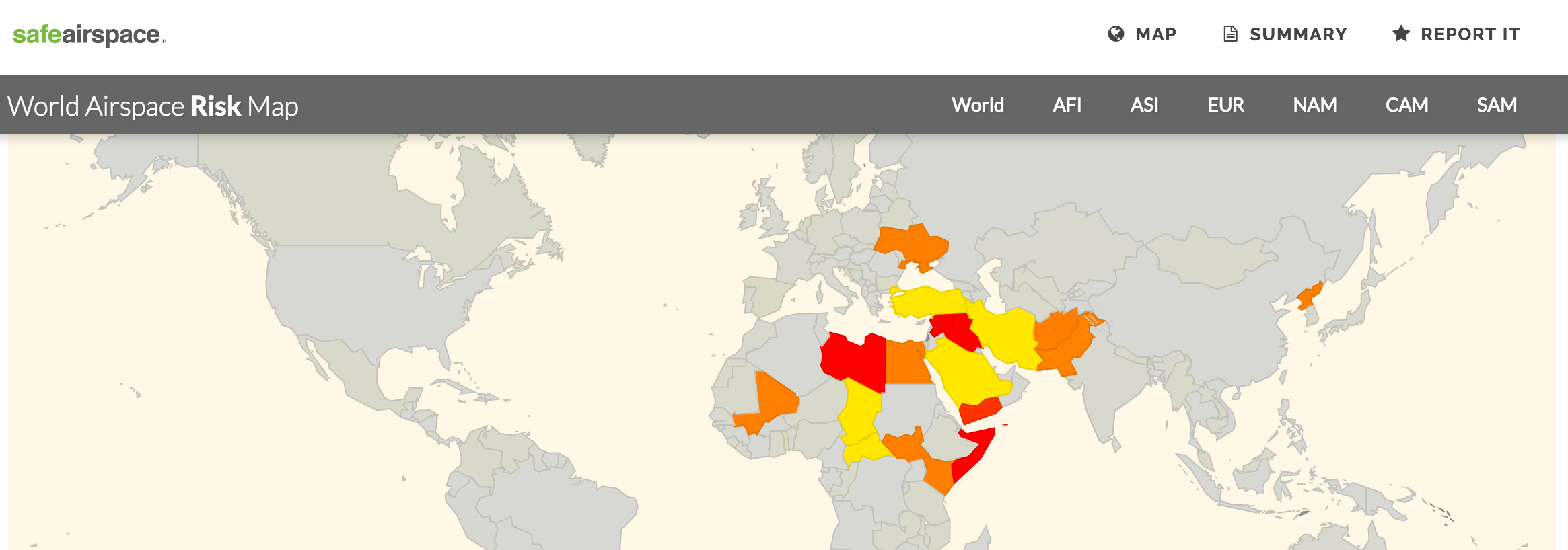
We do have some new challenges. Airspace safety – and the risk to our aircraft overflying unstable regions, is of more concern now than at any time in history. Since MH17 two years ago,  there have been many new areas to avoid. But how to know where, and why? Through The Airline Cooperative and OPSGROUP, we’ve worked as groups of Dispatchers, Controllers, and Pilots to share information so that when one person becomes aware of new information, everyone gets to hear about it. Our shared map shows the current status at safeairspace.net.

safeairspace-net

As a group, we’ve also been creating some new tools that help us – Aireport is our shared review site, where we can let each other know about good and bad experiences with Handlers, Airports, and ATC – whether it’s service, procedures, changes, or avoiding a fuel stop that’s going to cost you a fortune.

aireport-co

Maybe the biggest problem with all this new access to information is the overload one – the internet is the equivalent of a Shannon to Singapore NOTAM briefing. 80 pages of crap with a couple of important things stuck in the middle. Sometimes those important things are good to know, sometimes it’s critical information.

So how do you find those couple of critical things on the internet? You won’t have any trouble finding Aviation sites, but if you are managing an International Flight Operation of any sort – whether you’re the pilot, the dispatcher, the controller, the regulator, the ramp agent – whoever: how do you find out what’s new that will affect your flight.

That’s the question that bothers us at FSB every day of the week. We literally work on this every single day – and every day it becomes a little easier. Every Wednesday, we squeeze and condense the things that we’ve discovered this week into our weekly International Ops Bulletin – removing as much as possible until you’re left with only the critical stuff. The biggest source, and greatest help – is our amazing group of people in OPSGROUP.

Anyhow, I digress. Back to PanAm …