Teterboro: RIP the RUUDY SIX
For some time now, the problematic RUUDY 6 SID out of KTEB has been causing trouble. In fact, just prior to the pandemic the FAA reported it had resulted in nearly two hundred pilot violations in just six years.
If you’re not familiar with it, it is a departure from Runway 24. Here’s the chart:
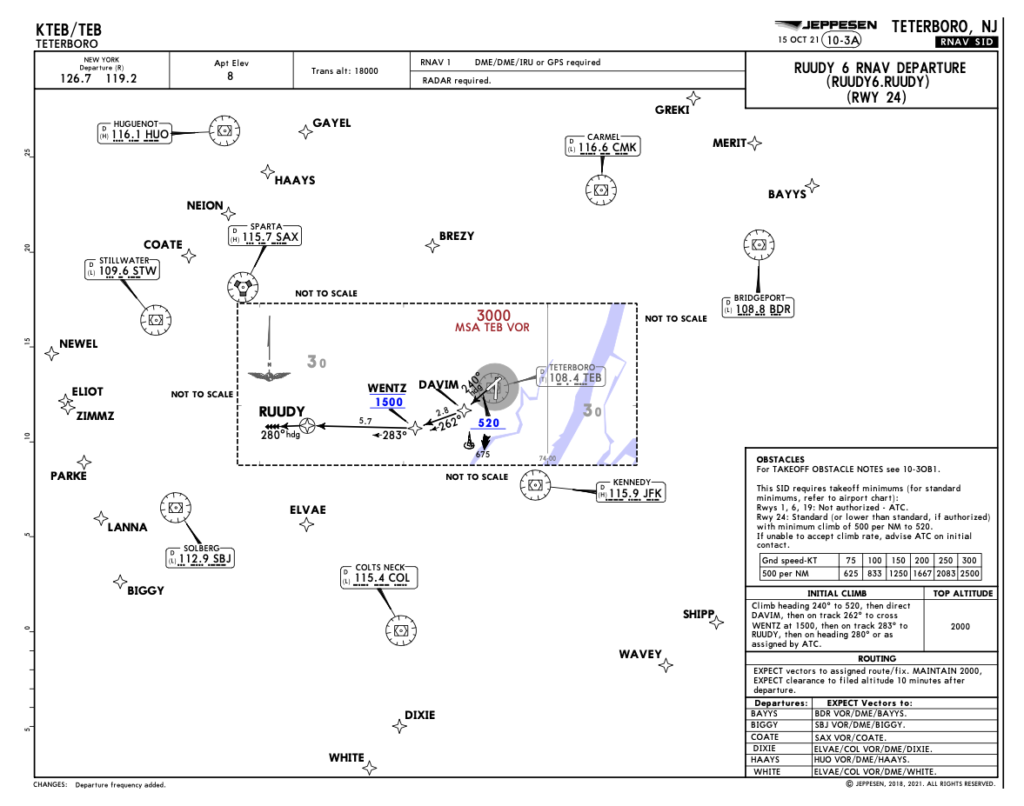
The reason for the high number of deviations is cause for debate with both lateral and vertical excursions reported. In the case of the latter, one suggestion is that the procedure itself isn’t that clear. For instance, a typical IFR clearance out of TEB includes the phrase “climb via the SID.”
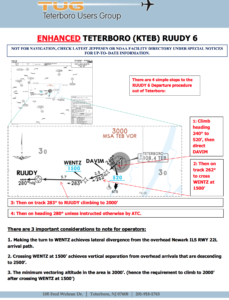
Take another look at the chart – it requires a level off at 1500’ and an instruction to maintain 2000’.
This can be interpreted in two different ways – either to maintain 1500’ until cleared to 2000’, OR to continue climb to 2000’ passing the waypoint WENTZ.
The Teterboro Users Group (TUG) since clarified the latter is correct, given there are actually three things going on at once:
- A turn to WENTZ to separate aircraft on Newark’s 22L ILS above.
- A level restriction at WENTZ to keep aircraft away from aircraft descending to 2500’ above.
- Achieving the minimum vectoring altitude for the area – hence the subsequent climb to 2000.’
And all of this while managing the energy of high-performance business jets shortly after take-off into some of the busiest airspace in the world. There is little room to get things wrong.
But people were, and quite consistently. And so, work began to develop a clearer SID to replace the troublesome RUUDY.
Welcome Wentz.
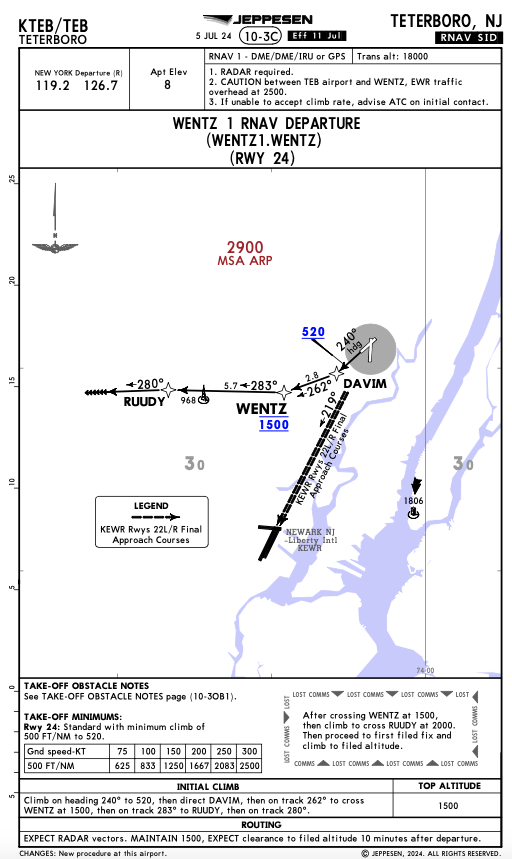
On July 11 that finally happened with the publication of the new WENTZ ONE SID – almost.
The WENTZ ONE is effectively an improvement to remove the ambiguity. It does away with the step climb to 2000’, instead requiring aircraft using it to maintain the one level – 1500’.
ATC will issue any subsequent climb instruction.
Here’s what the new procedure looks like:
Here’s the kicker though, while the charts have been published, no one is flying it just yet. Why?
TUG explains that this is due to FAA controller training requirements, which are essential. Given the pending relocation of Newark’s airspace from NY TRACON to Philadelphia TRACON it is difficult to predict exactly when this process will be finished.
So, while the plate will appear in your EFB, expect the RUUDY SIX for a short while yet.
What about an instrument approach to Runway 01?
While we have you here – there is another problem pilots need to contend with at TEB.
An instrument approach to Runway 01, or lack thereof.
Right now, the common procedure is the ILS 06, circle-to-land 01 to keep you clear of Newark.
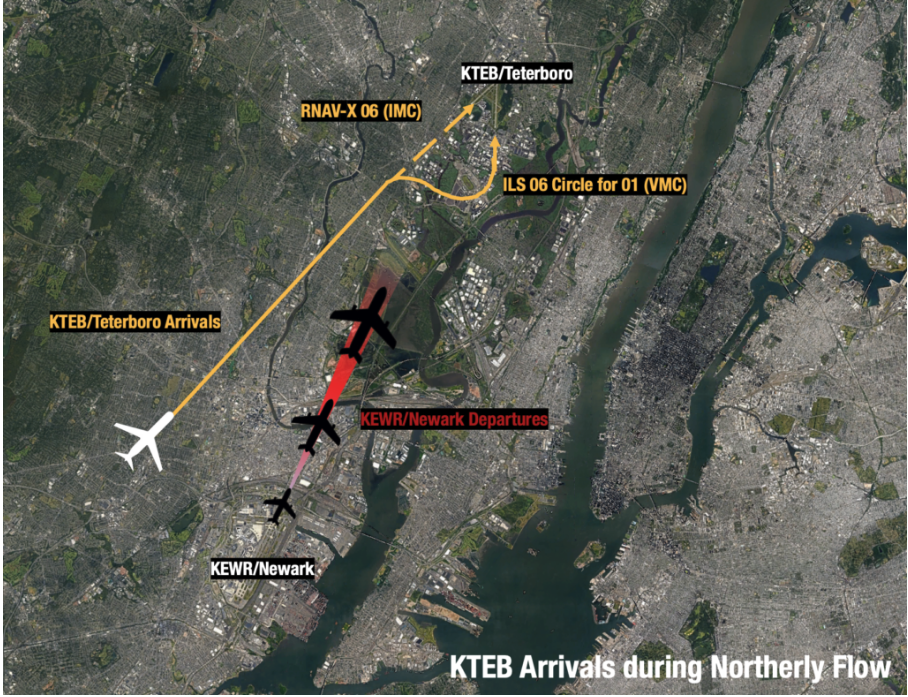
The challenging ILS 06, circle 01.
This approach is challenging for a number of reasons. If you’re not familiar with those, check out Code 7700’s full briefing here.
For some time now TUG has been advocating tirelessly for a proper RNAV approach which is long since overdue. There has been some progress for some Honeywell users. Since last year there has been a coded FMS visual approach that replicates the visual to Runway 01, but with lateral guidance and vertical guidance using familiar waypoints DANDY and TORBY. It does this with moderate angles of bank and a gentle 3.5 degree slope alleviating some of the existing threats of the procedure.
You can watch that approach below:
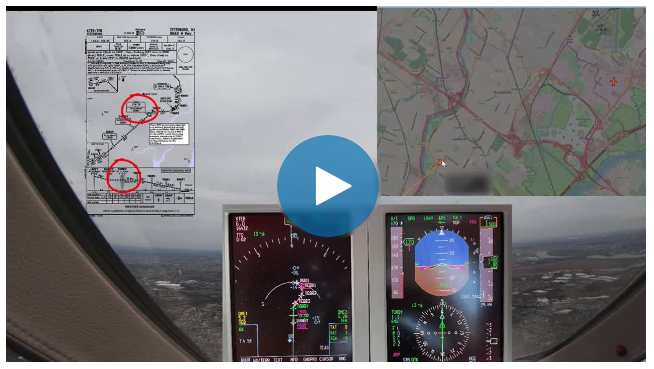
With regards to a publicly available instrument approach to KTEB’s 01, TUG advises we will need to wait a while longer yet. They will have a formal update for us later this year.

 This week