RNP-AR: New Arrival Procedures at Toronto
Everyone loves an aviation acronym, don’t they? So this post is about an acronym that causes a lot of confusion. Is an RNP-AR the same as an RNAV, and what if you add GNSS on the end?

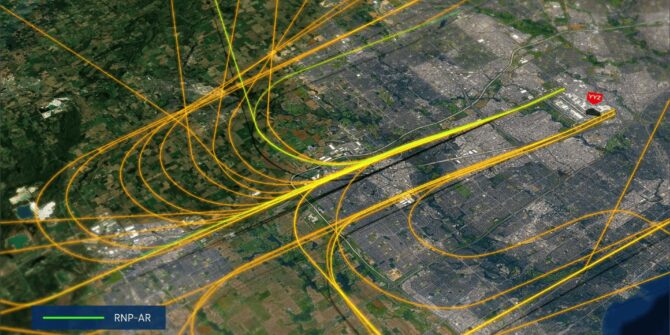
It is also about CYYZ/Toronto Pearson airport because they have just implemented the ‘biggest’ deployment of ICAO E0R standard at any major international airport in the world.

OK, so what exactly have they done?

If you haven’t heard the term EoR before, then it just means Established on RNP-AR”  and means they can use reduced separation standards.

So in simple terms, they’ve started using RNP-AR approaches. Which is great because reduced separation standards means reduced track miles for you, which means reduced fuel costs and time and all that joylessness at the end of a long and tiring flight.

So, RNP-AR approaches are way better.

Nav Canada says this – “The EoR separation standard allows aircraft to be considered established on final as soon as they’re on the RNP-AR procedure, which is now in use for both ends of Toronto Pearson’s north runway (05-23). As a result, some aircraft approaching from the south will have the opportunity to fly up to 1,000 feet higher when aircraft to the north are established on an RNP-AR procedure, thereby providing aircraft with the opportunity to reduce their noise over communities located south and downwind of the airport.”

And here’s a little video to learn even more about the project.

But before you disappear, here are some of Toronto’s charts and a little discussion on these approaches in case you’re seeing them for the first time ever.

The Charts.
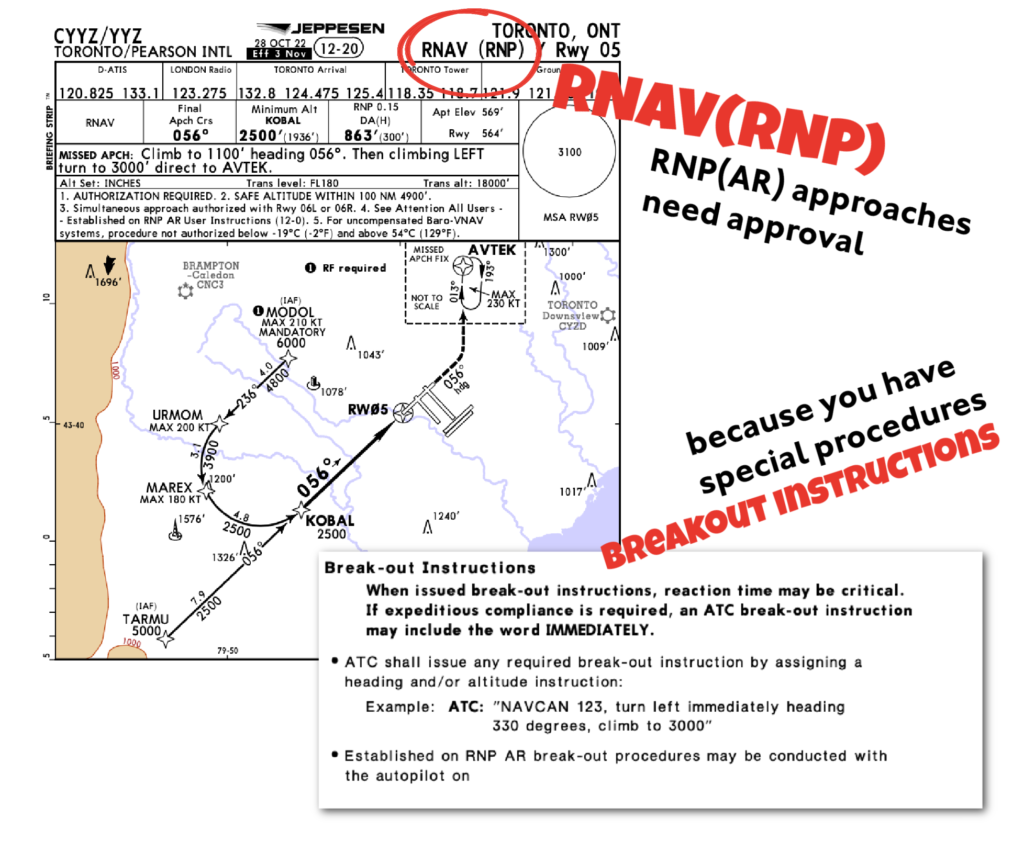
RNP(AR) and the ones to watch for if you don’t have approval

General RNP-AR Info.

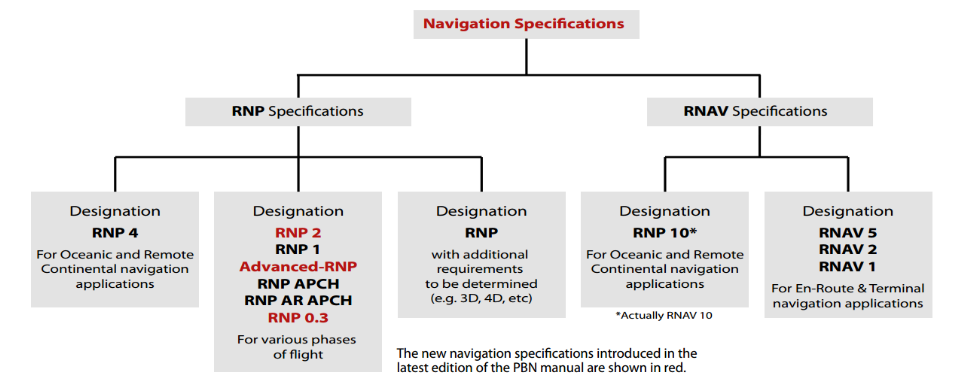
Because a lot of folk find the RNP, RNAV, RNAV RNP, RNAV GNSS, RNP AR terminology just a little confusing (it is!), here is a link to a post talking all about it.

A mini summary:

  • RNAV is the original name. The system doesn’t require alerting (when you go outside the required tolerance)
  • RNP is the new name, and the system requires alerting
  • In the US they call RNAV approaches GPS approaches, and RNAV (RNP) when they need authorisation
  • RNAV/RNP (GNSS) requires GPS. If it doesn’t, it might use something like DME/DME to back-up accuracy
  • AR means authorisation required, which means you need training and approval to fly them
  • They all come under PBN which stands for Performance Based Navigation
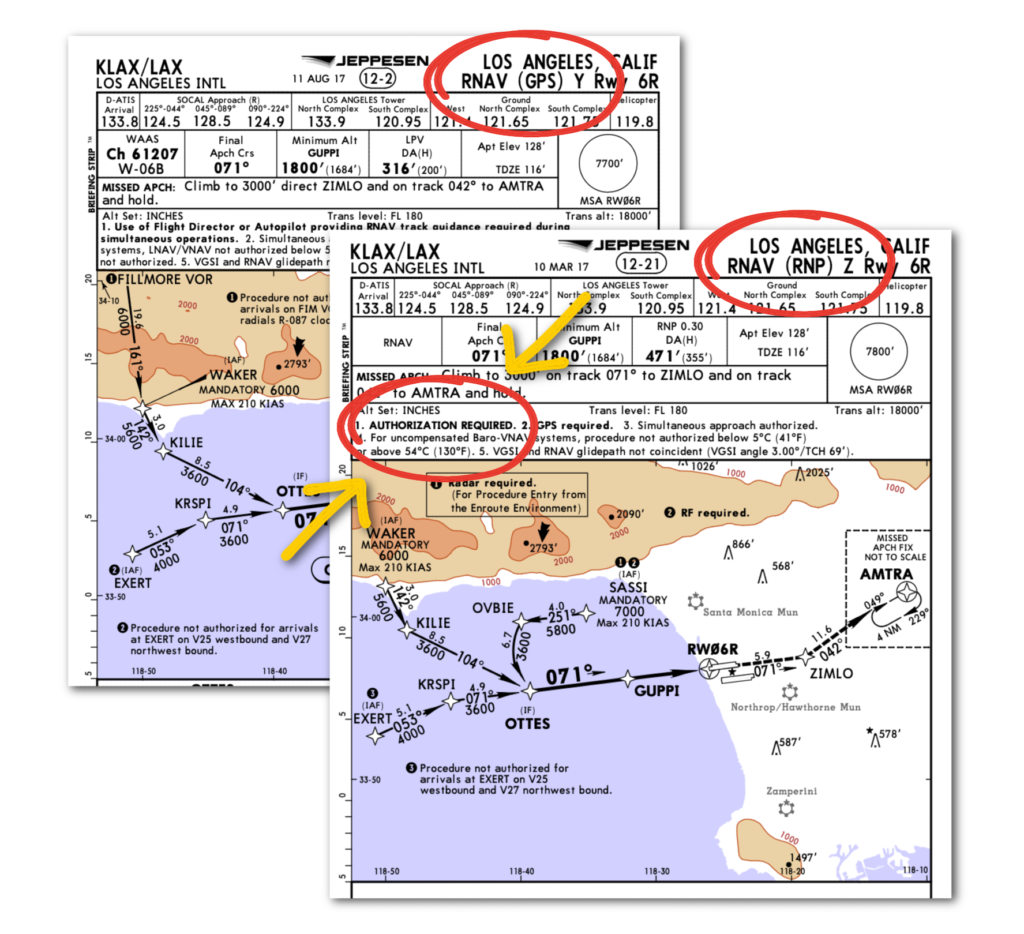
The difference (in the US)

CYYC/Calgary

Calgary is next in line to get them (probably).

There is a ‘period of public comment’ open now until Feb 3rd 2023, so get your voice heard if you have comments on these plans.

Kathmandu got RNP-AR (and so should you)

RNP AR approaches are not your standard stuff. They need special authorisation and training for you to fly them. But it is worth it because these complex looking approaches are generally used in some of the most challenging places, to make your life easier (and safer).

So here is a quick look at them, some insights into why you might want to fly them, and how to sort that out.

What does this acronym mean then?

RNP means Required Navigation Performance. Which is something under the whole ‘PBN’ thing which basically lets aircraft fly along a nice, precise path with a lot of accuracy.

It’s the newer, better version of RNAV that has performance monitoring and alerting involved.

You’ve probably come across it in a bunch of different places and with different numbers after it. RNP 4 over the oceanic and remote spots, RNP 1 on approaches… the number is the accuracy requirement. So 4 means accurate to 4nm 95% of the time. Or your system tells you (that’s the alerting bit).

AR means authorisation required.

RNP-AR you allowed?

You can get that authorisation with an LOA and a bunch of training. In the US this is covered under section 9 of your En-Route / General Rules and Procedures / Holding, Approach and Departure Procedures which you can find here.

The FAA issues RNP AR authorization via operations specification (OpSpec), management specification (Mspec), or letter of authorization (LOA C384). There are no exceptions. Operators can find a lot of info on RNP AR aircraft eligibility, operating procedures, and training requirements in AC 90-101.

Which (because we’re generous with our links) can be read here.

Like anything, it comes down to the equipment you have in your aircraft as well. It requires certain GNSS and an on-board inertial system (IRU/IRS) setup, an FMS navigation with multi-sensor capability (so there is something as a backup to maintain RNP if the GNSS is lost)…

Surprisingly few BizJets seem to have what is needed. Good news though, companies do offer retrofit options.

So, what does an RNP AR look like?

Well, it should look accurate to 0.3 (that’s about 40m with SBAS), and sometimes even 0.1.

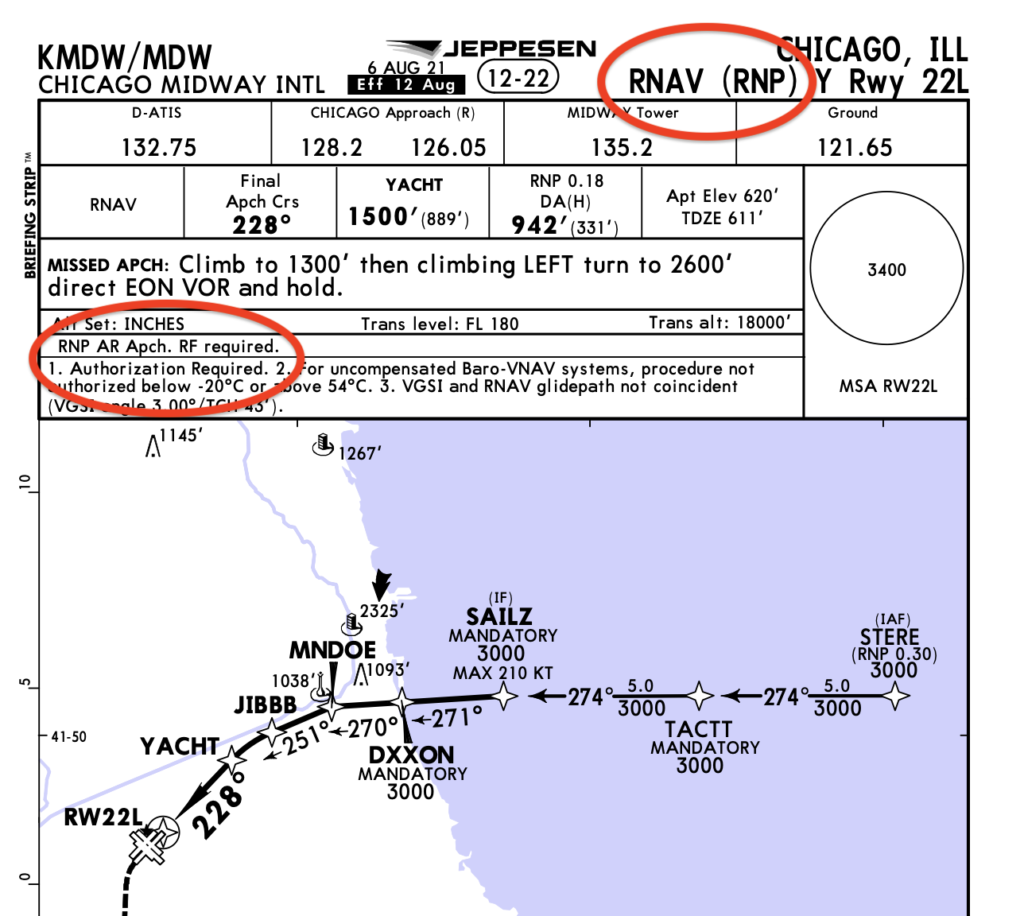
If you’re in the US then your RNP AR APCH is probably going to be called an RNAV (RNP). It should have AUTHORISATION REQUIRED scribbled somewhere on the chart too because, you know, you need it…

You do also get ones for departures too.

Why do we like them?

“An RNP AR APCH (approach) is a procedure that allows for narrow, linear obstacle clearance corridors in the procedure design…”

In other words they help you get into tough places by giving more guidance in a more sort of 3D way.

This means they can have some real funky stuff going on in them like swirly turns, RF (radius-to-fixes) and all that sort of stuff. But if you know how to fly them and are allowed to then this is going to save you a whole bunch of woe in some challenging spots.

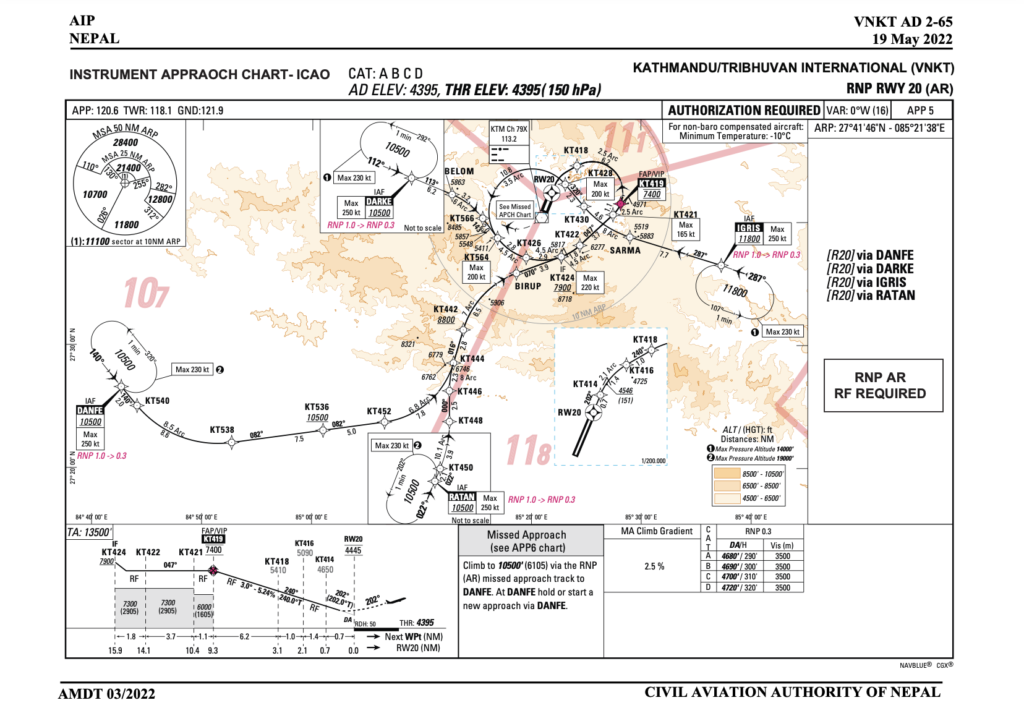
Like VNKT/Kathmandu…

Kathmandu?

Yep, Nepal’s main international airport. (They only just built their second international airport in April 2022 over at Bhairahawa).

At VNKT/Kathmandu, they just installed some RNP AR approaches which came into effect May 19. And about time too, because this is a mean airport with all that terrain, and before these new approaches you just had some VORs.

You can find the full AIP here.

If they remind you of that old snake game then that’s because there is a lot of vicious terrain in Kathmandu. Which is why RNP AR approaches which let you zigzag between all the mountainy bits are helpful.

Where else are these handy?

Anywhere there is nasty terrain. Alaska, New Zealand, Peru, Chile, Ecuador, Indonesia… There is one for Cape Town that massively reduces track miles, another in Guatemala for departure that will help with your payload restrictions…

KPSP/Palm Springs makes excellent use of them, and you will even find them at some major airports which don’t have terrain, because they can ensure traffic remains clear of other airports in particularly congested airspace (KMDW/Midway and KORD/O’Hare for example).

Want more info?

This is a good article from AvBuyer which goes into more depth for those of you looking to retrofit your aircraft.

Here is a presentation from ICAO on it, because who doesn’t love a good powerpoint.