Saudi Ops for Hajj 2021
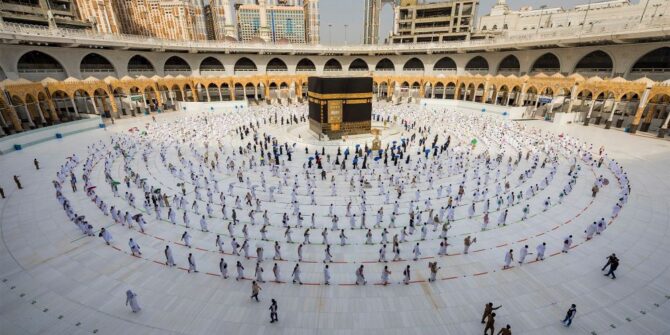
Hajj is the annual pilgrimage to Mecca, which means a change in traffic density and also some flight restrictions into Saudi Arabia.

The Hajj period this year is July 17-22

However, with current quarantine measures (1 week in a hotel if you haven’t been jabbed), the increase in inbound traffic might start a little sooner.

Where in Saudi?

OEJN/Jeddah and OERK/Riyadh airports are the two main entry points to Saudi Arabia for those attending Hajj. In fact, to fly in here during Hajj period your passengers may well need special Hajj visitor visas, or will likely experience some pretty long delays in customs.

Use these airports as alternates with caution during this period because traffic is going to be much higher even this season (2021) when visitor numbers are restricted. You might also experience delays if a VIP is landing as they tend to add in security measures (which can include holding other aircraft if there are enough “V”s before the “IP”)

Where else?

OEMA/Madinah can also see more traffic since those holding Visit or Seasonal Work visas are often transferred via here instead.

OETF/Taif Regional airport is also apparently open for Hajj flights if you are moving people domestically.

If you are planning on operating a Hajj charter

You are going to need to get a request in with the GACA (General Authority of Civil Aviation) Administrative Liaison Center. There are quite strict quotas because they want a 50/50 split with Saudi air carriers so an early request is a good plan.

We suggest doing it through an authorized agent like fbo@spa.sa – these folk are nice and responsive.

Operations requests have to be sent to GACA through official channels. Hajj flight schedules should sent via e-mail to: hajflights@gaca.gov.sa

You can find a bunch of useful info on how to apply for that here. Actually, if you are thinking of operating a Hajj flight then definitely read this since there are a lot of things you need to be aware of. It is the official GACA produced ‘Hajj Instructions Governing the Carriage of Pilgrims by Air’.

Airspace Warnings

There are a fair few in place for the south-western region of the Jeddah FIR. The general view is to avoid that part of the Jeddah FIR, and avoid Yemen, and anywhere near the Yemeni border.

It is also worth reading up on the ESCAT procedures Saudi Arabia have because an escalation in attacks is possible during Hajj season, particularly with a focus on Riyadh and Dammam airports due to the higher numbers of traffic. Basically, if they activate, you will have to follow exactly what ATC tell you and will probably be required to land at the nearest suitable aerodrome, or leave Saudi Airspace right away.

Any other alerts I should know about?

We have a few alerts out at the moment for Saudi Arabia including one about hotel room shortages. Anyone who is unjabbed needs to quarantine for at least a week so these have been filling up fast.

Crew are exempt from quarantine but do still need a PCR test less than 72 hours old.

Hajj Routes

Usually, ASECNA put out an AIP SUP for Hajj routes through Africa, because the number of Muslims routing from Africa to Saudi Arabia means changes to the traffic flows and standard routings are required so ATC can deal with it all.

Normally, traffic is very much north-south predominant, with Europe-Africa flights being the main flow. When Hajj operations start up, a good amount of traffic starts operating east-west (ie. Africa-Saudi Arabia and vice versa), and this is something to be aware of when cruising along at FL330 with spotty HF comms.

However, we haven’t seen one published yet this year, possibly because numbers are so restricted. So keep on a look out, and listen out if routing through Africa just in case.
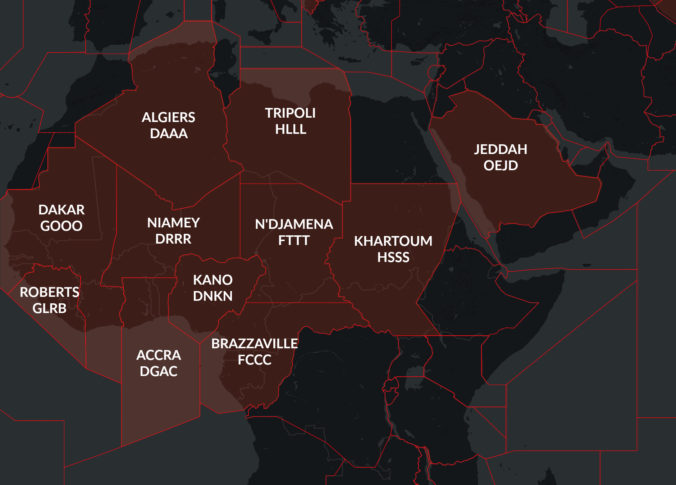
The FIRs which see higher traffic during Hajj

Where can I find more info?

You can find it right here with this handy list:

Finally, if you are flying any Muslim passengers and they ask which direction Mecca is in, then there is a waypoint MECCA which you can use to find the bearing.
Rumbles Over Riyadh: A New Threat?

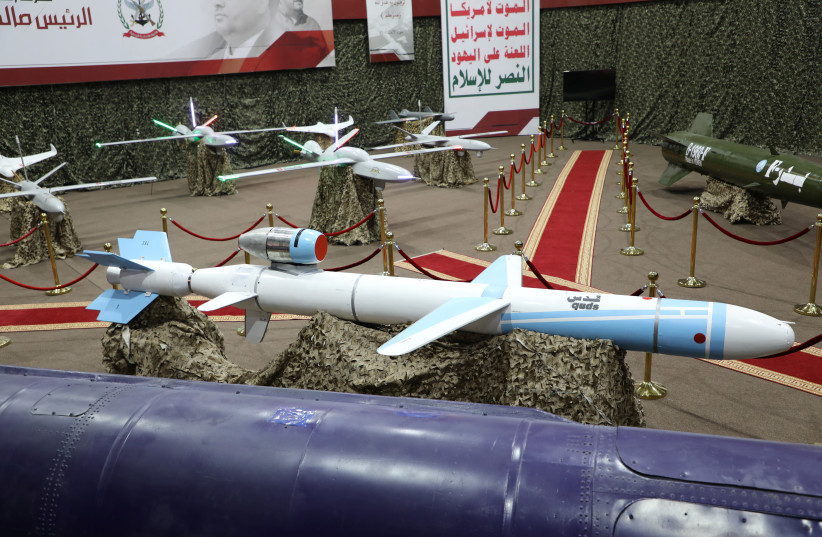
You might have seen the headlines a week or so ago. On January 23, Saudi Arabia’s capital Riyadh was attacked by a ‘hostile air target’ – likely an explosive ‘kamikaze’ drone. Saudi air defences destroyed it, causing a loud explosion over the city and flight disruptions at OERK/Riyadh.

Then a few days later it happened again. Another big bang in the skies of Riyadh and more flight disruptions. Plenty of people caught it on camera. But the silence from official channels was deafening.

So what? Isn’t there is always stuff in the news about drones over there?

Yes. They’re sporadically sent over the border from Yemen by the Houthi – the folk who overthrew the Yemeni government back in 2014. Southern regions are usually the worst hit and occasionally Jeddah and Riyadh are targeted just to remind Saudi Arabia that they can.

But here’s the kicker: this time it probably wasn’t them.

How Do You Know?

Firstly, the Houthi have adamantly denied they were to blame. They’ve actually gone out of their way to distance themselves from the attack. So why should we believe them? Because of the status quo – they want to make headlines. Their attacks on Saudi Arabia are a demonstration of their firepower and willingness to target anywhere in the country. They’re even known to claim responsibility for attacks that weren’t theirs.

Secondly, someone else has already put their hand up for the attack – a group of militants in Iraq called the Alwiya Waad al Haq. The Who? The ‘Brigades of the Righteous Promise’. It’s a fancy name but the takeaway is this: someone new is apparently taking shots at Saudi Arabia from Iraq.

Here’s why

Saudi Arabia and Iran don’t get along. The reasons are long and complicated and you can read more about them here. But in a nutshell, religious differences and a desire for regional dominance are the cause of the ongoing conflict. The attacks on Riyadh are a worry because they may reflect a changing way that Iran asserts its dominance throughout the Persian Gulf – by proxy.

Proxy conflicts are a thing. It means when someone is doing the hands-on fighting for somebody else. Remember those Brigades of the Righteous Promise people? It is alleged that Iran may have put have put them up to it, and supplied the firepower to do it.

There’s no shortage of independent militia in Iraq. They’re difficult to trace and new ones emerge seemingly from nowhere – so much so that they’re sometimes known as ‘shadow militia.’ In reality, they are usually a cover for larger and much more well-known groups. In this case, possibly the Hezbollah – one of Iran’s largest proxies.  By hiding behind different names they can cause confusion, unpredictability and can divert blame away from the prime suspects.

It is possible that Iran may now start using these proxies more often for attacks on its regional adversaries.

So why is this an aviation issue?

We get twitchy when anyone is firing things into the sky. This way of fighting is unpredictable and the weapons being used are getting more sophisticated and can cover large distances.

Case in point. Back to the Brigade guys – since their alleged attack on Riyadh they have since threatened to attack the Burj Khalifa in Dubai, and also Abu Dhabi airport. Whether or not their threats can be taken seriously remains to be seen – but if the attack on Riyadh is anything to go by, they might have the weapons and intent to do it.

For aircraft, there are a few threats to be aware of:

  • Misidentification by sophisticated air defence systems.
  • Being caught in the cross fire.
  • Simply being in the wrong place at the wrong time. Airports are often a prime target.

What can we do about it?

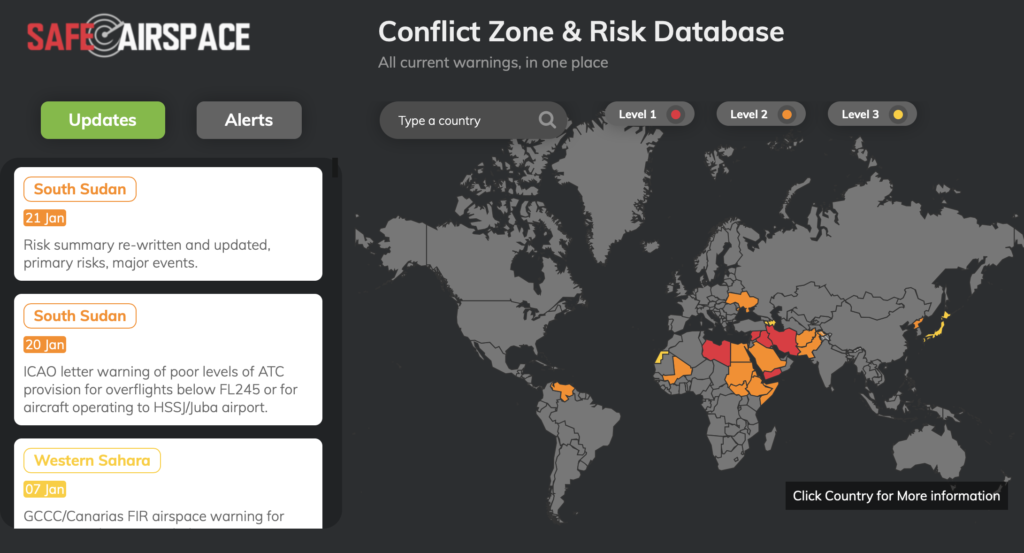
Continue to monitor Safeairspace.net for airspace warnings – it is our database of airspace risk and we update it all the time. Head over there and take a look – there are multiple warnings for the Persian Gulf region including four ‘no fly’ countries: Syria, Iraq, Iran and Yemen.

Understand ESCAT rules. Or you might know them as SCATANA. Either way they are a protocol for getting you out of dangerous airspace and fast. ATC may divert you clear of an FIR or ask you to land. They’re in use in Southern Saudi Arabia – but can be applied at short notice to any airspace where the risk is high. ESCAT procedures are published in GEN 1.6 of Saudi Arabia’s AIP. If you don’t have a login, you can see the relevant section here.

Lastly, carry out your own risk assessment and know what’s going on down there. Just because airspace is open doesn’t mean that it’s safe.


Midweek Briefing 06JUL: Hong Kong capacity problems, Iceland: The fun continues

Hong Kong capacity problems 06JUL During this year, the Hong Kong CAA has issued a couple of warnings to operators to stick carefully to their allocated slots, but it’s not making much of a difference to operations there. Read the article.

Iceland: The fun continues 06JUL Last week there were some really positive indications that the ATC strike in Iceland was coming to an end, but it’s now worse than ever, with Westbound, Eastbound, and landing traffic all affected. Read the article.


HECC/Cairo FIR A restriction exists for traffic to and from the Amman FIR, so if overflying Jordan and then Egypt, or vice versa, you can only use the waypoint METSA.

OMAE/Emirates FIR has some updated peak times. Departures need a slot between 0630-0730Z and 1700-0000Z. Arrivals will be spaced 5 mins apart during these times also, as will aircraft entering the OMAE FIR from nearby airports like Muscat, Isa, and Baghdad.

EIDW/Dublin Runway 10/28 is closed overnight until 09JUL.

OERK/Riyadh, Saudi Arabia will be hosting the ‘Global Ministerial Aviation Summit’ 29AUG-31AUG. 55 different ministers from various countries are expected to be in attendance. Be aware of potential restrictions leading up to and after the event.

CYFB/Iqaluit Another NAT alternate favourite, CYFB has some runway closures throughout July.

EGCC/Manchester is doing some work on 05L/23R overnight until 08JUL and has advised operators to carry some extra gas due possibility of holding.

LOWW/Vienna has published a helpful list of rush hour periods – worth avoiding these times as holding is common at VIE. The times are: 0530-0750, 0920-1030, 1140-1240, 1340-1500, 1615-1800, and 1840-1940Z.

BIZZ/Iceland Despite optimistic reports of a resolution to the ATC dispute in Iceland last week, the situation remains unresolved. Last night BIRD Oceanic was closed to most Eastbound traffic once again, as was BIKF. A new addition to restrictions is a closure to many Westbound flights on Wednesday 06JUL – “DUE TO STAFF SHORTAGE IN REYKJAVIK OACC WESTBOUND TFC PLANNING TO ENTER BIRD FROM ENSV VIA GUNPA,VALDI, IPTON, INGAL, ISVIG AND EGPX VIA LIRKI, GONUT, OLKER, MATIK AND RATSU AND THEN PROCEEDING INTO EGGX OR CZQX SHALL REMAIN SOUTH OF BIRD CTA” Read the article.

EDYY/Maastricht ATC have requested crews operating through the Maastricht UIR to log on to CPDLC EDYY, if you have datalink. While voice remains the primary comms method, you might get an uplink message if the frequency is busy – it’s not a test, you should confirm – most of these uplinks are likely to be frequency changes.

EPZZ/Poland has advised operators to check carefully whether permission is required in advance of operations at airports other than EPWW/Warsaw. Many countries including Poland have reinstated Border Controls within the Schengen zone. Best advice is to treat each country as having full Border Controls for the moment (so think Passport, GenDec, etc.)

SPIM/Lima FIR (Note that the airport is now SPJC, distinct from the FIR code) is shutting down airway UG427 after 21JUL.

SUEO/Montevideo ACC (Uruguay) has some comms issues in it’s airspace, and has advised of some extreme spacing between aircraft irrespective of FL – 40nm. For now, this ends today (06JUL) but may happen again.

WSZZ/Singapore Qualifying citizens of Singapore are now eligible to apply for US Global Entry membership – and benefit from expedited entry to the United States at designated airports. Similarly, qualified U.S. citizens are eligible for enrolment in Singapore’s enhanced-Immigration Automated Clearance System (eIACS).

ZMUB/Ulaanbaatar, Mongolia is downgraded to RFF Cat 7 until 10JUL. Also, from 12-16JUL, you can’t file this as an alternate which may limit your options somewhat.

LFPG/Paris due to maintenance on the ILS for Runway 08L/26R from 18JUL to 02OCT. The only approaches that will be available will be RNAV based procedures (LNAV/VNAV, LPV, LNAV) and VOR/DME.

GQNN/Nouakchott, Mauritania has moved to a new international airport this June. Located approximately 10nm north of the city, it has an annual passenger capacity of 2 million. Infrastructure from the capital’s old airport was transported to the new one.

SECU/Cuenca Following the landing incident on 28APR of an E190, all inbound flights will be reportedly be held if the runway is wet – until end of August.

LFMH/St Etiennee Fuel outage on 07JUL, 0800-1100 UTC.

Canada/Mexico From 01DEC2016, Mexican nationals will be able to travel to Canada without a visa for business and tourism for up to 90 days.

Turkey/Russia Russia has lifted the travel restrictions on tourists between the two countries. The ban was put in place following the downing of a Russian military aircraft last year.

Bangladesh Germany, Australia and the U.K. have banned direct cargo flights from Bangladesh due to security concerns.

Israel/China The Israeli parliament has ratified a multiple-entry visa agreement with China, under which Chinese business visitors and tourists can enter Israel multiple times with the same ten-year visa and vice versa.

EZZZ/Europe the European Union updated Air Safety list (aka the Airline Blacklist) on 17JUN, and lifted a ban on Zambian air carriers.

Uganda Introduction of ‘e-visa’ system. You must show a valid yellow fever vaccination certificate on arrival.

ZJSA/Sanya FIR, China has an ADS-B trial up and running on L642 and M771. Radar is still the primary separation tool, but ATC ask that you check your Flight ID matches your FPL.

View the full International Bulletin 06JUL2016