Liquid Lunch

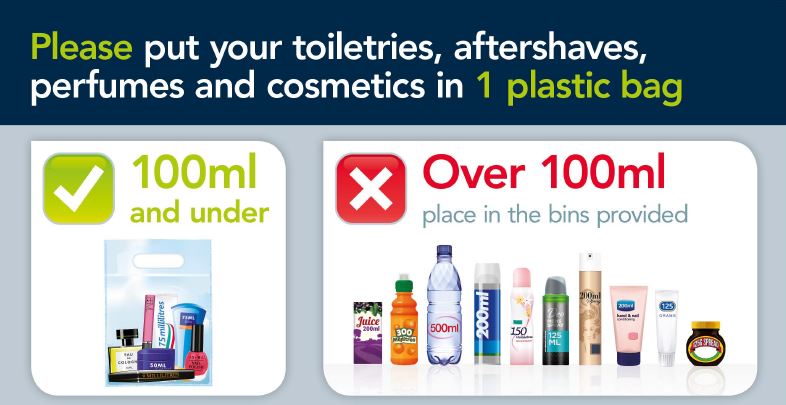
Remember the 100ml rule? The one that’s been there since 2006, causing endless hassles at security. Well, its changing!

Why does that matter for air crew?

Good question. Is this really an operational issue to talk about? We are ‘Opsgroup’ not ‘VaguelyInterestingInfogroup’ after all…

Well, the rule is here for crew too and if you’ve ever operated through a UK airport you will know they can take it very seriously indeed. I once had my healthy hummus lunch taken from me because hummus is slightly more liquid than solid.

So, the change will mean:

  • An easier time going through security for Air Crew as well as passengers
  • Possibly some changes on what you can stock up on during layovers (if you don’t check your crew bags)
  • The option to have better coffee than what you might get onboard
  • General security changes

No more of this!

Let’s take a quick look at the security side of things.

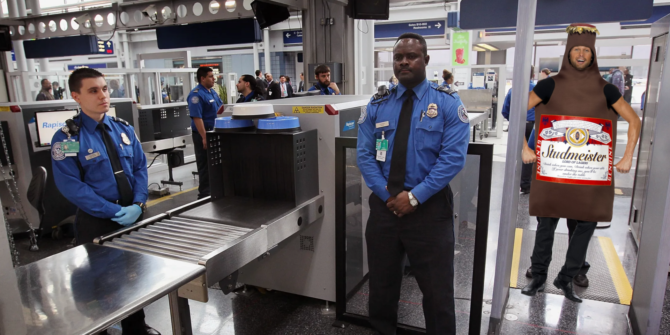
Passengers and crew will be able to carry whatever liquids they require, so long as they fit in their hand luggage. Remember though, if you are transiting another airport, their liquid limits will still apply.

There are a few liquidy products worth looking out for as well. The top two we are aware of are peanut butter and Frankfurter sausages in jar available in EDDF/Frankfurt airport duty free.

Why?

Well, the liquid explosive scanning machines work off detecting a range of chemical elements, and also look at density. Fun fact – the molecular makeup of peanut butter is actually very similar to nitroglycerin, while the juicy sausagey water in frankfurter jars is apparently of a density that some scanners struggle with.

Then there are actual banned substances.

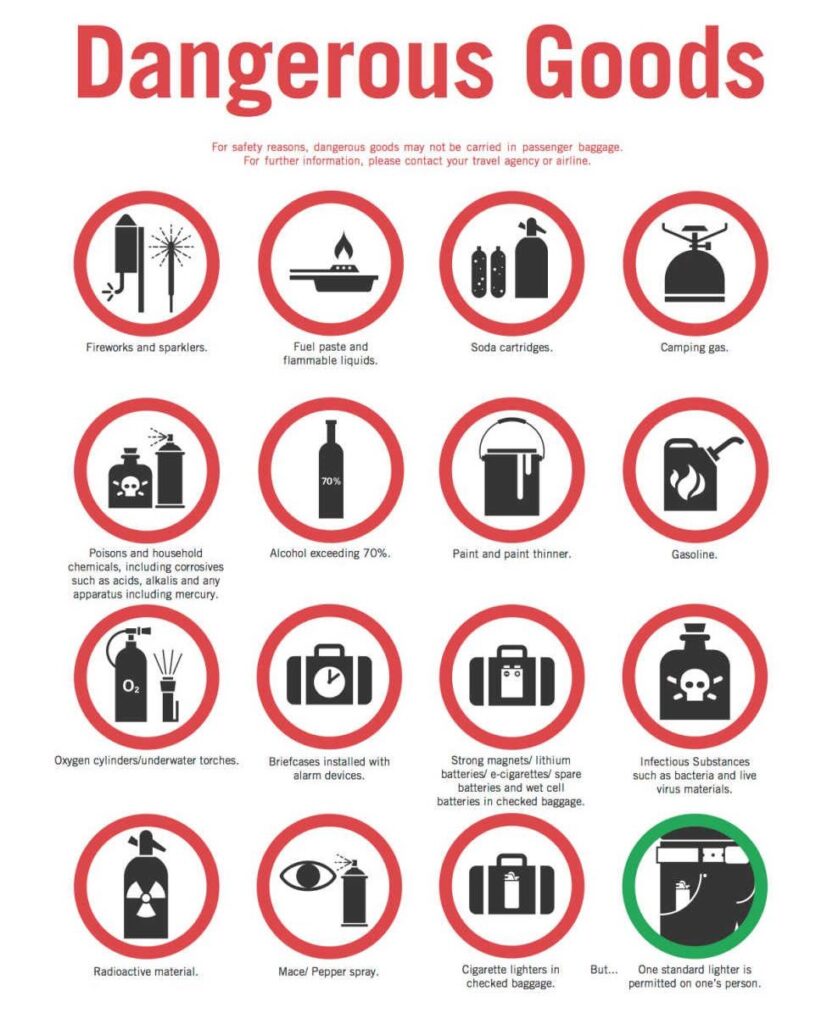
Possibly more important to remember – these are, obviously, still banned. There is no change to the dangerous goods restrictions.

Toxic, flammable, infectious, over 70% alcohol, paint etc is all still not allowed.

Toxic, flammable, infectious stuff… still banned!

Shannon Airport

EINN/Shannon is of course a gateway airport for the USA. The US Pre-clearance status means you can undergo all immigrations, customs and agriculture inspections here.

Which is why we thought this was worth mentioning because it will be a nice change for a lot of folk heading through, but those agriculture restrictions remain in place.

All travelers entering the United States are required to declare anything with meats, fruits, vegetables, plants, seeds, soil, animals, as well as plant and animal products – including soup or soup products.

Check out the USA CBP website for more info. There is quite a handy “what can I bring in for my own personal guzzling purposes” list here, published by them.

Where else are the scanners going to be?

Well, the UK is planning to have them installed in all their international airports by December 2022.

TSA in the USA is also planning on having over 1000 of them active for Summer 2022. So watch this space.


Flying outside the Procedures

Aviation is full of procedures. We fly by them, sometimes we kind of live by them. But other times there are situations where we need to disregard them. So when is it ok to throw the rule book out the window? 

In an airplane, never.

In the literal sense anyway, given the risk of opening a window mid-flight and getting sucked out. But what about in the less literal sense?

Procedures are not there to stop us just doing whatever we want. They are there to keep us safe, to make sure everyone is operating to the same standards and to provide pilots with a guideline of what they should do in *most situations.

Why the asterix? 

I will come back to that. But for now, that reasoning makes sense. If every airplane did what it wanted, flew how and where it wanted, the sky would be a messy mass of chaos. So, we have procedures and we have them so we know what to do, when to do it and how to do it.

More importantly, everyone else knows as well. Which brings us back to the “most situations” comment. 

We cannot expect there to be a procedure in place for every possible event. They are there to offer guidelines and standards, but they are not designed to cover everything.

And they are definitely not supposed to remove the need to think.

So what should we think?

Well, thinking about situations where we might be without a procedure, or where there is a procedure but it no longer leads to a safe outcome is a good place to start.

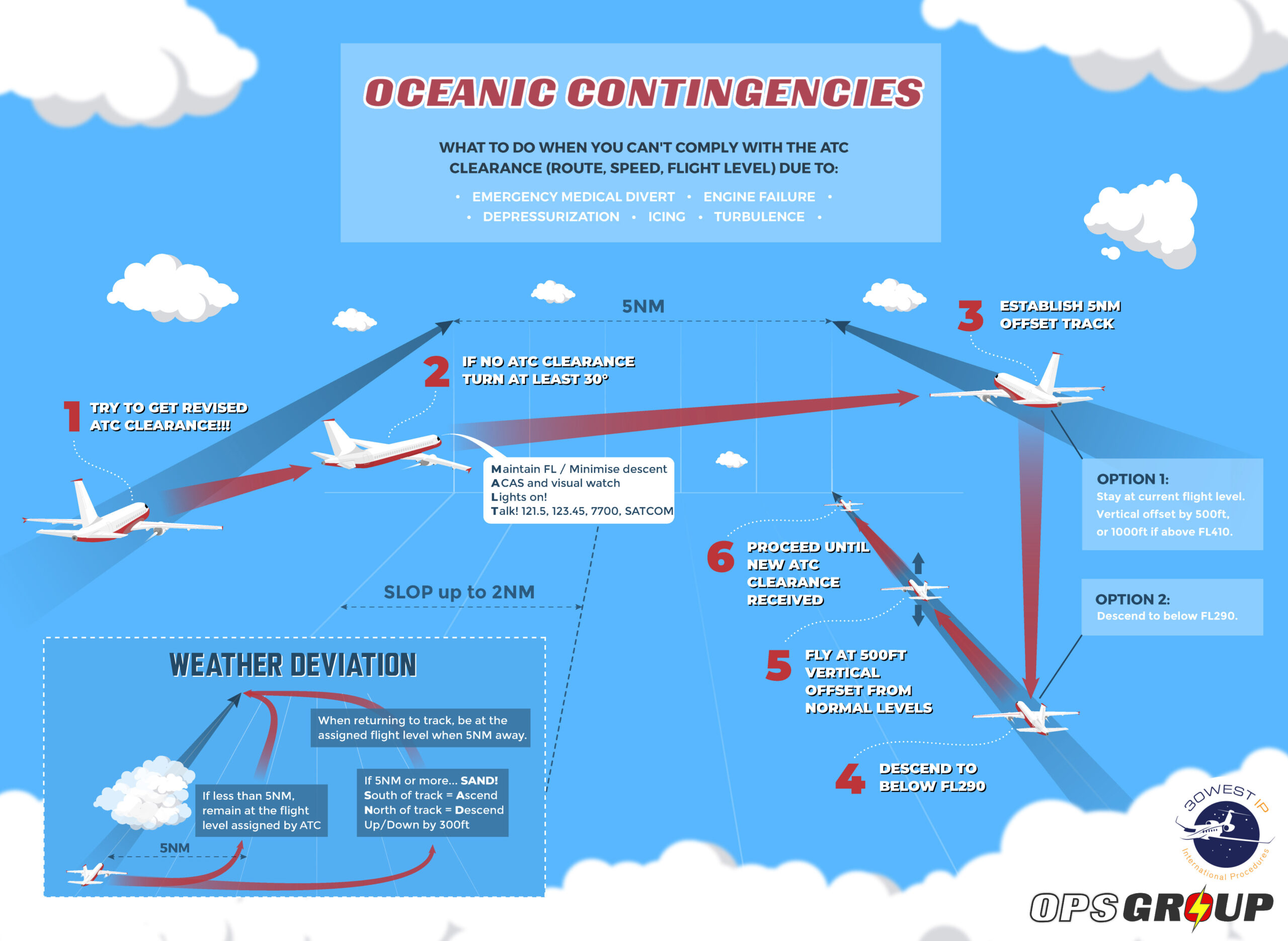
Let’s take a look at ICAO Doc 007 – the “bible” for the North Atlantic. It is quite clear on a lot of things – for example, what the contingency procedures are if you experience some sort of emergency while flying in the NAT.

We are talking some busy airspace out there, with a lot of aircraft flying on specific tracks, and so the last thing you want is aircraft barreling across them setting off TCAS warnings as they zoom off on a diversion.

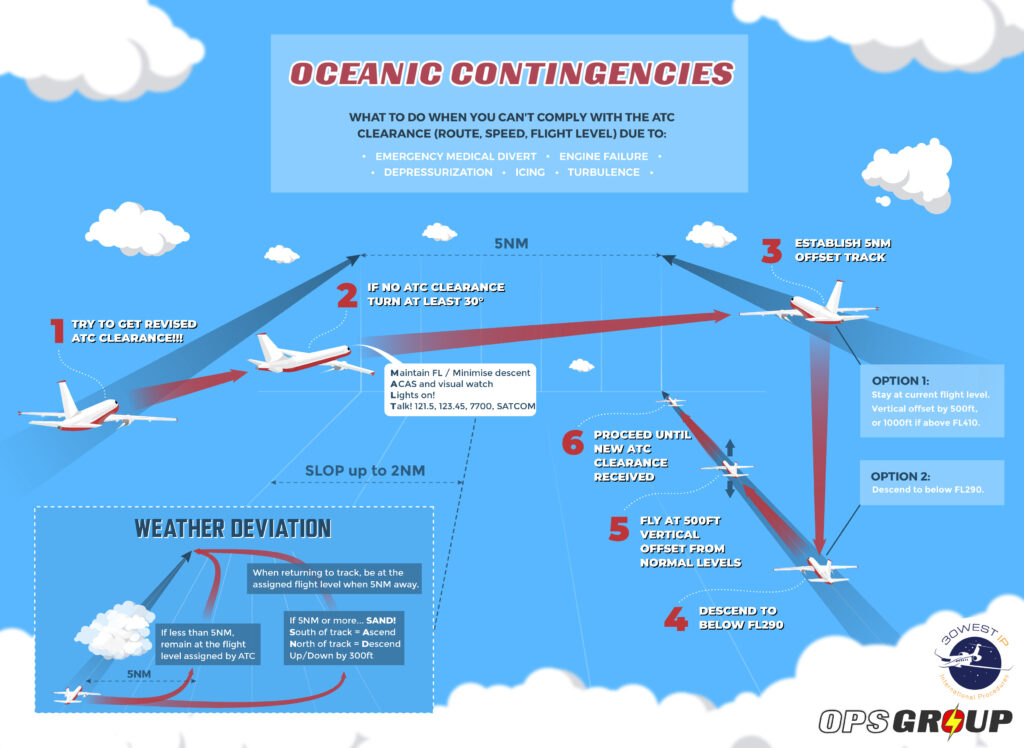
So NAT Doc 007 lays out some procedures to follow. Things like turning 30 degrees off track and offsetting 5nm. And one that says – 

“When below FL290, establish and maintain 500’ vertical offset when able and proceed as required”.

Ok, great, it is pretty clear. Get yourself down to below FL290, establish on your offset, and now go where you need to go.
But…

What if our emergency is a decompression, and we are right out in the middle of the NAT where routing at 10,000ft the whole way to an airport might turn into a fuel problem?

Do we still need to get to FL95 before starting a diversion?

There might not be a black and white, right or wrong answer, but this is the point – there are situations where there isn’t necessarily a procedure telling us what to do, or when to follow another procedure.

So this is something we should probably be thinking about a bit more. The “What If?” things that could happen.

So, what is the rule for breaking procedures?

Is there sort of a checklist for when we can, can’t, ought to or must? Why isn’t there a rule for every time you are allowed to break a rule? 

Well, the reason is no-one can think through every situation, and more importantly they shouldn’t try to! 

The day pilots can only do something if a procedure tells them to is the day you might as well replace them with a computer. We need to retain the skill of weighing up risk and reward, consequence of actions, because there are so many situations out there which are not going to be black and white. 

NAT Doc 007 document actually states quite clearly several times –

The pilot shall take action as necessary to ensure the safety of the aircraft…”

And this goes for any procedure, any rule, anytime you are flying. 

Just because the book says “No, don’t do that!” never means you cannot do it if it is what you need to do to maintain safety.

The tragic Swissair Flight 111 accident is often raised in CRM discussions as an example of when following procedures to the book might not lead to a safe outcome.

But…

Not following procedures because you think there is a quicker, better, easier way to do something is probably not the best idea either.

A Qantas pilot experienced “incapacitating” symptoms after a technical malfunction where they decided to cary out their own troubleshooting, rather than following the checklist.

So, having a good reason to not follow a procedure is important because you are going to have to justify why you broke the rule. If you need to break it for safety then break it, but the key seems to be having a valid, justifiable and safety related reason.

That is airmanship, and that is why the Commander has final authority. It is also a cornerstone of our pilot licence that we “agree” to accept the ultimate responsibility for the safety of the flight.

Why are we even having this discussion?

Possibly because we sometimes forget why we have procedures in the first place.

Unfortunately none of us are immune to this. I can remember several times in my career when procedure-following took over from common sense. The time when we shut down an engine with 10 meters of taxi left, ran out of steam, and had to be towed the last 9… But hey, we still ticked the one engine out taxi box.

So, all of us stepping back and considering why the procedures are there, and then what we might do when we find ourselves potentially having to operate outside of them, is important.

Which brings us back to the debate about FL95 over the NAT. 

Different folk might answer this question differently. It is going to depend on the day, on you and on the situation, and there probably isn’t a definitive answer to be given.

What is clear is that at some point in our flying career we will all probably find ourselves in a situation where there is no procedure, no clear cut answer, no simple solution, and this is where our experience, airmanship and judgement will really be put to the test.

When we end up in that situation we should’t be asking “What is the risk of me getting into trouble if I do?” but rather “What is the risk to my safety if I don’t?” because all the procedures we fall back on were not put there to be blindly followed, and were not written into stone to keep you out of trouble – they are there to be thoughtfully followed when they keep your aircraft out of trouble. 

The Mexican Downgrade: What’s the impact to ops?

Mexico have recently found themselves downgraded by the FAA under their IASA program.

So, what does this mean for Mexico, and what does everyone else need to know about this?

First up, what is the IASA program?

It might sound confusingly like a combination of EASA and IATA, but ‘IASA’ is actually the International Aviation Safety Assessment Program run by the FAA, and used to determine the safety standards in foreign countries.

It was set up in 1992 to monitor air carriers operating in and out of the US – not to monitor the operators specifically, but to check the authority in the country is up to scratch with ensuring their operators are up to scratch. If not, the US don’t want to let them into their airspace.

What do they look at?

They are focusing on the country (not the operators in the country), to see how well they adhere to international aviation safety standards and recommended practices, as suggested by ICAO in Doc 9734.

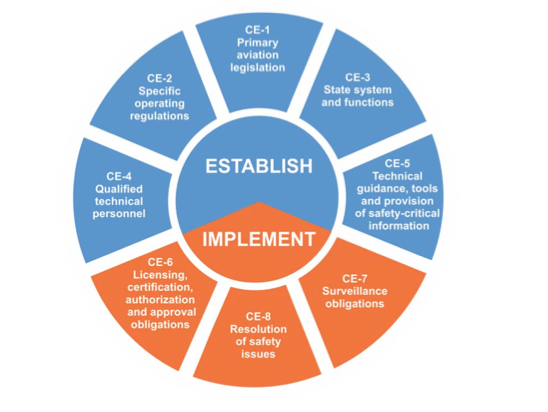
There are 8 elements that the FAA/ICAO reckon a decent aviation safety oversight authority should be doing well:

  • Legislation
  • Operating Regulations
  • The State civil aviation system and safety oversight functions
  • Technical personnel qualifications and training
  • Technical guidance, tools and provision of safety critical information
  • Licensing, certification, authorization and approval obligations
  • Surveillance obligations
  • Resolution of safety concerns

I feel like they combined a few there, and its actually more than 8. But there’s the list.

How do they do the assessment?

If you visit the IASA site, on the FAA main site, then you’ll find each of those areas has its own checklist. These are thorough, lengthy things. The Operating Regulations alone is 19 pages with a whole bunch of points to check off per page. Oddly, all that checking leads to only two possible outcomes.

A country either meets the standard or it doesn’t. There is Category 1, or there is Category 2, no in-between.

  • Category 1, Does Comply with ICAO Standards
  • Category 2, Does Not Comply with ICAO Standards

Basically, if one or more deficiencies are identified, it’s a Category 2 ranking, and Santa won’t be bringing you a present that year.

What does it mean to be on the naughty list?

Well, if you already have air carriers flying to the US then you can continue but they are going to monitor them pretty closely. If you don’t already have air carriers operating in and want to, then you’re going to have to improve before they give you permission.

But why should we all care?

After all, the oversight is to do with their air carriers and nothing more? Surely it just means their aircraft might be a risk coming into US airspace, or their pilots might not follow procedures properly?

Well, actually no. The problem is these air carriers share airspace with you. If their pilots are not licensed or trained correctly (think Pakistan’s recent problem) then this can degrade the safety for all aircraft operating in their vicinity.

If a state is failing to ensure minimum safety standards in areas such as the promulgation of safety critical information (notams), technical personnel qualifications (the maintenance folk who might be fixing your aircraft, or the CAA inspectors checking compliance) then this is something any international operators might want to be aware of as well because there are potential knock-on safety impacts for those heading into the country in question.

So does it tell me if another country is safe to fly to?

No. The FAA is not saying every country ranked 1 is safe, no issue, no problem.

It also isn’t telling you a country is unsafe to operate to if they don’t meet compliance standards. Remember, it is purely looking at the regulatory and safety oversight and asking if they ensure minimum ICAO standards. There are countries out there that pose significant threats (just not because of any deficiencies in the authority’s oversight).

It might also mean that the FAA have not ranked that country, because no-one from that country is flying or planning on flying to the US.

Remember, these rankings are looking at how a state ensures its air carriers are safe and compliant. It does not consider whether services or infrastructure within the state itself are safe or compliant.

How should operators and pilots use this list?

For operators and pilots, if a country is ranked Category 2, it means you might want to be doing your own risk assessment before heading in. No-one is saying that country isn’t going to be safe, but they are saying there are deficiencies with the authority, and since that authority looks after a lot, it is worth asking whether there might be other deficiencies as well.

You should be looking at the following:

  • What are the standards of the handling agents and maintenance services you are going to require there?
  • How reliable are Notams, and are they providing the information required?
  • What level of service and safety will ATC provide?
  • Will procedures and regulations be correctly adhered to there, and if not, what will this mean operationally for your flight safety?

You can get this info from sites like Safeairspace, Airport Spy, and through talking with colleagues who have operated into there before.

Who is on the Category 2 list?

So the big news this week is that Mexico were downgraded. Again, actually.

Along with Mexico the FAA also have the following countries ranked at Category 2:

  • Bangladesh
  • Curacao
  • Ghana
  • Malaysia
  • Eastern Caribbean States
  • Pakistan
  • Thailand
  • Venezuela

It changes though.

In 2014, the FAA downgraded India, citing inadequate oversight by local regulators, and in 2001 South Korea found themselves downgraded due to unskilled technical staff, pilot screening problems, issues with flight operations rules and a lack of objectivity in air crash investigations.

Both made it back on again relatively quickly.

Let’s take a closer look at Mexico…

The FAA have not yet given the reasons for their downgrade. However, Mexico was downgraded previously – back in 2010 – due to shortcomings in technical expertise, trained personnel, record-keeping and inspection procedures.

Actually, Mexico has a pretty decent infrastructure in terms of airports, although these do pose some operational challenges of their own (things like high terrain, high elevation). The CAA was actually “revamped” back in 2019. We put out this post about ramp checks.

Mexico’s political problems seem to be at the root of most issues here for the aviation industry. A project to build a new airport was recently cancelled (Texcoco airport was partially constructed already.) Now the government are instead looking to improve MMTO/Toluca and build new runways at an Air Force base near Mexico City. Plans are also under way for a third terminal at Mexico City Juarez, but given it is already congested and operating over its designed capacity, this might not be any solution.

Combined with Covid Pandemic problems, the latest downgrade will mean a big financial impact for various Mexican airlines now unable to access the major Mexico-USA market, and the knock on effect from this might be further felt in the aviation industry there as a whole.

The Big Taco-way?

If you are operating into an FAA IASA Category 2 ranked country, doing your own risk assessment on the standards and compliance you can expect to experience there might be worthwhile.


Brexit is here: What’s the impact to ops?

The UK officially left the EU on Jan 1st, 2021. Although it’s still a part of Europe (the continent), it’s no longer part of the European Union (the trade and political bit). Whereas before, the UK fell under EASA and all their rules and regulations, the UK CAA is now in charge of all things aviation in the UK…

So, what does that mean?

It means a raft of changes to the rules for operators flying between the UK and EU states. A new agreement has been drafted which applies from Jan 1. Here are the main changes:

  • Essentially UK operators will no longer be considered as EU carriers, and will instead be ‘third country’ carriers, meaning they will lose their special treatment. Flights between the UK and EU will continue, but passenger cabotage flights will no longer be allowed. Or in more human terms, UK operators will not be able to carry fare paying pax between two EU states (and vice versa). Cargo cabotage will still be okay as long as the two countries involved have an agreement.
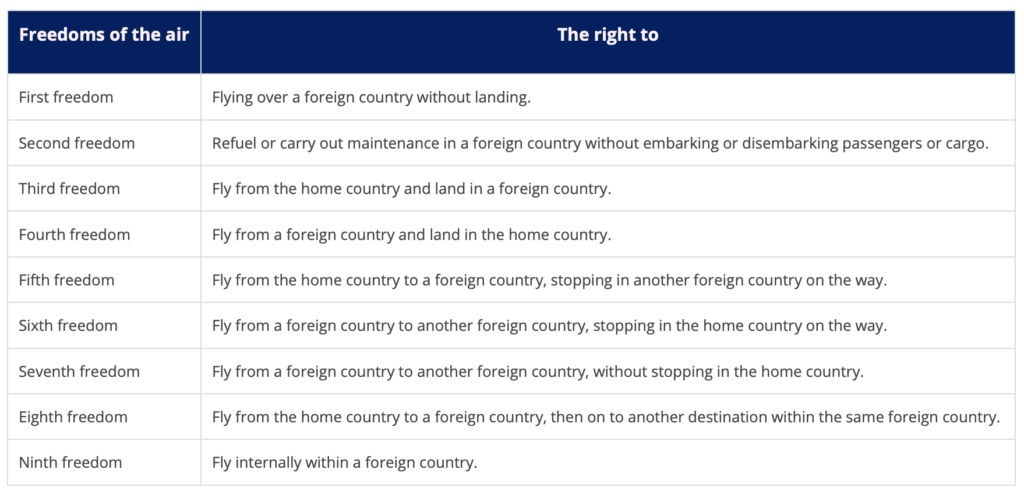
  • Both sides will still have the right to overfly each other’s territory, make technical stops, and to operate third- and fourth-freedom passenger and cargo flights between any point in the UK and any point in the EU. The fifth-freedom rights beyond the EU will continue, but only for a five-month period and with a new capacity cap.
  • UK and EU airlines can also continue codesharing, and UK airlines can continue providing wet-leasing operations.
  • There are other changes coming too, which EBAA cover here.

But what about laws, licences, rules and regulations?

All existing EASA certs, approvals and licences valid for UK registered aircraft will be good for another two years. For UK operators of EU-registered aircraft things are more complicated. The UK CAA have set up a useful website to help you get your head around what you need to do to stay compliant elsewhere in Europe, and it’s a great place to start. There is also a helpful flow chart to keep things simple.

With Brexit complete, the UK CAA is now in charge of setting the rules, but they’ve basically said that they’ll be sticking to pretty much all of the aviation law, rights and obligations that were in place before. You can read that statement, and a bit more, on the UK CAA’s main regulations site.

The heads-up for passengers

Things may get complicated. UK citizens will likely lose their special EU travel privileges which means it may become harder to move around Europe thanks to everyone’s favourite elephant in the room, Covid.

As a general rule, pax from the UK to Europe will need to make sure their passport has at least six months validity in it if they want to visit any EU country, Iceland, Liechtenstein, Norway or Switzerland. They will also need to check their health cover – the EHICs (European Health Insurance Cards) are still valid if issued before January 1.

If they are entering as a tourist, they can stay for 90 days – and they can do that twice a year. But if they are entering for business purposes, they might need a visa.

All of this is on the UK Gov website if you want to take a look.

The Question of Covid

Not being part of the EU anymore means that flights from the UK to the EU will no longer have the same Covid entry restrictions applied. “Luckily” no-one was really letting UK flights in anyway, what with their virus mutation running rampant, so right now, any change for flights originating in the UK (and passengers for that matter) is not really relevant.

The entry rules for UK nationals in the rest of Europe are changing fast, and every country is different but in most cases it will be harder for UK travellers to avoid Covid related rules for non-essential travel. Don’t know where to start? We don’t blame you. The best place is the UK FCO website which has the most up to date entry requirements for UK nationals for every country around the world.

CO2 much?

One extra little snippet of info to know about Brexit is that the amount of emissions small, non-commercial operators can produce as “improved”. If you already have an EU-ETS (emissions trading scheme) exemption then your allowance has now been doubled.

Instead of 1,000t CO2, you can now produce 2,000t CO2 – half in the EU and half in the UK. 

Don’t think you can get away with puffing about and no-one watching though. The UK are setting up their own scheme, and France will be monitoring the EU bit of it (apparently they won the task because UK operators tend to spend more time there than anywhere else in Europe).

If you are trying to work out what 1,000t of CO2 coming out your aircraft looks like, then there is a handy calculator you can use (but its roughly 103,400 gallons or 391,500 litres of JET A1 burned).

The news for N-reg’ers

Well, to be honest, not a lot at this point. The main thing to know is that the UK no longer falls under EU (EASA) rules and law, so if you have any problems you’ll now be dealing direct with the UK CAA… but currently their laws aren’t actually any different to what they were at the end of December.

If you are carrying passengers from Europe to the UK (or vice versa) then there will be different passport and entry procedures for them now.

That’s about it.

So, the really important bit… can you bring food?

Always one of the big questions for crew who want to stock up on all things delicious. Basically, no meat, milk, or dairy stuff into the EU from the UK. The UK is a bit more chilled, but you do need to declare things, and a suitcase filled with Camembert and wine probably won’t go down very well.

Of course, the real good news is all those juicy duty free goods which travellers between the UK and EU will now be able to buy!