Swerving off the road: Why are pilots avoiding EMAS?
Update November 2024:

Over two years have passed since we first published this article on EMAS.

A recent report identified that runway excursions are still one the leading causes of business aviation accidents in the US – which has put this valuable technology back on our radar.

It’s pleasing to see that the adoption of these life-saving blocks of crushable energy absorption has steadily continued to increase across the world including recent news that it is coming to Australasia for the first time.

The FAA now reports that EMAS is installed at 121 runway ends at seventy-one US airports and growing.

To date it has safely stopped twenty-two overrunning aircraft carrying 432 pax and crew – the latest, a Hawker 900XP at KTEX/Telluride back in July.

Outside of the US, a number of aviation authorities have introduced or are planning to install EMAS beds to current US FAA standards at airports in countries including the UK, Canada, France, Spain, China and Taiwan.
The adoption of EMAS at airports around the world is beginning to grow.

A first for Australasia

Two promising pieces of news recently emerged from down under in recent months.

New Zealand is installing EMAS at two of its most challenging airports characterized by windshear, short runways and RESAs geographically constrained to the minimum 90 meters (295’). Both receive high volumes of jet traffic.

NZQN/Queenstown is currently in the process of installing EMAS at both runway ends. Work is happening at night and is expected to be completed soon.

Just last week, NZWN/Wellington announced it would follow suit, with major runway safety upgrades. It hopes to have EMAS in action by the end of March.
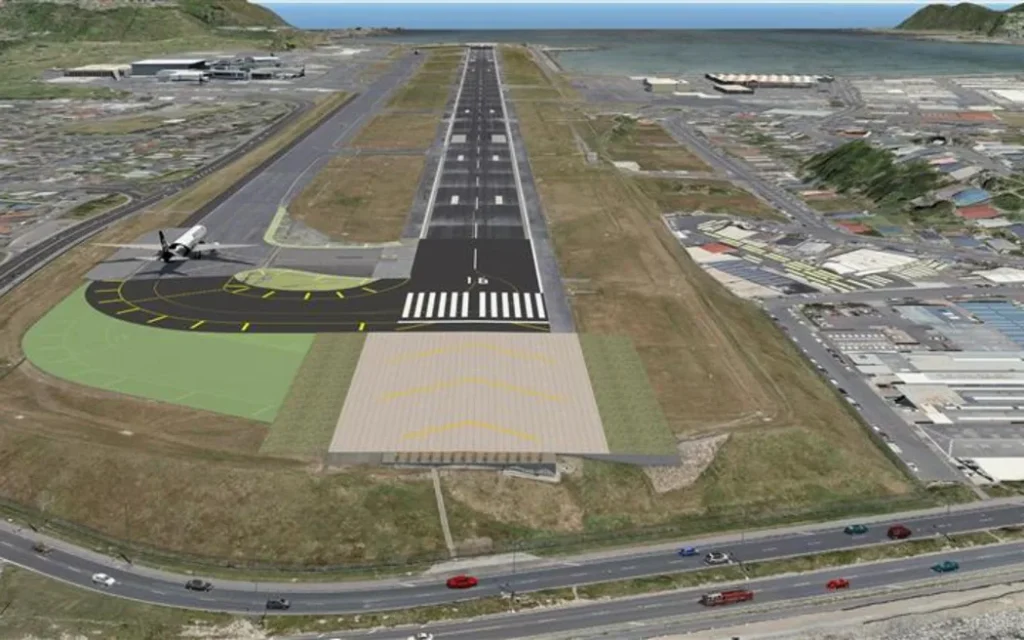
Wellington – one of two airports in airport soon to receive a EMAS arrestor beds.

A familiar problem remains

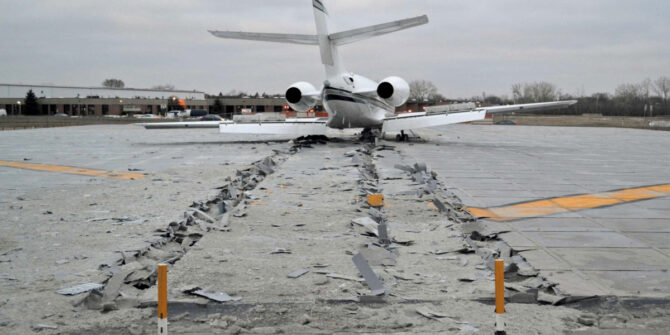
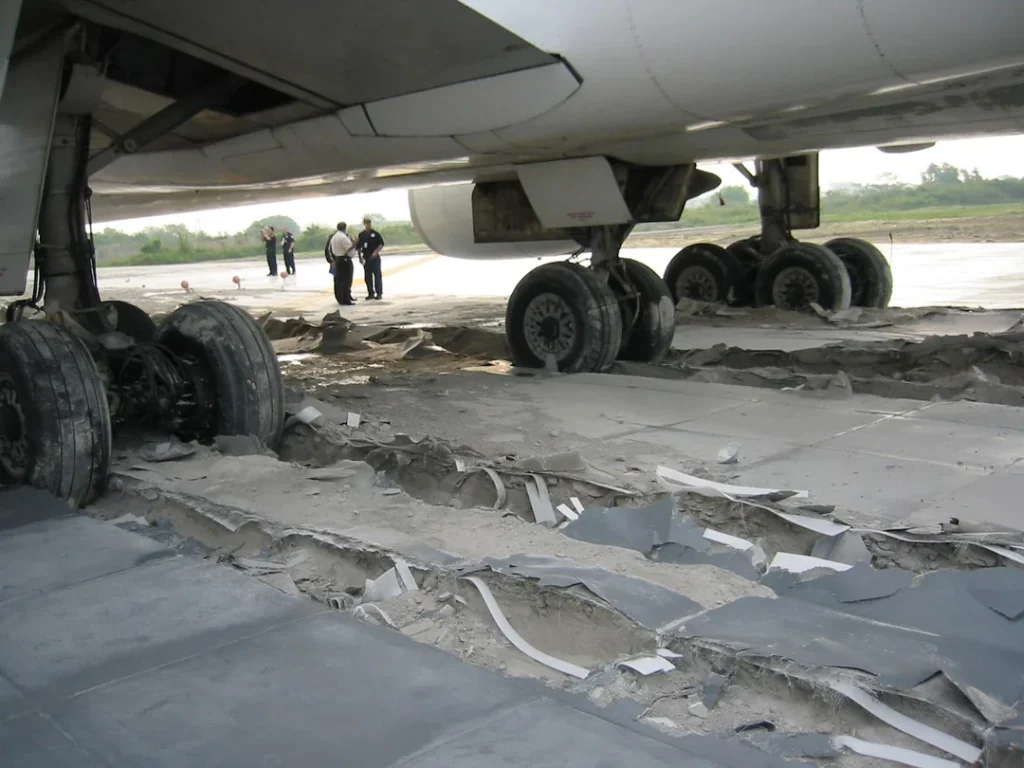
If there is any doubt as to the effectiveness of EMAS, consider this. A typical EMAS installation in a 90m (295’) RESA effectively increases its stopping power to the equivalent of 240m (787’) – that’s nearly three-fold.

And yet pilot awareness remains limited. There are no ICAO SARPs for EMAS. And the FAA’s guidance is limited – the only advice for an imminent EMAS encounter is to maintain the extended runway centreline. And once stopped, don’t try and taxi the aircraft.

The reality is that 90m from 70kts looks darn short – and vacant space on either side of the runway makes for an attractive option in the heat of the moment.

Pilots may simply not know it’s there (how often do we brief EMAS?) or act out of instinct. Which means incidents are still occurring where we’re swerving to avoid it.

More on that in our original article below.

Original Article:

Across the US alone, over one hundred runways at 71 airports have a safety critical system fitted to help prevent a major cause of aviation accidents – runway overruns.

It’s called EMAS, or ‘Engineered Materials Arresting System’, which is a technical of way of using drag to safely stop an airplane when all else fails. And better yet, it has your back in all runway conditions – water, snow, ice, you name it. It’s a proven life saver.

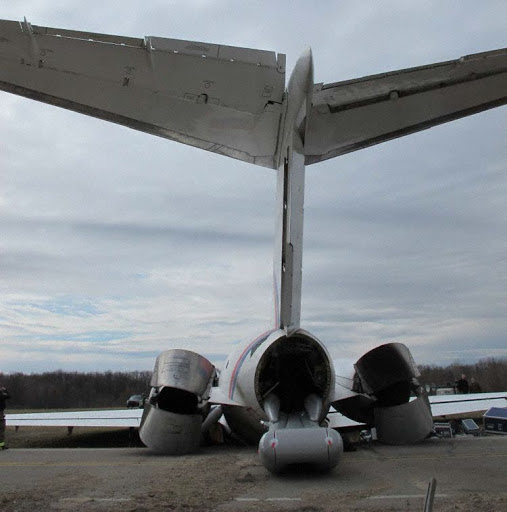
But the problem is there are still accidents happening where pilots have actively avoided it, instead choosing to veer off the runway.

Why?

IFALPA recently put out a new position paper which may provide some solid clues. And along with work that others have done, the reasons seem to fit into one of two camps:

  • Knowledge about what EMAS is and does.
  • In the heat of the moment, pilots just didn’t know it was there.

For such an effective safety system that protects crew, passengers and even those on the ground, is it possible that we’re just not giving it the attention it deserves?

Let’s tackle both camps.

EMAS 101

Dip into the regs and you’ll see that the US FAA requires all airports to have runway safety areas. They are typically 500 feet wide and extend 1000’ past the runway end, and are clear of obstacles in case an aircraft either overruns, or undershoots. Sounds safe, right?

But what if there isn’t enough space? Take KMDV/Chicago Midway for example. It’s not always practical. That’s where EMAS comes into it. It achieves a similar level of safety, only using a lot less room.
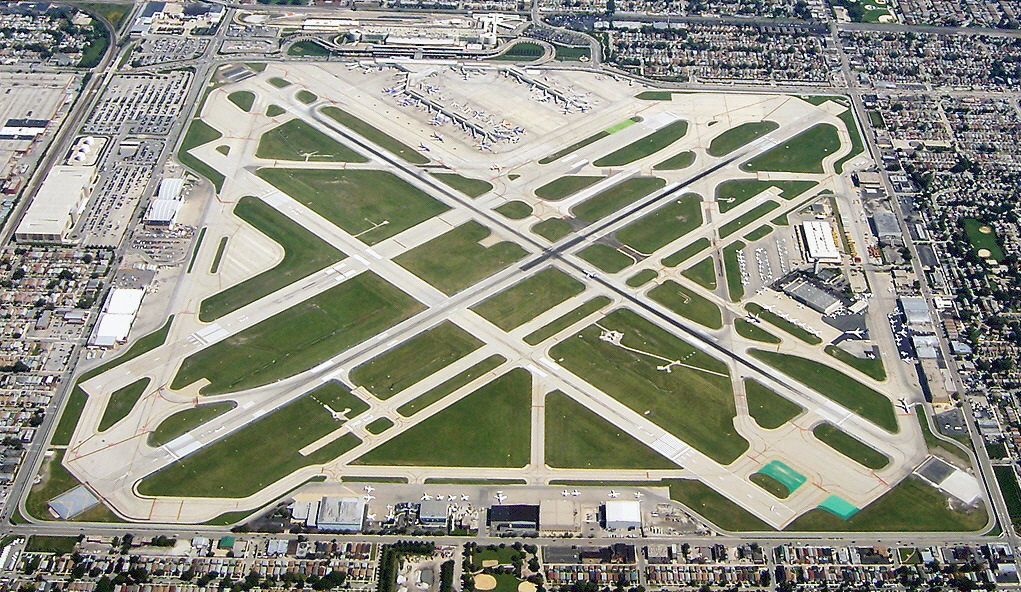
In a squeeze – Chicago Midway where EMAS is installed. Courtesy: Chris Bungo

It is essentially a concrete bed (or ‘arrestor pad’) of increasing depth which contains thousands of blocks of crushable material that are designed to quickly slow down an aircraft with little or no damage – likely your nose wheel, and that’s about it.

And it works really well too. In fact, it’s so effective it can stop an aircraft travelling as fast as 70kts – which is a good thing as 90% of all overruns happen below this speed.

It’s not even a big deal to replace it – it’s modular. Only the blocks that have been damaged need to be changed out.
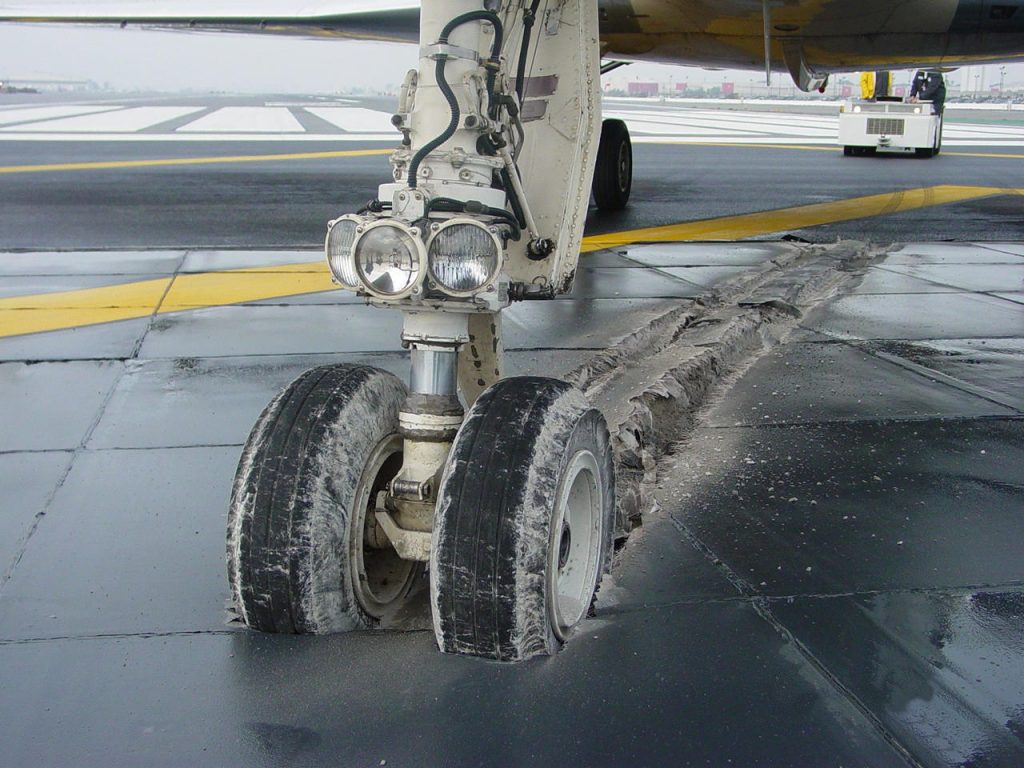
Grass and dirt

Some EMAS pads are only 150’ long. When faced with obstacles like trees, buildings, and roads it’s no wonder that the instinct is to avoid ploughing straight ahead.

Instead, the grass and dirt off the side of the runway begins to look like a very appealing option to slow an airplane down. And as the FAA itself once phrased it, ‘there’s a myth that if you take the dirt, you won’t be on the news…’

But the reality is that EMAS will do a far better job and with a safer outcome and less damage.

What about approach lights?

Lights on an EMAS arrestor pad are designed to break away and do very little damage to your ride.

You may not know it’s even there

This is where IFALPA get really stuck in. Some crew actively steered away from EMAS simply because they didn’t know, or forgot, that it was there.

Knowledge is one thing, but you can’t brief what you can’t see.

Yellow chevrons indicate an EMAS arrestor pad, but there is no standardised signage in place for it. Take a look a look again at the list of US airports with it installed – if you operate in and out of any of them, how often are you thinking about EMAS?
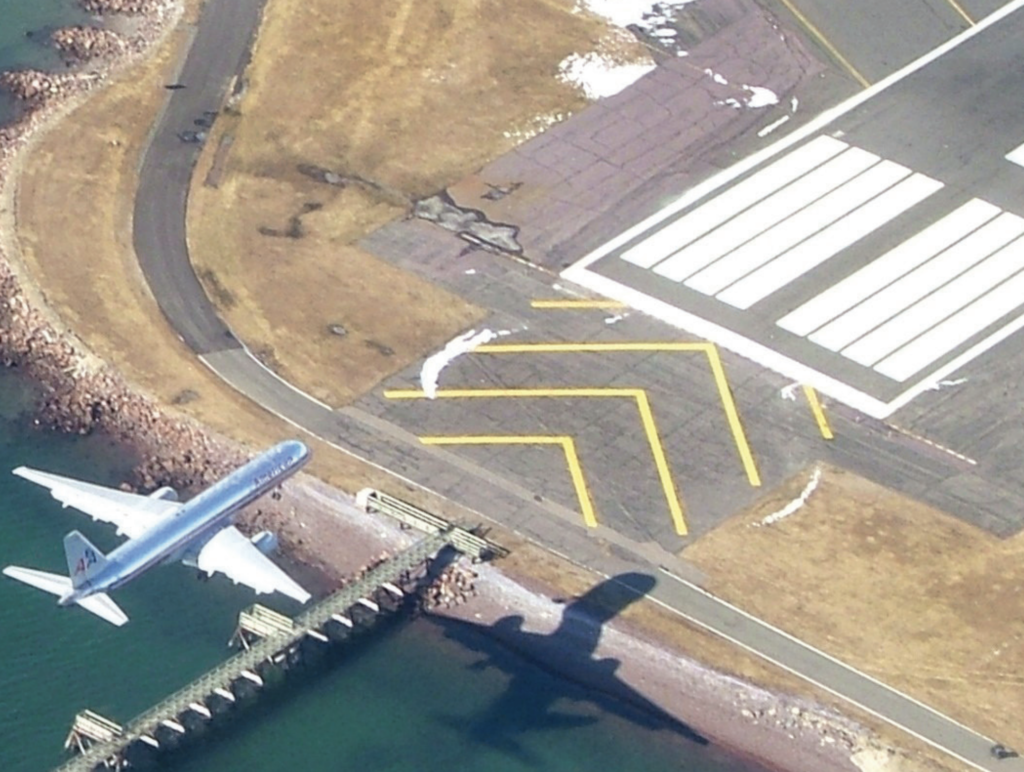
If you hadn’t briefed it, would you know it was there?

And the story doesn’t end with signage either. What about approach and airport charts? Leading chart manufacturers indicate where EMAS is present on ground charts only. But not on approach charts – the argument is that it won’t fit.
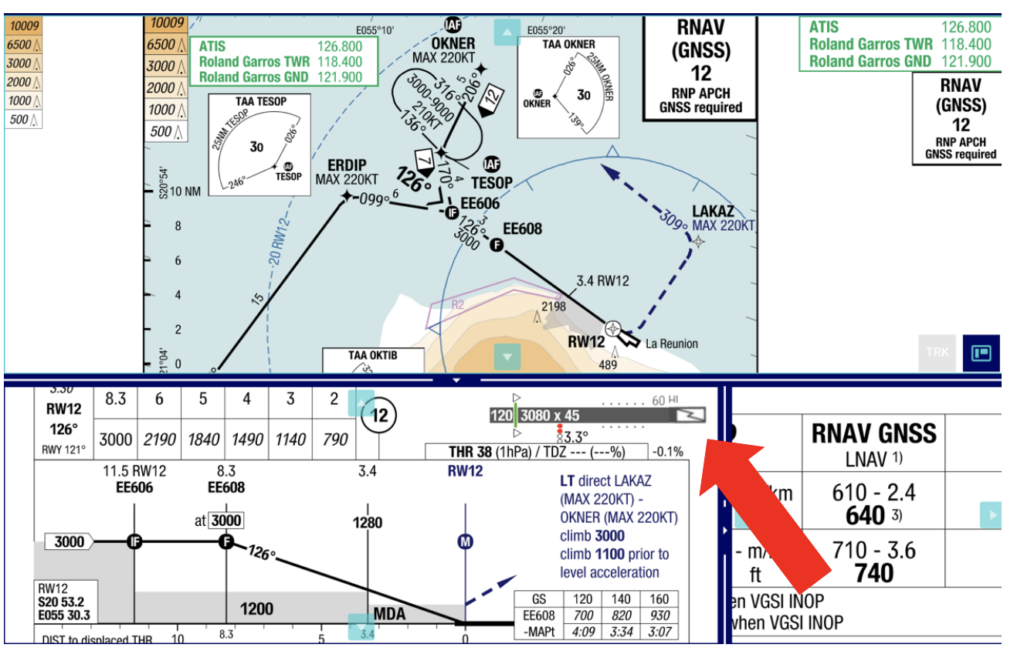
IFALPA has suggested how EMAS might be shown on an approach chart Couresty: IFALPA.

It seems as though the work hasn’t been finished just yet. EMAS is really effective, but as an aircraft departs the runway, there just isn’t enough time to figure out it’s there or not. And that all starts with crew awareness with the tools available when ops are normal.

Regulators in the US and abroad need to be doing more to illuminate this valuable piece of safety tech. At least five hundred lives have already likely been saved because of it.

Knowledge is power

Which is certainly the case with EMAS. Combine both camps, and pilots (myself included) can understand how valuable an obscure sign that says ‘EMAS’ may be, and also know when it is available before you need it the most.

Only then will it live up to its full potential.
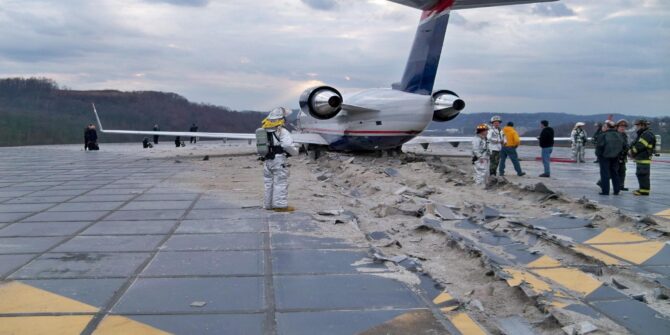

Go / No-Go: Why Are We Rejecting Above V1?

Rejected take-offs aren’t new

Every time we open up those thrust levers and accelerate down a runway there is a risk that something will go wrong and that we will need to stop again. Which is why we brief before every departure.

But they are also pretty rareOne study found that they happen on average once in every two thousand take-offs. For a long-haul pilot that’s about one every twenty-five years, and for short-haul folks once every four years. And of those RTOs, ninety percent happen below 100 kts. So when they happen at speed they are usually accompanied with a healthy serving of startle factor.

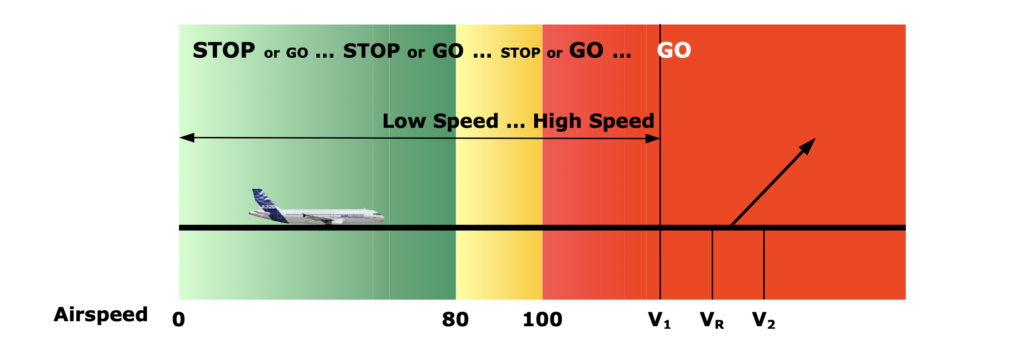
Common sense and physics tells us that the faster we go, the more dangerous it becomes to reject, rather than get airborne. Once we hit V1 we go, because there may not be enough of the hard stuff in front of us to stop anymore. The problem is that reports continue to tell us that avoidable accidents are happening because crew are still rejecting take-offs above V1. Which poses an important question: why?

There is no simple answer. But accident and incident reports may hold some clues…

The Real World is Different

The vast majority of high speed RTOs we practice in the sim are related to engine problems. Failures, flame-outs, bird ingestion, compressor stalls. Those sorts of fun things. They are generally easier to identify and illicit a strong and confident decision to reject the take-off.

But here’s the kicker: Most high speed RTO’s are not caused by engine problems.

In fact historically, less than quarter of them are. Which means when something unexpected happens that we haven’t seen before, the Go/No-Go Decision suddenly becomes a lot more difficult.

Here are some of the other leading causes:

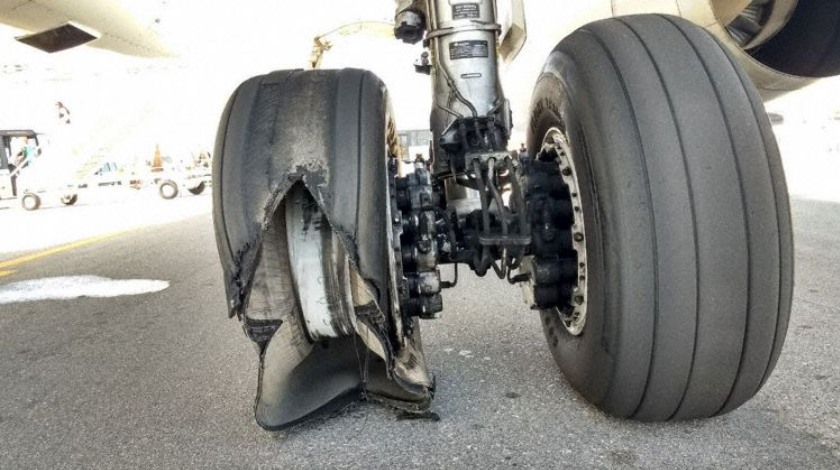
  • Wheel/tire failure
  • Config warning
  • Bird strike
  • ATC
  • Noise/vibration
  • Directional control issues
  • Crew coordination
  • Malfunction Indications

A lot can go wrong and the process of detecting, deciding and acting takes time. At high speeds close to V1 this is a problem. Here’s why…

V1 is not a Decision Speed

V1 has been redefined a number of times over the years and has ultimately ended up with the current FAA definition:

‘…..V1 means the maximum speed in the take-off at which the pilot must take the first action (e.g., apply brakes, reduce thrust, deploy speed brakes) to stop the airplane within the accelerate-stop distance. V1 also means the minimum speed in the take-off, following a failure of the critical engine at VEF, at which the pilot can continue the take-off and achieve the required height above the take-off surface within the take-off distance….’

I know what you’re thinking – that’s a lot of words. Which is why it is still casually referred to as ‘take off decision speed.’ It just rolls off the tongue better. But hidden amongst all those words is this key concept – by the time you reach V1, the decision must have already been made and the first action taken.

Here is an easier way to put it: V1 is the end of the go/no-go decision making process, not the beginning. 

It may seem like a technicality, but it’s not. It has been shown that with a balanced field length, if an RTO is initiated just two seconds after V1 an aircraft will exit the end of the runway at between 50 and 70kts. On average it takes pilots between 2-4 seconds to react. In other words, time is critical.

But there’s more to it than that. What does ‘unsafe to fly’ actually mean?

We know that the faster we’re going, the more dangerous it is to stop. Which is why we become ‘go-minded’ at higher speeds (usually above 80 or 100kts). It is in our efforts to embrace this go-mindedness that we have adopted the philosophy that there are four things that could trigger a high speed abort: engine failure, engine fire, windshear or an unsafe condition. Makes sense right? We brief them every sector.

But what constitutes an unsafe condition? Or in other words, what are the signs that an airplane is unable to fly?

Accident reports show that pilots are having difficulty recognising these conditions and that is leading them to stop above V1 when it would be safer to go. They often interpret anomalies (like a tire blow out) as events that threaten the safety of the flight and decide to reject at any speed. The overrun of a Learjet departing KCAE/Columbia Metro in 2008 serves as a tragic example.

In fact one study found that almost half of all high speed rejected take-offs were the wrong decision. That’s a startling statistic.

And to make matters worse, sometimes it is the right decision as the accident of an MD-83 in 2017 certainly proved.

The Decision Isn’t Easy

Go/No Go – if only it was as straight forward as it sounds. From a pilot’s perspective, it is difficult to make the right decision. Given any number of failures, the incredibly short timespan we have to make the decision and the lack of information at hand, it’s no wonder that that not all rejected take-offs go to plan.

But there is still room for improvement if we continue to train for them and brief them using lessons learned from accidents past.

The Joint Industry/FAA Takeoff Safety Training Aid was published in 1993 as a guide to pilots and operators on how reduce the number of RTO related accidents and improve the outcome of go/no-go decisions. We still widely use those same principles today. There were four key takeaways identified from accident reports which might prove as a decent starting point:

  • We must be prepared to make the decision before V1. 
  • We need to be able to differentiate between ‘safe to fly’ and not. 
  • Crew must be ready to act as a well co-ordinated team. 
  • We have to be well practiced and able to fly RTO procedures proficiently.

It may be unrealistic to think that we can get rid of RTO related accidents entirely. But with more training and a focus on what is going wrong out there we can certainly work toward keeping everyone safer on the roll.


Overrun, Forrest, Overrun!

Earlier this week the Accident and Investigation reports came out about two aircraft overruns, on the same runway, that occurred within two hours of each other.

So what was going on in UEEE/Yakutsk back in 2018?

Or rather, what was going off, and why?

A bunch of factors contributed to this double whammy of airplane excursions. First up, the runway at Yakutsk airport had been shortened for works. It was, in fact, 1,150m shorter – which is quite a significant amount.

There were some Notams published about this, (and pretty decent Notams at that)

A5991/20 said –
DAILY 0000-0800: RWY 23L AVBL FOR LDG ONLY. LDA 2248M. TKOF FM RWY 23L CARRIED OUT BY REQ DURING THIS PERIOD. 2. DAILY 0800-2359: RWY 23L AVBL FOR TKOF/LDG. DECLARED DIST: TORA 2248M, TODA 2398M, ASDA 2248M, LDA 2248

And then there was A3621/ 20 which said –
AD TEMPO UNAVAILABLE FOR ACFT OF FLW TYPES: IL-96-300, IL-96-400, IL-86, IL-62, A-310, A-330, TU-154, BOEING777, BOEING747, BOEING-767-400ER, MD-11F AND THEIR MODIFICATIONS.

What about the airplanes, I hear you ask. 

Well, the Sukhoi Superjet 100LR is not included on the list of “can’t land here” airplanes. However, the Notams should have at least given them pause for thought, especially since both of them had technical issues reducing their deceleration performance.

Number 1 “First to Overrun” was found to have significantly worn out tires (which should have been spotted during a walk around), while Number 2 “Also Skidding Through” had a thrust reverser out of action. No big deal, but factors to be considered in the context of the other conditions of the day.

Talking of those conditions – the ATIS was reporting a tailwind of 6kts which is not outside anyone’s limits, and of course 150% of any tailwind is taken into account for landing calculations.

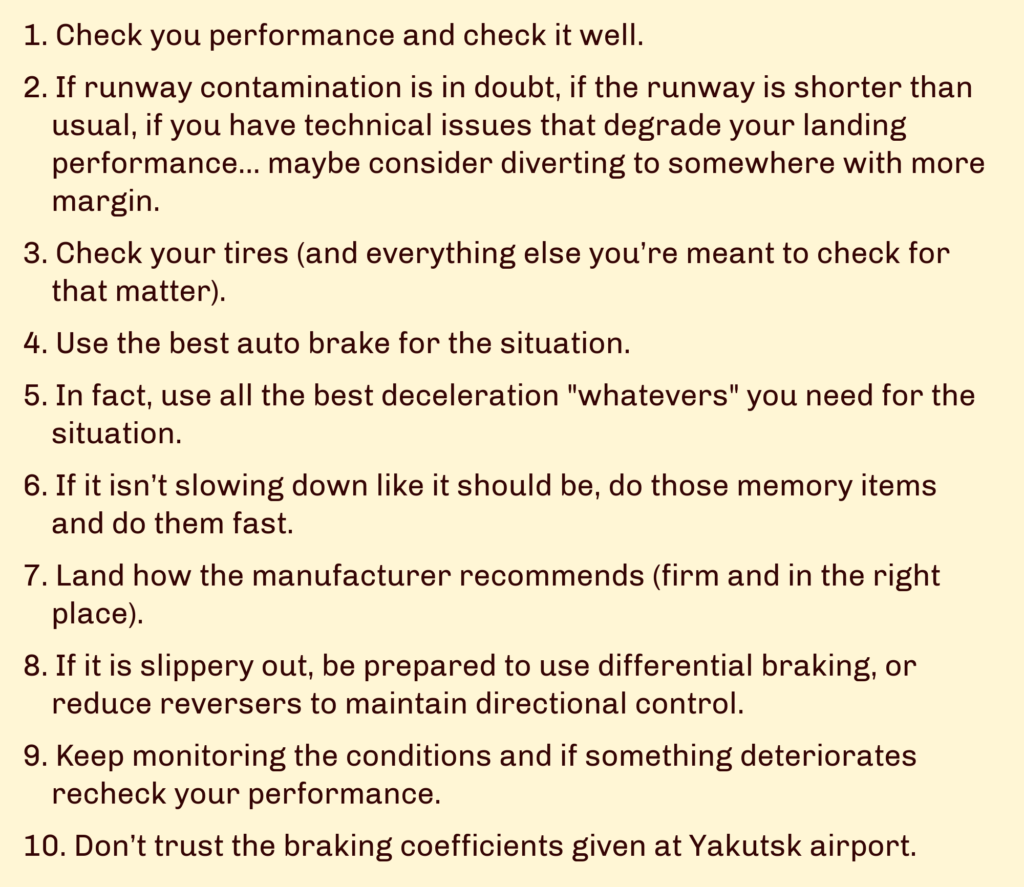
The braking co-efficient, however, was reported as 0.45
Now, ICAO and most national authorities have moved away from reporting measured friction because they decided that, really, it is a pretty useless thing to report. There is not actually any great way to work out how those contaminants on that day will result in whatever friction for whichever aircraft – because there is no way to correlate the measurements a ground measuring device can measure in a meaningful way to what an airplane will actually experience. In other words – it has limited practical use in actually characterizing the runway conditions for an aircraft operation.

To further add to its pointlessness, the 0.45 was not even accurate. The real coefficient measured that day was actually less than 0.3. 

As slippery as an oiled-up eel
Now, these pilots did do a landing performance calculation using what they thought were accurate figures. Even with their selection of only medium auto brake, and the mandatory 15% safety margin added in during in-flight performance calculations, the results looked ok and so they gave it a go.

However, had they known the coefficient was only 0.3 then they would hopefully have come up with landing results similar to those calculated during the subsequent investigation. These showed that a Superjet needs about 1,598m on a dry runway, 1,838m on a wet runway and a whopping 3,650m if the coefficient of friction is 0.3. Their 15% safety margin could not even cover the extra distance because of the poor braking action.

So, with one of the reversers out of action, a tailwind, an incorrectly reported friction co-efficient and only 2,248m available for stopping in, poor old airplane Number 2 never stood a chance of stopping in the space available.

What can we take away from this?

Runway Excursions are still in the top 3 most common bad stuff that happens to airplanes, and considering the vast majority are avoidable with a bit of planning, better procedures or common sense, this is fairly shocking.

So, what can pilots do to prevent overruns?

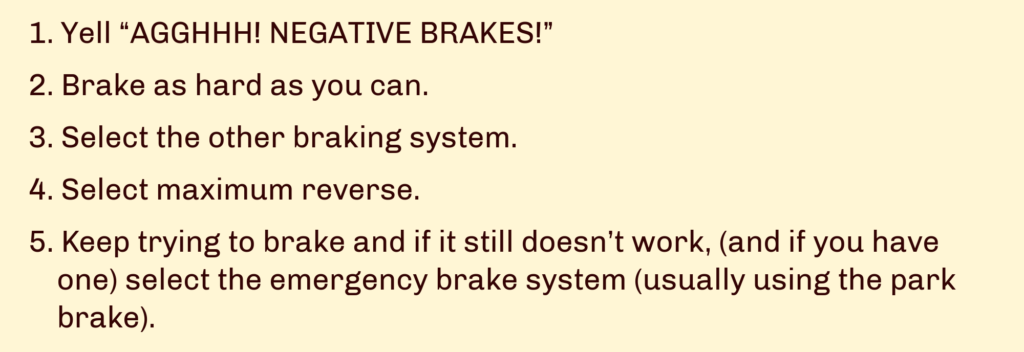
Braking, braking, broken…

Sometimes brakes do fail, or systems malfunction, and if that happens being ready with your memory items  is the best way to deal with this. They might vary slightly across different types, but the basic actions are probably something along the lines of – 

What are manufacturers doing to help stop overruns?
A lot of airplanes have some clever devices installed in them nowadays. 

Take Airbus for example. They have their ROW/ROP systems. The ROW bit (runway overrun warning) does useful things like monitoring the conditions in real time, and running speedy little calculations based on the known runway length and aircraft weight to make sure the aircraft is still stoppable in the distance available. If it isn’t, it will yell at the pilot.

The ROP bit (the protection that kicks in after landing) does something similar, and can automatically apply full whiplash effect with the brakes if it thinks you need it, as well as reminding you to “Set Max Reverse!”

Other aircraft have similar systems with warnings that trigger if an aircraft is too fast, or if the landing flare is too long, or the remaining amount of runway is too short…

What can authorities do to stop excursions?
Ensuring operators train crew and staff properly, and that information is distributed in the industry is important. 

Airlines and Operators should have in place technical and practical training for their crew to help them have a better awareness of the risks and factors that lead to overruns. Better monitoring of areas like unstabilised approaches which often precede overrun incidents, and contaminated runway and winter operations awareness, is also necessary.

Airports should makes sure Notams about works and changes to runway characteristics are up to date and correct. Giving correct information to pilots about the conditions on the day would also help…

In the US the FAA is advocating the use of  EMAS (engineered materials arresting systems) at airports within insufficient runoff space, and this has apparently prevented the severity of 15 aircraft overruns in the years they’ve been installed.


Further Reading

  • Opsgroup article: 5 Tips for Safter Winter Ops
  • Airbus “Safety First” magazine: new issues published every 6 months, a wealth of info about all things safety-related.
  • Useless fact: If you wanted to ski down a concrete slope using rubber skis, the coefficient of friction for rubber on concrete is 0.9 which means you would need a 42 degree slope to actually get moving.