2025 Update: BizAv Ops to Israel
Key Points
  • May 2025: Turkish airports have stopped supplying fuel to aircraft heading to Israel due to a trade embargo. BizAv flights will need to plan fuel stops enroute at one of Israel’s “approved airports.”
  • Jan 2025: Israel’s new Electronic Travel Authorization system (ETA-IL) is now mandatory for pax from all visa-exempt countries. Plus we have a new list of approved airports from which international flights are allowed to enter or overfly the LLLL/Tel Aviv FIR.
  • May 2024: Israel has tightened the rules for GA flights from the US, due to security concerns. Most flights will now need to either hire an approved security company to do screening in the US, or else make a stop en-route at an approved European airport.
  • Check below for a summary of how to get an Israel landing or overflight permit, and what to expect on how that process works.
May 2025: No fuel for Israel-bound flights in Turkey

We’ve had confirmation from a local handler that Turkish airports will no longer supply fuel to aircraft heading to Israel. This is part of a trade embargo Turkey imposed on Israel following the Gaza war, but it seems like only recently they’ve started applying the rule specifically to jet fuel for BizAv flights.

So if you’re flying to Israel and were planning to tech-stop in Turkey for fuel – that’s no longer an option. You’ll need to plan a fuel stop at another airport enroute, and make sure it’s on Israel’s list of “approved airports” for international departures (see list below).

Jan 2025: New ETA Rules

Effective 1 Jan 2025, Israel’s new Electronic Travel Authorization system (ETA-IL) is now mandatory for pax from all visa-exempt countries. The ETA will be valid for up to 2 years, and lets people stay for up to 90 days. Visitors from non-eligible countries still need to get a visa, just like before. Operating crew are exempt (official word here).

For a list of visa-exempt countries, check here. Visitors from non-eligible countries still need to get a visa, just like before.

Jan 2025: New list of approved airports for flights to Israel

Israel has published a revised list of approved airports from which international flights are allowed to enter or overfly the LLLL/Tel Aviv FIR. Download it here.

Several airports have been removed from the list: EBCI/Charleroi, GMMN/Casablanca, LEPA/Palma, LEMG/Malaga, and KIAD/Washington Dulles.

Russian airports UUBW/Zhukovsky and UUWW/Vnukovo have been added.

You can still apply to operate from airports that don’t appear on the list – but allow extra time for processing.

May 2024: GA flights from US to Israel – 3 Options

Effective May 2024, there are some new rules for GA flights from the US. These have come from ASOC (Aviation Security Operations Center), the authority responsible for the security procedures for the arrival of aircraft into and through Israeli airspace.

You can read the ASOC announcement on this here. If you want to fly from the US to Israel, you now have three options…

1. Hire an ASOC-approved security company in the US to do pre-departure security screening and fly direct. 

  • You basically pay one of two companies to send their staff to whichever US airport you want to depart from, and they will do your pre-departure security screening for you.
  • The two companies approved by ASOC are: Premier Corporate Security or Crisis 24. Contact deets for both can be found here.

2. Private flights can sign up to the Preferred Carrier/Aircraft Program and fly direct without any pre-departure screening.

  • Charter flights (Part 135) are not eligible for this – only Private flights (Part 91).
  • It’s quite a process – you have to pay for ASOC to come visit you, conduct interviews, train your crew, and the whole thing can take months. So this option is really only applicable to operators who do frequent flights to Israel or who have close ties to the country.
  • You can apply by emailing asoc-dvir@int.gov.il

3. Land at an approved European airport en-route for a security check before continuing to Israel.

  • Check this list of approved airports (published in Jan 2025). These are where you’re allowed to fly direct to Israel from. Ignore the US ones (KEWR and KJFK) as these no longer apply to GA flights.
  • For flights coming from the US, there are plenty of viable options to consider in northern Europe. (BIKF/Keflavik isn’t an option though – that got removed from the list back in 2023).
What do I need to do to fly to Israel?

So now we’re talking about permits i.e. the standard stuff that’s been around for a while.

It’s the same process for landings and overflights, except for the thing about a ‘local sponsor’ – you only need this for landing permits.

  1. You must be departing from one of the approved airports in the approved list. (For overflights, your destination airport doesn’t matter.)
  2. For landing permits: You need a ‘local sponsor’ – a contact person in Israel who can vouch for you. This person must be Israeli, and personally acquainted with all passengers – not just a travel agent or hotel representative. They will be contacted by the security services before any approval is given.
  3. For overflight permits: You don’t need a local sponsor.
  4. Your crew/pax/plane need to be from Israel-friendly countries: You must provide passport copies of the crew and passengers, who must be nationals of countries that have diplomatic relations with Israel. The same rule applies to the country your aircraft is registered in.
  5. Fill in the permit application form, and send it back to ASOC at asoc@int.gov.il.

The next step is where it can get a bit confusing. Get ready for some jargon. Check out the full guidance on ASOC’s website, but here’s the lowdown on how it works and what to do:

  1. ASOC will check your permit request, and if approved, will reply to you with a Pending Permission Notification.
  2. The Captain must then call or log in to the ASOC website to submit an Entry Code. The Pending Permission Notification then becomes a Final Security Arrival Permit.
  3. You’re good to go! On entering Israeli airspace, you’ve then got to follow the Arrival Identification Procedure. This bit is easier than it sounds – ATC will basically just ask for your Entry Code to approve you for entry. ASOC have published an example of how you can expect that conversation to go.

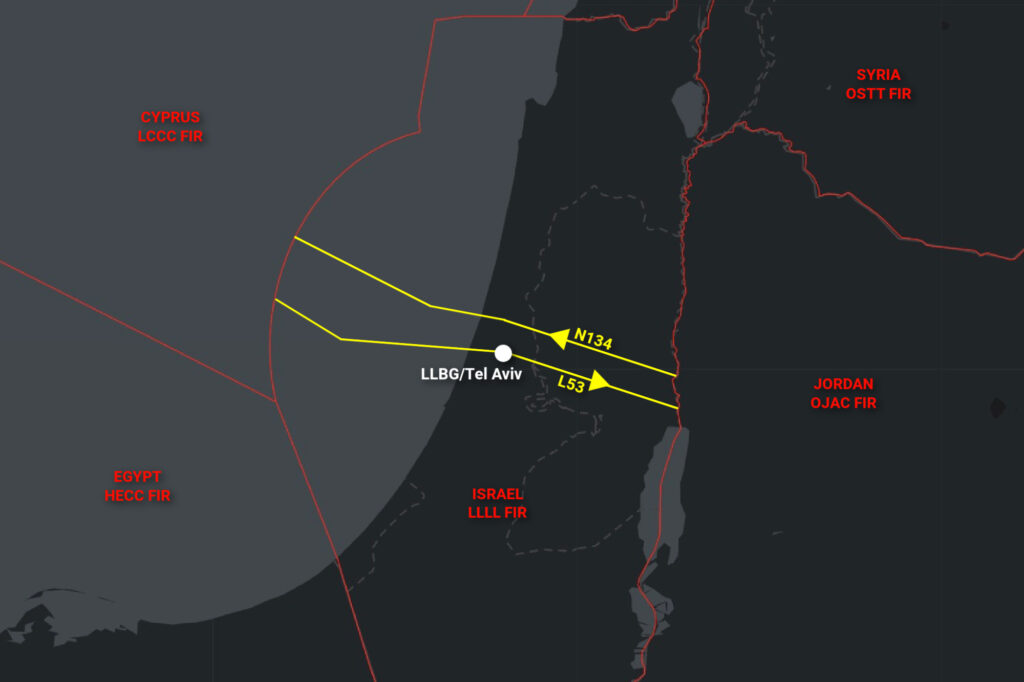
For overflights, there’s basically two options – N134 for westbound flights, and L53 for eastbound. Although check the Notams for the latest here, as they often only permit overflights at specific flight levels and times.
Security & Airspace Safety

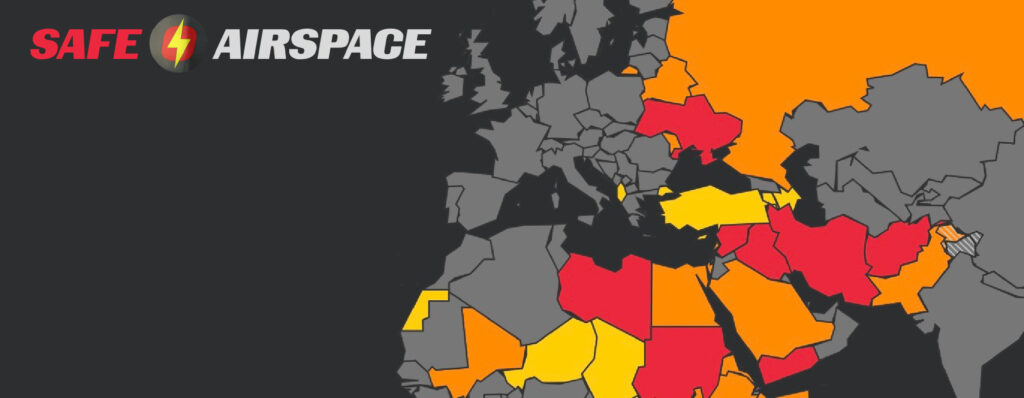
Ongoing GPS spoofing, sporadic attacks in the north from Lebanon, and the Gaza conflict create a hostile and non-routine environment. There remains significant risk within the Tel Aviv FIR from the ongoing conflict, and a day-to-day review of the current situation is essential prior to operating.

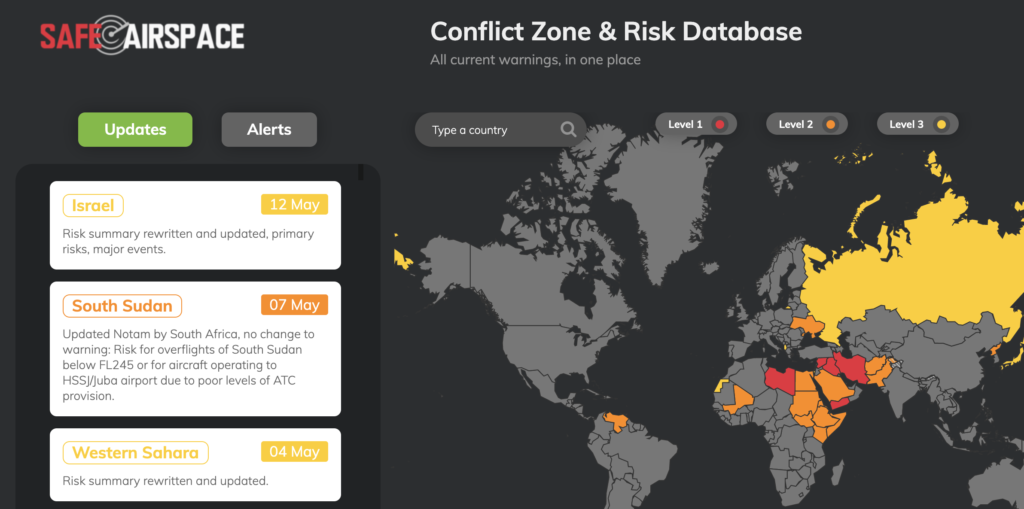
For more info, check safeairspace.net, which also includes a report about the recent Iranian drone/missile attacks on Israel that resulted in airspace closures across the region.
Most airlines stopped flying to Israel at the start of the conflict in Oct 2023, and many have been slow to return. To read OPSGROUP member reports on flights they have recently operated to LLBG/Tel Aviv, check Airport Spy.

For overflights in the region, almost none are going over Israel. Most operators are going via Egypt and Saudi Arabia – many are choosing to transit west of Cairo, fly south, avoid Sinai, and then continue eastbound over Saudi Arabia. The northern route via Turkey and Iraq is also an option, though warnings for Iraq remain below FL320.

Send us your reports!

If you’ve been to Israel recently (or anywhere else, for that matter) and can share some info on how it went, please file a quick Airport Spy report and we can update this article and share the info with everyone!

May 2021: Israel Airspace Risk

Update May 23, 2000z:

  • The ceasefire between Israel and Hamas in Gaza agreed on May 21 is continuing to hold.
  • Israel has now removed its Notam advising caution to operators in the LLLL/Tel Aviv FIR.

Update May 15, 1200z:

  • The Israeli CAA have now published a Notam advising caution in the LLLL/Tel Aviv FIR due to the ongoing conflict between Israel and Gaza. Operators can contact the Israel Airports Authority for operational info: contactus@iaa.gov.il.
  • Militants continue to launch rockets and drones at towns in central Israel, while the Israeli Defense Force continue to target locations in the Gaza.
  • LLBG/Tel Aviv airport will be closed all day tomorrow, May 16.
  • The US has updated its Travel Advisory for Israel, increasing the level of advice to “Level 3: Reconsider Travel”.

Story from May 12:

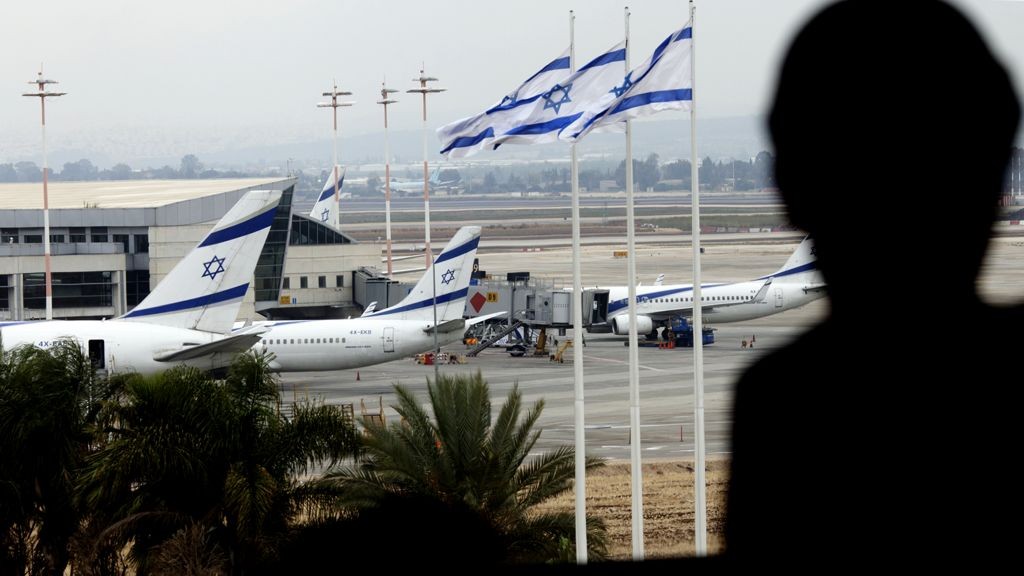
Flights at LLBG/Tel Aviv Airport were temporarily suspended on May 11, with some diverting to Greece and Cyprus, as the city was bombarded with multiple long range rockets launched by militant groups in Gaza. No damage has been reported at the airport, although some airlines have cancelled flights this week.

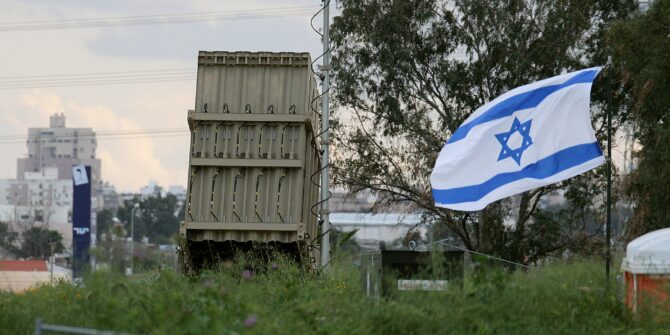
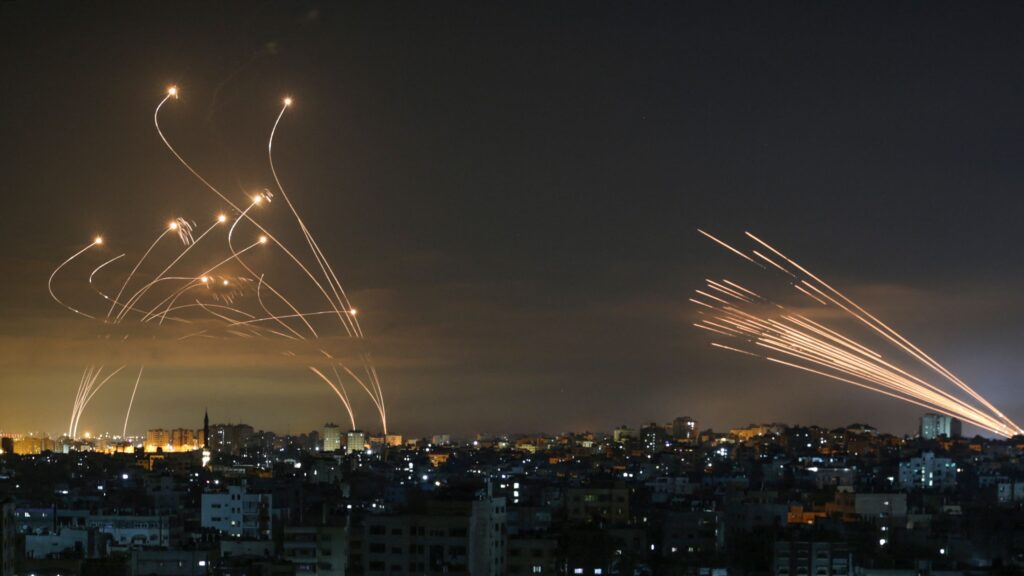
Israel has an Air Defense System – “Iron Dome” which protects populated areas of Tel Aviv from rocket attacks by launching interceptor missiles to ensure rockets detonate prior to reaching the ground, minimizing damage. However, the sheer number of rockets launched resulted in several impacting the city.
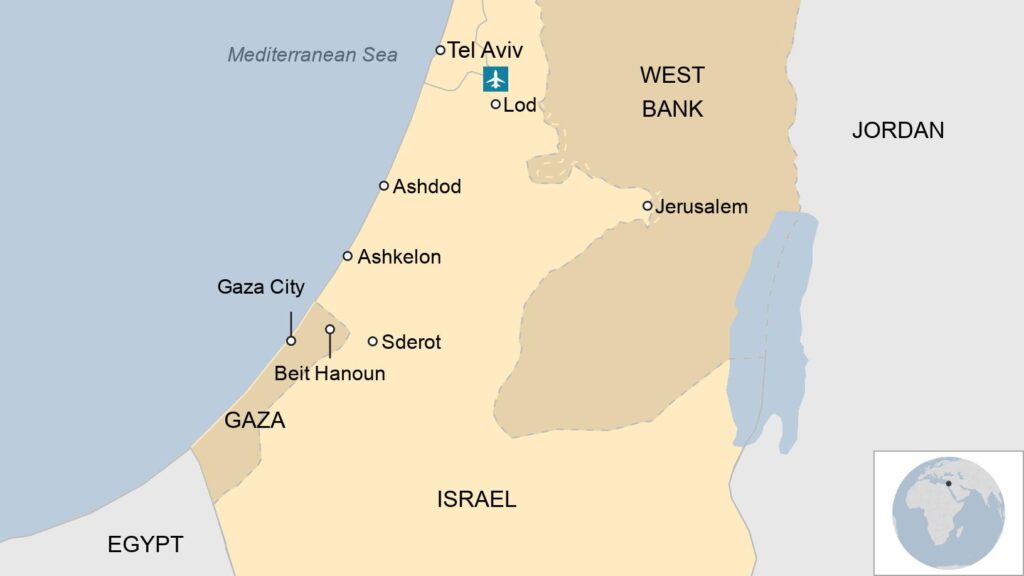
Sporadic rocket attacks in Southern Israel are not unusual but don’t often target Tel Aviv itself, and certainly not on this scale. One look at the footage of the attack and you will begin to see just how dangerous the skies of Israel became on Tuesday night.

The conflict has been escalating throughout the month of Ramadan, which coincides this year with the significant religious Jewish event Shavuot.

Earlier on Tuesday, a series of Israeli airstrikes in Gaza led to the collapse of a residential building and the reported deaths of several people. Militant groups in Gaza immediately retaliated by unleashing a large-scale rocket attack on Central Israel, forcing the temporary suspension of flights at LLBG/Tel Aviv Airport as air defence systems were activated around the country.

It marks a major escalation in the conflict which may present a new risk to aviation.

Are there new airspace warnings?

EASA have published a warning, available via the Eurocontrol homepage:

12/05/2021 16:15
Considering the heightened tensions in Israel, including exchange of rocket fire 
and retaliatory airstrikes, air carriers operating within Israeli airspace and 
to or from Ben Gurion International Airport (LLBG/TLV) in particular, should 
monitor closely these developments and adapt their operations according to 
Israeli Authorities aeronautical publications. Several NOTAMs are already in 
place for FIR Tel Aviv (LLLL) and its commercial aerodromes rerouting civilian 
aviation flight paths as necessary to ensure safety and security of the air 
operations. Due to the unstable regional situation, these publications may be 
more restrictive within short notice. The situation in the region remains a 
matter of high concern for commercial aviation – It is recommended to exercise 
caution by taking into account any relevant information, alongside available 
guidance or directions from your national authorities as appropriate.

So just a warning for now – no firm restrictions on flights. The most recent incident of major rocket fire from Gaza against Tel Aviv was in 2014 during the Gaza War. Back then, the US FAA responded quickly by imposing restrictions at LLBG/Tel Aviv airport for a two day period, and EASA advised that operators should suspend flights, which ultimately resulted in 30 airlines cancelling flights.

What are the risks?

There are parallels between the situation in Israel and similar rocket attacks carried out recently on Saudi Arabia’s major cities. Previously issued guidance on those and the threat which they pose to civil aircraft may also be relevant here.

The major risks identified from rocket attacks were:

  • Misidentification or miscalculation by air defence systems.
  • Falling debris from air defence activities.
  • Ballistic impact while on the ground.
  • Short notice airspace closures.

Where to from here?

We’re likely to see further rocket attacks on Israel and Israeli air strikes on Gaza. From an operator’s perspective, perhaps the most significant development here stems from the fact that militant groups are now showing renewed ability and intent to mount major aerial attacks on Tel Aviv.

Keep an eye on the SafeAirspace.net page for Israel where we will report changes as they happen, and continue to monitor the situation if planning to operate within the LLLL/Tel Aviv FIR – the events of this week have shown us just how quickly quiet skies can become active conflict zones.


Why are we still flying airline passengers over war zones?

Here’s the level of inconsistency we’ve reached in international air transport: we take each passenger, scrutinize their booking, check the no-fly-list, watch them on CCTV, pull them apart at TSA, remove anything sharper than a pen, question them, x-ray the bags, run Explosive Trace Detection tests, screen the hold baggage, background check every member of the crew, and then, once they’ve all boarded, fly this ultra-secure airplane straight into a war zone.

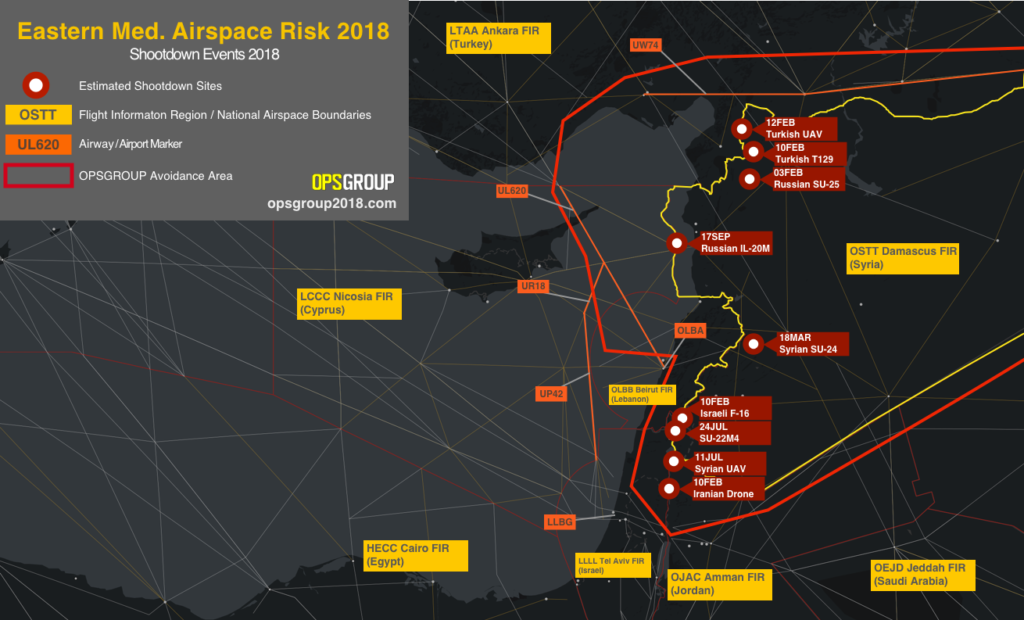
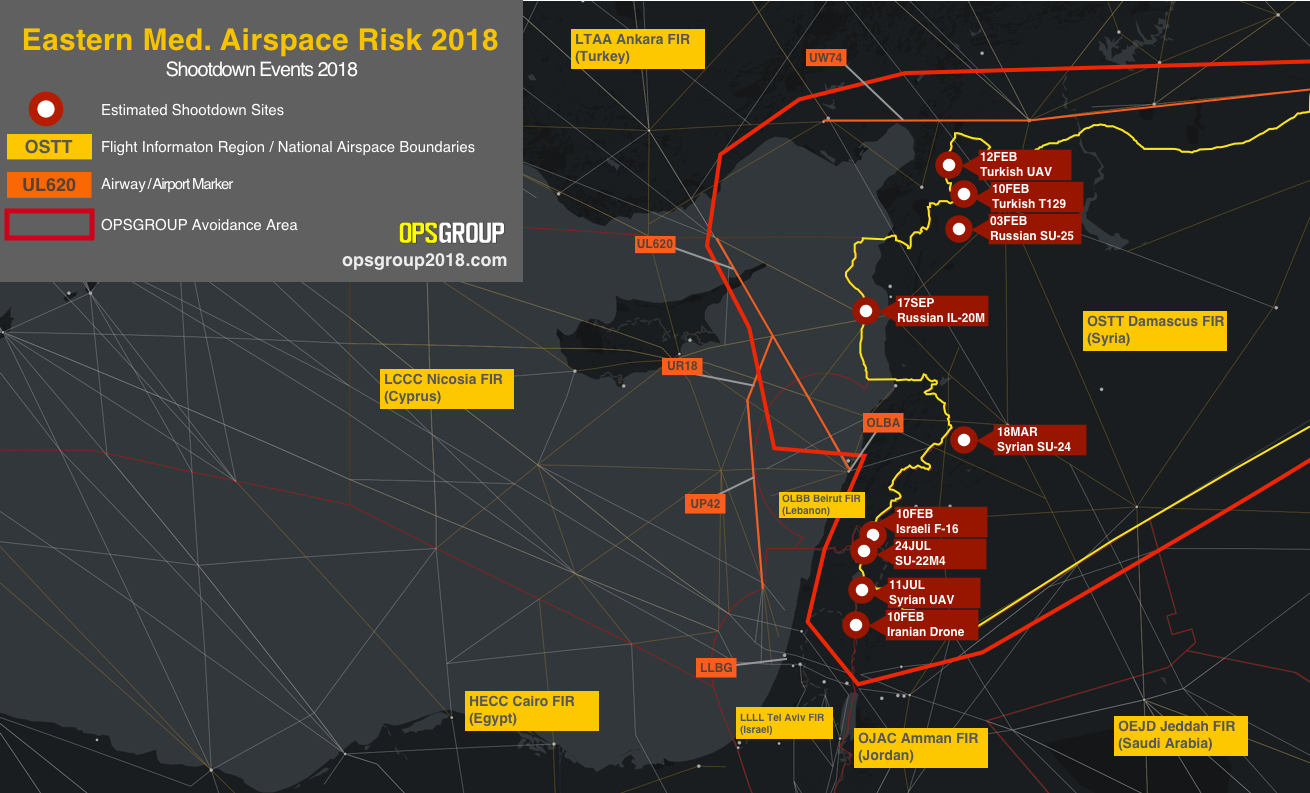
Welcome to the Eastern Mediterranean. It’s an active conflict zone. The Russian naval build up there this month is the largest since Moscow’s intervention in Syria began in 2015. Over Syria, 9 aircraft have been shot down this year.

The most recent was on Monday night this week, when Syria came under attack from Israel fighter jets, and started firing indiscriminately at anything off the coast that looked like a threat. They wanted to shoot something down, and they did — except it was a friend, not foe. They took out a Russian Ilyushin IL-20M transport category airplane. Even on the worst radar, that doesn’t look anything like an Israeli F-16.

50 miles away from where the Russian aircraft plunged into the sea on Monday night is the international airway UL620, busy with all the big name airline traffic heading for Beirut and Tel Aviv. If Syria can mistakenly shoot down a Russian ally aircraft, they can also take out your A320 as you cruise past.

And yet, most airlines continue to operate. Are we really so comfortable with operating in conflict zones again?

The lessons of MH17 seem to be fading fast. It’s a little over four years since 298 people lost their lives over Ukraine one summer afternoon, thanks to an errant missile fired during a civil war at an aircraft that they thought was a military threat. “Why were they over a war zone”, everyone cried afterwards.

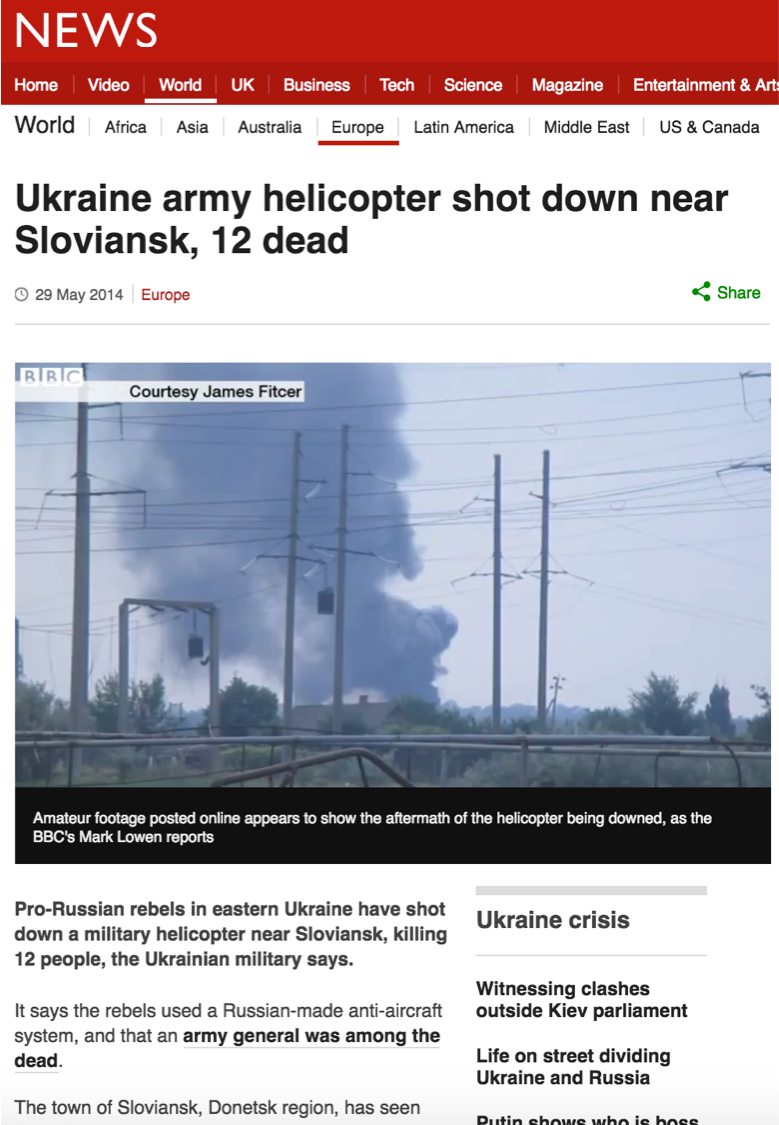
Well, we all were. Me too. I was a pilot for Austrian Airlines at the time. I recall one morning in Vienna, some months before MH17. Boarding the last of the passengers, my BBC news app flashed up a story about a helicopter being shot down in eastern Ukraine .

As we were headed east, with my colleague in the cockpit, we quickly plotted the position on our enroute chart, and noted that it was really close to our route. Maybe 30 miles north. “We might see something interesting!”, we said, and pushed back. We didn’t, nor did we think much more about it.

Do you see the thought process though? Before MH17, we didn’t consider the risks to our aircraft from war zones. Especially being so high. Helicopters might be getting shot down, but we’re at 35,000 feet. No problem.

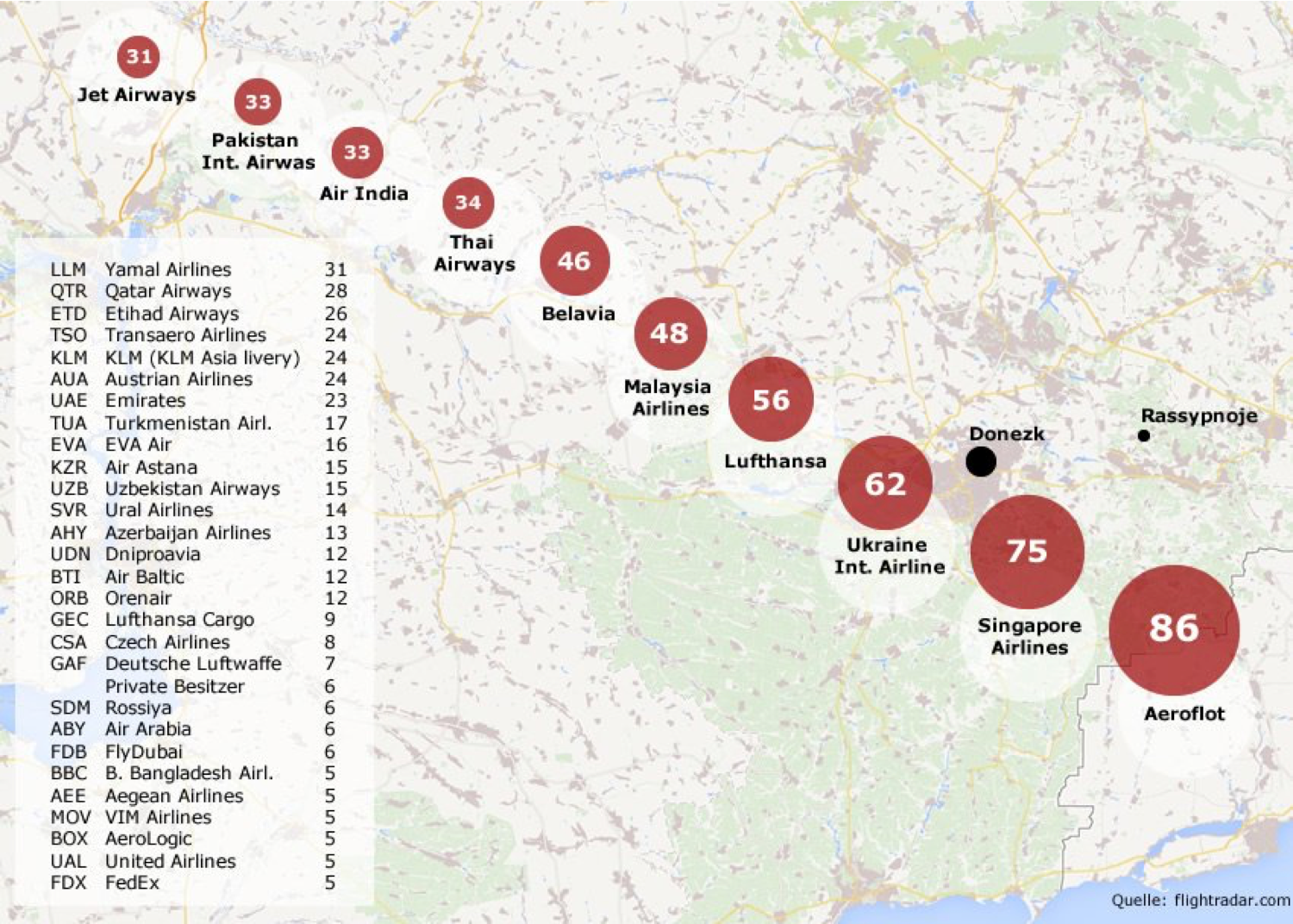
This is why all of these airlines — mine, at the time, included — operated on the route.


Image: Der Spiegel

And then it happened, and none of us could quite believe it.

But we learned. “Conflict Zone” became a buzzword. We had task forces and committees, whitepapers and promises, and — myself included — talked at length about how this happened, why, and how to avoid it in the future.

And yet, here we are flying unsuspecting passengers along the Syrian border. If you’re unsuspecting enough, and buy a SkyTeam codeshare ticket — you’ll actually overfly Syria on the Honey Badger airline of the region, Middle East Airlines.

Here we are flying passengers in the Eastern Mediterranean war zone. Why is this happening?

My guess: because we don’t think anything bad is going to happen, because the airspace boundary lines on the charts make that little bit of sea near Cyprus feel different from that little bit of sea near Syria, but mainly because there is no clear guidance from Aviation Authorities.

Let’s start with Cyprus. The Nicosia FIR has a big chunk of unsafe airspace. The Russian aircraft on Monday was shot down on the Nicosia FIR boundary. What do the Notams say? Take a look. There are 97 of them. Mostly about fireworks at local hotels. Critical stuff indeed. Then there are 20 or 30 about “Russian naval exercises”. A clue, perhaps, but where is the black and white “An Aircraft was Shot Down on our Border on Monday?” . Or, since we are still using teletype to communicate Notams to crews, “AN AIRCRAFT WAS SHOT DOWN ON OUR BORDER ON MONDAY”. Wait, we have to abbreviate that, and use codes, for some reason. “ACFT SHOT DOWN ON FIR BDY 17SEP”. That’s better.

What about Turkey? Anything on the Eastern Mediterranean risk? Let’s have a look. Nope, just 132 Bullshit Notams, and something about an AWACS aircraft. See you back here in 30 minutes when you’ve read them all.

Remember, I’m being a pilot, an airline, a dispatcher, trying to find information on the Risk in the Eastern Mediterranean. And this is how hard it is.

EASA (European Aviation Safety Agency), how are you doing? Let’s start here, at the “Information on Conflict Zones”. Paragraph 2 tells us that ICAO have a Central Repository on Conflict Zones, launched in 2015.

No, they don’t. That died — quite a long time ago. This is where it used to live. So, there is no ICAO Central Repository on Conflict Zones. There is a new ICAO document with guidance on managing Conflict Zone risk (and it’s a bloody good one, too) — but where is the picture of current risk?

Let’s plough on through the EASA site. Aha! Seems we have a Conflict Zone alerting system, and Conflict Zone bulletins. Here they all are: https://ad.easa.europa.eu/czib-docs/page-1

The last one on Syria was issued on April 17th. But it seems to be just a list of Notams issued by other states. And these are out of date. The German Notam has expired, the French AIC has been replaced.

And there’s no guidance. No Map. No routes to avoid. Nothing about Cyprus, or Beirut. No mention of the Russian shootdown. No mention of the 9 aircraft shot down this year.

How am I supposed to know, as an operator, or pilot, what the risks are and where to avoid. We’re getting closer to the point here. You’re not supposed to rely on the Aviation Authority. That is their message. You must conduct your own risk assessment. You must research and find out about the risks yourself.

You are on your own.

If you’re a big airline, that’s probably fine. You’ll make your own decisions about where to fly, anyhow. But what about everybody else?

While OpsGroup works hard to get information out to our members — and we spend a lot of time researching risk — I would greatly prefer that we didn’t have to.

Aviation Authorities must issue better guidance for the aircraft entering their areas.

Let me remind you. Airlines are operating 50 miles from a position where an airplane was shot down at night, by a missile type that’s already taken out a passenger airliner by mistake, fired by a beleaguered Syrian defence post, at a friendly aircraft that they did not take time to identify.

And the guidance to operators from Authorities: NIL.


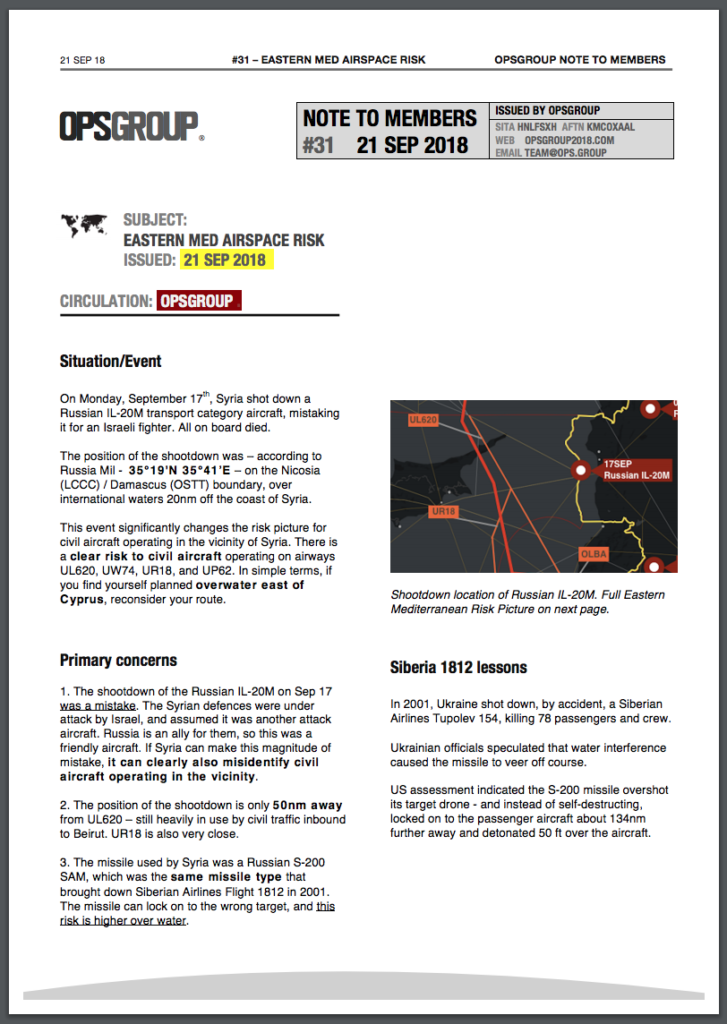
Opsgroup has now published Note 31: Airspace Risk in the Eastern Mediterranean. There is a clear risk to civil aircraft operating on airways UL620, UW74, UR18, and UP62. In simple terms, if you find yourself planned overwater east of Cyprus, reconsider your route.

Further reading:


Feb 2018: Tel Aviv Airport closes as a precaution against attack

LLBG/Tel-aviv: Israel’s main airport briefly suspended operations on Feb 10, due to military clashes along the northern border with Syria.

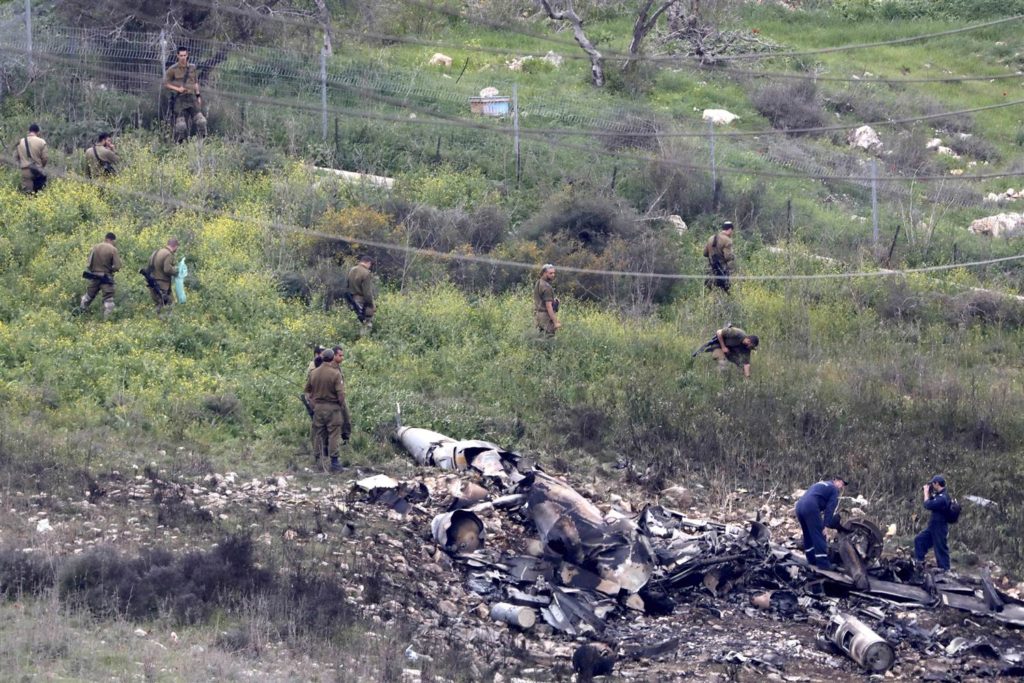
Two Israeli pilots were forced to abandon their F-16 jet, which crashed near the border after being hit by a Syrian anti-aircraft missile. The jet was on a mission in which it struck an Iranian facility in Syria that had previously operated a drone which Israel shot down over its territory.

This resulted in all flights from LLBG/Tel-aviv Airport being grounded for around an hour starting at 9am local time, as a precaution against any further attacks. The airport is considered a strategic location that could be targeted during military conflict.

Here’s what Israel’s PM had to say about it:

This incident marks the most significant engagement by Israel in the fighting that has been taking place in neighbouring Syria since 2011. Israel has mostly stayed out of the conflict so far, but has recently become more concerned about the increased Iranian presence along its border.


Strike cancelled at Tel Aviv Airport

Update 1800z Nov 30: A strike by airport workers at LLBG/Tel Aviv which was originally planned for this weekend has now been cancelled.

The Airports Authority says the strike was canceled after the government intervened and were able to reach a deal with the workers’ union to delay any strike action this weekend.

We’ll keep this page updated with any more news as we get it.


Israel moves closer to Eurocontrol

Israel has signed an agreement with Eurocontrol to work more closely together in flight planning.

Air traffic between Israel and Europe has been growing at over 9% a year for the past three years. This growth poses ongoing challenges to international civil aviation and underlines the need to improve ties between regions in order to ensure flight efficiency and safety in airspace and airports that are growing more crowded every year.

Israel is now the second country to sign the “Eurocontrol Comprehensive Agreement”.

What does this mean for operators?

The existing process is complex and multi-step: flights that transit Europe from Israel require filing at least 3 hours in advance to the Tel Aviv Coordination Centre, who then liaise with Eurocontrol to verify that the routing is RAD compliant. Changes are often then made by Eurocontrol and back down the line to the operator.

The implementation date is to be confirmed, but FPL filing out of Israel will now be the same as for any other European country, with immediate ACK from Eurocontrol.

Other benefits of this agreement are improved crisis management, more efficient traffic flows between Israel and Europe, more predictable day to day operations, improved safety and possibly airspace redesign and management.