(No More) Danger in Denver

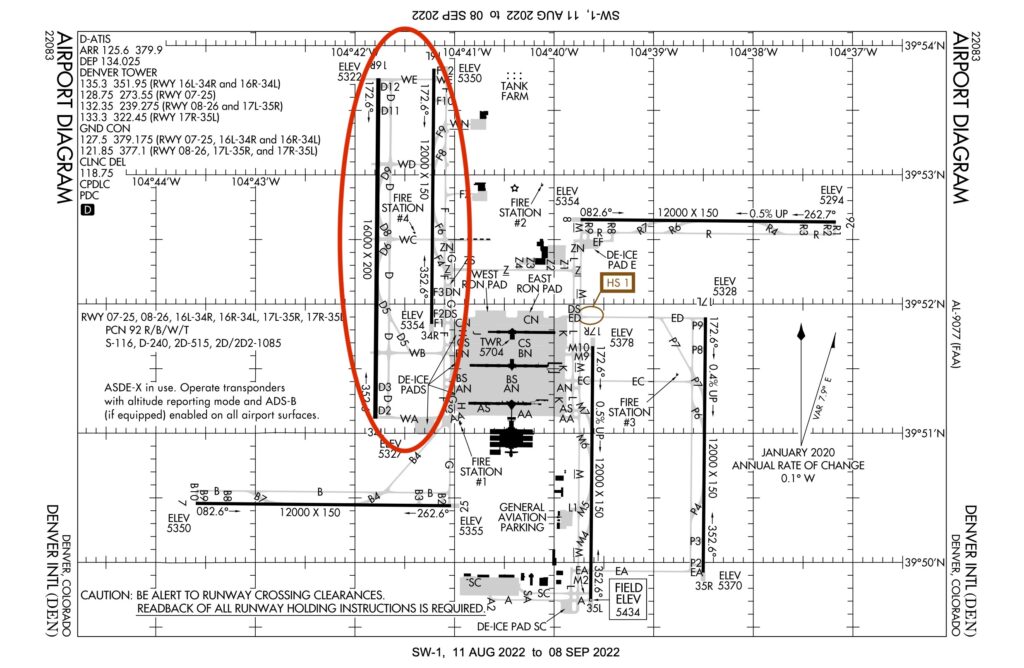
Back in 2022, the FAA issued a Safety Alert (SAFO) for KDEN/Denver, after a high number of TCAS RA events were recorded between aircraft landing on the parallel runways (16L/16R).
This was compounded by a number of factors:
- High elevation
- Reduced separation
- Controller workload
- Possible complacency caused by regular nuisance TAs.
It was a moody brew leading to the FAA becoming concerned about potential for a midair collision. If you’re like to know more, here’s an article we wrote at the time.
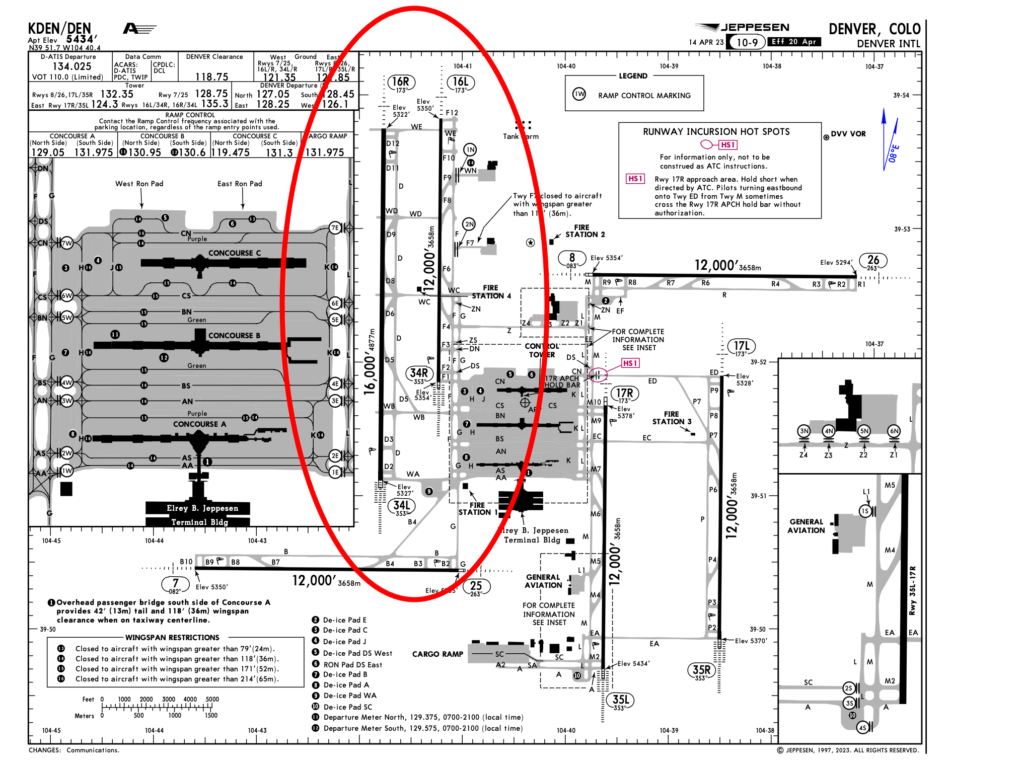
The trouble runways.
The good news is that last month, new approaches were introduced to alleviate the risk. Here’s an update on what has changed.
Offset Approaches
On November 30, Runway 16R received two new approaches (offset by 3 degrees) – the RNAV (Y) and RNP (Z).
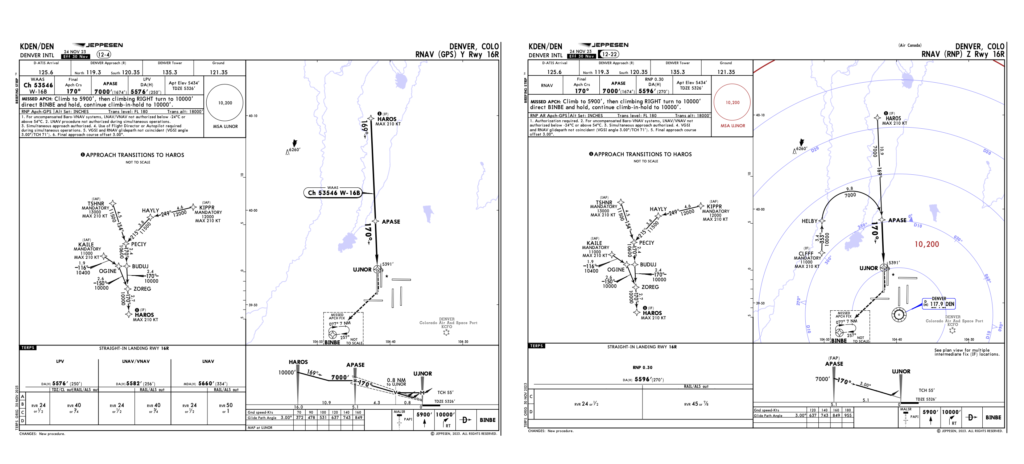
The two new offset approaches to Runway 16R
It was previously determined that 3-degrees would be enough to mitigate nuisance TCAS activations and allow operators to continue using full TA/RA mode throughout their approach and landing.
Along with these offset approaches, the FAA has published new procedures for their use found in this Information Note for Operators.
The procedures will be in use anytime Runways 16L and R are operating simultaneously, and visual approaches are in use on at least one of the runways.
New Procedures
Listen out for the following phrase on the ATIS:
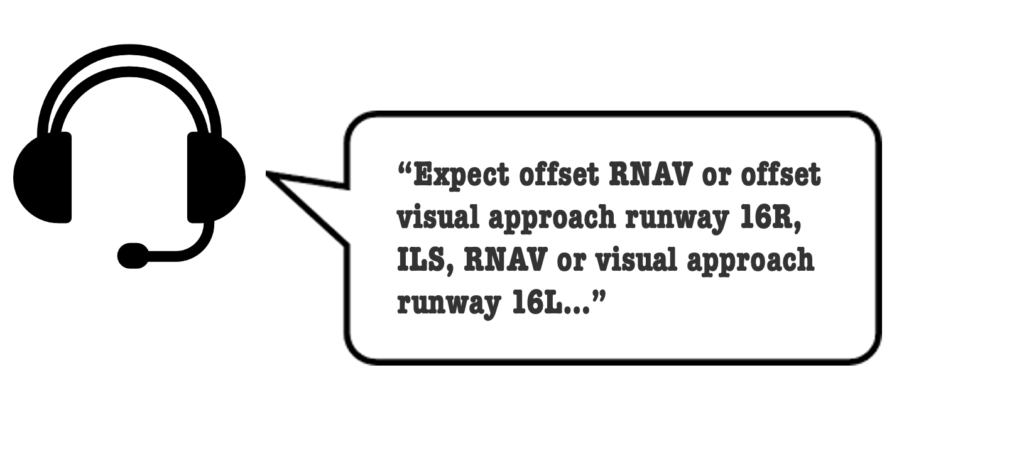
If you’re landing on 16R, there are effectively now two scenarios:
Instrument Approach – Follow the RNAV (Y) or RNP (Z) charted procedure. Easy.
or
Visual Approach – Here’s where things get a little more complicated. Even though the FAA regs say that an aircraft on a visual approach does not need to follow a specific track or vertical profile, in the case of KDEN, the FAA strongly suggests you do.
Aside from assuring you stay inside Class B airspace, it will also mitigate nuisance TCAS RA’s that can lead to unstable approaches, go-arounds and level busts.
In their Info Note the FAA goes even further and says don’t fly a straight-in approach to 16R (including via the existing ILS) unless specifically cleared to do so.
So when can we line up with the runway?
Whether you are on an instrument approach, or a visual, the FAA says don’t break off the offset until you can see the runway and have crossed the FAF.
Look out for these chart notes…
Because the above procedure will only be used when conditions permit a visual approach on at least one of the two parallel runways, technically the whole deal doesn’t fall within the realm of ‘simultaneous IFR operations.’
So, you can disregard the following two chart notes:
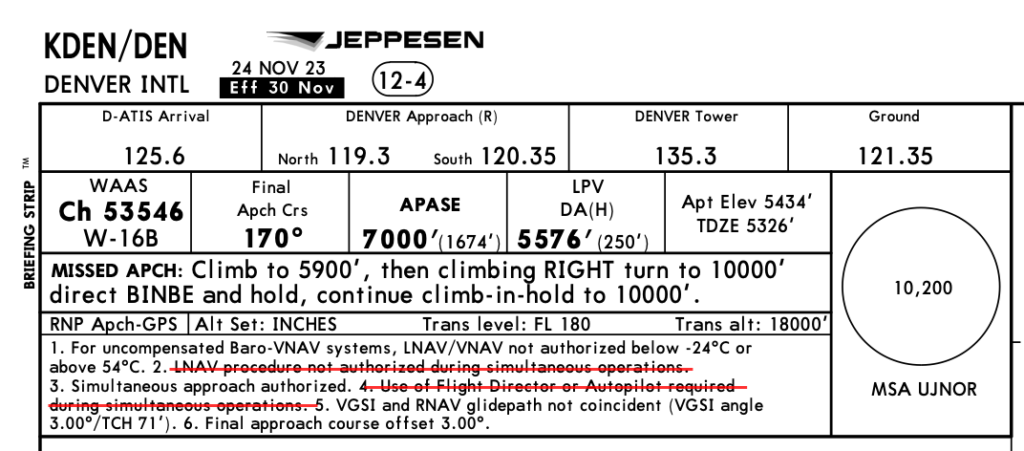 …although the last one is still recommended by the FAA.
Still have questions?
You can get in touch with the folk at the Flight Technologies and Procedures Division at 9-AWA-AVS-AFS-400-Flight-Technologies-Procedures@faa.gov (yes, that’s the real address) or on the phone via (202) 267- 8790.
Or talk to us! team@ops.group. We’d love to hear from you.