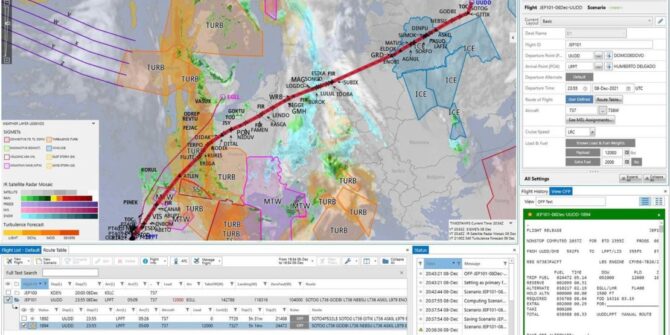
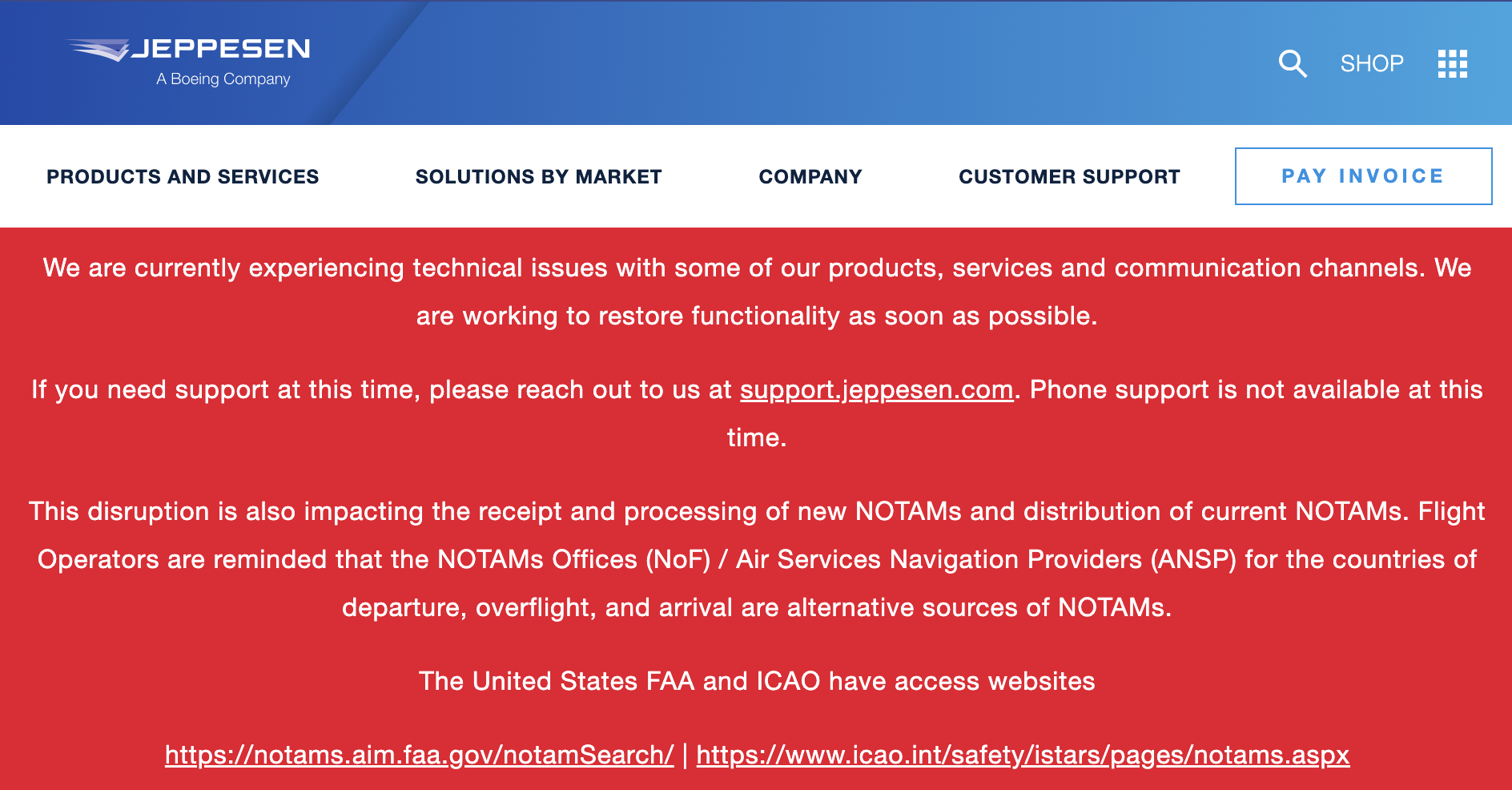
Farewell, Paper Jepps

It’s the end of an era. After nearly a century of keeping pilots flipping, folding and cursing in cramped cockpits, Jeppesen is calling it a day on its paper chart service.

It will be retired by 31 Oct 2026, closing a chapter that began when Elrey Jeppesen first sold his little black book of hand-drawn airfield notes in the 1930s.

For many, it’s like losing an old friend. One that was heavy, expensive and always due an update. But it never froze, crashed or ran out of battery.

If you still like the feel of paper in hand, Jeppesen says a few options will remain…

Why end a good thing?

Essentially, cost. Paper chart operations aren’t cheap – printing, shipping, updates and physical inventory are all expensive. Something that Jeppesen itself refers to as the ‘growing costs of managing paper.’

The industry has overwhelmingly transitioned to digital charts thanks to the proliferation of EFBs, tablets and integrated avionics. And all good things must come to an end.

Jeppesen’s legacy paper chart service will end Oct next year.

But what is the operational impact of this change? And how will you be affected if still using paper in the flight deck?

Operational Impact

If your operation still relies on paper Jepps, now is the time to plan ahead. The exact impact depends on what part of the law you operate under.

Part 91:

With the exception of Part 91K, Part 91 operators can switch from paper to digital charts without FAA authorisation.

But there are a few caveats:

  • The PIC must ensure that the electronic charts being used are current and accurate.
  • You’ll also need a backup (a second device or app). Printed charts also count (but obviously, you’ll soon need to print them yourself).

In other words, you can switch at your own discretion as long as you cover the basics above.

Parts 91K, 125, and 135:

The ‘pathway to paperless’ is a little more complicated.

All require OpSpec A061 that authorises EFB use. You’ll need to adequately show that there are procedures and training in place for crew, and that there is a backup plan for failures.

There will also need to be procedures in place for device mounting, power compliance and the update process.

For Part 91K operators, the lead time is typically 1-3 months. In the case of Part 135, this is longer. Most go through a ‘paperless transition’ period – operating with both paper and electronic charts until fully approved.

Part 121:

Most (if not all) are likely already approved for EFB use.

If there are any outliers still out there, a full formal approval is required. This typically takes 3-6 months.

This involves the airline submitting a detailed EFB program to the FAA’s Principal Operations Inspector.

The process is structured and lengthy and includes factors like power/heat analysis, training and other risk assessments. So much so that airlines have entire manuals dedicated to their EFB operations.
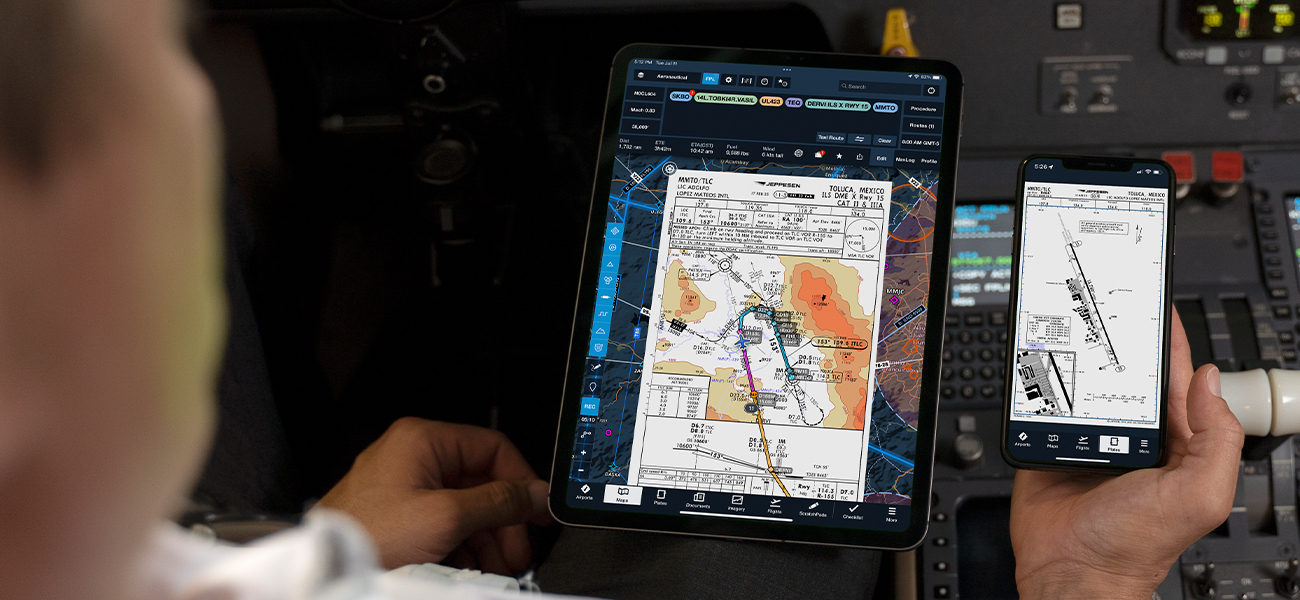
Only (most) Part 91 operators can avoid regulatory approval to transition to digital charts.

Jeppesen itself also provides solid guidance on this process.

I still want paper!

Fear not – it can still be done, just with a little more elbow grease.

Jeppesen will continue to sell it’s (blank) 7 hole-punch paper via its online store here.

Most popular EFB services (including ForeFlight and FD Pro) support user printing.

The big man himself, Elrey Jeppesen.

Jeppesen Ransomware Attack Update

On November 3rd a ransomware attack took down the majority of Jeppesen planning products.

We heard that:

  • Jetplan.com was down
  • Milplanner.com was down
  • Jetplanner (standalone) was not working
  • Chart viewer products was not working (eg. Elink portal, and Icharts)
  • FliteDeck Pro was not working
  • Foreflight (now a Boeing company) was working but their Notam feed was not.

Find the post on this here.

Update: November 16

We asked around and it sounds like it took longer to fix than expected, and some bits still aren’t working quite as they were:

  • Foreflight notams remained down for several days
  • Ice crystal areas are not showing
  • There is an ongoing issue with expired charts and updates being unavailable
    • Jeppesen has advised that “The most recent Jeppesen chart downloads are currently effective and in compliance. Any “expired” messages prior to Dec 1 do not indicate that the charts are expired from a regulatory perspective.”
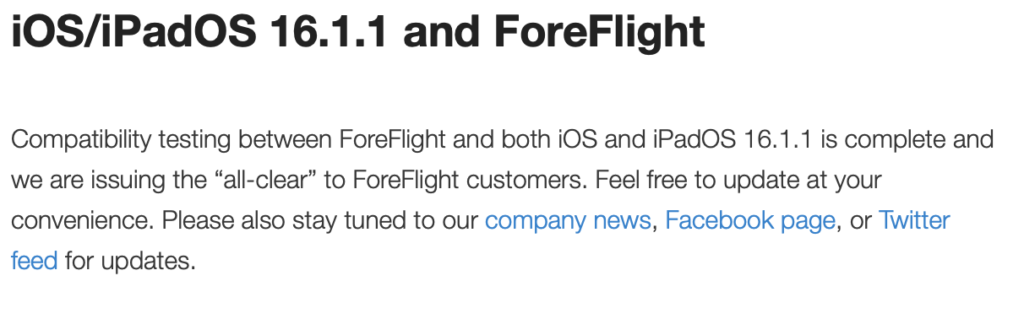
    • However, they do also have this note up. We suggest checking with them direct if unsure whether to update or not:

You can read their response to the attack here, including an explanation of whether or not you need an update.

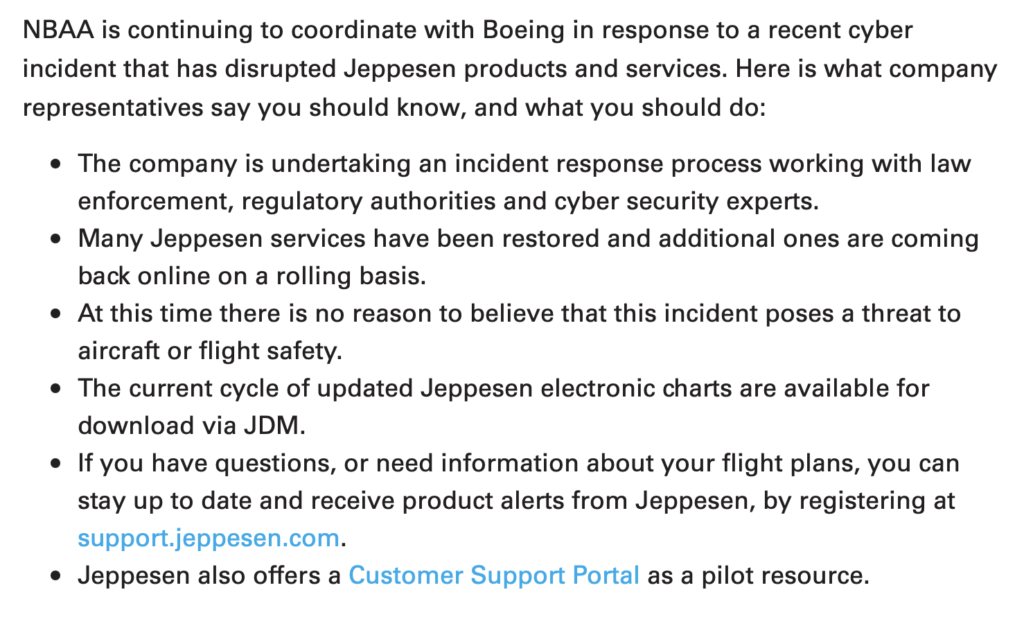
The NBAA has also posted this:

So how big was the impact?

It was pretty big for some. The most disruptive seemingly for those reliant on the planning software.

Let us know if you were impacted (or still are).

What can you do if this happens again?

We aren’t sure actually. It raised more questions for us than we have answers for:

  • Can you use old route plans?
  • Can you use old fuel plans?
  • Where else can you get weather, Notam and planning info from?
  • Are there any back-ups for charts?
  • What else haven’t we thought of?

We’ve asked the question to members who were impacted by this.

If you were, and have some feedback on what the impact was and what you did about it, then send us the info at team@ops.group We will keep it anonymous, but if you have anything that can help others plan for/mitigate disruption if it occurs again in the future, then we want to hear it.

Has this happened before?

Computer and software glitches have caused numerous issues in the past, but most of these have been related to passenger booking info.

A problem with Aerodata, which several major US airlines use for weight and balance, caused disruption in 2019.

In 2021, a cyber attack on a major fuel pipeline in the USA led to significant disruption at east coast airports due to fuel supply issues.

The cyber security threat.

You’ve probably had to sit through a Cyber Security training thing at your organisation. They are basically common sense: don’t open random links and don’t give out passwords (or information that helps people guess passwords).

Cyber criminal cunningness is increasing though. We wrote about some of it here, and it is worth upping the caution levels and making sure you ain’t a weak link in security.


Jetplanner, FD Pro, Charts – down

Hi members,

As those of you immediately affected by this will already be well aware of, the majority of Jeppesen planning products are not working at the moment.

Currently:

  • Jetplan.com is down
  • Milplanner.com is down
  • Jetplanner (standalone) is not working
  • Chart viewer products are not working (eg. Elink portal, and Icharts)
  • FliteDeck Pro is not working
  • Foreflight (now a Boeing company) is working but their Notam feed is not.

There is a note on the “outage” on the Jeppesen website, but reports from members here indicate that phone support is not available, and information is scarce.


However, it does appear that Jeppesen is dealing with a ransomware attack, meaning they have a choice of paying a ransom to restore service, or find an alternate way of providing service. Much as the impact of the outage will weigh heavy on some operators, our thoughts are with Jeppesen – not a nice situation to be in at all.

Given the situation it seems lilkely that the outage may continue for some time yet.

We will post any updates here and in the #flightops channel on OPSGROUP Slack.

If you have any information, please share with the OPSGROUP Team.