The Mexican Downgrade: What’s the impact to ops?

Mexico have recently found themselves downgraded by the FAA under their IASA program.

So, what does this mean for Mexico, and what does everyone else need to know about this?

First up, what is the IASA program?

It might sound confusingly like a combination of EASA and IATA, but ‘IASA’ is actually the International Aviation Safety Assessment Program run by the FAA, and used to determine the safety standards in foreign countries.

It was set up in 1992 to monitor air carriers operating in and out of the US – not to monitor the operators specifically, but to check the authority in the country is up to scratch with ensuring their operators are up to scratch. If not, the US don’t want to let them into their airspace.

What do they look at?

They are focusing on the country (not the operators in the country), to see how well they adhere to international aviation safety standards and recommended practices, as suggested by ICAO in Doc 9734.

There are 8 elements that the FAA/ICAO reckon a decent aviation safety oversight authority should be doing well:

  • Legislation
  • Operating Regulations
  • The State civil aviation system and safety oversight functions
  • Technical personnel qualifications and training
  • Technical guidance, tools and provision of safety critical information
  • Licensing, certification, authorization and approval obligations
  • Surveillance obligations
  • Resolution of safety concerns

I feel like they combined a few there, and its actually more than 8. But there’s the list.
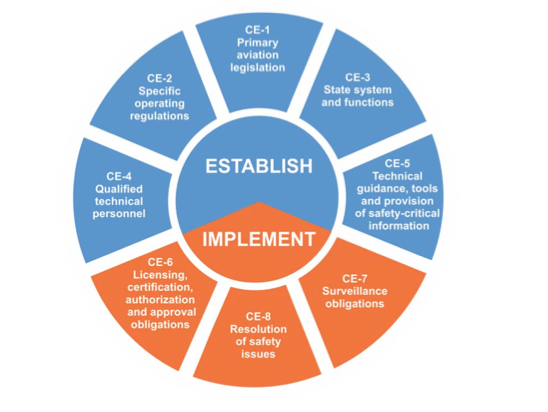
The Big 8

How do they do the assessment?

If you visit the IASA site, on the FAA main site, then you’ll find each of those areas has its own checklist. These are thorough, lengthy things. The Operating Regulations alone is 19 pages with a whole bunch of points to check off per page. Oddly, all that checking leads to only two possible outcomes.

A country either meets the standard or it doesn’t. There is Category 1, or there is Category 2, no in-between.

  • Category 1, Does Comply with ICAO Standards
  • Category 2, Does Not Comply with ICAO Standards

Basically, if one or more deficiencies are identified, it’s a Category 2 ranking, and Santa won’t be bringing you a present that year.

A lot they are looking at

What does it mean to be on the naughty list?

Well, if you already have air carriers flying to the US then you can continue but they are going to monitor them pretty closely. If you don’t already have air carriers operating in and want to, then you’re going to have to improve before they give you permission.

But why should we all care?

After all, the oversight is to do with their air carriers and nothing more? Surely it just means their aircraft might be a risk coming into US airspace, or their pilots might not follow procedures properly?

Well, actually no. The problem is these air carriers share airspace with you. If their pilots are not licensed or trained correctly (think Pakistan’s recent problem) then this can degrade the safety for all aircraft operating in their vicinity.

If a state is failing to ensure minimum safety standards in areas such as the promulgation of safety critical information (notams), technical personnel qualifications (the maintenance folk who might be fixing your aircraft, or the CAA inspectors checking compliance) then this is something any international operators might want to be aware of as well because there are potential knock-on safety impacts for those heading into the country in question.

So does it tell me if another country is safe to fly to?

No. The FAA is not saying every country ranked 1 is safe, no issue, no problem.

It also isn’t telling you a country is unsafe to operate to if they don’t meet compliance standards. Remember, it is purely looking at the regulatory and safety oversight and asking if they ensure minimum ICAO standards. There are countries out there that pose significant threats (just not because of any deficiencies in the authority’s oversight).

It might also mean that the FAA have not ranked that country, because no-one from that country is flying or planning on flying to the US.

Remember, these rankings are looking at how a state ensures its air carriers are safe and compliant. It does not consider whether services or infrastructure within the state itself are safe or compliant.
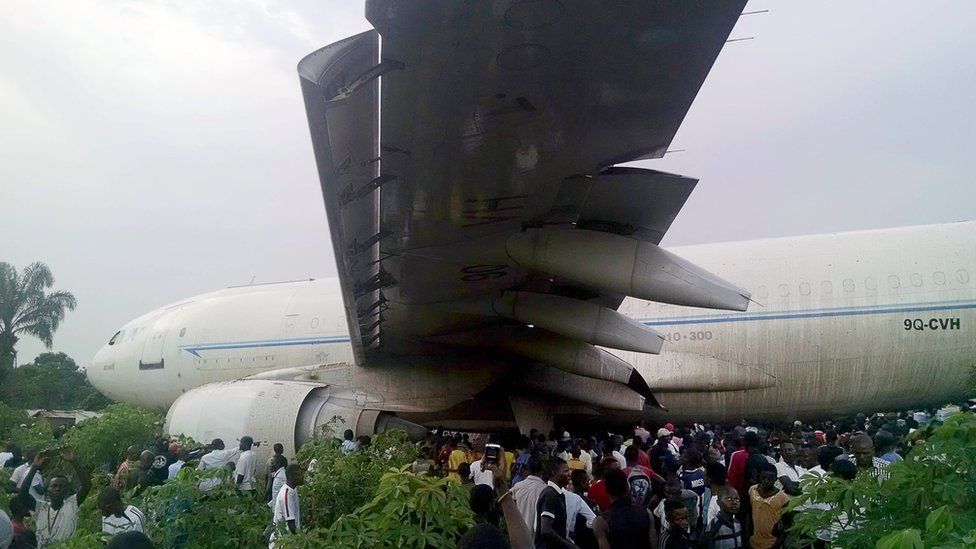
The DRC isn’t on the list. It’s not the safest place in the world…

How should operators and pilots use this list?

For operators and pilots, if a country is ranked Category 2, it means you might want to be doing your own risk assessment before heading in. No-one is saying that country isn’t going to be safe, but they are saying there are deficiencies with the authority, and since that authority looks after a lot, it is worth asking whether there might be other deficiencies as well.

You should be looking at the following:

  • What are the standards of the handling agents and maintenance services you are going to require there?
  • How reliable are Notams, and are they providing the information required?
  • What level of service and safety will ATC provide?
  • Will procedures and regulations be correctly adhered to there, and if not, what will this mean operationally for your flight safety?

You can get this info from sites like Safeairspace, Airport Spy, and through talking with colleagues who have operated into there before.

Who is on the Category 2 list?

So the big news this week is that Mexico were downgraded. Again, actually.

Along with Mexico the FAA also have the following countries ranked at Category 2:

  • Bangladesh
  • Curacao
  • Ghana
  • Malaysia
  • Eastern Caribbean States
  • Pakistan
  • Thailand
  • Venezuela

It changes though.

In 2014, the FAA downgraded India, citing inadequate oversight by local regulators, and in 2001 South Korea found themselves downgraded due to unskilled technical staff, pilot screening problems, issues with flight operations rules and a lack of objectivity in air crash investigations.

Both made it back on again relatively quickly.

Let’s take a closer look at Mexico…

The FAA have not yet given the reasons for their downgrade. However, Mexico was downgraded previously – back in 2010 – due to shortcomings in technical expertise, trained personnel, record-keeping and inspection procedures.

Actually, Mexico has a pretty decent infrastructure in terms of airports, although these do pose some operational challenges of their own (things like high terrain, high elevation). The CAA was actually “revamped” back in 2019. We put out this post about ramp checks.

Mexico’s political problems seem to be at the root of most issues here for the aviation industry. A project to build a new airport was recently cancelled (Texcoco airport was partially constructed already.) Now the government are instead looking to improve MMTO/Toluca and build new runways at an Air Force base near Mexico City. Plans are also under way for a third terminal at Mexico City Juarez, but given it is already congested and operating over its designed capacity, this might not be any solution.

Combined with Covid Pandemic problems, the latest downgrade will mean a big financial impact for various Mexican airlines now unable to access the major Mexico-USA market, and the knock on effect from this might be further felt in the aviation industry there as a whole.

The Big Taco-way?

If you are operating into an FAA IASA Category 2 ranked country, doing your own risk assessment on the standards and compliance you can expect to experience there might be worthwhile.

Going Viral: The non-Covid nasties to watch out for

With Covid running rampant across the globe, other risky diseases have been forgotten somewhat, but there are a fair few out there which can pose a threat to crew on layovers.

So here’s a quick round up on the regions where you might need to cover up, dose up, or just be extra cautious during your international flight operations, split into sections based on the active travel health alerts that the CDC and other health authorities have out at the moment.

Red Warning Level 3: Avoid all non-essential travel

Guinea – Ebola

They had a serious outbreak earlier in 2021. Actually, cases have reduced significantly and the US has just removed their travel restriction which required travelers coming from Guinea to enter the US via 6 main airports only. Caution is still very much advised though if traveling in the country.

Venezuela – Infrastructure

Not a specific disease caution here, just a warning that their healthcare infrastructure is breaking down and if you are taken ill here you may not be able to access treatment. One to think about if you ever have crew on a layover here.

Amber Warning Level 2: Extra caution

Fiji – Leptospirosis

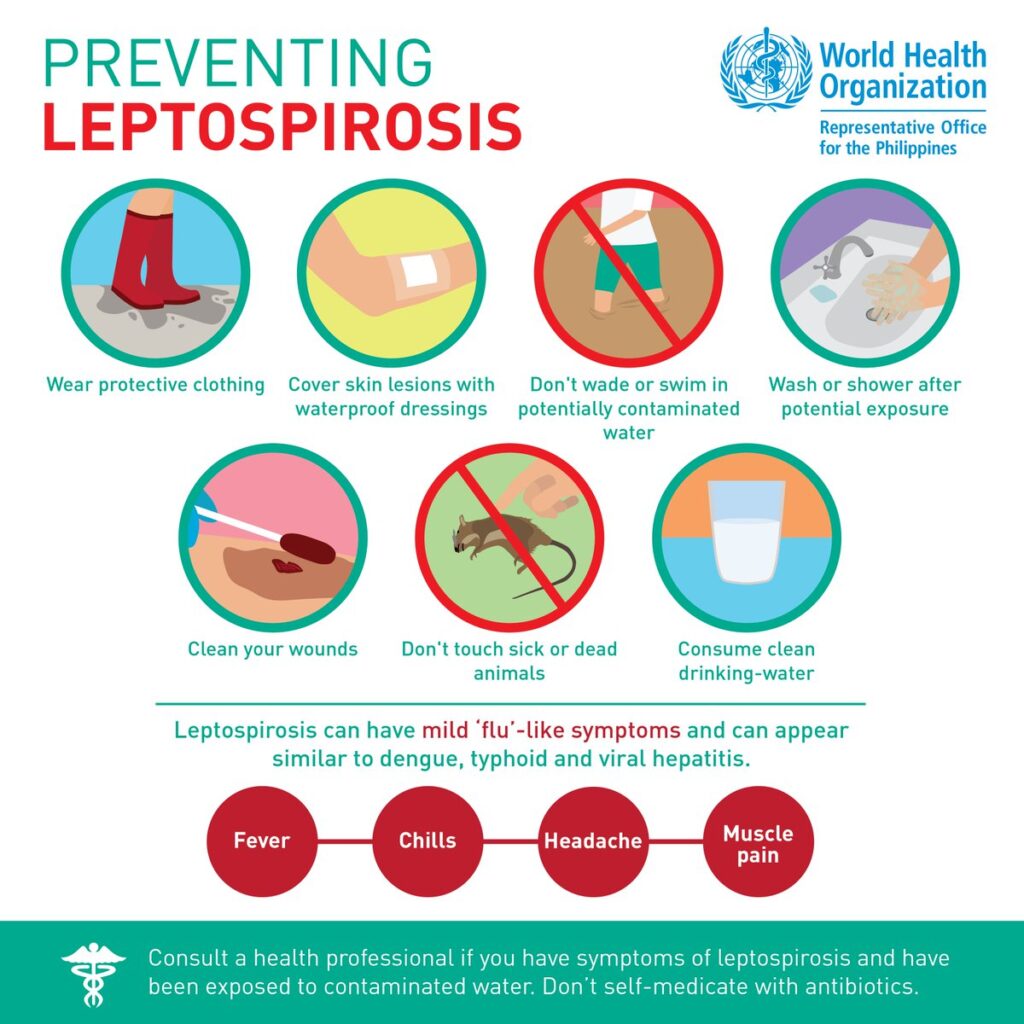
This really prevalent in Fiji at the moment, particularly rural areas. It is caused by a bacteria spread around by animal pee, and can get into water and soil and live there for months. The main guidance is to avoid swimming or wading in water that could have had infected animals in it. Wear protective clothing and footwear and cover any cuts and scratches with waterproof bandages.

Haiti – Rabies

Haiti currently has a big problem with rabid dogs. The bigger issue is that there is an extremely limited supply of treatment drugs in Haiti, so the recommendation is to get vaccinated before you head there.

Avoid dogs, and cats for that matter – even the cute baby ones. You can catch it if you are bitten, scratched or even licked, and treatment is only effective if administered early. Once symptoms present themselves it is often fatal. Plus, getting bitten by anything is never pleasant.

Polio – Africa and Asia

Everyone should be vaccinated against this. If you are not, get vaccinated (or don’t travel) because this is continues to be very prevalent in African countries and there is always a risk.

Nigeria – Yellow Fever

Consider getting vaccinated if you head here regularly, and try to prevent mosquito bites (also, because they carry loads of horrid stuff).

International flight crew generally are required to have had Yellow Fever Vaccinations – if you have not then take care because some countries will not allow crew (anyone) to enter who does not have a vaccination booklet if they have traveled to a Yellow Fever region recently.

What else to watch out for

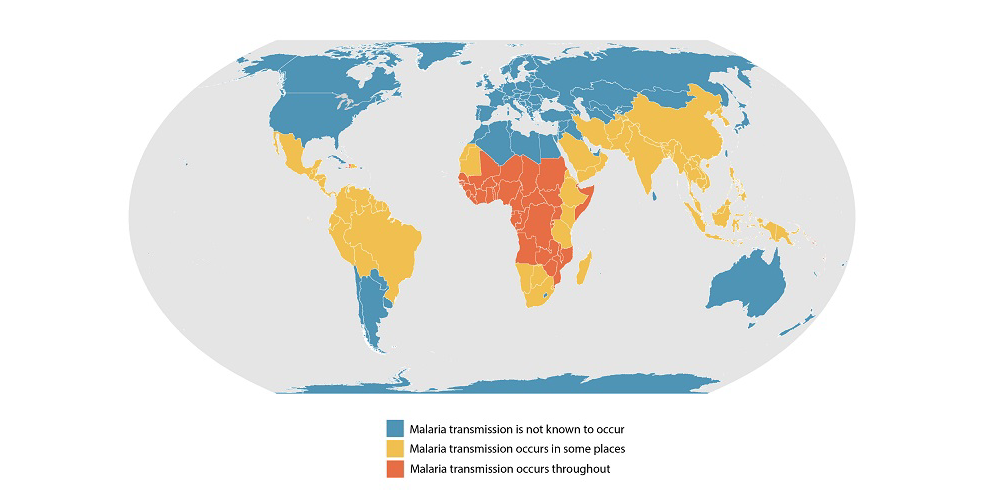
Malaria

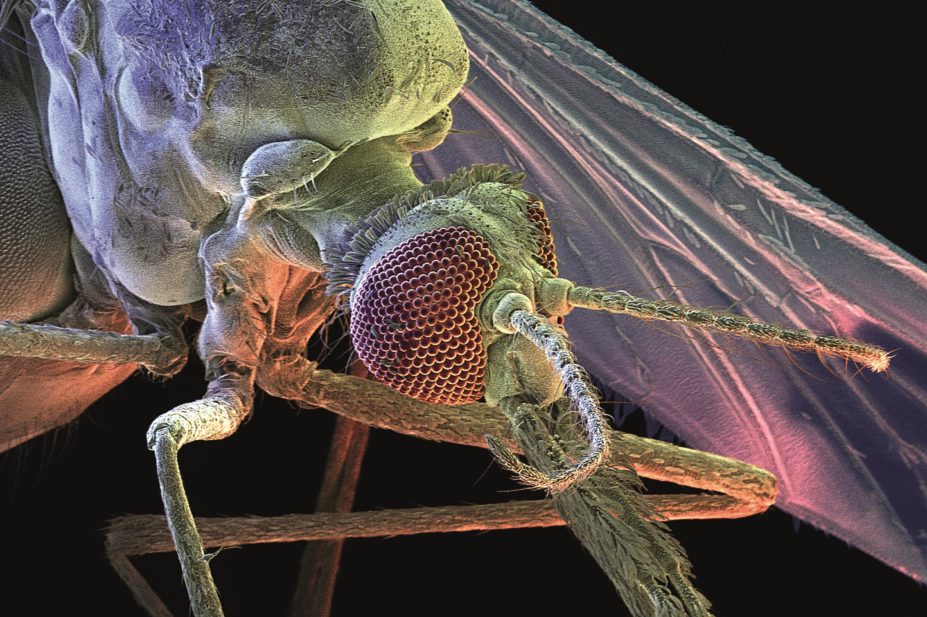
Malaria is a parasite carried around by mosquitos. There are actually four types of it, and it is in a lot of places!

The big risk here is it can take a while for symptoms to show. They reckon you’re most likely to have symptoms between 10 days and 4 weeks from being infected, but it could take as long as a year. The little beasties also like to loiter around in your liver, popping out at random times when you’re run down, and so can cause recurring illness for as long as 4 years after infection.

Where?

According to the CDC it is found in warmer regions, which doesn’t narrow it down an awful lot – basically anywhere hot and humid where there are places for mosquitoes to breed and grow. Just after rainy season is likely to be the worst, and rural areas will be more risky.

We have borrowed the CDC map because it is easier than trying to list everywhere to watch out.

How to prevent it

If you are going to a Malaria riddled area then you can take preventative medicine, but watch out! Not many are approved for operating pilots because they can have some nasty side effects. Malarone is the most commonly approved (and generally has the least side effects) but we ain’t no doctor so check with an AME from your licensing state before taking.

The other option is to slather yourself in deet and wear long clothing to prevent the little nippers from getting at you in the first place.

The Symptoms

  • Fever, sweats ad chills
  • Muscle ache
  • Nausea and sickness

So, basically generic symptoms of about a thousand other possible diseases.

If you have been to a malaria area and are thinking “I got chills, they’re multiplying”, don’t write them off as a random cold – tell a doctor so you can get tested because it can get very serious!

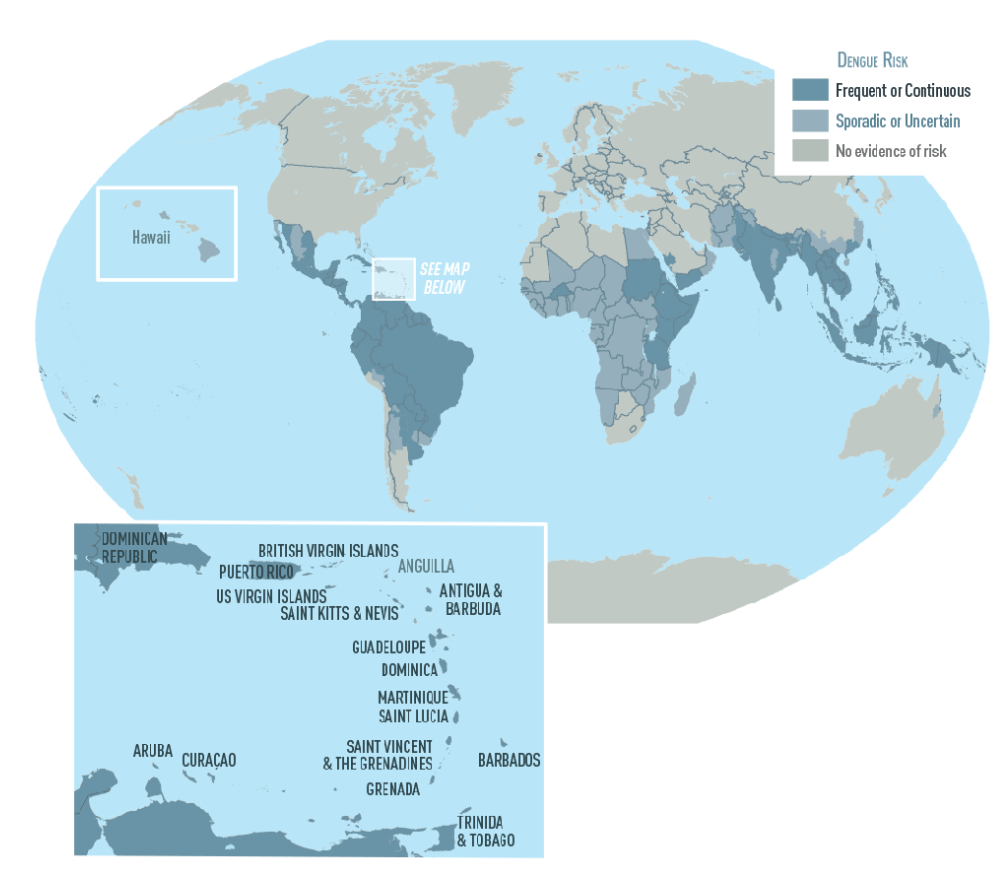
Dengue Fever

Another one to blame on the pesky mosquito, Dengue is common in over 100 countries, and over 400 million people catch it every year, 100 million getting sick and 22,000 dying. Dengue Fever is Malaria’s bigger, badder brother, and there is no specific treatment.

Like Malaria, there are also different strains of the virus meaning you can get different sorts, multiply times.

Where?

Outbreaks are coming across the Americas (including North America, although the mosquitoes aren’t there, people just head in already infected), Africa, the Middle East and Asia, and the Pacific Islands. It is most prevalent in tropical and sub-tropical areas.

There is currently a growing outbreak in Reunion.

Brazil has the highest rate of Dengue fever in the world.

How to prevent it

Best plan, don’t get bitten. Insect repellent is smelly, sticky stuff but it works. Here’s what the CDC recommends:

  • DEET
  • Picaridin (known as KBR 3023 and icaridin outside the US)
  • IR3535
  • Oil of lemon eucalyptus (OLE)
  • Para-menthane-diol (PMD)
  • 2-undecanone

There is a vaccine but it is only given to people who have been infected before and have a risk of getting severe Dengue, and for kids between 9-16 who live in a Dengue area.

The Symptoms

The early, mild ones tend to get confused with other diseases so again, ff you’ve been somewhere with Dengue, don’t assume it is something else. Go get tested.

Initial symptoms usually appear within 4 to 10 days:

  • Nausea and sickness
  • Rash
  • Aches and pains, especially behind the eyes and in bone joints and muscles

These last around a week, unless you develop serious Dengue fever, which 1 in 20 do:

  • Belly pain
  • Vomiting (a lot)
  • Bleeding from nose and gums
  • Lethargy

Zika

This one made the news a few years ago as it can cause serious birth defects. The symptoms for most tend to be fairly mild though.

It is also transmitted by our old friend the mosquito and there is no particular treatment so your preventative tricks are the best – don’t get bitten!

Chikengunya

Transmitted by mosquitoes, this has very similar symptoms to Dengue Fever and Malaria, and is found in all the same spots.

There is no treatment for it and no vaccine to prevent it, so preventing bites is really important.

There are currently serious outbreaks in Brazil, and in Asia (Vietnam, Philippines)

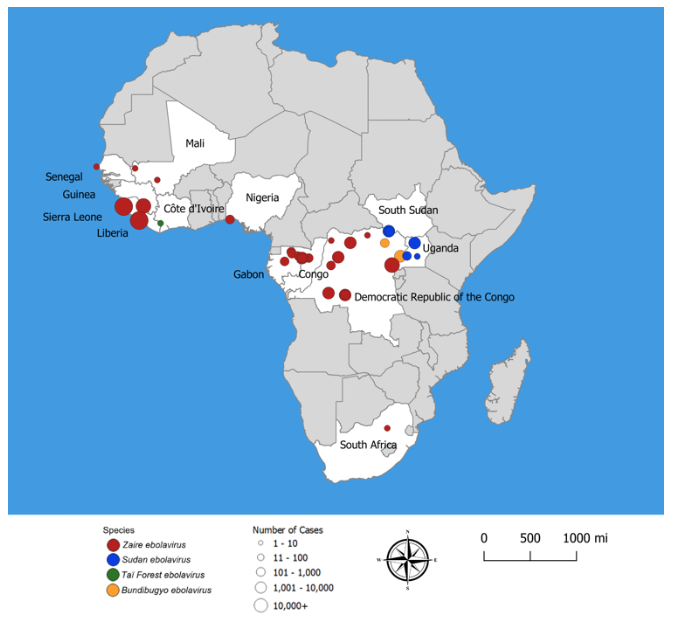
Ebola

This is a nasty one, often deadly, and causes lasting damage. They don’t really know where it comes from but it possibly started with monkeys and apes and was passed onto us human folk.

It is spread through direct contact with all the gory stuff that comes out of sick people.

Where?

Guinea had a major outbreak in 2021, but cases have fallen again. The US previously restricted travelers from here, and from the DRC, only allowing entry through 6 specific airports.

In 2020, the DRC (formerly Zaire) had a major outbreak.

It is most common in African countries, particularly the central African countries, and along the north west coast.

How to prevent it

It is spread through bodily fluids so avoiding contact with these is important. You also should avoid contact with animals that live in Ebola regions. Bats, primates, forest antelope all carry stains of the virus. So don’t eat them.

There is a vaccine but it is only used in areas where an outbreak is occurring. There is medicine for treating it, and the do help survival rates. You also need medication to support blood pressure, to manage the fever etc, so this really is a serious disease which you do not want to catch

The symptoms

These can appear between 2 and 21 days of infection, usually around the 8 day mark. The main symptoms are:

  • Fever
  • Severe aches and pains
  • Sore throat
  • Loss of appetite
  • Gastrointestinal symptoms
  • Unexplained hemorrhaging, bleeding and bruising

Yellow Fever

This is pretty rare nowadays, but still on to watch out for across Africa and South America. It gets its name from the fact it generally causes jaundice.

Insect repellant works well. It is transmitted by the mosquito (again)

There is also a vaccine. It has been used for 80 years and it pretty well tested, safe and effective, with 1 dose providing life long protection. In fact, many countries require travelers to have had the vaccine if they are entering from a country (or have visited one) where there are high incidences of Yellow Fever.

Meningitis

This is serious – it makes your brain and spinal cord membranes swell up which sounds horrid and painful. It can be bacterial, viral, parisitic, fungal, amebic… so there are a bunch of different sorts all with varying degrees of nastiness.

Good news though, there is treatment for most, and vaccines. You have likely had some already, it is another one that flight crew are often vaccinated for because this can be caught from all over the place. Bacterial in particular can be in food.

General travel recommendations

The CDC has good guidance for flight crew which you can read here.

Many international airlines require their crew to have the following vaccinations, and they are often recommended in general for any traveller:

Cholera – Africa, Asia, Central America and the Caribbean

Diphtheria – Africa, south Asia, former Soviet Union. This protects you against Diptheria, polio and tetanus

Hepatitis A – Africa, Asia, Middle East, Central and South America. This is common in places with poor sanitation and hygiene and can be picked up a lot of ways.

Hepatitis B – Africa, Asia, Middle East, Central and South America. This is spread by bodily contact generally.

Japanese Encephalitus – Common in rural areas of Asia with a tropical climate, after the rain season. It is also found in western Pacific island and near Pakistan, China and Australia. Actually, it is rarely found in Japan because they did a mass immunization program years ago. There is a tick borne version too. Also with a vaccine available.

Typhoid  – the Indian sub continent, south and south east Asia, South and Central America, Middle East


The Lowdown on AUSOTS: Australian Flex Tracks

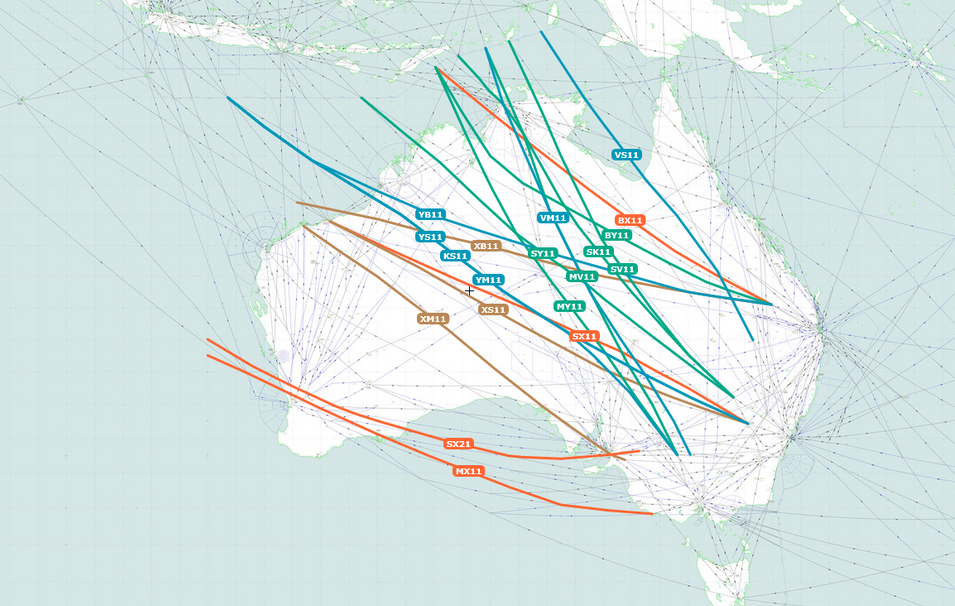
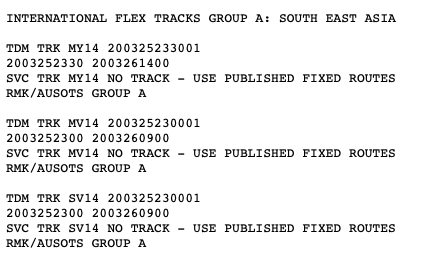
If you haven’t heard of the AUSOTS then it means the Australian Organised Track Structure, and is basically a bunch of Flex Tracks that are produced on a daily basis, aimed at helping aircraft benefit from the best wind conditions.

The inventors define it as – “A non-fixed ATS route calculated on a daily basis to provide the most efficient operational flight conditions between specific city pairs”.

Sounds familiar? That’s because it is basically the NAT OTS but over a different bit of big, not-much-out-there, airspace on the other side of the world.

Where exactly?

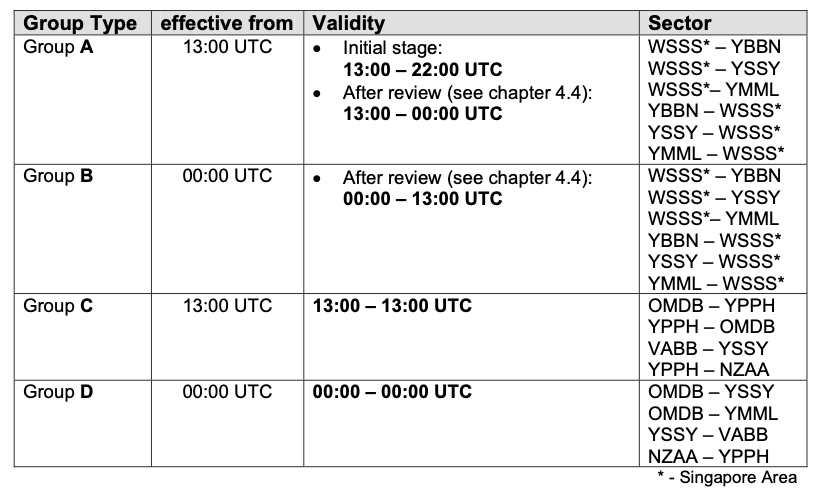
The AUSOTS are currently published for routes between Australia and the Middle East, Australia and South East Asia and for domestic routes between Brisbane and Perth. They pretty much cross the entire YBBB and YMMM FIRs and a few other parts too.

Opposite direction tracks are spaced by 50nm in Oceanic and 30nm in domestic, but with the introduction of ADS-B this is reducing. Again, probably all sounds quite familiar.

The User Preferred Routes are available in the YMMM/Melbourne, YBBB/Brisbane, AGGG/Honiara and ANAU/Nauru FIRs.

Your UPRs can be constructed between gates (entries and exits to FIRs), or by published waypoints (so long as time between them is not greater than 80mins), NAVAIDs or Lats/Longs (and you can use ones that are not whole degrees if you want).

You do need a reporting point on an FIR boundary (except for between AGGG-ANAU or YBBB-AGGG FIRs). 

What do I need?

In terms of equipment, your usual stuff giving you RNP10/ RNP4 type capabilities, Datalink (CPDLC), a couple of LRNS and bits to help you navigate accurately – all that sort of thing.

Unsurprisingly, what you put in your flight plan is much the same as well – if you are RNAV10 then write ‘GR’ and ‘I’ (if appropriate) in item 10 and PBN/A1 in item 18. If you are RNP4 then throw in a ‘GR’ and write PBN/L1 in item 18

You also need HF comms and ADS-B to fly on the UPRs.

What if something goes wrong?

If you are on a track and lose your RNP capability then as long as you can still navigate the track you can stay on it. If you can’t, you probably will want to let ATC know fairly quickish so they can put you onto a fixed track.

If you lose all your comms then it is simple as well –  try other methods, squawk 7600, do some broadcasting on 121.5 and 123.45, put your lights on, and maintain your last assigned speed and level for 60mins (following failure to report over compulsory point), then follow your flight plan. Once you leave Oceanic, follow the procedures of the state you’ve gone into.

In general, if you are flying over Australian airspace they are going to want to know if your estimate over a reporting point changes by more than 2 minutes. They are also going to want to know if you are off your track by more than 20nm (small weather deviations).

Also know that Standard ICAO Contingency and Weather Deviation Procedures apply here.

SLOP?

Yep, they like it. Up to 2nm right of track is the way to go, and in 0.1nm increments if your airplane can do that. You don’t need a clearance for it, but remember you cannot use it in addition to offsets for wake, or weather avoidance.

Block Altitudes

Also allowed in this airspace, and given you are probably flying some mega miles through it, it might be a good idea. That way you can climb up when your weight will benefit, or avoid turbulence if there are reports of it without having to talk to ATC…

You mentioned talking?

We did, but to be honest there is not a huge amount of it going on in this area. Most comms are taken care of through CPDLC. They like a position report sent via CPDLC when you get to the boundary of the FIR (all position reporting procedures are in accordance with ICAO Doc 7030).

The Australian controllers really know how to control. They are great at it. But they also have some pretty high standards which means if you make a mistake they are going to get grumpy and report/fine you. It might seem obvious, but if you’re off track for weather avoidance, once clear, don’t assume you can head direct to the next point – they want to see you regain your original track.

What will I find out there?

A whole lot of empty space and open sea. 

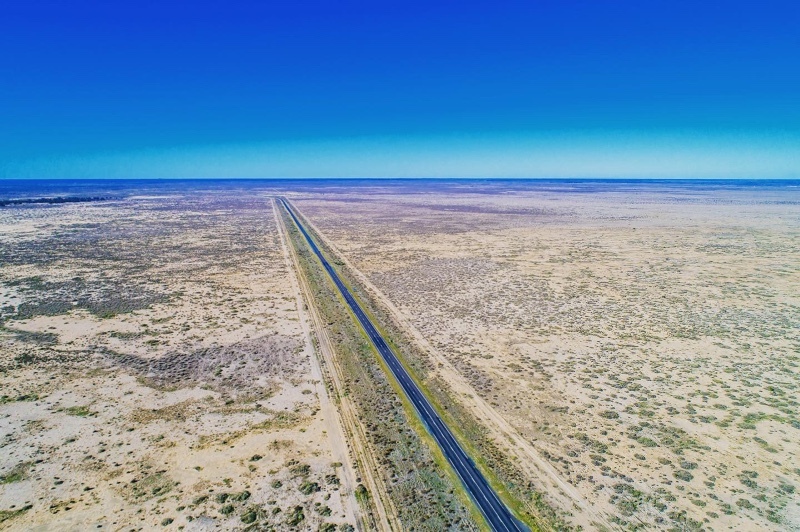
The distance between Singapore and Brisbane is roughly 6,000km. The distance from Perth to Brisbane is over 3,500km. In between them? A lot of dry, dusty bush, and kangaroos.

The middle of Australia is quite an empty place so if you’re looking for airports to use, we would recommend the ones around the edge of the country. YSSY/Sydney, YMEL/Melbourne, YBBN/Brisbane are the biggies on the eastern side and you’ll find nice long runways, decent approaches and good facilities at each of them. YPPH/Perth is the main south west one, while if you’re heading north-ish then YPDN/Darwin or YBCS/Cairns are probably your best bets.

You do have YBAS/Alice Springs in the middle if you really need it, and its a fairly decently equipped airport with a 7,999 ft/ 2438m runway and an ILS/RNAV approach.

Who can I ask for info on AUSOTS?

Should you need it, then you can email these folk with all your AUSOTS queries – uprs@airservicesaustralia.com

You can also try the Melbourne Center Operations Manager at Melbourne ACC on +61 3 9235 7420 or on AFTN: YMMMZRZS if you have specific questions about the published AUSOTS Flex Tracks.


NAT Airspace Closures

Update 18th Oct: No more events are planned at this time. However, we will keep this page updated with the latest news as we get it.


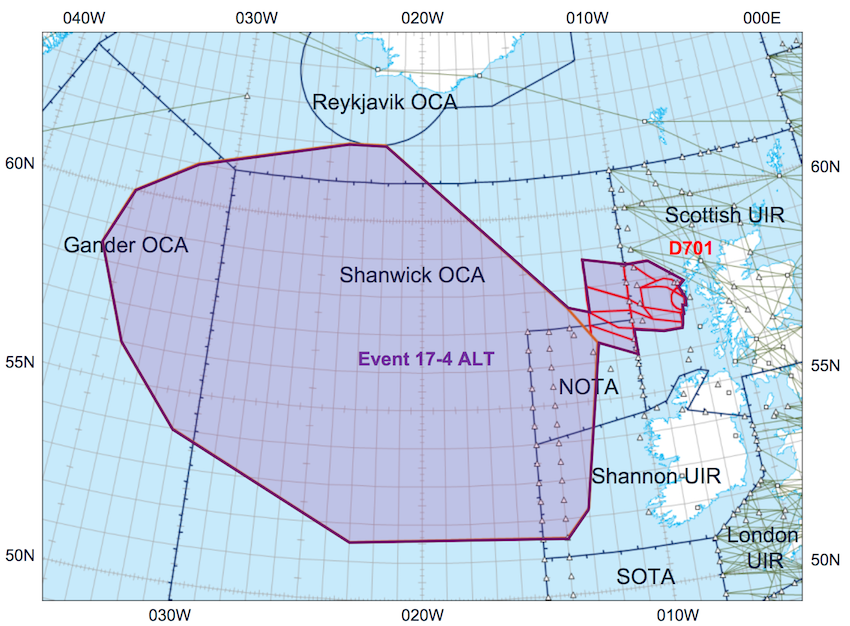
Sections of NAT airspace are set to close on various different dates in October. This is all due to U.S. and NATO joint military exercise that’s going on, called Formidable Shield, which will mean huge chucks of airspace will be closed to civil ops for many hours.

The basics for each event are the same:

  • Airspace closed, SFC-UNL.
  • Aircraft capable of flying in MNPS airspace will have to keep at least 30nm away from the area, other aircraft will need to keep 60nm away.


Event 1 Happened on 25th Sep. 


Event 2 Happened on 7th Oct.


Event 4Happened on 15th Oct. (Yes, Event 4 happened before Event 3 – just to confuse us!)


Event 3 Happened on 17th Oct.


EUROPE: Third Country Operators (TCO)

A TCO is an authorization issued by EASA to any third-country operator wishing to perform commercial air transport in any of the following European countries:

  • 28 EU Member States
  • Iceland, Liechtenstein, Norway, Switzerland

Plus the following territories:

  • Gibraltar, Aland Islands, Azores, Madeira, Canary Islands, Guadeloupe, French Guiana, Martinique, Reunion, Saint-Martin, Mayotte

Applications are made directly to EASA using their application form.

https://www.easa.europa.eu/document-library/application-forms/fotco00160

You will need to provide the following documentation:

  • AOC
  • Operating Specifications
  • Insurance

Contact details for applications are made to:

European Aviation Safety Agency
Applications Handling Department
Postfach 10 12 53
D-50452 Köln
Germany

Fax: +49 (0)221 89990 ext. 4461
E-mail: tco.applications@easa.europa.eu

Should EASA deem the application in order the operating authorization process is completed in approximately 30 days.  Some flights can avoid this requirement, such as Air Ambulance or Humanitarian flights.

Please note:

  • Overflights of the above states do not require a TCO permit.
  • EU member states cannot issue a permit for their country if the operator does not already hold a TCO operating authorization.

If you plan to operate to these areas, we’d suggest getting your TCO right away, even if you don’t have a planned flight at the moment.  They can take some time to obtain.


Australia: GPS requirements relaxed

The implementation day for Australia switching off Navaids remains the same: 26MAY2016, but the GPS requirements are relaxed – a little – especially for foreign private operators.

If you’re Australia based:

  • You’ll have seen this coming and will already be RNP1/2 compliant. CASA has no exceptions.


If you’re a Foreign Operator and have RNP1/2:

  • After 26MAY2016, if you’re RNP1/2 compliant, put it in the Flight Plan (read on), and that’s about it.


If you’re a Foreign Operator and you don’t have RNP1/2:

  • Australia has a Two Year Transition for Foreign Operators after 26MAY
  • An “Acceptable Means of Compliance” is contained in CASA EX06/16
  • Notify CASA in advance using Form “Notification to operate aircraft on RNP 2 routes and/or RNP 1 procedures using GNSS based RNAV 1 & RNAV 2”
  • If you are a non-commercial operator – ie. operating a Private flight, then compliance is not mandatory. According to CASA, through a release to IBAC, “Only commercial operators that can comply with the requirements and want RNP 1 and RNP 2 traffic services are required to apply for an exemption. “


Flight Planning:

  • If you have RNP2 – put GRZ in Field 10a and NAV/RNP2 in Field 18.
  • If you don’t, then you must operate according to Australia’s “Acceptable Means of Compliance” and put RMK/CASA RNP AMC in Field 18.
  • If you don’t, and you’re a private operator, probably worth a RMK/NEG RNP PVT FLT or similar.
  • Keep an eye on the charts – a bunch of new 5 letter waypoints are coming, to replace the VOR’s and NDB’s being switched off.

Reference: