Military Coup: Sudan Airspace Closed
Update

This article has been updated to reflect the current status as of Aug 14, 2023.

Key Points
  • Following a military coup in April 2023, Sudan airspace remains closed to all civilian flights.
  • In South Sudan, air navigation services remain suspended above FL245.
  • HSSK/Khartoum airport is closed, but no Notams are being issued.
  • There is a Contingency Plan available with published routes for ops in and out of HSPN/Port Sudan airport.
  • For overflights, there are some north-south routes available via Egypt and Saudi, and some east-west contingency routes available over South Sudan.
  • If routing via nearby airspace, be aware of other active warnings in close proximity.

The Coup

News first emerged on April 15. Sudan’s paramilitary group ‘Rapid Support Forces’ (RSF) became engaged in active fighting with the state military in Khartoum in an apparent coup attempt. While the details were scarce, they reportedly seized control of several important assets, including HSSK/Khartoum Airport.

This has been brewing for some time. There has been a power struggle between the two rival military forces since an overthrow of the government back in 2019.  A failure for the existing government to successfully transition Sudan to a freely elected one has fanned the flames. Along with this is strong public demand for the RSF to be merged with the regular armed forces. This now looks pretty unlikely.

Closed Airspace

On April 15, the HECC/Cairo FIR advised Eurocontrol that Sudanese airspace had closed, and that local authorities were unable to issue any Notams to that effect.

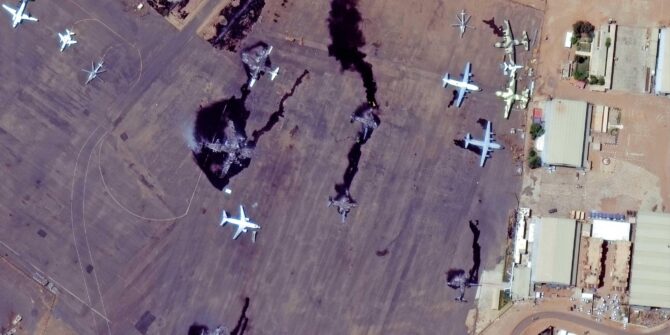
At the same time, videos began to emerge of large passenger jets on fire on the tarmac at HSSK/Khartoum Airport. This included reports that an A330 was shot at multiple times while preparing to depart. The pax and crew evacuated, and were transported to safety at a local embassy.
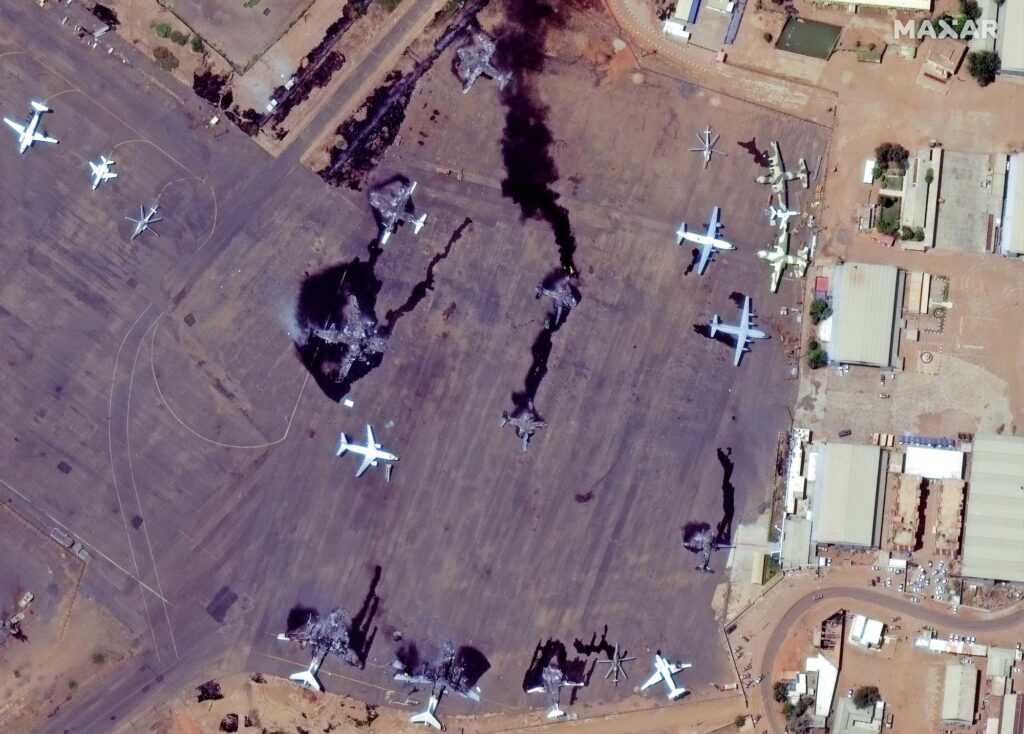
Satellite imagery taken on April 17 over HSSK/Khartoum airport shows damage from the fighting. (Image credit: Maxar Technologies)

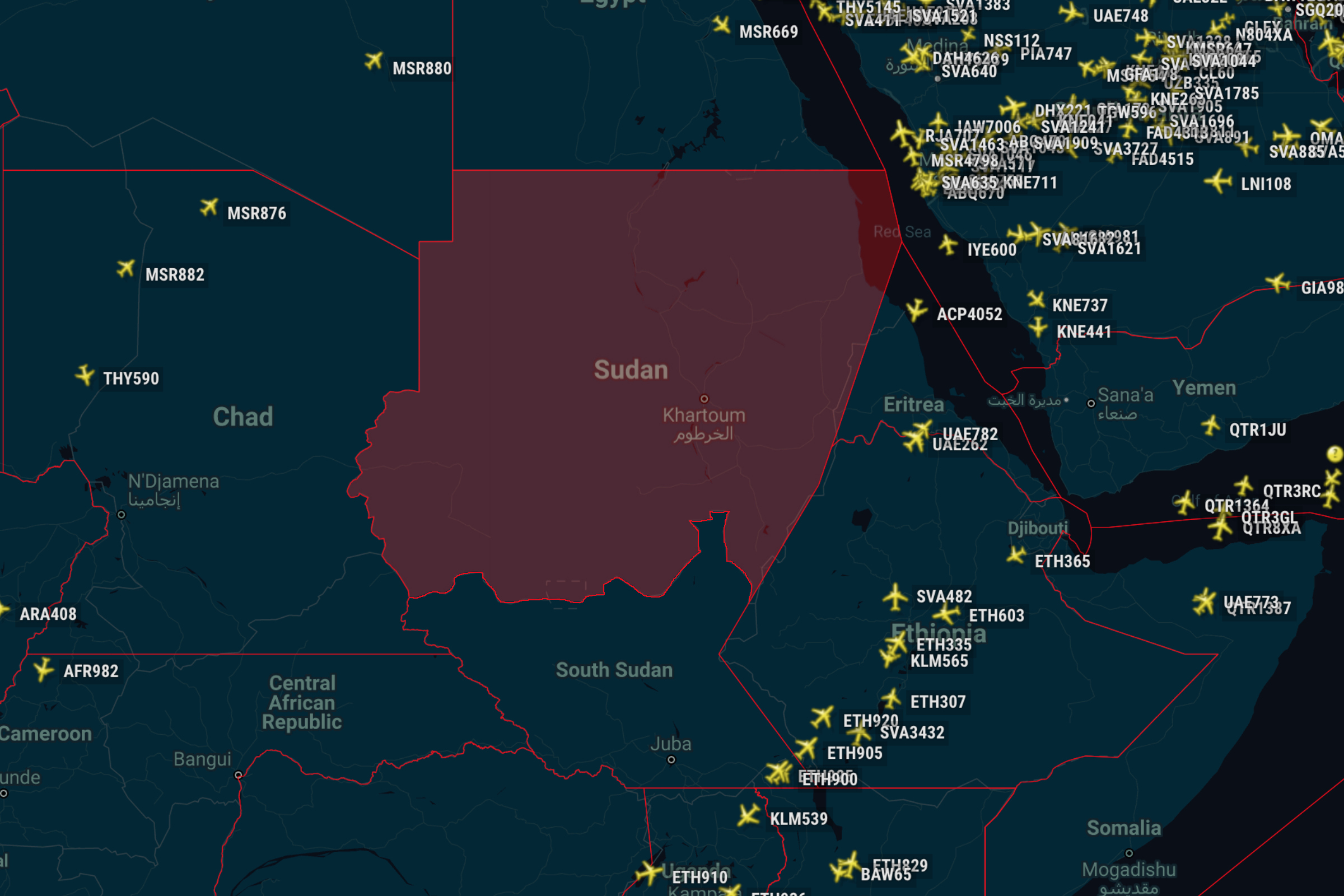
As of June 2023, the HSSS/Khartoum FIR is now publishing Notams again, and they have said once again that the airspace over Sudan is closed to all flights except for humanitarian and evacuation flights. And in South Sudan, air navigation services remain suspended above FL245.
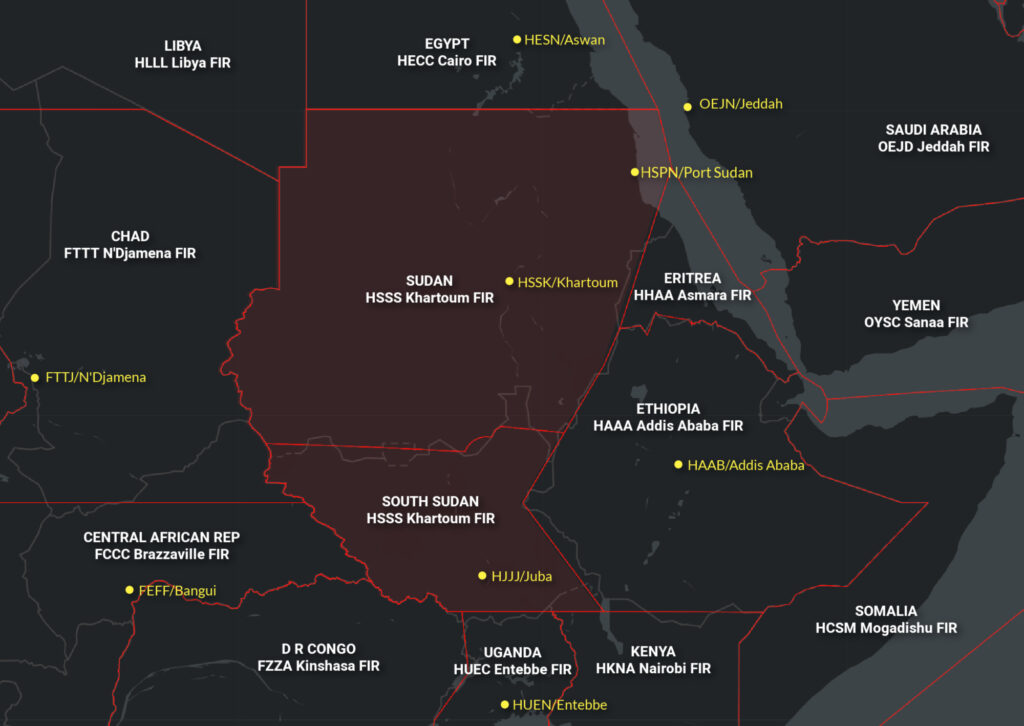
Air navigation services have been suspended in Sudan’s airspace, including above FL245 in South Sudan.

For overflights, there are some north-south routes available via Egypt and Saudi, and some east-west contingency routes available over South Sudan. Check the HSSS Notams and the Contingency Plan for details.
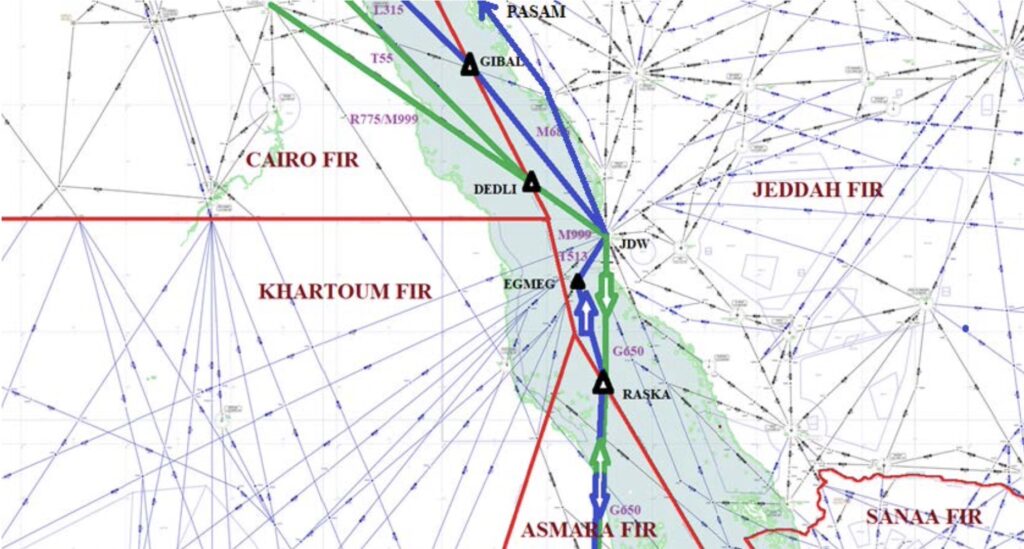
North-South routes via Egypt and Saudi.
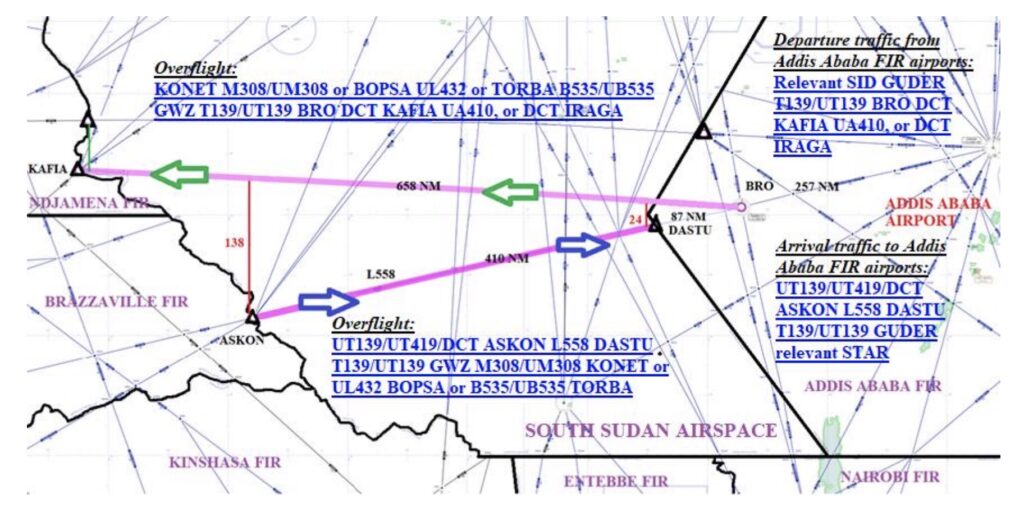
East-West Contingency Routes available in South Sudan above FL245.

Adjacent Airspace Warnings

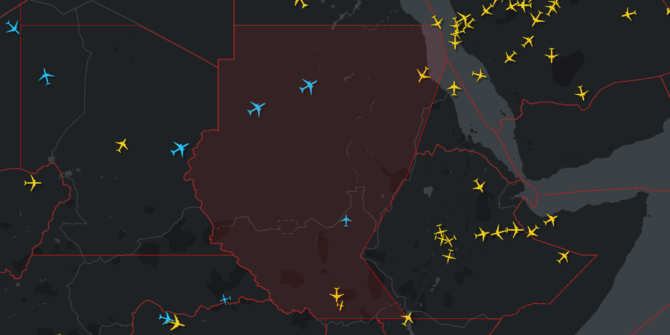
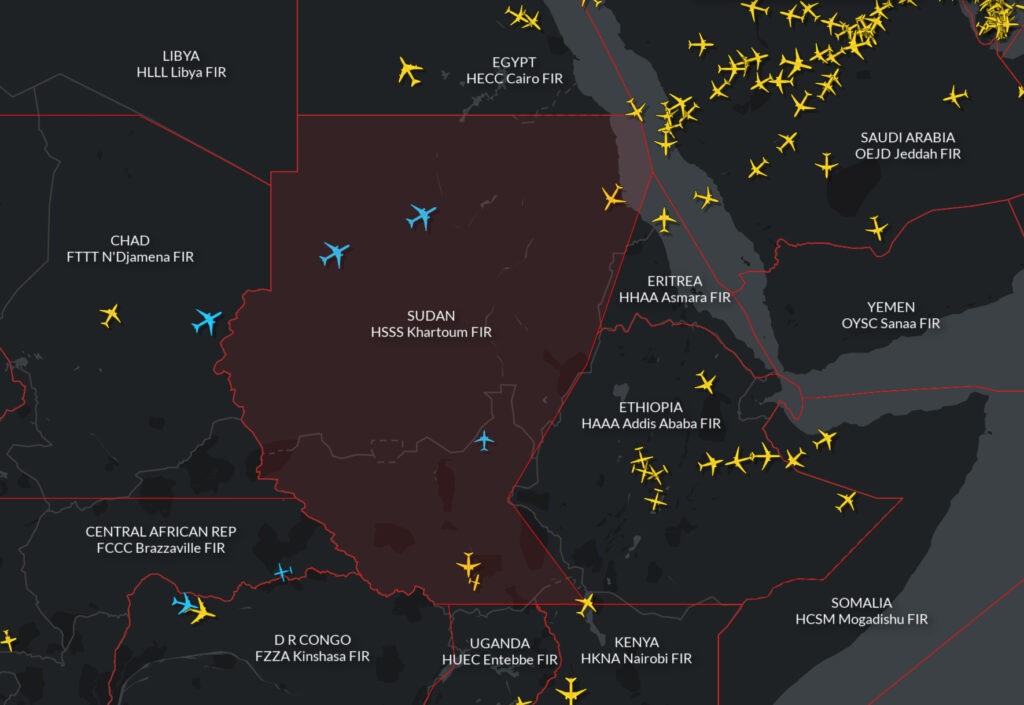
The HSSS/Khartoum is a big piece of airspace. The scramble now will be how to avoid it. Unfortunately, several adjacent countries have their own airspace warnings in place and so it is important to take these into careful consideration. Here’s a summary:

South Sudan

You may be tempted to fly below FL245 through South Sudanese airspace to ensure air traffic control services. However these have been the focus of recent scrutiny. The primary risk there is poor levels of ATC provision, especially for aircraft operating in and out of HSSJ/Juba. Back in 2021, ICAO issued a letter warning of disruptions, a lack of qualified controllers, communication issues and coordination issues with adjacent airspace. There have also been reports of navaids being withdrawn from service and other changes without proper notification to crew. We’ve received no further reports of these problems since.

Chad

There are no active airspace warnings for the FTTT/N’Djamena FIR, although several states (including the US) advise against travel here. The main issue seems to be the risk of crime, kidnapping and terrorism. The general advice is to avoid landing here. We haven’t heard of any issues for overflying aircraft, but keep safety during diversions in mind.

Ethiopia

Special attention needs to be paid to the Northern Tigray Region, near the border with Eritrea. A long running conflict there has recently come under ceasefire, but there may still be some resistance to this amongst militant groups with access to portable air defence systems. These can pose a risk to low level aircraft (below FL250).

Several states including Germany, the UK, France and Canada still have airspace warnings in place. Although they are due for review, they should still be considered active in the meantime. The US warning has previously been lifted. You can view all active advisories here.

Egypt

To the north of Sudan lies the HECC/Cairo FIR. There is still a reported threat of terrorism in Egypt, particularly in the Sinai Peninsular. Only the UK and Germany still have active airspace warnings here – both countries essentially advise against overflights below FL260 in the northern part of the Sinai region. The US had a similar warning in place until it was rescinded in March 2022.

Central African Republic

The news isn’t great here. The security situation on the ground in the Central African Republic is fairly dire. There have been numerous attacks on civilians and peacekeeping troops in recent years. FEFF/Bangui airport is operating under UN control, and is subject to regular power outages. The US and UK advise against all travel to the entire country due to violent crime, civil unrest, and the presence of armed groups who control large areas of the country. There are no official airspace warnings in place for the CAR, but the general advice is to avoid landings here completely.

What will happen next?

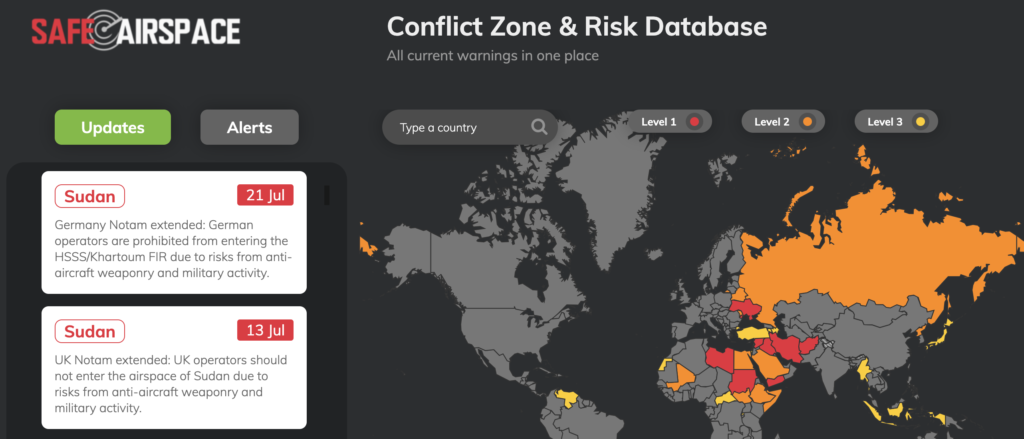
It is a developing situation and Sudan should be avoided until things stabilise. We’ll continue to publish updates as they become available, both to OPSGROUP members, and also via Safeairspace.net – our conflict zone risk database.
Military coup in Sudan: Impact to ops

A military coup is underway in Sudan – the second since late September. Troops have been deployed throughout Khartoum and the military chief has dissolved the transitional government.

HSSK/Khartoum Airport is closed and all flights have been suspended (though no new Notams have been issued). Sudan’s CAA has told the media that the airport will reopen on Wednesday 27 Oct at 4pm local time (1400 GMT).

Phone and internet networks have been blocked making it hard to contact local agents for situation updates. However, security forces clashed with anti-coup protestors on Oct 25 & 26, and there are additional demonstrations and roadblocks planned over the coming days across Sudan.

The US Embassy in Sudan issued a security alert on Oct 26 advising US citizens not to travel to the embassy or the airport. “When commercial flights are confirmed to be departing, an alert will be released” it said.

Overflight impact

HSSS/Khartoum FIR covers the whole airspace. Overflights are still taking place but there have been reports of delays due to thirty-minute separation being applied in the HSSS/Khartoum FIR. A coup in 2019 saw the airspace close for 24 hours.

There is no immediate known risk to overflight safety due to the military takeover.
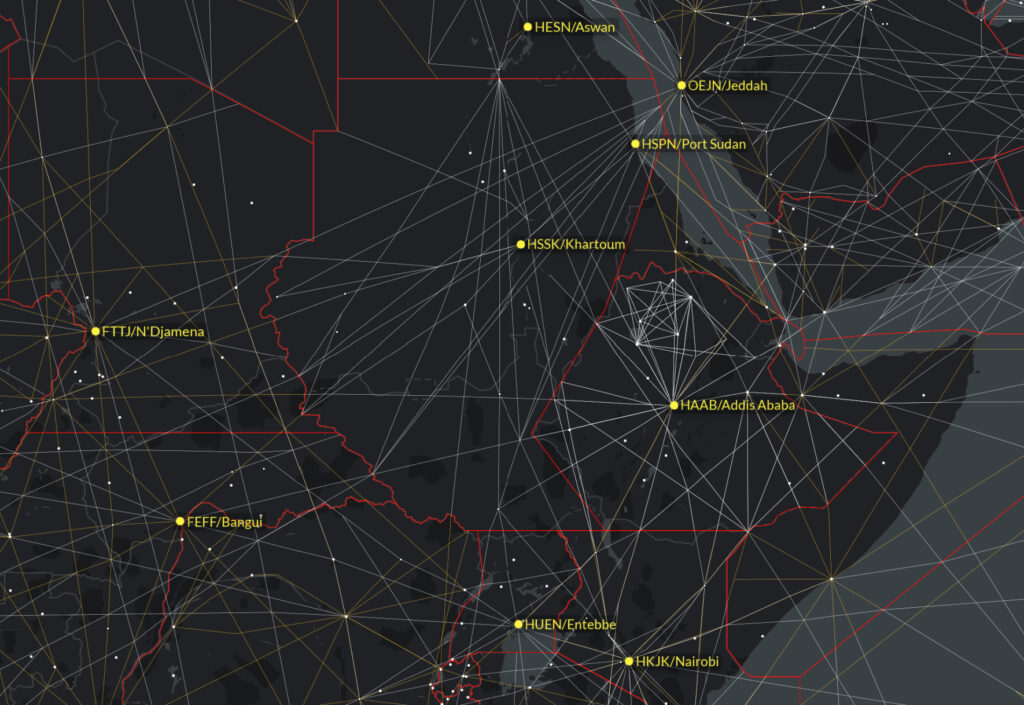
However, Khartoum is a main en-route alternate for this part of Africa. With the security situation on the ground now unpredictable here, there is a general risk for overflights in terms of limited alternative diversion options, given that there are several high risk airspaces including Libya, South Sudan, Eritrea, Somalia and Ethiopia (Tigray region) in the vicinity.

Airspace warnings

There is only one international airspace warning (from France) which recommends overflights above FL260 for the far southern and western edges of the country where it borders South Sudan. The risk is, in part, due to the lack of ATC services and standards below FL245 in South Sudan. Further information on this is available on our Safeairspace page.

For some more background info on the airspace safety concerns for Sudan and South Sudan, you can read our January 2021 update here.


Sudan Airspace Update: A New Risk

Generally, our SafeAirspace risk assessments focus on risk due to conflict, and the anti-aircraft weaponry that is often a result of said conflicts. But today a new risk alert popped up for South Sudan.

So this is a brief summary on the history of airspace safety concerns for Sudan and South Sudan, and the new risk that has been highlighted specifically for South Sudan.

Where are we talking about?

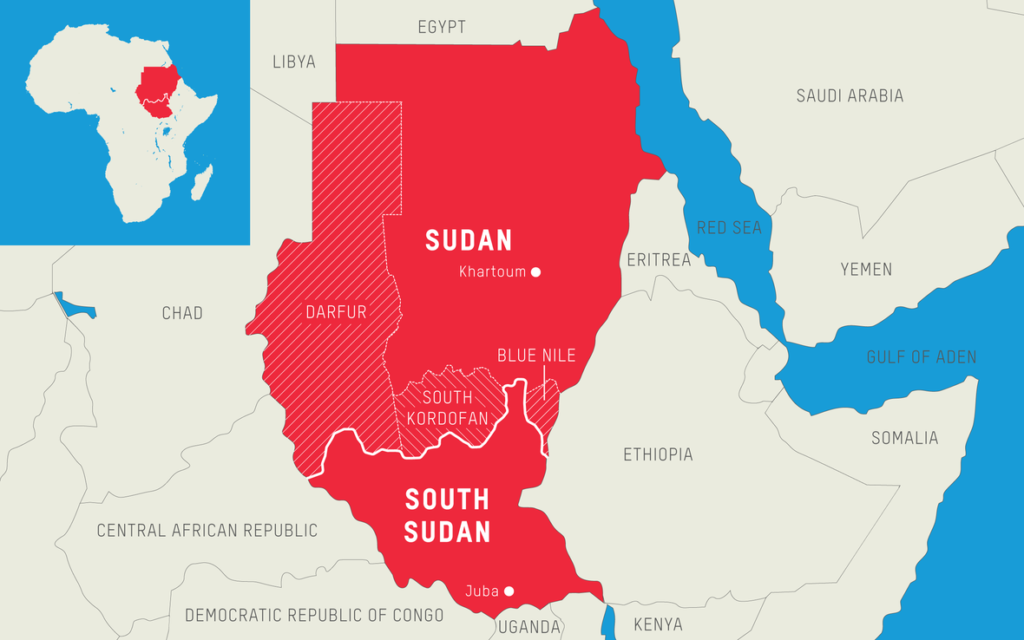
South Sudan is a landlocked country in East-Central Africa, bordered by Sudan, Ethiopia, the DRC, the CAR, Uganda and Kenya. The main airport for South Sudan is HSSJ/Juba.

So it’s South Sudan, not just Sudan?

Yep, there are two Sudan’s – Sudan and South Sudan. South Sudan is officially known as the Republic of South Sudan, whilst Sudan (North Sudan) is ‘just’ Sudan.

Sudan’s primary airport is HSSS/Khartoum

They were the same country until 2011 when they separated following decades of civil war. South Sudan became the world’s newest nation.

Two separate Sudans, three separate issues

Following five years of civil war in South Sudan, a ceasefire has largely held since Sept 2018. Though there has been a significant reduction in violence since then, the political and security situation remains volatile.

Sudan, on the other hand, (which borders South Sudan, the Central African Republic and Chad), has had its own conflict. In 2019 they temporarily closed all their airspace following a military coup which ousted their longtime president Omar al-Bashir from power. This came after months of protests against his rule.

Clashes between the army and former security agents resulted in violence and gunfire in the streets, and the temporary closure of HSSS/Khartoum airport in 2020, but this was brought under control relatively quickly.

There are also issues in bordering Ethiopia and Eritrea, in the Tigray region, which resulted in the closure of some airspace and airways by the Ethiopian and Sudanese CAA.

What warnings are in place due to conflict?

South Sudan – Although the situation has improved since Sept 2018, several countries (the UK, France and Germany) still advise against overflying South Sudan below FL250/260 due to the risk posed by anti-aircraft weaponry. The US published a similar warning but rescinded it in Aug 2019.

Sudan – Only has one official warning in place, from the French authorities. This recommends against overflights below FL260 in the far Southern and Western regions.

But there is a new warning for South Sudan?

Yes, there is. And it isn’t conflict related.

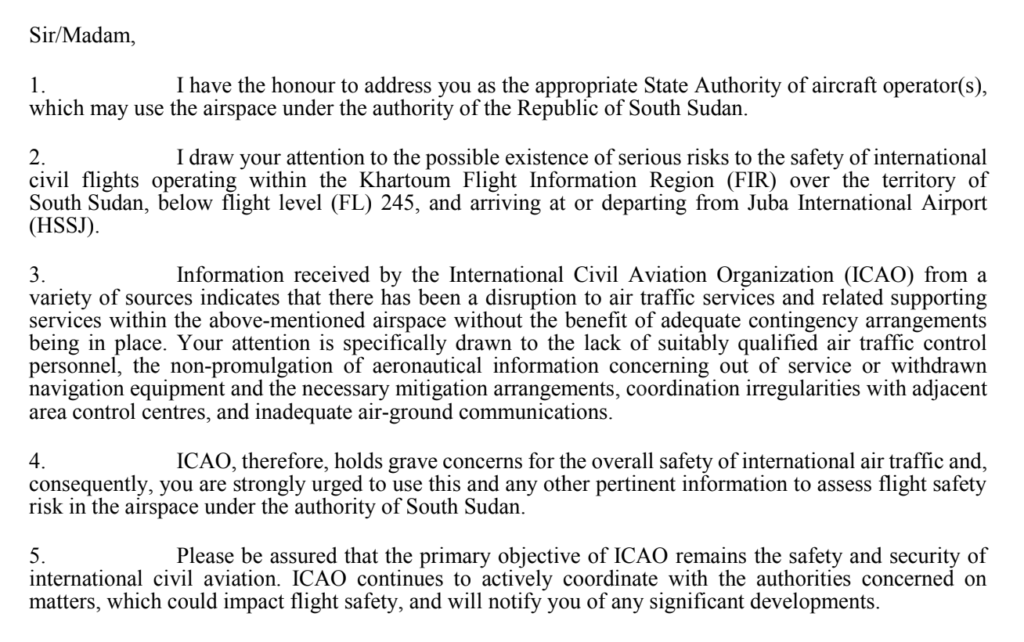
ICAO released a letter on January 20th regarding the safety of Civil aircraft in the Khartoum FIR over South Sudan.

The raised ‘grave concerns’ for the safety of International air traffic operating below FL245, and operating into and out of HSSJ/Juba international airport.

The concerns relate to the disruption of air traffic services and the lack of contingency arraignments in place. They warn about the lack of suitably qualified air traffic control personnel, the lack of information being shared on unserviceable or withdrawn navigation equipment, and inadequate air-ground communications.

A quick search on Notams for Khartoum FIR and Juba airport only brought up info on the opening of airspace following Covid restrictions.

The full warning from ICAO can be read here.

In summary

  • Both Sudan and South Sudan are considered Level 2: Danger Exists regions because of ongoing conflicts.
  • South Sudan now poses a separate risk due lack of aviation infrastructure and lack of information being promulgated (through Notams) on this.
  • Caution recommended if operating below FL245 in South Sudanese airspace, or if you are operating into HSSJ/Juba airport.

Airspace Risk Warning – Ethiopia and Eritrea

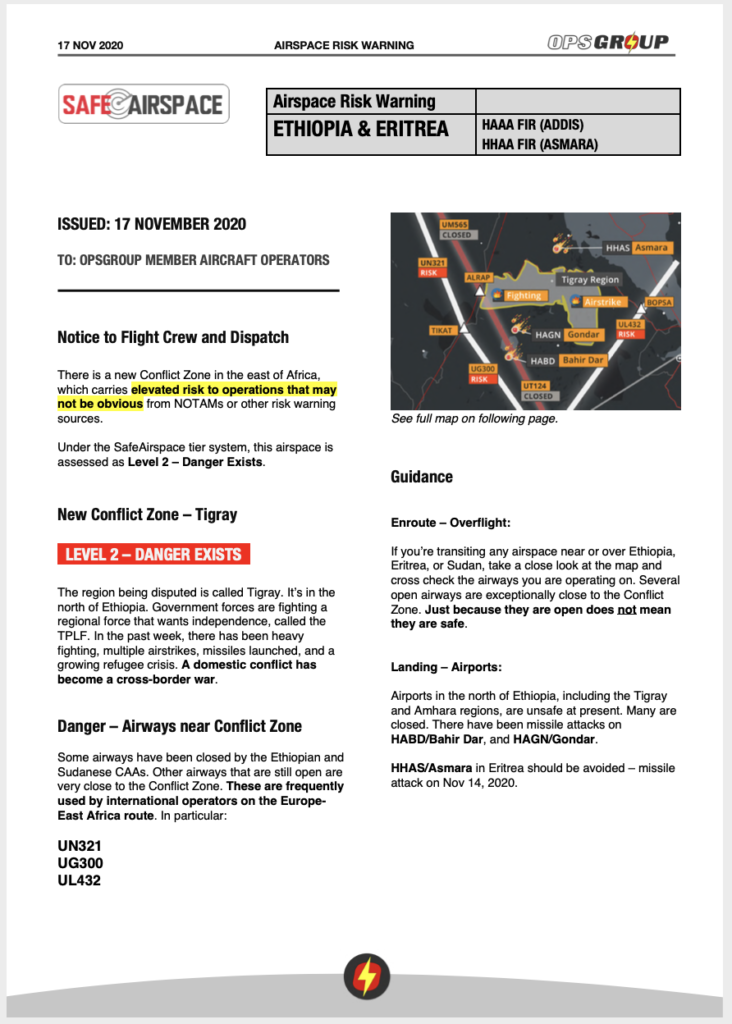
There is a new Conflict Zone in the east of Africa, which carries elevated risk to flight operations that may not be obvious from NOTAMs or other risk warning sources.

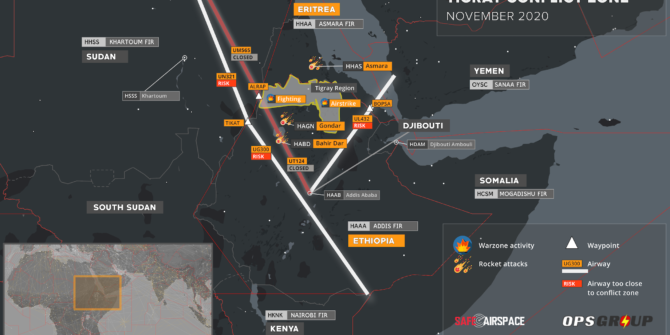
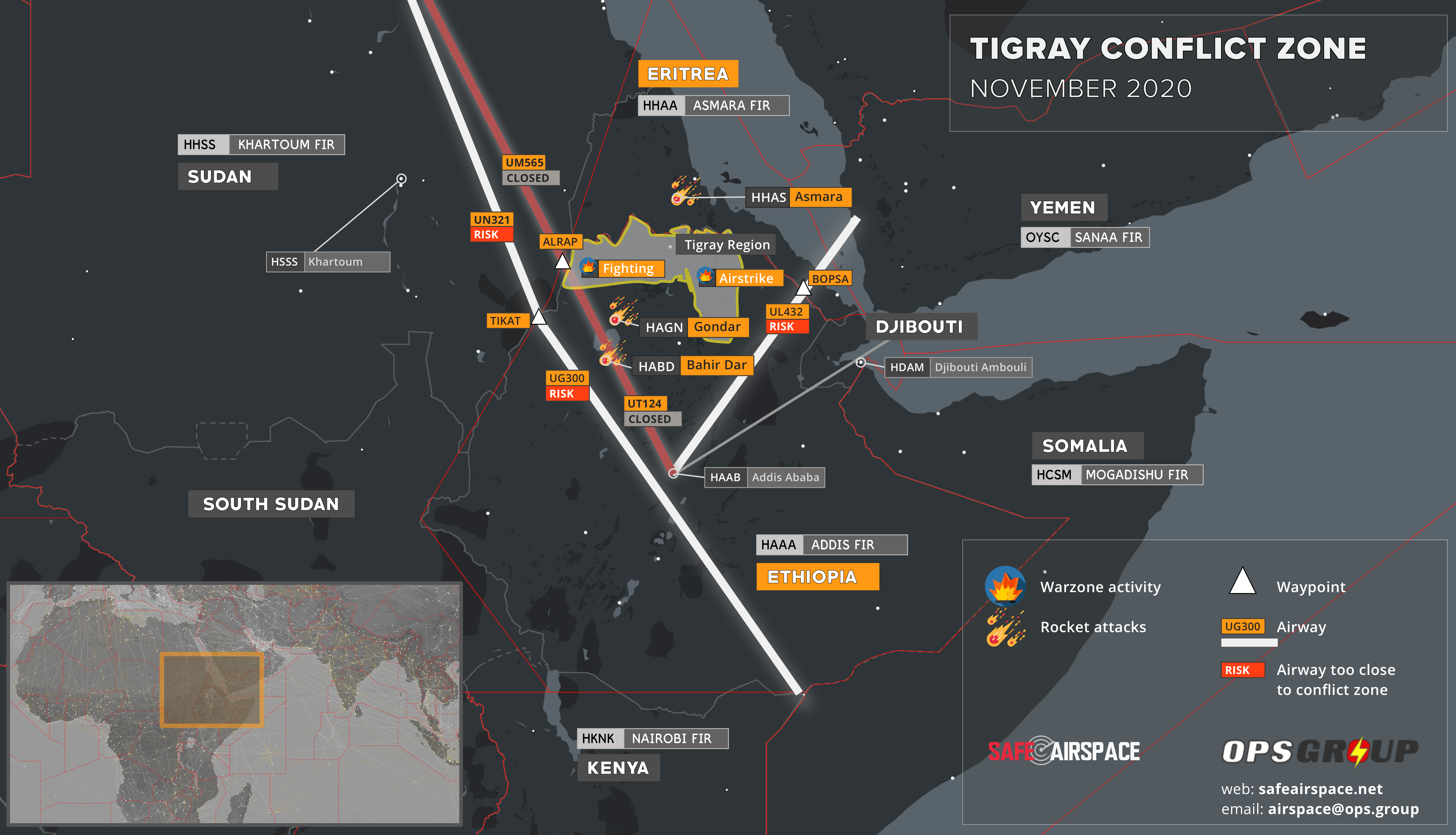
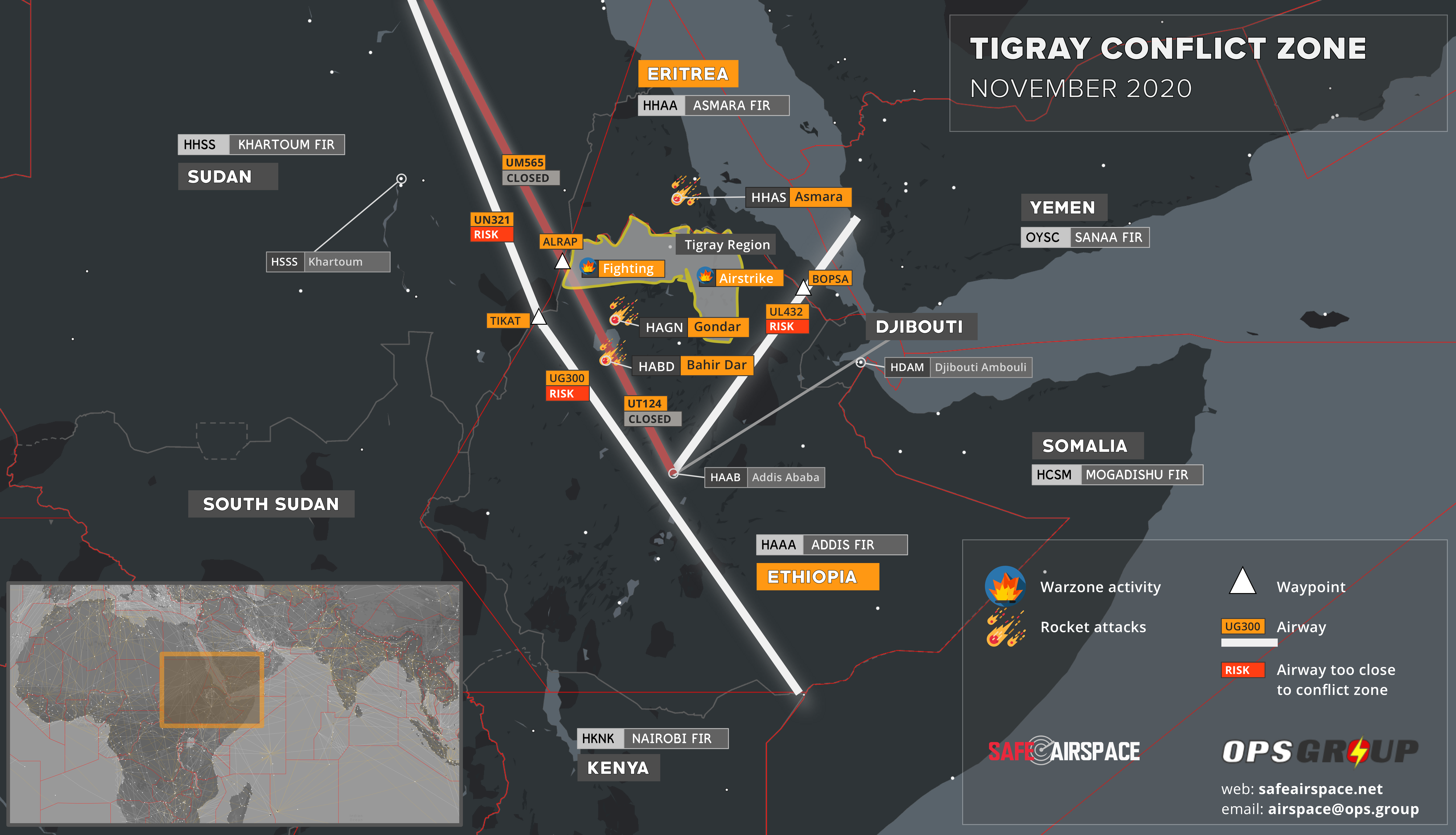
Some airways have been closed by the Ethiopian and Sudanese CAAs. Other airways that are still open are very close to the Conflict Zone. These are frequently used by international operators on the Europe- East Africa route. In particular: UN321, UG300 and UL432. We are concerned that operators may be using these routes without being aware of the risk.

OPSGROUP has today issued an Airspace Risk Warning to its members.

Download OPSGROUP Airspace Risk Warning – Ethiopia/Eritrea (PDF)


Download Hi-Res version of this Conflict Zone map


Situation

The region being disputed is called Tigray. It’s in the north of Ethiopia. Government forces are fighting a regional force that wants independence, called the TPLF. In the past week, there has been heavy fighting, multiple airstrikes, missiles launched, and a growing refugee crisis. A domestic conflict has become a cross-border war.

Our Concerns

There are many warning flags that point to previous shootdown incidents – not least MH17 and PS752. These are the reasons we are particularly concerned about the risk to civil aviation in this region:

Local NOTAMs are misleading
The NOTAMs issued by the Ethiopian CAA to close airways in the conflict zone (UM308, UT124) do not say why they are closed. NOTAMs issued to reroute traffic to adjacent routes (UN321, UL432) do not say why they are rerouted. The same applies to NOTAMs issued by the Sudan CAA to close airways and reroute traffic. Flight crews and aircraft operators are therefore not alerted to any conflict in the area by NOTAM.

Arbitrary Reroutes
Traffic is being rerouted to other airways by ATC, but it’s not clear, or likely, that there has been any risk assessment. European flights are now using UN321/UG300, and UL432 – all of which come exceptionally close to the conflict zone. As we’ve learned from MH17 and PS752, just because airspace is open and available, does not mean it is safe.

Previous shootdowns
The Ethiopian Army shot down an Embraer 120 in May 2020, in Somalia. The Ethiopian Air Force shot down a US Learjet in August 1999 in the Eritrean border region. Both were misidentified.

No guidance to operators
No aviation authorities or official sources have issued any guidance or warnings to date via normal channels.

Rapid Escalation of Conflict
The situation has intensified rapidly, and is extremely unpredictable and unstable. The impact on aviation has not been widely reported.

Guidance

Enroute – Overflight:
If you’re transiting any airspace near or over Ethiopia, Eritrea, or Sudan, take a close look at the map and cross check the airways you are operating on. Several open airways are exceptionally close to the Conflict Zone. Just because they are open does not mean they are safe.

Landing – Airports:
Airports in the north of Ethiopia, including the Tigray and Amhara regions, are unsafe at present. Many are closed. There have been missile attacks on HABD/Bahir Dar, and HAGN/Gondar. HHAS/Asmara in Eritrea should be avoided – missile attack on Nov 14, 2020.

Information Sources

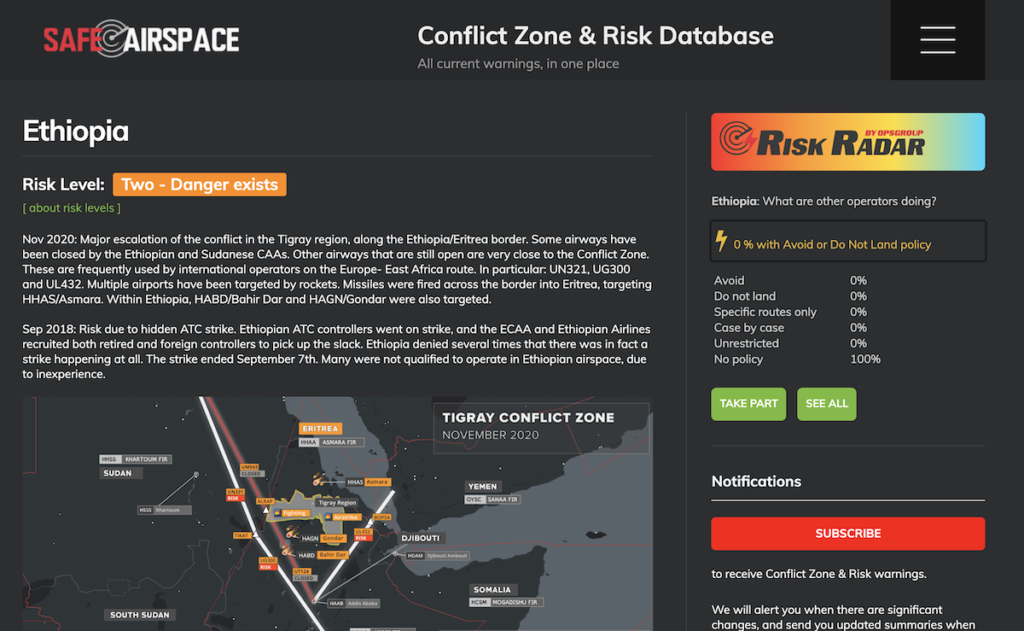
The Conflict Zone & Risk Database at SafeAirspace.net contains all current published warnings and alerts for Ethiopia and Eritrea.

The countries that issue the most relevant updates for unsafe airspace are:

• US (FAA) – through Notams and SFARs
• UK (DFT) – by Notam and then AIP
• Germany (BMVI) – by Notam
• France (DGAC) – by AIC

Note: Operators should not rely on EASA Conflict Zone Information Bulletins (CZIB)’s as a primary source of information. These serve only as pointers to the above sources, and often are not issued until several months after updates, if at all. Note that the Civil Aviation Authorities of the countries whose airspace is determined to be unsafe are unlikely to issue reliable guidance.

Group effort

This information is compiled from OPSGROUP member input, information, intelligence and analysis. If you have additional information to share, please send it to report@safeairspace.net.

Members: More information

OPSGROUP Members: More information in the discussion in the Forum about Ethiopia/Eritrea:
Forum > International Ops > New Conflict Zone Ethiopia/Eritrea

All links to further resources are there.


Africa: Hajj 2019 routes in operation

The Hajj routes for 2019 will take effect from 18 Jul through to 9 Oct.

What are Hajj routes?
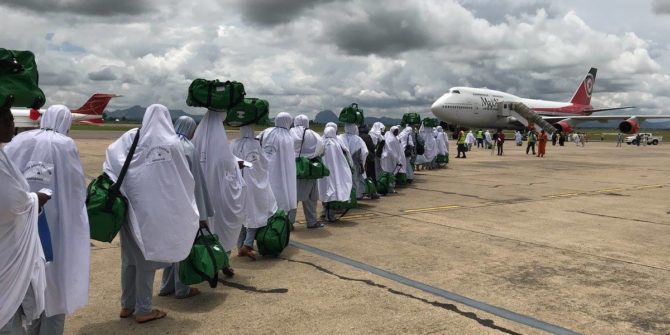
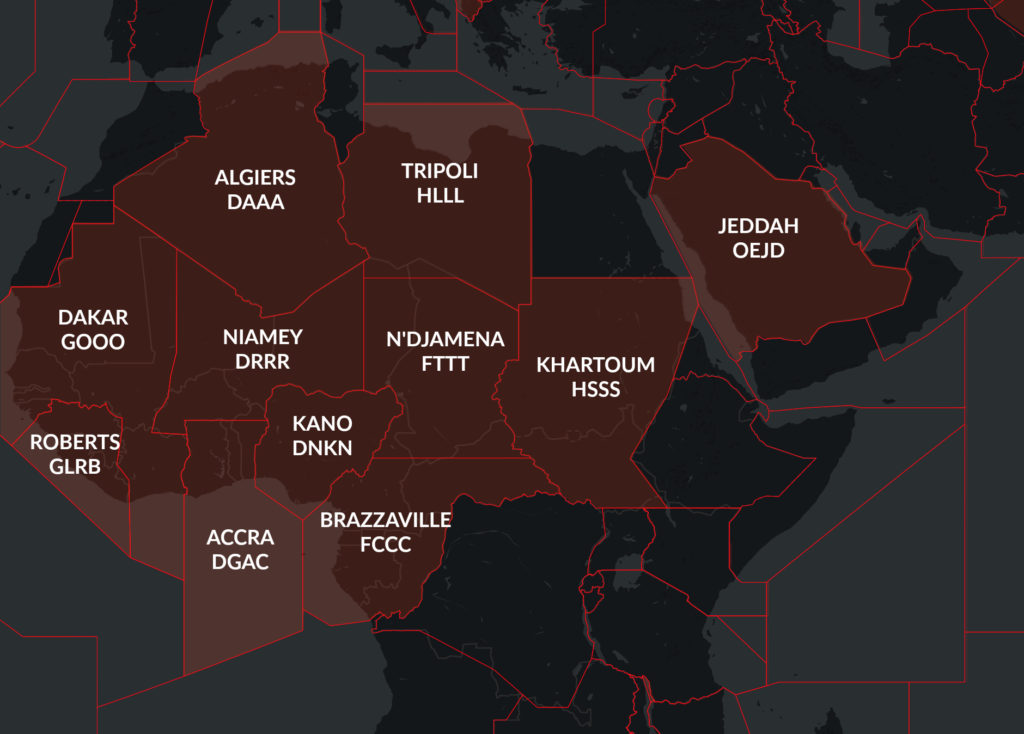
Every year, millions of pilgrims travel to Mecca and other sites in Saudi Arabia – and this changes the predominant traffic flow over the African continent. ATC in the FIRs most affected put in place standard routings to help flow that traffic.

Normally, traffic is very much north-south predominant, with Europe-Africa flights being the main flow. When Hajj operations start up, a good amount of traffic starts operating east-west (ie. Africa-Saudi Arabia and vice versa), and this is something to be aware of when cruising along at FL330 with spotty HF comms.

So, in addition to the normal IFBP belt and braces on 126.9, keep an eye out for a much higher amount of crossing traffic during the coming months.

The FIR’s affected are: Algiers, Accra, Brazzaville, Dakar, Jeddah, Kano, Khartoum, N’Djamena, Niamey, Roberts, and Tripoli.

Of these, watch out for Tripoli – risk remains high across Libyan airspace at all flight levels, and multiple countries have “do not fly” warnings in place. There are daily airstrikes taking place, severe limitations in ATC services, and massive areas of the FIR are without surveillance and communications capabilities. Malta FIR is currently managing all east-west routes in this airspace, and operators can contact them for additional information on email: airspace.cell@maltats.com

The Hajj routings are contained in this ASECNA AIP Supplement.

Further reading:

  • Read IFALPA’s information on recommended procedures when operating in the African region here.

Sudan airspace reopens

Sudan airspace reopened at 1200Z on Apr 12, having been closed for 24hrs following a military coup.

So the HSSS FIR is now once again open for overflights. As for flights to HSSS/Khartoum Airport, all the airlines who were forced to cancel flights during the airspace closure have now resumed operations, and Opsgroup members have reported receiving landing permissions from the authorities again. Local handlers have told us: “The airport is now functioning normally with more security support”.

The military has declared a three month state of emergency, and has deployed soldiers to secure key sites around Khartoum, with armoured vehicles and tanks parked in the streets. Protests against the new military government are still ongoing, although there have not been many reports of any violence. A nightly curfew was introduced on 11 APR for Khartoum between the hours of 10pm and 4am, but this was later lifted.

In response to the military coup, the U.S. has now issued an updated Travel Advisory for Sudan and raised its level of advice from “Level 3: Reconsider Travel” to “Level 4: Do Not Travel.”

Despite all this, still only one international airspace warning exists for Sudan, which was issued by France last year and modified in Jan 2019, recommending overflight above FL200 in the country’s southern edge (where Sudan borders with South Sudan) and western edge (where Sudan borders with Central African Republic and Chad). France’s warning for South Sudan remains the same: overflights should be at FL240 or above. More info at Safeairspace.


Sudan “will shoot down” aircraft

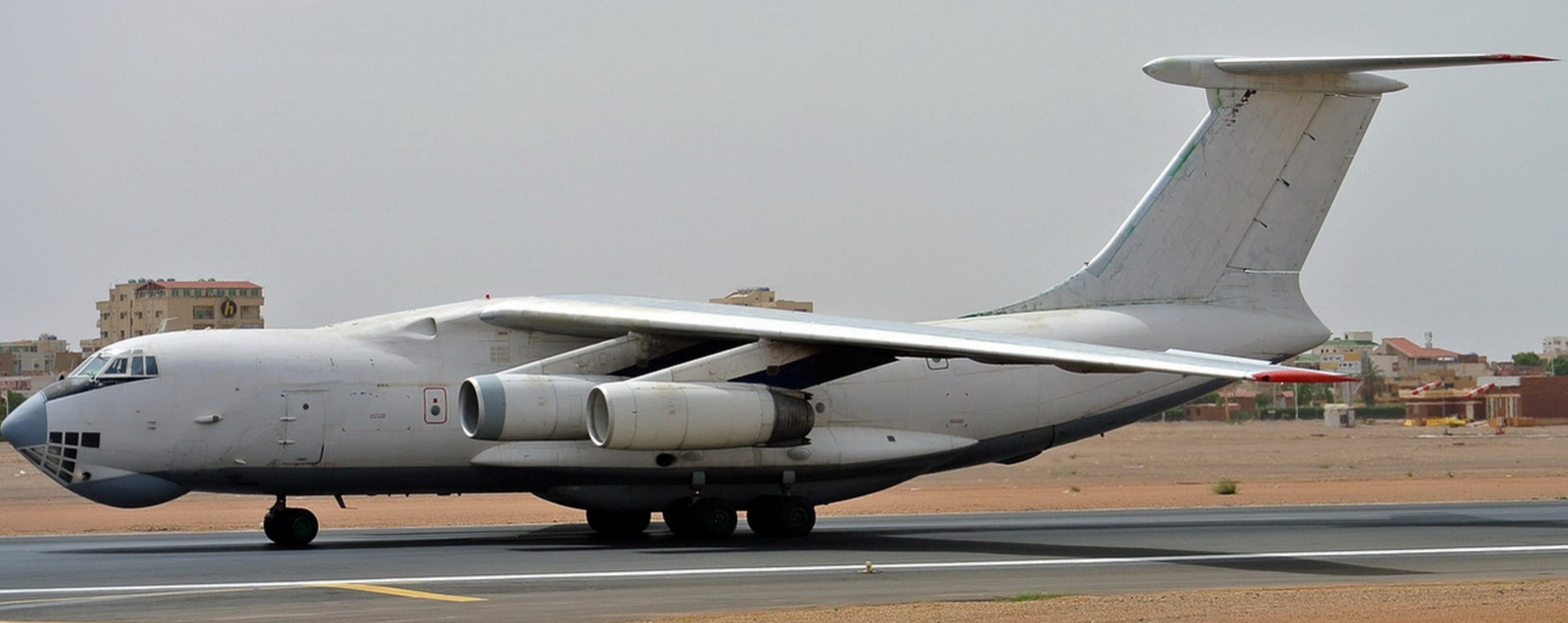
In May 2016, Sudanese radar detected several unauthorised flights by Aid Agencies using chartered IL76 aircraft. The response from the government, on this occasion the Sudanese Army, was extremely strong.

We are concerned at the language being used in Khartoum and Juba. The most recent statement from the Sudanese Army, on 2nd June 2016, says “This action is considered a serious violation of the aviation regulations and the international laws, so we consider it as a direct affront to the Sudanese sovereignty … [we] will deal decisively with any plane failing to observe the proper procedures and entering the Sudanese airspace without prior permission”.

At the start of this year, the South Sudan government declared: “The South Sudanese government has ordered its army to shoot down any aircraft flying across its airspace without permission, citing the increase of unauthorised incursions into the national airspace”.

It’s tempting to dismiss this as not related to regular airline or non-scheduled flying – including long haul overflights – but we’ve learned lessons in the last few years that the unexpected isn’t as distant a threat as it used to be.