Haiti Crisis: Airport Attacked, Aircraft Shot

Key Points
  • Worsening gang violence in Haiti. A state of emergency is now in place, and the US Embassy has issued a new warning for its citizens to leave immediately.
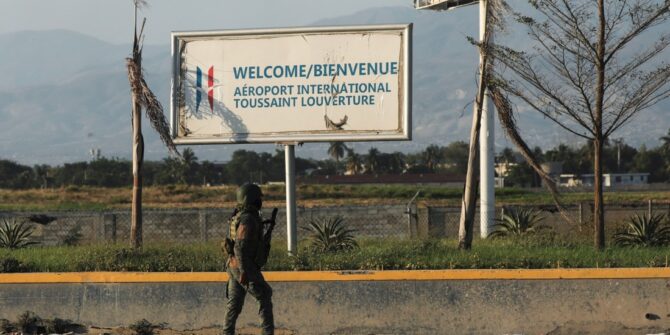
  • Aviation has also come under direct threat, with reports of several armed attacks at MTPP/Port-au-Prince in recent days. All flights have been cancelled until further notice and the airport is now effectively closed.
  • There are no official airspace warning for Haiti. However, conditions on the ground have been likened to an active war zone. For flights, normal services are unlikely to be available, and crew security cannot be guaranteed.

Airport Attacks

On March 4, several dozen heavily armed gang members attempted to take control of MTPP/Port-au-Prince airport.

They breached the airport perimeter and exchanged machine gun fire with police but ultimately failed. Airport staff were forced into hiding. Soldiers have since been stationed there for protection.

Since then, all flights have been cancelled.

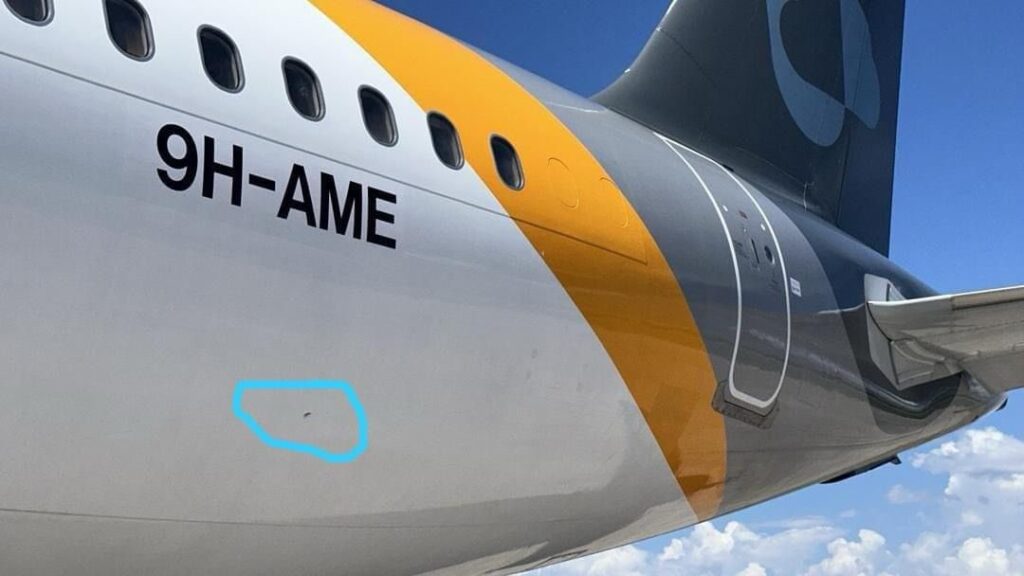
This followed a separate attack last week where an A321 was damaged by a bullet after landing. Sustained gun fire was reported along the access road to the airport during this time.

A landing A321 at Port-au-Prince was apparently damaged by gunfire after landing on Feb 29.

Don’t look to the MTPP Notams for help – you won’t find anything. However, the media has reported several closures of the airport in recent days in light of these events.

Gangs are fighting fiercely for resources and revenue. This includes control over key transport routes hindering freedom of movement and further empowering the gangs – which is why the airport is being actively targeted. Gangs may also have the additional political motivation to interfere with ops at the airport in an attempt to stop the existing president from being able to re-enter the country.

State of Emergency

The Haitian Government declared a state of emergency on March 3, which will apply until further notice. On the same day, the US Embassy issued its own warning asking citizens to leave. 

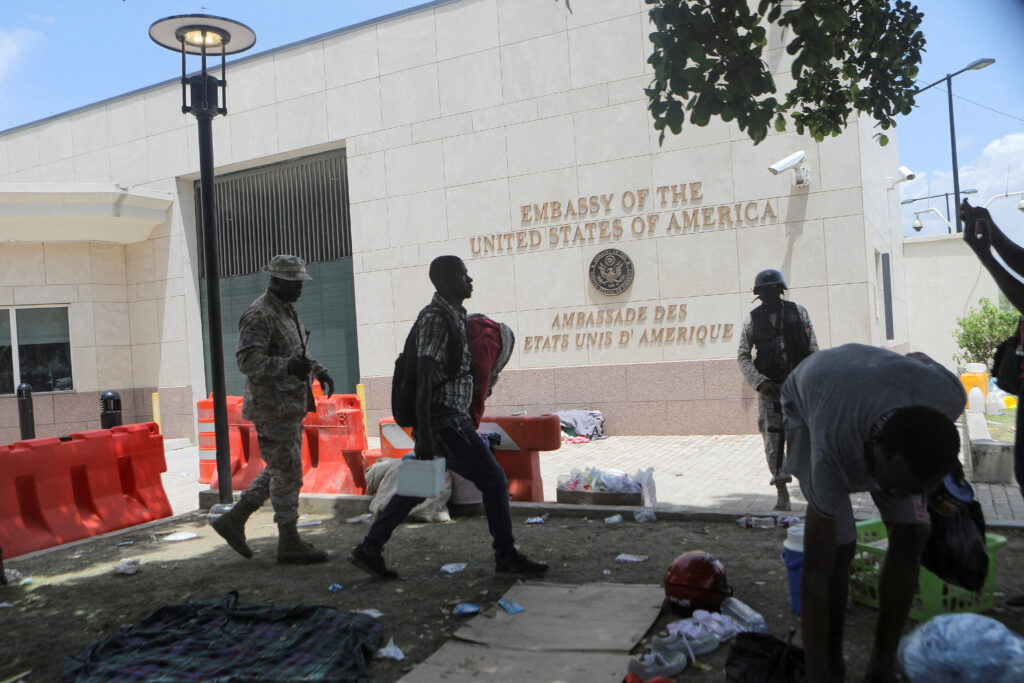
The Embassy itself is periodically closing, and its staff are highly unlikely to be able to help anyone who finds themselves in trouble.

Machine gun fire has been reported near the US Embassy in Port-au-Prince

Impact on Overflights

The FAA does not currently have any active airspace warnings in place for Haiti.

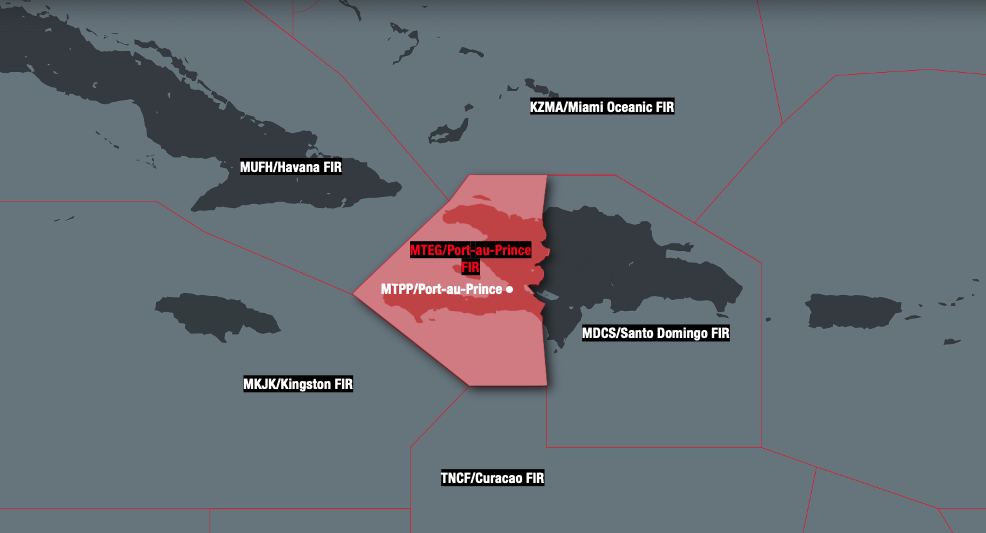
The country operates its own small chunk of airspace – the MTEG/Port-au-Prince FIR. Adjacent sectors include Cuban, Dominican Republic and US airspace. Its Notams are also conspicuously quiet.

No restrictions on overflights have been published, with flight tracking still showing sporadic airline traffic overflying– although the bulk appear to be transiting further east over the Dominican Republic.

The Dominican Republic has banned all passenger and cargo flights to and from airports in Haiti (MDCS Notam A0111/24 refers), but this does not restrict overflights.

The gangs however have shown an active intent to target government infrastructure – its not clear yet what effect this may have on controllers’ ability to perform their duties at short notice.

At the very least, a solid contingency should be in place right now for a short notice reversion to Class G.

Special care also needs to be taken for the possibility of unplanned landings or diversions – especially to Port-au-Prince. Normal services are unlikely to be available, and crew security cannot be guaranteed.

As the situation evolves, keep an eye out for updated information from aviation authorities such as the FAA who may publish background information or additional flight restrictions.

We will report any we see on our conflict zone and risk database, safeairspace.net.

If you have any other information you’d like to share with us, don’t hesitate to get in touch via news@ops.group.


The Changing Face of Disaster Relief Flying – How General Aviation (and Social Media) is Making A Huge Impact

Approximately 200 miles east of Puerto Rico at Flight Level 390, a Miami Center air traffic controller beckoned us on the radio and commanded, “Descend to 17,500 or below and squawk VFR. Good luck.” Hurricane Maria had made land fall over Puerto Rico not even 48 hours prior, and, without power on the island, there were no San Juan Center air traffic controllers to coordinate aircraft flying through their large parcel of airspace.
This was our flight department’s first attempt at delivering humanitarian aid into a natural disaster zone so we expected some unknowns, but this directive was a bit unnerving. We had just begun our trip only hours earlier out of Ft. Lauderdale and now ATC wanted us to fly VFR over the ocean, 200 miles off the coast of our destination? Unknowns are one of many issues flight crews face on a constant basis, but being unprepared is quite another dreaded beast. Were we in over our heads?

A Burgeoning Resource

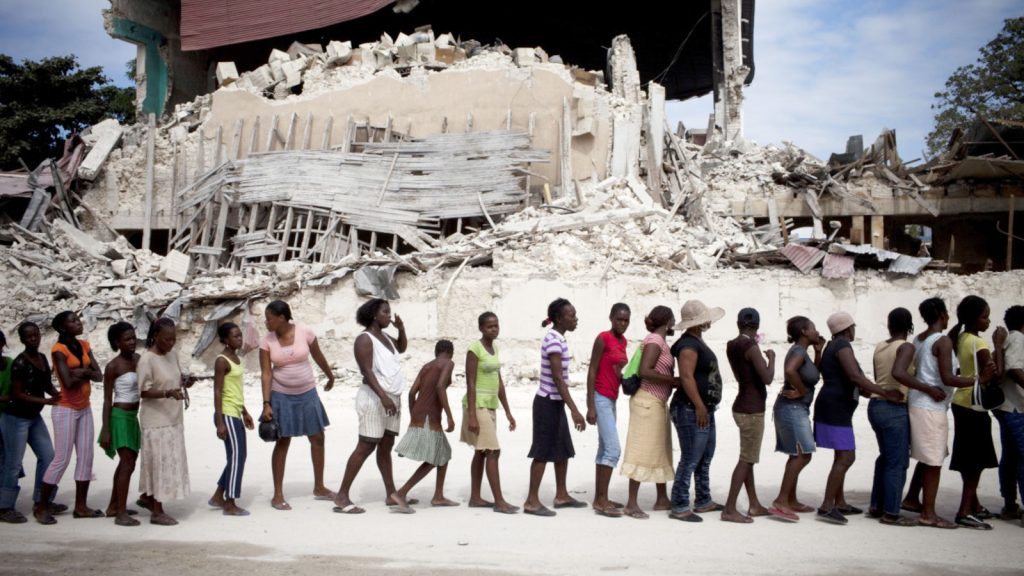
“Before Hurricane Katrina and the earthquake in Haiti, it was rare for Part 91 and 135 operators to partake in disaster relief,” explained Robin Eissler, the founder of PALS, Patient Airlift Services. “The past 14 years have seen so much change.”

When Katrina struck, Eissler began working with other flight department managers and dispatchers through the NBAA’s Airmail system to figure out a way to coordinate a general aviation response to the disaster. This would eventually become the building blocks for the HERO (Humanitarian Emergency Response Operator) Database, the NBAA’s registry for flight departments seeking to assist in such emergencies. “In terms of our HERO Database, we help to connect the aviation resource (airplane or other individual volunteer) with the relief organization best able to utilize that asset,” said Douglas Carr, Vice President, Regulatory and International Affairs of the NBAA. “Business aircraft can fly on short notice into airfields in which many airliners and cargo planes cannot.” The HERO program works closely with many humanitarian groups, especially Eissler’s PALS.

Shortly after Eissler formed PALS, the earthquake in Haiti struck. She described the general aviation humanitarian response as the grand experiment, “The government response was limited initially. The airlines shut down, and, other than military aircraft, corporate aircraft became a major source of delivering aid. We had over 1,000 flights for food and medical supply drops as well to evacuate the injured.”

In those early trials of PALS and the HERO Database, social media was a major asset. “We had a 13-year old girl in Haiti hit by a bus just after the earthquake and doctors said she needed an immediate evac,” recalled Eissler. “There were strict slots to get into Port Au Prince, and we had a G5 in Connecticut set to depart to get her when it had an engine issue. We immediately posted a need for help on our registry but also on Facebook. Five minutes later a Pilatus pilot just getting ready to leave Haiti posted that he had some room on the aircraft for her. She was delivered to the plane in critical condition laying in the bed of a pickup truck. But she’s alive and well today. Many might think social media is silly, but it can save lives.”
Now that the registries have been tested through further natural disasters, pilots and dispatchers can easily log-in and quickly see what requests have been posted and what missions might match their departments’ capabilities.

Haiti also played a major role in the creation of LIFT, a not-for-profit logistics provider for other NGO’s. It’s founder, Michael Rettig, spent over 30 years in the freight forwarding business. As he assisted in Haiti’s humanitarian response he saw what potential general aviation aircraft had to offer to such a response but also witnessed the lack of organization and preparation.

Rettig thrives on the efficiency of the supply chain and now applies his logistics experience to disaster relief through his organization. “60%-80% of every dollar spent on humanitarian aid used to be spent on logistics. That was way too inefficient,” he explained. “There’s a need for general aviation in humanitarian relief but there was a lack of coordination.”

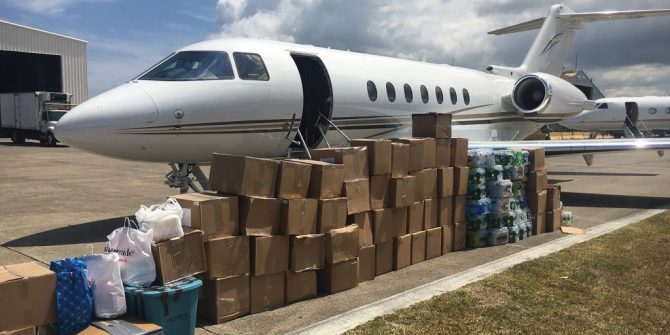
Large transportation companies like UPS, FedEx and Maersk formed LET’s, Logistics Emergency Teams, to coordinate disaster relief. But general aviation was lacking such coordination. FEMA’s National Response Coordination Center was willing to listen to GA advocates but there needed to be more preemptive coordination. “Too many general aviation aircraft were showing up with aid that wasn’t necessarily what was needed,” Rettig said. “Flying in a G5 filled with Fiji water is a waste of money and resources. I much rather see medications like insulin or advanced communication system components and specialized technicians that can set them up being flown in. Corporate aircraft plug into the overall response framework by delivering high value, high impact aid.” Rettig and Eissler are very familiar with each other as their organizations work hand in hand during these responses. The required aid – whether it be medical or tech oriented – can be flown in and then medical patients can be flown out.

Planning Ahead

As we flew through the Wild West of uncontrolled airspace towards Puerto Rico, talking over a common radio frequency to the aircraft both ahead of and behind us as we obsessively monitored their positions on our Traffic Collision Avoidance System, we finally entered the traffic pattern over a small satellite airport in San Juan. After landing, we tried to maneuver down a taxiway with overturned Cessnas, mangled helicopters, obliterated hangars and even a pit bull limping down the tarmac. This was definitely unexpected.
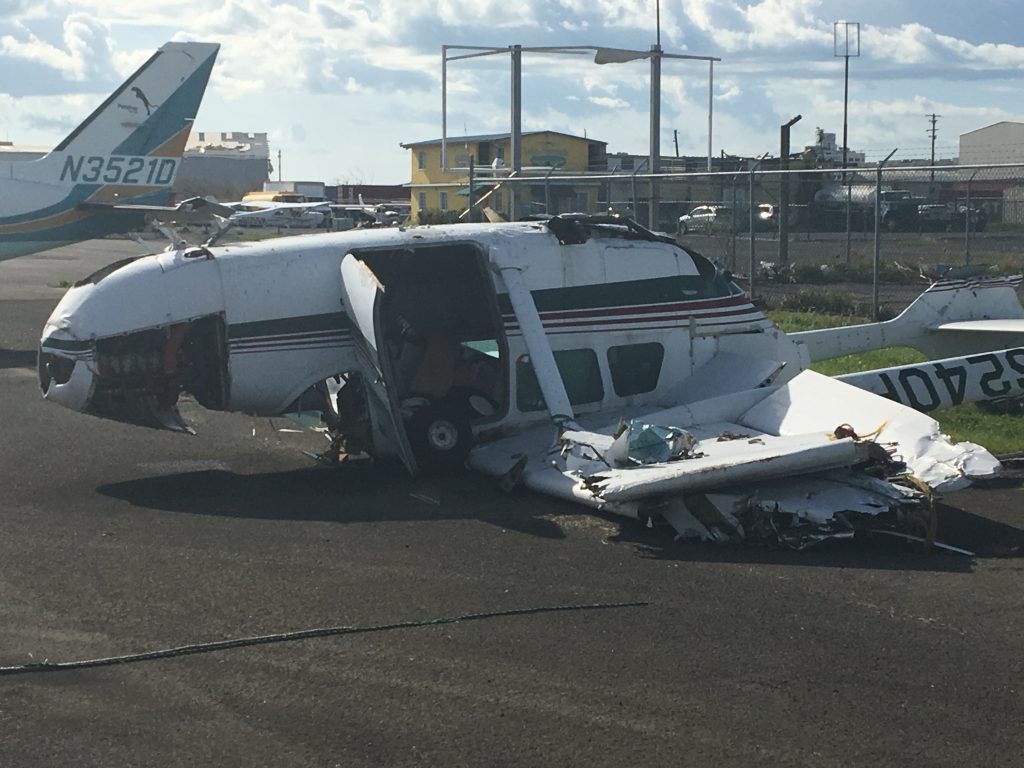
Thankfully we had one of our maintenance technicians along with us who go out of the plane and guided us safely around the strewn debris. Surface conditions of the airfield are of a primary concern when entering a disaster zone, and without power and phone communications, there may not be much information available. Having a dedicated operator on the ground is so much more helpful in determining the safety of an airfield than putting all your trust in an email from an FBO employee or a flyover to check for debris.

Zac Clancy is Vice President of Global DIRT (Disaster Immediate Response Team), a nonprofit organization made up of prior military personnel who immediately arrive in disaster zones and even pre-position themselves in areas prior to a hurricane’s arrival. “We have multiple responsibilities from restoring communication connectivity to securing and transporting aid.” Once aircraft drop off the aid, what exactly happens to it? “We’ve seen cargo planes drop off tons of humanitarian aid on the tarmac and then leave. No one takes responsibility for it, no one protects it. We unload it, take legal responsibility for it and then work with other NGO’s to deliver it,” Clancy explained. Global DIRT employees also work directly with airport tower controllers in these affected areas on getting ATC slots and clearances for GA operators. “It’s interesting, in many cases I simply walk up to the control tower, knock on the door and speak directly with the controller,” said Clancy.
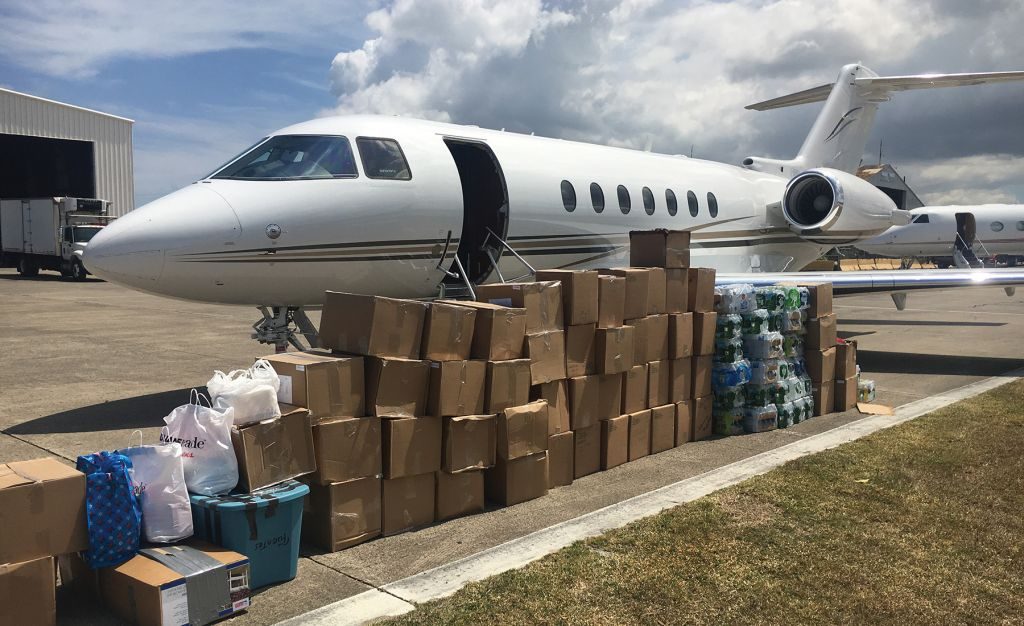
“We’ll assist you once you get here, but I highly suggest that all operators have a plan in place prior to any type of natural disaster response,” said Clancy.

As we unloaded boxes upon boxes of aid in the blistering afternoon air, we started to reexamine our original “plan”. Our dispatcher had worked tirelessly without rest since the hurricane hit to organize the flights as this type of mission was new to all of us, and she was learning on the go. “It’s the little things you don’t think of that you need to have already planned for. What are you willing and not willing to pack on the airplane? What company personnel should be permitted to go? Even, what type of packaging should be used?! Misunderstandings and miscommunications like these cause delays and headaches,” she explained. “What an aircraft owner or a corporation’s executive team may assume is possible, may not be so. Prior understanding is a key. And their understanding of the risks involved are necessary as well.” Eissler agreed, saying, “Corporate flight departments can get nervous once you start talking about safety and security and all the logistics on the ground. Working with us offers that extra layer of liability protection.” Rettig added – “If I can advise one thing, it’s to partner with a vetted organization that deals with these things. Don’t show up unannounced. No one wants disaster tourism.”

As we prepped our aircraft for departure, the skies over the small executive airport began to get congested with business jets transporting their own aid. A few go-arounds occurred and some aircraft exited the traffic pattern to manoeuvre back around to re-enter. Clear and detailed communications between flight crews were essential for safety.

As for communications on the ground, we were thankful to have a satellite phone to speak to our point of contact in the city that was delivering the aid by truck. ETA updates were necessary as NOTAM’s spelled out that all aircraft must depart the island by sundown or be stuck overnight. Thankfully, our maintenance technician had just finished dealing with an issue with our ELT as we didn’t even want to even consider the possibility of getting stuck overnight.

As we taxied to depart from our first disaster aid drop we were somewhat disappointed. We had planned on making two drops that day but delays in ATC letting us depart Ft. Lauderdale as well as delays in the actual delivering of the aid took much longer than we expected and there would be no way to make another round trip before nightfall. There was also a sense of guilt at having empty seats in the aircraft as we flew back to the mainland. Clancy couldn’t iterate enough, “The return legs of the relief flights are often under-utilized. While there is the need for aid coming in, often times there’s a need for things to go out as well: people highly in need of medical care, stranded citizens, and returning aid workers. Unfortunately, these flights back are empty because the planning wasn’t in place to know of such need.” In our situation, that would be the last time we would fly back with an empty aircraft.

Coordination

At the hotel that night, I began posting on OpsGroup about what we had witnessed, what we had learned, and what some of our concerns and misunderstandings were. The response was relieving as other operators and OpsGroup personnel chimed in with much needed info and support for the continuing flights.

Our dispatcher took her job to the next strata, and, in the ensuing days, we had much more structured missions. She coordinated with LIFT to send our own company’s disaster relief aid over in a cargo plane; no more strategic packing of goods in our corporate jet and no leaving behind of aid that was too big to fit in our plane. Whatever we needed to get over to the island could go. In exchange, Rettig coordinated a flight in which we flew technicians from a large tech company into a decommissioned naval airfield to begin fixing a specialized communication system to bring back cell coverage across the island.

There were no instrument approaches, just a government issued airport diagram. But a surprise radio contact from a Marine Corps air traffic controller aligned with a battalion sheltering in one of the decrepit hangars offered much appreciated assistance. Once again, the unexpected! As the technicians and engineers worked through the day, we could sense that this mission, which our aircraft was well suited for, may offer much more to the overall disaster response than the general aid we had delivered the day before.

The following day we flew in security and NGO personnel set up by ALANAid, American Logistics Aid Network, which works closely with LIFT, into San Juan International Airport, by then fully operational. Upon return, PALS filled the aircraft with sick and elderly personnel.
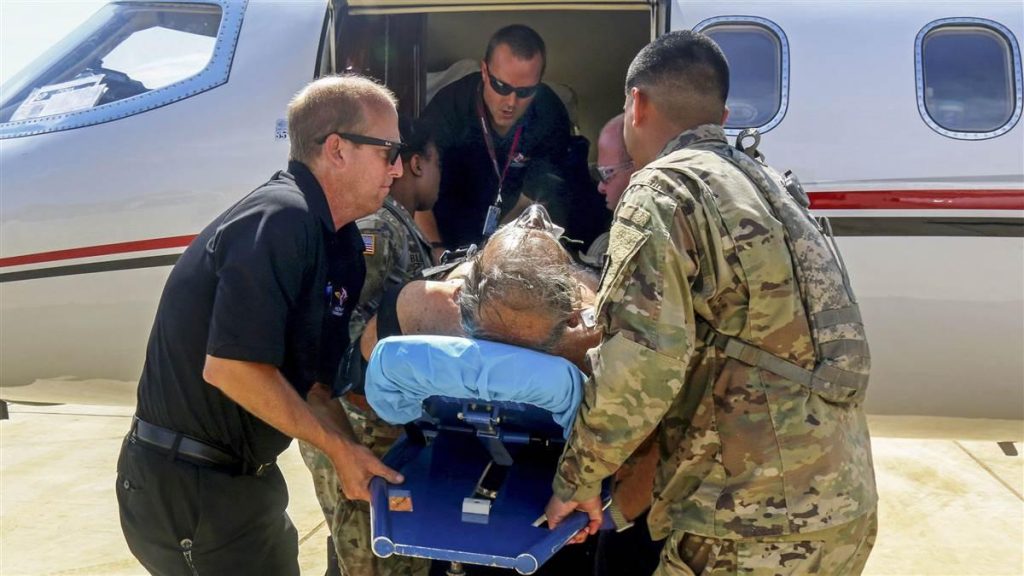
Again, we were a bit weary of what to expect as far as handling those in medical need. “As for planning, a flight department should know how they want to deal with the sick and elderly,” said Eissler. “We have you covered liability-wise, but departments have some small decisions to make beforehand – like, if they want passengers sitting up or laying down. What food, drink or medications you may want onboard. Many people don’t think of these things prior to picking up these passengers. But we point them in the right direction.”

Once we met our passengers, though, all weariness evaporated. Just witnessing their appreciation for simply taking them out of the sweltering FBO and into our aircraft’s air conditioning was heartwarming. And that would pale in comparison to witnessing them being reunited with family on the mainland.

The response in Puerto Rico made clear that there are a number of organizations that can assist a flight department in delivering disaster relief. Yet it seems to be a very small circle. They all seem to know each
other, work with each other… and, more importantly, respect each other.

It makes sense, considering the reason many of these people do this type of purposeful work. Before Katrina, Eissler was overseeing an aircraft management company.  A few years later after creating PALS, she would be getting calls from the military. “I’ve ordered an Air National Guard commander where to send his aircraft while standing in my kitchen on the phone. I’ve yelled at a commander for landing his C130’s on a runway that couldn’t support its weight. I’ve called in for a King Air to fly over a runway to check its integrity for other aircraft. And here I am – a mom in Texas and I’m making these calls!”

Rettig took a similar path; before Haiti he was working for a large shipping corporation but after coordinating a small aid flight in a friend’s PC12 to Haiti he found a passion. Now he’s handling transportation in all forms and sizes to assist NGO’s with humanitarian aid logistics across the globe. That passion underlies how many of these organizations can help general aviation departments in their effort to deliver humanitarian aid.

We continued flying into Puerto Rico for a few more days. Each day the mission changed but the logistics of the flights got easier as basic services began coming back on line. On our last flight back to the mainland to drop off passengers in Ft. Lauderdale, I walked an elderly woman with kidney failure into the FBO. After her awaiting family celebrated her arrival she hugged me with a tear smeared face. She then proceeded to FaceTime with her niece, an unmarried nurse in NYC. While holding me in the in frame of the phone’s video feed, she asked if I was married and if I’d like to meet her niece. More of the unexpected! Her hearty laugh was a great ending note on what was such a meaningful – and adrenaline filled – week of flying.

That year we would respond to hurricane aftermaths in Texas, Florida and North Carolina. And though we hope for no more natural disasters, we know better. And we look forward to helping in any way we can when they do happen. In normal operations we focus on service to ensure safe and successful business operations, the importance of which cannot be overstated. But when disaster relief becomes the business at hand, one cannot help to feel an even greater sense of purpose. Though achieving that goal can be daunting and anxiety-ridden, there are dedicated people out there to help in succeeding in that mission. And all who take part just may find enjoyment in the experience, even in the unexpected.

Resources

International Bulletin: Winter is Coming, Updated Canada Requirements

Winter is coming 09NOV With the clocks changing, it’s a reminder that we’re not far away from the snowstorms, deicing delays, cancelled flights, airport shutdowns, and those big invoices for de-icing fluid. Our new author Frank Young has an article.

Updated Canada requirements 09NOV From tomorrow, November 10, an eTA is now mandatory for flights to Canada (for most people), and there’s an update to flying to Canada with a previous conviction. Read the article.


BIKF/Keflavik Long a destination for flight certification testing (because it’s cold and windy), will not accept test flights until February next year, thanks to runway renovation work.

ZZZZ/Worldwide Last week we ran a story about the new ICAO SID/STAR phraseolgies. In short, some countries are implementing, and others aren’t. We’re going to make a list of who’s doing what, so that you as an operator or pilot will have some idea. Can you help us? What is your country doing? Tell us at bulletin@fsbureau.org.

LTBA/Istanbul At about 0100 local time on 6 November, two people on a motorcycle opened fire outside Istanbul Ataturk International Airport, prompting a temporary closure. Reports indicate that authorities apprehended both suspects and did not find additional weapons or explosives on their persons. Officials briefly placed the airport on lockdown but reopened the facility at about 0130. The incident reportedly did not affect flights, and the gunfire harmed no civilians or police officers.

CZZZ/NAT Region The FAA has recently determined that time estimates provided by pilots in oceanic CTAs are less accurate than expected, particularly when adverse weather causes pilots to deviate from the planned course. These inaccurate estimates can compromise the separation of aircraft. Have a read.

YMML/Melbourne Be aware of recent hoax ATC calls. Someone with a handheld radio has been making “go-around” transmissions on the Tower frequency, and at least one aircraft has responded. Airservices says there have been 15 such transmissions in the last few weeks.

CZZZ/Canada The NBAA has issued useful updated info for flying to Canada with previous convictions – Canada is known for refusing entry based on DUI charges. Today, November 9, is also the last day that you can enter Canada without an eTA.

PWAK/Wake Island – an ETOPS alternate – is closed on 11NOV for Veterans Day. They do say they will attend with 30 mins notice, so maybe two ETOPS circles are required for that day. Check other US ETOPS alternates on this date also.

UCZZ/Kyrgyzstan Since 4 November, if you’re staying for longer than 5 days, you must register with the local authorities.

PKMJ/Majuro is downgraded to Cat 6 until November 23, which may affect some operators using this as an ETOPS alt.

EGNX/East Midlands airport has some weekend closures for the next six weeks.

VIZZ/India announced on 8 November that 500 and 1,000 rupee banknotes will cease to be legal tender as of 0000 local on 9 November 2016.

EVLA/Liepaja (one of Latvia’s three international airports) is now closed to all operations. They say they will be open again in Spring 2017. Fingers crossed.

LAZZ/Albania has been experiencing heavy rains, high winds and flooding throughout the country, causing road blockages, school closures, and disruptions in ferry services. The army has been mobilized for rescue and relief operations.

LFLL/Lyon If you’ve been using LFLL as an alternate at weekends, you’ll have to cut that out from December 10th, they don’t want weekend diversions of non-sched flights.

EGKK/Gatwick has advised of a new series of rail strikes that will run through to January next year.

MHTG/Central America FIR reminds operators that a CENAMER notification by AFTN is required for all flights planning to enter the airspace.

MTZZ/Haiti The US has published updated advice for Haiti: U.S. citizens are advised not to travel to the southern peninsula of Haiti, commonly referred to as the “southern claw.” The U.S. Embassy has currently banned unofficial travel to the southern peninsula and allows official travel only after consultation with its security office. There is widespread devastation throughout the southern claw with the most affected areas on the western tip of the peninsula. Travelers can expect difficult travel conditions with roads made impassable by landslides, damaged roads, and bridge failures. There is also widespread damage to buildings and infrastructure, including gas stations and cell towers, loss of electricity, and shortages of food and potable water. U.S. citizens who choose to travel to the southern claw in spite of these risks should carry sufficient water, food, fuel, and medicine to last longer than their anticipated stay. The security environment around the southern claw is fluid and uncertain.

LFOB/Paris Beauvais is closed overnight from 2200 to 0600Z, for 14-25 November inclusive, due to stuff.

HAZZ/Ethiopia On November 8, the Command Post – the body tasked with implementing Ethiopia’s state of emergency – lifted the restriction imposed on foreign diplomats, which restricted them from traveling more than 25 mi/40 km outside of Addis Ababa. The Command Post also lifted and revised several other state of emergency provisions; however, the changes are minor and are not likely to affect the current situation. The curfew and communication restrictions remain in place

NFTF/Tonga Fua’amoto (the main airport) has new operating hours – these are, in UTC: 1600 SUN TO 0530 MON, 1025 MON TO 0800 TUE, 1600 TUE TO 0530 WED, 1000 WED TO 0800 THU,0900 THU TO 1200 THU, 1600 THU TO 0530 FRI, 1600 FRI TO 0800 SAT. They’ll accept div traffic outside these hours, call +676 22 608 – but prefer no surprises on Sundays.

OMAA/Abu Dhabi will see heavy traffic for the Grand Prix on November 27, avoid if possible.

SBZZ/Brazil The office that processes Foreign Civil overlight and landing permits has updated hours of operation: Mon-Fri 1230Z-2230Z.

SBCT/Curitiba airport would like 4 hour PPR notice for non-scheduled flights, and request that you call them on 55-41-3381-1478 to arrange that.

SPJC/Lima, Peru has an upcoming APEC meeting 14-21 November, with a decent increase in traffic expected, and a few restrictions. They’ve also warned pilots to pay attention to radios and transponder codes to avoid them sending up the jets – good advice.

TVSV/ET Joshua Airport is closed due to flooding.

VECC/Kolkata Radio has a new HF frequency: 8861, with hours 1330Z-0130Z. Use this if 6556 or 10066 isn’t working for you.

CZQX/Gander is going to auto-send you a “Confirm Assigned Route” message from 01DEC, on entry into their OCA – if you are FANS 1/A equipped. If you’re not sure how to feel about that, read our previous article.

LCCC/Nicosia There’s a good deal of mil activity – UN, and Russian – in the Cyprus region at the moment. Read the LCCC and surrounding FIR Notams carefully. Oh, and if you’re not up to date on your Greek-Turkish FIR dispute, add LGGG and LTBB to that. As 2016 draws to a close, enough regional history has been published for an entire novel. This weeks Notam series covers the 1923 Lausanne Peace Treaty.

NZZC/New Zealand published a change to SID procedures today, and our brain hurts. We’re not sure if this is related to the 10NOV ICAO SID/STAR changes, or .. something else. If you’ve got it deciphered, let us know. THE STANDARD INSTRUMENT DEPARTURE (SID) SPECIFIES IN BOTH DIAGRAMMATIC AND NARRATIVE FORM ANY OF THE FOLLOWING: THE DIRECTION OF TURN, HEADINGS, TRACK, DISTANCES, SIGNIFICANT POINTS AND ALTITUDE REQUIREMENTS. WHERE TRACKING TO OR FROM A NAVIGATION AID IS NOT POSSIBLE, DESIRED TRACKS ARE SHOWN AND DUE ALLOWANCE FOR WIND IS TO BE MADE. AIRCRAFT ARE TO CONTINUE CLIMBING THROUGHOUT THE SID UNLESS IN COMPLIANCE WITH PUBLISHED ATC MAINTAINS, DEPARTURE MINIMUM SAFE ALTITUDE (MSA) OR AS OTHERWISE INSTRUCTED. WHERE CONTINUOUS CLIMB TO THE END OF THE SID IS NOT REQUIRED A DEPARTURE MSA MAY BE DEPICTED ON THE RELEVANT CHART. THE DEPARTURE MSA REPRESENTS THE LOWEST ALTITUDE FOR OBSTACLE CLEARANCE ALONG THE ENTIRE DEPARTURE ROUTE (INCLUDING TRANSITIONS). IT REMAINS THE PILOT’S RESPONSIBILITY TO MEET SUBSEQUENT ENROUTE MSA/MINIMUM FLIGHT ALTITUDE (MFA)/MRA/MEA REQUIREMENTS APPLICABLE AFTER SID TERMINATION. DEPARTURE MINIMUM SAFE ALTITUDES DO NOT ENSURE CONTROLLED AIRSPACE CONTAINMENT.

OEZZ/Saudi Arabia has issued an extension of the policy that requires all aircraft with a destination in Yemen to first land in OEBH/Bisha – through to 08FEB next year. The only exceptions are the UN, Red Cross, and MSF.

VHHK/Hong Kong is going to move to a new ACC and ATC Tower towards the end of this month. There will be delays. The actual date hasn’t yet been notified, we’ll let you know when we hear.

View the full International Bulletin 09NOV2016


Airbus Flight 101 – Relief to Haiti

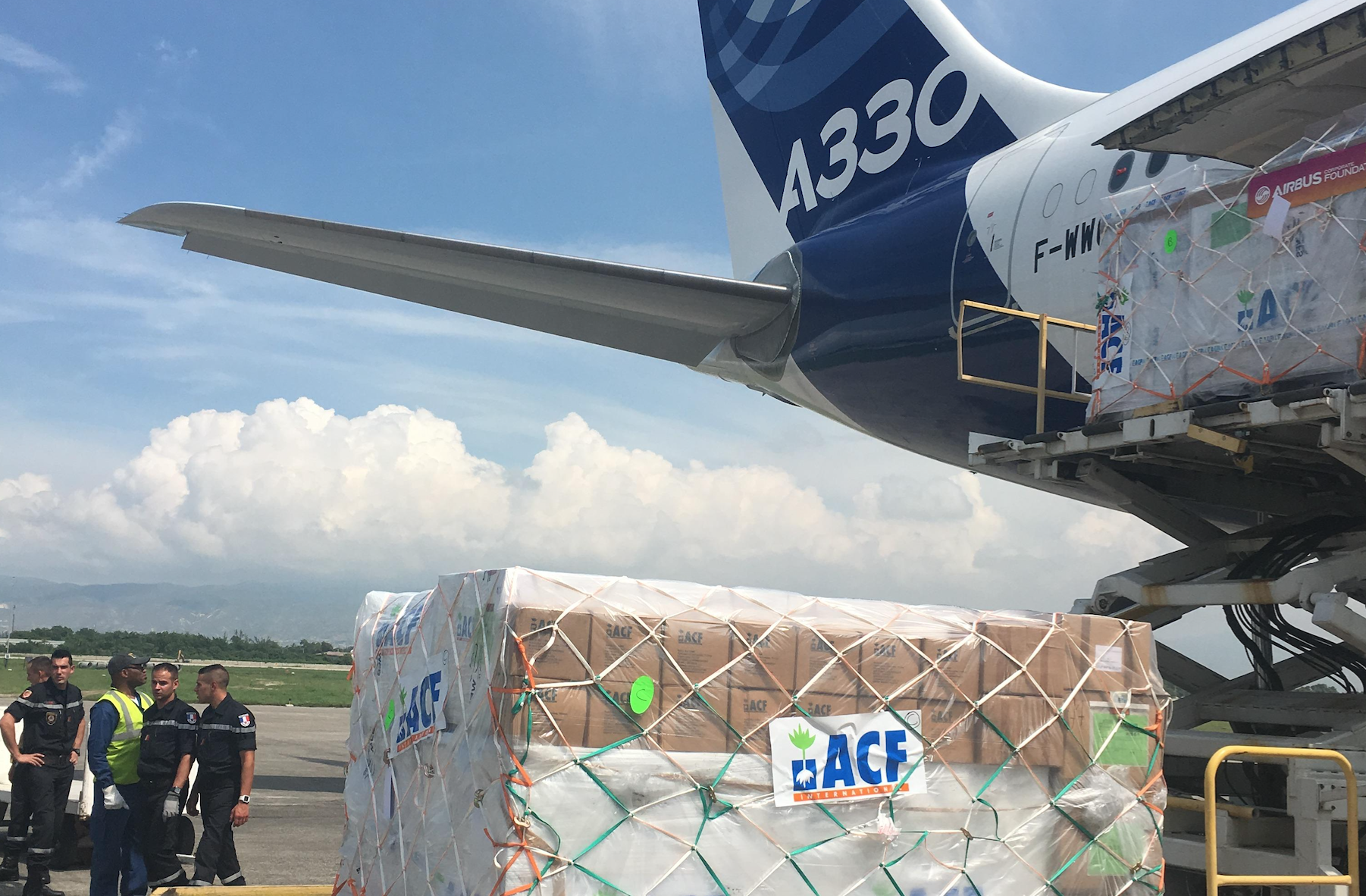
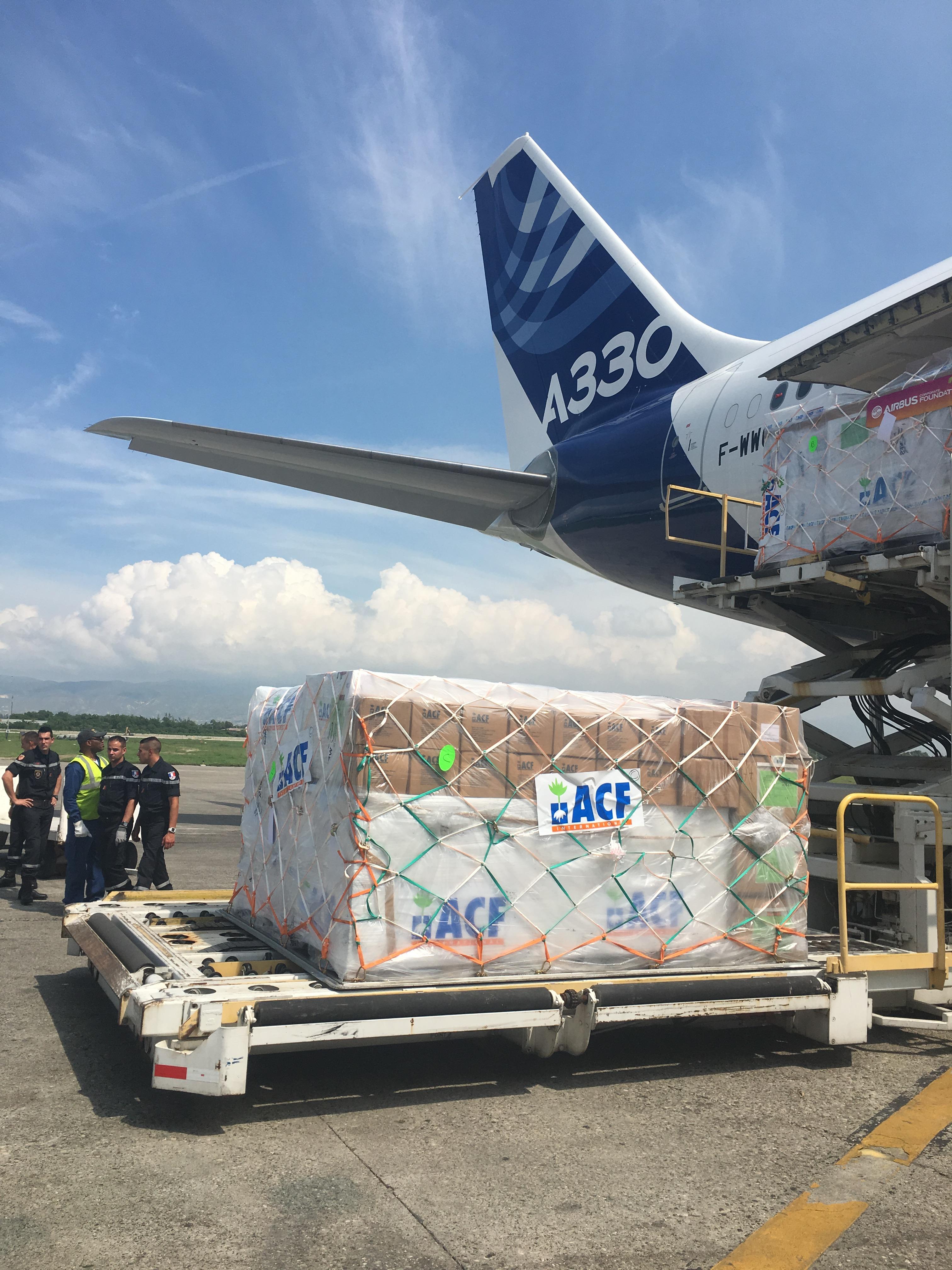
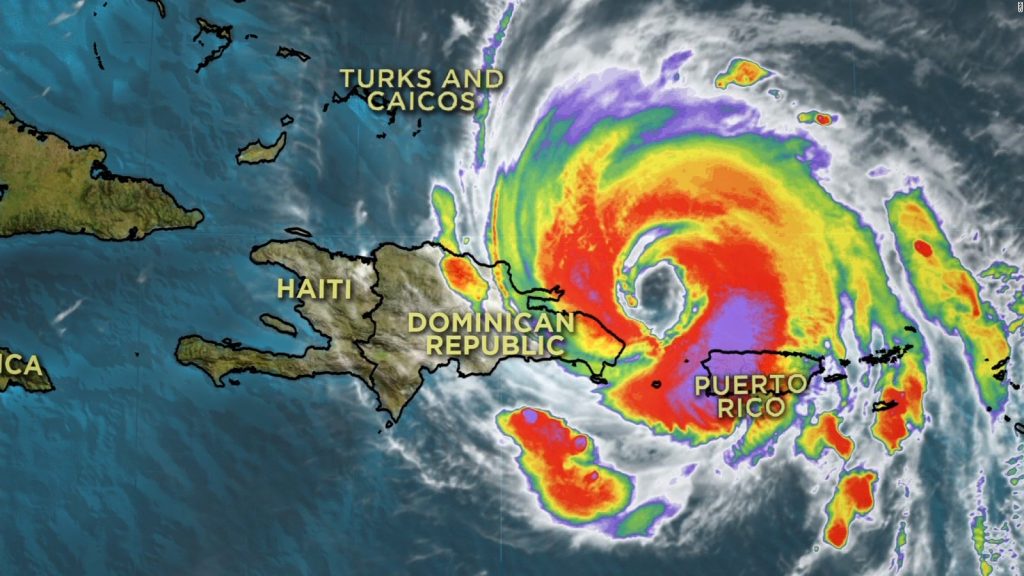
After Hurricane Matthew last week, MTPP/Port-au-Prince (Toussaint Louverture) became a central focus in relief efforts for Haiti. One of our OPSGROUP members, Airbus Industrie – took an A330 that’s normally used for testing, and flew it with supplies from France to Haiti.

Thanks Pedro @Airbus for this flight and trip report – and thank you for your contribution to the relief effort as well. All the crew members on board were volunteers.  We’re very proud to have you as a member of our group.

departure

Report from Pedro Dias, Airbus Industrie:

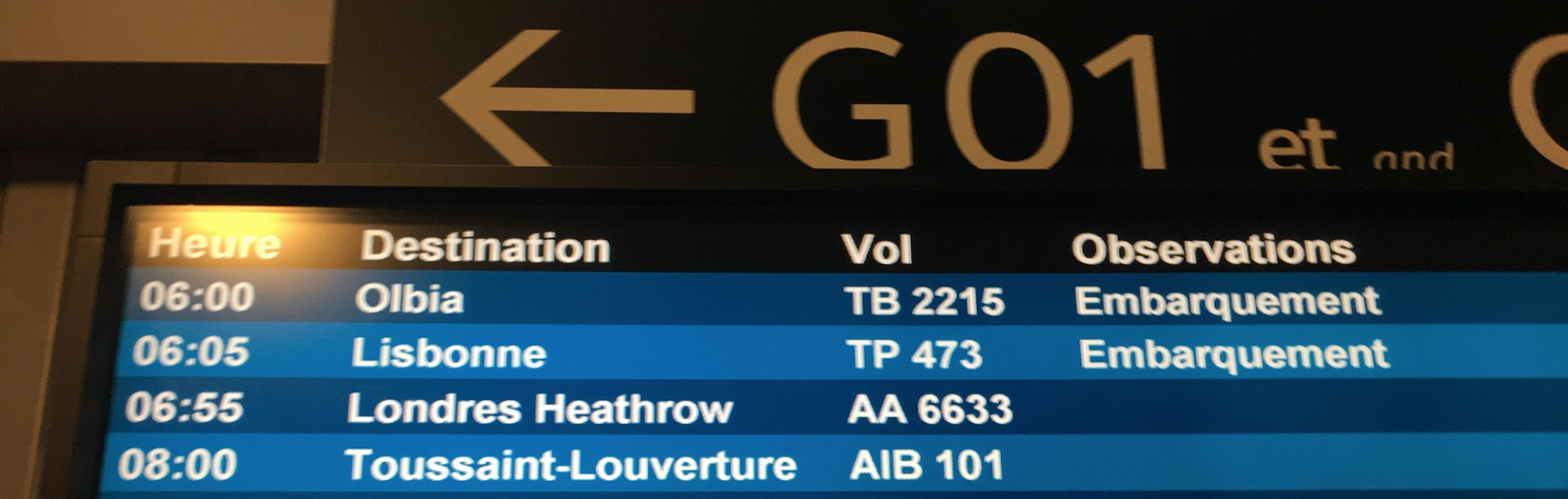
RELIEF FLIGHT TO HAITI – FLIGHT AIB101 – AIRBUS A332

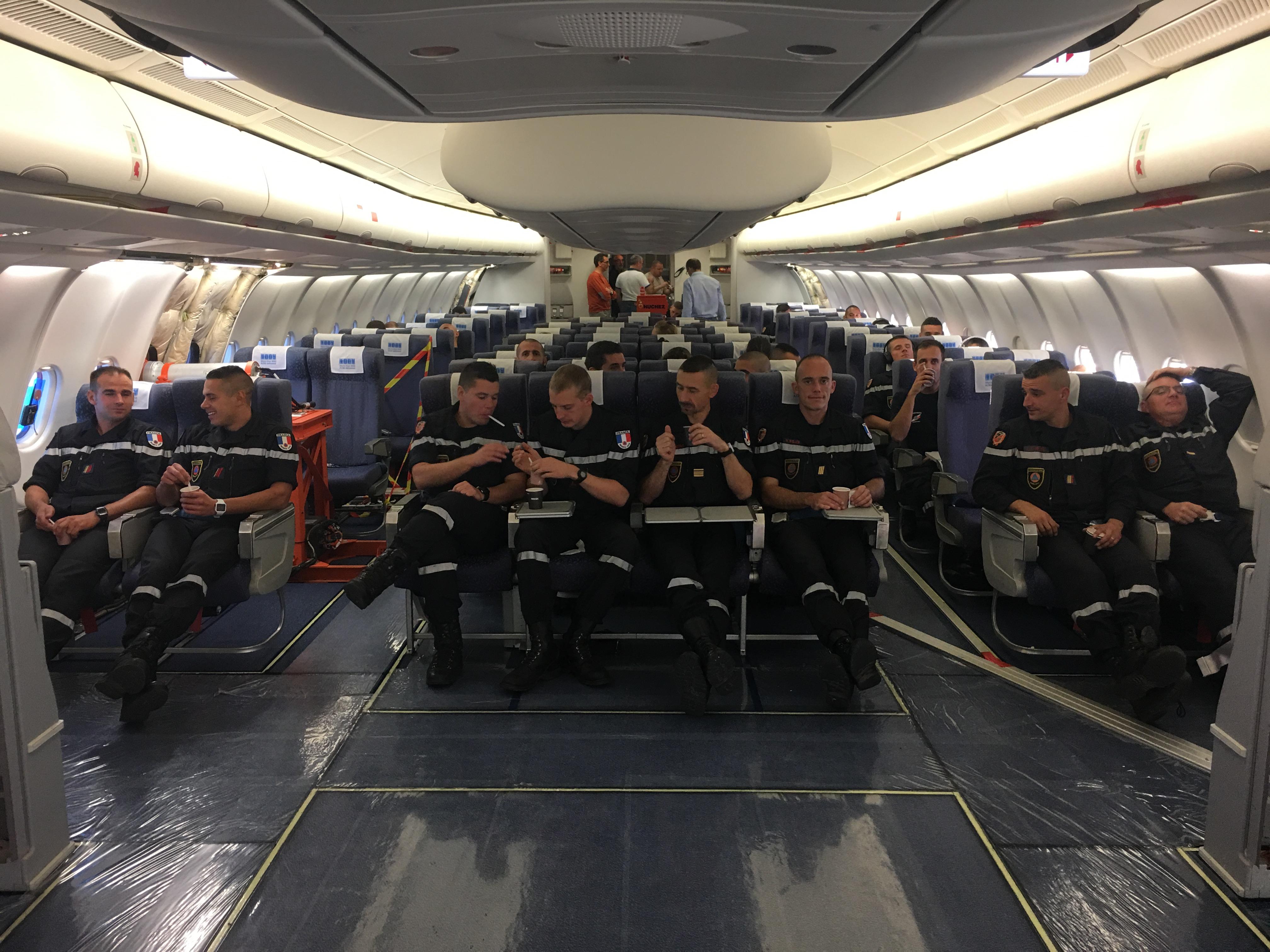
A request from NGO has raised to carry to Haiti 25 tons of medical equipment, first aid supplies, portable water station as well as a team of 40 people (28 military Rescuers, 4 doctors and nurse, 8 NGO staff). Airbus, thru the “Airbus Foundation”, responded positively and offers to help providing our A332. This aircraft is a test aircraft, partially equipped with pax seats and offer the full capacity of its cargo. On Monday 10th October we were ready to go!

First stop in LYS where all the NGO equipment was stored, after a short night Cargo and passengers were on board ready for a 9h30 flight.

AIB101 T/O @ 05H45UTC

Nice flight with some turbulence approaching the Caribbean Area… This long flight gave us the opportunity to talk with our fellow passengers and understand their motivation to go to such devastated places. Very interesting dialogue, which made all of us understand that we are lucky to be where we live.

haiti1

After overflying a small part of the Island we’ve been cleared to land. On the ground a B747 was already there, offloading equipment sent by French government.

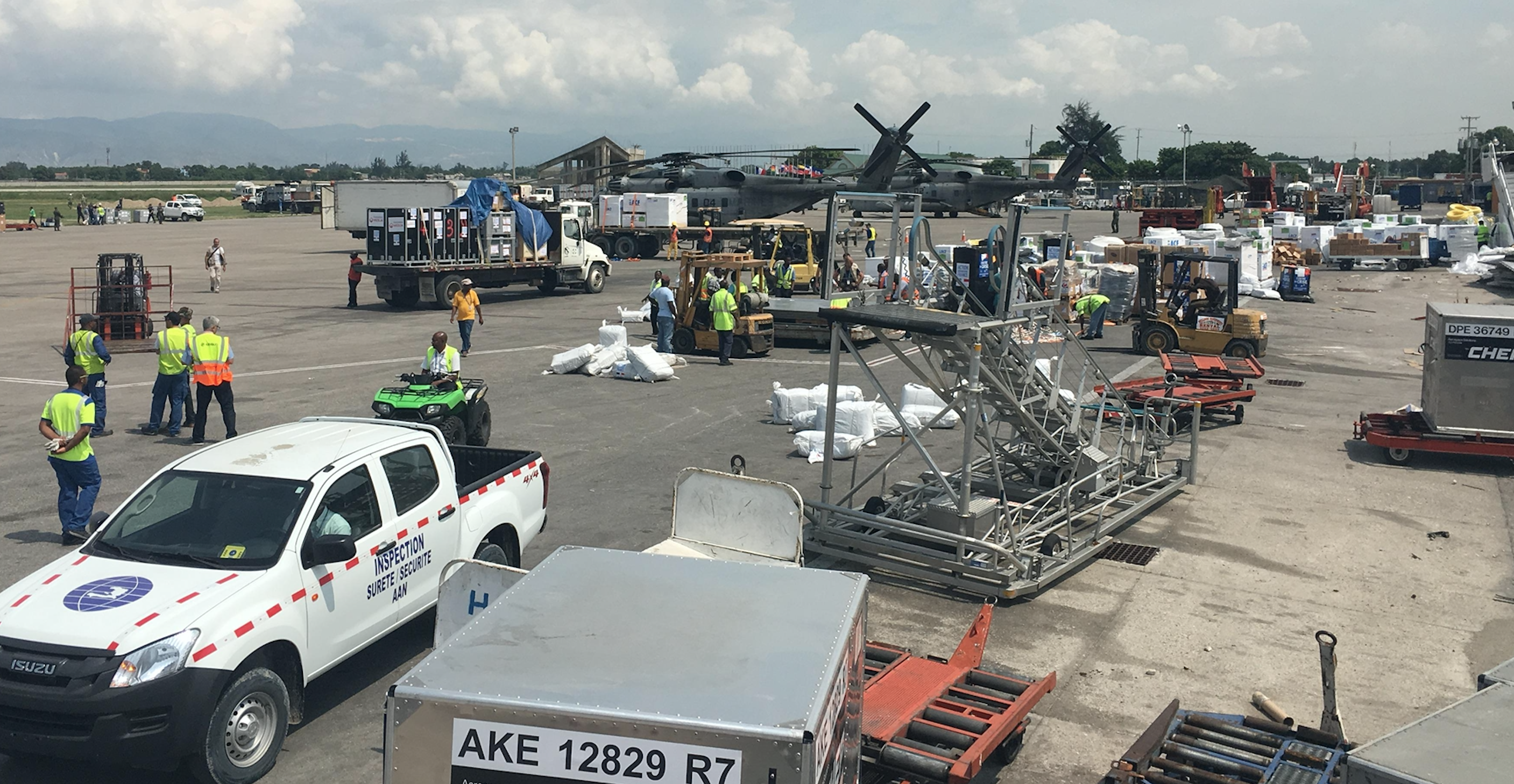
Handling was efficient but slow, as could be expected, and the airport was a bit messy due to Matthew but also to the heavy work on the airport, have to be careful of all trucks and excavators crossing taxiways and parking with no radio contact!!!

tail

We had to wait for customs to clear our cargo, finally everything went smooth and after less than 2 hours on the ground we were ready to leave. Fuel was not available, things have changed since I guess, we planned a fuel stop at PTP (Pointe-à-Pitre, Guadeloupe) before flying back to Toulouse.

ramp

2h Flight to PTP, then 2h on the ground and after a 08h00 flight it was 0550Z on Wednesday when we landed at Toulouse after 24h around the clock for this tiring but really rewarding flight.

All crew and Airbus team were volunteers to help on this flight, we know that what we bring is a drop in the ocean but we expect it will help people there, and we hope many more flights will follow soon”

Thank you Airbus and Pedro for this report!


Matthew – Airports update 1400LT Wednesday

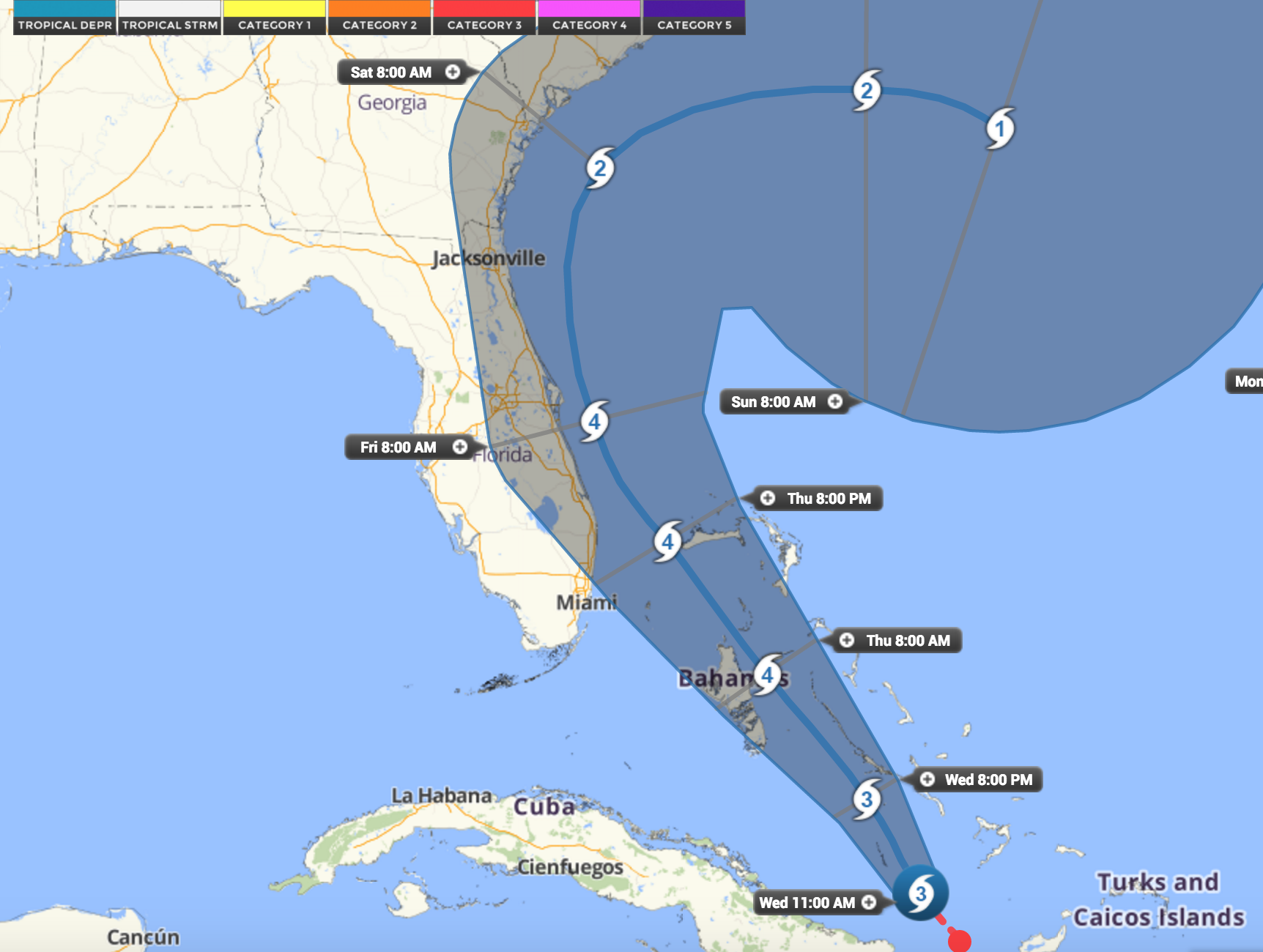
The next 24 hours will dictate the impact that Hurricane Matthew will have on Florida, as it leaves Cuba and begins to track north through the Bahamas.

Airports Update: for Haiti,  MTPP/Toussaint L”Ouverture International and MTCH/Hugo Chávez International are confirmed reopened and operating normally, by the National Airport Authority Haiti (as of 1200ET).

For the Bahamas – the hurricane will severely impact operations at all Bahamas airports. As of 1100LT Wednesday (this morning), ALL Airports in the Bahamas are closed, by order of the Department of Civil Aviation and the Airport Authority.

For the USA – the first state to be affected will be Florida. Tracking of the hurricane will determine by how much. A slight turn to the left, and hurricane force winds will impact the entire coast, hardest hit will be the area from KPBI/Palm Beach north to KJAX/Jacksonville.  KMCO, KMIA, KFLL are among the large airports that will be affected.

Projected timings for eye of Matthew:

0800LT Thursday: Abaco, Bahamas
0800LT Friday: Palm Bay, Florida
0800LT Saturday: Savannah, Georgia –

Monitor:

matthewtrack


Monday Briefing: Cuba Travel opens up, Chile Airport strike ends

Cuba Travel opening up 21DEC Negotiations between the USA and Cuba on scheduled air services between the two countries are progressing at pace; meaning that we expect to see sanctions on private US Tourism Travel lifted as early as next March. See more below.

Chile Airport Strike ends 21DEC A four day strike was ended yesterday 20DEC in Chile by the Trade Union, as 3000 Airport workers across the country responded to the governments rejection of a pension plan. Several hundred flights were cancelled. Non-scheduled operations were largely unaffected, but the risk of further action remains.


HUEC/Entebbe ACC, Uganda. ATC in Uganda is reporting a significant increase in the number of flights entering their airspace without prior coordination from Sudan and Congo (Khartoum and Kinshasa FIRs). Regional ATC in Africa is known to be challenging, but this warning deserves attention. Crews should make all efforts to contact each FIR 10 mins in advance – HF 11300, or relay on 126.9 if unable.

KZMA/Miami FIR SpaceX announced Sunday it has pushed back its planned launch of a Falcon 9 rocket with 11 communications satellites to 2033 ET Monday. KZMA has issued NOTAM A1357/15 for launch. It will also affect the KZJX Jacksonville FIR and TJZS San Juan FIR. The FAA will also issue tactical advisories regarding the launch and will most likely restrict operation on AR6 and AR15.

EGGX/Shanwick have issued a reminder to flights operating on the “Tango Routes” (T9, T16, T213) that HF in all cases is required to operate here, and crews should be trained in the procedures. Request OCA Clearance 50 mins in advance. Primary/Secondary HF freqs: Southbound 6547/8879, Northbound 8879/6547.

LIPH/Treviso Fuel spillage on the runway has closed the airport until 1700Z today 21DEC.

Cuba and USA Reports in the international media last week indicated that an agreement between Cuba and the US is likely to be signed early next year, allowing up to 110 scheduled flights: 20 to Havana, 10 to each of the other 9 international airports in Cuba. At present, US visitors must still fall in to one of the 12 official categories for authorised travel; however, once scheduled services are in place, we anticipate this to be the leverage to remove the final hurdle for US citizens – visiting Cuba for tourism. The first flights will likely operate in early March.

It should be noted that there are no restrictions on the Cuban side. US Aircraft can land in Havana with a routine Landing Permit issued by IACC, and US Aircraft can overfly with a routine Overflight permit. We anticipate that the requirement for a permit will stay in place as this is routine in most Latin American countries, primarily to check Navigation Fee debts and Operator Profile.

Georgia and Ukraine On 18DEC2015, the EC announced that both Georgia and Ukraine meet requirements for being granted visa-free travel to the European Union’s Schengen zone. However, the European Parliament and the EU member states must vote in favor of granting Georgia and Ukraine visa-free travel before they are able to do so. Reports indicated that the decision could be put to a vote as early as 2016.

Haiti On 19DEC, election-related demonstrations across Haiti turned violent amid accusations of electoral fraud. Violent clashes led to the burning of several government buildings. Haitian police officers stated that they were trying to restore security to the country.

Space Weather/Polar Ops moderate an ongoing G1 geomagnetic storm expected for Mon, Dec 21. Please check the NOAA Space weather aviation dashboard for the latest actuals and predictions HERE.

PAZA/Anchorage ARTCC has a number of new procedures and systems in place effective 17DEC, including 30/30 RNP4 separation, an update to the Track Advisory program for westbound Russian Tracks, and standard routings. Check the current PAZA NOTAMs for complete information.

ZBAA/Beijing authorities have issued a red alert for high levels of air pollution and reduced visibility. The alert will be effective until 22DEC. According to China’s National Meteorological Center, air pollution levels are forecast to be slightly higher than those recorded from 06-09DEC.

EGLL/EGKK London Heathrow/Gatwick Airport train links will be disrupted over Christmas. The Gatwick Express trains will stop running for 10 days due to engineering works, with the last service of 2015 leaving Victoria station at 9.15pm on Christmas Eve and the first services of 2016 scheduled for 4 January. At Heathrow, the usual one-day closure on Christmas Day will be extended by three days. Neither Heathrow Express nor Heathrow Connect trains will run from London Paddington station during the period.

UBxx/Azerbaijan will become part of the IFPS (Integrated Flight Plan System) zone as of AIRAC 1601 on 07JAN2016. Azerbaijan will delegate responsibility for the provision of flight planning services for IFR/GAT flights within the Baku FIR to the Network Manager’s Integrated Initial Flight Plan Processing System. For more info see Azerbaijan AIC 01/2016 Series A, AIP ENR 1.10, AIP ENR 1.11 and NOTAM A0126/15.

UHPP/Petropavlovsk FIR Volcano Karmsky has recently been active with ash reported up to 15,000 ft and possibly affecting ops on R220. Please check for the latest Tokyo VAAC advisories.

The ICAO Council adopted a new tracking standard for certain international flights that requires crews to report their aircraft’s positions at least every 15 minutes. It will become effective in March 2016 and applicable 08NOV2018. The new requirement also will be formalized as Amendment 39 to Annex 6—Operation of Aircraft, Part I. Only aircraft with a maximum takeoff weight of more than 59,000 pounds and a passenger seating capacity of more than 19 are affected by the rule. Also, the requirement applies to over oceanic and other remote areas, and where air traffic service is obtaining position information greater than 15-minute intervals.

Christmas and New Years closures. Check opening times carefully during the next 2 weeks, as many major airports and FBO’s have closures, especially on 24, 25, 26DEC and 31DEC/01JAN.