Germany: Crew Being Charged for Sneaky Security Checks
Key Points
  • July 2024: We wrote about some strange happenings reported by OPSGROUP members at German airports – random security checks performed by LBA staff (Germany’s Civil Aviation Authority) to ensure the proper protocols were being followed by crew.
  • These are not ramp checks, they are sneaky checks to see whether crew follow the right security procedures. They basically try to enter the aircraft, and your job is to make sure you stop them.
  • Jan 2025: We’re now hearing that the LBA have started charging operators for these checks! One member reported receiving a 330 Euro invoice for a check that took place at EDDM/Munich. Another reported the same thing at EDDV/Hannover and EDDS/Stuttgart. It seems that opting-out of these checks is not possible!

Surprise invoices

In December and we received a fresh report from an OPSGROUP member. During a recent stop at EDDM/Munich, they were the unwitting recipients of one these surprise security checks.

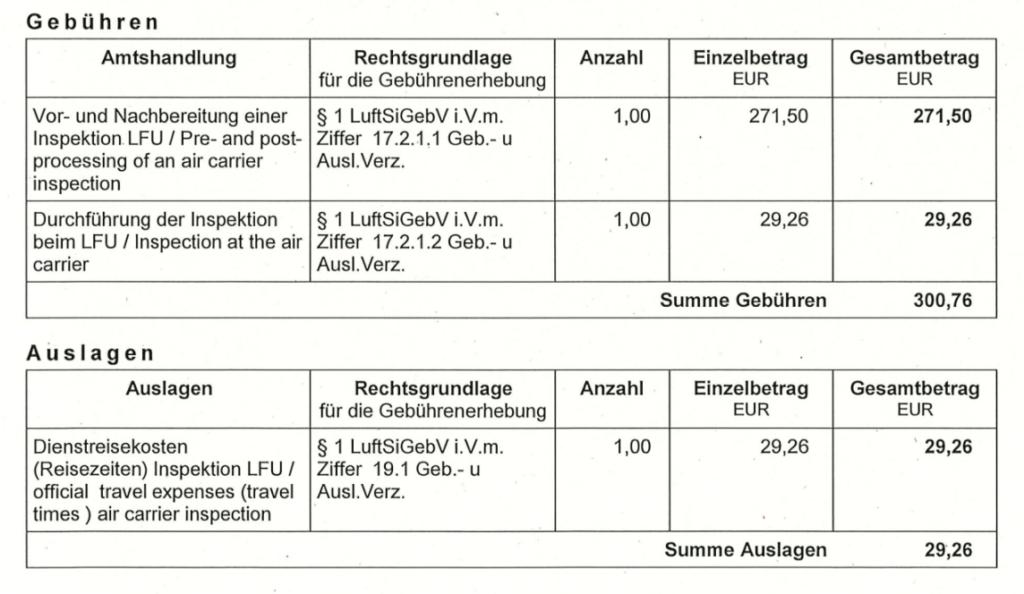
Later, they received an invoice from the LBA for 330 Euros – despite having no ability to opt out. Here’s an excerpt:
What the LBA had to say

It was the first we had heard of crew being involuntarily invoiced for these random security inspections and so reached out to the LBA directly.

Apparently, a legal document called the Aviation Security Fees Ordinance (or Luftsicherheitsgebührenverordnung for short) was amended in February 2024 to enable LBA to collect fees to cover the costs of ‘surveillance measures’ which includes the surprise security checks in question.

Fair or not, it looks as though this practice will continue at German airports indefinitely.

The checks themselves

We previously enquired as to the legality of these checks and were referred by the LBA to another document – the EU Implementing Regulation 2015/1998 which is all about basic standards on aviation security.

We read it so you don’t have to – and couldn’t find anything in it warning crew to look out for weird notes or unwelcome visitors in high-viz vests entering your aircraft with no ID.

The legal framework is there, but from an operational perspective but we still have the following concerns:

  • Crew are being tricked into compliance.
  • These invasive checks have now been incentivized.
  • There is no ability for crew to opt out of being charged.

Aviation security is a team effort, not a commercial enterprise. And for that reason, we feel this a concerning precedent to set.
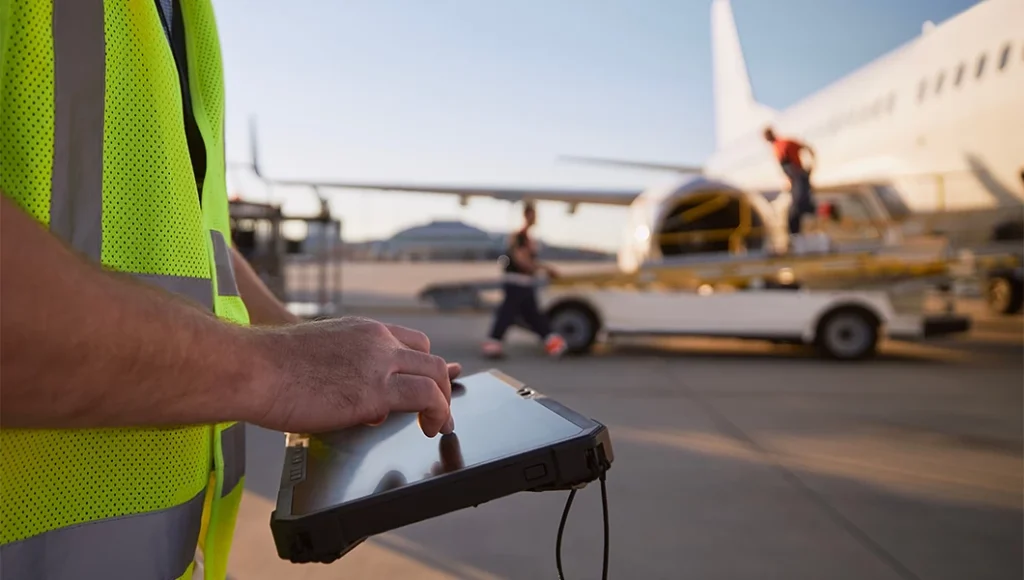
Security checks are distinct to traditional ramp checks. 

Please get in touch with us

When we write Ops Alerts to members we have a specific category for costs, as they often come as an unwelcome surprise to operators. We do our best to get the word out to help others. If you come across these in your travels, please reach out to us on team@ops.group so that we can keep the group informed.
Hab Dich! German Ops Gotchas

OPSGROUP members have reported several strange things happening at airports in Germany recently. We asked the German Aviation Authority and a few local handling agents and FBOs, who confirmed these were not isolated incidents. So here’s the lowdown on these latest German Ops Gotchas…

#1: The Baggage Hold Gotcha

After a few back-and-forth emails with the German Aviation Authority (LBA – Luftfahrt-Bundesamt, website here), the following is what applies.

If you are operating a commercial flight (i.e. Part 135)  out of a German airport, and your aircraft has an inflight-accessible baggage hold, then ALL baggage will be required to be screened and deemed cabin baggage. Size isn’t considered, so it could be a Citation or an Airbus 330.

This means that passengers won’t be able to take any security-restricted items in their luggage. If they want to carry something sharp, or perhaps some hunting gear, then this would need to have some big lockable box.

You can apply for approval to carry prohibited items from the Ministry of the Interior BMI. The list of goods is here. However, LBA have said that it is not an exhaustive list, and the screener shall have the final judgement.

Bottom line, if you are flying most bizav aircraft out of a German airport and you have something that could be “dangerous”, you are likely to have the item confiscated if screened correctly.

Possible solution: one member has reported that authorities accepted in their AOC to install a wire-lock to the “impact-curtain”, so it is not easy to access the compartment during flight.

#2: Sneaky Security Checks

Jan 2025 update: We’re now hearing that the LBA have started charging operators for these checks! One member reported receiving a 330 Euro invoice for a check that took place at EDDM/Munich. It seems that opting-out of these checks is not possible!

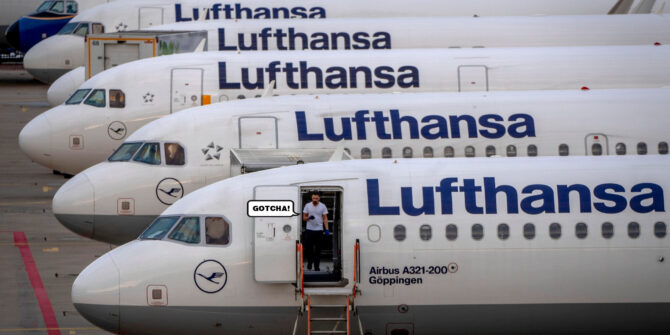
These are not ramp checks, they are “security checks” performed by LBA staff to see whether crew follow the right security procedures.

They basically try to enter the aircraft, and your job is to make sure you stop them. So man the doors! Check their identity, make sure they’re wearing the right ID cards, and you will have passed the test. Another common thing is that they leave a note behind the GPU hatch door to check if you do the security check properly.

EDDS/Stuttgart is one of the top spots for this, but we’ve had reports of this happening at EDDV/Hannover and other airports in Germany too.

We asked LBA about this one too. They reference EU Implementing Regulation 2015/1998 which is all about basic standards on aviation security. We read it, and couldn’t find anything in it warning flight crew to watch out for people in yellow jackets trying to trick them by switching their ID cards around and leaving weird notes on their aircraft.

So we don’t like this one very much. Security is a team effort, and flight crew are a big part of this. Tricking them into compliance like schoolchildren isn’t the way to go.

#3 Fuel Payments

The simple rule we’re all used to: if you’re a commercial flight, you don’t pay tax on fuel. So you fuel up, pay the bill, then if you’re a commercial flight you get Customs to issue you a refund of the fuel tax.

Problem is, what’s been happening more often recently is that Customs have not been showing up to aircraft – presumably due to lack of staff.

We also heard one recent case where Customs refused to accept an AOC of a commercial flight, and the operators had to pay the associated taxes with a private operation.

Possible solution: one of the local handlers recommends that operators make sure they always carry the charter contract for the flight on board, along with the AOC. And if Customs don’t show up for the refund, you can fill in a form and apply after the flight. Here’s a copy. Email it to: poststelle.hza-potsdam@zoll.bund.de


Been to Germany recently and know any more Ops Gotchas to watch out for? Let us know.


Germany don’t like it if you’re late

There is an old stereotype about Germans blocking poolside seats with their towels so others can’t use them. Well, it turns out they do something similar at their airports – sticking strict night flight restrictions and curfews on them so no-one else can use them until morning.

OK, that isn’t actually remotely similar, but the bit about the night flight restrictions is, so we thought a little refresher on them might be handy since we are heading into Christmas market season soon and Germany is one of the very best spots for that.

Why do they have such strict restrictions and curfews?

Noise mainly. They like their people to get a good nights sleep.

What do the restrictions look like?

It differs from airport to airport depending on the laziness of the locals (that’s a joke), but in general it looks like a strict cut-off time followed by no flying at night.

You can find them in the Aerodrome bit of the AIP.

There is also a very handy tool on the German Slot Coordination website. It has info on night restrictions at IATA level 2/3 airports, (much easier than scrolling through the AIP).

But here is a brief look at some of the main airports and their restrictions (all times in local) to give you an idea:

EDDH/Hamburg

The restriction is from 23:00-06:00

If you are scheduled to land before 23:00 and you’ve got a really good reason (ie not your fault you’re late), then they do have some special regulations allowing flights to take off and and up to midnight.

EDDB/Berlin

Berlin’s retraction is 00:00-05:00 for all regular scheduled flights.

They have a reduced number of movements between 23:00 and midnight, and between 05:00 and 06:00 (31 movements are allowed), and they reserve 05:00-05:30 and 23:30-00:00 for delayed flights only.

EDDP/Leipzig

23:30-05:30 with a 30 minute window either side for late flights.

Cargo flights have no restriction but no, you can’t call passengers cargo. 

EDDL/Dusseldorf

22:00-06:00, but they allow landings up to 23:00 (up to 23:30 if you’re on their “bonus” list)

You can also get in even later/earlier if Dusseldorf is a proper maintenance base for you (basically a home base)

EDDF/Frankfurt

23:00-05:00

Frankfurt has a bunch of special regulations based on your noise certs, scheduled movement restrictions, if you’re trying to land on the north-west runway. Basically…. 11pm to 5am is going to apply unless you’re lucky or special.

EDDS/Stuttgart

22:00-06:00, but you’ve got a 30 minute lateness window for landing.

There are some different exemptions if you’re a prop aircraft for example.

EDDM/Munich

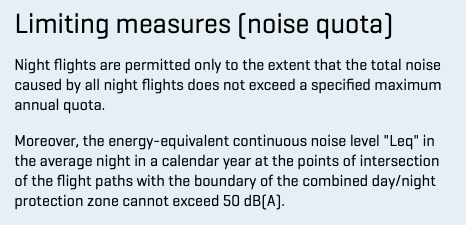
10pm to 6am as part of a ‘modern, restrictive noise quota system’.

That noise thing can win you a spot of their bonus list which means you might be able to land within the restricted hours (but probably not between midnight and 5am which is their ‘core night’ period).

What’s “noisy”? 

Well, again it differs from airport to airport but generally something around the 75dB[A] mark is what the likes of EDDM/Munich measure.

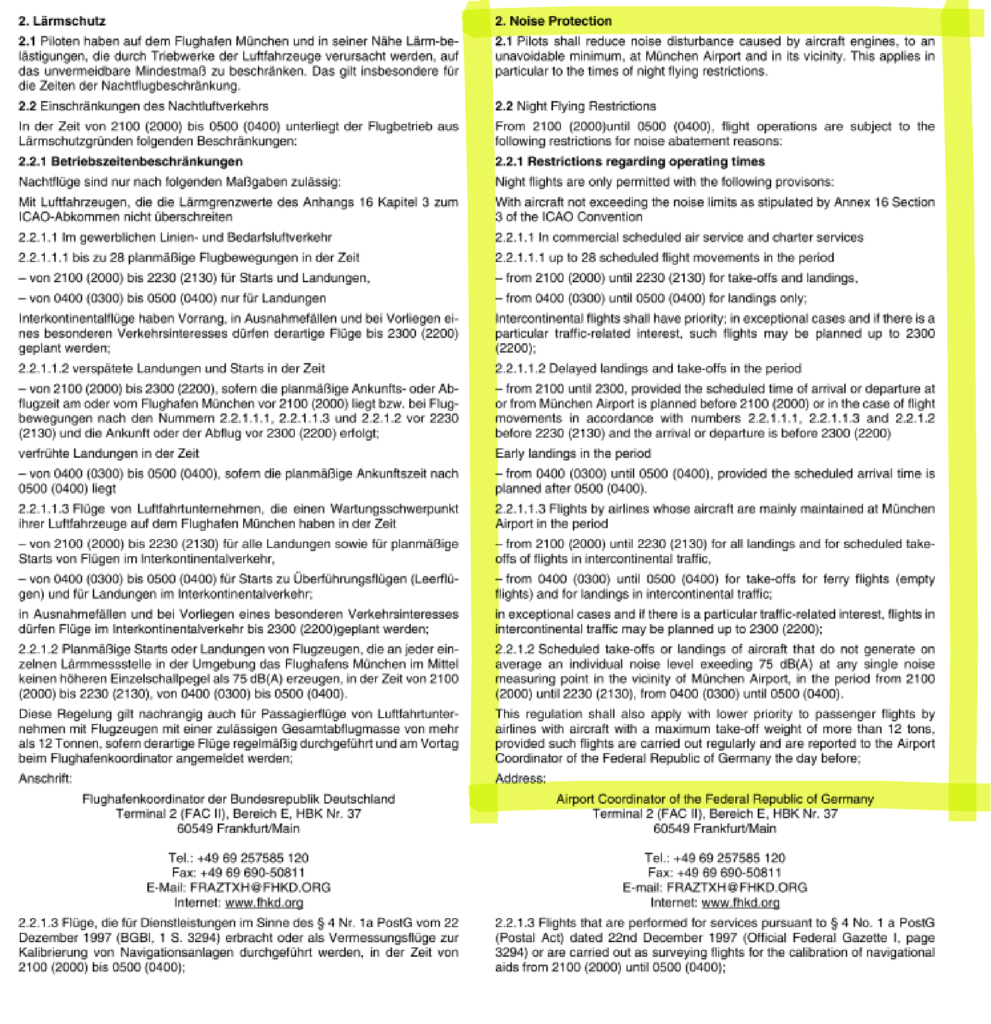
But then they say this, so we aren’t really sure:

You’re better checking it directly at the airport than us trying to summarise them all.
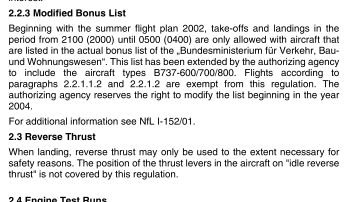
What is the bonus list?

It is something published by the “Bundesministrium für Verkehr, Bau und Wohnungswesen” and basically lists a bunch of types which are exempt from the noise regulations. We can’t find it, but we do know that the B737-600/700/800 is included on it, if that helps anyone.

Who is restricted?

Probably you. The restrictions reply to pretty much everyone, save a few exceptions.

These are the exceptions (that we know of):

  • Emergency diversions
  • Flights needing to use them as an alternate due weather, tech or safety reasons (that doesn’t mean planning them as weather alternates after hours though)
  • Disaster relief flight
  • Medical flights
  • Search and rescue flights
  • Police flights
  • Mail flights
  • Flights that have special permits pre-arranged

What do I do if I’m late?

Well, try not to be, but if you really can’t help it…

Whatever the lateness reason, getting a message to your handler at the airport to help pre-arrange things is probably a good idea.

These are strict curfews though, there ain’t no wiggle room. The only way you’ll be getting in inside of them is if it is a genuine emergency.

  • If you are delayed en-route then chances are you will not be cleared the arrival or approach and will be sent on a diversion elsewhere
  • If you are on the arrival this doesn’t mean you’ll definitely be allowed to land
  • If you are on the approach then you may not be given landing clearance. Harsh, but I’ve heard it happening
  • If you have been cleared to land then you have been cleared to land and all should be good
  • If you end up flying a missed approach then whether they can accept you for a second approach and landing depends on the situation. No ATC is going to prioritise a noise curfew over safety, but, we’ll say it again, those curfews are strict! It may need to be an emergency
  • If you are delayed on the ground then you’re not going anywhere

When considering alternates, remember it isn’t just in Germany – there are several spots in Europe with similar restrictions.


Germany publishes new concerns for Iraq overflights

Late Monday evening, the German LBA published a new warning for Iraq, indicating areas of concern for overflying traffic, together with a new warning on ORBI/Baghdad Airport.

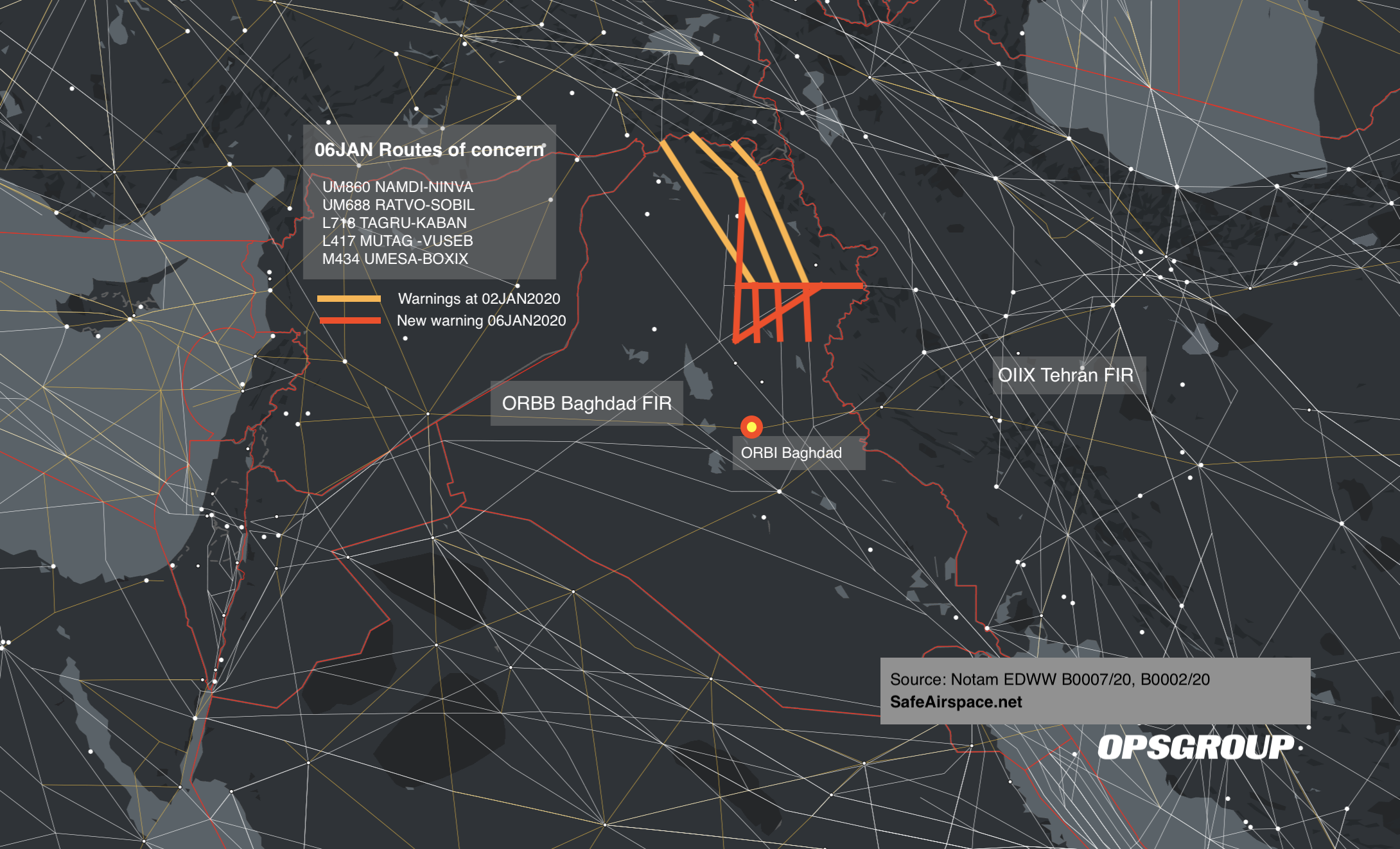
Notam B0007 of 2020 (issued Jan 6) replaces Notam 0002 (issued on Jan 2nd), and these are the routes that Germany now considers a potential risk for aircraft below FL260:

Airway UM860 NAMDI – NINVA
Airway UM688 RATVO – SOBIL
Airway L718 TAGRU – KABAN
Airway L417 MUTAG – VUSEB
Airway M434 UMESA – BOXIX
Airway R652 MUTAG – DAVAS

Seen on the map below, all these airways are in the north east of Iraq: the yellow lines are the warnings that existed on and prior to Jan 2nd, and the orange lines show the additional areas flagged in Mondays Notam.

Of the other primary states that issue airspace warnings – the UK, France, and the US – none have issued updated guidance yet this year.

There is no doubt that the events of Jan 3, 2019 at ORBI/Baghdad Airport have created an extremely tense situation between the US and Iran. The aviation security picture in the Middle East, already fragile and unstable, is now unpredictable. A response by Iran to the US airstrike of Jan 3rd seems possible.

Specific to the Baghdad Airport incident, it seems early reports of Katyusha rockets can be discounted, that it was an attack carried out on vehicles near the airport by US Apache Helicopters. Civil traffic resumed operations shortly after the attack with several departures operating ‘as normal’. Overflights continued during the attack.

As to the Iranian response, anything that looks like a US asset or ally could be a target – military or civil. US operators, at a minimum, should be avoiding the Tehran FIR, and considering security carefully when operating in other countries in the region, most notably Israel, Lebanon, and Kuwait – as a response may target airports in those countries or foreign aircraft. That said, it’s a guessing game right now, and predicting the specifics of a response is extremely difficult.

For full analysis, and a listing of all current warnings, see Safe Airspace.


Bad NOTAMS = Runway overruns in Hamburg

If you’re headed to Hamburg, watch out. The runway is shortened, and the Notams are vague.

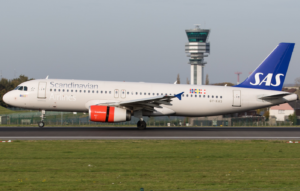
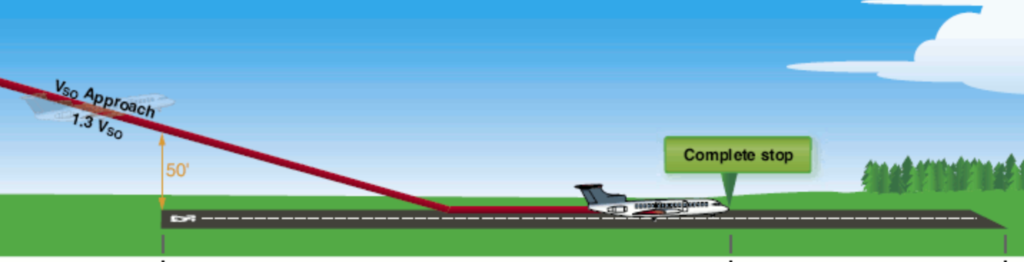
Poorly written NOTAMs struck again this week in Hamburg, Germany, when an A320 and a B737 both overran Runway 05 on landing – the first by SAS on May 11  and the second by Ryanair on May 15.

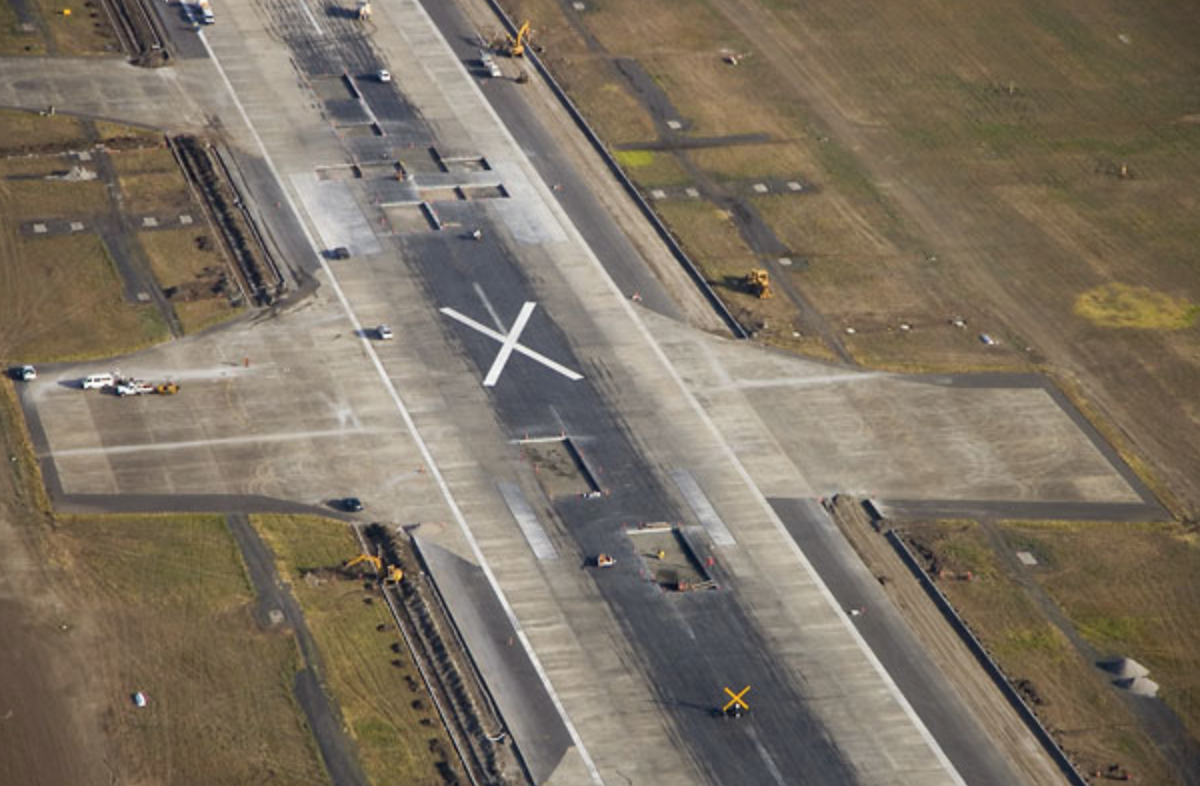
Runway 05 in EDDH/Hamburg has been undergoing works and a litany of related NOTAMs and AIP SUP were issued to explain.

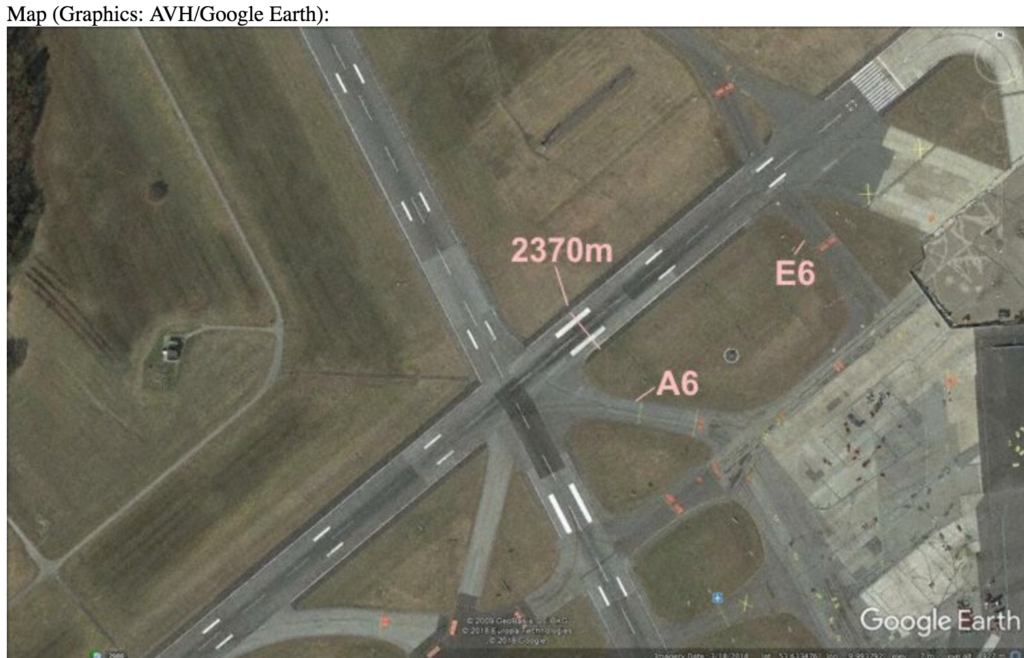
A1608/18 – RWY 05 LDA 2370M. 12 APR 04:00 2018 UNTIL 23 MAY 21:00 2018. CREATED: 05 APR 09:50 2018

A1605/18 – SHORTENED DECLARED DISTANCES FOR RWY 05/23. AIP SUP IFR 09/18 REFERS. 12 APR 04:00 2018 UNTIL 23 MAY 21:00 2018. CREATED: 05 APR 09:42 2018

A2223/18 – TWY A1, A3, A4, A5 CLOSED. 02 MAY 10:26 2018 UNTIL 01 JUL 04:00 2018. CREATED: 02 MAY 10:27 2018

A2044/18 – ILS RWY 05 NOT AVBL. AIP SUP IFR 09/18 REFERS. 23 APR 09:17 2018 UNTIL 23 MAY 21:00 2018. CREATED: 23 APR 09:17 2018

A1725/18 – CONSTRUCTION EQUIPMENT IN DEP SECTOR ALL IFR DEPARTURES RWY 05. PSN WITHIN AN AREA 533810N 0095948E AND 533805N 0100023E. MAX ELEV 89 FT. NOT MARKED AND LIGHTED. SUP 09 2018, CONSTRUCTION WORK EDDH REFER. 12 APR 04:00 2018 UNTIL 23 MAY 20:00 2018. CREATED: 09 APR 13:10 2018

A1609/18 – RWY 23 CLOSED FOR ARR. 12 APR 04:00 2018 UNTIL 23 MAY 21:00 2018. CREATED: 05 APR 09:52 2018

Despite this, both were unable to stop before the last open exit (A6) and vacated further down the runway. Thankfully both resulted in no injury because all construction equipment was kept clear of, and beyond, taxiway E6.

A better NOTAM may have been:

RWY 05 IS SHORTER THAN USUAL DUE TO CONSTRUCTION WORK AT 23 END. REDUCED LANDING DISTANCE IS 2370M. LAST TAXIWAY OPEN FOR EXIT IS A6. CONSTRUCTION EQUIPMENT ON RUNWAY BEYOND TAXIWAY A6. 

You get the idea. Concise and plain language in one NOTAM to make it clear what the issue is and the consequences of going beyond 2370m of runway.

They did, to their credit, try and tidy it up since the incidents:

A2563/18 – RWY 05 CLSD EAST OF TWY A6. RWY 05 LDA 2370M. RWY 05 NON STANDARD TDZ AND AIMING POINT MARKINGS AT 400M FM THR ISO 300M. ADJUST LDG PERF ACCORDINGLY. 17 MAY 16:30 2018 UNTIL 23 MAY 21:00 2018. CREATED: 17 MAY 16:31 2018

In another serious incident associated with these runway works, a Vueling A320 (another foreign operator) nearly landed at the wrong airport on May 11. Thankfully ATC intervened on that one.
All incidents are now the subject of investigation.

Naturally it’s imperative for crew and disptachers to check and read all NOTAMS thoroughly. But with over 40 current just for EDDH/Hamburg right now, it’s easy to understand why things get missed.

Until then “adjust landing performance accordingly”.

Extra Viewing:


Expect breathalyzer during German Ramp checks

German authorities confirm they have been conducting random breathalyzer tests during ramp checks since as far back as Jan 2017, despite this not being part of the official EU SAFA ramp inspection guidelines.

In Dec 2016, following the accident of the Germanwings Flight 9525, EASA published a proposal to the European Commission to better support pilot mental fitness. One of their recommendations was to introduce random alcohol screening as a part of ramp checks within the EU.

Although that proposal has still not been adopted yet, local authorities in Germany say they can still perform these tests on the basis of German national law alone.

Have you had a recent ramp check anywhere with any surprise items not part of the standard checklist? Comment below…

Further reading


Updated airspace warnings for Egypt, South Sudan, North Korea

Germany has issued fresh warnings on the airspace of Egypt, South Sudan, and North Korea, in three separate Notams issued in the last week. Germany is one of four states that provides Aircraft Operators with conflict zone and risk advice. We have updated the SafeAirspace.net country information pages with the specifics.

The current Flight Service Bureau summary of each country follows:

Egypt Since the Arab Spring, Egypt’s stability and security situation as a state has declined. In October 2015 a Russian A321 was brought down over the Sinai peninsula by a bomb loaded at HESH/Sharm El Sheikh. In the aftermath, it was initially feared that a missile had caused the crash. Multiple warnings still in place from that fear. 19 May 2016 EgyptAir Flight MS804 from Paris to Cairo disappeared over the Mediterranean, cause unknown. GPS jamming reported at HECA/Cairo several times in 2016. High threat from terrorism in Egypt. Further attacks are likely. Not recommended as a tech stop. [Read full country information]

South Sudan Conflict Zone. South Sudanese Civil War since 2013. The security situation in Juba has been relatively calm since the July 2016 crisis. Daily reports of fighting throughout the rest of the country. The security situation is especially unstable in the Equatorias in the south. MANPADS risk to overflights. In addition, the South Sudanese army has declared intention to shoot down Aircraft without permits. Most Authority guidance recommends min FL260. We think FL300 is a better minimum for overflights. [Read full country information]

North Korea The level of tension on the Korean peninsula can change with little notice. Multiple missile launches in 2016, increasingly without prior notice to ICAO. The range of these has increased – previously safe airways B467 and G711 are now at risk. Over 1000 reports of GPS jamming issues reported by operators in the vicinity of the North/South Korean border. SFAR79 prevents US operators from operating west of 132E, other Authorities restrict operations east of that line. [Read full country information]


References: