Trains, Planes and Fuel-mobiles

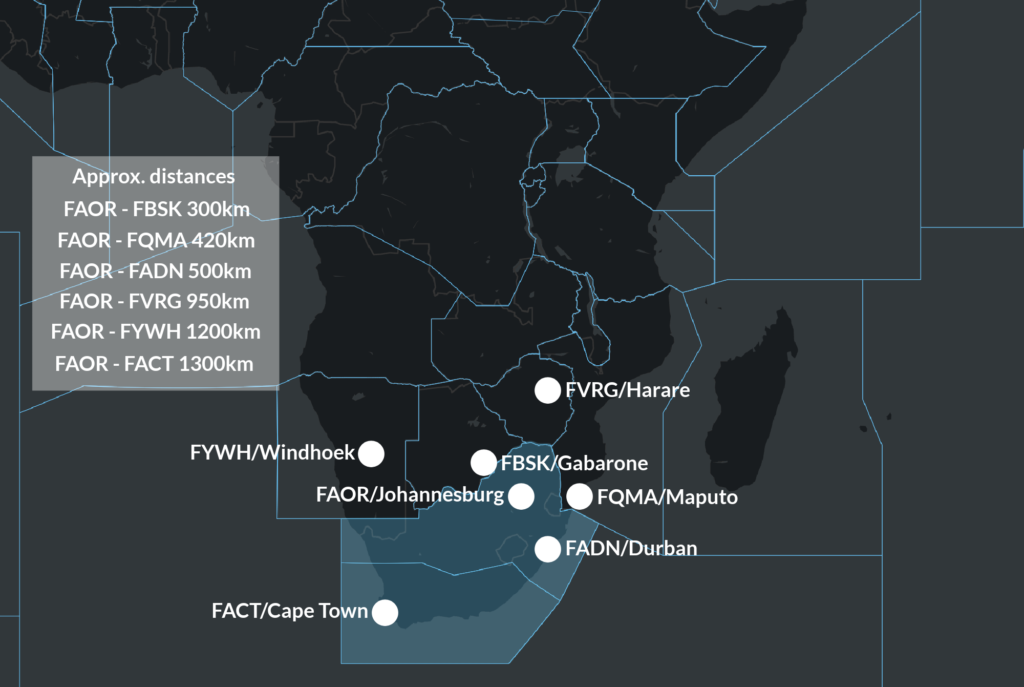
What do railways and airplane fuel shortages have in common? Well, at FAOR/Johannesburg Airport, it turns out quite a lot.

Chapter 1. Trains.

The railway lines which run through KwaZulu-Natal (the province on the east coast where FADN/Durban International airport is) were badly damaged in flooding earlier in 2022. Unfortunately, these train lines are how jet fuel is generally moved from the Port of Durban refinery to Gauteng (the province where FAOR/OR Tambo international airport is).

The train lines are only expected to be repaired to 50% capacity by June 2022, and 100% capacity by October 2022. Unless further flooding occurs.

Which means FAOR/Johannesburg isn’t getting the 16 million or so litres of fuel a week which it normally needs.
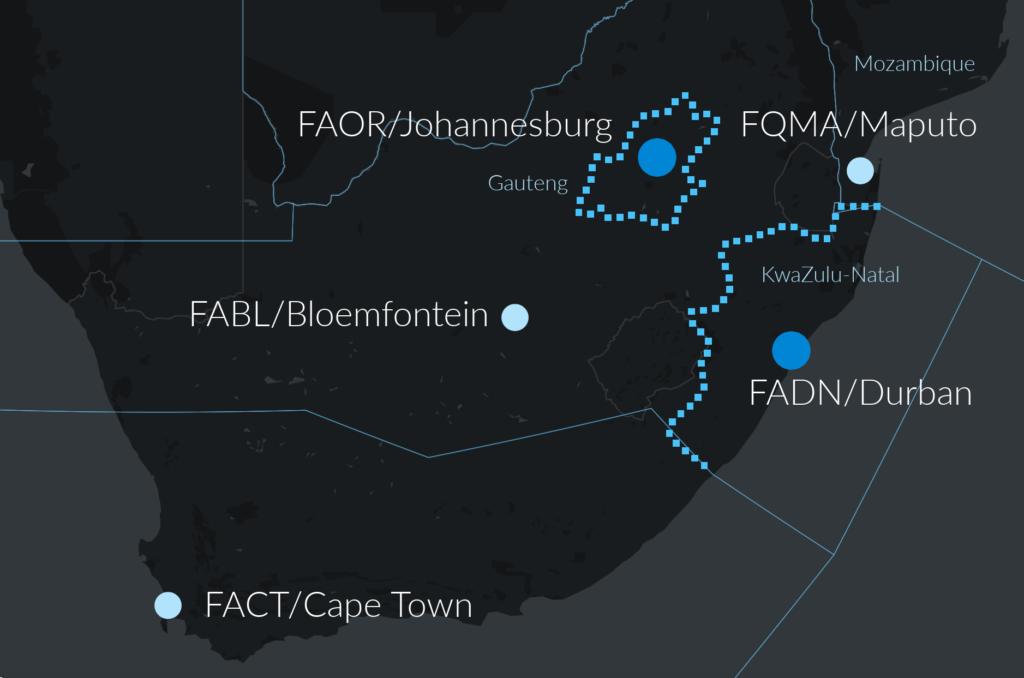
The railway lines between KwaZulu-Natal and Gauteng were damaged.

Chapter 2. Planes

We should say the 16 million or so litres of fuel a week which the airplanes need.

Currently (as of mid-May), the airport’s stock sits at around 3-5 days worth.

Domestic and regional airlines will be less badly impacted by this because they can tanker more easily, or visit one of the other South African airports and uplift their fuel there. 

Unfortunately, Durban (where the fuel is) lies on the southern eastern coast and for most international flights, this would require a fairly substantial diversion (fuel burn) to go simply to pick up more fuel.
Chapter 3. Fuel-mobiles.

It just rhymed…

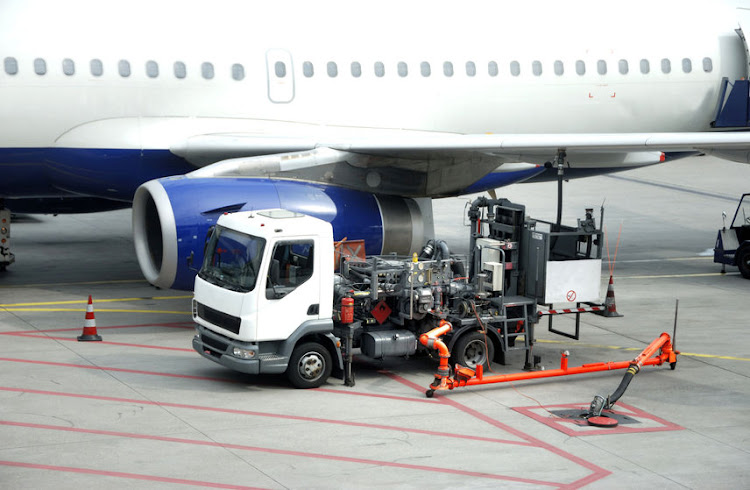
Actually, the plan isn’t to drive more fuel there in tankers, but to pipe it. A shipment of 20 million litres is on its way, while another 1.5 millions litres is being arranged directly with airlines that have been hit by the ‘force majeures’ of their normal fuel providers.

Epilogue. Where else is an option?

The fuel situation will be ongoing until October, although should ease up as plans are put in place. In the meantime, international operators do have options for fuel stops.

  • AEG +1 305-913-5253 / dispatch@aegfuels.com is a worldwide fuel supplier, worth contacting for up to date info on the fuel situation and availability at most airports.

FBSK/Gabarone, Botswana

FVRG/Harare, Zimbabwe – receives fuel supply from Mozambique (Beira). Rumour has it there is a growing shortage here though, so check in advance.

FQMA/Maputo, Mozambique

FYWH/Windhoek, Namibia

And ones to avoid?

GOBD/Dakar and GOOY/Dakar (old one) Senegal – these are no go. They have a severe shortage and international flights have been cancelled.

Anywhere in Nigeria – There is a pretty serious fuel shortage going on here right now.

We wrote a post on the fuel shortages worldwide here which you can have a read of if you need.


Is the Fuel Pool Drying Up?

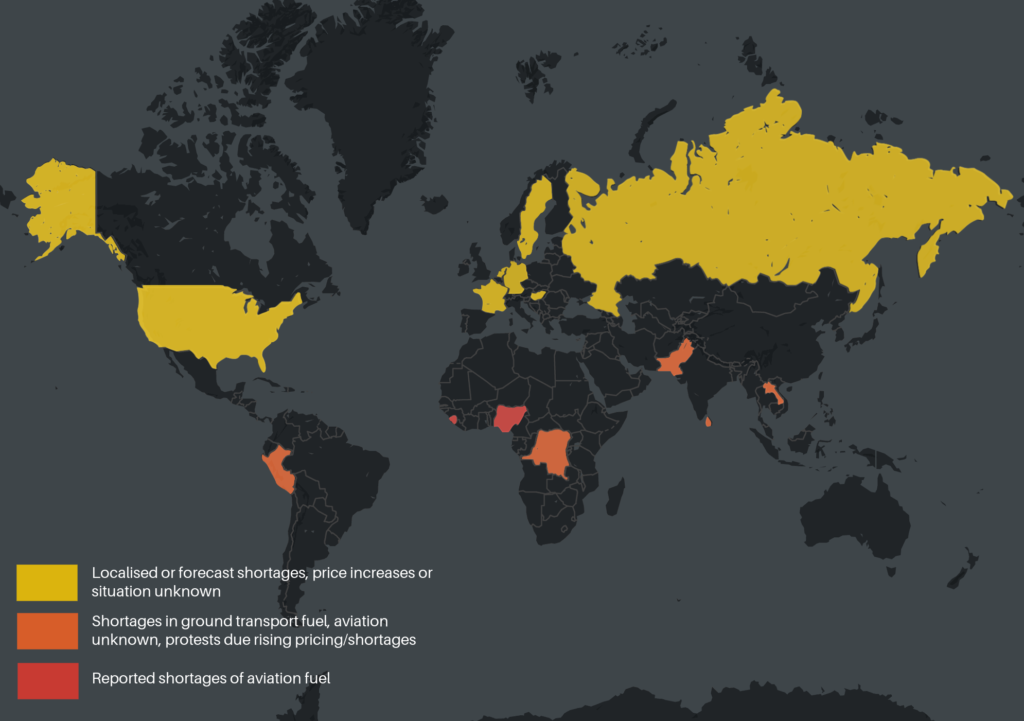
From Laos to Lima there is a growing fuel shortage and while the shortages (and fuel price hikes) have mainly been impacting road users, the problem is beginning to be felt in aviation as well.

So we figured we’d take a look at the situation.

What’s causing it?

The Ukraine Russia conflict.

Russia is the third largest supplier of oil behind the USA and Saudi Arabia, supplying around 12% of the world’s needs.

The conflict is seeing oil prices zoom up, recently hitting $139 a barrel (a 14 year high). Spot prices in New York Harbour went over $7.30 a gallon which is double what it normally would be this time of year.

But why is the USA short?

Good question.

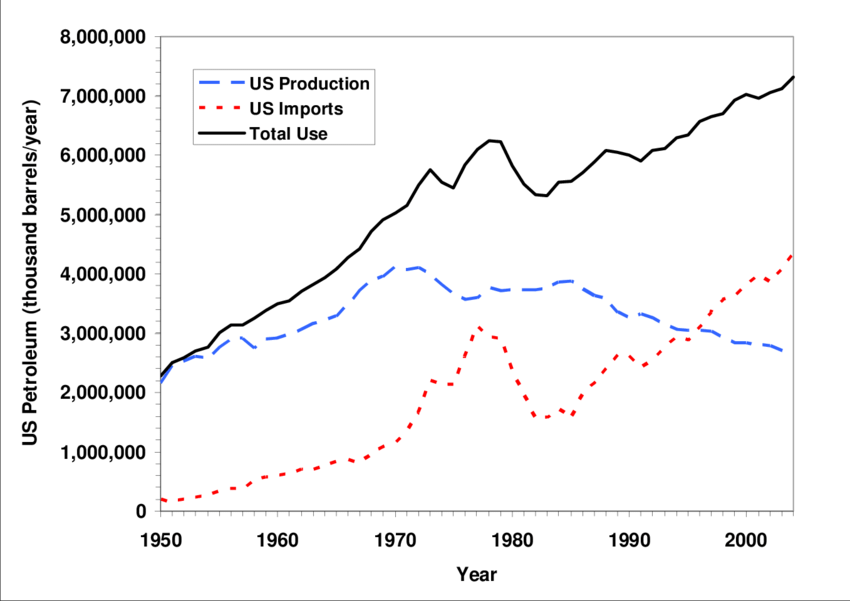
The USA gets its fuel from lots of places, predominantly domestically and from across the border in Canada and Mexico. What you might not realise though is it also sources almost 10% of its supply from Russia. It’s a big number when you consider 329 million people live in the US. Take into account that Europe is also feeling the pinch of this ‘tightening global energy market’, ‘ it’s no wonder prices are on the charge, and supply running thin.

Back in 2021…

Back in 2021 the USA suffered fuel shortages at a bunch of airports. This was actually due to a bunch of reasons:

  • There weren’t enough truckers to drive it around
  • The pipelines had all been shifted during covid and hadn’t been shifted back again
  • There was a cyber attack on one of the main pipelines disrupting the supply
  • Some supplies were diverted away from leisure airports and to airports where wildfire fighting aircraft needed it
  • Leisure routes were getting busier as Covid restrictions loosened

Fast forward to 2022 and while flying levels are around 95% of the peak 2019 levels, fuel production is still only around 80%. So there is, simply, a shortage.

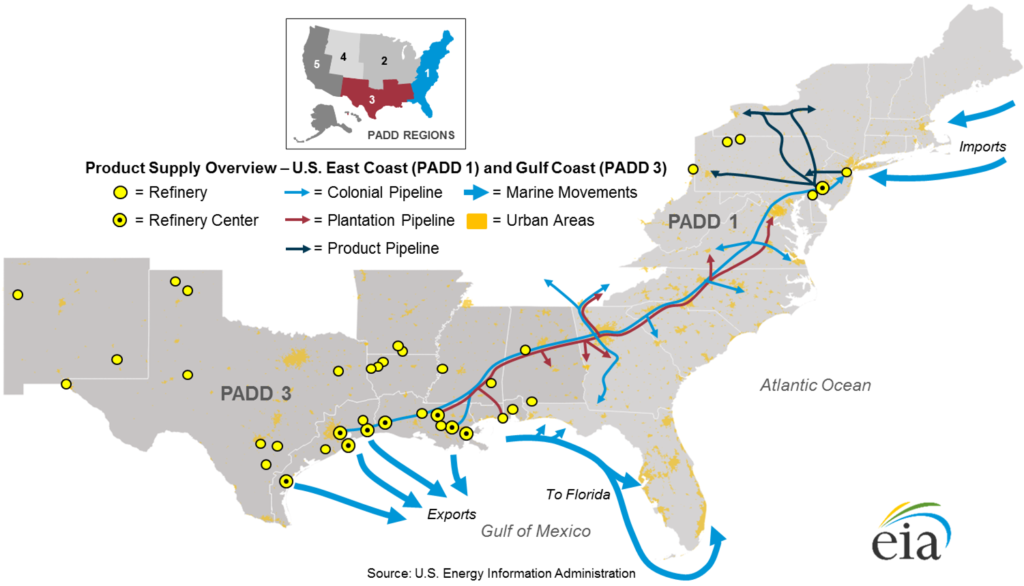
Let’s talk about the East Coast.

The East Coast has been particularly hard hit for two reasons:

  • One, because the California refineries suffered some technology issues earlier in 2022 and couldn’t make as much,
  • Two, because they receive their supply mostly from Texas and also Europe – and Europe ain’t sending much at the mo.
    • Distallite PADD 1 imports (the stuff a quick google search showed me is used for Kerosene – Jet fuel) is down 60%.

What are we seeing, where?

  • Smaller, regional airports are reporting shortages
  • Leisure routes are being cancelled due rising costs
  • International shortages/rising costs leading to security situations
  • Uncertainty as to ongoing availability
  • And of course, the rising costs globally…

In the USA

We have seen reports for several spots across the USA, and expect to see more particularly for the east coast airports.

  • KEYW/Key West has reported rising costs
  • KAUS/Austin has seen surge in passenger number and operators were asked to tanker where possible for at least the next few weeks.
  • KSDL/Scottsdale had a report from member of fuel shortages. One FBO confirmed their supply was ok, but other FBOs were running low.

If you have visited an airport recently which has fuel supply problems, or where costs are rising significantly, please let us know.

Elsewhere in the world

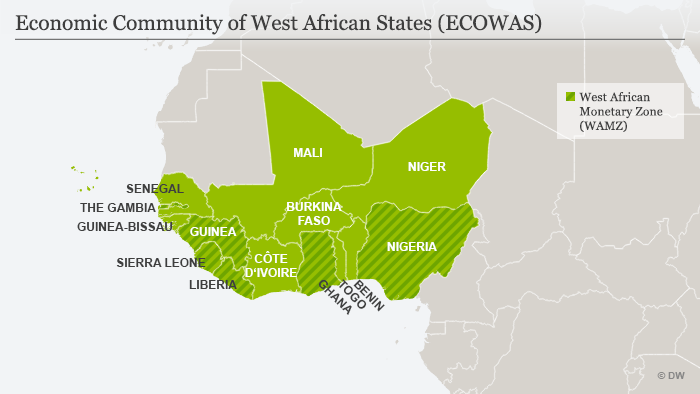
Nigeria and Russia have both had reports of aviation fuel shortages. The other countries on the list are seeing fuel shortages and rising costs leading to protests and security situations, however whether there is an impact on aviation fuel supplies is currently unknown.

  • Russia started to see fuel shortages around the start of March.

Whilst Russia are a major oil producer, much of their supply may be getting redirected for military operations. One major operator cancelled flights to UUDD/Moscow due being unable to uplift. With the current situation and lack of operators heading in, it is hard to get any clear picture of the situation though.

  • Nigeria have a big, ongoing shortage.

Although initially due to a batch of poor quality fuel, the situation has been growing as the costs of buying in more keep rising. This has been impacting domestic and some Interational airlines for over a month now. We wrote about it here.

  • Laos have a nationwide shortage but reports are not clear as to whether this impact aviation fuel as well.
  • Peru have seen protests and strikes in the transportation sector over rising fuel prices. There are no reports of this impacting aviation yet.
  • Sri Lanka has also been seeing an increase in protests over rising economic issues including fuel shortages. An FBO at VCBI/Colombo-Bandaranaike informed us that jet fuel supplies are good.
  • Pakistan are seeing rising demand, but are struggling to buy in fuel from their suppliers as Europe call in additional supply.
  • DRC has a shortage in ground transport fuel. No impact reported on aviation fuel, but significant security issues due protests.
  • Sierra Leone have a notam advising Jet A1 only available for scheduled flights at GFLL/Freetown until at least April 20.

What to do about it?

  • Keep an eye on notams
  • Confirm availability with agents prior to heading in
  • Consider signing up to services such as AvHopper that can keep updated on fuel costs and availability
  • Tanker where possible to maximise cost efficiency
  • When planning alternates consider fuel availability
  • Think about crew security on the ground if laying over, and crew transport issues
  • Share it if you operate to an airport or region and experience fuel issues.

You can let us know about it on team@ops.group and we will post an alert so others know about it as well.


Where has Nigeria’s fuel gone?

There have been growing reports of jet fuel shortages across Nigeria, and since mid-February several domestic airlines have been slowly but surely cancelling flights because of it.

So, what is the situation and what can you expect if you are operating to Nigeria?

From disruptions to cancellations.

Since December, jet fuel prices have almost doubled, and this has seen several of the smaller domestic airlines begin to reduce the frequency of some of their internal flights as they try to manage rising costs.

Lately the situation has grown more serious with some airlines stating they have only 3 days of fuel left, and national flag carrier Air Peace also seeing international flights being cancelled.

The fuel scarcity isn’t just at smaller, domestic airports. It is a nationwide problem, and it seems to be worsening.

Rising costs.

Fuel prices have risen from 190 naira a litre at the end of 2021, to 670 naira ($1.61) a litre in March 2022.

Domestic airlines require around 200 Naira a litre for their operations to remain viable.

So where has all the fuel gone?

Nigeria is Africa’s largest crude oil producer, but they don’t refine it themselves, instead importing almost 90% of motor and jet fuel.

It all began back in February when a batch of 100 million litres of imported gasoline was rejected because it contained unacceptable levels of methanol. This led to a rise in general fuel prices, which led to a spiralling situation of high costs, leading to less available cash, leading to less dollars for buying in more fuel…

The government is not looking like it will extend subsidies to the aviation industry, and so the supply companies just don’t have the cash to bring more fuel in, despite demand.

What about international flights?

The main problem is that no-one is really clear on just how scarce jet fuel is. So if you’re flying in and expecting some for your departure, you might be in for a nasty surprise. Whilst confirming at your destination might be possible, in the event of unplanned diversions it may be more of an issue.

But you can check the Notams? Right?

No, of course not. That would be helpful, but so far there don’t seem to be any, at least for the major airports that we checked.

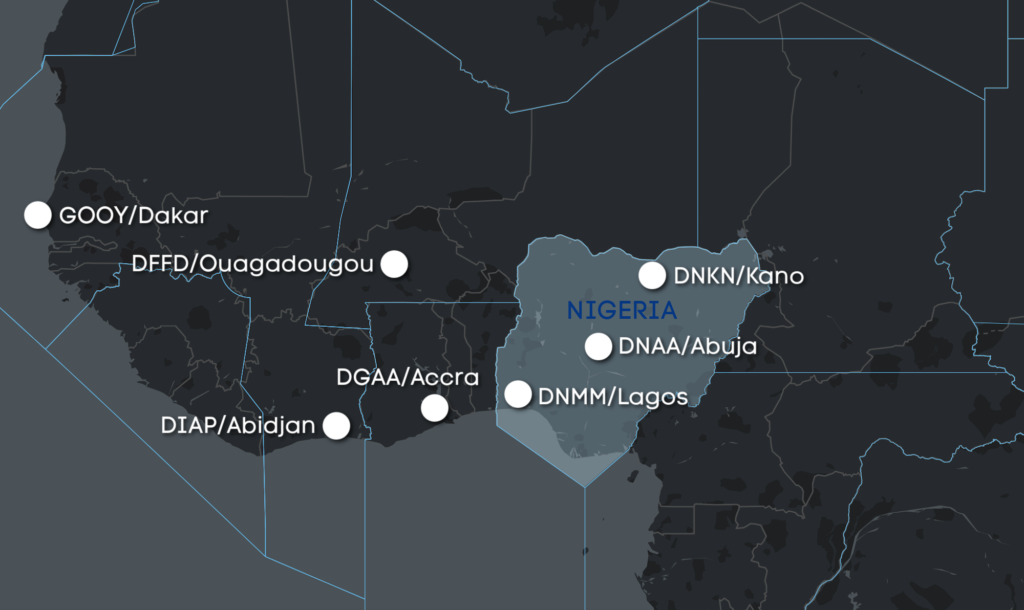
We did ask several handling agents who help arrange fuel at the bigger airports, and they advised that there is indeed a problem and that they cannot currently guarantee fuel. This was confirmed for DNMM/Lagos and DNAA/Abuja.

Can you tanker?

Tankering is an option dependent on your range and uplift capacity. A better option might be a fuel tech stop though.

However, security across this region of Africa is somewhat patchy, so the airports available to you for fuel stops may be limited. Here are some suggestions (direct fuel contacts only):

  • DGAA/Accra, Ghana
    • Vivo Energy are one of the main fuel suppliers in Ghana: +233 30 2664 636
    • AEG Fuel are also a large supplier: +1 305 913 5253 / dispatch@aegfuels.com
  • DIAP/Abidjan, Cote d’Ivoire
    • Corlay are the primary local fuel supplier: +225 2 121 1515
  • GOOY/Dakar, Senegal (west coast)
    • AIBD are the main local FBO here: +221 77 569 35 57
  • DRRN/Niamey, Niger
    • Air Total supply fuel at Niamey: +33 1 47 44 45 46
    • AEG are also a supplier
  • FKKD/Douala, Cameroon
    • Check in with Airport Admin: +237 2 33 42 87 62
    • Corlay Cameroun are one of the local fuel suppliers: +237 33 42 30 28


No fuel at LFMN/Nice

Update July 9th: Following last week’s issues with a break in the fuel pipeline coming into the airport, local handlers are now saying there are no more issues with fuel supply and availability. However, some third-party fuel providers are warning they still cannot arrange fuel for BA/GA operators, and are advising them to tanker inbound. Do you know different? Let us know!

July 5th: Due a break in the pipeline into the airport, for most operators there is no fuel available at LFMN/Nice.

Check with your handler before operating if your uplift at Nice is essential, as many are now advising all ad-hoc operators to tanker-in.

Information is still coming in, but it appears this may affect operations for a few days. No word of other airports affected, and nothing has been published in the Notams yet.