(No More) Danger in Denver
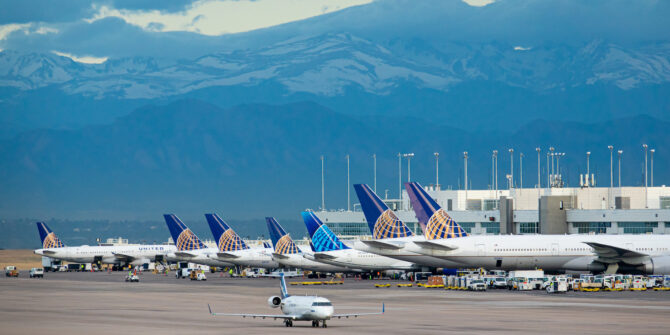
Back in 2022, the FAA issued a Safety Alert (SAFO) for KDEN/Denver, after a high number of TCAS RA events were recorded between aircraft landing on the parallel runways (16L/16R).

This was compounded by a number of factors:

  • High elevation
  • Reduced separation
  • Controller workload
  • Possible complacency caused by regular nuisance TAs.

It was a moody brew leading to the FAA becoming concerned about potential for a midair collision. If you’re like to know more, here’s an article we wrote at the time.
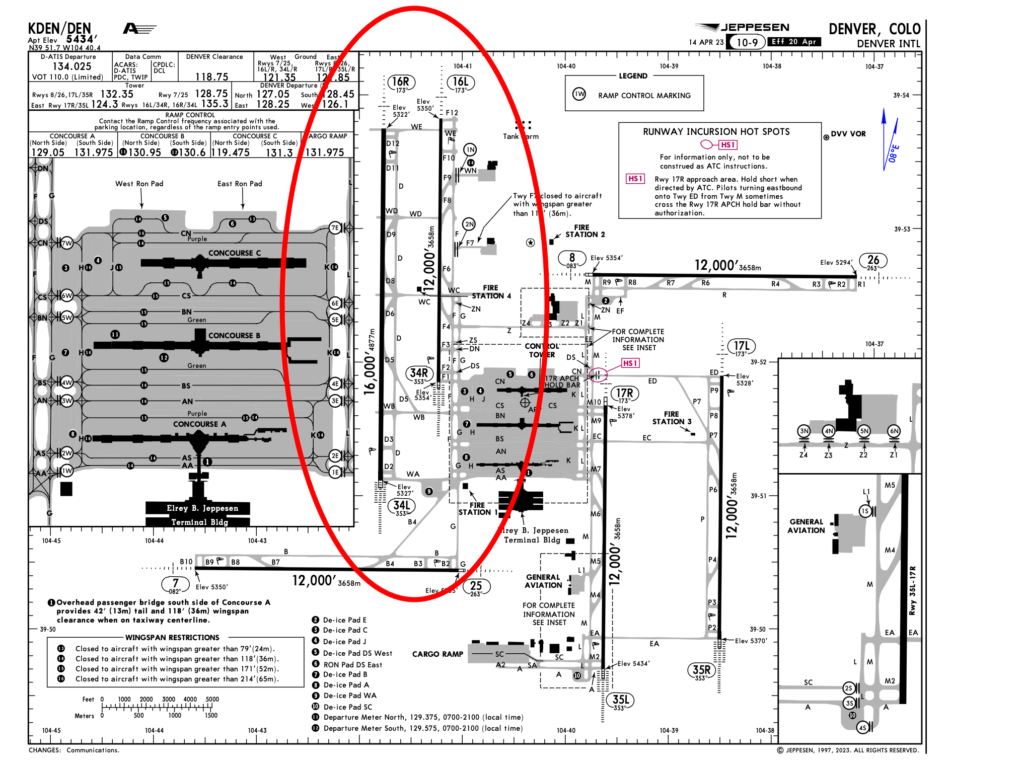
The trouble runways.

The good news is that last month, new approaches were introduced to alleviate the risk. Here’s an update on what has changed.

Offset Approaches

On November 30, Runway 16R received two new approaches (offset by 3 degrees) – the RNAV (Y) and RNP (Z).
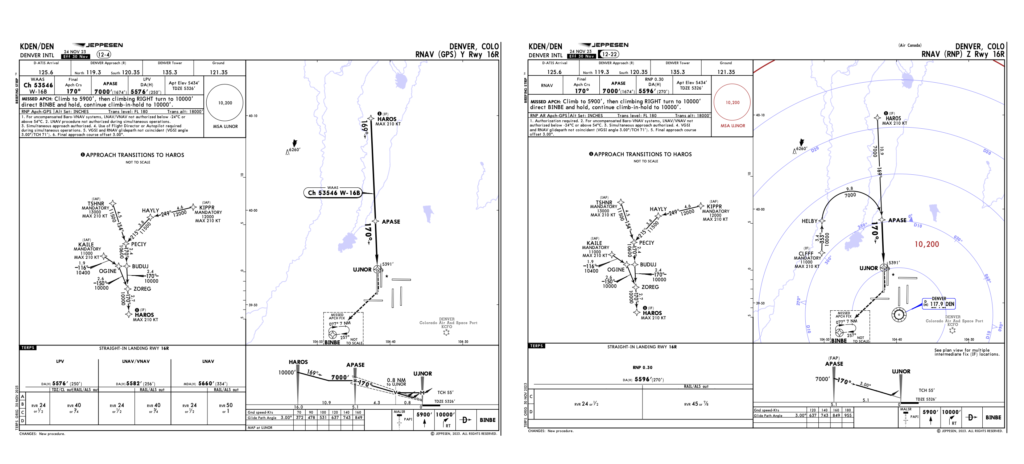
The two new offset approaches to Runway 16R

It was previously determined that 3-degrees would be enough to mitigate nuisance TCAS activations and allow operators to continue using full TA/RA mode throughout their approach and landing.

Along with these offset approaches, the FAA has published new procedures for their use found in this Information Note for Operators.

The procedures will be in use anytime Runways 16L and R are operating simultaneously, and visual approaches are in use on at least one of the runways.

New Procedures

Listen out for the following phrase on the ATIS:
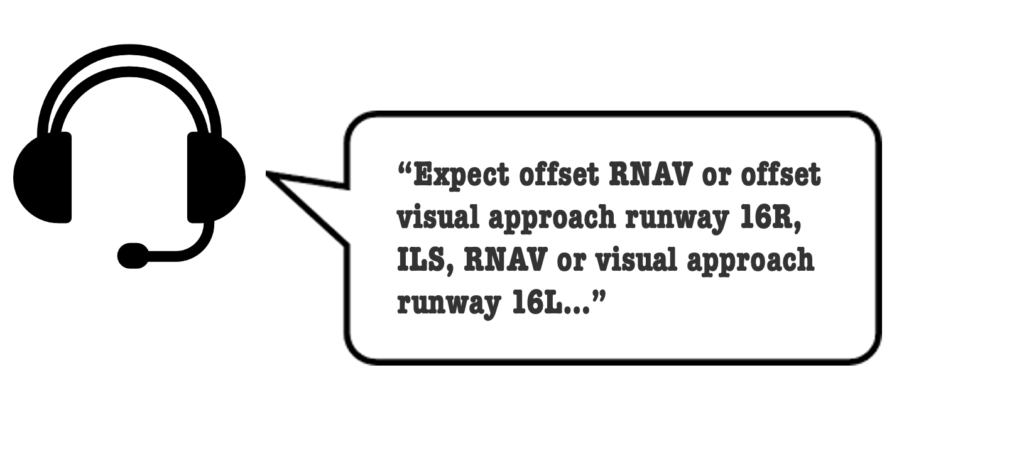
 

If you’re landing on 16R, there are effectively now two scenarios:

Instrument Approach – Follow the RNAV (Y) or RNP (Z) charted procedure. Easy.

or

Visual Approach – Here’s where things get a little more complicated. Even though the FAA regs say that an aircraft on a visual approach does not need to follow a specific track or vertical profile, in the case of KDEN, the FAA strongly suggests you do.

Aside from assuring you stay inside Class B airspace, it will also mitigate nuisance TCAS RA’s that can lead to unstable approaches, go-arounds and level busts.

In their Info Note the FAA goes even further and says don’t fly a straight-in approach to 16R (including via the existing ILS) unless specifically cleared to do so.

So when can we line up with the runway?

Whether you are on an instrument approach, or a visual, the FAA says don’t break off the offset until you can see the runway and have crossed the FAF.

Look out for these chart notes…

Because the above procedure will only be used when conditions permit a visual approach on at least one of the two parallel runways, technically the whole deal doesn’t fall within the realm of ‘simultaneous IFR operations.’

So, you can disregard the following two chart notes:
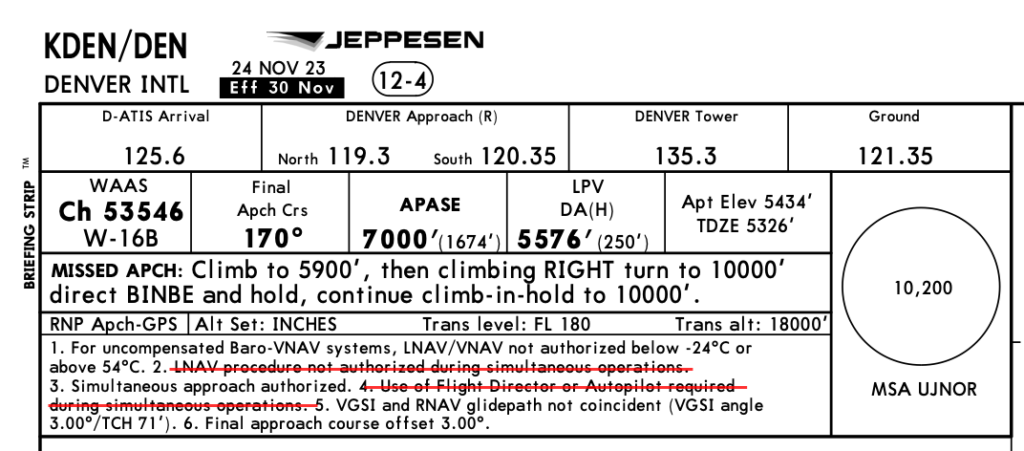
…although the last one is still recommended by the FAA.

Still have questions?

You can get in touch with the folk at the Flight Technologies and Procedures Division at 9-AWA-AVS-AFS-400-Flight-Technologies-Procedures@faa.gov (yes, that’s the real address) or on the phone via (202) 267- 8790.

Or talk to us! team@ops.group. We’d love to hear from you.

Danger in Denver: Collision Risk

On August 3, the FAA put out a new Safety Alert (SAFO) for KDEN/Denver. Here it is if you want a read.

The issue is the high number of TCAS alerts being recorded when aircraft are shooting parallel approaches to Runways 16L/16R.

It turns out that TCAS, high elevation, and reduced separation aren’t a great mix, and the FAA are worried there are chances of a collision.

Here’s a breakdown of the situation.

Elbow to Elbow.

Since 2004, KDEN has been operating two parallel runways (16L and R). The two runways sit literally elbow to elbow, with only 2600’ (709m) between them. For simultaneous close parallel approaches, 3600′ separation between runway centrelines is generally required. In Denver, typically two separate controllers are feeding traffic onto the approach cones for each runway, which means coordination can be a challenge.

From early on it became apparent that nuisance TCAS alerts were a problem. The FAA sought to fix the issue, and so in June 2019 Denver TRACON started separating aircraft vertically by 1000’ in case someone busted through a localizer.

Trouble is, this didn’t fix the issue. Instead, now the majority of TCAS events are happening when aircraft are established on the final approach course. The big threat here is the number of folk selecting TA only (a good 20%), and there is now a healthy dose of desensitisation thrown into the mix from so many nuisances warnings in the past.

Then there’s the elevation.

Fun fact: TCAS becomes more sensitive with altitude. Or in other words, the trigger thresholds for both TAs and RAs increase the higher you get.

Enter Denver – the ‘Mile High City’ – called that because it sits exactly a mile above sea level. That’s around a 5,300’ elevation.

The next iteration of TCAS, (the romantically named ACAS XO), promises better tolerances for these conditions but it’s not here yet, so right now users of TCAS 7.1 get all the warnings when all the warnings are not necessary.

What the FAA are concerned about.

Operate into Denver, and the threat of simultaneous parallel approaches isn’t new, but awareness of the threats needs to be improved. The basic idea is folk should:

  • Have an awareness of how the close in approach setup might increase the threat
  • Brief how operating in TA only mode adds to this
  • Know exactly where to be and what’s around by listening out on the radio and monitoring TCAS carefully
  • Think about to remember to re-select TA/RA mode in the event of a missed approach
  • Be aware of how nuisance TCAS cautions and warnings may desensitize crew.

In fact, this could be useful guidance anywhere where there are similar operational and environmental conditions which might increase the risk of collision.


Midweek Briefing 27APR: Rome Airport Closures, Strike: Germany, France

Rome Airport Closures 27APR Private flights (any non-commercial traffic) will not be allowed to operate to or from LIRA or LIRF on 30APR and 01MAY, as the result of a Papal Restriction. Refer to Italian NOTAMs for details.

Strike: Germany, France 27APR Widespread, mostly without notice, strike action across Europe today affecting operations for the coming few days. France and Germany worst affected (EDDF, EDDM, EDDK in particular); Lufthansa has cancelled all domestic flights. Monitor Eurocontrol NOP for latest.


KLAX/Los Angeles Due to a runway and taxiway construction project at LAX, arrivals (mostly general aviation) from the north and west can expect to be routed to arrive on the south side of the airport via the LEENA FIVE STAR between 09MAY and 06AUG.

KTPA/Tampa Due to an unforeseen required runway repair, TPA has closed 01R/19L and 10/28 until 09MAY. The airport is operating under single runway ops so you can expect ATC delays until the runway is fixed.

KDEN/Denver has opened a new train line that connects the airport to downtown. Named the ‘A Line’, it will take passengers to downtown in 37 minutes and cost $9 USD each way.

MKJS/Montego Bay increased traffic and possible delays into and out of MBJ 27APR-29APR due to the Airports Council International Convention.

SEZZ/Ecuador As of 23APR, 654 people have been killed, 113 people have been rescued alive, 58 people remain missing, and more than 25,000 remain displaced as a result of the 7.8 magnitude earthquake that struck off the coast of Ecuador on 16APR.

LZBB/Bratislava will be introducing free route airspace in their FIR above FL245 on 28APR. All ATS routes have been withdrawn above this flight level.

MTPP/Port au Prince, Haiti On 24APR, approximately 2,000 protesters marched through Port-au-Prince in opposition of the postponement of the runoff elections. While the protest did not turn violent, it severely disrupted traffic in Port-au-Prince, as protesters set up roadblocks of burning tires in the streets

EZZZ/Europe The European Commission has officially offered citizens of Ukraine visa-free travel across Europe.

HEZZ/Egypt UK FCO Advice: there is a heightened threat of terrorist attacks targeting celebrations of Orthodox Easter (24APR-01MAY).

RJFT/Kumamoto has reopened after closing for several days following the Japanese earthquakes. At this point, the airport can only handle arrivals, due to damage the terminal building sustained, which has effected the airports ability to perform security checks and handle luggage.

RZZZ/Japan The Immigration Bureau will be closed 29APR through 05MAY for Golden Week holiday observance. Foreign nationals should expect processing delays for immigration applications filed before or after this period.

ZZZZ/Worldwide On 25APR the World Health Organization (WHO) warned of a likely increase in the upcoming months in worldwide cases of Zika. Experts believe Europe will be next to experience an increase of Zika virus cases due to the approaching summer.

ZSHC/Xiaoshan The airport authority has requested that all private flights arrive with their specific tow-bar on board to mitigate any departure delays. The expectation is in effect until SEP16.

ZKZZ/North Korea At 0930Z on 23APR the North Korean military launched a submarine-based ballistic missile off the Sea of Japan. The missile flew for approximately 16nm before falling into the sea.

VIAR/Amritsar is currently in the process of upgrading the CAT II ILS to a CAT IIIB ILS which will allow CAT III capable aircraft to land in visibility down to 50 meters. Currently the only other city in India that has a CAT III ILS is Delhi.

View the full International Bulletin for 27APR2016