Europe CPDLC: The Mandate We Missed

A brief little refresher on the datalink mandate in Europe, because some of the temporary exemptions have now ended.

What actually happened?

The EU had a datalink mandate which came into force from February 2020. It applied to all aircraft operating above FL285 throughout Europe.

But, there were exemptions. Two sets in fact – one of a fairly permanent sort, and another that was only temporary. It is the temporary exemptions which have now ended.
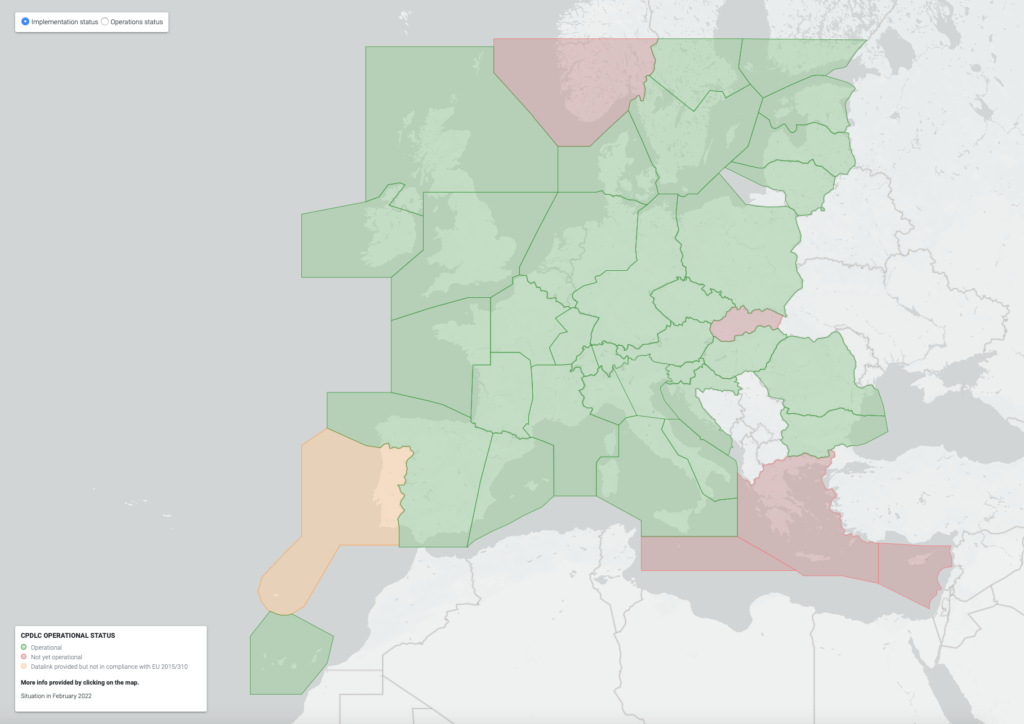
Click on this to link to the current Eurocontrol map

When did this happen?

5th February 2022. And no, they haven’t extended it.

What were the exemptions?

There are two articles (you can read all this ‘officially’ here if you would like).

Basically, if you fit under Article 1 then you can get a permanent exemption. If you fit under Article 2 then you probably had (but don’t have anymore) the temporary exemption.

Article 1 covers all aircraft listed in Annex I, and any in Annex II whose first certificate of Airworthiness was issued prior to Feb 5 2020. Article 2 is any aircraft listed in Annex II with an airworthiness certificate issued on or after Feb 5th 2020, and any aircraft specified in Annex III.

Give it to me straight!

Ok, ok, here are the aircraft which are permanently exempt, and those which had the temporary exemption until 5 Feb 2022 to do the avionics retrofit…

Aircraft permanently exempt:

  • Aircraft in Annex I
  • Aircraft in Annex II with a CofA issued before 5 Feb 2020

Aircraft which had up to 5 Feb 2022 to do the avionics retrofit:

  • Aircraft in Annex II with a CofA issued after 5 Feb 2020
  • Aircraft in Annex III

There are a lot of aircraft listed in these annexes, but Annex II in particular contains a fair few Bizav aircraft, so we’ve whacked that in below for you to see. We mentioned how GA/BA aircraft might be exempted here, before.
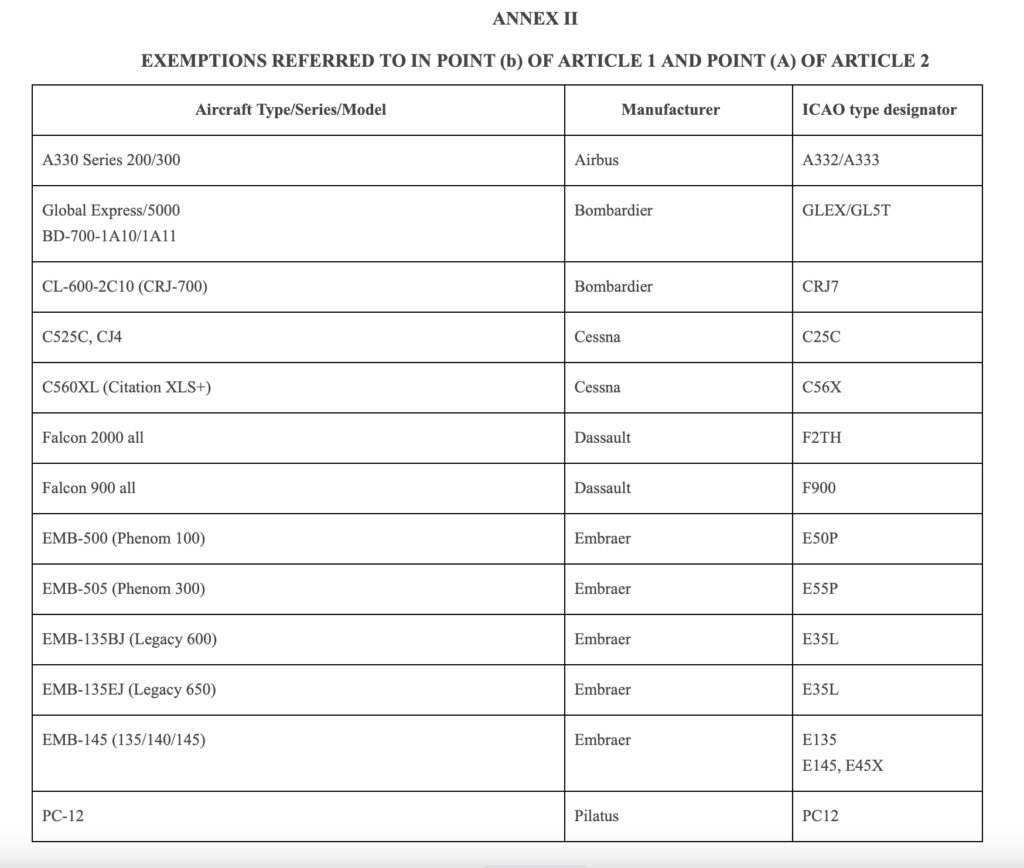
The smallest annex, so we could screenshot it here.

So does this affect you?

See above. It depends on those criteria.

Basically, most BizAv aircraft probably do meet the requirements of Article 3(3)(d) as well, which covers aircraft with a certified maximum seating capacity of 19 passengers or less and a maximum certified take-off mass of 45 359 Kg (100 000 lbs) or less and with a first individual certificate of airworthiness issued before 5 February 2020. If they do, they are exempted permanently.

This is all really a “reminder” of what’s already happened because if you don’t already know about this, it’s too late now anyway!

Tell us more about the mandate.

Actually, rather than do that, just head here to read what we’ve written before. This covers all the info you (hopefully) need on white list logons and all that jazz.

The entire consolidated version of Commission Regulation (EC) No 29/2009 is available here for your perusal, while the EC Implementing Decision 2019/2012 is here if needed.

The FAQs

EASA have published some (fairly) useful FAQs on all things datalink and CPDLC which you can read here on their ‘Airspace Usage requirements – DLS/CPDLC’ page.

One we see a lot, is do you have to register on the ‘White List’. The answer is no, it’s not  a regulatory requirement.

One final exemption.

If your equipment is temporarily inoperative you can still continue to operate within the applicable airspace if your MEL allows, and if you tell them about it in your flight plan. You do this with a “Z” in item 10 and the indicator “DAT/CPDLCX” in item 18 of your flight plan.

A final final one – you are also exempt if it is a delivery flight.

What EASA said when we asked for clarification.

Basically what we’ve put above, but to make it extra clear, here is a quote from their response –

“The EC Implementing Decision 2019/2012 in Article 2 refers to the 5 February 2022 date. Depending on the specific aircraft type/model and the first CofA date, the aircraft were either exempted or only temporarily exempted until 5 February 2022. There is no extension to this date and no change to this Decision since it has been adopted.

On the other hand, it should be noted that most business aircraft may meet the requirements of Article 3(3)(d) of the Commission Regulation (EC) No 29/2009 referring to aircraft which have a certified maximum seating capacity of 19 passengers or less and a maximum certified take-off mass of 45 359 Kg (100 000 lbs) or less and with a first individual certificate of airworthiness issued before 5 February 2020. If this is the case, the operator’s aircraft is exempted.

So if you were exempted under the earlier Article you are still exempted. If you weren’t but fulfil the criteria in Annex I of the new article then you are permanently exempted. If you fall in the list in the new Annex of only exempted until Feb 5th, then you are no longer exempted.

Any other questions?

You can read SIB 03 2020 here. If you have any other questions, you can ask EASA directly on atm@easa.europa.eu. We asked them some things a while ago and they took a week or two to respond but were super helpful when they did.

Most GA/BA aircraft now exempt from Europe’s 2020 Datalink Mandate

Europe’s datalink mandate takes effect today – 5th Feb 2020!

The original plan was that datalink would be required for all aircraft operating in Europe above FL285 from this date, but then the EU announced that this would not be required for several categories of aircraft, the main two being:

  • Aircraft with a certificate of airworthiness first issued before 1 Jan 2018 and fitted prior to this date with FANS 1/A.
  • Aircraft with 19 seats or less and a MTOW of 45359 kg (100000 lbs) or less, with a first individual certificate of airworthiness issued before 5 Feb 2020.

In other words – most GA/BA aircraft! (You can read the rule here – latest version in 2023).

Added to that, in early Decemebr 2019 the EU Commission approved plans to pass an additional resolution that makes a bunch of other aircraft exempt too:

Aircraft permanently exempt:

  • Aircraft in Annex I
  • Aircraft in Annex II with a CofA issued before 5 Feb 2020

Aircraft which have up to 5 Feb 2022 to do the avionics retrofit:

On Feb 3, EASA issued a Bulletin which says that operators who are exempt from the mandate should include the letter “Z” in Field 10 and the indicator “DAT/CPDLCX” in Field 18 of their flight plan. If you don’t, ATC won’t know you’re exempt, and you may struggle to fly above FL285!

Bottom line, for operators who are exempt from the mandate, these flights should not be restricted to the lower flight levels below FL285. Logged-on traffic might just get better directs and faster climbs, that’s all.

It should be noted that the Datalink Mandate is not the same thing as the Logon List. The Logon List is the thing you need to get registered on if you want to get CPDLC when flying in Maastricht, France, Switzerland and Portugal. And it only applies to ATN CPDLC aircraft. If you’ve only got FANS1/A, Maastricht will let you log on, but France, Switzerland and Portugal will not.


The Backstory…

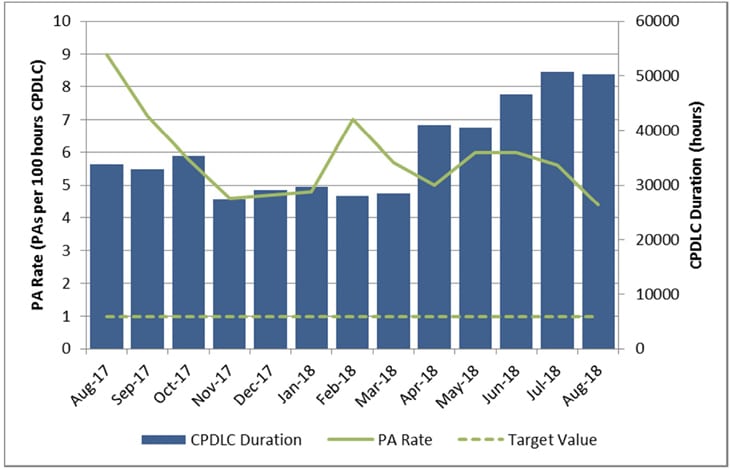
This mandate was actually supposed to come into force back in Feb 2015, but got delayed to Feb 2020 due to technical issues with the system, particularly disconnections, known as ‘provider aborts’ – which is where an aircraft loses datalink connection with the ground for more than six minutes.

The high amount of these provider aborts has led some sectors (Maastricht UAC, France, Switzerland, and Portugal) to implement the Logon List (formerly known as the “White List”), which effectively means that CPDLC is only provided to those aircraft with avionics that are known to suffer a lower provider abort rate. The Logon List only applies to ATN B1 equipped aircraft, not those with FANS1/A – Maastricht are planning to introduce a similar list for FANS1/A aircraft at some point in the future, to ensure that only aircraft that have the latency timer feature will be able to log on.

In their original postponement of the mandate back in 2015, the EU said the following:

“This excessive rate of random provider aborts causes a degradation in the network performance potentially presenting aviation safety risks by increasing the pilots and controllers’ workload and creating confusion leading to a loss of situational awareness.”

Their goal was to get the number of provider aborts down to 1 per 100 flight hours. By mid-2018, the number had dropped to a rate of 4.4 per 100 flight hours, and data from this year has that figure down to 3.9 per 100.

Added to that, they wanted to get at least 75% of flights across the network filing with datalink. Current data suggests this is still lingering at around the 40% mark. So if the datalink mandate had been implemented as planned in Feb 2020 without these new exemptions, that would have meant that approximately 60% of the traffic would have been restricted to below FL290!

As the EU make clear in their new ruling, that is ultimately why the new raft of exemptions has now been brought in, ahead of the Feb 2020 mandate:

“Acknowledging the ongoing data link implementation issues and corrective actions taken and recognising the objective that at least 75 % of the flights should be equipped with data link capability, the criteria for exemptions should be amended. Those criteria should remain effective, without placing an undue economic burden on specific operator categories which contribute significantly less to the overall number of flights. Such categories should include operators of aircraft with Future Air Navigation Systems (FANS) 1/A systems installed, operators of older aircraft, and of aircraft designed to carry 19 passengers or less.”

Ultimately, when the datalink mandate comes in on 5 Feb 2020, it now looks like most GA/BA aircraft will be exempt from this, meaning that those without CPDLC will be able to continue to operate above FL285.


Thanks to the European Business Aviation Association for their help with this article!

Article header photo by @Zelgomat