Storm in the Cockpit: Tales of Conflict and Clashes
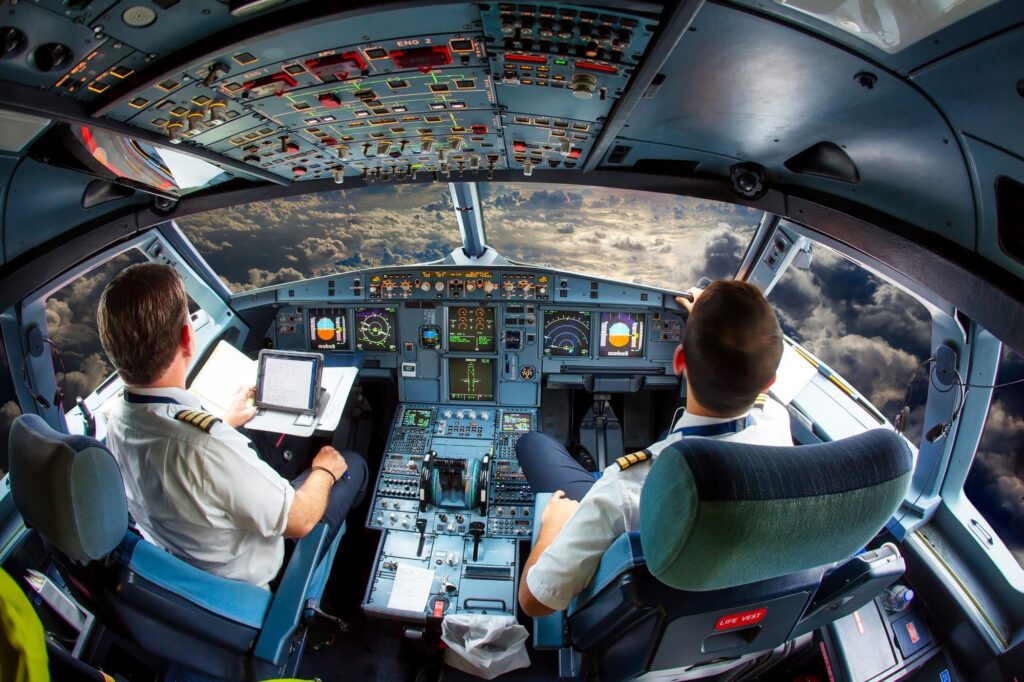
We’ve said it before, and we’ll say it again – the flight deck is a weird little world to work in. We lock ourselves into our button-filled booth, with one other person, and sit there for hours on end, putting ourselves through no end of challenging things.

I am talking things like fatigue, boredom, stress and, yep, dealing with people.

You’re one, I’m one, they’re one (if they’re not then you’ve got an even bigger problem). Point is, we’re all people, people can be challenging. and dealing with those challenges is a big part of our jobs. But we rarely talk about it. At least not in a very human way.

Well that stops now!

We want to talk about human stuff. The good, the bad and the ugly stuff that makes us human, and often ‘not such ok’ humans from time to time.

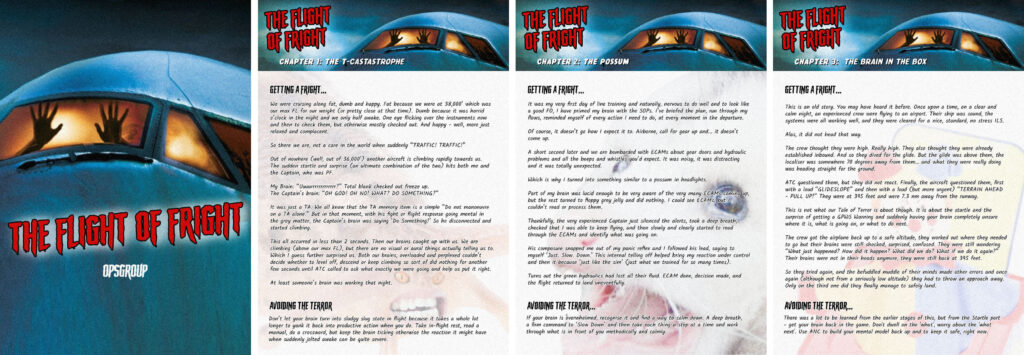
We wrote a little book.

It’s just 3 stories. Tales of things that happened to pilots (to us!) where there was a storm brewing, a conflict growing, a nugget of irritation and anger flowering.

You can download the PDF here.
We want pilots (people) to share these stories, because these are the experiences we can all learn from, think about, probably have happen to us.

So, if you have a story, share it – please – we will even add it in (anonymously if you prefer). Send it to team@dangerrr.club

A normal day at work, as a pilot, is often anything but normal.

Just think about it for a moment – everything you do is monitored, you are strapped into a little box and expected to work away for hours on end, doing things where one little error can easily escalate, where one small slip can slide you into a catastrophe. And you can’t step out if you feel off.

You can’t even step out to have a simple bathroom break with having to prioritise it, and awkwardly announce it to the other person.

The airplane “office” is a strange spot to work in at the best of times, and then we add in a whole load of challenges that make living up to the ‘ok pilot’ standards even more difficult.

What are we talking about?

All the things that make our little, puppy brains act even more strangely:

Fatigue – flying at crazy hours of the day and night, across timezones, and expecting our brains to go “yeah, ok, I’m good with this! I don’t need sleep.”

Boredom –  yeah, I’ve said it. Sitting in the cruise in the middle of the night, monitoring monitoring monitoring can get tedious, and a bored brain can be a bad (or at least not as good as usual) brain.

Stress – The pilot job can be a tricky one. Things happen. Often they are things we don’t like having happen, but we’re the only two up there in that cockpit who can sort it.

Random pressure – it’s all over the shop. At home, from the company, from the passengers, from inside your own little brain.

And of course… People – The behaviour, attitude, values, ideas, smell, sounds, way they put a glove on to fly all impacts how we act too.

Whether it’s a ‘Stranger Danger’ (working with someone you don’t know at all, and maybe are struggling to find any common ground with) to the ‘Friendly Foe’ (flying with the same person you always fly with, who you know really, really well…), and all the others in between. They all have their challenges. People do weird stuff from time to time, but we never talk about how to deal with it.

Not really.

I mean really talk about how to deal with someone doing something weird, or how to spot it in yourself when you’re getting cranky, grumpy, grouchy, slouchy, slack or mad or mean.

So, we’re here to talk about it.

Now, before we do, let’s have a quick chat on CRM courses. These are of course great.

Sometimes.

Especially the ones where you have to pick which shape appeals to you most. In fact, let’s do it now quickly –

Which shape appeals to you most?
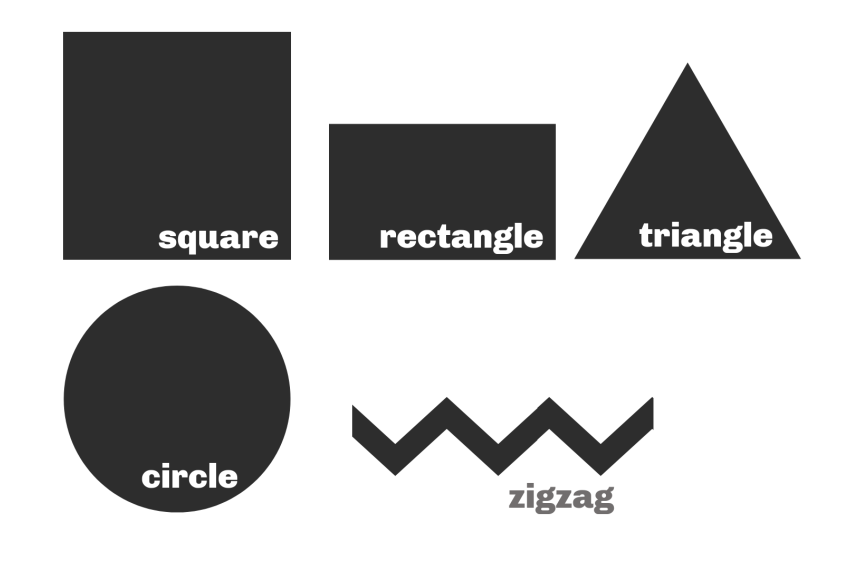
Pick one. Only one.

Right, so, whichever shape you have picked tells us so much about you as a person…

  • The square is a tireless worker. Diligent, patient, methodical, neat, organised, logical. Predictable, rational, data driven.
  • The Rectangle is a transitional shape which means this person is curious, inquisitiveness, adventurous, motivated. Always trying new things, always lively and interested.
  • The Triangle is the shape that symbolises leadership. This person focuses on goals, analyses situations fast, is confident, thinks they’re always right, assertive and argumentative. Their career gives their life meaning.
  • The Circle is a harmonious person who loves good interpersonal relationships. They value people and wellbeing, are the glue that holds the team together. They have sympathy, and empathy, lots of emotional IQ and often super creative.
  • The Zigzag is (not a shape!) but a symbol of creativity, imagery, conceptualism and aesthetics. They live for experience and reflection, new ideas and methods, possibilities rather than actual realisation.

I bet you fit perfectly into one, and not any others right?

No? No! Of course you didn’t! Because we aren’t defined by one shape and a couple of sentences about said shape.

We can change on a fairly daily basis (or by the minute, if you’re like me and particularly susceptible to things like hunger rage). What’s more, this does very little to actually help us establish how to work with a triangle if I’m a circle, or to deal with that flimsy whimsical zigzag while you, the square, are trying to get a basic job done.

Human Factors has some answers though.

They do indeed have some.

We have (thankfully) moved a long way from simple symbols and SHELL models to tell us what sort of errors and mistakes, biases and behaviours can cause concerns in the cockpit. We know about our non-tech competencies, we know about those hazardous attitudes. We know that a too steep cockpit gradient might lead to an unassertive FO not speaking up, and we even know that there is a risk of the too friendly flight deck and the risk of complacency.

The thing is, we read the reports, accident investigations, and we think about how that crew crashed. 

But what we rarely talk about is the bits that lead to that. The off day, the slight challenge, the things we see and experience all the time which never lead to the big bad accident, but which could, one day, if we don’t deal with it right. The reason we don’t is… well, why would we? Unless you bring them up yourself then they aren’t in an accident investigation report, they generally aren’t covered in a CRM manual, because they just aren’t big enough.

Which means we are never talking about us, each other, our experiences. We assume we all know how to deal with them, because they are everyday human things. But in the cockpit, in that locked chamber, these are what often amplify.
The Flight of Fright: Tales of Startle and Surprise

We may have brought this up before. I think we referred to it as “that old chestnut”, and talked about how the lack of currency (a lot of folk were heading back to the cockpit after big periods of Covid-no-flying) made it a big threat to think on.

But it turns out lack of flying isn’t the only issue. In fact, Startle and Surprise are a bit less “old chestnut” and a lot more “giant conkers still encased in their spiny suits, falling on pilots’ head from 40,000 feet”. They can affect anyone, and regardless of experience or currency, can be hard to deal with.

So we thought we’d take another look, and a slightly more personal look, to see if that might help folk be less, well, startled when something startles them, (or surprised by something surprising).

It’s all in your head.

It really is, which means reading about the Science of Amygdala and the Theory of ‘fight and flight’ is great, but it probably won’t actually change your reaction. At least, not the one that counts. You may say “oh, so that’s why my brain did that!” several hours afterwards when the adrenalin has worn off, but in the heat of the moment?

Knowing the theory probably won’t help.

If you want to know how to not react the ‘wrong’ way to Startle or Surprise, then you need to think about how you do currently react – analyse those past events and what your brain did during them – because once you understand and are aware of that, then you can start to think about how to control it a little more.

A very wise lady wrote an interesting thing of this for the RAeS magazine. She pointed out that one of the big issues with training for Startle & Surprise is the fact that you can’t really do it that effectively in a simulator. 

  • First of all, we all go to the sim expecting hideous things to happen and are generally quite primed for it. 
  • Secondly, unless your sim is particularly high tech then chances are they have to build up to a lot of those startlingly surprising things. Like the old “close your eyes and only open them when I say ready” UPRT practice. If you know what’s coming, the effect is less.
  • Thirdly, as much as we’re told to treat the sim like a real flight, our little brains always know deep down that it is just a sim and we aren’t going to really be in any life threatening jeopardy, which can change just how much ‘fight or flight’ it really goes for.

So it is hard to really experience a full Startle or Surprise in the sim. But we can still benefit from the practice by using it to review our reactions and thinking about how they felt, what we did, how we recovered – we can mentally prepare ourselves for the real deal should we ever encounter it.

Are you a ‘flight’ risk?

I am a naturally very jumpy person. My husband takes great amusement in making me jump at every opportunity which sadly has only further developed my “scream first, think later” response. 

Would I have a similar reaction in an airplane?

Embarrassingly, yes. I once flew into my wind shear memory items after the system yelled “Wind Shear!” at me. Great. Nice to know I’m that well conditioned. Only the warning had gone off at 12,000’ because the system had malfunctioned, and me hurling it into TOGA basically all out panicked the poor thing. 

Are you a ‘fight’ risk?

I’ve seen other pilots startled by the dings of ECAM during an engine start, seen the EGT skyrocketing and yanked the start master off – de-powering a bunch of the systems the clever FADEC probably would have used to help the situation.

Both the flight or fight reactions generally have us wanting to do something immediately – to take action, to get ‘out of danger’ – and generally before we’ve really understood the situation and all the information in front of us.

The ‘duh!’ Moment

The other response is the ‘freeze up’. 

A prime example of this occurred in the French Bee go-around incident of 2018. Startled by an unexpected wind shear warning the FO seemed to freeze – cognitive incapacitation. This was quite an extreme example (extreme in how long it lasted).

I’ve heard folk say “I really froze up!” when they were startled or surprised, “There was this moment of cluelessness, where I just didn’t know what to do!” This isn’t the same as the poor French Bee FO though who, after carrying out that probably amounted to a conditioned memory reaction then checked out entirely for almost the entirety of the go-around procedure.

Is a momentary freeze up such a bad thing?

That ‘duh’ moment is a pause. It is your brain trying to work out what is going on, and this can be to your benefit if you recognise it, and use it as a trigger to start getting the brain back into gear.

https://giphy.com/gifs/movie-film-1990s-1aKKuZOjn3qUg

The worst thing to do would be to do something because you feel you need to. You need to give your brain time, but how can you do this?

What should that response be?

A lot of folk say “sit on your hands” but this is easier said than done. 

I mean, you’re not literally going to sit on your hands. Mine tend to go into a sort of weird claw shape when I’m truly startled, which I’ve never understood because what use is that? I’m not a clawed apex predator, and it makes sitting on my hands particularly uncomfortable.

What I think the phrase is aiming for is giving yourself a couple of seconds to allow your brain to get out of the startled state and start actually taking in the information and processing it properly. So a better method, or technique, is the deep breath trick.

Literally one big guzzling breath of air. 

I like this one for two reasons – one it really works, and two it turns what would have been a mortifying yelp into a sort of wheezing gasp which is less startling for the person sat next to me.

Be a rock. 

Or rather a ROC – Relax, Observe, Confirm.

Actually, ROCK works too – Relax, Observe, Confirm, Know (what to do).

This is a really good mantra to get into your brain. Deep breaths to clear the mind. Look at what is in front of you. Vocalise it so the other pilot knows what’s going on.

The point is, you are going to be startled at some point. Things are gong to surprise you, and chances are, you will have the age old human survival reaction to this. You probably can’t help it, but if you can recognise it in yourself and stop it from taking over totally, then that is a good thing.

After all, the other ‘old chestnut’ CRM thing – the one about stress levels and how well you perform (because adrenalin is a useful thing, to a point) is also a science fact.

So – a challenge.

Try and think of a time when you’ve been startled, or surprised, and try and remember the feeling.

Once you start to recognise it, and to understand how you react, then you can really start to condition yourselves with a better response, or at least a way to manage it.

Then try to think of a situation when an immediate response really is required. Aside from the obvious “TERRAIN AHEAD, PULL UP!” or a really violent wind shear warning, there are very few. Engine fire? You still need to confirm the right one. TCAS? RTO? They build in the natural delay.

We’ve put together a bunch of ‘stories’ – A Startle and Surprise Story Book.

We aren’t astronauts.

Chris Hadfield, Canadian Astronaut, once talked about how astronauts sometimes might only have the time they can hold their breath for to solve a problem. I tend to yelp which means I let all the air out, so I would be awful in this situation. 

Thankfully, we aren’t astronauts, and there is rarely going to be a moment when you have to act right this second or that’ll be it. So taking two seconds, two breaths, to calm down and work out what actually does need to be done is pretty much always going to be a good thing to do.

Want to read some other stuff?

Try this for size. (It’s the old post we wrote about this very subject when folk were heading back into the skies after long periods off).

And here’s our book again in case you didn’t already download it. If you have a personal story to share of a time when you fought the twin headed gorgon of Startle & Surprise, send it in and we will add it (anonymously of course). Email us at news@ops.group


Getting Your Head Back in the Game

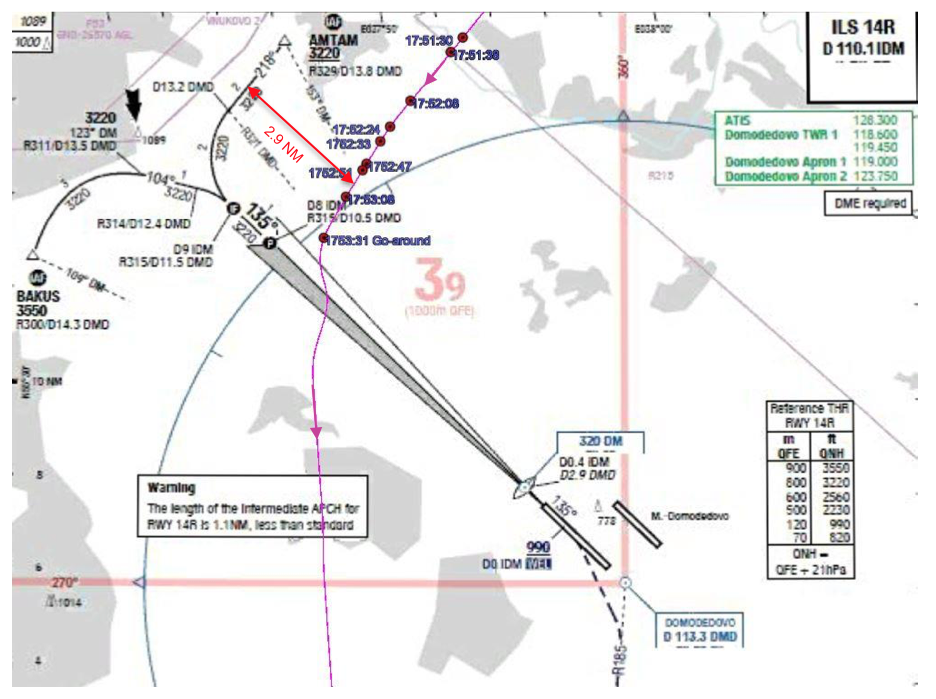
In 2017, an Airbus 380 routing to UUDD/Moscow Domodedovo had a serious incident attributed to “Descent below Cleared Altitude during Approach and FS not reconfigured following a reset doing the Second Approach.

What happened, in plain English (and minus 166 pages of report), was an aircraft carrying 422 passengers descended to 395 feet AGL, had an EGPWS warning, and then attempted a second approach which they went around from before finally landing without incident from the third approach.

Now, it might come as a surprise, but  if we are going to talk about either of those approaches, then we actually should talk about the second one. Here’s why…

(But before that) The Report

A large number of the aforementioned 160 plus pages of this report discusses and analyses Airbus specific (and at times quite technical) factors involved in the second approach. Things to do with FMS sequencing, oscillations from mismatching position signals, FMC resets, multiple waypoints…

But if we sift through this technical stuff and really ask what led an experienced crew, with a full functioning modern aircraft, into this situation then the real root cause is simple.

Stress.

Stress caused by what had happened earlier clouding their ability to do what needed to be done next.

We’ve all been there.

We have all experienced a time where something has gone wrong and our brain has refused to drop it. Instead of getting to work, it’s sat there reminding us what we just did, how silly it was, even when we’ve tried to move on and get our focus back on the current situation.

You no doubt have your own examples – the first manoeuvre in a sim assessment that is so messy you spend the rest of the session dwelling on it, wondering if it was too messy to pass. The time you did something silly on the line and sat there stewing away with the “why did I do that?!” and the “What an idiot I am!” thoughts.

And out on the line, this dwelling on what happened just now, instead of what is happening now now is particularly critical because, as we know, a flight is a pretty dynamic beast, and it doesn’t stop at the mistake – it keeps moving on. If we don’t get with the program, then where it is going to move us to might very well be another equally or even tighter spot than the one we are still stewing over.

Now, us pilots are tough on ourselves, often our own worst critic. We are also quite detail-oriented which means if we allow our brain the freedom to, it tends to start throwing a few additional ingredients into that stew pot, until there is a nice bubbling hot soup of worry filled with self blame, bruised ego, concerns about repercussions and just a little fixation on hindsight.

But if we let this soup spill into the remainder of the flight, we can get burned very quickly. So, how can we get our head back into the game?

Time

Yep, time is a wonderful thing. They say it heals all.

Alas, we don’t always have it, and if you don’t, then you’re going to need to do two things.

One: Take just a few moments to throw everything into the stew pot.

Two: Stop stirring it and put it aside until you do have the time to really sit and look at your reflection in the probably quite thick, dark gloop (ok, enough with the stew analogies, I promise).

You are going to have to wait until you can sit and reflect, dissect, digest. This does not mean disregarding it immediately though.

After a stressful or surprising event, it can take between 20-30 minutes for adrenalin levels to really drop down to normal again. In the flight deck SOPs, memory items, all our years of practice are there to help bring those levels back to normal quickly. But you still need time to acknowledge something happened, and to regroup. While you may not have time for the full self-trial, you do need to make time for your brain to get it together again.

But how long do you need?

That is very dependant on you and on the situation. A group of pilots were asked to give an estimate of how long they thought they’d need to reset and re-brief for a second approach following a “not their fault” event leading to a go-around. It wasn’t particularly scientific, there was a hypothetical pig involved, but for the most part the group seemed to feel 5-10 minutes was adequate.

This was a situation where they were not to blame though. Throw in the embarrassment and concern about repercussions and the time to put all that aside may be much more.

Admit it, Move on.

A key step in this seems to be simply admitting something went wrong. Acknowledging a mistake, out loud. Saying “That happened, but now we need to do this…” can be trigger to your brain to focus on that “now we need to” element which is so important to safety. It can also be the trigger to bring the other person back into the now as well.

Without this, it is often hard to stop your brain from running through the events again and again, self-preservation kicking in as your brain so thoughtfully tries to find reasons, evidence, excuses as to why it wasn’t really your fault.

We need to Rebuild

In the A380 incident, this seems to have been what happened. Added to that was a likely loss of trust – in themselves or potentially in the aircraft – because there was not time to review and work out what had really happened. And this is the next thing you need to give yourself time to do – rebuild.

Just as we rebuild our automation after a wind shear event, or a TCAS RA, we need to rebuild our own mental model of the situation as well, and using a structured method – sticking to SOPs, ANC, what we know – will help reset your brain back into the ‘now’ far more quickly, and with far more useful context to keep you safe. By going back to basics, starting simple with a good bit of ANC and working up again, you can determine where to place your trust and then go from there.

The Process

The process look simple:

  • Give yourself time to take in what happened and to acknowledge it.
  • Mentally put it aside until there is time to think on it again.
  • Rebuild the situation and your own mental model, bring your brain back into the game.

But can we prepare for this even earlier?

Train to Fail

We probably don’t spend anywhere near as much time thinking about failing as we should. I mean, it’s not nice to. Adding some Kobayashi Maru exercises into sim profiles probably isn’t the way to go about it, but in fact building resilience is something that can only really be done through practice.

By resilience, we mean that ability to bounce back. The capacity to recover from difficulties. Mental toughness. Some of this can be prepared with briefings on mitigation strategies, threat and error managements and all that good stuff.

But the resilience to bounce back from a real unexpected, unprepared for event –  that only comes through actual experience of those sort of situations.

How can we train to fail in sims though? And especially in the sort of scripted sims that are all many smaller operator pilots have exposure to?

The Element of Surprise

Sim scenarios which involve an element of surprise are critical. It doesn’t have to be something huge, but it does have to be something that actually tests the pilot’s decision making, situational awareness and resilience skills. They also don’t have to fail, but they do have to experience that “not going to plan, what do you do now?” moment where they need to reset their brain, rebuild their SA, and regroup with the other crew member.

If Resilience is the key, how to build it is the question.

The resilience to bounce back needs to be developed, practiced and thought about. And a process for doing it needs to be identified.

Resilience, or a lack of, is unfortunately what led the crew of the Moscow A380 into having to discontinue a second approach. While the factors leading to the first may seem so much more important to review because that first approach led to a so much more dangerous condition, the really critical Human Factor in this, and in so many experiences on the line, lies in the question of “How can we get our head back in the game following an event?”

Think you have an answer to this? We would love to hear it. You can reach us on team@ops.group.


Danger Club .. the story so far

What happens in Danger Club? Top secret of course, but very simple: we get together as pilots to talk about safety danger. This isn’t the usual safety meeting (hence the strikethrough): we’re just fallible humans figuring out where our faults may lie.

The first six meetings have been met with enthusiasm from all attending, and some really interesting discussions have resulted.

Top topics so far: Taking control from the PF, finding your voice as the F/O, MAYDAY calls and emergencies, over-experienced captains, automation vs hand-flying, the risks of a too shallow cockpit, whether there is such a thing as too much experience, and the question of when do we become too comfortable with risk?

It’s been fun and fascinating. Bec wrote a great article on one of the topics after one of the sessions: Fighting for Control, and Chris wrote another one: Grandchildren of Magenta.

OPSGROUP members – keep an eye on the OPSGROUP forum for details of the next event!


Fighting for Control

How many pilots can stick their hand up and say they’ve taken control from another pilot?

A more interesting question though might be – how many can recall a time when they didn’t take control but felt they should have? Because this is now getting somewhere – this is what we need to be thinking about. Why, if it was apparent that we should have taken control, didn’t we?

It’s happened before, it will again.

In 2016 a Global 5000 was routing from ZBAA/Beijing to VHHH/Hong Kong. During the approach they lost their ‘mental picture’ of the situation and descended below their cleared altitude leading to a pretty significant loss of terrain clearance.

There are a lot of why’s and how’s and other factors which led to this, but one particularly interesting point that stood out was the First Officer’s comments in a subsequent interview about the incident.

“… he [the captain] has a very aggressive attitude… it causes problems if I don’t do things his way… I had my hands on the controls, but I couldn’t take over…”

How does it get to that point?

Taking over control is something that in many cases pilots say they should have, could have, or someone else probably would have avoided. We are not talking the immediate, time-critical, co-pilot-hasn’t-flared-and-you-have-less-than-3-seconds-to-fix-it type situations, or the rolling-down-the-runway-and-the-other-pilot-has-just-passed-out sort of thing.

We are talking about those times when a Swiss cheese model of insidious, minor or ambiguous events has built up. When there have been clues, hints and opportunities to spot ‘holes lining up’ and where we potentially could have identified that something big might happen if we don’t set ‘safety’ back on track. 

In these situations, reaching a point where we have to take control is too close to the line, it is not somewhere we ever want to reach. So what ways are there to ‘redirect’ safety and prevent it from reaching the “I have control?” stage?

The Intervention Model.

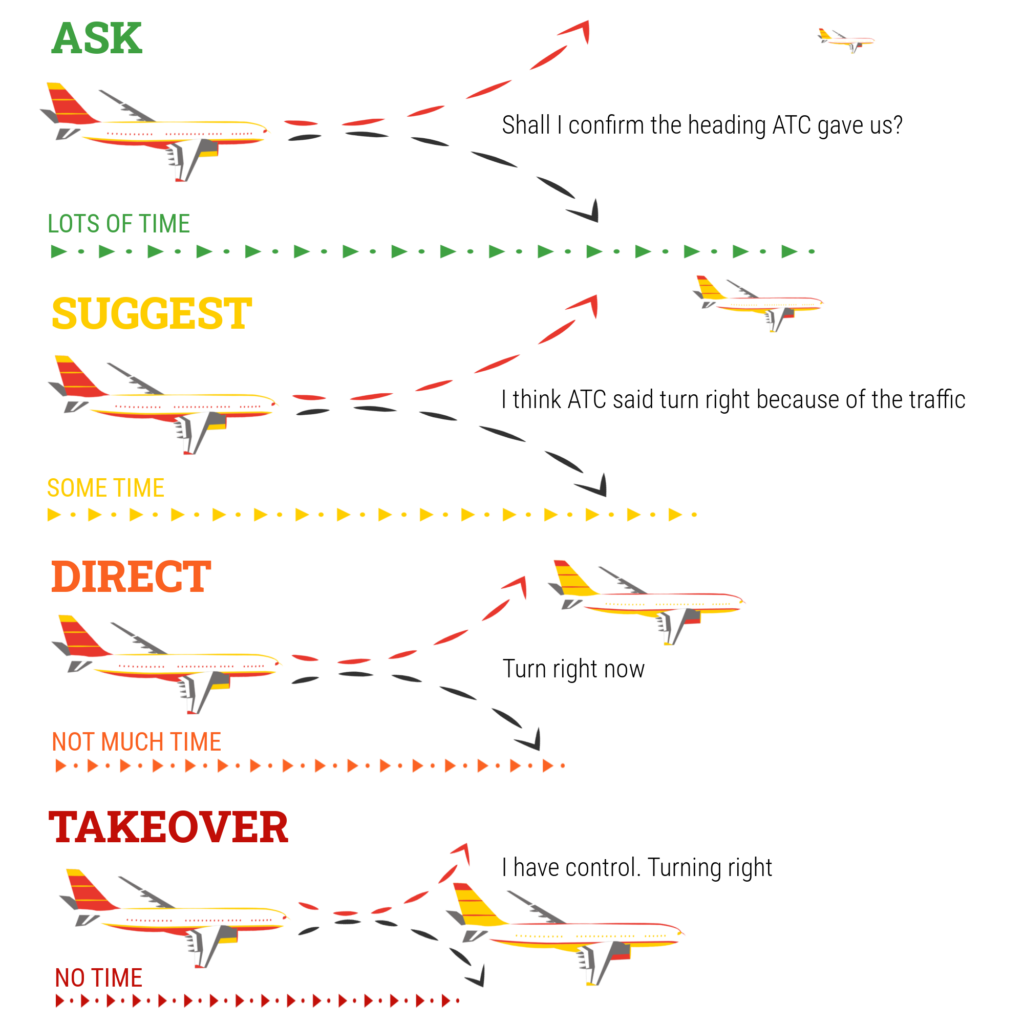
‘ASDT’ is an acronym many airline pilots might be familiar with. Ask, Suggest, Direct, Takeover. The idea is we intervene based on how much, or rather how little time we have left to fix whatever situation is unfolding. If you haven’t heard of that then RAISE right ring a bell – it is a similar model.

So how do we apply it? Well, if we are lazing along in the cruise and ATC ask us to take up a heading, and the pilot flying dials in the wrong one, we probably aren’t going to yell “I have control!” Asking a simple “Can I confirm the heading, that isn’t what I heard?” question is enough. It is appropriate. We have time.

On the other hand, if ATC has told you to turn immediately to avoid a traffic conflict, and the other pilot then turns the wrong way towards the traffic then you might find yourself moving into the suggest or even the direct “Negative! Turn right heading 360 now!” stage. There is less time, but there is still time to correct it without taking control.

ASDT, RAISE (or any others you might know) require an assessment of urgency, or criticality of action versus time. It sounds simple, and generally it is when the situation is clear cut, right or wrong, time or no time. The difficulty for many pilots comes when they are faced with something that isn’t a clear breach in SOPs, or an obvious error, but when it is more of a “feeling” or a comfort level in a grey area of right or wrong, OK or not OK.

When it is a sense that something might not be right, or when that ‘not rightness’ might actually be with the other person or their attitude rather than a clear action or moment, then this can be hard to deal with under an intervention model. If we can’t identify what it is that makes us think there is a potential for things to go wrong, then what should we ask?

Challenging or intervening when we don’t really know what to challenge or where to intervene is not going to result in good CRM.

What’s your safe word?

“I am uncomfortable” is a ‘safe word’, or rather phrase, that one major airline encourages its pilots (particularly the First officers with an emphasised “Captain” at the start of the phrase) to use.

It is an indication to the other pilot that perhaps you don’t understand a situation, that they haven’t “shared their mental model” well with you. It is asking, suggesting and directing the other pilot all at once to consider that there might be something causing the other to question if the situation could become unsafe at some point.

It is phrase I have used, as a less experienced First Officer, when I felt a Captain was not taking a large cloud on the approach as seriously as I thought we should. It caused him to slow down and talk me through his thought process. Turns out his judgement and experience was sound and it was just me and my lack of experience that had made me unsure.

I could have asked him outright “do you think we should avoid the cloud?” but this might have only earned me a “No, I don’t” – and that hasn’t provided me with anything to remove my uncertainty.

“I am uncomfortable” is not the phrase to use when the other pilot is outside of the localiser limits and still isn’t correcting. It is the phrase to use if they have chosen to hand fly in gusty winds and are starting to chase the localiser. It wasn’t the phrase to use during the Global 5000 VHHH incident when the Captain exceeded 44° of bank, but it might have helped the situation if it had been asked earlier when the Captain first said he was going to disconnect the autopilot. 

Reaching the point of no return.

But all this asking, suggesting, directing and saying “I am uncomfortable” might not prevent a situation reaching a point when taking control is necessary, and when that point is reached action has to be taken, and so it is worth thinking about what it really means to do that.

Taking control from the other pilots means you are effectively removing them from that stage of the flight. It is placing you in a single pilot operation and it breaks down the CRM and communication entirely, for that moment. While it might be absolutely required, it also might mean a very challenging few moments for you.

So considering ‘what happens next?’ is critical because you are going to have to manage that workload, the increase in pressure and the responsibility to maintain safety on your own in what will likely be a very dynamic situation. If you are not prepared it might rapidly place you, and the flight, in an even more dangerous situation.

At some point you are also going to have to rebuild the CRM by bringing the other pilot back into the picture and to do this you will need to have the aircraft in a safe position with time on your hands to do so. This isn’t always as easy as it sounds and unfortunately, we rarely train for it.

A pilot intervention with the automation is one thing, but intervening with another person, (and where their pride and ego is involved), can be quite another.

Why don’t we take control?

We ran a mini poll and asked people what they think the main reasons were for pilots not taking control.

The main reason most folk thought was a lack of situational awareness – the other pilot also not knowing what was going on. This seems to be the main factor in the Global 5000 VHHH incident. Loss of situational awareness is a tough one to spot but sticking to SOPs, briefing well, and proactive threat and error management seems to be the best defence.

Second up was the cockpit gradient issue – the First Officer feeling unable to question the Captain due to a too steep gradient. This is where using a safe word or intervention model might help. But at the end of the day, both pilots remain equally responsible for safety, so if something ain’t right, speak up – we should be more afraid of the repercussions of not doing so than of any grumpy reaction we might experience.

The When, the How and the Why.

We might have done pilot incapacitation training where the other pilot has mysteriously frozen at “rotate”, but few will have really trained to a comfortable, competent level where we can easily identify what stage of intervention might be most appropriate. We rarely practice insidious, developing situations which are filled with grey areas. Fewer still will have experienced what the reality of taking control, and then ‘bringing the other pilot safely back into the picture’ really means.

The best way to prepare for this is to think about it, talk about it and consider it in advance. Understand our comfort levels, know when we would react and how we would do it, and talk this through with other people so we can share experience and learn from one another.


Introducing: Danger Club

Aviation changes constantly – new airplanes, new routes, new rules, new risks. Something that isn’t changing, however, is accidents. If the return to service and industry growth being talked about is anything like what’s forecast, we’re going to need even more focus on the “why” of things going wrong.

So, we want to create a safe space to talk about this – as people, not as companies or airlines.

Calling it “Safety Club” would be missing the point (and not sound as much fun). We’re not here to blather on about SMS, FOQA, Safety Culture, or even CRM: we want to get right to the core of it and discuss the dangers – hence, Danger Club.

What happens at Danger Club?

We get together as pilots, we look at one specific incident or accident, and have a conversation about what went wrong, and see what we can learn from digging into it. We’ll host it on Zoom, chat for an hour or so, and decide together what’s useful to talk about and how we can make the next one better.

OPSGROUP members – keep an eye on the Danger Club forum page for details of the next event.