New FAA Airspace Warning for Afghanistan
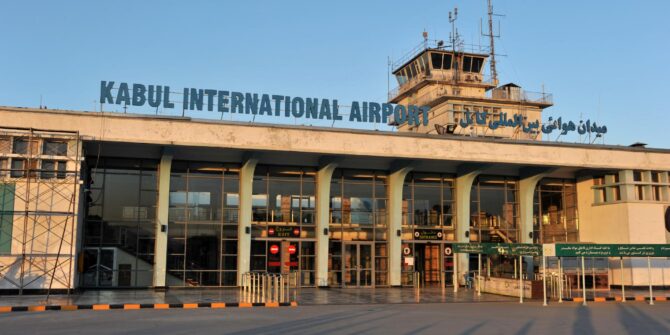
The FAA has issued an emergency order for Afghanistan’s airspace which bans all US operators below FL260 throughout the OAKX/Kabul FIR.

KICZ Notam A0020/21 has the details but essentially there are only three exceptions:

  • Flights in and out of OAKB/Kabul are allowed to continue.
  • If a flight has a special approval from either the FAA or the state.
  • If you have an emergency and have to land.

What’s the risk?

Due to increased extremist activity on the ground, civil aircraft are increasingly exposed to a number of threats. Aircraft at low levels and those taking-off and landing are especially vulnerable.

The first is indirect fire caused by militant groups targeting airports with mortars and rockets. OAKB/Kabul was attacked in December last year by ballistic weapons which damaged a parked aircraft.

The second is direct fire from a variety of sources. Militia are known to have access to multiple weapons that can be used to target low level aircraft. These include rocket propelled grenades and man-portable air defence systems (MANPADS) which are capable of reaching aircraft as high as FL250. Even small arms fire has been actively used to target aircraft.

In recent years there have been several reports of anti-aircraft fire incidents from both military and civilian traffic. Tragically in two cases, military aircraft were actually shot down.

So why now? What’s changed?

While the threat from militant activity in Afghanistan isn’t new, the FAA has been closely monitoring the situation there for changes in safety and security. And things are changing…

As US forces begin to withdraw, two groups are now engaged in an escalating conflict there – the Taliban and Afghanistan’s own military, which may lead to a civil war if no agreement can be met. Essentially the Taliban seek to regain power, while the existing government is defending itself.

For aviation this means an increase in exposure to known risks. The situation is volatile, and no one really knows where the conflict is headed. But with increasing extremist activity on the ground and a possible intention to make an international statement, the FAA appears to have decided that a simple caution is no longer enough.

What about above FL260?

US operators can continue to overfly the OAKX/Kabul FIR above FL260 but is recommended you stay on established airways. It’s also important you continue to monitor the situation on the ground which may change with little warning.

What are other countries saying?

Several long running airspace warnings remain in place, and it is likely we will see these changed in the near term as the situation in Afghanistan continues to evolve.

France follows similar rules and requires all operators to remain at or above FL260 throughout the Kabul FIR. Both German and UK operators are advised to consider the risks of operating below FL330 and FL250 respectively.

Stay safe up there.

As US troops withdraw the real question now is whether the Afghan Government (or another international force) can put the brakes on a resurgent Taliban.

Until that happens, the situation remains unpredictable. You can keep up to date with airspace risk changes as they happen over at SafeAirspace.net – our conflict zone & risk database.

Click here for a full global briefing.

US FAA issues new airspace warning for Russia and Ukraine

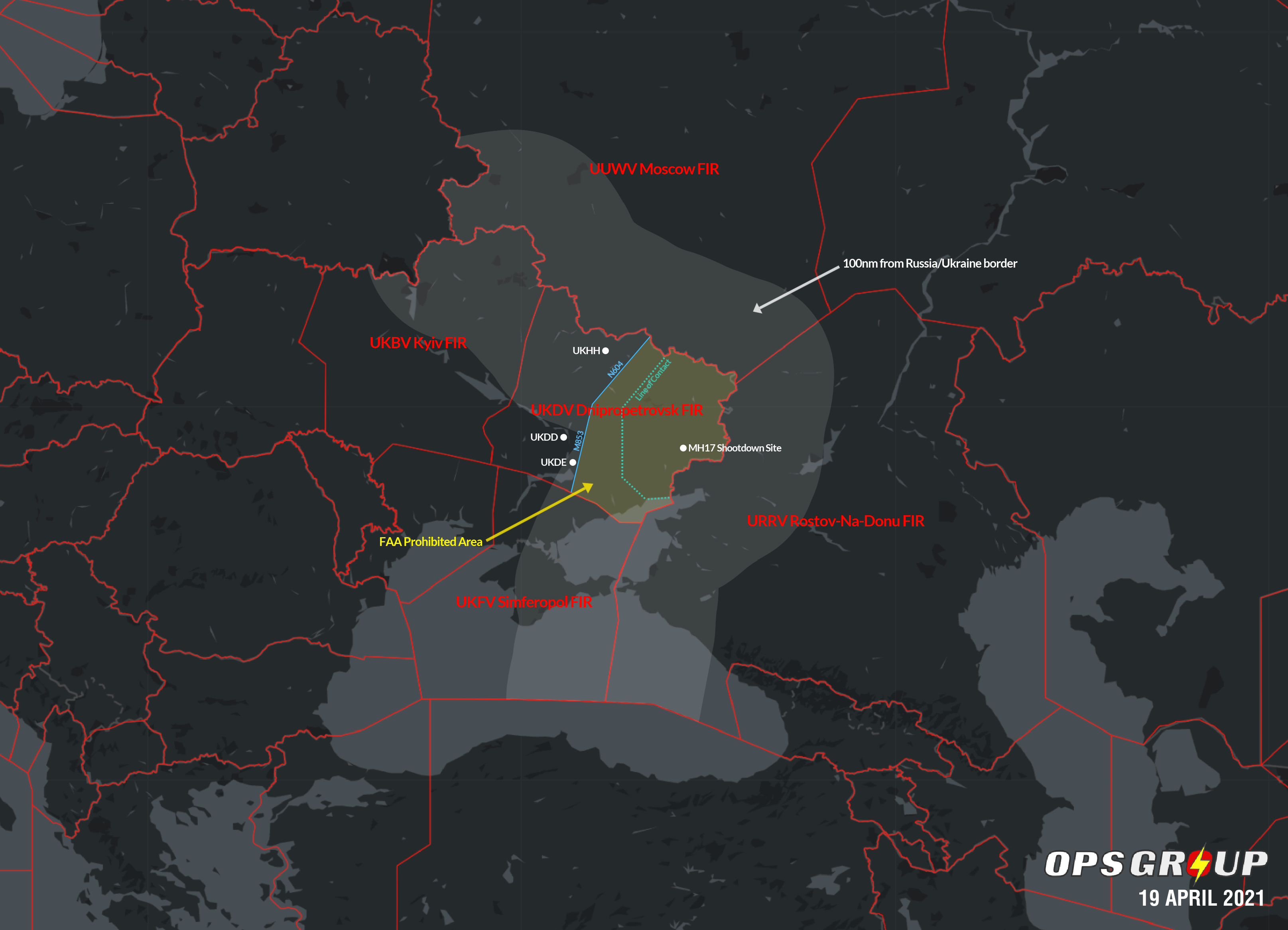
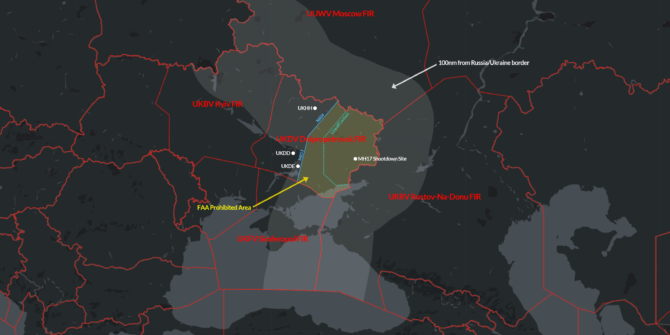
On April 17, the US FAA published new Notams warning operators to exercise extreme caution within 100nm of the entire Russia-Ukraine border, due to risks associated with recent increased tensions between the two countries. Should hostilities escalate here, the airspace on both sides could be exposed to potential weapons activity posing a risk to civil aircraft from misidentification or miscalculation.

The eastern part of Ukraine along the border with Russia is still an active conflict zone. The main hotspot is the Line of Contact which runs north-south through the UKDV/Dnipropetrovsk FIR. Throughout April 2021 there has been a large military build-up and an increase in ceasefire violations in this area, plus reports of GPS jamming and surveillance of civil flights by military systems – similar conditions to those prior to the shoot-down of MH17 in 2014.

This new airspace warning from the FAA follows the Information Note they published on April 13, which provides more background on the situation.

The FAA’s previous warning for Ukraine, as per SFAR 113, remains in place – US operators are banned from overflying the eastern part of the UKDV/Dnipropetrovsk FIR due to a continued threat of arms fire in the region. Essentially, everything east of ABDAR–M853–NIKAD–N604–GOBUN is prohibited. Airways M853 and N604 are off-limits as well. Flights to UKHH/Kharkiv, UKDD/Dnipropetrovsk and UKDE/Zaporizhzhia airports are permitted.

Put that all together – the old warning and the new one – and here’s how it looks:

Several other countries have airspace warnings in place for eastern Ukraine, including Canada who recently published a Notam advising operators to avoid the UKFV/Simferopol and UKDV/Dnipropetrovsk FIRs due to the risk from heightened military activity and anti-aviation weaponry. Check SafeAirspace.net for more info.

What about the UKFV/Simferopol FIR?

For the past few years, the risk here has been quite separate to that affecting the UKDV/Dnipropetrovsk FIR. It stems from the fact that the UKFV/Simferopol is disputed airspace, with aircraft potentially receiving confusing and conflicting air traffic control instructions from both Ukrainian and Russian ATC. 

In March 2014, Russia annexed Crimea, and Ukraine disputed this. The ATC Center is in Simferopol, Crimea, and is now run by Russia. Russia claims the airspace, and now refer to it as the URFV FIR. Ukraine refuses to recognise the change, and still calls it the UKFV FIR – and asks crews to talk to Ukrainian controllers in Dnipro/Odesa ACC instead of Simferopol ACC.

In October 2020, the US entirely removed their restrictions on overflights of the UKFV/Simferopol FIR, as they said the security situation had sufficiently improved here. While Russia continued to assert territorial claims over this region, Ukraine had established appropriate risk management measures to ensure safe operations for aircraft along the Black Sea routes.

In simple terms – since 27th October 2020, US operators have been able to overfly the Simferopol FIR.

However, tensions have been on the rise in this region throughout 2021. Russia seem to be going on a renewed military offensive here, focusing their efforts on the area of disputed airspace over Crimea, and establishing several large danger areas over the water surrounding the Crimea Peninsula at all flight levels. These danger areas are most likely due to military activity which may include live firing exercises –  so use extreme care in the UKFV/Simferopol FIR at this time as the situation is unpredictable.

For more info on these latest developments in the UKFV/Simferopol FIR, see our dedicated article here.

What are other countries saying about Ukraine?

Aside from the US, several other countries consistently publish airspace warnings: the UK, Germany, France, and Canada

UK and France: both have warnings in place advising against all ops over both of these Ukrainian FIRs, with the exception of airways Black Sea routes in the UKFV/Simferopol FIR.

Germany: does not have any published warnings in place at all.

Canada: avoid the UKFV/Simferopol and UKDV/Dnipropetrovsk FIRs due to risk from heightened military activity and anti-aviation weaponry. Exercise caution across the rest of Ukraine’s airspace.

For more details on Ukraine and other airspace warnings, head to SafeAirspace.net


“THIS NOTAM IS AN EMERGENCY ORDER” – FAA on Venezuela

At 8.30pm tonight, the FAA issued a new “Do Not Fly” instruction to US operators, barring all operations into or over Venezuela, unless operating at or above FL260, and giving a window of 48 hours to leave the country.

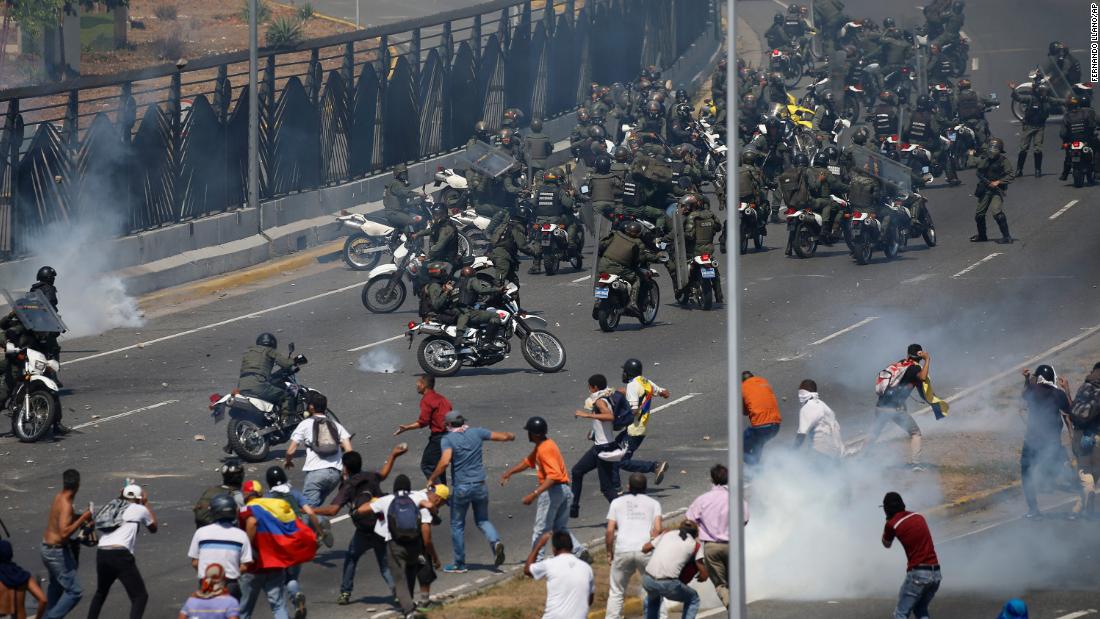
The order comes on a day of an information battle waged between Maduro and Guaidó, and although the coup status is uncertain, one thing is clear: taking your aircraft to Venezuela is not a good idea.

The new Notam, KICZ A0013/19, has as postscript: “THIS NOTAM IS AN EMERGENCY ORDER ISSUED UNDER 49 USC 40113(A) AND 46105(C).” It gives US operators 48 hours to leave Venezuela.

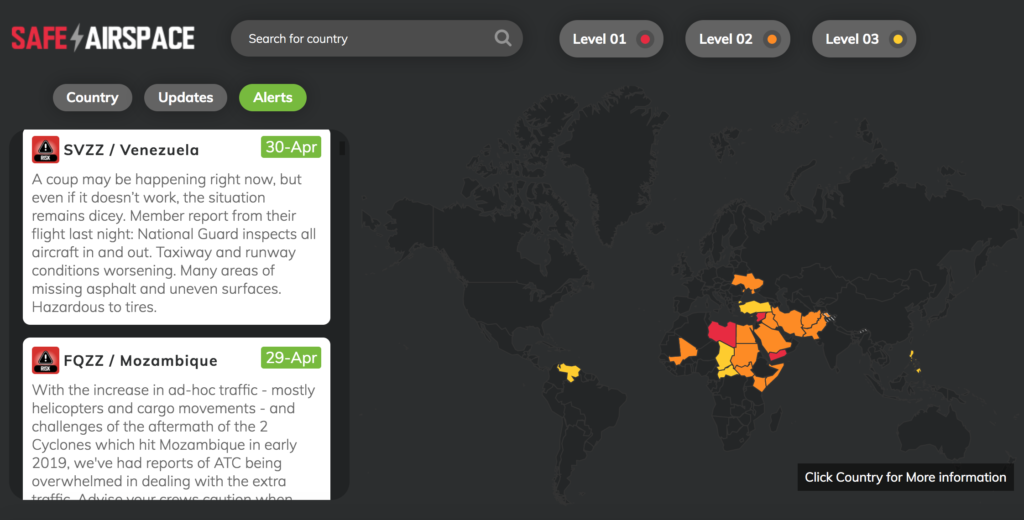
Over the past year, the situation in Venezuela has steadily declined, and in OPSGROUP we have issued multiple alerts and warnings, most recently today, on the back of several member reports:

The Venezuelan authorities had also published a Notam on 30 APR banning all GA/BA flights from operating to/from airports in the country, but this has since been cancelled.

The new FAA Notam leads with:

“ALL FLIGHT OPERATIONS IN THE TERRITORY AND AIRSPACE OF VENEZUELA AT ALTITUDES BELOW FL 260 BY THE PERSONS DESCRIBED IN PARAGRAPH A BELOW ARE PROHIBITED UNTIL FURTHER ADVISED DUE TO INCREASING POLITICAL INSTABILITY AND TENSIONS IN VENEZUELA AND THE ASSOCIATED INADVERTENT RISK TO FLIGHT OPERATIONS.”

and is issued as a Permanent Notam with no expiration date.

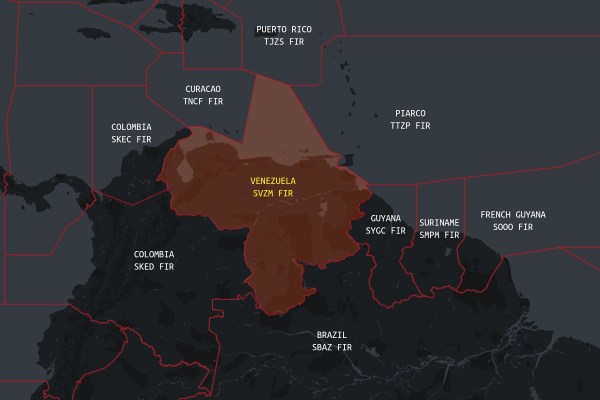
Rerouting options for overflights choosing to avoid, would be either west via Colombia, or east via Guyana and Piarco.

The full FAA Notam text is below. SafeAirspace.net is now updated with the new information.

FAA Notam KICZ A0013/19 issued May 1st, 2019, 0025Z.:

KICZ A0013/19 – SECURITY..UNITED STATES OF AMERICA PROHIBITION FOR
VENEZUELA

ALL FLIGHT OPERATIONS IN THE TERRITORY AND AIRSPACE OF VENEZUELA AT ALTITUDES BELOW FL
260 BY THE PERSONS DESCRIBED IN PARAGRAPH A BELOW ARE PROHIBITED UNTIL FURTHER ADVISED
DUE TO INCREASING POLITICAL INSTABILITY AND TENSIONS IN VENEZUELA AND THE ASSOCIATED
INADVERTENT RISK TO FLIGHT OPERATIONS.

A. APPLICABILITY. THIS NOTAM APPLIES TO: ALL U.S. AIR CARRIERS AND COMMERCIAL OPERATORS;
ALL PERSONS EXERCISING THE PRIVILEGES OF AN AIRMAN CERTIFICATE ISSUED BY THE FAA, EXCEPT
SUCH PERSONS OPERATING U.S.‐REGISTERED AIRCRAFT FOR A FOREIGN AIR CARRIER; AND ALL
OPERATORS OF AIRCRAFT REGISTERED IN THE UNITED STATES, EXCEPT WHERE THE OPERATOR OF
SUCH AIRCRAFT IS A FOREIGN AIR CARRIER.

B. PERMITTED OPERATIONS. THIS NOTAM DOES NOT PROHIBIT PERSONS DESCRIBED IN PARAGRAPH
A (APPLICABILITY) FROM CONDUCTING FLIGHT OPERATIONS IN THE ABOVE-NAMED AREA WHEN
SUCH OPERATIONS ARE AUTHORIZED EITHER BY ANOTHER AGENCY OF THE UNITED STATES
GOVERNMENT WITH THE APPROVAL OF THE FAA OR BY A DEVIATION, EXEMPTION, OR OTHER
AUTHORIZATION ISSUED BY THE FAA ADMINISTRATOR. OPERATORS MUST CALL THE FAA
WASHINGTON OPERATIONS CENTER AT 202-267-3333 TO INITIATE COORDINATION FOR FAA
AUTHORIZATION TO CONDUCT OPERATIONS.

C. ALLOWANCES. PERSONS DESCRIBED IN PARAGRAPH A ABOVE WHO ARE IN THE TERRITORY AND
AIRSPACE OF VENEZUELA AT THE TIME THIS NOTAM IS ISSUED MAY DEPART THE TERRITORY AND
AIRSPACE OF VENEZUELA BY THE MOST EXPEDITIOUS POSSIBLE ROUTE WITHIN 48 HOURS FROM THE
TIME THIS NOTAM IS ISSUED, IF THE PILOT IN COMMAND DETERMINES THAT THE OPERATION CAN
BE CONDUCTED SAFELY.

D. EMERGENCY SITUATIONS. IN AN EMERGENCY THAT REQUIRES IMMEDIATE DECISION AND ACTION
FOR THE SAFETY OF THE FLIGHT, THE PILOT IN COMMAND OF AN AIRCRAFT MAY DEVIATE FROM THIS
NOTAM TO THE EXTENT REQUIRED BY THAT EMERGENCY.

THIS NOTAM IS AN EMERGENCY ORDER ISSUED UNDER 49 USC 40113(A) AND 46105(C).
SFC – FL259; 01 MAY 00:25 2019 UNTIL PERM. CREATED: 01 MAY 00:28 2019