Bangladesh is now one big ADIZ
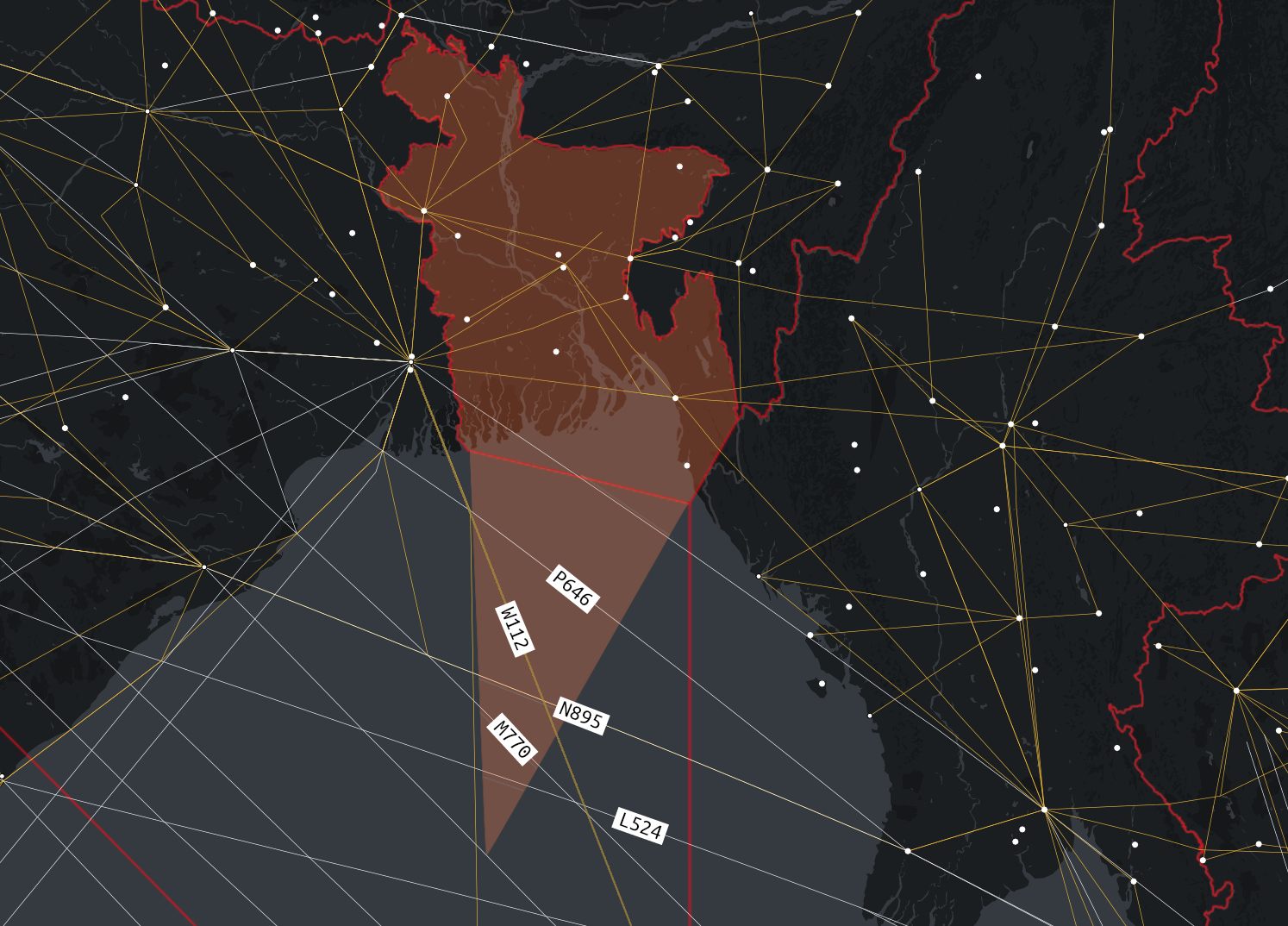
Bangladesh has decided to establish an ADIZ over the entire country, including a massive chunk of airspace off their south coastline that actually extends over much of the adjoining Indian VECF/Kolkata FIR.

Aircraft intending to fly into, through, or within this new Bangladesh ADIZ must now obtain an ADC (Air Defence Clearance) number beforehand. Just file your flight plan, and they will send this to you by AFTN. Make sure you write it down – as they will ask you for it on HF before you enter their airspace.

If you don’t have AFTN access, you can get the number by calling +880-2890-1081 or emailing adnc@baf.mil.bd

The authorities in Bangladesh have released a scary sounding AIP SUP on all this, which you can read in full here. What they fail to mention there, but did publish by Notam at the time, is that there are actually a bunch of airways over the ocean (P646, N895, M770, L524 and W112) where you won’t have to get this ADC number, unless you deviate towards the landmass of Bangladesh.
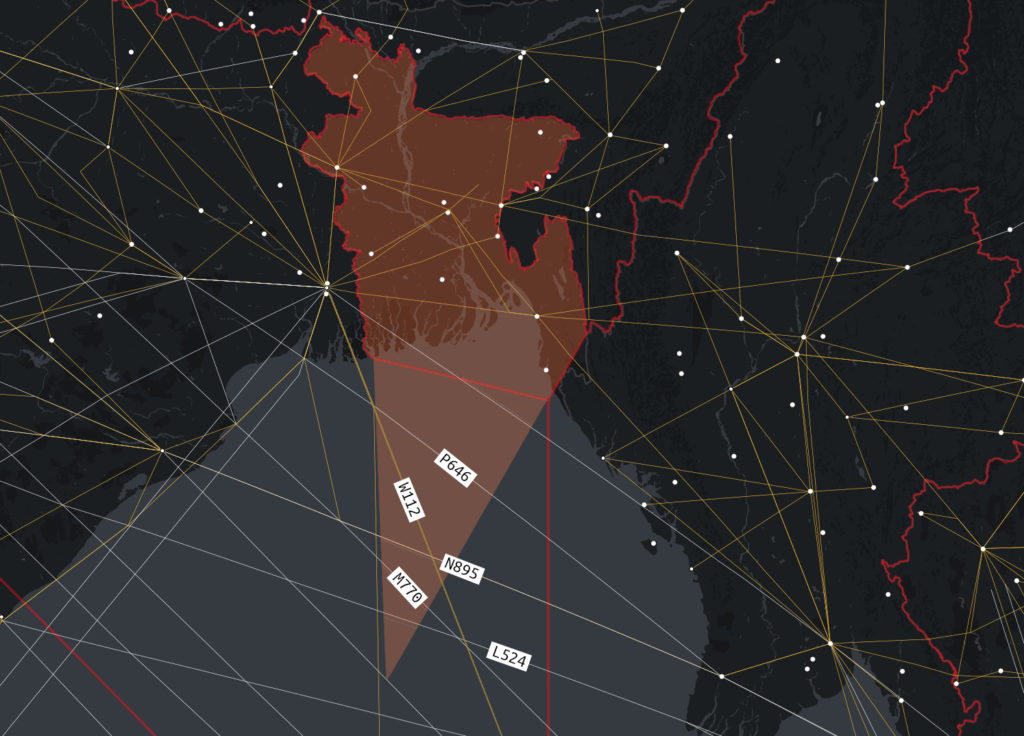
Here’s the Notam:

A0032/18 NOTAMN
Q) VGFR/QXXXX/IV/BO/AE/000/999/
A) VGFR B) 1802010001 C) PERM
E) THE FLW AMDT/UPDATES ARE BROUGHT TO THE AIP-SUPP 01/2018:
1. ACFT INTENDING TO OPR INTO, THROUGH OR WI BANGLADESH ADIZ SHALL
OBTAIN ADC NR FM THE FLW CONTACT DETAILS.

TELEPHE: +880 2 8901081
FAX : +880 2 8901081
E- MAIL: ADNC AT THE RATE OF BAF.MIL.BD
AFTN : VGHSZQZX

2. FLT OPR ON ATS RTE P646, N895, M770, L524 AND W112 SHALL NOT
REQUIRED TO OBTAIN ADC NR UNLESS DEVIATED TOWARDS THE LAND
MASS OF BANGLADESH.

3. GUARD FREQ. 121.50 MHZ SHALL NOT BE USED TO CTC THE AIR
DEFENCE UNIT.

4. ARTICLE ‘L’ IN THE PROCEDURES FOR AIR DEFENCE CLEARANCE IN
THE AIP-SUPP SHALL BE TREATED AS CNLD.

5. FOR THE TIME BEING DOMESTIC FLT AND FLT OF STATE ACFT AND
GENERAL AVIATION ACFT OF BANGLADESH SHALL NOT BE REQUIRED
TO OBTAIN ADC NUMBER

So you won’t need an ADC number on those airways, but for everywhere else in that big red ice pick-shaped chunk of airspace, you’ll need to get authorisation. As the Bangladesh AIS office politely warn in their AIC: “Aircraft flying without a valid ADC number or failing to comply with any restriction or deviating from flight plan will be liable to interception by Bangladesh Air Force Interceptor aircraft according to ICAO Standard Interception Procedure.”
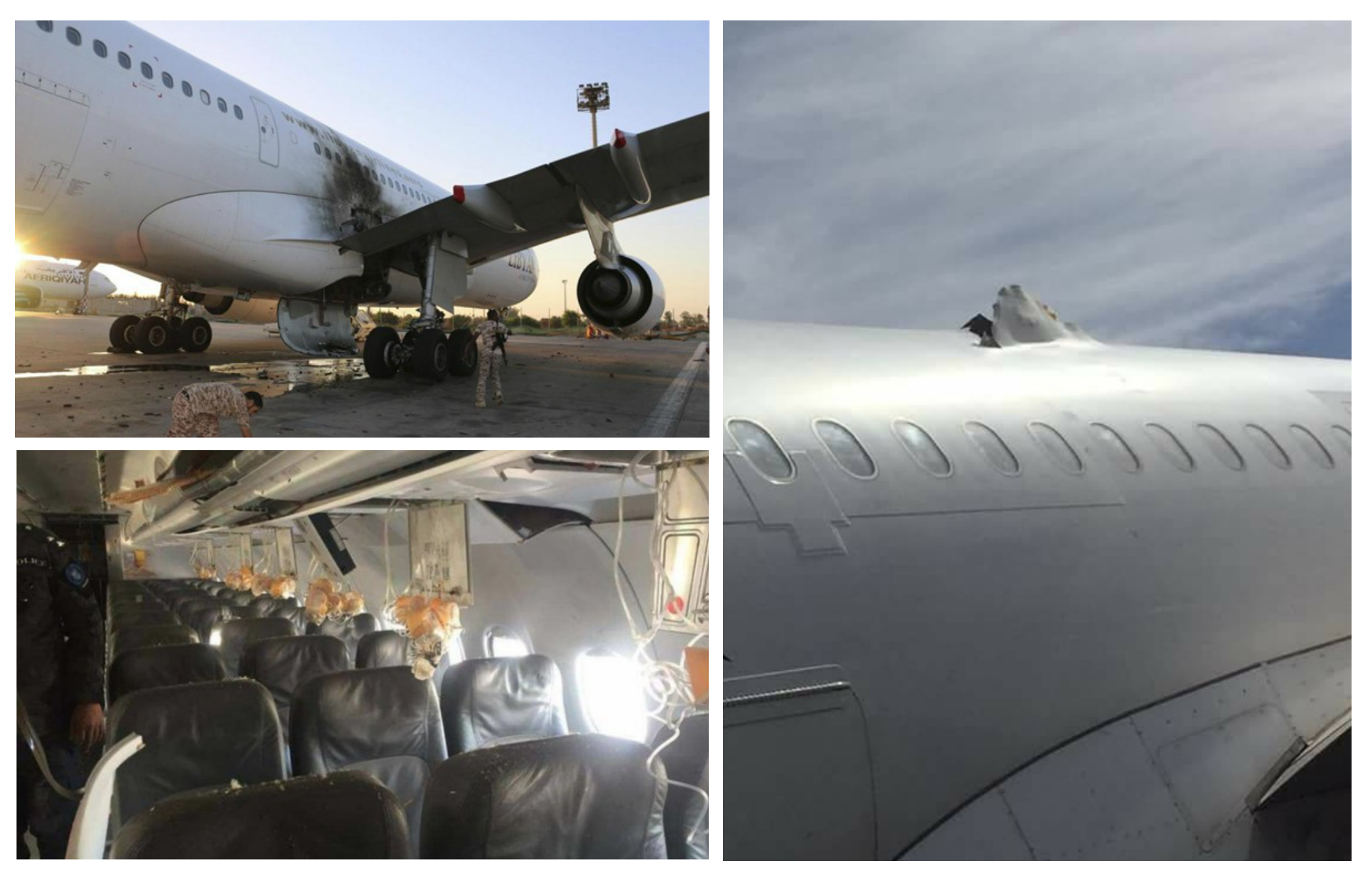
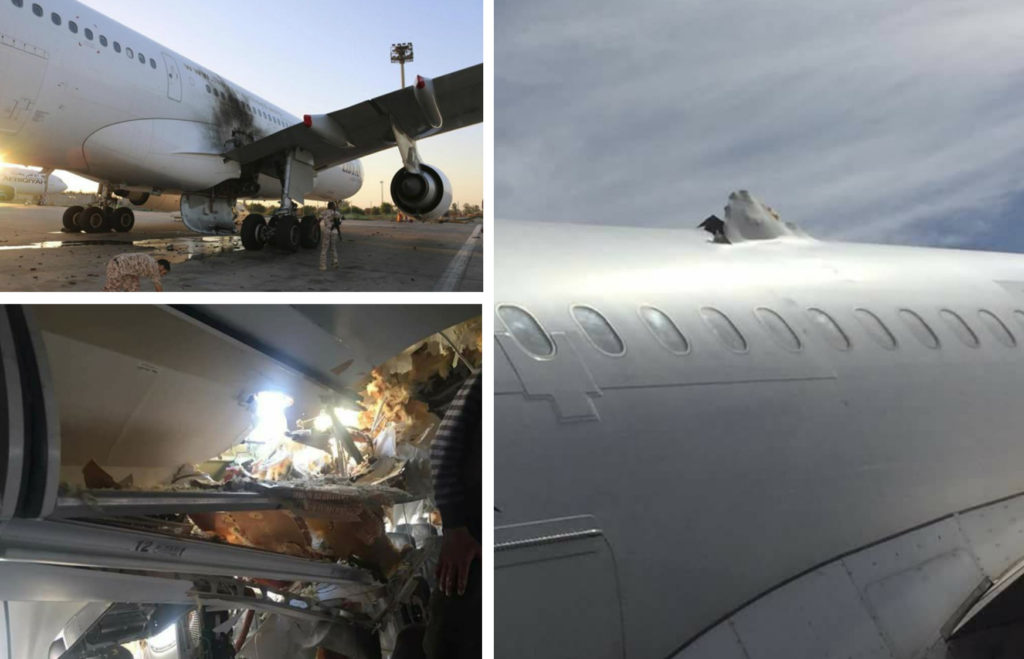
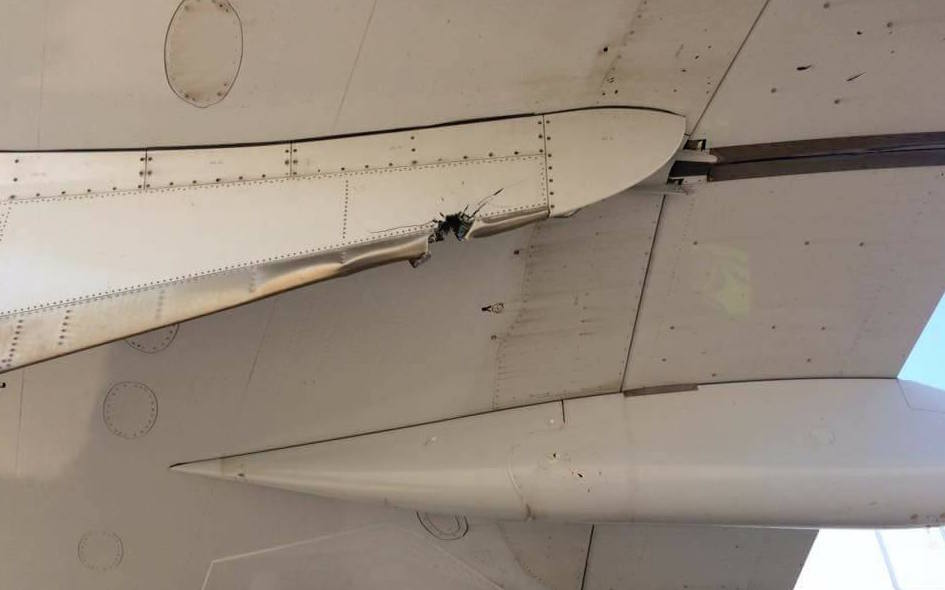
A319, A330 hit by gunfire at Tripoli

Heavy clashes broke out in the Libyan capital Tripoli on Jan 15, leaving at least twenty people dead and forcing HLLM/Mitiga airport to close for five days, re-opening again on Jan 20.

Gunfire at the airport damaged multiple aircraft, including a few A319s and at least one A330.

Here are some photos of some of the damage:


Both airports in Tripoli are focal points for fighting. Given their strategic value, they periodically serve as headquarters for various local militias.

HLLT/Tripoli has been more or less completely closed since mid-2014, when at least 90% of the airport’s facilities were destroyed in fighting between local militias. Since then, international flights to and from Tripoli have been using HLLM/Mitiga instead. Technically, HLLT/Tripoli is now only available for VIP, emergency and ambulance flights; but in reality, it should be avoided at all costs.

HLLM/Mitiga is the old military airfield, which is now being used for civilian traffic, since the closure of HLLT/Tripoli. However, the airport has been plagued by violence over the past few years, and has been forced to close a number of times.

Back in July 2017, we reported on the intense fighting that took place at Mitiga airport where 5 people were killed and 32 injured, and then on 19 Oct 2017, a Libyan Airlines A330 at the airport was hit by gunfire during an exchange of fire between local militia in the district directly south of the airport.

A number of countries already have blanket warnings in place against operating to Libya, and they all say pretty much the same thing: avoid the entire country – don’t land at any airport, don’t even overfly.

So we suggest you ignore whatever gets pumped out on the HLLL FIR Notams about airports being “AVAILABLE H24 FOR INTERNATIONAL FLIGHTS AND EN-ROUTE DIVERSIONS”. (You can read that nonsense in full by clicking here.)

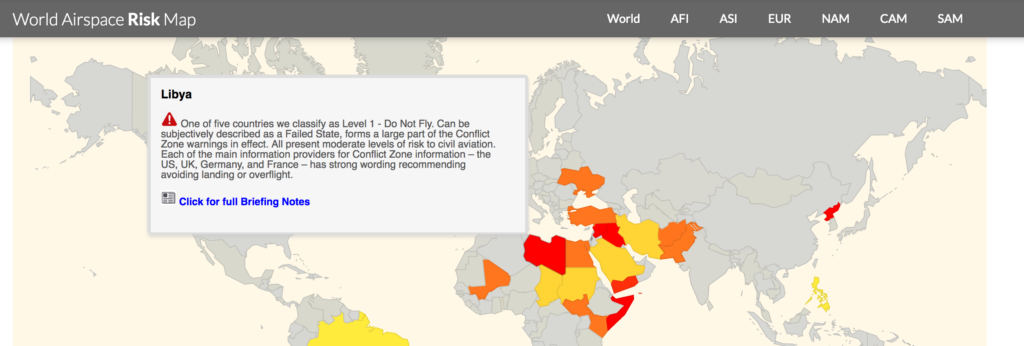
Libya remains categorised as a Level One country (Do Not Fly) at safeairspace.net


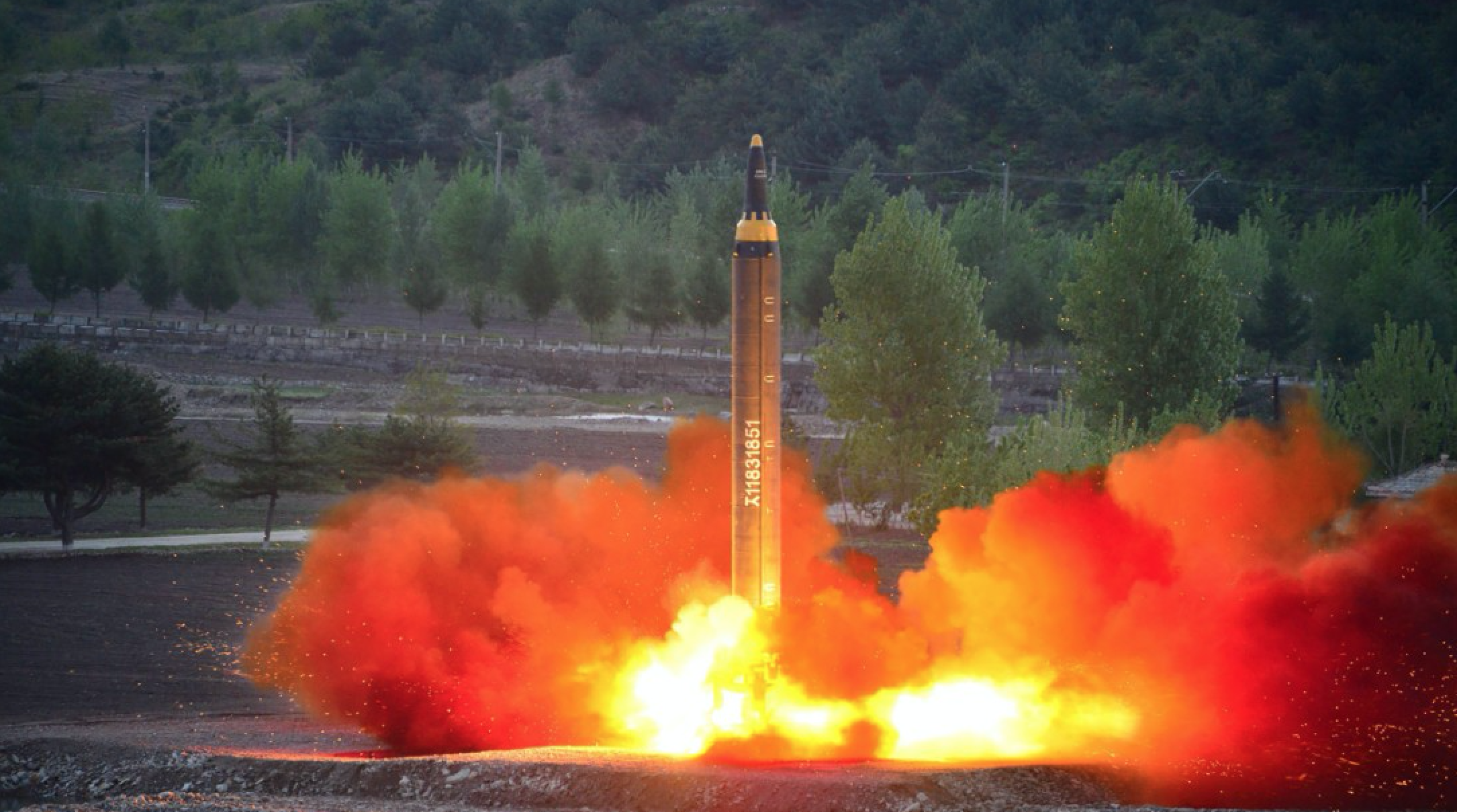
Cathay crew witness missile re-entry from North Korea

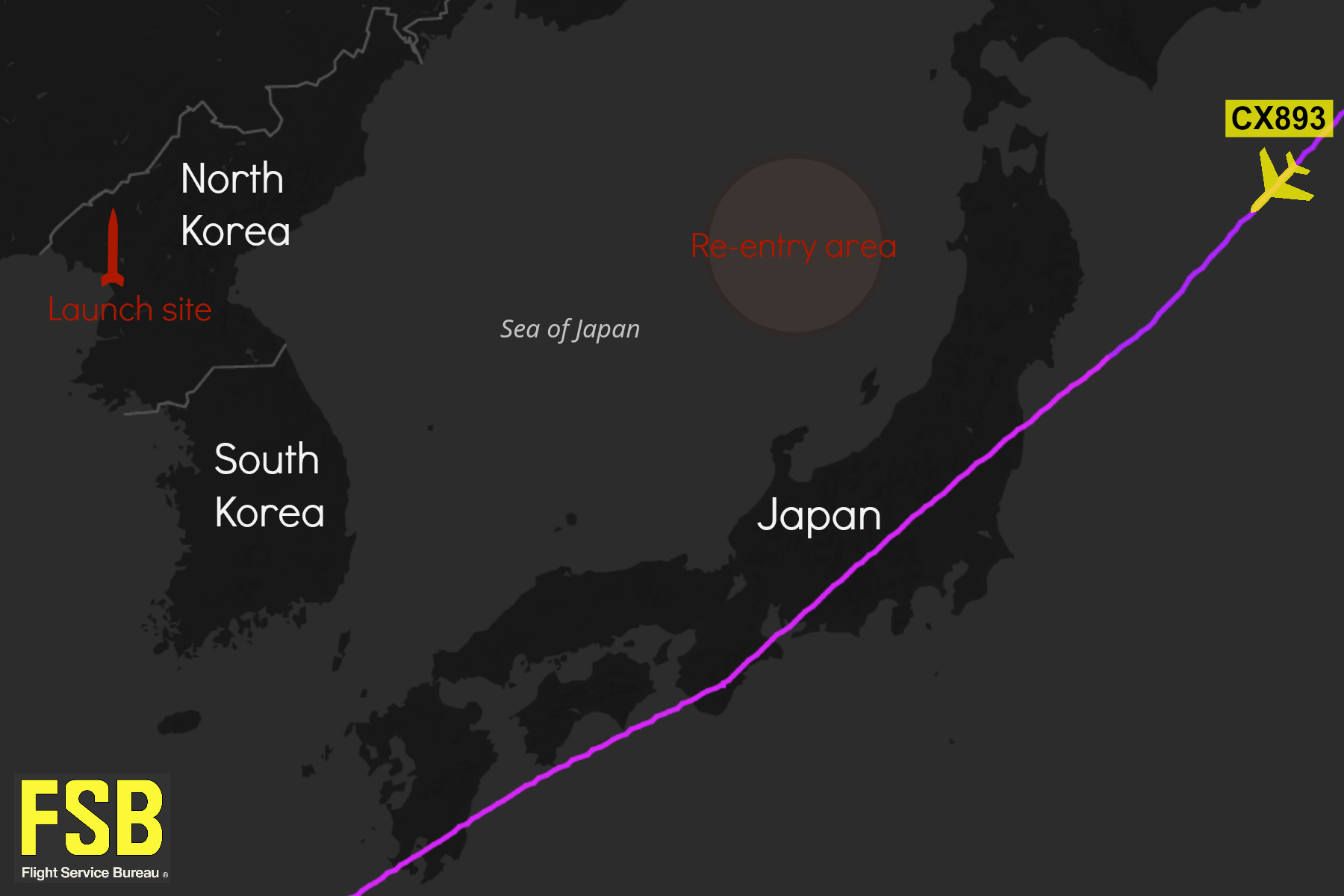
Crew onboard a Cathay Pacific flight witnessed the re-entry of North Korea’s latest missile near their position late last week. The CX893 service from San Francisco to Hong Kong on Nov 29 was over Japan at the time when North Korea launched its missile.

The crew reported: “Be advised, we witnessed the DPRK missile blow up and fall apart near our current location.”

Here’s Cathay Pacific’s full statement:

“On 29 November, the flight crew of CX893 reported a sighting of what is suspected to be the re-entry of the recent DPRK test missile. Though the flight was far from the event location, the crew advised Japan ATC according to procedures. Operation remained normal and was not affected. We have been in contact with relevant authorities and industry bodies as well as with other carriers. At the moment, no one is changing any routes or operating parameters. We remain alert and review the situation as it evolves."

North Korea’s missiles are larger, and can fly further, than the other missiles we’ve previously seen. Over the past year, most of these missiles land in the Sea of Japan, well inside the Fukuoka Flight Information Region (Japanese airspace). But as we see with this latest test, there is clearly a danger of some of these missiles not re-entering the atmosphere intact – meaning that a debris field of missile fragments passes through the airspace, not just one complete missile. If you haven’t done so already, make sure you read this: our article on why North Korean missiles are now a real threat to Civil Aviation.

This latest test is also significant because of its unprecedented altitude – 4500km (2800 miles). Experts seem to agree that if it had been fired on a standard trajectory, the missile would have been capable of traveling around 13000km (8100 miles), meaning it could have struck anywhere in the mainland US.

If you’re operating in the region, we recommend avoiding the ZKKP/Pyongyang FIR entirely and avoiding the affected areas over the Sea of Japan. For more info, check out Safeairspace.


Bali – Airport Status

Volcanic eruptions from Bali’s Mount Agung earlier last week forced the closure of WADD/Denpasar and WADL/Lombok airports, as volcanic ash spread across both islands.

Here’s the current situation at the airports on Dec 4:

  • WADD/Bali: Re-opened on Nov 29. (Although the airport will be closed for runway repair from 18-23z daily [except Saturdays] until Dec 31).
  • WADL/Lombok: Re-opened on Nov 30. 
  • WARR/Juanda: Open and operating. So far has not been affected at all by the volcanic ash. (Although the airport will be closed for runway repair from 16-22z daily until Jan 06).

Although Mount Agung has now stopped emitting ash, another large eruption is still likely. The local monitoring agency are registering powerful and continuous tremors, and authorities have ordered locals and journalists within 10km of the volcano to evacuate. Further intermittent airport closures are possible, depending on wind direction.

We will keep this page updated with the latest news as we get it.


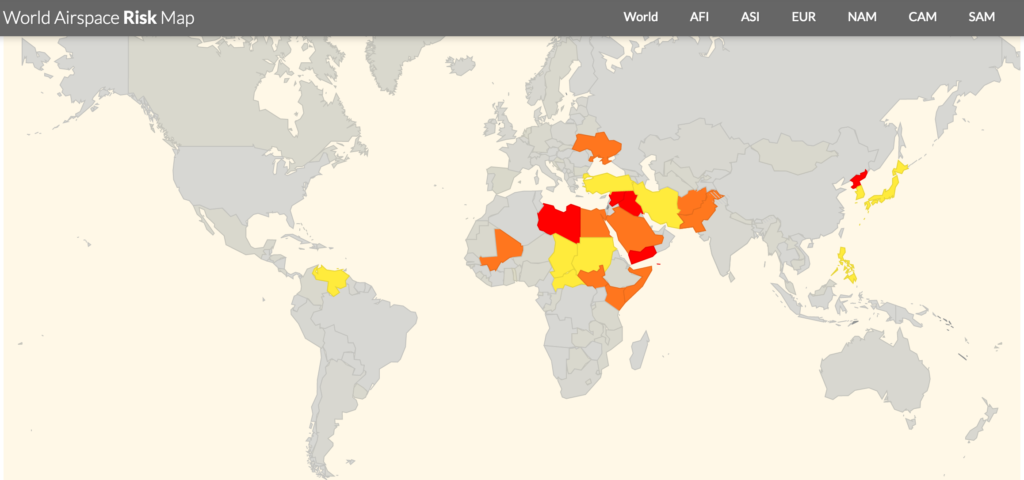
Think twice before entering this airspace. Overflight Risk areas in August 2017.

One of our primary missions at FSB is to monitor the world’s airspace and report on new risks to civil aviation. When enough changes occur, we update our “Unsafe Airspace Summary“.

Today, we published a new summary effective 16AUG2017 – version “INDIA”.

First up, the map as things stand:

Red is Level 1 – Avoid this Airspace
Orange is Level 2 – Assessed Risk
Yellow is Level 3 – Caution.

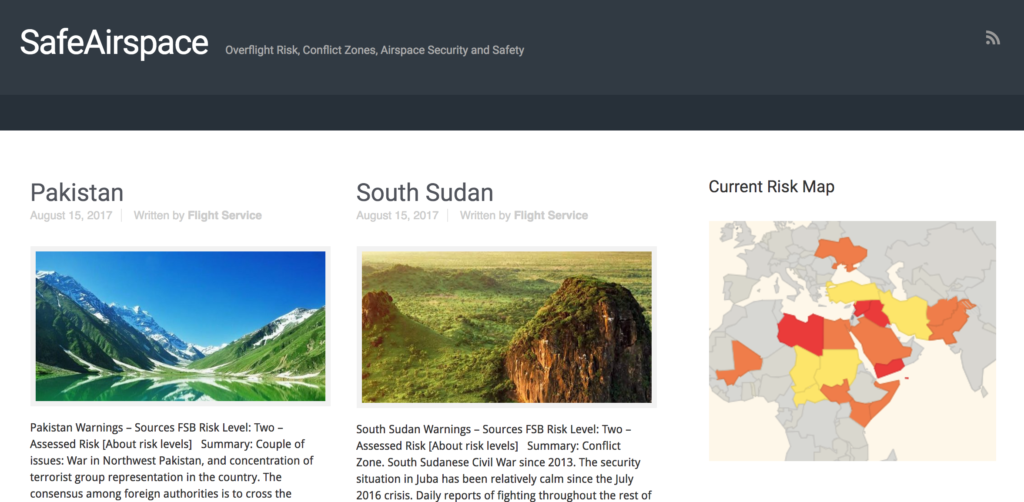
A live version of this map is always updated at safeairspace.net


What’s changed since the last summary?

  • Somalia is downgraded to Level 2, so there are now five Level 1 – Avoid countries: Libya, Iraq, Syria, Yemen, and North Korea.
  • Saudi Arabia is upgraded to Level 2, due to assessed risk in the southwestern portion of the FIR (Yemen border area)
  • French Guyana no longer a threat as strikes and airspace closures have ended
  • Addition of JapanVenezuela and South Korea at Level 3 – Caution advised

If you have ops to any of these countries, make sure to have a read of the risk information. A full library is at safeairspace.net.


Download the latest summary