NAT FAQ: No Datalink – Where can we go?


No Datalink – Where can we go?
  • You can make a crossing at FL280 or below, or FL430 or above
  • You can cross via the Iceland-Greenland corridor if you have ADS-B
  • You can enter NY Oceanic, the Bodo and Azores corridors, GOTA, and fly down T9/290.

Datalink is defined as CPDLC and ADS-C. If you’re missing either CPDLC or ADS-C, then you’re not datalink equipped. Since 2021, datalink is mandated (DLM) for the entire NAT region between FL290-410 [NAT Doc 007, Ch 1.8]. The only exception is flights STS/FFR, HOSP, HUM, MEDEVAC, SAR, or STATE.

Without datalink, you can only enter these areas on the North Atlantic FL290-410 [NAT Doc 007, 1.8.2]:

  • Anywhere north of 80N
  • New York Oceanic East
  • The Iceland-Greenland Surveillance corridor (ADS-B required west of 30W)
  • The Bodo corridor (ADS-B required)
  • The Azores corridor (ADS-B required)
  • Tango 9 and 290 (ADS-B required) (per UK AIP)
  • GOTA  (ASD-B not required but please do if you can, says ATC)

The only complete crossing available is therefore via the Iceland-Greenland corridor. For this, you need ADS-B west of 30W.
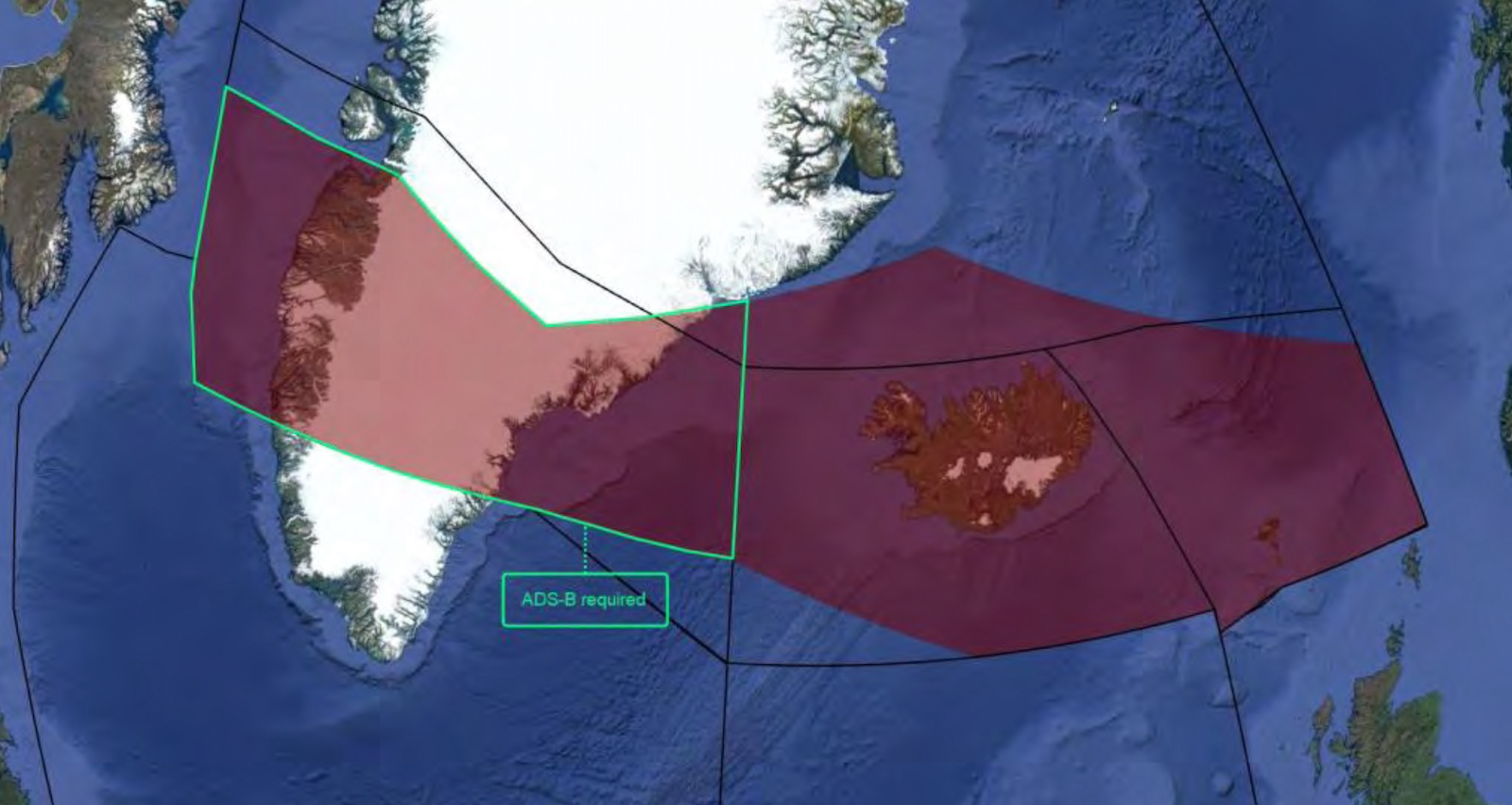
So, if you have ADS-B, and the remaining NAT HLA requirements, you can make a crossing at normal altitudes (eg. FL380) through this airspace.

For planning purposes, this area is bounded by the following:
Northern boundary: 65N000W – 67N010W – 69N020W – 68N030W – 67N040W – 69N050W – 69N060W – BOPUT.
Southern boundary: GUNPA (61N000W) – 61N007W – 6040N010W – RATSU (61N010W) – 61N020W – 63N030W – 6330N040W – 6330N050W – EMBOK. [NAT Doc 007, 1.8.5]

If you don’t have ADS-B, then this crossing is not available between FL290-FL410.

In this case, you should plan to cross the ocean at FL280 or below, or FL430 or above. This in turn places you outside the NAT HLA, as the HLA levels are FL285-FL420. A crossing at FL280 may mean a fuel stop, in Iceland for example (BIKF or BIRK are commonly used).

You can request a climb or descent through Datalink Mandated airspace from ATC, and this is commonly granted, but you do need HLA approval.

Santa Maria Corridor
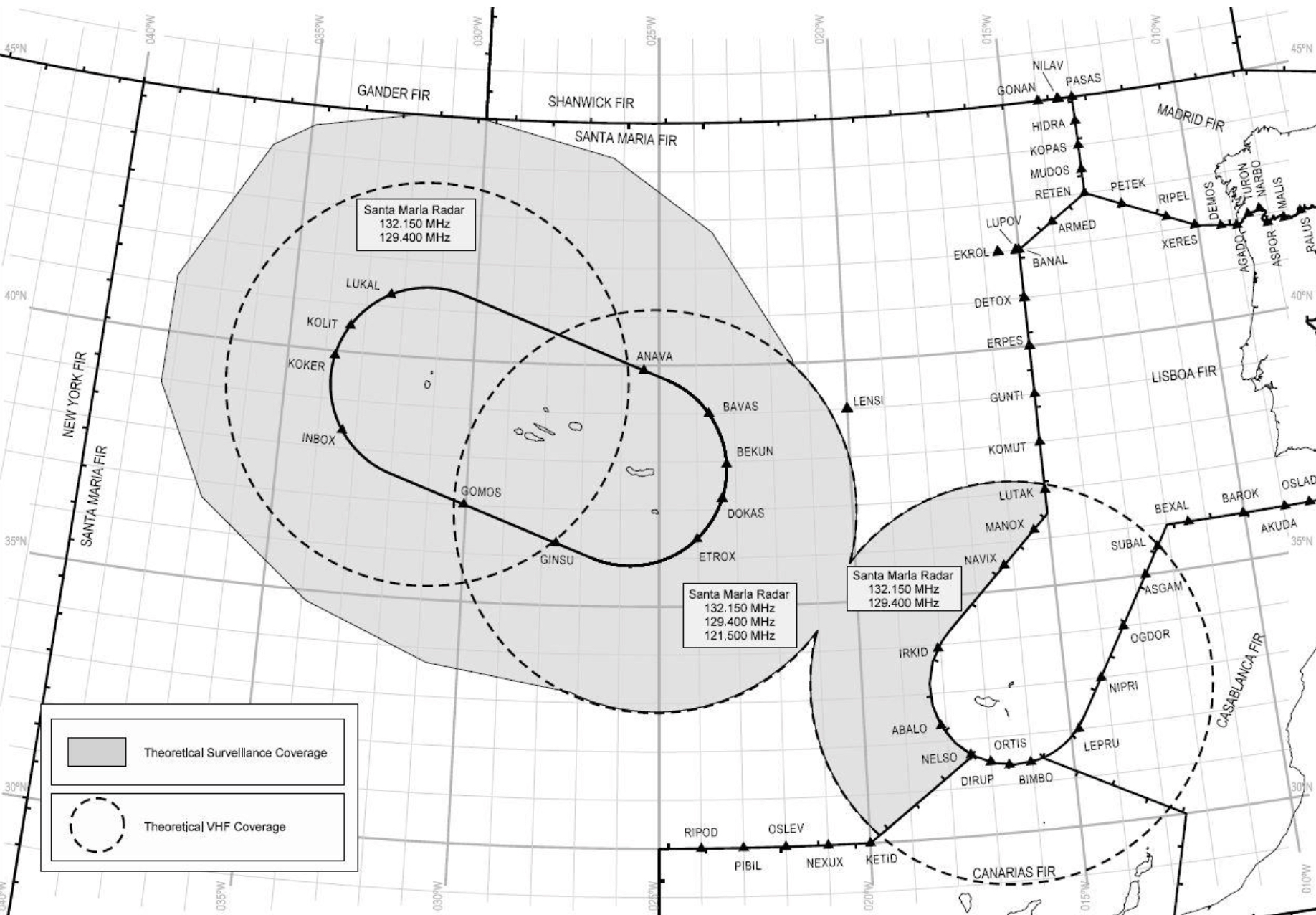

The Santa Maria Corridor will allow you to fly out to the Azores and back, but won’t help with a full NAT crossing due to the gap between Santa Maria surveillance and the New York oceanic boundary. To use this corridor, you need a Mode S transponder with extended squitter for ADS-B. [NAT Doc 007, 1.8.5 b]


This didn’t answer your question?

Comment below. Sadly (for us), we enjoy digging into this stuff. So, post your question below and we’ll update this page with the answer (probably quite quickly!)


Useful links for more on this … 


NAT FAQ: No HLA approval – Where can we go?

No HLA Approval – Where can we go?
  • You can make a crossing at FL280 or below, or FL430 or above
  • You can enter the NAT region outside HLA airspace
  • You might get special ATC approval to enter, or to climb/descend through it

The North Atlantic (NAT) High Level Airpsace (HLA) is the busiest Oceanic airspace in the world. Special approval is needed to fly in it. The NAT HLA extends from FL285-FL420, and takes in 6 different Oceanic Control Areas’s (OCA’s): Reykjavik, Shanwick (excluding SOTA & BOTA), Gander, Santa Maria, Bodo, and NY Oceanic East north of 27N.

HLA approval is issued by your country of registry, or the country of your operator.

Without NAT HLA approval, you can make a crossing at these altitudes:

  • FL280 or below
  • FL430 or above – but you should be familiar with NAT HLA procedures in case of drift-down, especially if above the NAT Tracks

ATC may approve you to (briefly) enter the HLA in some cases: if you are under radar control (or other surveillance), have VHF contact, and can navigate appropriately [NAT Doc 007, 1.5.1]

You can also get ATC approval to climb/descend through HLA airspace [1.5.2].


This didn’t answer your question?

Comment below. Sadly (for us), we enjoy digging into this stuff. So, post your question below and we’ll update this page with the answer (probably quite quickly!)


Useful links for more on this … 


NAT FAQ: No RVSM – Where can we go?

No RVSM – Where can we go?
  • You can make a crossing at FL280 or below, or FL430 or above
  • You can briefly enter RVSM airspace to climb/descend to your cruise level
  • You might get approval if on delivery flight, or ferry flight to repair.

Reduced Vertical Separation Minima (RVSM) is required throughout the NAT region. RVSM applies between FL290 and FL410, which matches the dimensions of the NAT HLA (FL285-FL420).

Without RVSM, you can only cruise at a level outside the FL290-FL410 band. However, ATC will generally approve a climb/descent through RVSM airspace to reach your cruising level. This is different to Europe, where you can’t do this.

ATC may approve you to fly within RVSM airspace [NAT Doc 007, 1.6], if you:

1. Are a delivery flight, or
2. Did have RVSM approval but returning for repairs, or
3. Humanitarian.

Contact the first Oceanic Centre by phone 4-12 hours before you plan to enter. If you get approval, note it in Field 18 on the Flight Plan. (eg. RMK/NON-RVSM APPROVED BY GANDER 23MAR2024). HLA approval is required in all cases. Use the call “Negative RVSM” on initial contact with ATC.


This didn’t answer your question?

Comment below. Sadly (for us), we enjoy digging into this stuff. So, post your question below and we’ll update this page with the answer (probably quite quickly!)


Useful links for more on this …