Singapore Ops Update: Two New Rules to Know Before You Go

If you’re planning ops to Singapore this year, expect it to be busier than ever. Traffic into Singapore exceeded previous records last year, and slots and parking are already harder to secure than they used to be.

In addition to the capacity challenges, there have also been changes to immigration and operator procedures that can catch you out if they’re not on your radar. They’re not complicated, but they do mean doing things earlier than before. These include the new No-Boarding Directive (NBD) for passengers and updated requirements around the Singapore Foreign Air Operator Certificate (FAOC).

NBD – No-Boarding Directive

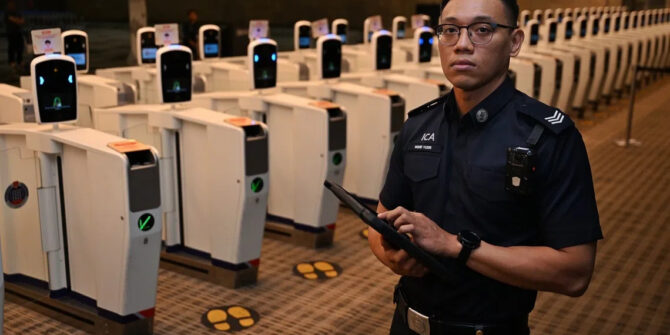
Effective 30 Jan 2026, all operators (private or commercial) must check passengers in advance for a clearance (or refusal) to enter Singapore.

You can check the official announcement on this here. The process sounds more complicated than it really is. In the past, passengers who were denied entry would only be identified after arrival, once immigration determined they were ineligible to enter Singapore. This could be due to a lack of visa, being assessed as an undesirable or prohibited traveller, or a red flag arising from their SG Arrival Card submission.

Previously, the system waited until the passenger was already on Singapore soil, which was always somewhat counter-intuitive. From 30 January, however, an operator must receive confirmation that a passenger is cleared to enter (effectively a green light). If you carry a passenger into Singapore without this clearance (even if that passenger ultimately would have been approved) the operator is liable for significant penalties under the Immigration Act.

So what do you need to do?

As the operator, your role is actually very simple. You must submit your general declaration / passenger manifest to your agent or handler ahead of departure. Current guidance is no later than two hours before departure. This allows the handler to submit the passenger details via a dedicated ICA portal.

That portal will return one of two responses: “OK to Board” or “Do Not Board.”

The key takeaway is this: you must receive one of these two responses before departure. In this case, no news does not mean good news.

The upside is that operators do not need access to the portal themselves (and cannot access it anyway). Everything is handled by your agent. Your only responsibility is to ensure the passenger manifest is submitted in good time before departure.

FAOC – Singapore Foreign Air Operators Certificate

In Singapore, any foreign AOC holder (Part 121 or Part 135) is now required to apply for a FAOC (local validation of your AOC). This process is completed online via the Flight SG portal.

You should allow 2-3 weeks to receive your FAOC, which is typically valid for 3-6 months on the first application. Subsequent approvals generally come with a longer validity period. Be aware that CAAS conducts ramp checks on all FAOC holders, and in particular, operators are more likely to be ramped during the renewal period. CAAS follows the standard SAFA inspection methodology.

The FAOC itself is not new. What has changed is the introduction of ANR-129, which is now in force. This replaces the old FOSP (Foreign Operator Surveillance Programme) and the permit rules that went with it.

So what does ANR-129 change?

Quite simply, any aircraft listed on an AOC must now hold both a valid FAOC and a permit to operate into Singapore. CAAS no longer exempts ferry, positioning, or so-called “private” flights if the aircraft is on an AOC.

The only operations exempt from the FAOC requirement are private aircraft (Part 91 / CAT 2) and certain emergency situations. Overflights are also exempt. This means that any aircraft operated commercially overseas must still hold a FAOCif it is coming to Singapore for maintenance, or even if it is operating an owner-only flight.

The FAOC application process is well documented on the CAAS website, so I won’t repeat it here. The key point is to apply well in advance of your planned operation to avoid any last-minute surprises.

CAAS is currently conducting frequent ramp checks to ensure compliance, and ground handlers are now verifying FAOC permits before confirming airport slots.

More info on Singapore ops

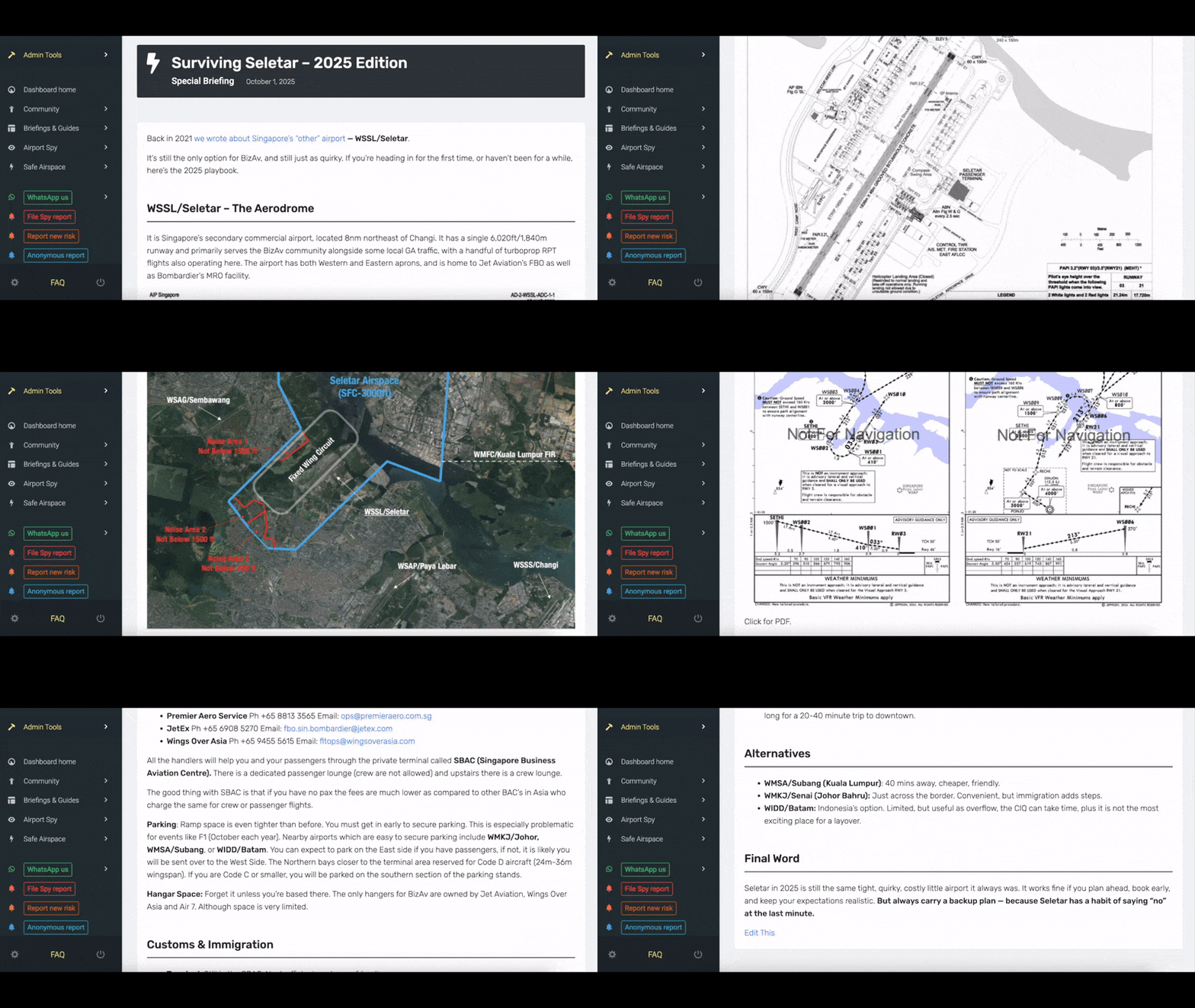
If you’re flying a bizjet into Singapore, WSSL/Seletar is your only option. Our recent guide covers the key survival tips – from managing the visual-only arrivals to dealing with limited parking and other quirks that can catch you out. OPSGROUP members can access the guide via your members dashboard here.


Japan BizAv Ops: Haneda, Narita, and Nagoya Explained

Japan is a great place to pilot a BizJet. It has super efficient ATC, spotlessly choreographed ground handling, and some of the best customer service you’ll find anywhere. But it also comes with a maze of rules, slot systems, strict curfews, and a cultural operating style that does not reward improvisation.

If you have not been to Tokyo recently, or ever, here is the short version. It is brilliant. It is also very easy to get yourself boxed in by paperwork, curfews, and slot rules if you do not understand how the system works.

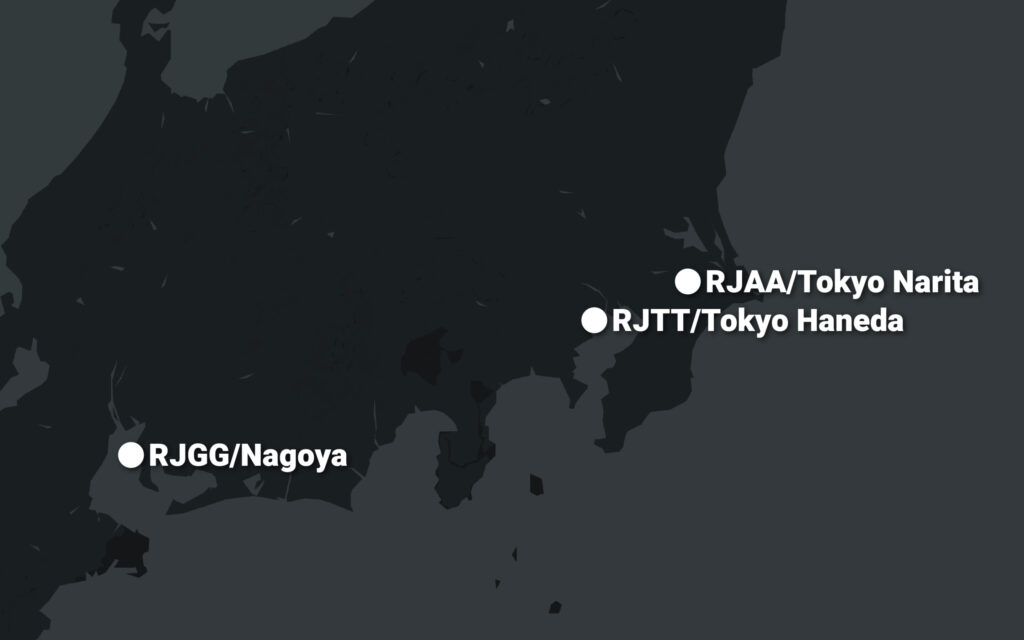
This guide focuses on what actually matters for BizAv crews operating into Tokyo and nearby alternates – RJTT/Haneda, RJAA/Narita, and RJGG/Nagoya.
What Makes Japan “Different”

Three concepts matter above everything else:

  1. Japan is a PAPERWORK country – everything begins and ends with approvals: Airport slots, runway slots, parking slots, customs/CIQ slots… your trip will succeed or fail based on how early and how accurately your handler books these. This is why it is hugely important to work with one who you can trust and have a good relationship with.
  2. They expect you to follow EXACTLY what you filed: Japan does not like late changes, creative ground routing, early arrivals, or “we’ll see how it works out on the day.” If you change anything (ETA, ETD, passenger count) then you can expect to have to get a new approval. You can expect to loose your departure slot if you are not ready on time, and if you are ready early, most likely you will be waiting on the ramp for your allowed departure time.
  3. ATC is world-class, but extremely procedural: Local slang is not a thing in Japan. Phraseology is pure ICAO. But be ready for long STARs, strict speed control and a lot of traffic. Controllers accents can be strong, but what they say, and what they expect pilots to say comes right out of the ICAO rulebook.
RJTT/Tokyo Haneda: The BizAv Trophy Airport (with a very bad slot hangover for Winter 2025/26)

Haneda is the airport everyone wants, it’s close to the city, has plenty of runways, and easy for pax transfers.  But it’s also the hardest airport in Japan for BizAv access. And right now, it is worse than ever.

The Big New Gotchas at Haneda

  • Slots are at crisis level: Since early 2025, the slots available for BizAv operators have been seen to be drying up, and unfortunately it has only become worse since the Winter 2025/26 schedule began. Day time slots (0800-2300LT) are nearly never available which leaves just some overnight slots open for BizAv operators to pick up. However what you can do with a good handler is secure slots for RJAA/Narita and ask them to keep an eye out every half day for a slot which may have opened up due to a cancellation. I recently had a slot open up in RJTT/Haneda, 30 minutes prior to engine start for our flight into RJAA/Narita, this is how to the wire it can be.
  • Parking remains another challenge: Even if you secure a slot, securing apron/parking is increasingly difficult for BizAv. Remember that you need three slots for operating at RJTT/Haneda. Parking slot, landing slot and a departure slot. 
  • Slot allocation process is rigid: Your handler will take care of this, but the trifecta is a tough one to manage. Your pax need to understand that there must be flexibility in both their arrival and departure time.
  • Competition from the airlines: Haneda prioritises scheduled airline traffic above BizAv. As traffic has recovered since the end of Covid, BizAv has been squeezed out.
  • Parking limitations: There is a hard rule of 4 nights parking, non negotiable. If you need to park for a 5th night or more, than it is time to reposition to RJAA/Narita or RJGG/Nagoya.

Operational Notes

  • Long RNAV STARs: The RNAV STARs into RJTT are long and usually flown in full due to noise over the city. Do not plan on shortcuts, although you may occasionally get a vector or track shorten late.
  • Strict arrival speeds: ATC will assign speeds on arrival and expects full compliance. You will normally be told “resume normal speed” before the approach – that is your cue to slow down, not speed up.
  • Long taxis after landing: Taxi distance depends heavily on the runway in use. Most BizAv parking is on the GA ramp in the N-Area, which can mean a long roll.
  • Turnaround parking exception: If you are doing a quick turn, ATC will often park you on P11 near Terminal 3, which saves time and crew walking.
  • Tokyo Bay fog risk: Sea fog and low cloud are common, especially on winter mornings. Conditions can change quickly.
  • Runway use driven by noise: If weather allows, arrivals favour 34L and 34R. If not, expect 22 or 23 via the LDA approaches. When those are not usable, the airport switches to 16L and 16R. This is all about noise mitigation for the city below.
  • Arrival runway logic: South and westbound arrivals usually get 34L or 22. North and eastbound arrivals usually get 34R or 23.
  • Departure runway logic: North and eastbound departures normally use 34R. South and westbound departures use 05. When the 16s are active, 16L is north or eastbound and 16R is south or westbound.
  • No approaches to 04 or 05: Runways 04 and 05 have no published approaches, so do not expect to land on them.
  • Wind and turbulence warning:When there are strong winds forecast, you can expect a lot of mechanical turbulence and sheer, bug up the speed and stabilise early would be my recommendation. Also watch out for the 1000’ winds, they can often be 50knots or greater and this leads to a very sporty final approach.

Noise Restrictions, Curfews and Operational Hours

  • Noise-driven runway assignment: Haneda uses strict noise abatement and time-based runway patterns. You will be assigned a runway and there is no negotiation. BizAv is typically sent to 34L or 22.
  • Performance-based refusal only: If you genuinely cannot accept the assigned runway, use the phrase “unable due performance”. ATC may accommodate you, but this is not a free pass. The JCAB has been known to meet aircraft on arrival for a ramp check to verify the performance limitation.
  • 24-hour BizAv passenger gate: The business aviation gate at Terminal 3 operates 24 hours, but it is for pax only.
  • Crew screening: All crew clear via the standard crew channel in Terminal 3 alongside airline crew. This can be slow and congested. I would allow at least 45 min from arrival at the terminal to having the APU up and running, an hour would be more comfortable.
  • No APU restrictions: RJTT/Haneda does not enforce any APU restrictions on arrival or departure. This is handy since in the winter it gets very cold (with some snow) and in the summer it is very hot!

Fuel & Handling & Parking

  • Handling: is excellent, extremely polite, and English is solid. But crew must follow the handler’s instructions exactly they’ll tell you when to tow, taxi, reposition.
  • Late changes: Given the slot/parking squeeze, late changes on the day may trigger re-filings with the authority. It is often impossible to shift an arrival or departure time. You have a slot buffer of 30 minutes, be careful not to exceed this, you will be required to report the reason for this to the JCAB.
  • Fuel: Fuel is available in Tankers on the N apron, it is up to 5000USG, so if you need more than that, let them know in advance. For large fuel orders, you can ask for a bay on the P11 apron, they will assign this 1 hour prior to your ETD. But the good thing for this apron is that Fuel is via the underground network so there is not need for a tanker, and it is close to the Passenger BAT.
  • Parking: There are a handful of Power in/out bays (951-954 & 151-155) but the rest are push back (961 – 969) so keep your pins handy. There are some extra bays which could be used, for mid sized aircraft spot 984 & 985 can be opened up.

Crew Logistics

  • Hotels: Haneda is around 15-30 mins to most of the big hotel chains, this is the reason it is so popular for the owners of a Bizjet. Some good options are the AC Hotel Ginza, Tokyo Westin, Prince Sakura Autograph hotel or the Sheraton Miyako. Be prepared to pay though, hotel rates are high, unlike the cost of Jet A1, which is cheap in Japan. especially compared to the US.
  • CIQ: Crew are usually processed as a regular passenger, so they are given a passport sticker, this is good it allows you to roam anywhere in Japan. Watch out if you get given an Orange Shore Pass as this only allows you to roam within 100km of the airport on entry. You will get yourself into trouble if you try and jump on the Shinkansen.
RJAA/Tokyo Narita: The BizAv Workhorse Airport

Narita is the airport that quietly saves every BizAv trip to Japan. The biggest downside is the distance from down town Tokyo. However it could really depend on where the boss’s meetings are, since Tokyo is northeast of Haneda. Generally you should allow 60-90 minutes via limo to CBD Tokyo.

Why BizAv Operators End Up at Narita

  • Parking availability: Far better than Haneda for overnight and multi-day stays. The airport allows up to a months parking and there are some hanger slots available which can be good for the winter time since Tokyo does get below 0c and snows.
  • Slots are still required, but far more achievable: There are 2 runways at RJAA/Narita, but since the majority of domestic flights run from RJTT/Haneda, the airport is not as busy. You generally will get your arrival and departure time of choice. But be wary of the 2300-0600LT curfew. 
  • Customs/Immigration is smoother for BizAv: The dedicated BAT processes both passengers AND crew so this saves you at least 30 minutes compared to RJTT.

Operational Notes

  • Expect long taxi times: Narita is spread out and there is a farmer who lives nearby the threshold of Runway 34R, he refuses to sell his land, so the airport built around him, give them a wave when you are on Kilo or Lima 😁
  • Arrival and departure runways: You will always land on 34R/16L, and departures are mostly 34L/16R. The only way to get assigned the “long” runway for landing is if it is required due to aircraft performance, and the key here is REQUIRED. If this is the case a simple “Require 34L due landing performance” will suffice and approach will do the rest. But remember the JCAB has been known to ramp check aircraft to take a look at the performance requirements.
  • Seasonal winds can be strong: In the winter, NW winds across the runway 34s are a known challenge. You can expect 50knots or more at 1000’ and it gets very bumpy, so bug up the speed and buckle up. 
  • Take a look at the arrival and departure chart: You will notice that when 16L/R are in use, they will keep you high until abeam the airport and then descend you late downwind and base, this is to keep you clear (to the north) of the departing traffic. Remember that you will always be north of the airport, there is no circuit to the south since that interferes with RJTT.

Noise Restrictions, Curfews and Operational Hours

  • Narita has a hard 2300L-0559L curfew: No exceptions. Well, ok, there is a one hour buffer which the airport can enact if there has been heavy snowfall and they are dealing with deicing. But that’s the only time it happens, and no matter how much you ask, they won’t change this.
  • If your schedule pushes late arrival or early departure, plan accordingly: Let the pax know the hard limit, many flights have been grounded over night because of this. It is an airborne time, not off blocks time.

Crew Logistics

  • Hotels: Lots of hotels nearby, not many western brands (Marriott / Hyatt) but the local hotels are clean and do the job. The airport is a big travellers hub, so the hotels in Narita tend to cater for airline layovers. For longer stays head downtown to Tokyo and you will find a lot of options, although be prepared to spend big.
  • CIQ: Just like RJTT/Haneda, crew are usually processed as a regular passenger. The shore pass issue is the same.
RJGG/Nagoya: The Best-Kept Secret

Nagoya is the dark horse of Japanese BizAv ops. If you need Japan but don’t need Tokyo itself, RJGG is often a dream. Located 150nm south of Tokyo, Nagoya is a smaller city with an airport that punches well about its weight. Your passengers probably won’t choose this place to be dropped off, but when parking becomes an issue further north, then Nagoya is your saviour.

Nagoya is my choice of tech stop when heading westbound from the SA. Many people overlook it, but it’s one of the most efficient stopovers for some fuel before you continue.

What Makes Nagoya Great

  • Parking: nearly always available as are some hangers if you need them
  • Slots: easier to secure.
  • Customs: fast and polite.
  • Ops more predictable: way less congestion than Tokyo. And you can get super quick turnarounds with power in / power out bays and hydrant refuelling.

Nagoya is a great option for quick tech stops on long-range Pacific or Europe legs, or simply as the pressure valve when Tokyo is full – an easy place to park, lay over cheaply, and wait things out while the passengers are in the city.

Operational Notes

  • Winter winds: the bay can produce mechanical turbulence and gusts. So you can except some strong crosswinds
  • Approaches: these are straightforward with no major “hidden” quirks (compared to Tokyo). You will get a nice easy STAR and there is little to no track shortening to cause you foul.
  • More flexible: less stressful from an ops planning standpoint. There is hardly any traffic so very little delays, and you can plan for very quick turn arounds.
Permits, Paperwork, & the “Japan Style” of Operations

Permits – Landing & Overflight

Foreign BizAv flights generally need a landing permit. Lead time for part 135 is at least 3 days but be wary of national holidays. For Part 91 Ops there is no lead time and the permits can be applied for up to the day prior to your operation.

Overflight permits are only required if you are using an aircraft which has special airworthiness permits.

The earlier you submit, the better. And remember that any revision of timing will need to have an updated permit – this can be the tricky part.

Passenger Lists & Crew Data

Japan expects accurate final pax/crew counts ahead of time. There is no passenger e-APIS, a GD to the handler will suffice. Last-minute changes (especially add-ons) can trigger re-submissions and delays.

Domestic Cabotage

If you are a Part 135, then it is impossible. Domestic cabotage is prohibited unless it’s an empty repositioning leg. Passengers cannot join for domestic legs only. As a Part 91 flight, there are no cabotage restrictions.

Handlers

The handler is your trip’s linchpin. They deal with all the bureaucracy (airport authority, customs/quarantine, parking, ramp). If your handler says “this is the only slot/stand we’ve got”, you have to believe it!

Like most places there are many handlers to chose from. I have personally always use Aeroworks (fltops@aeroworks.jp), another very reliable one is Universal Japan (japan@universalaviation.aero).

ATC, Airspace & Flight Planning Quirks

STARs/SIDs

The RNAV/STARs are long and structured. Don’t assume direct routing once inside Japanese airspace. There is Datalink Airport ATIS and the STARs always link up nicely to the runway in use. Pay attention to the ILS since they have both Y and Z iterations. 

Speed Control

The JCAB have a 250kts at 10’000’ and below. Even if you get a “cancel speed restriction” this speed limit remains, only the STAR or SID restriction are cancelled. You will be given speeds to fly. On arrival this is monitored closely so do pay attention to the instructions.

Holding

Tokyo is congested and you could well find yourself in a hold during the STAR. The holds are standard ICAO PAN holds, with a slight twist. The speeds are based on the old PANS OPS doc.

Altitude (feet) Speed (knots)
0-6000 210
6001-14000 220
14001-20000 240
20001-34000 240
34000 & Above 240

Comms & Datalink

Japan now is using Datalink for En-Route control, you can log in via RJJJ.

VHF radio coverage is excellent but remember to keep it standard ICAO phraseology to make everyones life easier

ATIS for most airports can be downloaded via Datalink.

Weather – Don’t Underestimate It

Winter (especially Winter 2025/26)

Expect stronger cold air intrusion earlier than usual in the 2025/26 winter. This is thanks to a La Niña-like system. It will bring an early-season arrival of cold air and increased risk of localised heavy snow on the Sea of Japan side, so RJAA and RJTT will be affected.

Snow does fall in Tokyo although it is not that common. However both RJAA and RJTT do have deicing with Type 1 & 4 fluids available. Expect delays when these procedures are in use. Both airports have Cat III LVO approaches.

Summer

Expect typhoons and thunderstorms! Typhoons will have you relocating the jets and a thunderstorm weather band will give you massive delays. Northern Japan gets very very warm, particularly in late July – September.

Shoulder Seasons

Fog, low ceilings, early morning dew/frost. Strong winds bring turbulence and gusty approaches – bug you speed as needed.

Crew Experience & Cultural Nuances

Precision Matters

Japan expects precision: paperwork, timing, process. This means it is a great experience to operate here, because what you expect is what you get. But make sure you read up about the operation, and check out the airport briefing pages (10-).

Time is precise, if they say your slot is 0900, then you should aim for 0900 at the threshold. But one thing to check with your handler is the slot tolerance, it is generally +/- 30 minutes. It’s worth briefing your passengers that the slot isn’t optional – so a late arrival by them could result in a cancelled flight plan.

Don’t Improvise on the Ramp

Ask your handler for instructions. Turn directions and start up procedures are strictly enforced. Unauthorised stepping into restricted zones, opening panels, crew wanderings are flagged and can slow you down. And you should always wear a safety vest.

Fuel spills are a big deal in Japan. If one occurs the refuel operator will call the airport authorities and you can expect a visit from the JCAB and fire truck. You will have to clean up on the spot (prior to you moving) and there are many pages of reports to fill in.

Cultural Nuances

You may need to use Google Translate or similar – but the locals are very friendly and will help however they can

Don’t tip, it is considered to be rude and so it should be avoided. In the bigger cities, the locals are becoming more tip aware and so if you are in a big city and feel like you would like to tip, then you could.

Keep your voice down, don’t use your phone on the train and make sure you queue up properly (there is always a queue!). Public drinking is legal, however don’t make a nuisance out of yourself!

Final Thoughts

Japan is predictable, structured, and extremely polite – as long as you play by the rules. Tokyo works well if you plan early, lock the slots, and stay disciplined, especially at Haneda during Winter 2025/26. When Tokyo fills up, Nagoya usually saves the day without any drama.

Your handler is everything here. Trust them, follow the plan, and things run smoothly. Try to wing it, and Japan will very calmly, very politely, say no.


APEC 2025: South Korea Ops Impact

South Korea is gearing up to host the APEC Leaders Summit in Gyeongju from Oct 31 to 1 Nov 1. Both Donald Trump and Xi Jinping are expected to attend, along with leaders from 21 member countries. That means tight security and plenty of disruption at airports across the country from around Oct 25 to Nov 3.

If you’re operating a BizAv flight to Korea during that week, what you can do depends on whether you’re flying with APEC pax or without them. So that means delegates, government officials, or anyone else going to the event. To not make the rest of this article too wordy, we’re going to call these “APEC-related” flights!

If you’re APEC-related

Your life will be easier, but still tightly controlled.

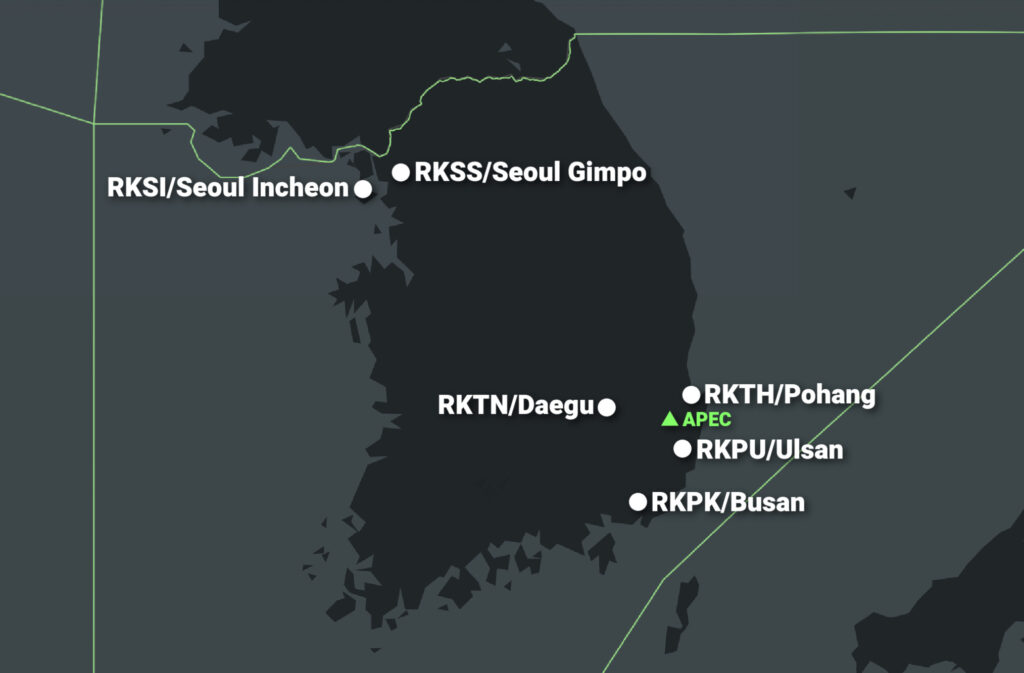
  • RKSI/Incheon: The main international gateway and the primary arrival point for heads of state. Only APEC-related flights will be allowed to park or operate here until Nov 3. Expect strict ramp control and ground handling reserved for official delegation movements.
  • RKTN/Daegu and RKTH/Pohang: Both near Gyeongju and being used as APEC support airports. Only APEC-related flights will be allowed in here during this period, but only for quick turns. Parking is limited to about an hour and a half, with no overnights. RKTH/Pohang is a domestic airport but will open to international flights between Oct 25 – Nov 1.

If you’re not APEC-related

For regular BizAv flights, options are limited.

  • RKSS/Gimpo: This is your best shot. It’s open for everyone – regular BizAv, diplomatic, APEC-related and non-APEC related, though ramp space is scarce. Parking is capped at five days, and slot requests should be made early. Expect congestion.
  • RKPK/Busan: A confusing one! It’s only available to diplomatic flights from Oct 27 – Nov 2. So that’s only the highest tier of APEC-related flights, we’re guessing. PPR is also required, as RKPK is a military airport.
  • RKPU/Ulsan: Domestic only, not available for APEC flights, and parking suspended.

As of now, there are no SUPs, AICs, or Notams published setting out these restrictions. Expect last-minute Notams later this week once security plans are finalised.

If you’re carrying APEC pax, expect strict time limits at RKTN/Daegu or RKTH/Pohang. If you’re flying a regular BizAv flight into South Korea, plan on using RKSS/Gimpo and book now! RKSI/Incheon and the nearby regional airports will be off-limits for you.

A high-security, high-traffic week is coming – plan accordingly and keep checking for updates! And if you need help with handling at any of these airports during this period, we recommend getting in touch with Nexus Jet Support at support@nexusjet.net.


US Midwest: Cicada’s are coming to town

This spring, the US Midwest will see Cicada’s emerging in numbers that have not been seen in generations.

This is quite frankly terrifying. It may sound ridiculous that something like this matters, but rest assured, it is crucial. I know from first-hand experience.

It was a hot summer afternoon in 2021 on the ramp at KSUS/Spirit of St Louis airport. There were massive bugs EVERYWHERE, buzzing around, hitting you in the head, flying into the rental car or aircraft if the door was open for even ONE second. Their dead bodies were scattered across the ramp from being run over or stepped on. It was Cicada swarming season, according to the line guys.

We had the APU running and the main cabin door open, attempting to cool the cabin while waiting for our passengers. Even with the curtain closed, the Cicadas entered the cabin and cockpit through the cracks. It was truly disgusting, and I still have nightmares to this day.

The captain was busily chasing the bugs around, attempting to capture each one and throw it back outside. Meanwhile, the FA and I were cowering in the corner, trying to stop them from flying into our hair. When the passengers arrived, they DASHED as fast as they could from their SUV towards the aircraft, hoping to escape getting hit in the face by a Cicada (spoiler: they did not escape this). The SECOND we opened the curtain for them to run in, a load more Cicadas flew in, and we were back to square one, trying to capture/dispose of each one. I heroically went outside, hastily loaded the bags, and shut the cargo door. We had no choice but to close the main cabin door with many 2-3 inch bugs still hiding inside.

Our attempt to escape was met with a HUNG START. QRH blah blah… after several minutes on the phone with our maintenance department and a few more attempts, we were fresh out of ideas. Right then, a frightened Cicada almost flew right into my mouth, prompting the realisation, that, of course this unique variable must be the thing causing the problem.

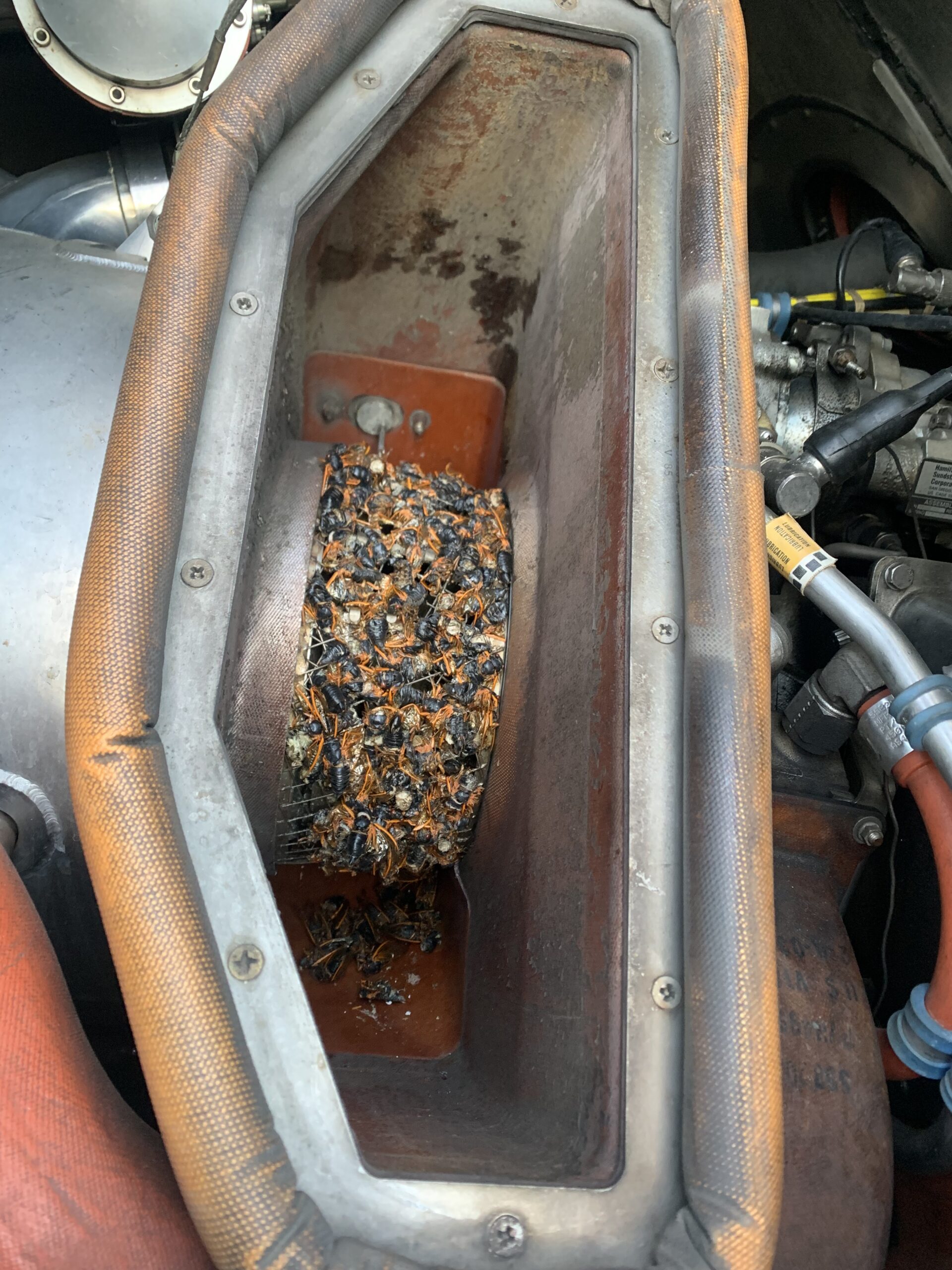
A quick climb up a ladder confirmed that the APU intake was COVERED in dead Cicadas. It wasn’t getting enough air to provide high-load pneumatic functions. We got a ladder and a broom and brushed some cicada-carcass off the intake, a feeble attempt in rectifying a problem that was concentrated far deeper than the external grate. Somehow, though, we managed to get #1 running (it took precisely 59 seconds, of course), and we were off to the races.

As we taxied off the ramp the most foul, PUTRID smell began to penetrate our nostrils. The smell of HOT/DEAD/LARGE BUGS is not a smell I’d wish on my worst enemy. We quickly switched the bleeds over to the engines and prayed for no circumstances requiring us to switch them back.

Upon arrival, our maintenance team opened the APU and manually removed the burnt cicada crust. It took almost a year for the smell to be removed entirely from any APU-fed PACK usage. We would later learn that Cicadas are attracted to the high-pitched sound of the APU, hence so many of them flew into the intake.

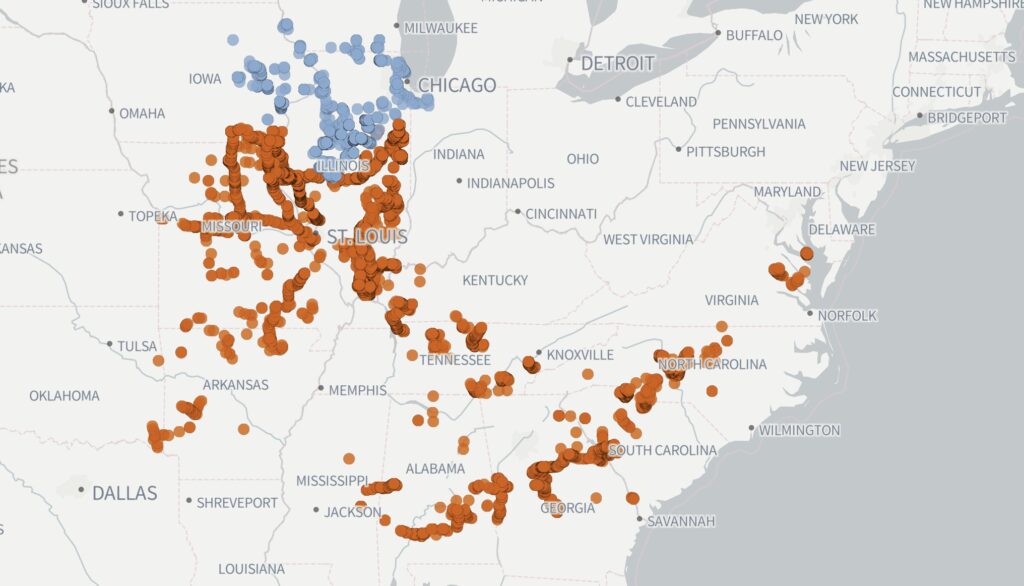
If you’re still reading, I’m surprised, but here’s the point: this year is supposed to be the most giant Cicada swarm in decades across the Midwest, specifically concentrated in Illinois (St.Louis and Chicago). Allegedly this swarm will be at least twice as large as the one in the story above.

For my crews, given that we will likely find ourselves in these locations this spring, I’ve set out the following procedures for operating in a Cicada swarm (think of it like you would a cold weather operational procedure):

  1. Do not run the APU until RIGHT before you want to start the engines.
  2. Attempt to leave all aircraft doors shut as much as possible.
  3. If it is very hot and the swarms are very bad, try to get a hangar the night before departure. Also, have the aircraft put online as close as possible to departure so that the cabin isn’t extremely hot for passenger boarding
  4. As a precaution ahead of departure, research whether an air cart is available on the field and what the procedures would be to get it (just in case).

I hope our “Cicada QRH Actions” can save you a new cabin fragrance for your aircraft this spring!


Got a story to share? Let us know!

If you come across a new risk, a new danger, a new procedure, something weird, something unusual – tell us, and we’ll tell everyone in the group.


Outsmarting the GPS spoofers: A clever app

GPS spoofing is fast becoming a real headache in aviation, causing confusion and navigation problems for pilots in several hotspots around the world.

We first saw this happening in September 2023, when we started getting reports of spoofing across the Middle East, including instances near Iraq, Iran, Egypt, Israel, Jordan, Turkey, Cyprus, and Lebanon.

Since then we’ve had reports from all kinds of strange places including Pakistan, Niger, and China. 

GPS spoofing involves sending false GPS signals to aircraft, leading to potential navigation errors and safety risks.

Manufacturers have been slow to work out what advice to pass on to pilots and operators on how to counteract these issues. But the effectiveness of these measures can be limited without the right tools, especially during live spoofing events where the reliance on ATC becomes critical.

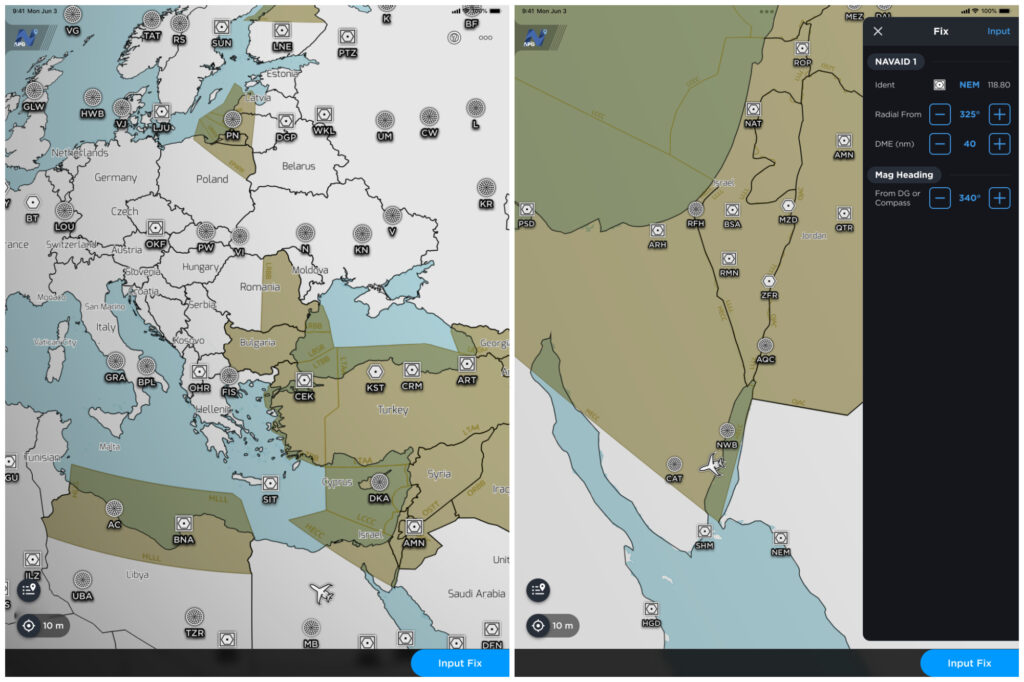
NaviGuard, developed by APG, is a new tool designed to counter GPS spoofing threats. It’s a plotting application that uses traditional ground navigation aids (e.g., VORs, DMEs, NDBs) to cross-check and verify the aircraft’s GPS-reported position. And best of all – it’s free. You can download it here.

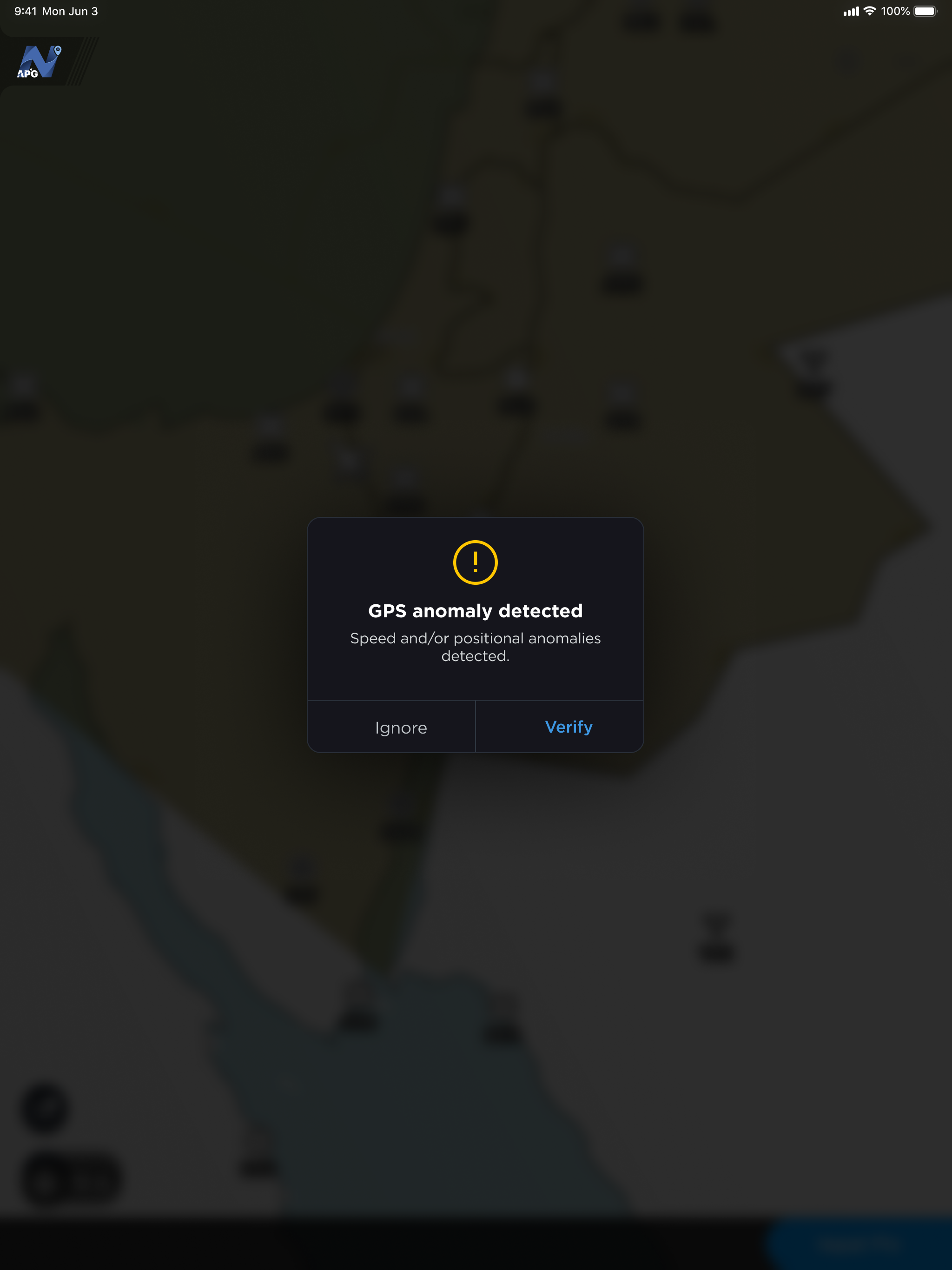
When NaviGuard detects discrepancies indicative of GPS spoofing, it alerts the pilots with a clear “GPS anomaly detected” message, enabling them to take corrective action promptly.

NaviGuard offers pilots a straightforward solution for maintaining navigational accuracy amidst GPS spoofing threats.

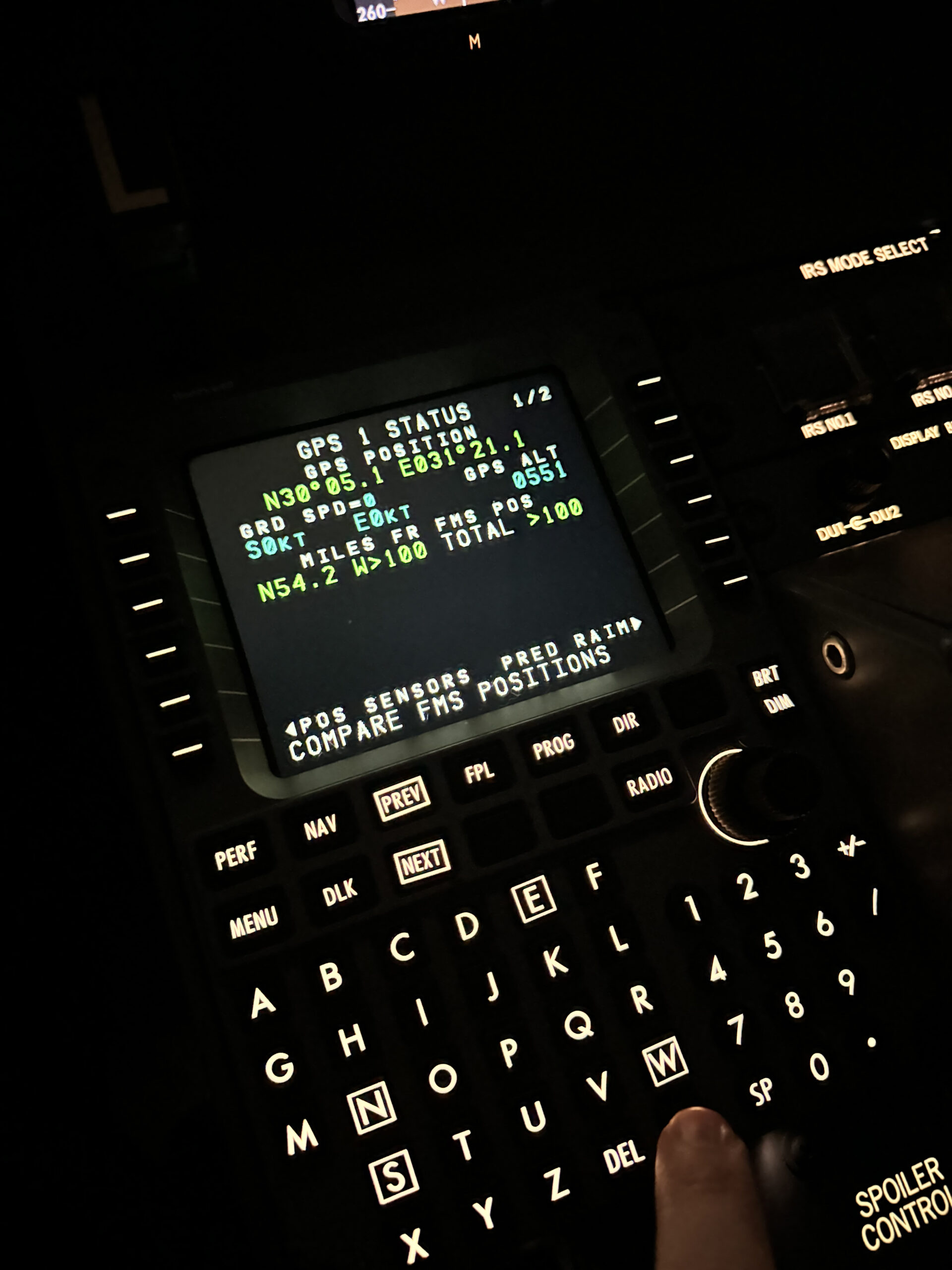
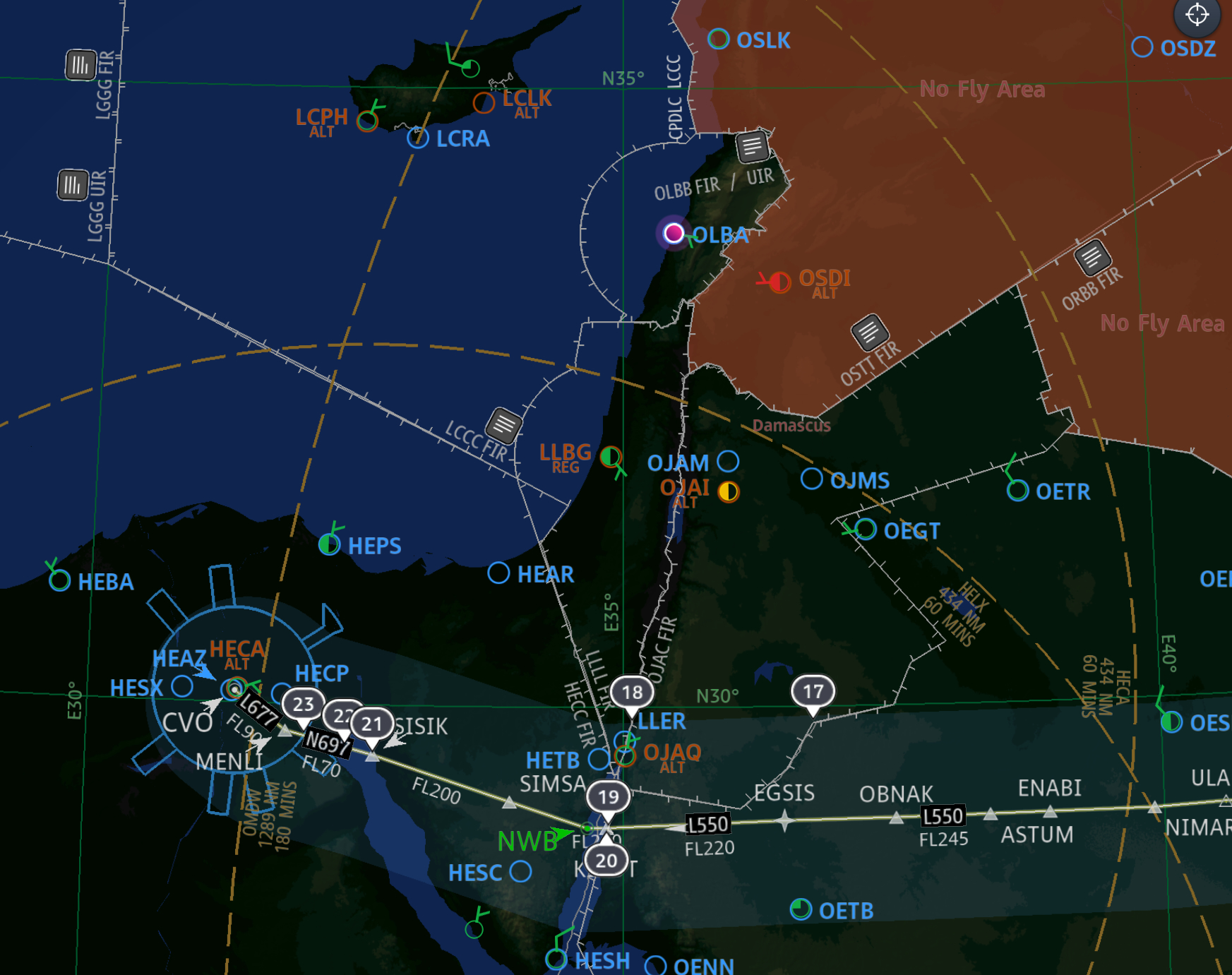
I used NaviGuard last month when I was spoofed whilst operating in Cairo. I got to try out the app for 30 minutes while our GPS tried to convince us that we were flying on top of Beirut.

As promised by Michael and the team at APG, the app was easy to use, and it allowed me to quickly verify that my IRS position was not compromised (we have a Hybrid IRS, so a spoofed GPS signal can corrupt the position data).

This is a no-bells-or-whistles solution, which I believe is an excellent addition to any pilot’s EFB; after this flight, I installed the app on all of our aircraft’s EFBs. It takes up very little space and is free. This is the great insurance when doubting your GPS position’s integrity.


US Visual Approaches: lessons from the LH458 incident

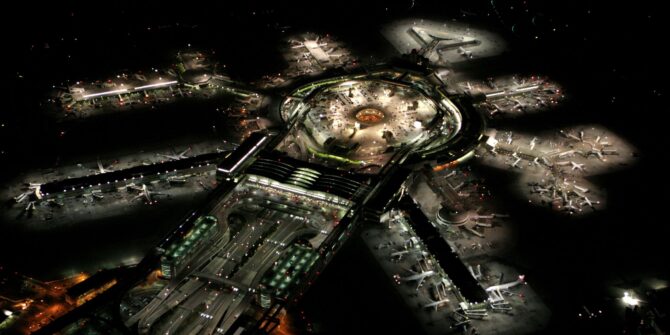
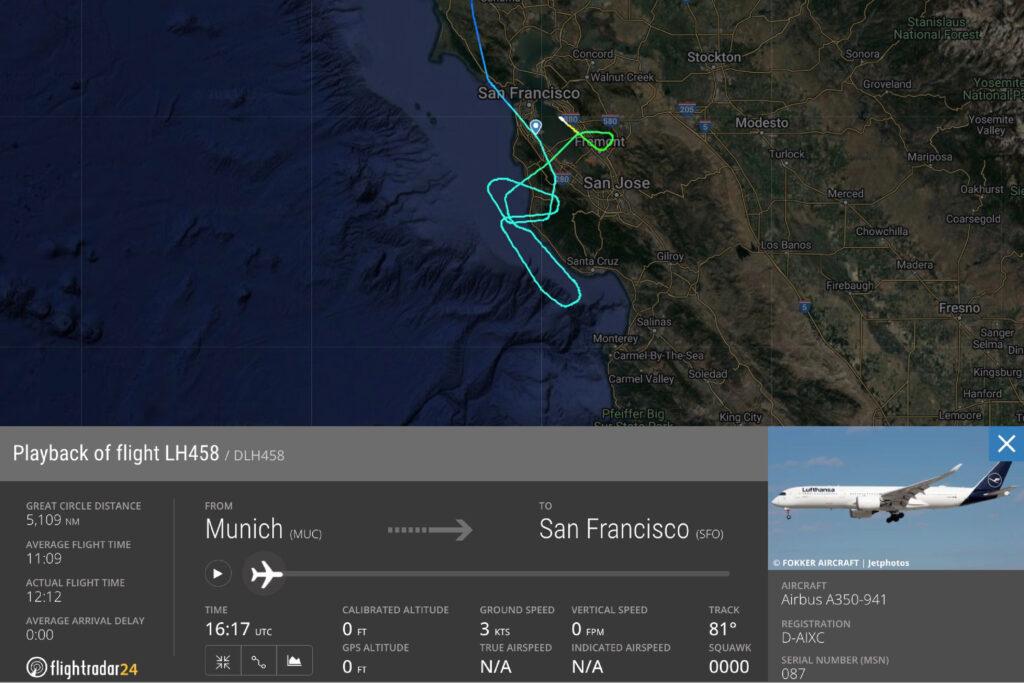
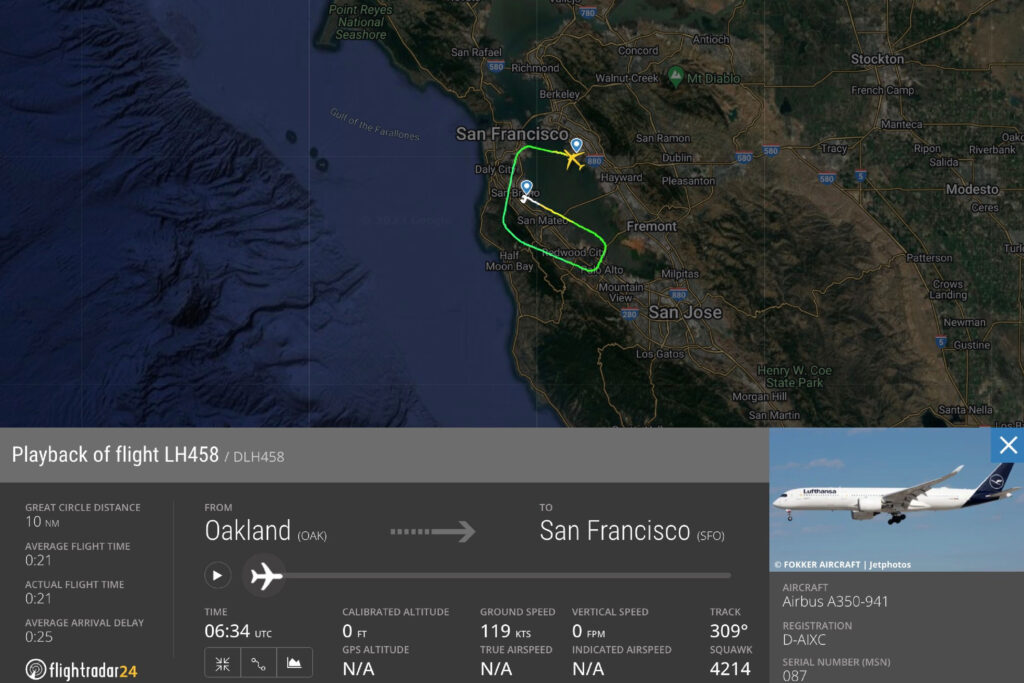
On October 16, the crew of a Lufthansa A350 inbound to San Francisco found themselves in an unenviable situation: a seemingly unnecessary last-minute diversion to Oakland after a long-haul flight. The diversion was forced by ATC, following the crews inability to accept a visual approach. The incident highlights issues with visual approaches in the US, particularly during late-night arrivals.

LH458 – What happened?

Here’s how it went down:

ATC: Expect a visual approach.
CREW: We can’t do visual approaches at night-time due to company procedures.
ATC: In that case, expect delays. 

At this point in the story, instead of a visual approach on runway 28R, the crew were told to expect an ILS approach on runway 28L. They were then put into a hold – perfectly understandable for their integration into the approach sequence. After holding for 20 minutes, ATC advised there would be another 10-minute delay. 10 minutes go by.

4 minutes later:

CREW: If we can’t land soon, we’ll have to declare a fuel emergency. 
ATC: What’s your diversion airport?
CREW: Oakland.
ATC: You need vectors to Oakland?
CREW: Er, no. What’s the problem here?
ATC: I can’t have this conversation with you. Either divert to Oakland, or you can continue to hold, it’s up to you.
CREW: Okay, you promised me 10 minutes, that ran out four minutes ago. So how many more minutes?
ATC: Conversation is over. You want to divert? Or you want to continue with the delay?
CREW: We’re diverting to Oakland.

This resulted in a flight time of over 12 hours, landing in Oakland an hour after commencing the approach to KSFO (and at 7 am Munich local time – the crew’s local time). After one hour of turnaround, the crew resumed their flight to KSFO, which took another 45-minutes block to block.


The delays are crucial to this story. It’s not uncommon for delays to occur, but ATC announcing a 10-minute delay (which is essentially treated as an EAT or Expected Approach Time), and then not adhering to it (especially after 30 minutes of holding) is not great. This significantly alters the situation and could have had more severe consequences.

A video of the flight path, including part of the audio between the crew and ATC is here:

What’s the problem?

In terms of flight safety, one can question the wisdom of subjecting the crew to signficiant extra fatigue after a long flight. Was it really not possible to create an additional two or three nautical miles of spacing between two aircraft for over 30 minutes to accommodate this flight?

Long Haul operations entail heightened risks due to extended duties and activities during circadian lows. While instrumental in facilitating aviation, the prevailing attitude within the US ATC tends to prioritize maximizing movements without seemingly adequate consideration for the nature of specific operations. It’s essential to recognize that not all arrivals are equal; when a pilot communicates inability, it’s not mere difficulty but a conscientious acknowledgment of the immense responsibility for the safety of hundreds on their shoulders. After a lengthy night of flying, we would all find it challenging to justify opting for a visual approach as the safer choice.

The FAA prohibits visual separation on an ILS. Consequently, questions arise about the request made to the crew in this regard, as well as the system that forces night-time visual approaches on all aircraft, regardless of the fatigue level of the crews and their unique circumstances.

This is a systemic issue. But it does feel like there is room to hope for a more comprehensive systemic approach to avoid putting a crew in a potentially safety-compromising situation.

Why was there a delay in the flight’s approach?

While a delay in air traffic is understandable, adhering to the announced duration (which clearly had the characteristics of an Expected Approach Time) is crucial to ensure safety. In this case, the crew experienced confusion when their EAT was not met, leading to concerns about fuel reserves and potential emergencies. Efficient coordination between ATC and crews is essential to prevent such situations.

Could the flight have been accommodated within the initially announced timeframe?

Considering that the flight had already spent over 30 minutes holding, it seems reasonable to think that they could have been inserted and provided with a few nautical miles in a thirty-minute sequence.

Based on the announcement of an additional 10-minute holding, this crew could have converted their diversion reserves into holding time, as allowed by regulations, and found themselves unable to divert and potentially facing a fuel emergency. This would have disrupted the sequence far more than adjusting a few nautical miles over 30 minutes.

Some aircraft, like the 777, may have to land with reduced flap settings in case of low fuel quantity, further diminishing margins. This outcome does not align with improved safety, and ATC should consider this for these long-haul approach flights.

It should be remembered that the pilots of this flight did all they could to communicate in a clear manner (sans the frustration at the end of the conversation) that they were unable to do what was initially conveyed. The fact that they were forced into a corner of a very near fuel emergency by the actions of ATC should highlight just how critical it is for us to get this fixed, pronto.

What can be done to improve safety and coordination in such cases?

Air traffic management needs to communicate effectively with flight crews, announce and adhere to EAT’s, and consider unique circumstances, especially for long-haul flights at night.

The FAA’s Safety Alert for Operators (SAFO) 21005 states that ‘it is the pilot’s responsibility, according to 14 C.F.R. § 91.3, to advise ATC as soon as possible if a visual approach is not desired.’ This SAFO recommends ‘Communicating “UNABLE” to ATC when, in the judgment of the pilot-in-command, compliance with a specific instruction, request, or clearance may reduce safety.’

Ultimately, a crew adhering to the FAA’s SAFO should not find themselves in a situation that compromises the safety of their flight by subjecting them to additional fatigue. The situation is even more concerning given the example of this flight and its implications for the crew, substantial financial consequences for the airline, and potentially for some passengers. This may make future crews hesitant about declining a visual approach, even when safety would necessitate it, as emphasized by the SAFO.

Why are visual approaches important?

Visual approaches allow for increased airport efficiency when weather conditions permit.

At KSFO/San Francisco, efforts were made in 2016 to enhance airport efficiency through new approach procedures, such as the RNP to GLS study. Being the seventh busiest airport in the US at the time, the airport could, during good weather conditions, sequence arrivals to runways 28L and 28R using visual separation, resulting in a peak arrival rate of 56 per hour. However, less favourable weather conditions necessitated instrument approach procedures, reducing airport efficiency to 28 to 36 arrivals per hour. This highlights the critical role of visual separation in maximizing KSFO’s capacity, despite runways being only 750 feet apart.

However, we must remember that separations primary objective is safety, as evidenced by recent updates in the FAA’s Order on Simultaneous Dependent Approaches to Closely Spaced Parallel Runways, which consider Consolidated Wake Turbulence (CWT) procedures.

The visual approaches involve reducing the spacing between arriving aircraft, which can lead to higher traffic capacity and profitability. But they also shift some responsibility to the flight crew, particularly the captain, who must accept the risk of wake turbulence and become responsible for maintaining proper spacing to benefit the system.

This dual nature of visual approaches underscores the delicate balance between efficiency and safety in aviation operations.

How does the US differ from international standards regarding visual approaches?

The US aviation regulations do not strictly adhere to the ICAO standards regarding visual approaches. In the US, air traffic controllers may initiate a visual approach without the explicit consent of the pilot, unlike standard ICAO procedures, which require pilot agreement. This difference in approach procedures can lead to unique challenges. For more info, have a read of this IFALPA Bulletin.

Key Issues

This recent incident in San Francisco highlights several issues:

  1. Crew’s Spacing Responsibility: Visual approaches in airports enhance efficiency but shift responsibility to flight crew for maintaining spacing and managing risks.
  2. US vs ICAO Practices: There is a discrepancy between US aviation practices and ICAO standards.
  3. ATC-Crew Safety Coordination: The incident shows the need for precise coordination between air traffic management and flight crews to ensure the safety of operations.
  4. Night Approach Restrictions: Certain airlines have procedures that prohibit crews from conducting night visual approaches, and ATC needs to be aware of and accommodate these restrictions.
  5. Managing Approach Delays: The delay in the flight’s approach raises questions about managing holding times and adhering to announced durations.
  6. Risks in Night Approaches: Long-haul flights arriving at night using visual approaches might pose safety risks, considering crew fatigue and FAA’s SAFO.
  7. Safeguarding Flight Operations: A comprehensive systemic approach is required to prevent compromising situations for flight crews, emphasizing effective communication, adherence to EAT’s, and crew judgment.
  8. ATC Safety Guidelines: ATCs must be aware of safety guidelines (SAFOs) to ensure crew adherence and avoid jeopardizing safety.
  9. Crew Safety Priority: Prioritizing safety over convenience is essential for flight crews.


This final point – ensuring flight crews are not hesitant to prioritize safety over convenience – is vital to maintaining the highest level of aviation safety. The KSFO incident serves as a reminder that aviation is a delicate balance of safety, efficiency, and coordination.


Microbursts: The clouds are gonna get ya!

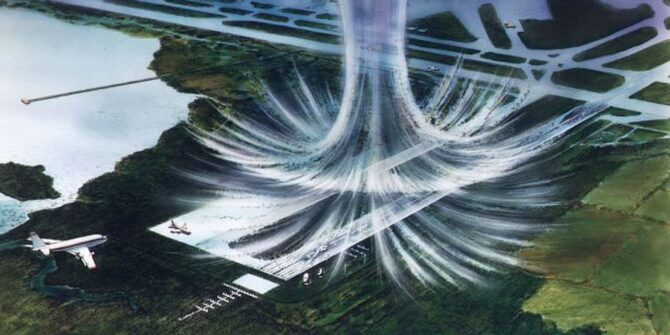
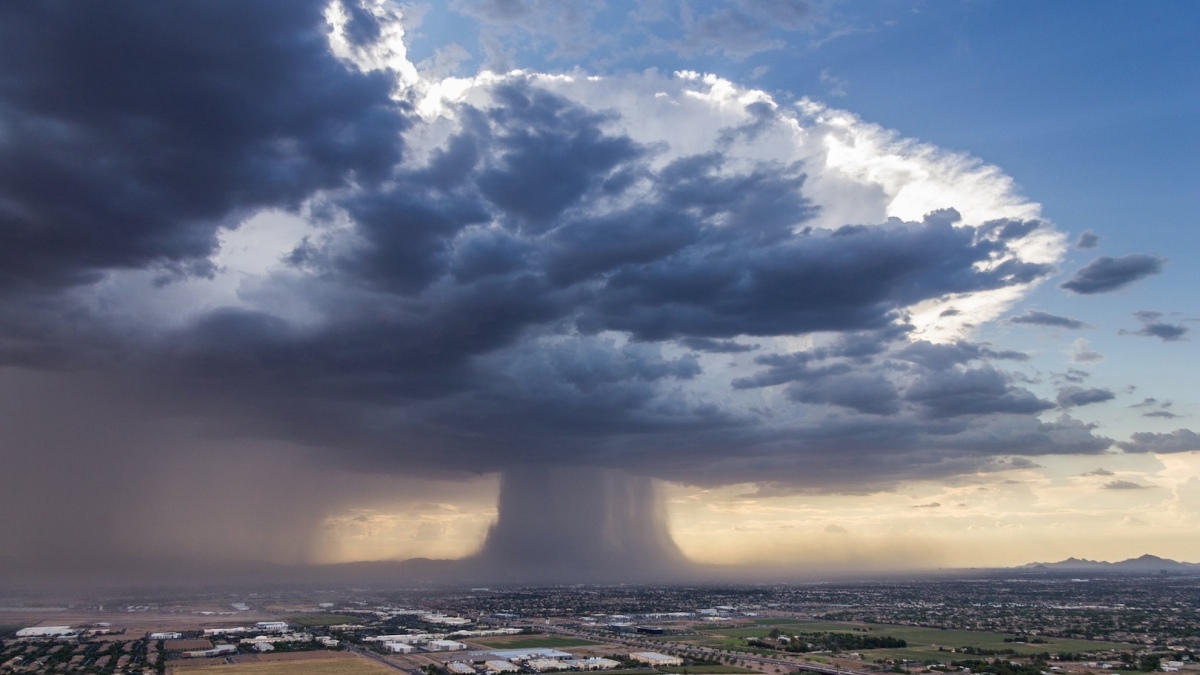
Microbursts! These short-lived, intense downdrafts of air will try their best to wreck your takeoffs and landings completely. But how do they work? And how can we avoid them?

What are microbursts exactly?

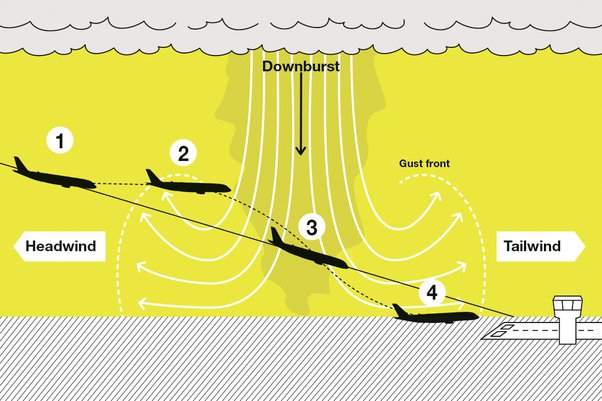
Microbursts are atmospheric marvels characterised by sudden, powerful air downdrafts that spread horizontally when they reach the ground. They are often associated with severe thunderstorms, convective clouds, or other intense weather systems. These downdrafts can reach up to 130 knots, creating hazardous conditions for aircraft.

Double Danger

Microbursts pose a significant threat to aircraft. Two main reasons:

  1. The powerful downward airflow. This can cause an aircraft to lose altitude or rapidly experience significant changes in airspeed. No matter how much power your engines produce, you won’t out-climb these downdrafts!
  2. The horizontal outflow of air when the microburst reaches the ground. This is known as the “outflow boundary” and can create strong crosswinds that affect the aircraft’s handling and control. When pilots get caught in these crosswinds, they will likely struggle to maintain the desired flight path, increasing the risk of accidents. Remember, the strength of the microburst will probably mean that the aircraft cannot outperform it – even with a max rate of climb, you will be unable to get a positive performance of the plane (Aeromexico Flight 2431 is an example of what can happen if you try to fly through a microburst).

How do we avoid them?

  1. Weather checks! Stay informed about weather conditions. Modern weather forecasting tools, including onboard radar systems (such as PWS – Predictive Windshear System) and real-time weather updates (often relying on the tower or a ground observer), provide valuable insights into severe weather systems that may produce microbursts. Review weather reports and forecasts before each flight, and pay close attention to thunderstorm activity and associated weather patterns.
  2. More training! Pilots should receive solid training on recognising and responding to microbursts during their initial flight training and beyond. This training should include familiarising with microbursts’ visual cues, such as dark and ominous cloud formations, heavy precipitation, and sudden wind shifts. But you should also be trained in specific techniques for mitigating the effects of microbursts, such as proper recovery techniques and decision-making during critical flight phases.
  3. Talk to ATC! Maintaining open lines of communication with AT is vital in avoiding microbursts. ATC can provide pilots with up-to-date weather information and may offer alternate routes or hold patterns to prevent known or suspected microburst activity.
  4. Eyes like a hawk! During the flight, regularly check onboard weather radar systems, which can detect the presence of microbursts. If a potential microburst is seen somewhere, avoid the area: this might involve altering the course, requesting a change in altitude, or holding until the microburst dissipates. Remember that if you see Virga, there is a good chance that a microburst may form.
  5. Just avoid them! Obviously the best mitigation strategy! They will form quickly but dissipate quite quickly as well. Holding and waiting for a clear weather path is critical to a safe approach and landing.

A good rule of thumb to keep you safe when it comes to these beasts = 5nm for 5min. In other words, stay more than 5 miles away and wait at least 5 minutes from the last activity report.


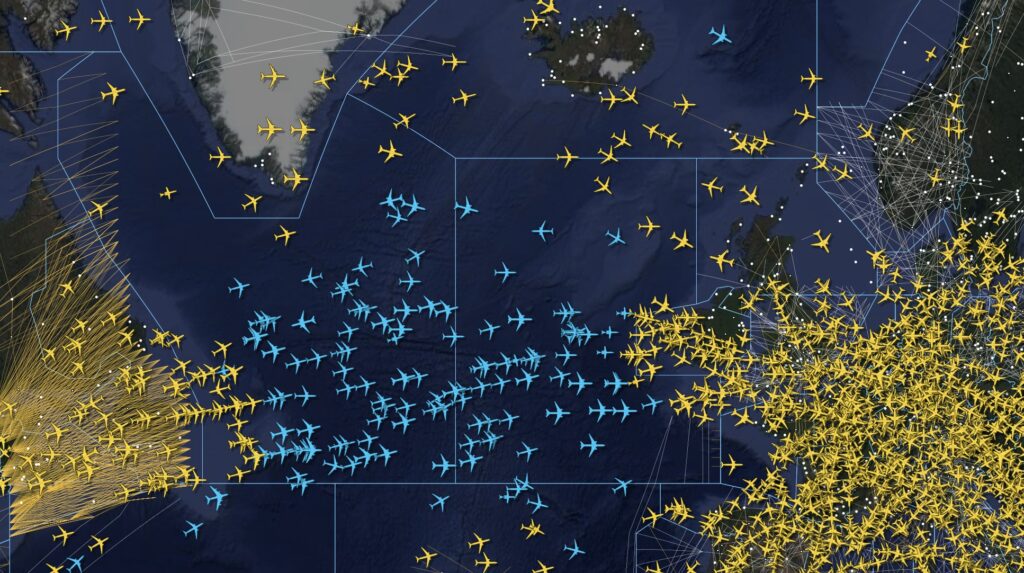
Is TCAS always required on the North Atlantic?

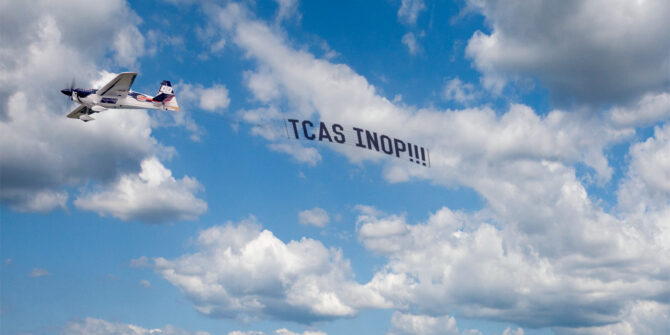
Oh, TCAS, you sly little gadget! The Traffic Collision Avoidance System is the knight in shining armour for preventing mid-air collisions. You would think that TCAS would be an absolute must-have in the NAT airspace, where the skies are busier than a beehive. But wait for it… surprise, surprise, the answer is a RESOUNDING (but actually slightly complicated) NO!

How can this be? 

Although most aircraft are still required to have TCAS onboard, a little something called MEL dispensation comes to the rescue.

Minimum Equipment List (MEL) is like that cool aunt who lets you get away with stuff. It allows us to operate with TCAS inoperative, within certain limits. For some aircraft, it’s a two-day pass, while others enjoy ten whole days of TCAS-less adventures (as long as they’re departing from a place where fixing it isn’t possible).

But what about ATC? Don’t they require us to have functioning TCAS?

We reached out to Shanwick ATC for a comment, and they had something surprising to say:

  • Shanwick supervisor guidelines state that there are no operational reasons for ATC to refuse a request to operate in Shanwick without functioning TCAS.
  • There are some caveats: level or route restrictions may be imposed to avoid densely populated airspace, however this is unlikely within Shanwick airspace. ATC here would not automatically exclude the flight from the NAT Tracks. Operators should file and request their optimal routing and ATC will endeavour to approve as requested.
  • Where TCAS fails during flight: Shanwick ATC will coordinate with the next unit but advise that the operator should be coordinating with other ANSPs, particularly those without a NAT boundary (for example any Eastbound flight that suffers TCAS failure in Gander FIR – Gander would coordinate with Shanwick and Shanwick would coordinate with Shannon).

A discussion with Gander ATC on the other side of the pond resulted in much the same information:

  • There is no rule prohibiting an aircraft operating under TCAS MEL relief from operating anywhere in the NAT HLA or on the NAT Tracks.

It all boils down to airspace design and risk mitigation. When intelligent folks design these controlled airspace areas, they put the responsibility of traffic separation on ATC. So, whether we have TCAS or not, it keeps their game plan the same. Our fancy onboard collision avoidance measures, whether TCAS or a creative SLOP manoeuvre, are like sprinkles on the icing of the airspace cake.

A word of caution

MEL isn’t there to make us feel invincible. It’s not a license to fly with broken stuff just because we can. It’s more like a get-out-of-jail-free card to prevent us from being stranded without a paddle. 

And also, before making grand plans for TCAS-free adventures, remember that our departure and destination airports may have something to say about it. The busier places like London or New York might only be keen on welcoming an aircraft with TCAS.

So, what are our options? We might need to make a detour to a quieter second or third-tier airport, which might not be as glamorous as our passengers desire. We’ll have to calculate the impact on remaining time and fuel and consider getting our aircraft to a maintenance base before the MEL expires.

Gimme the bite-sized version

  • En-route ATC centres don’t have any operational reasons to refuse entry into the NAT. If it breaks before the flight, you must let all of them know. If it breaks in flight, they will help you.
  • You may not get your planned level or track – you will need more fuel as a contingency.
  • Be mindful that the MEL doesn’t intend us to fly with broken equipment simply because we can… it’s a tool for us to get aircraft to equipped maintenance centres
  • Your departure or destination airports may not accept you without TCAS. Consider where you would go and how that would impact the remaining time of deferred defects.


Navigating the NOPAC Redesign Project

To revolutionise the efficiency of the North Pacific Route System, the FAA and Japanese CAA have embarked on a journey called the “NOPAC Redesign Project”.

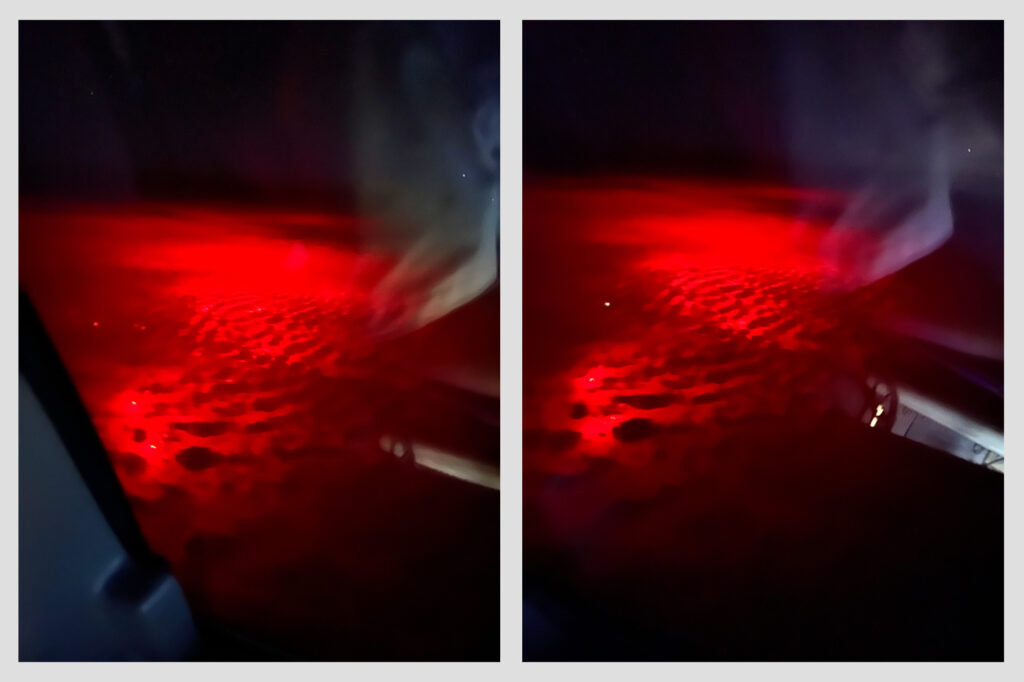
In 1974, when NOPAC was initially born, five parallel routes were drawn for pilots to spend many nights staring into nothingness between Japan and Alaska. If lucky, you would see the aurora borealis or maybe even a mysterious red UFO floating near the ocean 😊

However, it was a dark and quiet journey across the North Pacific for most.

This new project aims to compress four routes into less airspace, leaving pilots more room for creativity and manoeuvrability.

So, fasten your seatbelts and join us on this adventure through the whimsical world of airspace redesign…

Wait! Where are we talking about??

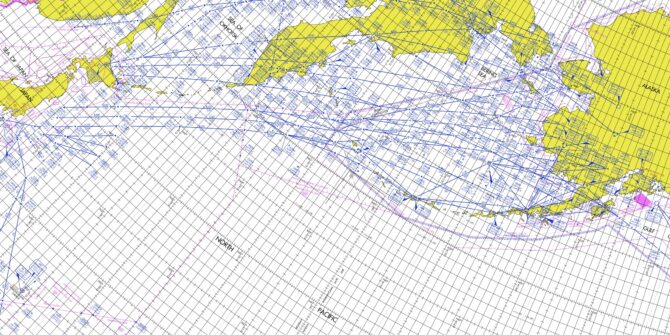
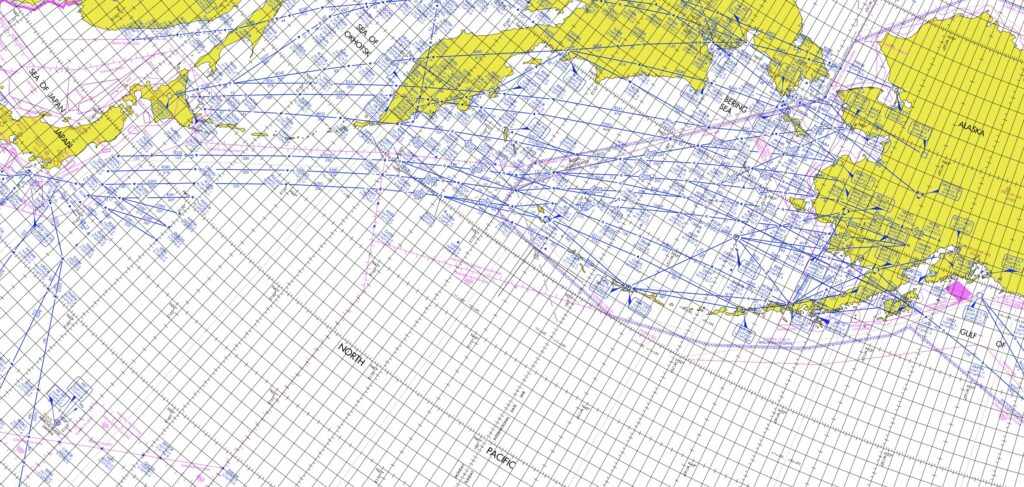
This area, from Alaska, over the North Pacific and down to Japan:

That’s just a big mess of yellow land and indiscernible blue lines

Yep, but thanks to the FAA we have some nicer maps available, showing exactly what is changing…

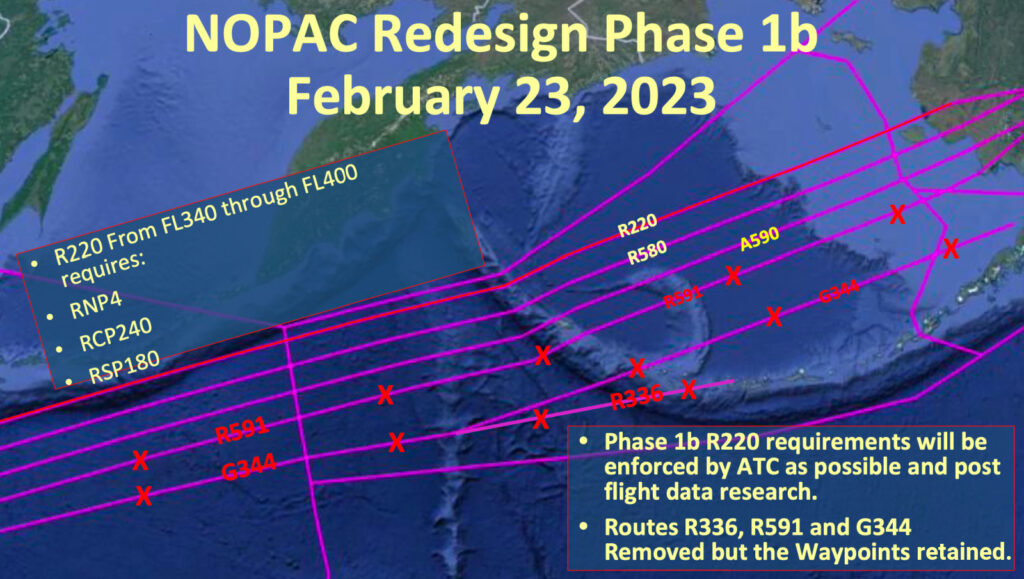
Phase 1B: The Story Begins

  • The two southernmost routes, G344 and R591, were zapped out of existence on Feb 23, 2023.
  • But for the hoarders, fear not, as the waypoints defining these routes were preserved. Think of them now as magical breadcrumbs to help pilots file their flight plans. This unlocked the airspace south of A590, providing opportunities for User Preferred Routes (UPRs). Free to do as we please, making for a more efficient trip.
  • The remaining three routes are: R220, R580, and A590.
  • Aircraft flying on R220 west of waypoint NULUK must have PBCS (RCP 240, RSP 180 and RNP4 approvals) to operate from FL340-FL400. 

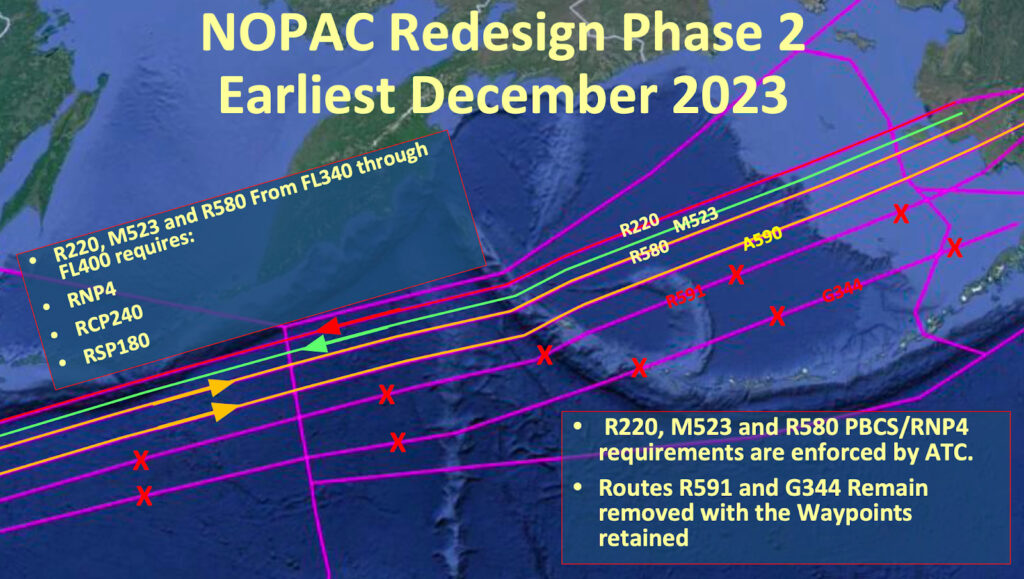
Phase 2: Westbound on Route M523

  • At the end of 2023 (but most likely in Jan 2024), Phase 2 of this redesign will unfurl.
  • Brace yourselves for the birth of a new westbound ATS Route named M523. It is ideally situated between R220 and R580. Think of it like adding a secret passage to an already perplexing labyrinth. But unlike the old routes, M523 will only be open to westbound aircraft operating from FL340-FL400.
  • At this point, R220, M523 and R580 will all require PBCS from FL340-FL400, to ensure lateral separation between aircraft (which is now down to 23nm).
  • Don’t have PBCS? If you are flying a plane lacking these approvals, you can merrily explore R220 and R580 either at or below FL330 or at or above FL410. Do you want something more optimum? Then you can plan eastbound on A590, or a westbound route at least 50nm south of A590.

My head hurts

We’re almost there now, only one more phase to go…

Phase 3: Eastbound on Route N507

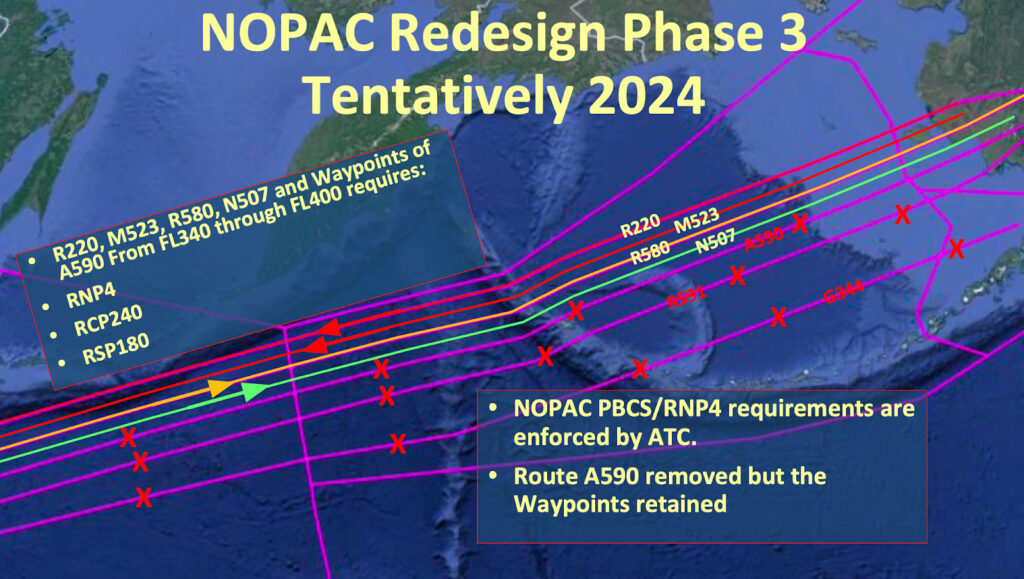
  • Cast your mind forward to mid-2024, when Phase 3 reveals itself. Behold the birth of the new eastbound route N507, positioned 25nm south of R580. Emerging from the charts, this route gives pilots more options to zigzag through the airspace. To maintain order amidst the chaos, aircraft operating on R220, M523, R580, N507, and the soon-to-be-deleted A590 waypoints will have to have PBCS.
  • Don’t have PBCS? You can operate on R220 and R580 at or below FL330, at or above FL410. Or you could operate at least 75nm south of N507. PBCS requirements do not apply in this southern airspace extravaganza.

Words words numbers numbers… just tell me what I need to know

A brave new world is appearing in the North Pacific, and to help us navigate the upcoming requirements, aviators should consider obtaining PBCS approvals in advance. Think of them like collecting golden tickets for new airspace adventures. So, dear pilots and planners, prepare yourselves for the challenges and delights that await in the world of NOPAC!

And to read all this information again in its pure, unbridled form, click here for the briefing from the FAA Anchorage ATC team.