Update: 19th June 2024
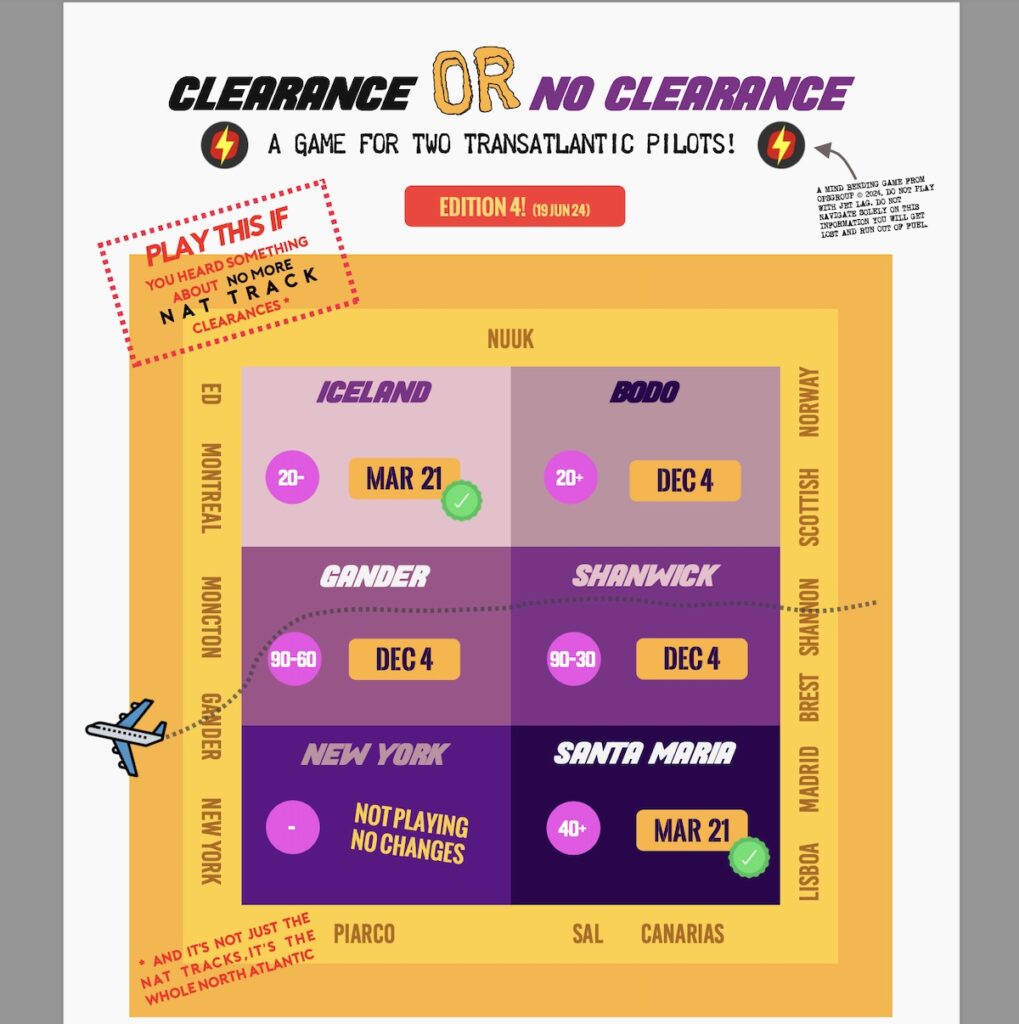
Our excitement at seeing another OACC cross the “Oceanic Clearance Removal” finish line has been short lived. Bodø implemented the change on June 17, but it did not go well. As a result, they’ve rolled back the software, and have now decided to try again on December 4, when Shanwick and Gander are doing theirs. So, as things stand – Iceland and Santa Maria have removed the clearance requirement, and Bodø, Shanwick, and Gander will now all transition on the same day in December.
Original Story
Last August, the headlines pointed to a promising development for all of us: No More Oceanic Clearances Required on the North Atlantic. The reason? Rapid improvements in comms and surveillance coverage (through satellite-based CPDLC and ADS-C) have created an environment far more like a regular radar sector. The idea of getting a separate Oceanic Clearance was becoming dated.
The reality from the pointy end is – you guessed it – not quite as exciting. After the Oceanic Centre changes to OCR (Oceanic Clearance Removal), you don’t have to request an Oceanic Clearance. This is true. But you do have to send a new-style “RCL message”, which is precisely the same message as if you were getting an Oceanic Clearance. In fact, that Oceanic Clearance does still exist, behind the scenes. You just don’t get a copy of it any more. More on that below.
The bigger issue for operators and pilots is trying to align cockpit procedures and crew expectations with the ever-shifting dates of when this is happening. Originally, all 5 Oceanic Centres (Shanwick, Gander, Iceland, Bodø, Santa Maria) were going to do this in March of this year. The current dates are now:
-
- Shanwick:
April 9 May Q4 2024 December 4
- Gander:
March May 3 December 4
- Bodø:
March May 6 June 17
- Santa Maria: completed March 21
- Iceland: completed March 21
Shanwick, Gander and Bodø have now delayed OCR implementation until December 4. This creates a 2024 year-long limbo for NAT crews, and raises some questions about the way in which changes to this complex airspace are made.
OCR Delayed – So, what now?
- If you are crossing the NAT solely via Shanwick and Gander‘s airspace, don’t worry about OCR/RCL changes until December 4. Do everything as you normally do. You will request, and get, a clearance as normal. But keep in mind that a lot of confusing documentation will now be out there with incorrect dates and procedures that are not yet in place.
- If you are entering via Iceland or Santa Maria, the Oceanic Clearance Removal has been completed. You don’t need a clearance, but you do need to send an RCL message. The same will apply in Bodø from December 4. If you are transiting into Shanwick or Gander, you don’t need a separate clearance. Iceland/Santa Maria will take care of that for you.
- If you are entering via New York, nothing has changed, and won’t. New York already operate without Oceanic Clearances, and your flight is coordinated tactically with the next Oceanic Unit.
- ICAO NAT Bulletin 001/23 (Rev 4) was issued on June 20, and all the dates are now finally correct!
Gotcha’s to watch out for
- NAT Doc 007 is unreliable. The Chapter on Oceanic Clearances (Chapter 5) was removed for the current edition, and crossings now refer to an RCL process that the majority of traffic will not use.
- Your EFB/Ops manuals are likely to have incorrect dates and procedures regarding Oceanic Clearances.
- AIP, AIP SUP, and AIRAC updates relating to Oceanic Clearances are likely to be confusing, as a lot of AIP changes have already been made for the planned March/May dates – which are now not happening.
Complexities and Confusion
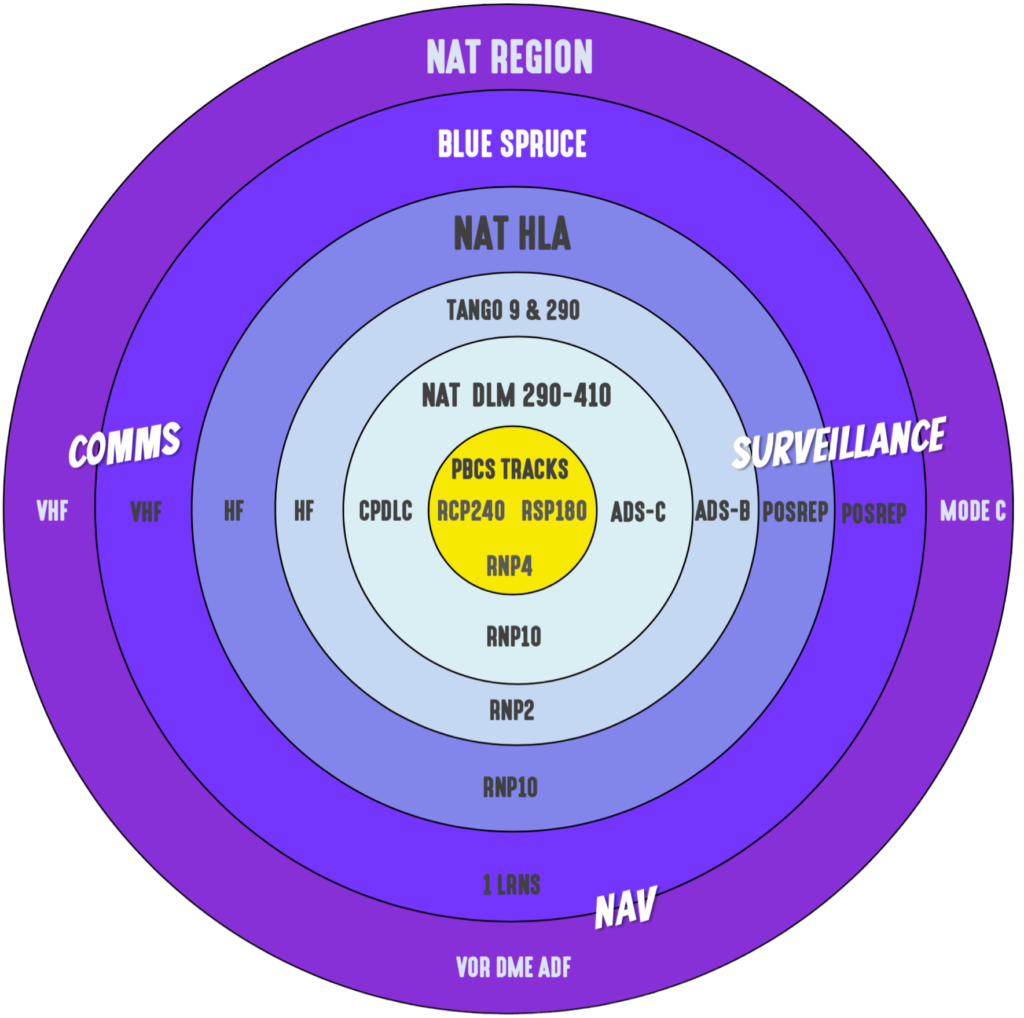
The North Atlantic is probably the most complex piece of airspace in the world for crews to get to grips with. NAT Doc 007, the bible for NAT Ops, runs to about 170 pages. This complexity is the primary reason for the NAT “HLA” airspace itself, and needing specific approval to be able to operate within it. Crews need to know a lot.
Every change on the North Atlantic imputes responsibility on the flight crew to understand and execute it. Being able to do that requires clear and simple wording, and above all, for the information to align between the various centre’s and domestic units involved. Potential confusion for flight crew should be minimised, and not underestimate just how hard it is for pilots to keep up with the litany of changes around the world every month.
The Oceanic Clearance Removal change has now created quite significant doubt in the minds of crews as to what is happening, and when. In the first place, the headline story “No More Clearances” is misleading. There is still an Oceanic Clearance, we’re just not getting a copy of it (An Oceanic Clearance Message (OCM), is still sent to domestic ATC units, so they can see your clearance!). This mismatch between what the pilot thinks is happening (no Oceanic Clearance), and what is actually happening (there is still an Oceanic Clearance) gives rise to understandable confusion, and potential for errors. This explains why an RCL is still required … and also explains why trying to think of the RCL as something other than “Request for Clearance” is difficult.
The continual shuffling of dates further creates a big workload for operators and pilots, and points to the need for a more integrated approach to making changes on the North Atlantic. One single date for a change of this magnitude would have been ideal, but as mentioned, it’s complex airspace. Nonetheless, the way this has played out has been frustrating for everyone involved.
Clearance game update
We’ve updated the “Clearance or No Clearance” game with the new dates, and some FAQ.
Download the current version (PDF, 0.5 Mb).