TIBA in Australia: What’s Going On?
Key Points
  • TIBA still seems to be an issue in Australia – shortage of ATC resulting in big bits of restricted Class G airspace, often at short notice.
  • We wrote about this last year, including guidance on what to do (see updated post below), but now IFALPA have published a Safety Bulletin saying the problem is still ongoing.
  • Amid accusations of understaffing, Australian ATC has announced they intend to strike. This process will take a few weeks to action, and so we’ll likely see disruptions from May. This may include full 24hr work stoppages and will be notified in advance via the YMMM/Melbourne and YBBB/Brisbane FIR Notams.

Since early in 2023, we’ve seen large sections of restricted TIBA airspace (traffic information broadcasts by aircraft) established by Notam up Australia’s East Coast in both the YMMM/Melbourne and YBBB/Brisbane FIRs.

In fact, there were 340 instances of uncontrolled airspace between June 2022 and April 2023 alone. And it’s still happening.

The cause here appears to be a fundamental shortage of air traffic controllers.

Where has this been happening?

In the South, look out for TIBA airspace east of YSCB/Canberra airport, Australia’s capital city found inland from Sydney.

Further north there has been a greater effect as large portions of coastal airspace near YBCG/Gold Coast and YBTL/Townsville airports have been impacted. This is an extremely busy air corridor – 80% of Australia’s population live on the East Coast.

At the top end of Australia, YPDN/Darwin airport has also been affected which can result in re-routes for international traffic headed up into South-East Asia and beyond.

Here’s what those hotspots look like on a map:
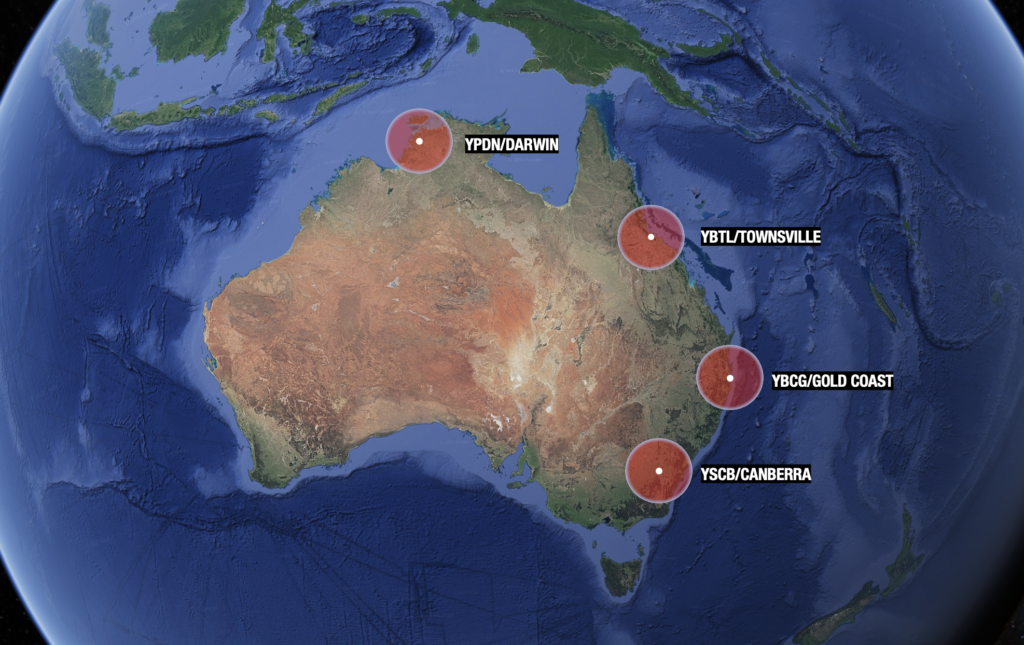
TIBA airspace has been reported in or near these hotspots.

It’s not all the time.

TIBA airspace is being activated by Notam, typically for hours at a time. A look at today’s batch indicated all is ops-normal. However, a local airline captain has advised OPSGROUP that it is currently a frequent occurrence.

Broadcast, or avoid?

The vast majority of airline traffic appear to be avoiding the TIBA airspace. This typically involves less direct routes at the expense of delays and fuel. Helpfully, for major city pairings the NOTAMs contain suggested routes that will keep you clear. But expect SIDs or STARs you may be less familiar with.

In fact, major carriers have policies in place that prevent them from using TIBA airspace anyway – unless they happen to be in it when it is activated.

That’s not to say there won’t be other traffic taking advantage of the more advantageous routes though. The East Coast is characterised by a huge variety of traffic including charter, skydiving, medevac and survey all of which may have valid reasons for using TIBA.

It can still be used safely, but with the procedures below (a heads up: dual comms are a requirement).

How on earth do I ‘do TIBA’?

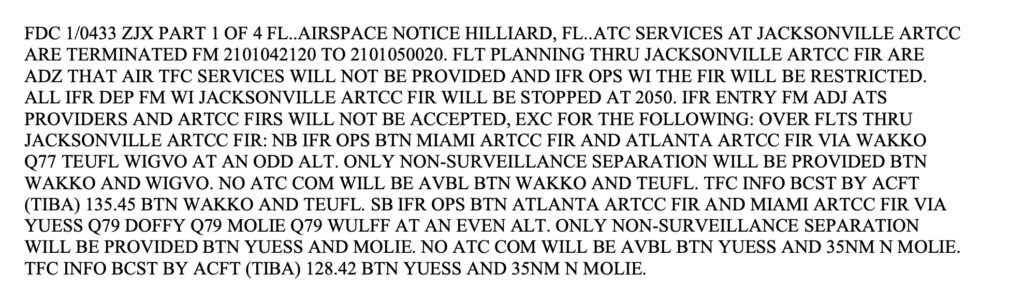
First things first. Whatever you do, don’t enter without permission. Australia’s TIBA airspace is typically restricted – in the sense you will need PPR to use it. The relevant Notams are quite helpful, and provide all the information on how to get it. Here’s an example.

Your approval will typically involve a phone call beforehand, and a chat to a flight information service in adjacent airspace for traffic information.

Once you’re in, you are totally responsible for terrain and collision avoidance. Turn that radio up and make sure you’re both alert and monitoring both the TIBA frequency and the relevant ATS one – now is not the time for controlled rest. Whoever is on the radios is going to be busy.

The Australian AIP then takes over. You can find the procedures in full here (time saver: flick to ENR 1.1-91). We’ve also put together a summary of those in this handy little briefing card which may be useful to keep in your flight bag:
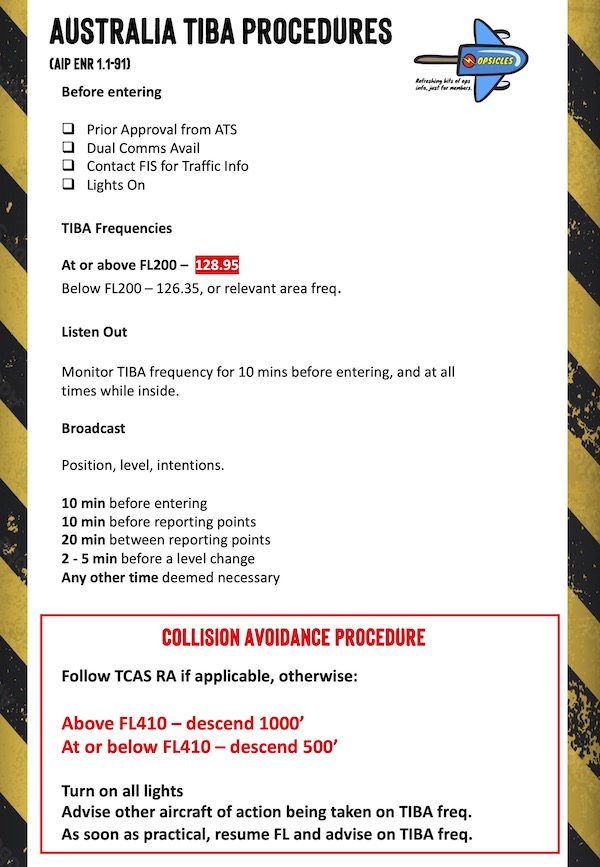
OPSGROUP members: click to download hi-res PDF.

Other questions?

You can also get in touch with CASA via this link, or alternatively Airservices Australia here with questions. Both have been very helpful in answering our pesky conundrums in the past.

ATC Zero in Class A Airspace: Is It Dangerous?

IFALPA has issued a new safety bulletin this week expressing concerns that existing US FAA contingency procedures that allow aircraft to continue using Class A airspace during ‘ATC Zero’ events are inadequate. They argue that the procedures expose aircraft to unacceptable risk and that more needs to be done to ensure their safety.

ATC Zero Events have become more common

Before Covid, ATC Zero events were quite rare. They’d usually only occur if controllers were forced to evacuate a facility. Fire, a force of nature, bomb threat – those sorts of things.

But then Covid came along and as we all know, it is super contagious. Amidst border closures and quarantine and testing rules, a new threat began to emerge in our skies.

ATC facilities began to be impacted by Covid infections, and short notice closures for cleaning have become a constant risk.

Last year we published an article on how to manage ATC Zero events in Oceanic Airspace after the New York ARTCC shut down affecting traffic crossing the NAT. The US FAA were sufficiently concerned that they published their own SAFO.

However since then the US has continued to be affected by ATC Zero events over land which affect large portions of Class A airspace, often for hours at a time.

What the FAA have to say about it

The FAA are satisfied that it is safe for aircraft to continue using Class A airspace when no ATC services are available, as long as you follow contingency procedures.

What contingency procedures?

Well, they can be broken down into two parts.

  1. When an ATC Zero event is scheduled, a NOTAM will be published. It will restrict traffic to specific routes through the affected airspace which contain compulsory reporting points. If you don’t intend to the fly the prescribed routes, you’re not allowed in.
  2. TIBA – Traffic Information Broadcasts by Aircraft. The FAA expects you to use them. Recent feedback from members who have operated under these conditions indicate that many aircraft either don’t know, or are choosing not to use them while operating in ATC Zero airspace. That in itself is concerning.

So what exactly are the TIBA procedures?

You can find them in ICAO Annex 11, or buried in lengthy NOTAMs if you prefer your procedures capitalised, abbreviated and barely punctuated.

Here’s a quick unofficial rundown:

1. Dial up your TIBA frequency. If you have two VHF comms, leave one on the normal ATS frequency to listen out for a controller.

2. Maintain a listening watch on the TIBA frequency.

3. In most cases you’ll need to remember ’10 minutes’. A radio call is required 10 minutes before entering the affected airspace, or if you have just taken off from an airport within the airspace as soon as you can.

4. Enroute, you’ll need to make routine position reports:

  • 10 minutes before crossing a reporting point
  • 10 minutes before you cross or join an airway.
  • And if your waypoints are really far apart, make a call every 20 minutes.

5. If you’re changing levels you need to make a radio call 2-5 minutes beforehand.

So what do you actually need to say?

The short answer: Who you are, what level you’re at, where you are and where you’re going next.

The slightly longer answer:

- ALL STATIONS
-  Call Sign
- FLIGHT LEVEL
- AIRWAY (or direct to/from)
- POSITION AT TIME
- ESTIMATING (next reporting point or crossing/joining airway) 
  AT TIME AND FLIGHT LEVEL

Don’t forget to listen

It’s important to remember: When you enter Class A airspace during an ATC Zero event, you are responsible for your own separation. You’re on your own. Which means you need to hear and be heard.

What if a conflict is likely?

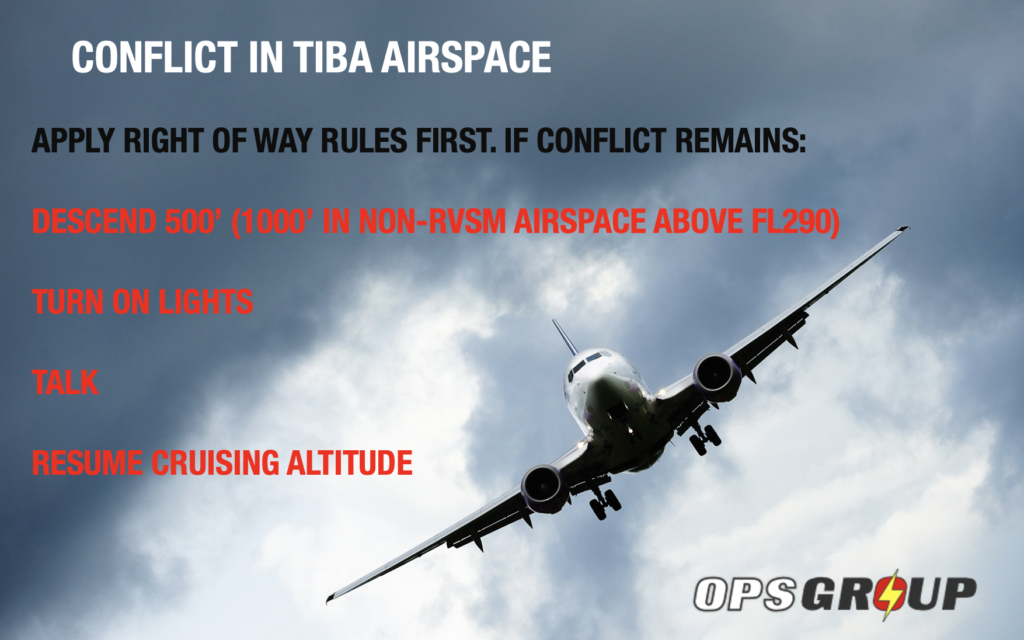
There’s a procedure for that too. If you can’t solve the problem with right of way rules, here’s what you need to do:

So why are IFALPA worried?

For starters, there may be aircraft operating in Class A airspace without TCAS which greatly increases the risk of a collision. Secondly there is a lack of training standards about how to apply the contingency procedures. Lastly given that no one is watching, you may be exposed to other aircraft breaching the regs.

Until things change, they recommend you avoid the affected airspace by flight planning around it. If that’s not practical here are their suggestions:

  • Minimise the risk by taking the shortest possible path through it.
  • Make sure you review the contingency procedures beforehand.
  • Make sure there are no procedures in your in your manuals that will be affected by a lack of ATC.
  • Submit a safety report afterwards.

The threat remains

ATC Zero events are likely to continue in the near term, along with the risks they pose. It is important that pilots take those properly into account before they enter affected airspace.

Love them or hate them, sticking to the contingency procedures like glue is everyone’s biggest risk mitigator until new or better ones eventually come along.