UIA flight 752: Iran military shot down plane after chain of errors
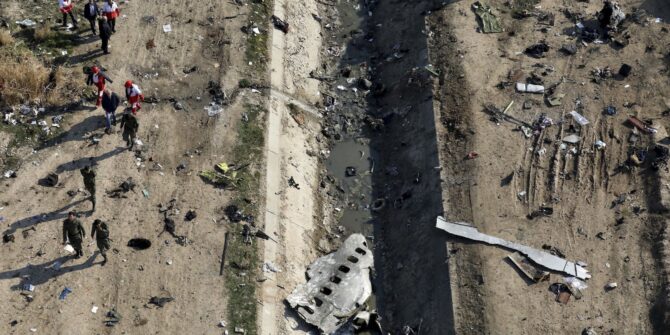
Iran has released its first official report into the shoot-down of UIA flight 752 in Tehran on Jan 9. They blame a misaligned missile battery, miscommunication between troops and their commanders, and a decision to fire without authorization as the major factors which led to the shoot-down of the plane by Iran’s Revolutionary Guard.

All 176 people on board were killed when the plane was hit by two missiles shortly after take-off in Tehran.

Iran initially denied responsibility for the incident, only admitting fault days later after Western nations presented extensive evidence that Iran had shot down the plane.
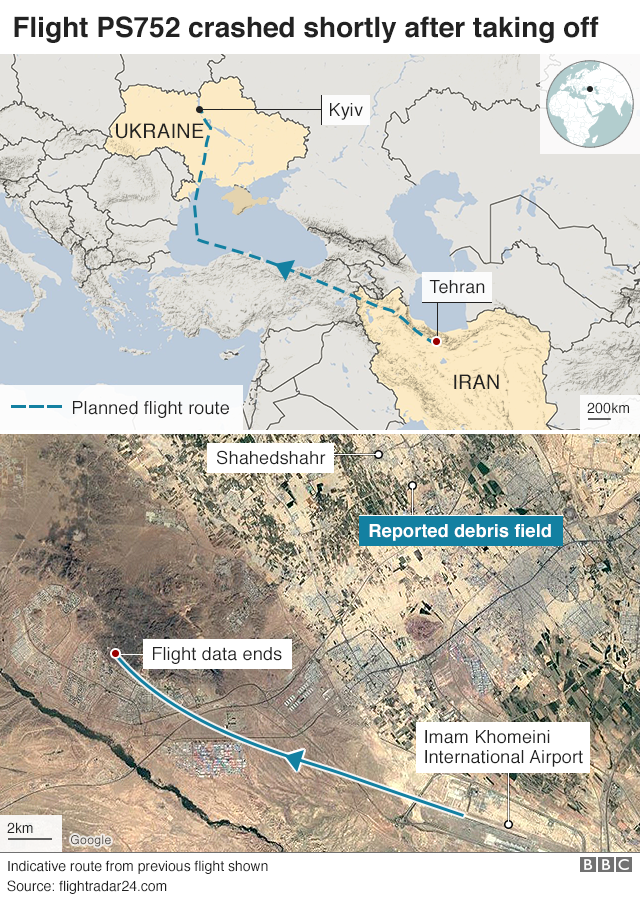
Iran’s air defences had been on high alert at the time. Just hours prior to the shoot-down, the US FAA issued “Emergency Order” Notams banning all US operators from overflying the airspace of Iraq and Iran. This was in response to an Iranian missile strike on US military bases in Iraq, which had just occurred the same night.

A full version of the report has not been made publicly available, but excerpts have been published by state news agency Fars. It places the blame entirely on those manning the missile system, and details a series of key moments where the shoot-down could have been avoided, the main two being:

  • The surface-to-air missile system had recently been relocated and was not properly calibrated. As a result, it misidentified the civilian plane as a hostile object.
  • Those manning the system could not communicate with their command centre, and fired on the plane without receiving official approval.

“If each had not arisen, the aircraft would not have been targeted,” the report said.

It also notes that the flight had done nothing unusual prior to the missile launch, with its transponder and other data being broadcast. It claims that the troops manning the missile system tried to contact the Coordination Centre with details of a potential target but they did not manage to get through, and that firing on the aircraft under these circumstances was against approved protocol:

“The system operator began analysing the observable information and categorised the detected target as a threat… At 02:44:41, without receiving any response from the Coordination Centre, the air defence unit operator fired a missile at the threatening target he had detected… Under the applicable procedures, if the defence system operator cannot establish communication with the Coordination Centre and does not receive the fire command, they are not authorised to fire.”

After repeated delays, Iran has said it will release the aircraft’s black box to officials in France on July 20, where Ukrainian and French experts are expected to examine it.

Airspace warnings

In the days and weeks following the shoot-down, several other countries followed the US in issuing airspace warnings of their own for Iran, including: the UK, Ukraine, Canada, Germany, and France. The US and Ukraine are the only countries to have issued outright flight bans on Iranian airspace, but all the others advise against landing or overflying the country at the lower flight levels. Check SafeAirspace.net for a full summary.

Traffic flows

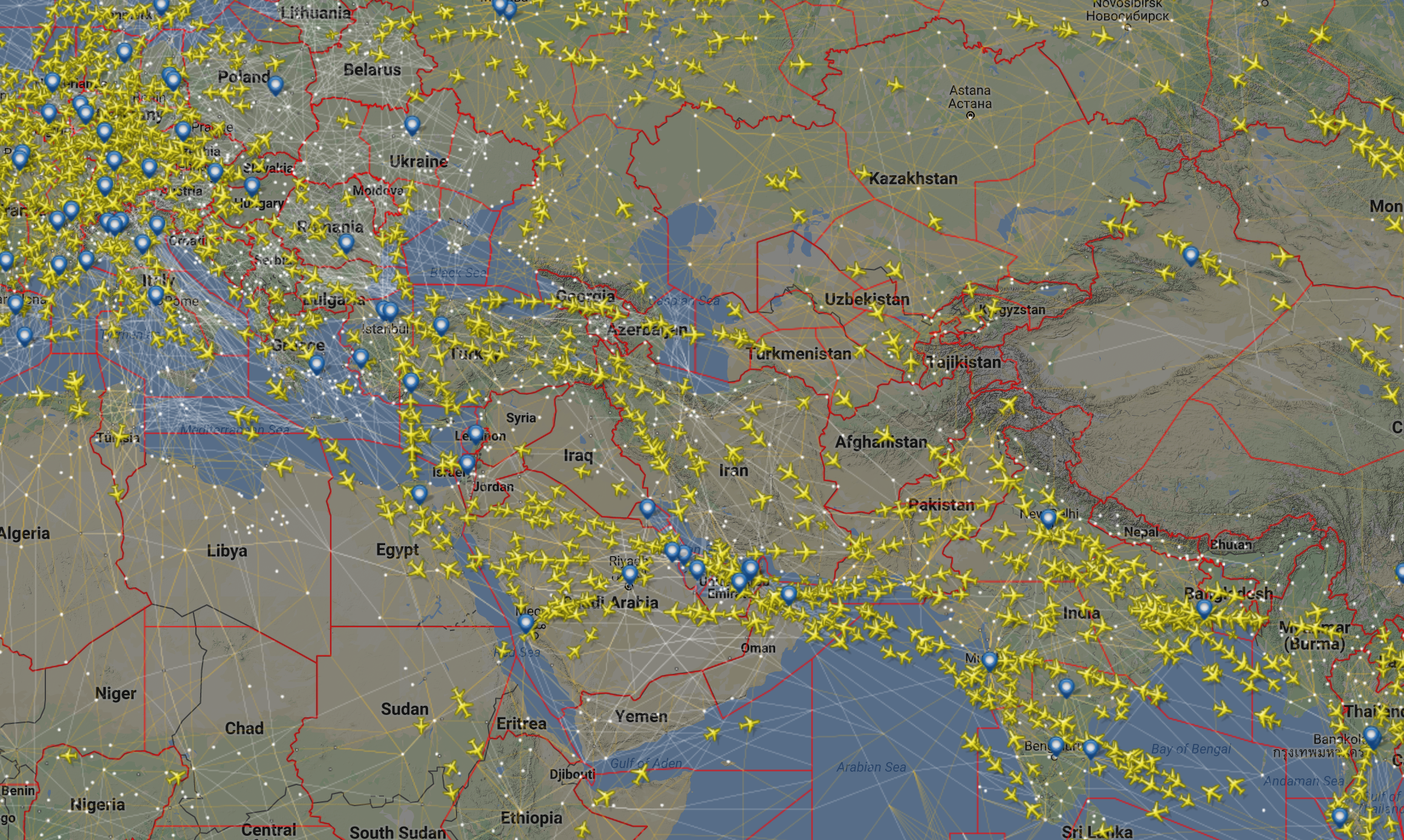
It’s worth considering that most airlines other than Middle Eastern carriers are still avoiding Iran. For traffic that normally operates through the Tehran FIR, a predominant alternative for east-west flights into the Dubai area is a southerly routing via Saudi Arabia and Egypt. There are warnings for both of these airspaces as well. Northerly reroutes for Europe-Asia flights are predominantly using a Turkey-Armenia-Azerbaijan-Turkmenistan routing. If entering Afghanistan airspace, note the current warnings there too.

Unfamiliar routes

For many operators wanting to avoid Iran, you may be using routes that are unfamiliar. Take the time to ensure you have the full package of charts, are aware of the risks in each FIR, are aware of the potential for GPS outages en-route (especially in the Turkish, Tel Aviv, Amman, and Jeddah FIRs), and have considered drift down over mountainous areas on the northerly routes.

Advice

Every air operation different. We know OPSGROUP has a huge variety of members – some conducting routine airline flights, some business aviation, charter flights, private ops, military, government flights. Therefore, offering blanket advice is difficult. You must undertake you own risk assessment, but paying close attention to the international warnings as well as what other carriers are doing is a good place to start.

On SafeAirspace.net, we continue to list Iran as Level One: Do Not Fly. The same goes for Iraq. Outside those two countries, just consider carefully what connections to the current situation there may be. Nowhere in the Middle East is without some level of risk.
No change to Iran airspace warning despite new US sanctions

The US reimposed sanctions against Iran on Nov 5. Despite this, so far there has been no change to the FAA guidance to US operators issued on 9th September 2018: flights to Iran are not prohibited, but operators should “exercise caution” when flying in Iranian airspace.

However, with the reimposed sanctions comes a new problem if you’re a US operator: you’re allowed to overfly Iran, but you’re not allowed to pay for all the things needed to make that happen – things like overflight permits, and nav fees.

The rule is simple: no US person or business can pay for services in countries with sanctions against them (like Iran), unless that person or business has a licence to do so, issued by the Office of Foreign Assets Control (OFAC).

And you’re not allowed to get an agent to do it for you either; it’s illegal to skirt the OFAC laws by using a 3rd party company (unless, of course, they’ve been approved by OFAC).

So the big question we have now is this: if you’re planning to overfly Iran, have you figured out the legalities of paying for services? How are you making that work? Know someone who’s got an OFAC licence for Iran? Let us know!

And one other thing to watch out for – operators with US based insurers should double-check their policies, as you may now no longer be covered for flights to Iran, due to the new sanctions. This is worth checking, even if you’re only planning on overflying the Tehran FIR, as any unplanned landing (decompression, medical, engine fire) may force you into Tehran or another airport – it’s a big chunk of airspace.

Further reading:


OIIX Tehran FIR 2017 Operational Changes – Iran

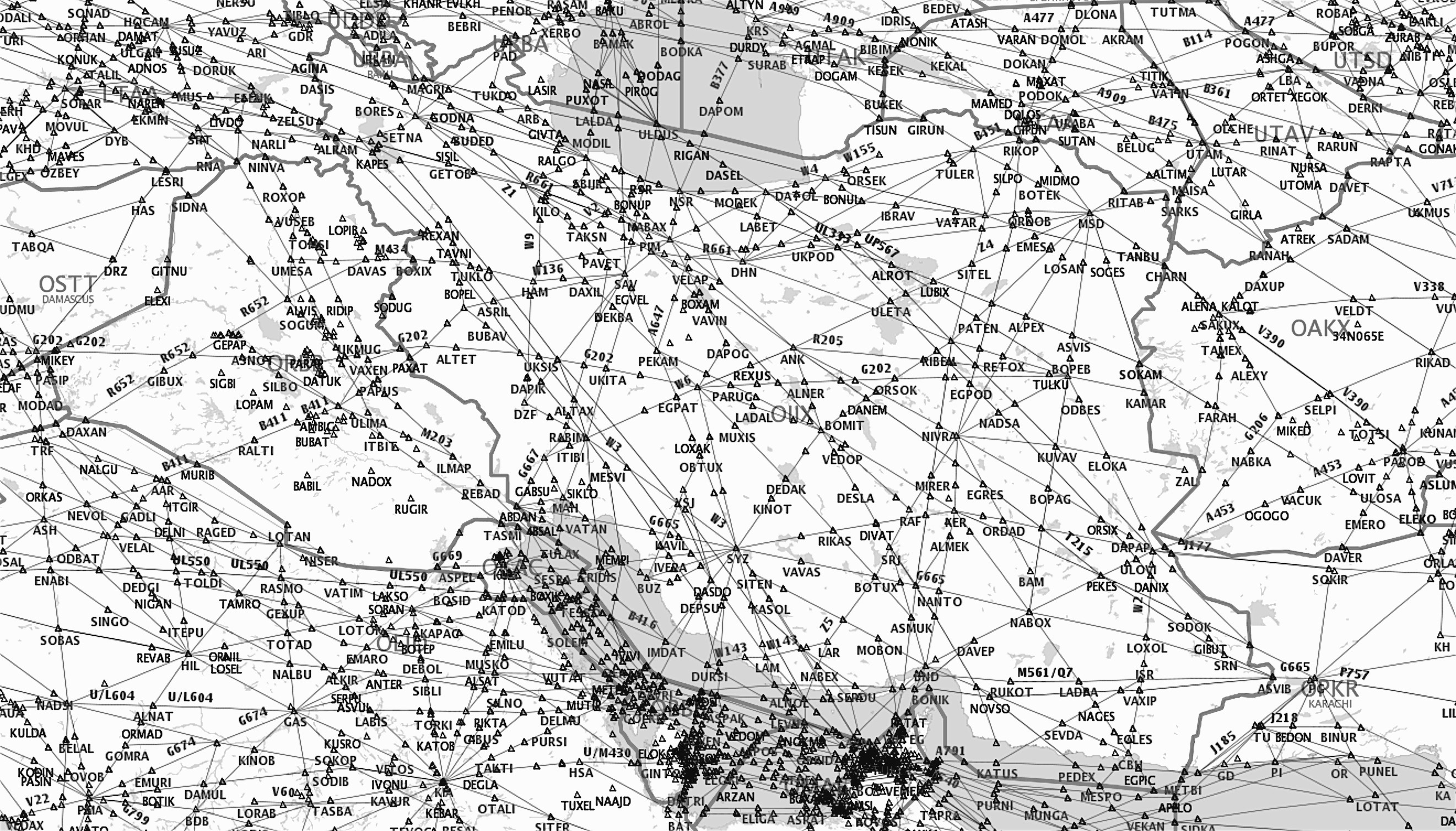
Feb 1st, 2017 Traffic is getting far busier through the Turkey-Iran FIR boundary (Europe-Asia main flight route). ALRAM is the new “corner” for avoiding Iraq. Here’s updated flight planning  guidance from Turkey for Jan-March 2017 – use these when planning your ATC route (refer LTAA A5716/16). We’ve translated the Notam a little for clarity, here’s the highlights:

1. SRT-ALRAM segment of UG8  – use FL330 or higher.
2. ULTED-ALRAM segment of UT36 – use FL330 or higher.
3. Going via UG8 or UT36, to leave Tehran FIR via ALRAM, at FL320 and below: Route EZS-UG81/UL124-VAN-BONAM-UMH. Check Iran AIP Sup 93/15 for more.
4. ALRAM-BAYIR segment UT888 minimum FL330. If entering LTAA/Ankara FIR via ALRAM lower than FL330, then route UMH-BONHAM-UI124/UG81-VAN-UI124-UG81-BAYIR.
5. VAN-BONAM segment of UG81 and UI124 can be used bidirectional below FL330.
6. ULTED-NINVA segment of UM688 – use FL330 or higher.
7. Entire R/UR21, SRT-KABAN segment of M/UM860, and ULSAB-KABAN segment of UT334 closed FL180-FL310.
8. UT332 – use FL330 or higher.
9. UT301 totally closed.
10. UT333 closed FL180-FL310 inclusive.


IOB Bulletins

31AUG 2016 OIZZ/Iran has approved the use of its airbases by Russian fighter aircraft; Russia has notified intention to launch missiles in the direction of Syria from the Caspian Sea fleet. The Russian Air Force has deployed six Tu-23M3 BACKFIRE bomber aircraft and multiple Su-34 FULLBACK strike fighter jets to Hamedan Air Base (OIHS/NUJ). FSBIOBXX

17AUG 2016 On August 16, Russian TU-22 bombers based in Hamedan, Iran, attacked targets in the Syrian towns of Deir Ezzour, Aleppo and Idlib. These were the first Russian airstrikes carried out from bases in Iran.

07DEC2015 German Authorities published a new Notam last week warning of a risk to flight for aircraft operating in the vicinity of OITT/Tabriz, OITL/Ardabil, and OIGG/Rasht. DFS, the German ATC agency, recommends overflying this general region at FL260 or higher. A6875/15.

13OCT 2015  On 06 OCT 15 the Russian military launched 26 Kalibr-class cruise missiles from 4 ships in the Caspian Sea at targets in Syria. These missiles were routed through the airspace of Azerbaijan, Iran, Iraq and Syria, causing concern as to the safety of international air traffic crossing the missiles trajectory. Full notice.


More stuff:

  • Iran Conflict Zone/Overflight risk warnings  at safeairspace.net


Monday Briefing: Northern California airspace changes, Iraq closes airspace below FL300

Northern California ‘Metroplex’ airspace changes 07DEC On 10DEC, several revised and new SIDs and STARs associated with the Northern California Metroplex project will be published. These procedures will be the last major changes associated with the project. You can find the full document covering the changes here.

Iraq closes airspace in Kurdish North below FL300 06DEC  Iraq issued a new Notam on 06DEC warning of further Cruise Missile operations below FL310. ORBB A0423/15 states that “Flights operating at FL310 or above, and flights operating at ORBI, ORNI and ORMM are not affected”. You can read the full Notam here.


OIIX/Tehran FIR German Authorities published a new Notam last week warning of a risk to flight for aircraft operating in the vicinity of OITT/Tabriz, OITL/Ardabil, and OIGG/Rasht. DFS, the German ATC agency, recommends overflying this general region at FL260 or higher. A6875/15.

Russia/Turkey Effective 01DEC, Direct non-scheduled flights between Russia and Turkey are banned by decree of the President of the Russian Federation dated 28NOV. Prohibited for all airlines, regardless of the country of aircraft’s registration .

VOMM/Chennai Re-opened for 24-hour domestic and international flight operations today, five days after it was shut due to flooding.

EGGX/Shanwick As of 07DEC, although system testing and acceptance is reportedly finished, no RLAT/Reduced Lateral Separation tracks have yet been published by Shanwick or Gander for the daily OTS. It appears uncertain what the first day of operation will be.

MUHA/Havana, Cuba Hotel Capacity in Havana is under severe strain at present. With increased traffic to Cuba, finding a hotel room is now a regular challenge. Some airline crews have had to be accommodated in Varadero instead, as there were no hotel rooms left in the city. Book well in advance, where possible.

OMxx/United Arab Emirates It has been advised to us, that the requirement for TCAS 7.1 also applies to the Emirates FIR. All aircraft arrivals/departures or those transiting UAE airspace from 01DEC must be 7.1 compliant, or a re-route around UAE airspace will be required. Another option is to obtain a special dispensation to operate, this is available from GCAA in AUH, but is reportedly difficult to obtain. For more details please see the UAE AIP ‘Gen 1.5.6.6 Carriage of ACAS-II’.

LIxx/Italy There is a possible suspension of IFR non scheduled commercial traffic to/from LIRF and LIRA on Dec 8th. Please see NOTAM LIXX 1W2845/15 for the official restriction.

LIxx/Italy Ongoing volcanic emission from Mt. Etna may disrupt routings through Italian Airspace. Please check the Toulouse VAAC for the most up to date info.

ESxx/Sweden have been forced to suspend, with immediate effect, flights from northern Iraq to Sweden following a directive from the Swedish Transport Agency (Transportstyrelsen). In a statement issued last week, Transportstyrelsen said the increased military activity across northern Iraq posed a threat to civilian flights thus warranting a ban.

VTxx/Thailand The FAA has downgraded Thailand to a Category 2 after an audit of the country’s Department of Civil Aviation (DCA) in October showed continued non-compliance with International Civil Aviation Organization (ICAO) safety standards. The FAA’s move comes five months after the ICAO formally instituted a Serious Safety Concern (SSC) against Thailand for failure to adequately address shortcomings identified during a Universal Safety Oversight Audit Programme (USOAP) inspection in January.

MUxx/CUBA Will be reinstating travel permits for doctors. On 01DEC, Cuba announced that it was reinstating the travel restrictions it had previously imposed on doctors, which requires doctors to obtain permission before leaving the country. The restriction had been lifted in 2013, but is now being re-imposed, as the government claims that its universal and free health care services are being “seriously affected” by the number of doctors leaving the country.

Zxxx/China will mandate that its air traffic controllers use only English when communicating with pilots of any airline starting in 2017, according to the Civil Aviation Administration of China (CAAC). The move will improve situational awareness for foreign pilots. Currently, ATC at all airports across China use English to communicate with pilots of foreign airlines and Mandarin with those flying for Chinese carriers. The CAAC will announce the exact date for implementation later, ensuring the readiness of all stakeholders involved in the process.

ZUUU/Chengdu has completed the on going construction work. The parking bay has been released and is available on a first come, first serve basis. This applies to overnighting aircraft as well.


View the full International Operations Bulletin for 07DEC2015