Cow Farts and Aviation
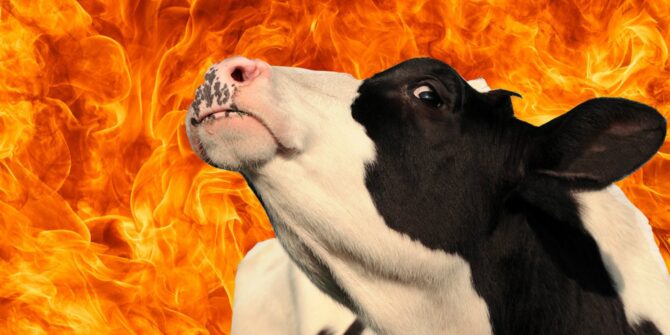
Did you know that cow farts are one of the major contributors to global warming?

Go ahead – google it. Just know that your search history will take some explaining later.

In fact they account for eighteen percent of the problem. They’re flatulent creatures, and their trouser coughs contain methane gas which is almost one hundred times more powerful at trapping heat than good ol’ carbon dioxide. In fact their flatulence is so strong, it can cause acid rain. Umbrella anyone?

Why are you reading this on an aviation website? Fair question.

Because regardless of where you stand on the cause of global warming, we know for a fact that the earth is heating up. And aviation is poised to be one of the victims.
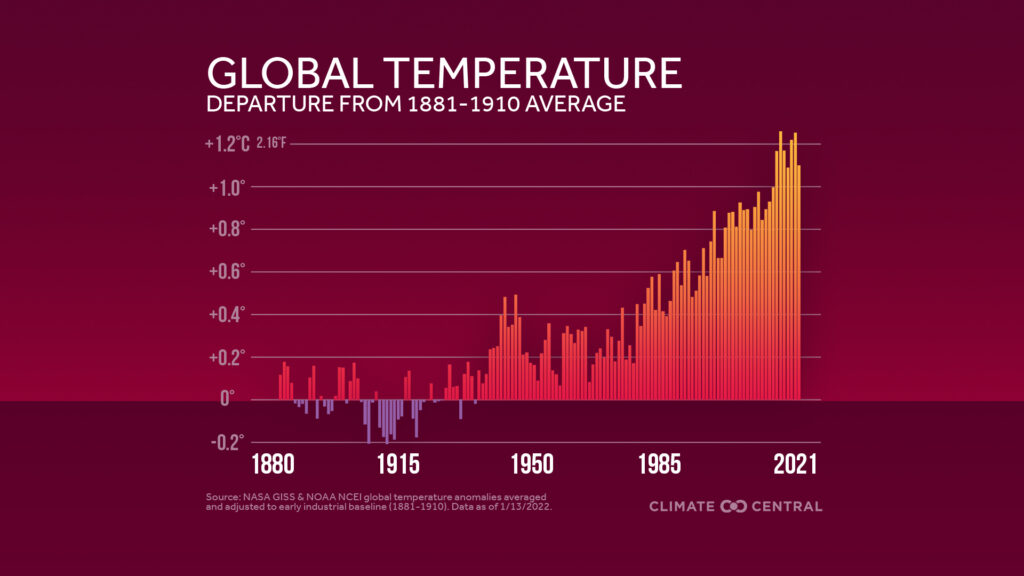
Regardless of the cause, the figures don’t lie…things are heating up.

Let me explain.

Bumpy Road

As the earth warms, jet streams will become stronger – along with wind shear. As we hitch a ride on those long routes eastbound, clear air turbulence is set to become much more frequent, and much more dangerous.

They’ve done studies, you know – and those jet streams are already fifteen percent more sheary than they were back in the 70s. And things are accelerating.
Jet stream related wind shear is already 15% stronger than the 70s…

The bottom line is this: scientists believe there is going to be two to three times as much severe turbulence in the next few decade thanks to cow farts (and of course all other contributing factors).

How severe is severe?

We’re not talking light chop.

There are two levels of turbulence we’re most concerned with. The first is severe – essentially large and abrupt changes in altitude or attitude. Your aircraft may even be out of control momentarily.

Beyond that turbulence can also be extreme. It doesn’t make for pleasant reading, but the official definition is when the aircraft is violently tossed about and almost impossible to control. You may even take damage.

Both are nasty.
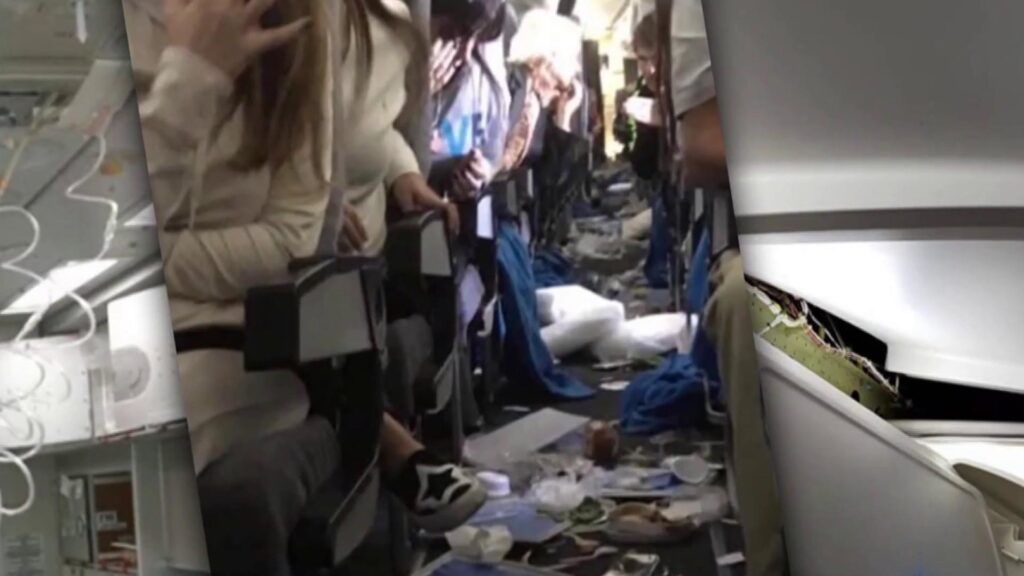
The increase in reports of severe and extreme turbulence are cause for concern.


What does this mean for ops?

Perhaps the most at risk are flight attendants. The NTSB reckons they are twenty-four more times more vulnerable to injury from CAT than their passengers. They account for eighty percent of all turbulence related injuries. This make sense as they are often on their feet, pushing carts that can weigh upwards of 300lbs.

Here’s another startling statistic – between 2009 and 2018, in almost thirty percent of turbulence related incidents, there was no warning.

CAT is the enemy you cannot see, because it mostly happens in clear air. It isn’t associated with storms or clouds, and weather radars need moisture to work. Our eyes are useless too.

Granted, planes aren’t about to start falling from the sky. But we can expect the amount of time spent in turbulent conditions on an average flight across the Atlantic to exceed thirty minutes in the years to come. Darn cows.

Great, what can we do about it?

Actually three things. Protect your crew, predict where it will happen, and care about sustainability. Let’s dig a little deeper.

Crew

The absolute best way to protect everyone on board during CAT is to have them seated with their belts on. The head of a major flight attendant union is calling for changes. It is becoming increasingly dangerous for them to still be on their feet, while passengers are strapped in.

The NTSB agrees and is recommending more stringent rules when those seatbelt signs turn on – especially for crew. The notion is a seat for everyone – including infants and young children who may be sitting on an adult’s lap and riding gratis.

While it may feel reassuring that all pax are safely seated, don’t underestimate how at risk cabin crew are if they are still up and working.
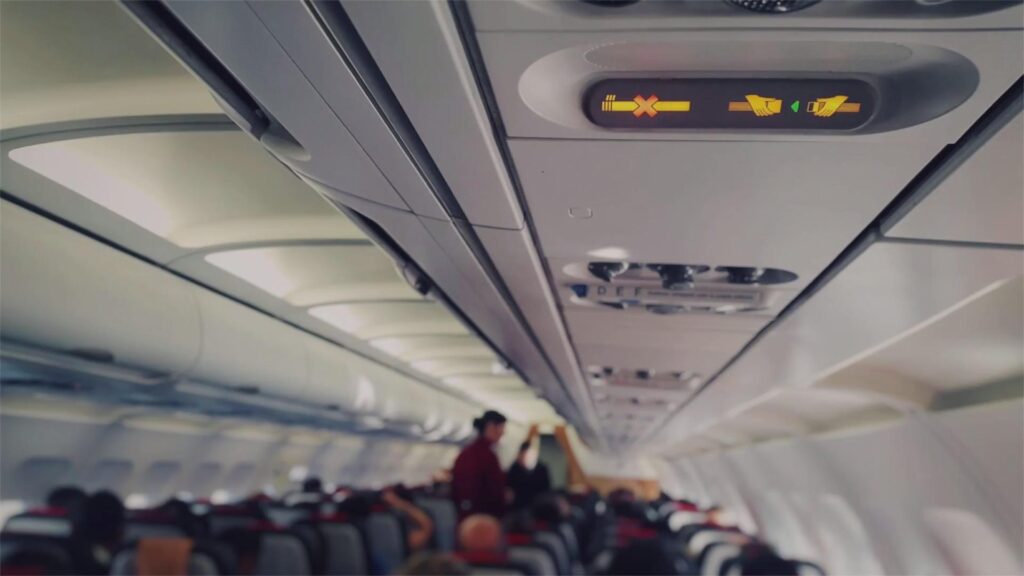
Unions and the NTSB are calling for stricter rules when the seat belt signs are on in flight.

Spotting the stuff.

Predicting CAT isn’t an exact science, and this ain’t no met class. But in a nutshell it is caused due to the difference of speed at high altitude (usually well above FL150) when flying near the boundary of two air masses.

Jet streams are typically strongest in colder months, and weaker in warmer ones.

Two things to look out for: dramatic changes in temperature, and dramatic changes to wind speed and direction.

Both are tell tale signs of CAT.

Along with that information in your flight plan, shear rates, sig wx charts and pilot reports (pireps) are also valuable sources of information.

Likewise, if you find some let ATC (and the traffic around you) know.

There are also turbulence information sharing platforms available to crew which provide real time updates on where the rough air is.

Sustainability

There is a lot of noise at the moment about sustainability, alternative fuels and ‘net carbon zero.’ It can all get a little dry.

But it is the operational impact of global warming that is really going to matter to us on a day to day basis, which is why we need to care. More than numbers.

Asides from clear air turbulence, as the jets grow stronger, westbound flights will take longer, burn more fuel and cost more. Not to mention more time away from being poolside at the Holiday Inn.

Then there’s the sea level. It is rising as the polar ice cubes melt. One study suggested by 2100, one hundred airports around the world will be below sea level, and close to half a thousand will be at serious risk of flooding and storm surges unless things change  – affecting up to twenty percent of all routes. That’s a lot of water.

Where to from here?
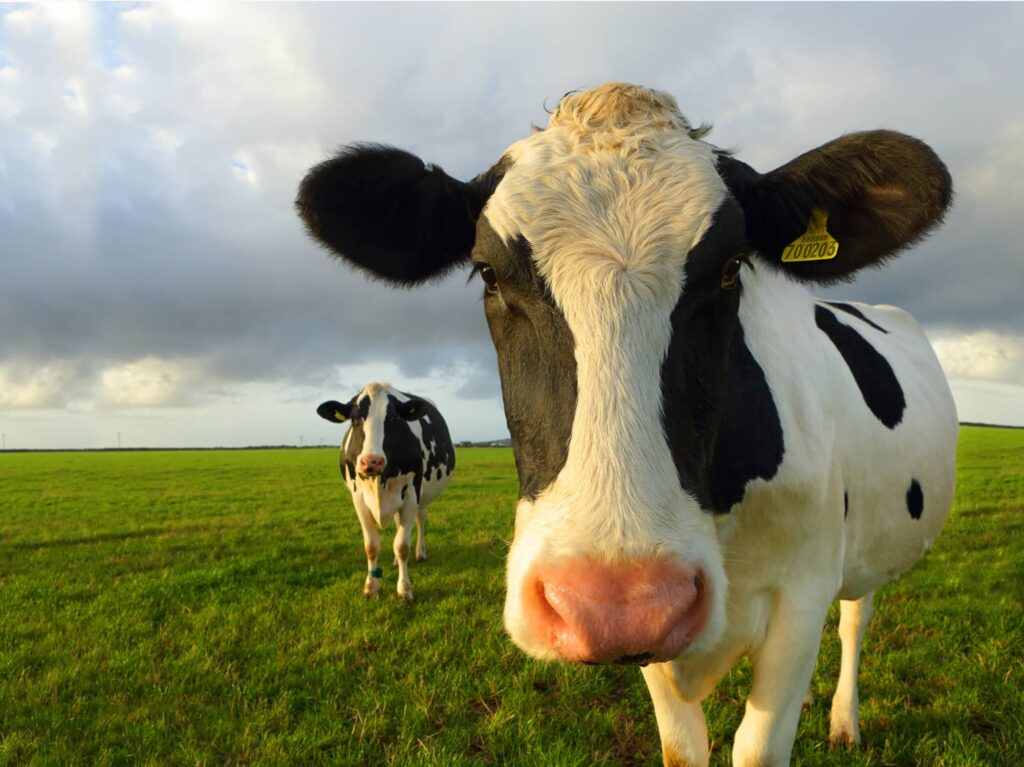
Don’t be mis-steakin, that air will keep on moo-vin.

The cows aren’t about to stop farting, so we need to mitigate. This may mean spending more time and attention on the risk that clear air turbulence poses while we flirt with the time saving benefits of the world’s jet streams on a daily basis.

We can also support the overall industry push to operate cleaner in the long run. A great no-nonsense source to keep track of these industry trends are IATA updates – you can view those here.
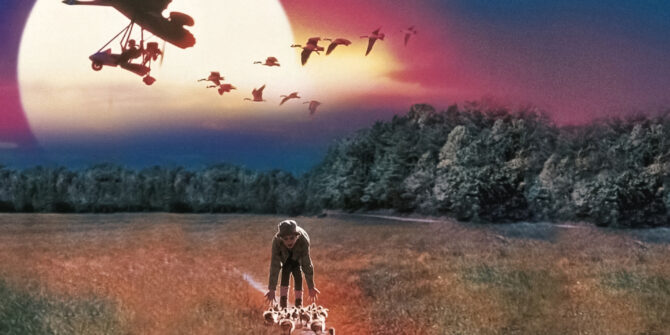
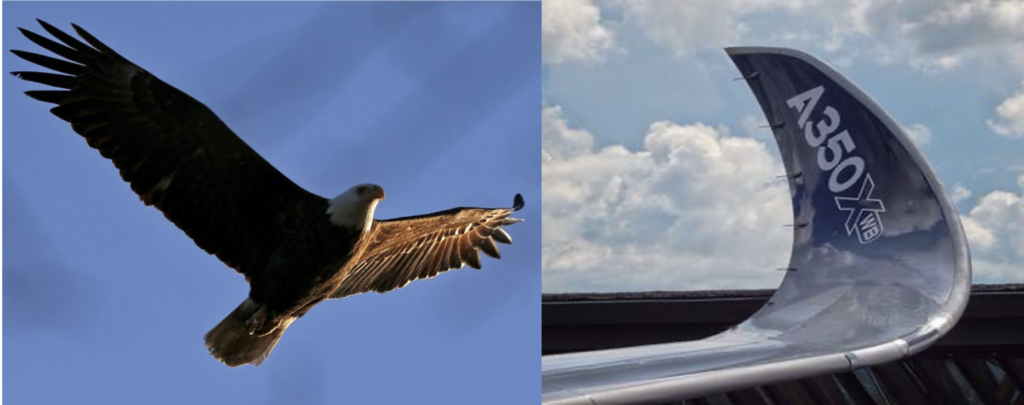
Hitching a Ride: How To Save Fuel with Geese

Industry heavyweight Airbus is currently running an innovative new trial over the North Atlantic that has potential to change the way we fly in oceanic airspace – and ANSPs Eurocontrol, NAT, DNSA and Navcanada are all on board. It’s called wake harnessing, and it was invented by geese. Okay maybe not ‘invented’ – but certainly provided by nature.

Geese, you say?

Geese have already left their mark on aviation history in ways that that we’d probably like to forget. So, it seems only fair that they do something positive for the industry too.

And now it seems that they are (unintentionally, but we’ll still take it). When a flock of Canada Geese infamously downed an airliner over New York back in 2009, they were flying in formation.

They were doing that because they were going somewhere and using each other to make things easier. Geese are known fly 1500 miles in a single day. That’s only possible because they use very little energy doing it.

So why do we care?

One word: biomimicry. Or in more simple terms – copying nature. When we want to figure out how to do something that we don’t know how to do, it’s often worth looking out the window. Nature, it seems, always finds a way.

Enter aviation. When it comes to fuel, it is facing a couple of big problems. The first is that ICAO have set some seriously lofty goals for improving fuel efficiency and carbon emissions. While the other issue is dosh. Jet fuel is expensive and modern aircraft use a lot of it. Reducing fuel burn is big business, especially in an environment where profit margins are tiny.

There are solutions coming. Sustainable aviation fuel and next-gen turbine engine design have been making headlines recently. But behind the scenes Airbus has been turning to nature to help solve the problem using existing technologies we have today and by changing the way we fly – and it’s all thanks to geese.

The Flying-V

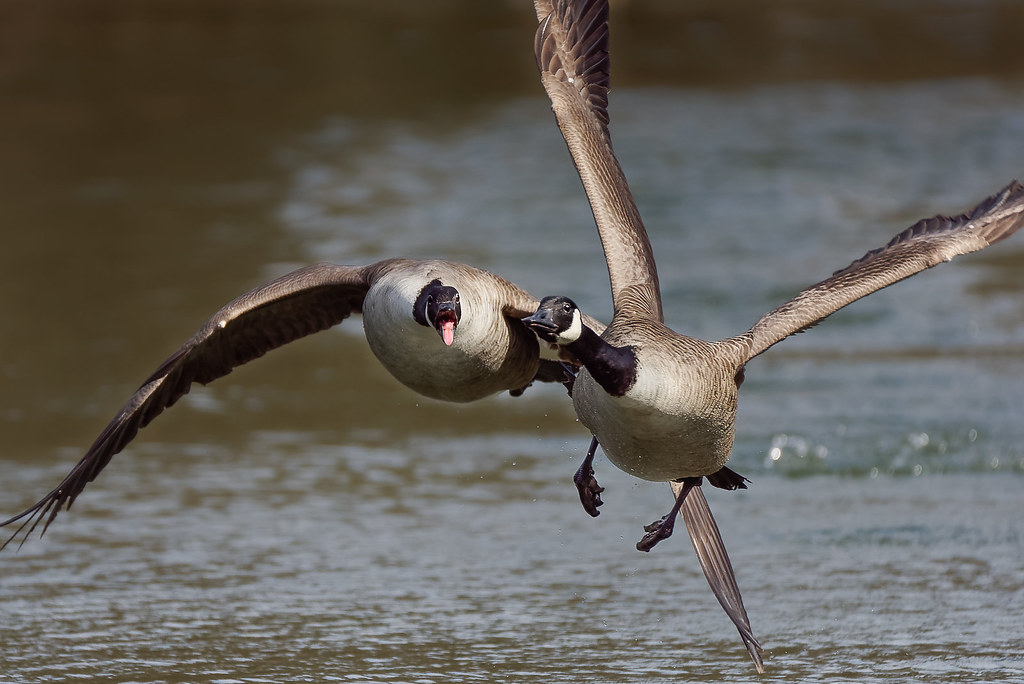
Geese fly long distances in formation. Have you ever wondered why?

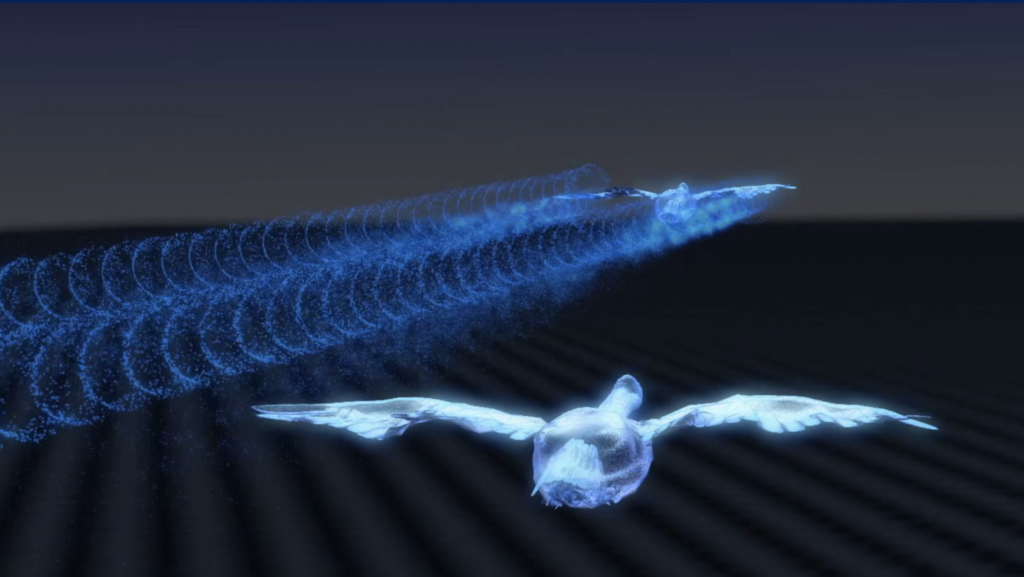
It’s because they are using something called wake energy retrieval. It’s a really fancy term for riding each other’s wave. It’s the result of countless years of evolution and it may have big implications for airplanes.

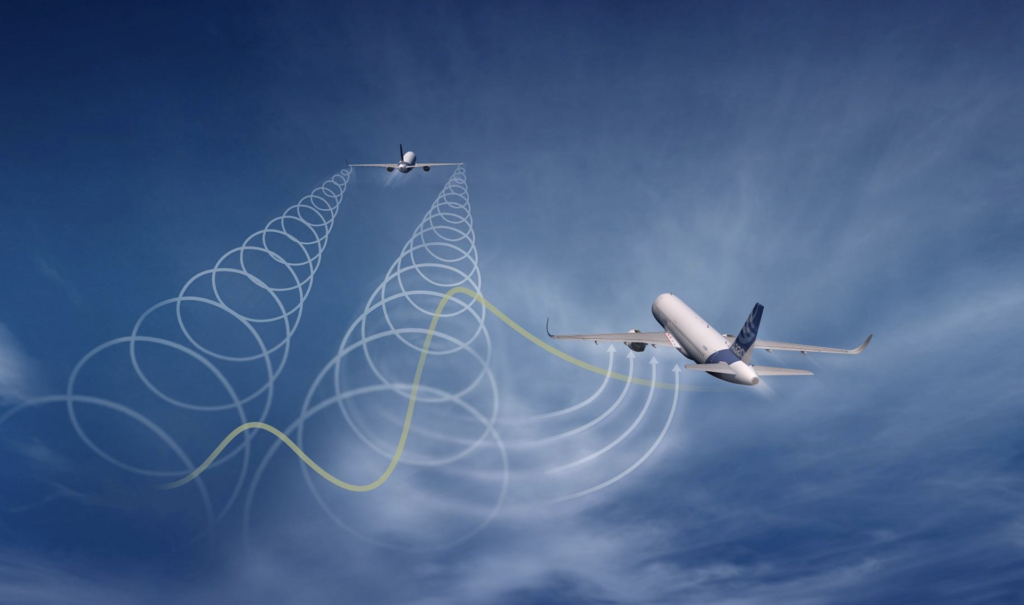
Here’s how it works: When a bird flaps its wings its tips creates vortices. In the same way that our man-made wings do. These vortices create a horizontal swirl of air – an outer upward component and an inner downward one.

The reason why birds fly in a V is because if they position themselves in such a way that their wings stay in upward-moving air from the bird in front, they can effectively fly in an updraft, constantly. Which means they flap less and travel further.

What if airplanes did the same thing (but with less flapping)?

Airbus thinks that’s a good question. Since 2016 they have been copying geese by flying large jets in formation so that the trailing aircraft ‘rides the wake’ of the one in front.

It turns out that if you find just the right spot, not only is it smooth for the passengers, but also very fuel efficient. Get this – Airbus have shown fuel savings of five to ten percent simply due to the effects of this phenomenon, and potential to reduce overall climate impact by twenty-five percent.

They’re heavyweight numbers. That’s because by flying in the upward component of the wake from the aircraft in front, we are essentially getting free lift. Or in other words, ‘harnessing’ energy we’d otherwise lose – which is why the concept is also known as ‘wake harnessing’.

It’s almost as though the trailing aircraft is flying in a gentle descent while level. That means less thrust, less fuel and less emissions.

But here’s the kicker – you have to get close. Like real close. Airbus have found the optimum distance between aircraft is only 1.5nm. That’s a fraction of the spacing applied by ATC. But with existing technologies like TCAS and ADS-C it’s not unreasonable to think that this can be achieved safely.

Airbus have called the project Fello’fly.

And here’s how it works.

ETAs would be used by ATC at feeder waypoints to set aircraft up for their ‘wake energy retrieval pairing’- i.e. formation. The aircraft will still be separated both horizontally and vertically, but close enough for the pairing process to begin.

Responsibility for separation will then be handed to the two aircraft. Using newly developed FMS software, the trailing airplane will slowly close in on the leading one until it is positioned in the optimum spot for wake harnessing. There it will stay until the two aircraft part ways again. The lead aircraft will be responsible for talking to ATC while in formation.

But it’s not all smooth sailing.

 While the idea has some serious potential there are some fairly obvious hurdles that would need to be overcome:

Wasting energy. The idea only works if aircraft don’t waste energy flying at sub-optimal speeds to make it happen. In other words, loitering or playing catch up. Which means it will be difficult to achieve for aircraft departing the same airport.

Instead the answer may lie in new software. For instance, German researchers have developed ‘MultiFly’ – a system that identifies jets that can be paired together based on type, location and how long they will be on the same route.

Different aircraft. Unlike a flock of geese, all aircraft types are different. 1.5nm may be optimal for a pair of A350s, but more testing needs to be done to find the sweet spot for all possible combinations of jets. Both aircraft would also need to have the same optimal cruise speed – otherwise all the gains would be pointless.

Then there is the raft of regulatory changes that would be required to make sure this can all happen safely.

Full Speed Ahead

Despite the obvious challenges that wake harnessing presents, if they can be overcome the potential benefits are obvious. Airbus is pressing ahead with the project and hope to make it reality in oceanic airspace by the middle of the decade.

Considering the growth potential of the industry in a post-Covid world, formation flight may be the next big step in cleaner and more efficient flying.

Who’d have ever thought we get there with the help of geese?