NAT Doc 006/008 Changes 2023

Read all about it! ICAO are changing up the NAT docs!

Here, for you, is our summary of the *exciting amendments to our *favourite documents.

*They aren’t that exciting. Also aren’t our favourites, clearly that is 007.

First up, Doc 008

NAT Doc 008 ‘Application of Separation Minima North Atlantic Region’ contains exactly what the title suggests: info on the application of separation minima. The standards that it doth contain apply to aircraft in the NAT Region who are communicating via a radio station or via CPDLC and also when in ‘Direct Controller Pilot VHF voice Communication’.

Excellent. We saw an amendment notification and we headed over to see what the change was. With baited breath we clickethed upon the link. Fingers tapping as it slowly downloaded itself and opened. We scrolled with frantic enthusiasm to the ‘amendments’ table. What would the change be? Is it big? Is it exciting?

It is not.

They have just amended paragraph 3.4.2.D to say that longitudinal separation is ‘10 minutes between aircraft on same/intersecting tracks, whether in level, climbing or descending flight, provided the aircraft have ADS-C periodic contracts with a maximum reporting interval of 20 minutes or are being tracked by an ATS surveillance system.’

‘or are being tracked by an ATS surveillance system’ appears to be the only change, at least that we can see anyway.

Doc 006

This one looks more interesting. First up, a review of what Doc 006 is.

In case you aren’t familiar with this one, it used to be:

  • Part I – Contingency Situations Affecting ATC Facilities
  • Part II – Contingency Situations Affecting Multiple FIRs
  • Now it has Part III – Contingency Situations Caused By Space Weather Events, which ‘considers events which are likely to affect one or more than one facility within the NAT region, specifically the contingency processes applied to minimize operational impacts of space weather events.’

You can find the updated Doc 006 parts here.

Part I of Doc 006 – Air Traffic Management Operation Contingency Plan.

The only change in this bit is the insertion of some text onto Page 1 about Part III – The Space Weather Contingencies.

There is also this newly amended table which, while grey and joyless, is actually very handy indeed. This covers general loss of ATC which could be space weather related, but could also not be space weather related.
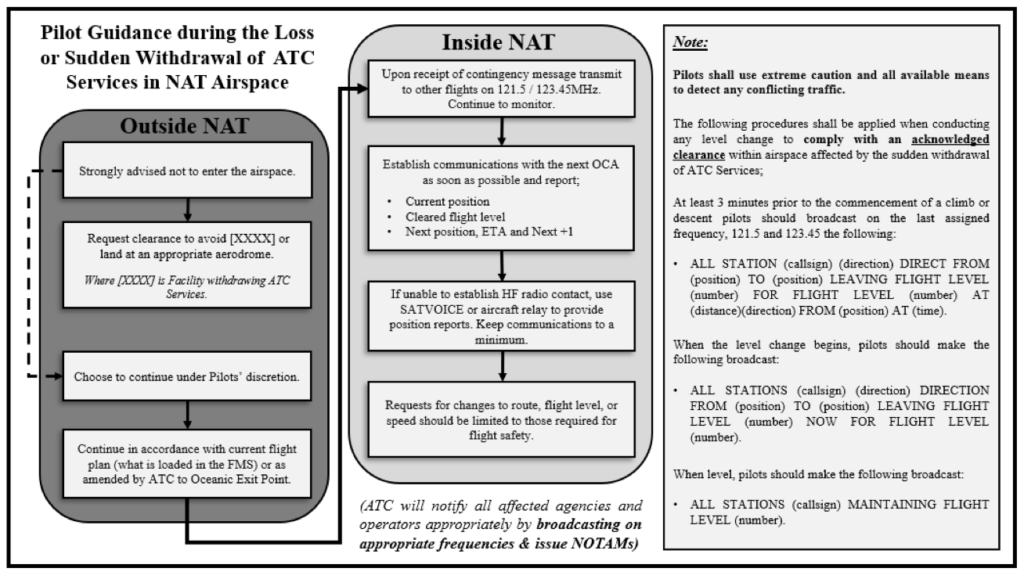
Simple but mighty.

Doc 006 Part III

I’ve given it a section of its own. This is the Space Weather bit, but, there is an actual document – Doc 10100 – which talks about space weather. 10100 can be found here and this is where you should go for *all your space weather knowledge needs.

*Not all, but a good start. 

Doc 006 Part II is all (only) about the contingencies in the event of issues with ATC, navigation, systems etc because of space weather.

A little bit of space weather info before we dive all the way in:

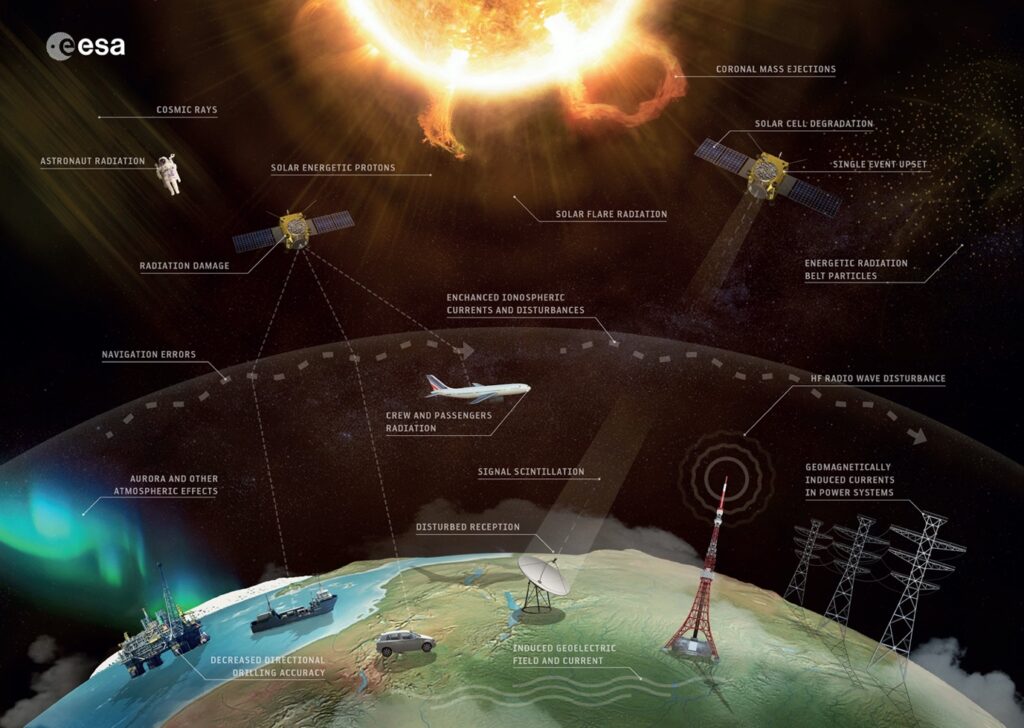
Space weather can play havoc on our GNSS systems, satellite stuff, HF, RF, power grids, even our microwaves (microwave links whatever they be). It can also have effects beyond just one FIR, or even the whole NAT region. So it’s a great thing that we now have a document to help.
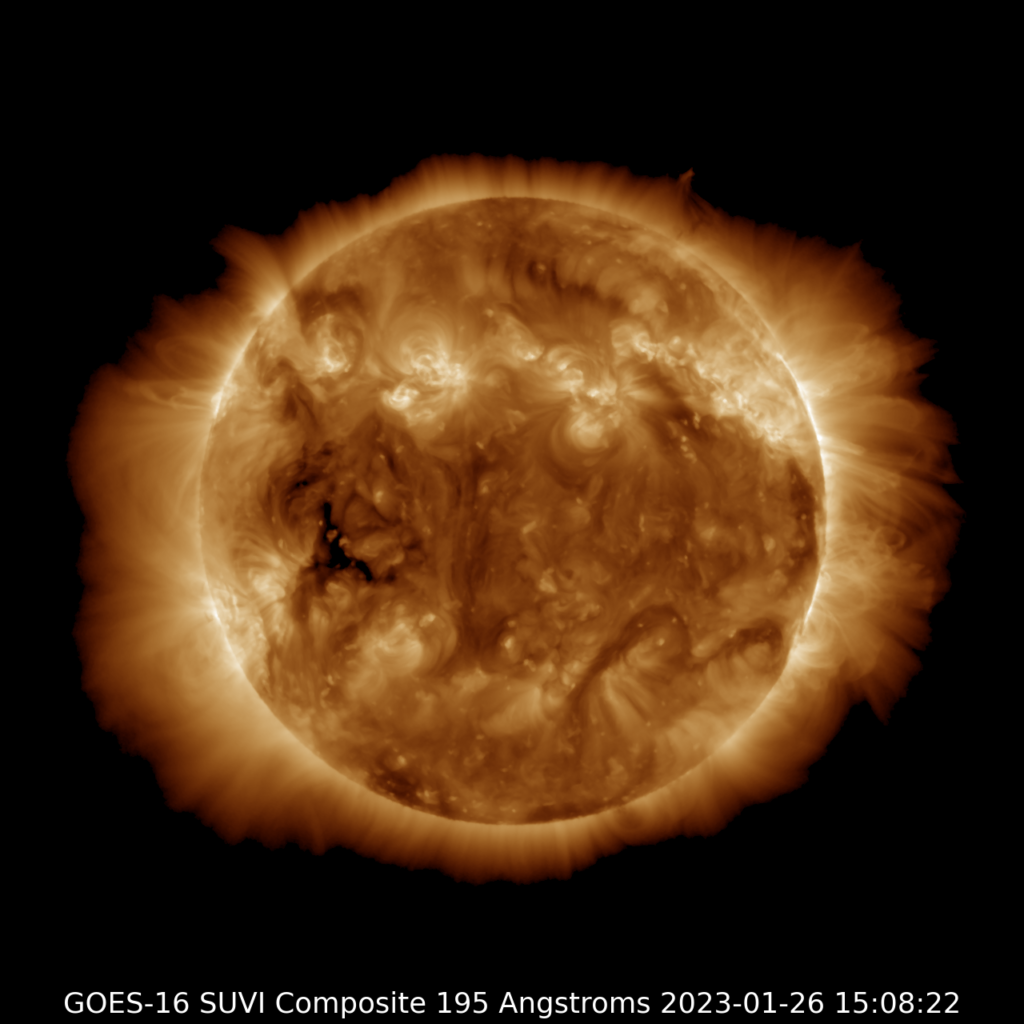
Don’t fly too close to the sun

Space Weather peaks around every 11 years, but we’ve seen a load of pretty decent (but not severe) space weather stuff of late. Things like:

  • Disruptions and even total unexpected loss of HF, SATVOICE, CPDLC etc
  • Issues with GNSS (that impacts out ADS-B and C)
  • Weird and random reboots of electronic stuff onboard
  • Passengers and crew growing extra limbs/glowing green etc

The Contingency Phases

They’ve broken the actions down into a few phases.

Initial Action (Reactive Phase):

What is happening during this phase is some space weather is whizzing its way over and an ANSP has become aware of it and so they start telling everyone about it, putting contingency plans into action, getting in touch with other ANSPs for support etc.

If you’re an airplane that is not yet in the NAT region then the general plan is to warn you about what might be awaiting you, and possibly (if it is really bad) re-route you.

If you are already in the NAT then you should do what you would normally do if you lose comms, or have some technical issue and that’s follow the published contingency procedures.

Subsequent Action (Proactive Phase):

What is happening in this phase depends on the severity of the situation, but basically a whole load of communication (about the severity of the situation) and stuff to help manage it.

Long term contingency plans:

This is for the really bad stuff that knocks out comms or satellites of what have you for really long amounts of time.

That… wasn’t very helpful

Doc 006 is really just more of an outline of what ATC will do (and so what the pilots can expect).

So, refer to the nice table, refer to the AIPs, go read your actual contingency procedures, and use this Doc 006 Part III as a helpful guide on what to expect.

How much radiation are we getting zapped with as crew?

How much radiation are we getting zapped with as crew, and what sort of levels should we be concerned about?

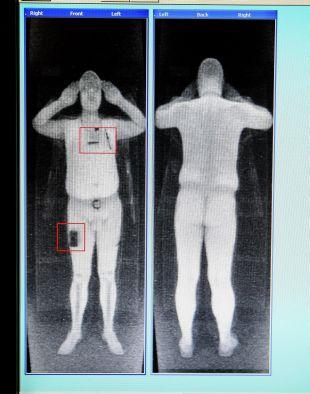
The Airport Security Scanner

Most pilots have probably experienced rather overzealous security scanners in an airport. You know the ones – when you go through, it beeps. You remove the watch you forgot to take off. It beeps again. You take your jacket, shoes, tie off. It still beeps. Now you’re wondering if you’ll need to strip down like this South African Airways pilot did…

Anyway, it is frustrating, but it is not really a big deal radiation-wise. One dose of the airport scanner is 100,000 times lower than the average annual dose we get from natural background radiation and medical sources. It actually delivers around 0.1 microsieverts per scan which is 100th what a standard chest x-ray delivers.

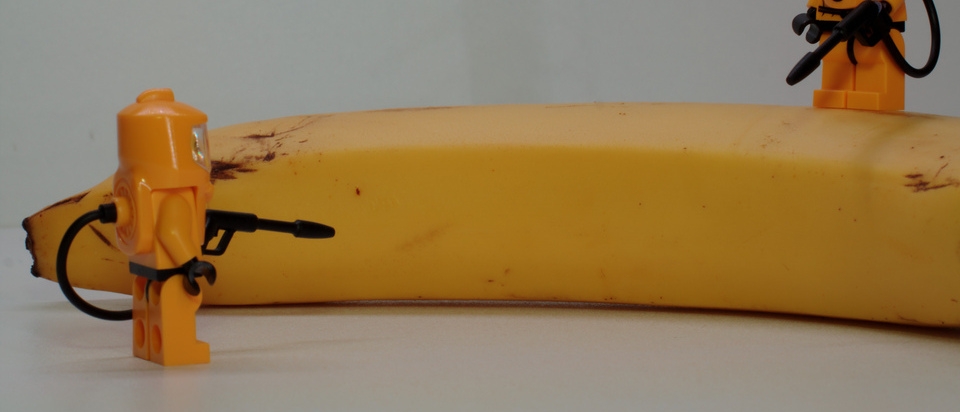
For comparison, every banana you eat contains around half a gram of potassium-40 (an ionising radiation source) which means eating it is the equivalent of 1000th of a chest X-ray in terms of the radiation dosage. The granite counter top you prepared your lunch on is also dosing you. While if you live in the UK you are getting about 2.7 millisieverts of radiation annually just by being there because it is one giant granite counter top under your feet.

So, no, we shouldn’t be worried about radiation from airport scanners. But given that every minute on an airplane is equivalent to one airport scan, should we be worried about that?

Flight Risk

When you fly you are exposed to low levels of radiation – from some of the onboard equipment, to the fact you are way nearer space and all the cosmic and UV rays swilling about up there. 

UV radiation is what we protect ourselves against by not destroying our friend, the Ozone Layer, and with all the SPF suncream we slather upon ourselves. The ozone layer sits around 10-15 miles above the ground (so our airplanes stay below it), and it blocks out a good whack of UV-B, all of UV-C and some UV-A.

Now, that *some is the reason why we should be slathering more sunblock on ourselves when we fly, because the ozone layer and our windscreens help, but not enough. A study showed that the amount of UV radiation the pilot seat (and you in it, presumably) gets smacked with when flying for under an hour at 30,000 feet is equivalent to a 20 minute tanning bed session.

Studies also show the rates of skin cancer in pilots and cabin crew are significantly higher than the general population. So, you need to be careful. Plus it makes you wrinkle more.

  • Wear sunblock (decent UV-A and UV-B ones)
  • Get decent sunglasses with UV protection lenses because your eyeballs are damaged by it too! Polarized sunglasses help reduce glare, but don’t necessarily provide more UV protection (and they mess with the screens).
  • Check them moles (if you’re a moley sort of person) – it isn’t just areas exposed to direct sunlight which can be at risk.

In fact, going back to the sunglasses point, IFALPA have a very handy handout on the ‘Ocular Hazards of UV Exposure’. It is basically ‘scary stuff, bad stuff, scary stuff’ and then a “get sunglasses that have a UV absorption up to 400nm/ 100% absorption’.

Cosmic Vibes

Cosmic radiation is high-energy charged particles – x-rays and gamma rays which come from stars, like our very own sun. It differs to UV radiation in that it is higher energy and ionising.

We don’t like ionising radiation because it causes damage to our squidgy little insides.

The closer to space we get, the more cosmic radiation we are exposed to, and the higher the latitude the more we get as well, which means those high altitude, Polar flights are the ones to really monitor.

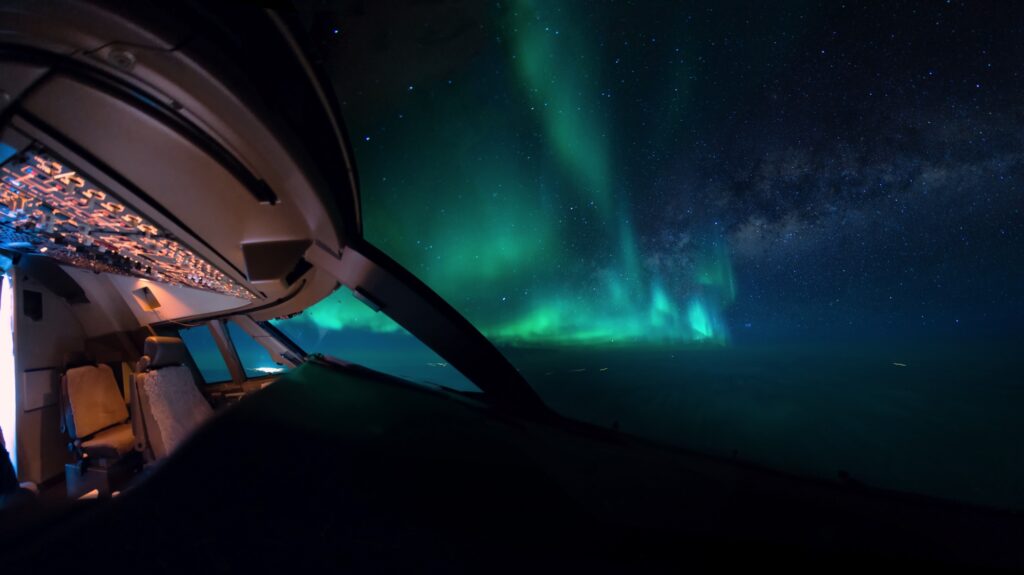
The Northern Lights displays we see, despite their “radioactive” green colour actually do not emit any radiation that reaches us. Although, if you were up there, in it, it probably wouldn’t be great for you.

What are the numbers looking like?

The International Commission on Radiological Protection (ICRP) basically classify aircrew as ‘Radiation Workers’ and recommend a maximum of 20mSv a year averaged over 5 years. So a maximum of 100 mSv in 5 years. 

The average person in the US receives up to 3mSv, with a recommended dose of 1mSv per year. Anything between 3 and 20mSv is considered moderate.

So, how much are we getting?

Well, heading from the east to the west coast of the USA you probably get about 0.035mSv. Not a tremendous amount if you’re a passenger, but what about if you are doing flights several times a week?

2 sectors a day, 3 times a week, plus or minus a few for holidays, and you could be heading towards something in the region of 10mSv which is higher than normal but still in the moderate (and acceptable) range.

If you are flying from Athens to New York – a flight likely to take you along a relatively northerly route and at a flight level of 41,000ft or higher, then the 9 to 10 hours airborne are going to dose you up another 0.063mSv – 0.63mSv per 100 block hours.

A study carried out in 1998 suggested the average crew member flies around 673 block hours, getting an average cosmic ray dose of 2.27mSv, while the annual cosmic ray dose for a long haul Captain was calculated at around 2.19mSv.

Ok, that was back in 1998, but as far as we know the levels of cosmic rays haven’t increased. Our block time might be a few hundred higher, but still well within limits on the radiation dose front.

How can you monitor it?

Airlines and operators should monitor this for you, but if you want to keep an eye on it you can via various apps out there in the mobile phone world. 

CRAYFIS is an app developed by scientists to help monitor the amount received via the pixels in your smartphone screen.

Apps like  TrackYourDose have options to plug in a route and uses average flight paths to help you monitor your dose on specific flights and days.

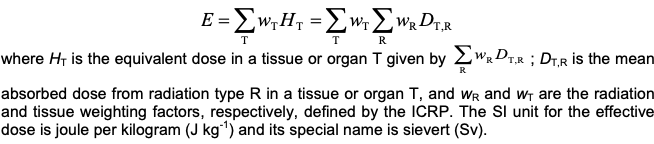
Or you can work it all out yourself using this handy little formula.

So, should we be worried?

The figures suggest no.

A study of 10,211 pilots carried out in 2003 also supported this, with skin cancer showing slightly higher incidences.

So unless you are flying an excessive number of long haul Polar Flights, the overall the radiation dosage received by air crew is higher than the average ground dweller, but remains within acceptable limits.

That space weather is likely to have more of an impact on your HF than it is you.

Want to read some more (official) stuff?

The CDC offer some good guidance.

As do the FAA in this useful booklet for air crew.


Space Weather: Here Comes Hubble…

History has shown that every ten years or so, earth comes under attack from high amounts of space weather– and we’re about to embark on the next cycle.

Wait, there’s weather in space?

Yep, but not in the conventional sense. That big ball of burning energy we call the Sun does more than provide us with the light and warmth we all seek on vacation.

It also constantly spews gas and particles into space, in what is known as the solar wind. These particles are charged with electricity, and are flung towards earth at up to a million miles an hour.

Luckily for us, our atmosphere and the earth’s magnetic field acts like a shield. But sometimes these determined particles make it through to our atmosphere. When that happens we are often treated to the spectacular light shows we know as auroras. If you fly at high latitudes at night, chances are you have been lucky enough to see them. Sadly space weather can have more serious consequences for aviation than struggling to capture that illusive insta shot on your trusty iPhone 4.

Like the earth weather we’re used to, space weather is changeable – its severity depends on what is happening on the sun.

Its surface is a busy place – hot gases are constantly on the move as powerful magnetic fields twist and turn. When things get especially rowdy, a storm occurs and the solar wind gets stronger. Occasionally these storms produce a solar flare – essentially the sun burps, and sends significant amounts of radiation towards earth. This is where the trouble can occur.

What kind of trouble?

Communications. During solar events, HF and satellite communications can be disrupted. In severe cases, even disabled. There may be effects on CPDLC and ADS-C services. Line of sight VHF is less likely to be impacted, but that does not help much when you’re over the middle of the ocean.

Systems. Some of your aircraft’s systems are sensitive to radiation storms. Space weather may induce sudden electrical failures that can range broadly from insignificant to ‘ruin your day.’ Systems that rely on magnetism can also be affected

Navigation. The sun’s particles disrupt the upper layers of the atmosphere, which can interfere with GNSS signals from satellites. You guessed it – the result is unexpected position errors. If it gets really bad, the signal may be lost all together. We’re using RNAV based approaches more than ever these days, and the likelihood of not having ground based aids as a backup is increasing.

The Body. During these storms, you can be exposed to unusually high levels of ionising radiation (the nasty one for humans, think Chernobyl). As a general rule, the higher you fly or the higher the latitude, the more exposed you are. The effects of this on crew is the subject of ongoing studies. But the more you can avoid higher exposure levels the better.

What can we do about it?

Here’s the best news: space weather is predictable. And ICAO are onto it.

Solar monitoring has improved significantly in recent years. A number of countries have joined forces to create three agencies responsible for issuing ICAO Space Weather Advisories (SWX) around the clock.

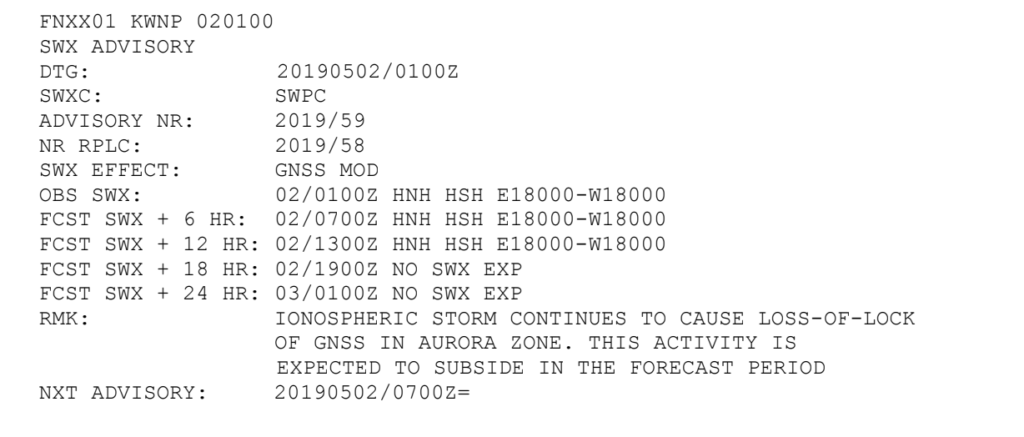
Space Weather Advisories have a standardised format, and are not the same thing as a SIGMET.

They are only issued whenever space weather conditions get bad – essentially moderate and severe impacts, and only when operations above FL250 are affected. They are activated for comms, GNSS and radiation interference, so seeing an SWX advisory during your pre-flight briefing is a pretty good indicator to have a closer look.

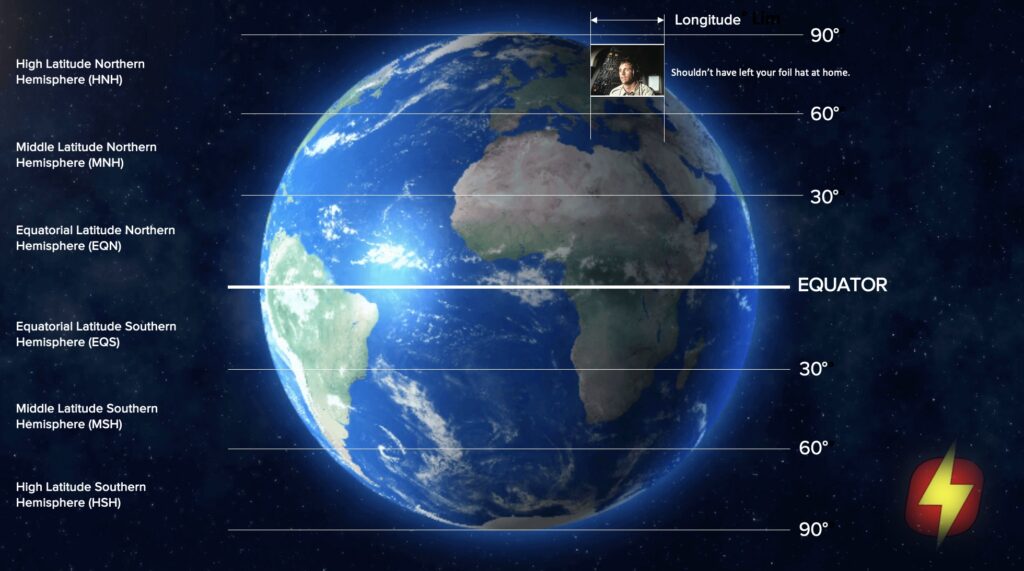
They predict the effect of space weather at six hourly intervals across a twenty four hour period. To define the areas affected, SWX advisories effectively draw a box. They divide the world into six bands of latitude, and tell you how wide the box is with longitude. Still confused? A picture always helps…

For a full briefing, the FAA has recently published a helpful information bulletin which explains how Space Weather Advisories work in more detail. And if you’re really brave, more info can also be found in ICAO Doc 10100.

Some other useful stuff: