South Korea Airspace Risk Update
Key Points
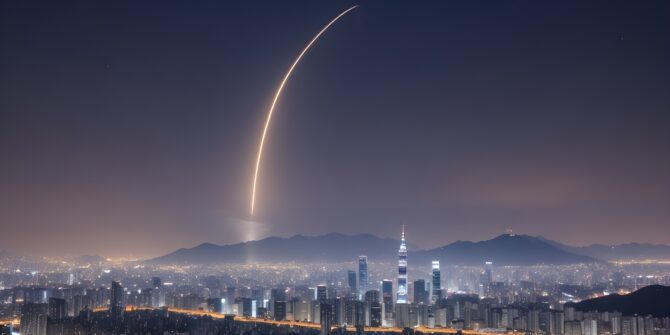
  • There are no official airspace warnings for South Korea, but the risk situation seems to be getting worse.
  • Airspace safety is gradually deteriorating due to several factors: GPS Interference, North Korean space launches and missile tests, military drills and failed agreements with North Korea, and weird balloon incidents.

If you’re operating in the RKRR/Incheon FIR, it is important to stay up to date with airspace risk.

In stark comparison to North Korean airspace, which is rife with warnings and flight prohibitions, operations over South Korea continue with almost no active advisories to crew – save for the odd FIR Notam.

It is not so much a matter of disinformation, but a lack of it that can create complacency amongst pilots operating there.

The situation on the Korean Peninsula is unique. The two nations are not at war but remain in a state of constant readiness to engage in one. They live in what was once described as a ‘reciprocal fear of surprise attack.’

This means South Korea’s airspace is at constant risk of instability caused by some kind of political crisis. Things have potential to change quickly, and without warning.

It is therefore vital to monitor changes in airspace that is considered by most to be completely safe. Here is a review of what has been happening in the RKRR/Incheon FIR lately that may have subtly been increasing risk to civil aircraft.

GPS Interference

The US FAA previously published a warning for GPS interference in South Korean airspace via a KICZ Notam – but this was cancelled back in 2018. The signs are that this advice may need to be re-visited.

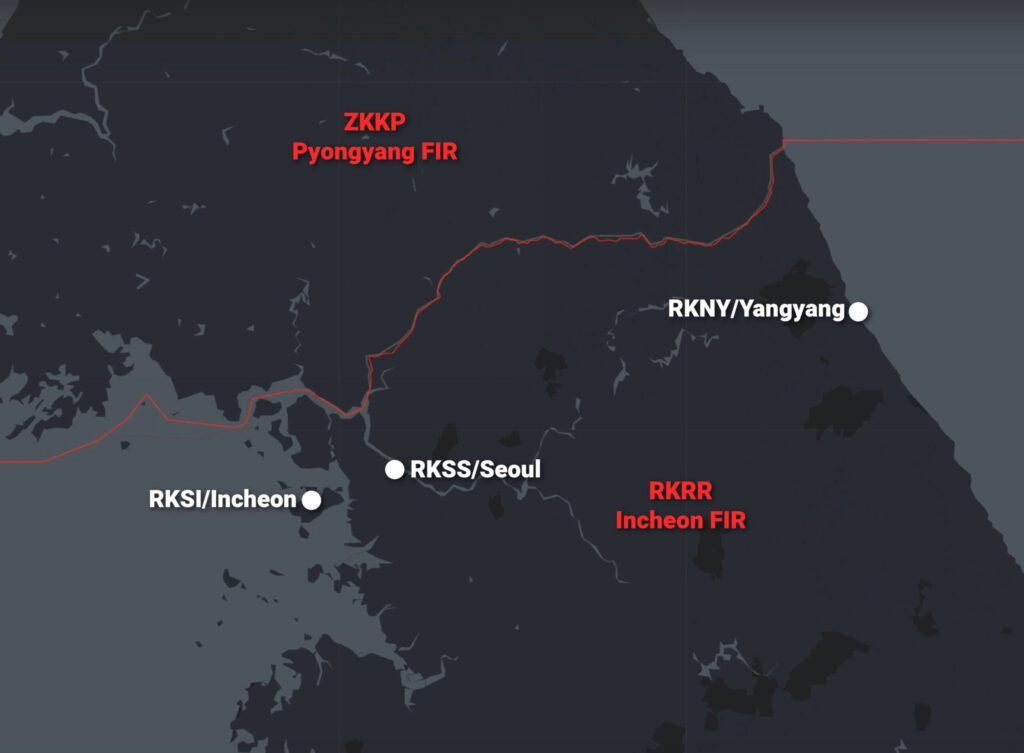
On March 11, the RKRR/Incheon FIR issued a new warning advising extreme caution for GPS interference including the vicinity of RKSI/Incheon, Seoul. The nature of the interference wasn’t specified but was likely to have included spoofing.

RKRR Z0558/24 - CAUTIONARY INFO FOR ACFT OPERATING IN INCHEON FIR :
PILOTS HAVE REPORTED THAT GPS SIGNALS ARE UNRELIABLE OR LOST 
INTERMITTENTLY IN INCHEON FIR(AROUND INCHEON AND SEOUL AREA). 
EXERCISE EXTREME CAUTION WHEN USING GPS. 
10 JUN 05:51 2024 UNTIL 17 JUN 15:00 2024. 
CREATED: 10 JUN 05:51 2024

The source of the interference was suspected to be North Korea attempting to interfere with military drills in the area.

This was followed by an OPSGROUP member report of GPS interference during an approach to RKSS/Seoul on May 16:

“GPS spoofing into RKSS/Seoul [while] on approach to RWY 32R. We disabled hybrid and deselected GPS after seeing the risk reported on ATIS…”

Any kind of GPS interference, especially when operating in and out of Seoul, is cause for concern. It’s 20nm from the North Korean border and a bunch of prohibited areas which carry chart warnings that say in very clear language that you may get shot at if you inadvertently enter.
North Korea’s Race to Space

Late last year, North Korea surprised the world by launching a satellite into space creating a potential debris field in the Yellow Sea between South Korea and China. The launch prompted a missile warning in Southern Japan.
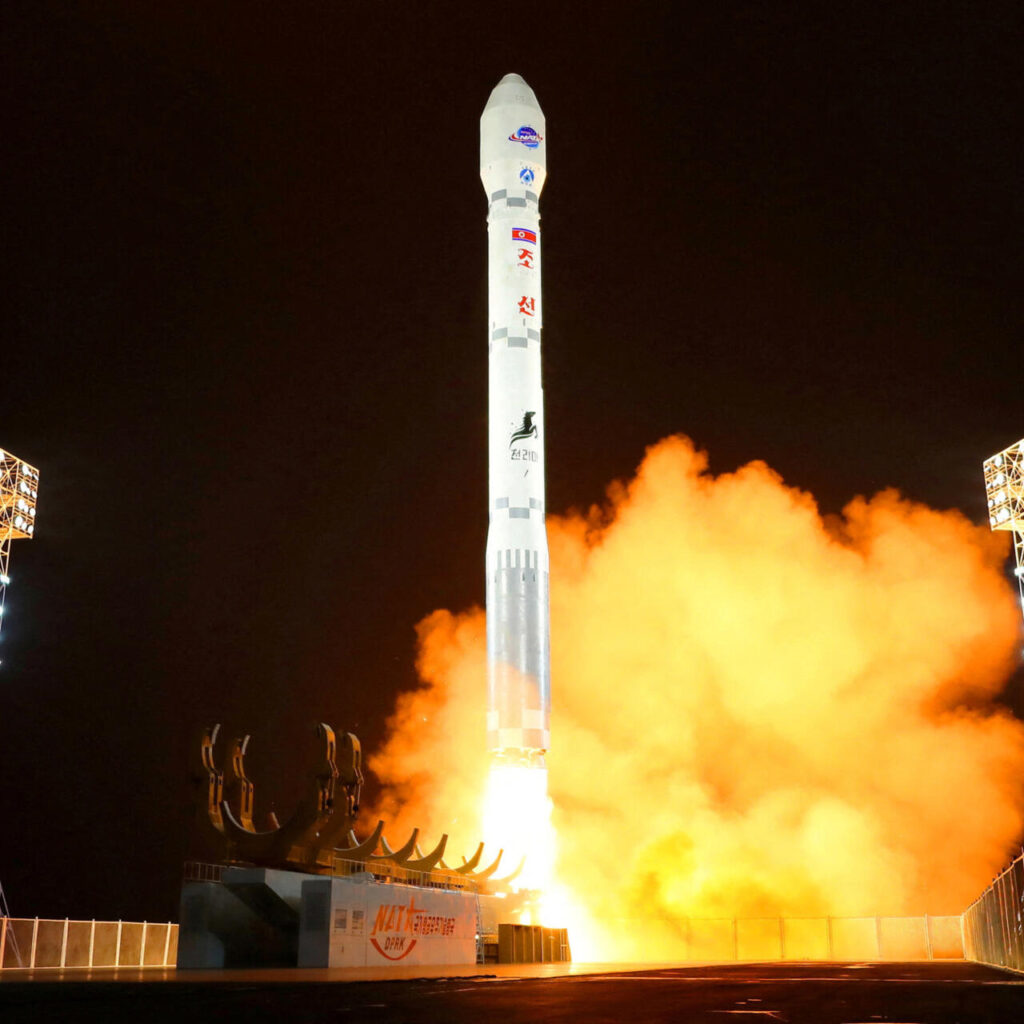
Unannounced North Korean space launches create airspace risks on a much wider scale than conventional missile tests.

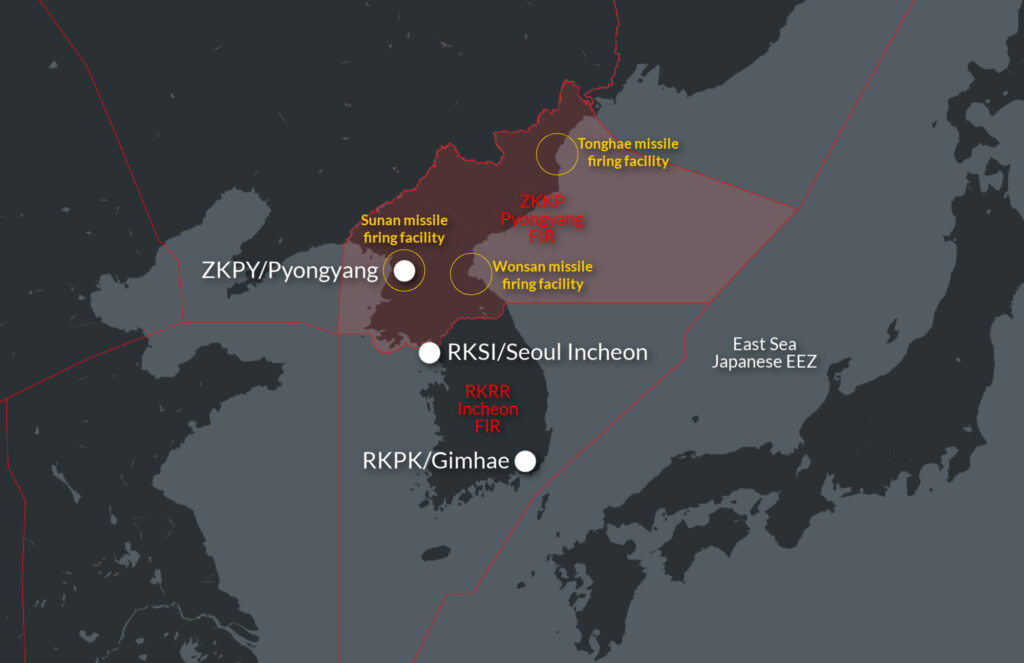
Unlike conventional missile tests, space launches create hazards to aviation that extend far beyond the ZKKP/Pyongyang FIR rendering existing airspace warnings arguably inadequate. Here is an example of a warning hurriedly issued for large portions of the RKRR Incheon FIR following a previously attempted space launch.

Then just weeks ago, North Korea attempted to launch another (with no prior warning) which failed spectacularly in a mid-air explosion. This prompted South Korea to conduct air drills with over twenty military fighter jets near the demilitarised border zone.

North Korea have since announced to Japan their intention to try again with another potential debris field near the Korean Peninsula, and the Philippines Island of Luzon. The original target was June 4 but we’re still waiting.

Behind this persistence to have satellites in space is Pyongyang’s ability to gather intelligence on South Korea should a conflict escalate – it seems that risk to civil aviation is an afterthought.

Ballooning Tensions

Earlier this month, North Korea sent at least three and a half thousand balloons across the border into South Korea carrying animal excrement, garbage and scrap paper. Some landed in Seoul.

No flight disruptions were reported, but images circulating in the media show that the balloons were not small and could easily cause low level hazards to aircraft operating in South Korean airspace near the border.
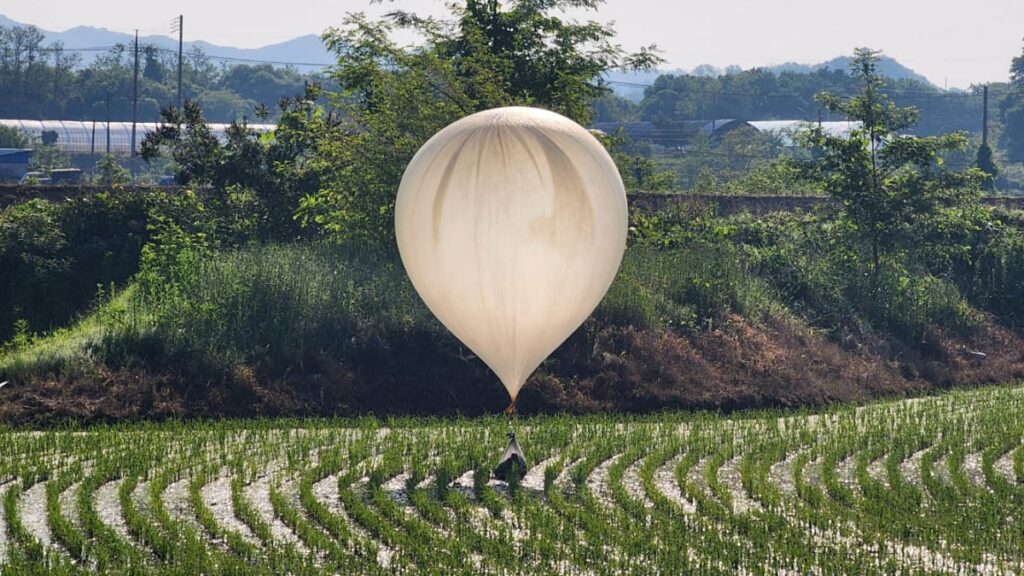
Earlier this month, North Korea sent three and a half thousand of these balloons across the border into South Korean airspace – some landing near Seoul.

Failed Pact

On June 4, Seoul axed a six-year old agreement with Pyongyang that was designed to calm things down between the two countries. It hoped to achieve this by prohibiting provocative military drills or carrying out psychological warfare near the border.

Just two days later, joint drills with the US were carried out using a long-range bomber to drop precision-guided bombs over the Korean Peninsula. It was the first time this has happened in seven years.

Existing Airspace Warnings for South Korea

They’re extremely limited. The Incheon FIR routinely issues temporary ones by Notam, under the RKRR designator but these can be easily missed in briefing packages. There are no other state issued warnings or advisories to report.

Safe Airspace

Perhaps more concerning to airspace safety than a single large event (such as the outbreak of war) are situations where risk gradually deteriorates in open and busy airspace.

This is arguably what we are seeing right now over South Korea. All of these changes are reported on safeairspace.net – our conflict zone and risk database.
If you have more information to add to this briefing, we’d love to hear from you. You can reach us on team@ops.group.
Get ready for more North Korean missiles

Exercise “Freedom Shield” is happening now – which means that more North Korean missile tests are likely in the coming days.

What is Freedom Shield?

Freedom Shield is a joint US-South Korean military exercise. They run joint exercises every year, but this one is the largest in a long while and so is likely to cause more ‘retaliatory responses’ from North Korea. Particularly as South Korea is specifically simulating responses to potential North Korean threats.

The exercises run for 11 days from March 12th.

It is not clear where the exercises will take place, but the general advice is stick to flight plan routes, maintain a very good listening watch on the radio, follow ATC instructions and keep a good look out.

What is the risk?

North Korea tend to respond to these exercises with significant missile activity, which they never announce. This exercise is likely to see similar levels of response, if their ‘announcement’ is anything to go by…

Pyongyong is resolved to respond with “overwhelming powerful forces” to so-called military manoeuvres by the “the US imperialists and the South Korean puppet forces”. So probably a lot of missile launches.

The missiles rarely have any impact, generally falling into the East Sea (Sea of Japan) outside the EEZ. However, they do pose a threat within the Pyongyang FIR, and a higher level of activity is expected this year.

Here is an earlier post covering this is more detail.

While North Korea do not announce missiles, South Korea do release notams (although generally after the event).

As of March 14, they have fired:

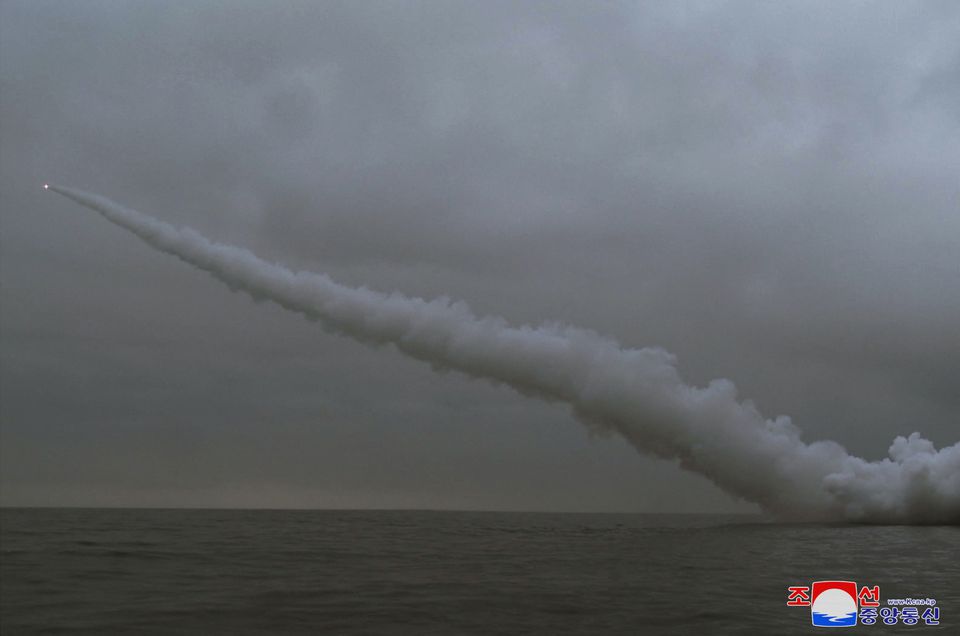
  • Two strategic cruise missiles, from a submarine off the east coast of North Korea
  • Two short-range ballistic missiles fired towards the East Sea, from Jangyon
  • They ran their own military exercises in Feb 2023, firing several long range cruise missiles
  • At the end of 2022, 180 North Korean ‘warplanes‘ were detected in North Korea, but did not infringe on South Korean airspace
  • 5 North Korean drones entered South Korean airspace in December 2022

In other North Korean news…

Not a lot.

They have been trialling ADS-B in their airspace since 2009, according to Notam A0050/09

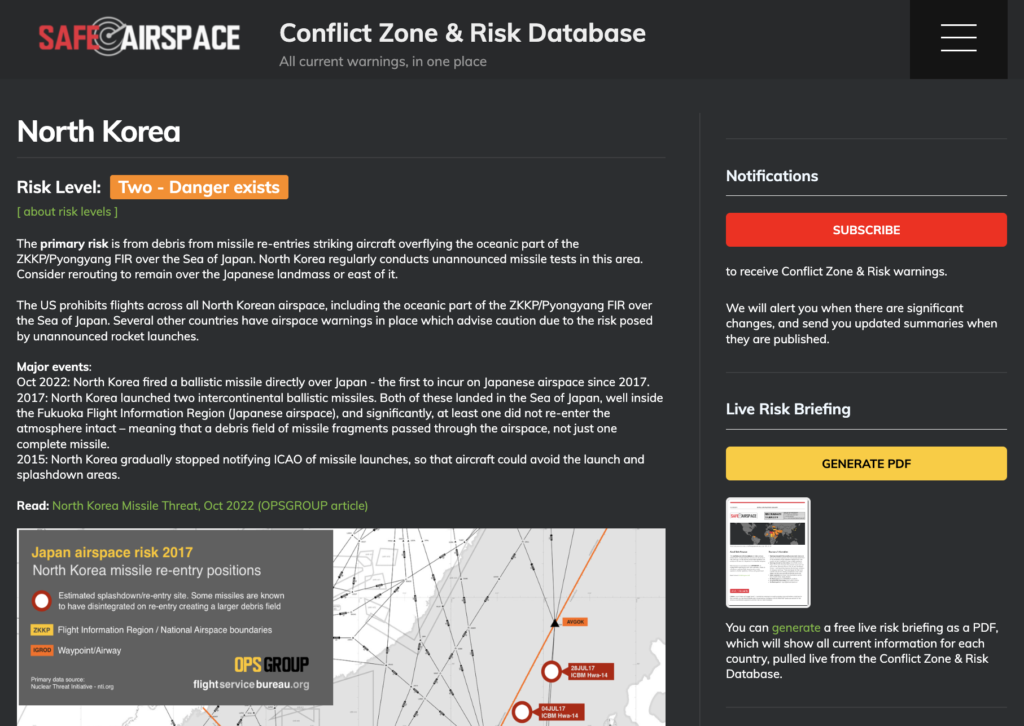
For full updates on the airspace risk in North Korea, as well as Japan and South Korean, visit Safeairspace.


North Korean Drones Over Seoul

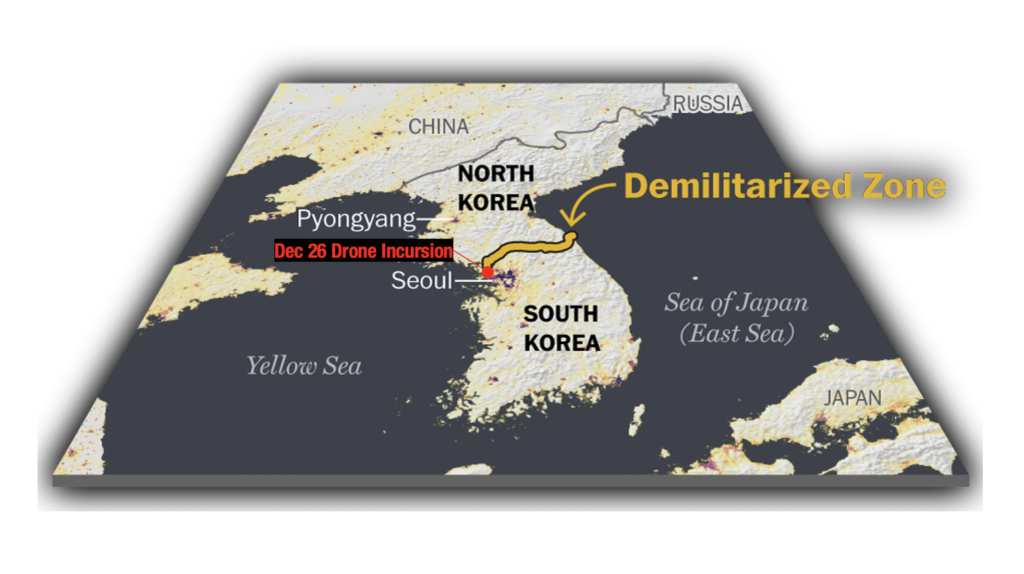
On Dec 26, several North Korean drones entered South Korean airspace. Ops at both RKSI/Seoul and RKSS/Gimpo were disrupted while military jets were dispatched to intercept them.

While it’s no secret that North and South Korea don’t get along, this is the first drone incursion in the RKRR/Incheon FIR in half a decade. And it didn’t go down well. So much so that there is now talk of ending a military pact that has stood since 2018 – especially if there is another incursion.

From an aviation standpoint, this has potential to spell trouble as it threatens the status of a military no-fly zone that buffers the two countries. In which case, the risk to aircraft in the skies of South Korea could deteriorate quickly – especially anywhere near its northern border.

In the absence of any active airspace warnings, here’s what you need to know.

The Dec 26 Incident

At around 10:30am local time, at least five North Korean drones entered South Korean airspace over the Military Demarcation Line near the city of Gimpo – just northeast of Seoul.

It appeared to have caught South Korean military by surprise, who temporarily suspended ops at RKSI/Seoul and RKSS/Gimpo to scramble military jets to intercept them. They fired at least one hundred rounds at the drones supposedly as warning shots.

There are no reports that any of the drones were shot down. One returned to North Korea, while the status of the other four isn’t known.

This has attracted some negative shade in the media, where some felt that the military’s response was inadequate.

In the days that followed, South Korea responded by sending surveillance aircraft into the ZKKP/Pyongyang FIR. The South Korean president has also said that the drone incident could cast serious doubt on a military pact between the two countries – the one that protects border airspace from military incursions.
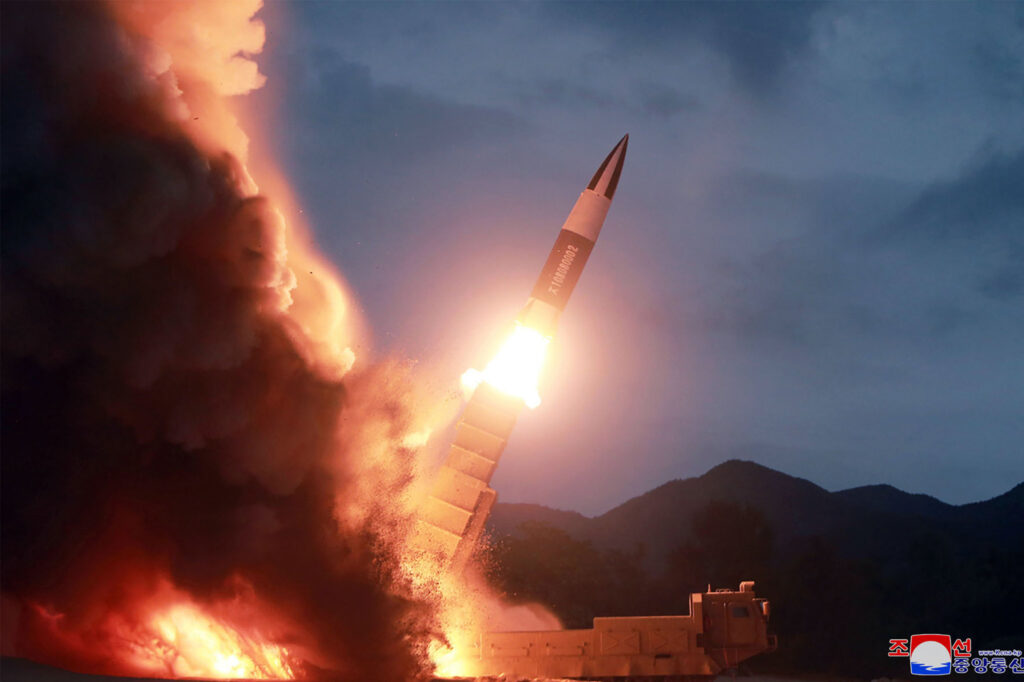
North Korea’s recent ballistic missile tests haven’t helped either – in recent weeks several unannounced launches have taken place with scant regard to civil aviation. The past twelve months have seen a huge upswing in these types of incidents, at one point triggering a ground stop on the US West Coast. And they send a very clear message to South Korea.

Political Posturing

So, are we about to see an outright conflict? Probably not, but ‘quid pro quo’ can be dangerous, especially where airspace is being used as the stage.

Add to that the potential for increased posturing on the border and civil aviation needs to take note. Mistaken identity and mis-targeting is a very real threat. This will escalate should the agreement which upholds the demilitarised buffer zone between them get dismantled.

Previous Airspace Warnings

The FAA has previously had warnings in place for the RKRR/Incheon FIR, but they have long since expired.

The first related to unannounced North Korean missile tests and regional instability. The second was a Notam on GPS interference that was cancelled back in 2019. It was purely advisory – that caution should be taken near the border as the signal may be interfered with.

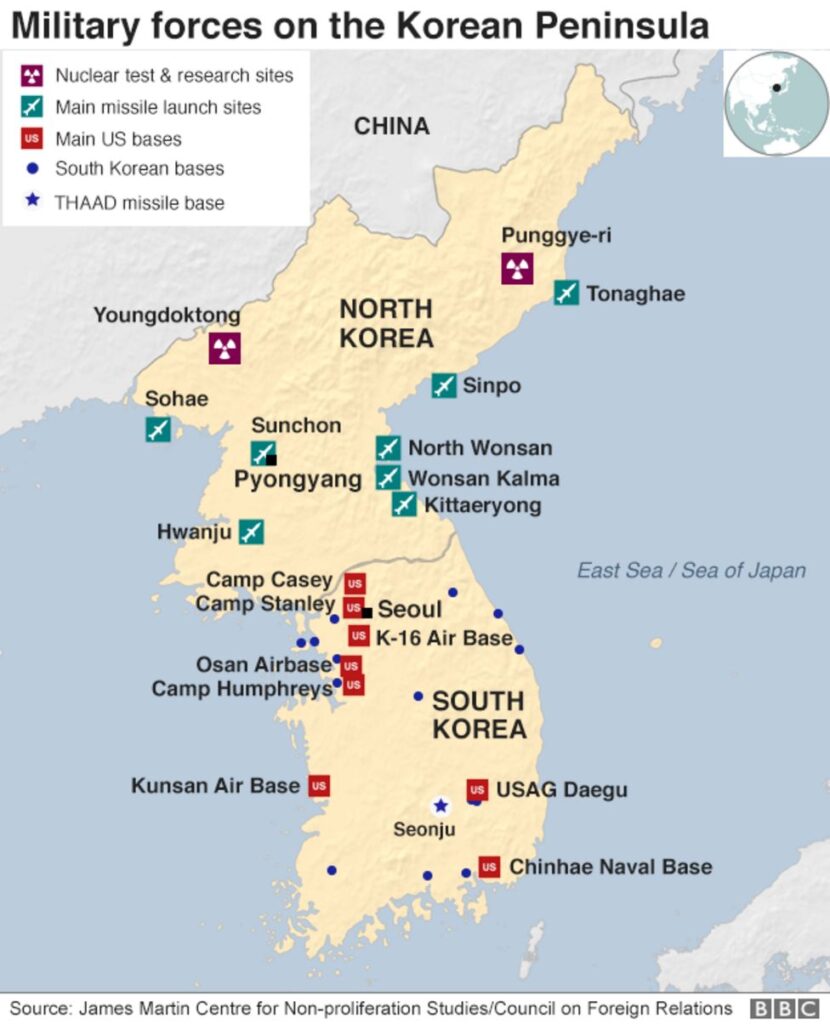
Since then, things have been quiet. But it is worth keeping in mind that operations in and out of Seoul particularly, are only 30nm away from the demilitarised zone. And beyond it lies the ZKKP/Pyongyang FIR, where US operators are currently banned at all levels.

You can check Safeairspace.net for a summary of the airspace risk, including warnings issued by each country.

What does the South Korean AIP say?

Essentially, don’t stray north.

There is a large area of prohibited airspace which runs along the military demarcation line – a strip of land around 2.5 miles wide which acts as a buffer between North and South Korea more or less defined by the 38th parallel.

No aircraft can enter the area at any level, 24 hours per day. As it is just north of RKSI/Seoul, operators there are advised to give it a wide berth. So much so there is a note to exercise extreme caution in a sector of airspace north of the field. You don’t want to bust it.

As a general rule, the military can impact civil aviation operations without prior notice. This is precisely what went down on December 26.

Where to from here?

We watch and wait. Tension on the Korean Peninsula isn’t new – but the December 26 incident is a reminder of just how volatile things can be at short notice. Should the military pact between the two countries genuinely implode, the risk to civil aviation could change overnight.