Salt Corrosion Behind BizAv Dual Engine Failure

The NTSB has released its final report into the crash of a Bombardier CL-600 that lost both engines on approach to KAPF/Naples on Feb 9, 2024. The trigger was corrosion in the engines’ airflow control system caused by long-term exposure to salt.
This wasn’t a freak chain of events. It was a pretty familiar BizAv setup: coastal operations, recurring maintenance snags, and two identical engines exposed to the same environment – both failing within seconds during a critical phase of flight.
A lot of US bizjets spend their lives operating around salt air on the Atlantic, Gulf and Pacific coasts – and over time, that can become a real maintenance issue.
And it’s not just about salt. The report also highlights how important it is to pay attention to early warning signs, and what can happen when recurring symptoms are treated as isolated problems instead of part of a bigger picture.
The Accident Aircraft
The CL-600 involved in the accident had spent its life operating near the ocean.
Built in 2004, it was based in Bridgetown in Barbados until 2020, before moving to a new owner in the Fort Lauderdale area.

The aircraft was maintained under an FAA-approved airworthiness maintenance program. Its engines were operated on an ‘on-condition’ basis, meaning they stayed in service as long as inspections and performance monitoring showed no issues – rather than being removed at fixed overhaul intervals.
Early Warning Signs
Twenty-five days before the accident, the pilots reported intermittent hung starts on both engines. A review of the aircraft’s history later found at least seven similar events over the previous ten years.
Maintenance troubleshooting focused on fuel and ignition issues using a flow chart with nearly thirty YES/NO steps. The following day, both engines started normally, which met the criteria to stop troubleshooting.
Critically, the check that would have identified the real issue (that salt corrosion was preventing the compressor vanes from moving freely) was never reached.
On Feb 9, both engines would later fail on approach leading to the loss of the aircraft.
Important to note from the report that it doesn’t point to pilot error as the primary cause, but it does highlight a few other things worth knowing…
Salt Exposure
For aircraft spending years operating near the ocean, salt exposure can quietly become a real maintenance problem. Corrosion inside the engine may not show up during routine inspections until something else starts going wrong.

Engines frequently exposed to high salt environments may require more thorough inspections including borescopes.
Start faults aren’t normal. Modern turbine engines are extremely reliable, so recurring hung starts should be treated as a warning sign – not just a minor fuel or ignition issue.
In this case, the abnormal starts were one of the few early clues that something deeper was wrong with the engine airflow system.
Catastrophic failures are rare – even in this case, both engines were still rotating on impact. Minor or sporadic indications may be the only warning we get, so don’t just write them off.
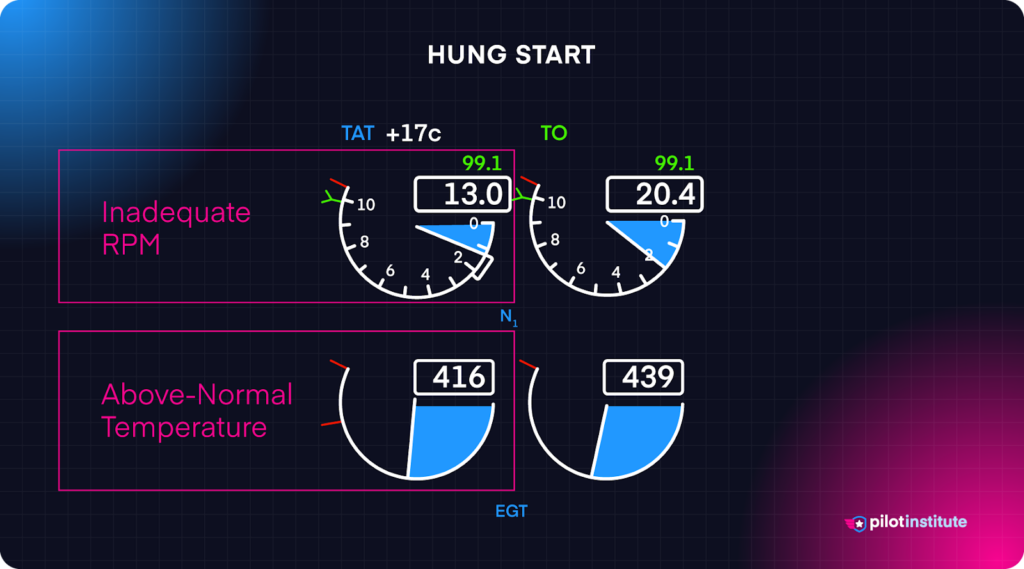
Abnormal starts can be an indicator of something more sinister than just fuel and ignition.
Maintenance Trap
Troubleshooting doesn’t always lead to the right answer. One important note from this accident is that an ‘approved’ maintenance program doesn’t mean ‘fail-safe.’
In this case, the variable geometry pressure test sat so late in the troubleshooting flow chart that it was missed when the engines were successfully started.
In business aviation especially, limited maintenance support and pressure to get the aircraft flying again can make it tempting to stop troubleshooting as soon as the manual allows.
Vulnerable on Approach
This happened on approach at low power, where compressor stability margins are already tighter.
On approach, at low power and close to the ground, there isn’t much margin for airflow problems.
The accident is a reminder that salt-related corrosion can stay hidden until it shows up at the worst possible moment.
Updated Guidance
In its report, the NTSB described the troubleshooting guidance as “inadequate.” Since the accident, the engine manufacturer has already revised its procedures.
The FAA has also proposed mandatory inspections of GE CF34-3 engines fitted to over a thousand US-registered aircraft (including the Challenger 600 family). Comments on this are open until June, with an official AD likely to follow.
For smaller BizAv operators especially, it’s another example of why recurring ‘minor’ faults probably deserve a closer look – particularly on aircraft spending their lives around salt air.