Every flight leaving Singapore will pay a SAF fee
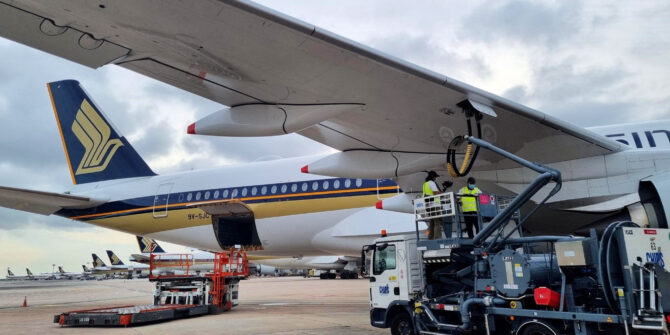
Singapore plans to introduce a mandatory Sustainable Aviation Fuel (SAF) on all departing flights from WSSS/Changi and WSSL/Seletar, but the start date has slipped from Oct 2026 to Jan 2027 after authorities delayed it due to higher fuel costs and disruption linked to the Middle East conflict.
This applies to airlines, cargo, and business aviation – effectively every departure from Singapore.
This isn’t a fuel mandate in the traditional sense. Operators are not required to physically uplift SAF. Instead, the government will buy SAF centrally and recover the cost through a levy applied to every flight.
Airlines will pass this on per passenger (based on distance and cabin), while BizAv operators will be charged per aircraft per departure.
The key difference: you’re paying for SAF whether you uplift it or not.
How the levy works for BizAv
For business aviation, the charge is simple on paper but has a few operational gotchas.
The levy is:
- Charged per aircraft, per departure
- Based on aircraft size (ICAO A-F)
- Based on the next destination, not the final destination
That last bit matters. If you’re flying Singapore-Japan-US, you pay Band II (Japan), not Band IV (US).
The bands are as follows:
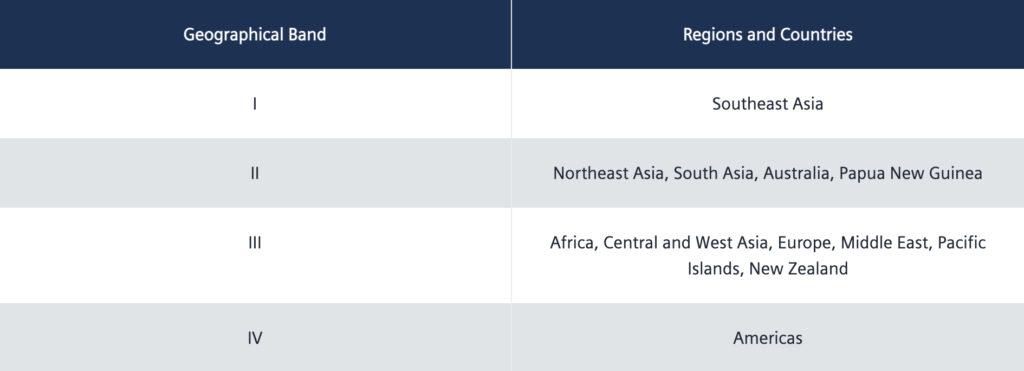
And the way they charge for BizAv flights works like this:
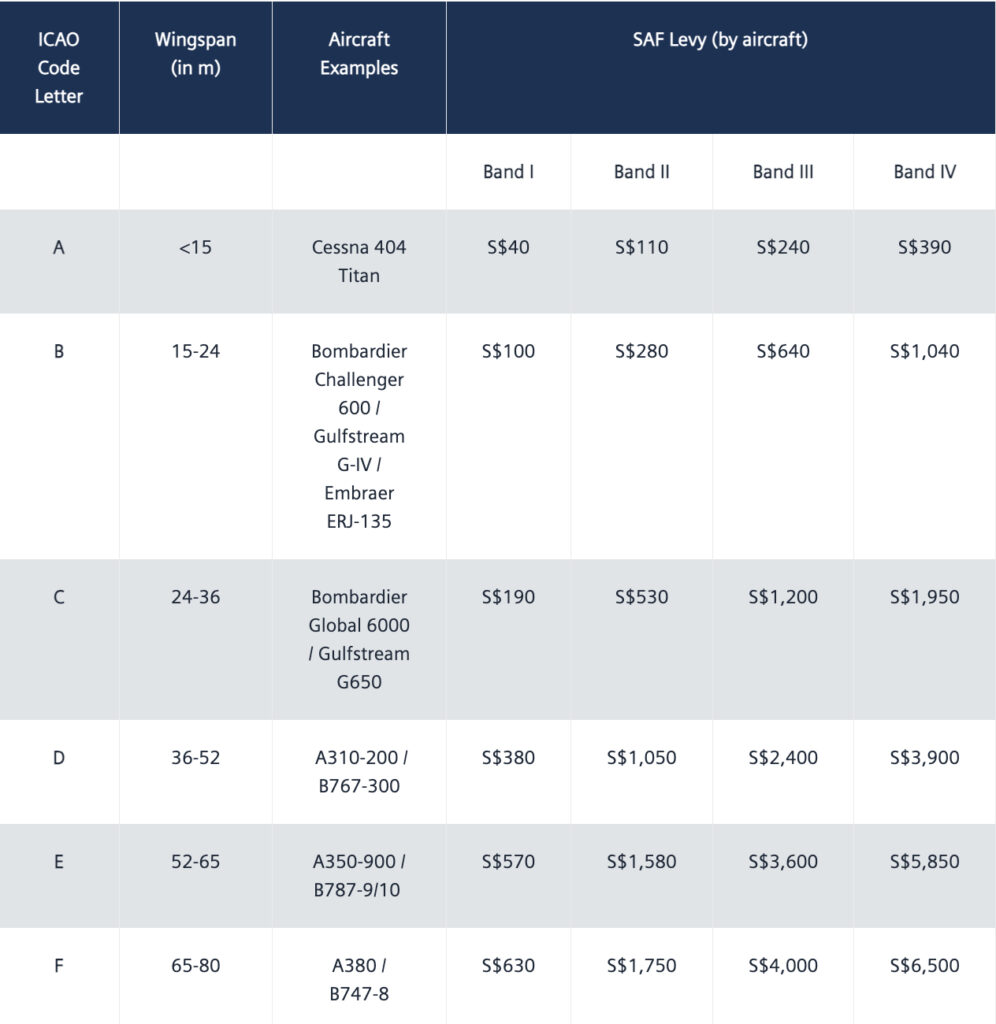
So costs scale quickly with size and distance. The table above shows everything in Singapore dollars. Converting into USD, a G650 (Code C) would pay the following:
- Band I (S$190) = $140 USD
- Band II (S$530) = $390 USD
- Band III (S$1,200) = $890 USD
- Band IV (S$1,950) = $1,440 USD
So long-haul departures are where you’ll feel it most.
A few practical points:
- This will likely show up buried in handling or fuel invoices
- It’s predictable, so you can plan for it
- Technical stops, diversions, and some non-revenue flights are exempt
Bottom line: not huge money, but another fixed cost to factor into every Singapore departure.
How this compares to the rest of the world
Singapore’s approach is unusual. Most countries are doing this a different way.
Across Europe and the UK, governments have introduced SAF blending mandates. Fuel suppliers are required to mix a minimum percentage of SAF into jet fuel at airports – starting around 2% today and rising over time.
That means:
- You physically uplift a blended fuel
- The SAF cost is built into the fuel price
- You pay more per ton of Jet A1, rather than a separate fee
Same end result (ie. you pay!) just packaged differently.
And the cost impact is real. Airlines have warned that SAF-related compliance costs in Europe have already pushed fuel prices higher due to limited supply.
This model is spreading globally. More regions are introducing mandates or targets, with governments pushing for increasing SAF percentages over time.
What’s driving all this
The push is simple: aviation is hard to decarbonise, and SAF is currently the only drop-in solution that works with today’s aircraft.
Governments see SAF as one of the main ways to cut aviation emissions in the near term, and are using mandates and levies to force uptake and scale production. In Europe, that means minimum SAF blending targets starting at 2% in 2025 and rising steeply over time.
In reality, it works like this:
- SAF is much more expensive than conventional jet fuel
- There isn’t enough supply yet
- So governments step in and mandate usage or recover the cost through schemes like this
- Operators end up paying, either through higher fuel prices or direct charges
Singapore has just chosen the most transparent version of that model – a visible line item instead of hidden fuel pricing.
Either way, the direction of travel is clear – more SAF, more cost, and more of this coming globally.