Cathay crew witness missile re-entry from North Korea
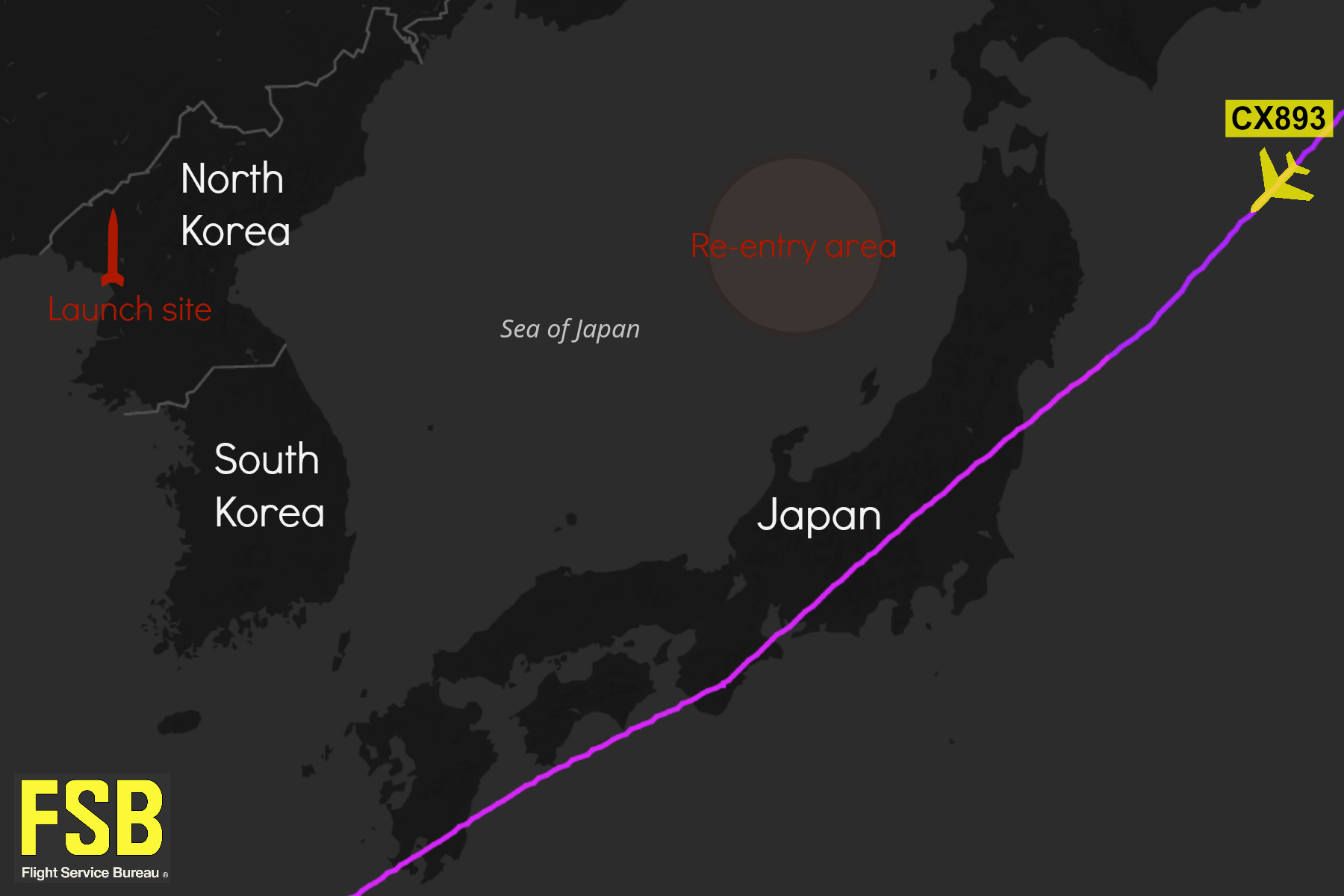
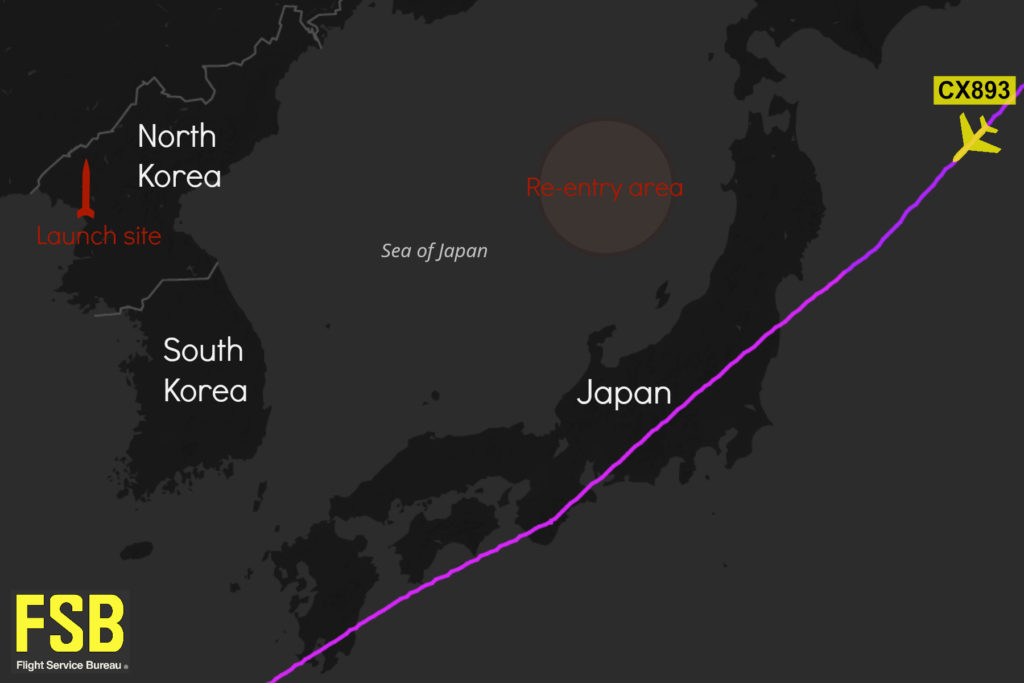
Crew onboard a Cathay Pacific flight witnessed the re-entry of North Korea’s latest missile near their position late last week. The CX893 service from San Francisco to Hong Kong on Nov 29 was over Japan at the time when North Korea launched its missile.

The crew reported: “Be advised, we witnessed the DPRK missile blow up and fall apart near our current location.”
Here’s Cathay Pacific’s full statement:

“On 29 November, the flight crew of CX893 reported a sighting of what is suspected to be the re-entry of the recent DPRK test missile. Though the flight was far from the event location, the crew advised Japan ATC according to procedures. Operation remained normal and was not affected. We have been in contact with relevant authorities and industry bodies as well as with other carriers. At the moment, no one is changing any routes or operating parameters. We remain alert and review the situation as it evolves."

North Korea’s missiles are larger, and can fly further, than the other missiles we’ve previously seen. Over the past year, most of these missiles land in the Sea of Japan, well inside the Fukuoka Flight Information Region (Japanese airspace). But as we see with this latest test, there is clearly a danger of some of these missiles not re-entering the atmosphere intact – meaning that a debris field of missile fragments passes through the airspace, not just one complete missile. If you haven’t done so already, make sure you read this: our article on why North Korean missiles are now a real threat to Civil Aviation.

This latest test is also significant because of its unprecedented altitude – 4500km (2800 miles). Experts seem to agree that if it had been fired on a standard trajectory, the missile would have been capable of traveling around 13000km (8100 miles), meaning it could have struck anywhere in the mainland US.

If you’re operating in the region, we recommend avoiding the ZKKP/Pyongyang FIR entirely and avoiding the affected areas over the Sea of Japan. For more info, check out Safeairspace.

Iridium Fault Fixed

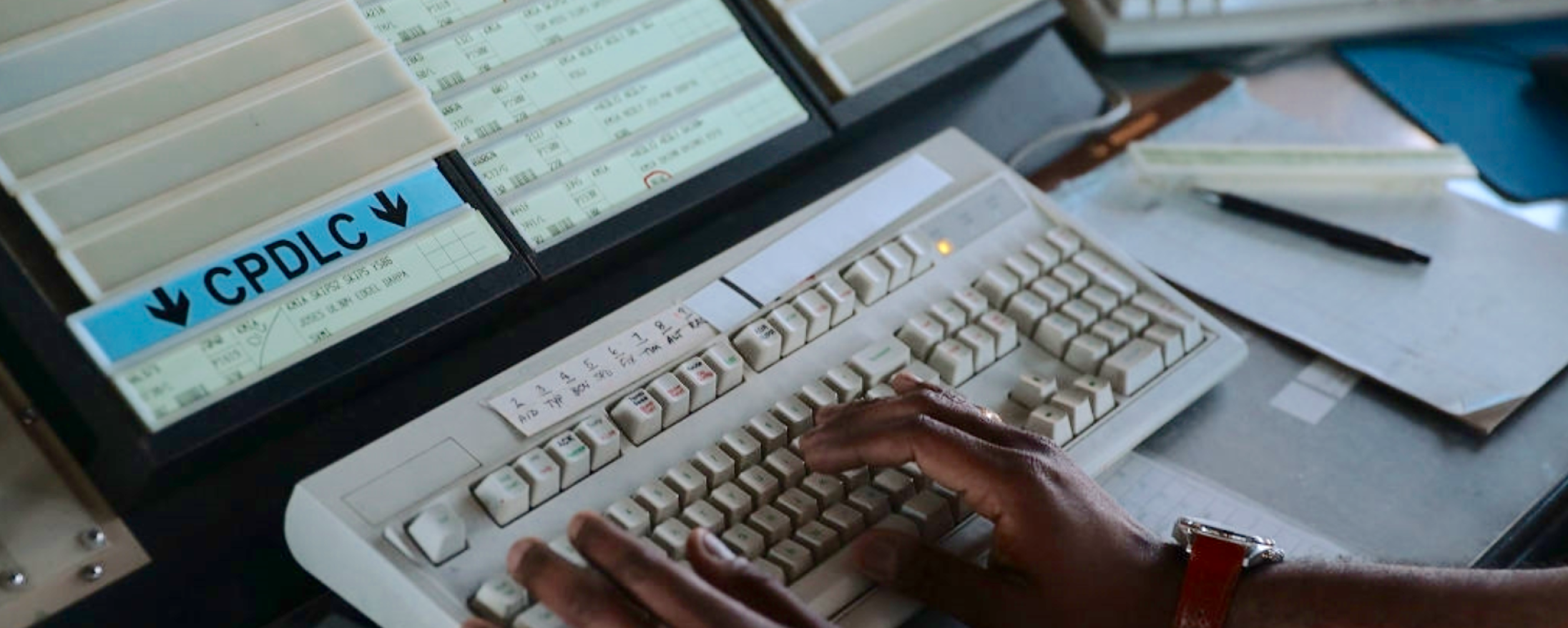
Last week we reported on an equipment issue with Iridium satcom that prompted a ban by a number of Oceanic ATC agencies. Some aircraft were receiving massively delayed clearances sent by ATC via CPDLC – and one took the instruction and climbed 1000 feet, even though the message was meant for the flight the aircraft operated previously.

Here were the areas which had previously published Notams restricting the use of Iridium: Brazil Atlantico (SBAO), Auckland (NZZO), Chile (SCIZ), Japan (RJJJ), Anchorage (PAZA), Oakland (KZAK), New York (KZNY and KZWY).

However, all FIR’s have now removed their notams which banned the use of Iridium for CPDLC and ADS-C. This has happened after tests were performed last week using Iridium SATCOM which confirmed that Iridium no longer queues CPDLC uplinks for more than five minutes.

Article header photo by @Zelgomat


Oceanic ATC’s tell us their position on Iridium Satcom

Last week we reported on an equipment issue with Iridium satcom that prompted a ban by a number of Oceanic ATC agencies. Some aircraft were receiving massively delayed clearances sent by ATC via CPDLC – and one took the instruction and climbed 1000 feet, even though the message was meant for the flight the aircraft operated previously.

Today, we checked-in again with all the oceanic ATC centres, to see what their current policy is on the issue.

EGGX/Shanwick told FSB that they are aware of the issue, reviewed it, but have decided not to ban the use of Iridium for either CPDLC or ADS-C just yet. LPPO/Santa Maria have the same position. So, in this airspace, you can use Iridium, for now.

CZQX/Gander said they did a safety analysis of it, and decided not to ban it. They have all kinds of conformance alerts in place to prevent any problems from happening – so if aircraft deviate they get notified immediately.

BIRD/Reykjavik aren’t that concerned about the issue – they use HF most of the time anyway.

Chile (SCIZ)
Japan (RJJJ)
Anchorage (PAZA)
Oakland (KZAK)
New York (KZNY and KZWY)
All these centres have published Notams instructing crews not to use Iridium for CPDLC or ADS-C. Until the fault is fixed, in those regions you’ll have to either use HF for ATC comms, or use another SAT provider.

Auckland (NZZO) and Brazil (Atlantico SBAO) have applied the ban to CPDLC alone. Use ADS-C if you like.


From Iridium themselves, they told FSB: “We’ve updated their queue management system. Every minute, there is a queue check. If there is any message that is older than 4 minutes, it marks as timed out, and will not be delivered. This update was done at ground level, so it does not require any software updates by the user. We’re still waiting on feedback from FAA workgroup on the fix and if it’s sufficient to allow use of Iridium for CPDLC and ADS-C.”

That’s it for now! We’ll keep you posted, or, even better – tell us below in the comment section if you hear news.