U.S. cracks down on scheduled flights to Cuba
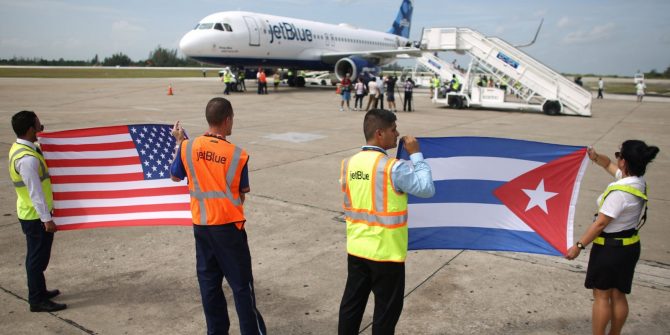
The U.S. has announced it will suspend scheduled flights to all airports in Cuba except for MUHA/Havana, in another attempt to limit cash flows going to the Cuban government. The affected airlines, including American, Delta and JetBlue, now have 45 days to wrap up their operations to those other destinations in Cuba, before the ban goes into effect on Dec 10.

This does not apply to Part 135 non-scheduled charter flights – these are still allowed to operate from the U.S. to any international airport in Cuba. However, it’s still a tricky business to operate these flights and stay within the rules. Policies introduced by the Office of Foreign Asset Control (OFAC) in 2017 mean that there are only a handful of categories of permitted travel between the US and Cuba.

As for Part 91 private flights from the U.S. to Cuba, these have been completely banned since June 2019. This was a policy introduced by the US Bureau of Industry and Security (BIS), which meant that U.S. operators could no longer operate an N-reg aircraft privately to Cuba for any reason – it doesn’t matter if your passengers meet OFAC’s “permitted categories of travel” or not, it’s a no-go.
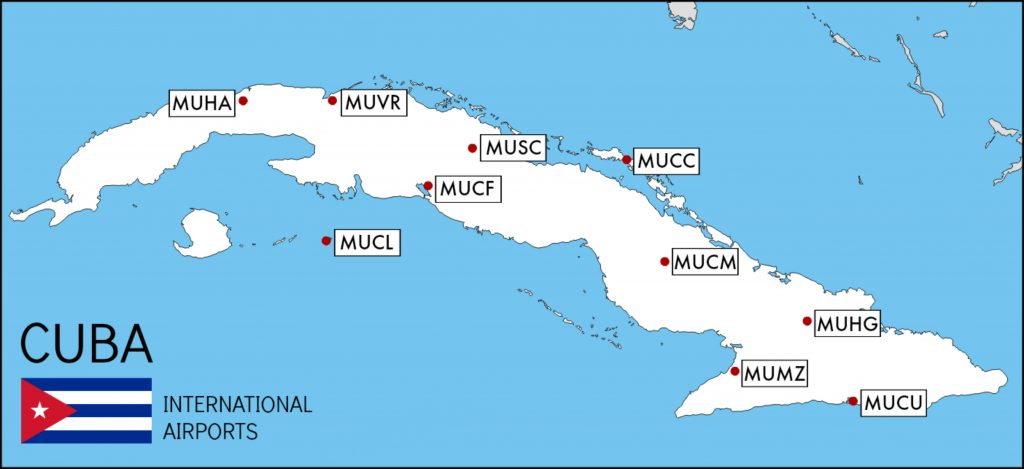
For non-U.S. operators traveling to Cuba from anywhere other than U.S. territory, it should be a doddle. Get a landing permit, arrange your ground handling, file your flight plan, and off you go. Check out our article for more info.

If you’re headed to Cuba — even to MUHA/Havana — you should double-check with your insurance provider about your coverage. We received the following report, which suggests that with the new U.S. sanctions, many U.S. operators may no longer be covered:

“Being the insurance director of an Airline, I’m having the dilemma whether the insurance would cover any damages/losses/injuries may have occurred during Cuba flights. Because, when I raised the question, insurers simply replied with an aviation clause called AVN111/AVN111(R) which says insurers would verify each individual case with relevant sanction authority (in this case, OFAC) and do their best to grant permission to reimburse the losses. It can easily take years to get resolved which essentially means there is no actual protection against losses”…

In principle, U.S. operators with an insurance policy from a non-U.S. based insurer can get insurance cover for Cuban ops. However, in practice it may not be possible to even purchase this, as lots of these policies are underwritten by U.S. based insurers – especially for higher policy limits.


Total ban on US private flights to Cuba

Effective today, June 5th, no US private aircraft will be allowed to travel to Cuba. The rule comes from the BIS – the US Bureau of Industry and Security, part of a further clampdown on Cuba policy by the US government.

We spent the day here in OPSGROUP clarifying the new rules and what it means for US operators.

What happened? BIS issued a new rule today, June 5 called “Restricting the Temporary Sojourn of Aircraft and Vessels to Cuba”. [official copy here] [Guidance here]. 

This is tough to read and understand. Nothing new about that. So, we asked OPSGROUP, discussed it with a whole bunch of members, got some legal interpretation, and got some great help from the NBAA.

Here’s the plain English wrap up:

  • US Part 91 private flights: Effective June 5, you cannot operate an N-reg aircraft privately to Cuba for any reason. This includes Corporate. It doesn’t matter if your passengers meet the “category requirements (see later)”, it’s a no go. 
  • Part 135 Air Ambulance: You can go, and you don’t need a license. From the rules: “Air ambulances operating under 14 CFR part 135, may depart from the United States under its own power for any destination”. “Air ambulances will remain eligible for the license exception when destined to Cuba”.
  • Part 135 Charter: This was unclear because of the wording of the new rules. But you can go. We asked BIS specifically about this, and the wording of the new paragraph is meant to be read as a series of options that allow you to go to Cuba – 135 is covered under the “AOC holder” bit.
  • Part 129: You can go. Part 129 is foreign operators. An example would be Air Canada doing a charter from JFK-HAV. That’s allowed.
  • Part 121: No changes. Airlines can operate.

BIS vs OFAC

The first gatekeeper of Cuba rules is BIS. If they don’t prohibit your operation, eg. Part 91 – then you proceed to the second gatekeeper – OFAC, and look into whether you need a license, and what category your passengers are travelling under.

Categories of allowed travel

There were 12 categories – or “reasons” to be allowed to go to Cuba. There are now 11. The one removed was known as “People to people”. These are set by OFAC.

What does Cuba say?

Thanks to one of our members who called the Cuba CAA this morning, and got this:
In our country there is no regulation in this regard. They can fly over
and land registrations of any nationality without any distinction
provided they meet the requirements requested and that you know
all right
.”

As we would expect, none of the restrictions come from the Cuba side. So everyone continues to be welcome in Havana, it’s just the US government that is restricting matters for US operators.

A super simple FAQ

Can I fly my private C172 to Cuba?
No. 

Can I fly my owner to Cuba in a G550, if he passes the ‘category test’?
No. He can go, but has to go on a commercial service.

Can I operate a Corporate Jet to Havana, for business reasons?
No. Regardless of the reason the principles might want to go to Cuba, you cannot operate any aircraft under Part 91.

But I see in the rules that you can apply for an exemption from BIS?
Yeah, you can, but they will say no. “License applications for the temporary sojourn to Cuba of those vessels and aircraft are subject to a general policy of denial.”

Can I operate a charter flight to Cuba?
Yes. BIS rules don’t prohibit this. But you then need to look into the OFAC rules.

Can I go to Mexico first, and then to Cuba?
No. In their lengthy FAQ, “A license from the Bureau of Industry and Security (BIS) is required to fly private or corporate aircraft to Cuba, even if the aircraft stops in another country first.”. And y’all ain’t gettin’ no license.

I am a Canadian operator. Can I operate to Cuba?
Yep. This is all about US operators being restricted. You can fly direct to Havana like you always did, and under the Part 129 bit in the new rule, you can also operate from the US to Cuba. 

So, we think we have this all correct as the final version. If we don’t hear any objections, we’ll add this to the OPSGROUP databank, and make a blog post. From here, we will post this in the new Forum, and the discussion can continue there!

THANKS EVERYONE!

Great team effort today to get this into an understandable-by-humans format. Well done!


No change to Iran airspace warning despite new US sanctions

The US reimposed sanctions against Iran on Nov 5. Despite this, so far there has been no change to the FAA guidance to US operators issued on 9th September 2018: flights to Iran are not prohibited, but operators should “exercise caution” when flying in Iranian airspace.

However, with the reimposed sanctions comes a new problem if you’re a US operator: you’re allowed to overfly Iran, but you’re not allowed to pay for all the things needed to make that happen – things like overflight permits, and nav fees.

The rule is simple: no US person or business can pay for services in countries with sanctions against them (like Iran), unless that person or business has a licence to do so, issued by the Office of Foreign Assets Control (OFAC).

And you’re not allowed to get an agent to do it for you either; it’s illegal to skirt the OFAC laws by using a 3rd party company (unless, of course, they’ve been approved by OFAC).

So the big question we have now is this: if you’re planning to overfly Iran, have you figured out the legalities of paying for services? How are you making that work? Know someone who’s got an OFAC licence for Iran? Let us know!

And one other thing to watch out for – operators with US based insurers should double-check their policies, as you may now no longer be covered for flights to Iran, due to the new sanctions. This is worth checking, even if you’re only planning on overflying the Tehran FIR, as any unplanned landing (decompression, medical, engine fire) may force you into Tehran or another airport – it’s a big chunk of airspace.

Further reading: