(Not so) New on the NAT

The helpful NAT OPS elves have put out some new NAT OPS info, so here is a summary on it.
The Sample Oceanic Checklist
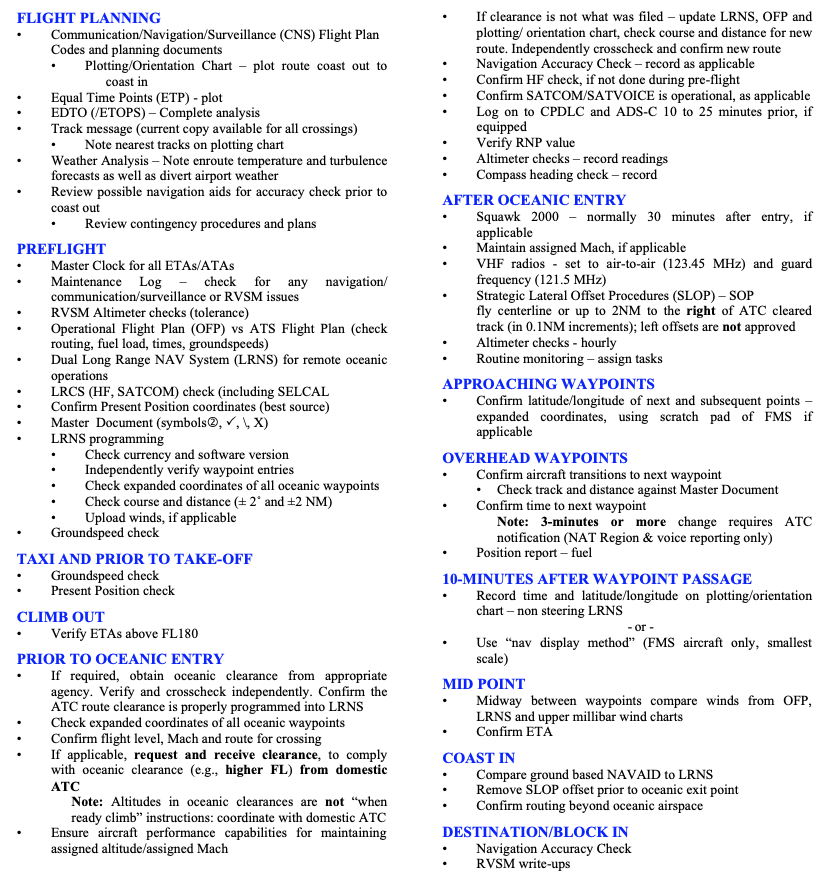
First up, the Sample Oceanic Checklist which was effective from October 5. Here it is if you want to read it yourself.
Page 2 of this is actually really handy if you are not super familiar with oceanic ops because it lists everything you need to think about and do for each stage of the flight. The main change here is a clarification of SLOP (and micro slop) which is up to 2nm to the right, never go left, and in increments of 0.1nm.
Fresh out the bulletin
Page 5 has updated the info on Long Range Nav Systems (LRNS) saying ya need two of ‘em, a single FMS doesn’t count even if it is receiving from two separate nav sensors, and as far as your LRCS (long range comm systems) go you need an HF as one of them.
‘Prior to Oceanic Entry’
A reminder here that both pilots must obtain the clearance. This does not mean both have to do it separately. It means both have to be there, check it, confirm it. They actually say that dual checking of the oceanic clearance must be SOP. So no toilet breaks in the middle of it.
Generally if you are going to get your clearance by voice then give it 40 minutes, if you’re using Datalink (which you most likely will be now with all the mandates in place) then 25-90 minutes before entry will work. The time varies from entry region to entry region so you’ll need to confirm the exact timing. Reykjavik for example actually says 15-45 minutes.
Oceanic Errors
The second update, also effective October 5, is all about Oceanic Errors, and it starts out with a ‘Safety Snapshot’. We’ve posted on the safety reports each year and you can read last year’s here.
This bulletin looks at the main issues that have been cropping up in the NAT – namely gross navigation errors, separation problems, weather deviations, and issues with CPDLC – and it provides some top tips on how not to mess up.
Here’s our version of the Top Tips.
CPDLC
It seems some folk have been getting confused with conditional clearances. A conditional clearance means it isn’t as simple as a “climb now” – it will have some sort of delay in it, like a climb after 20W, or a “to reach it by…”, or even a “maintain FLXX, at 14:03 descend and maintain FLXX”
There is a lot of explanation on what these mean, what is expected and how to think about it. Really, it goes back to that infamous saying we all had drilled into us through school – read the (insert swearword) question. Or in this case, clearance. RTC.
Gross Navigation Errors
These seem to be happening because clearances are differing from flight plans and folk aren’t checking and are missing the amendments. You have to fly the clearance. Which means you need to make sure your box (FMC, navigation thingamajig) has the new route programmed in.
Erosion of Longitudinal Separation
People aren’t flying the speed they’ve been been told and are getting too close up the… of another aircraft. Or another aircraft is getting too close to them.
Stick to your assigned Mach. If you have to change it because of turbulence, or you messed up and can’t actually fly that fast/slow by more than .01 of a mach, then tell ATC. ATC will tell you when you don’t need to stick to it anymore by saying something like “Resume normal speed”.
Contingencies
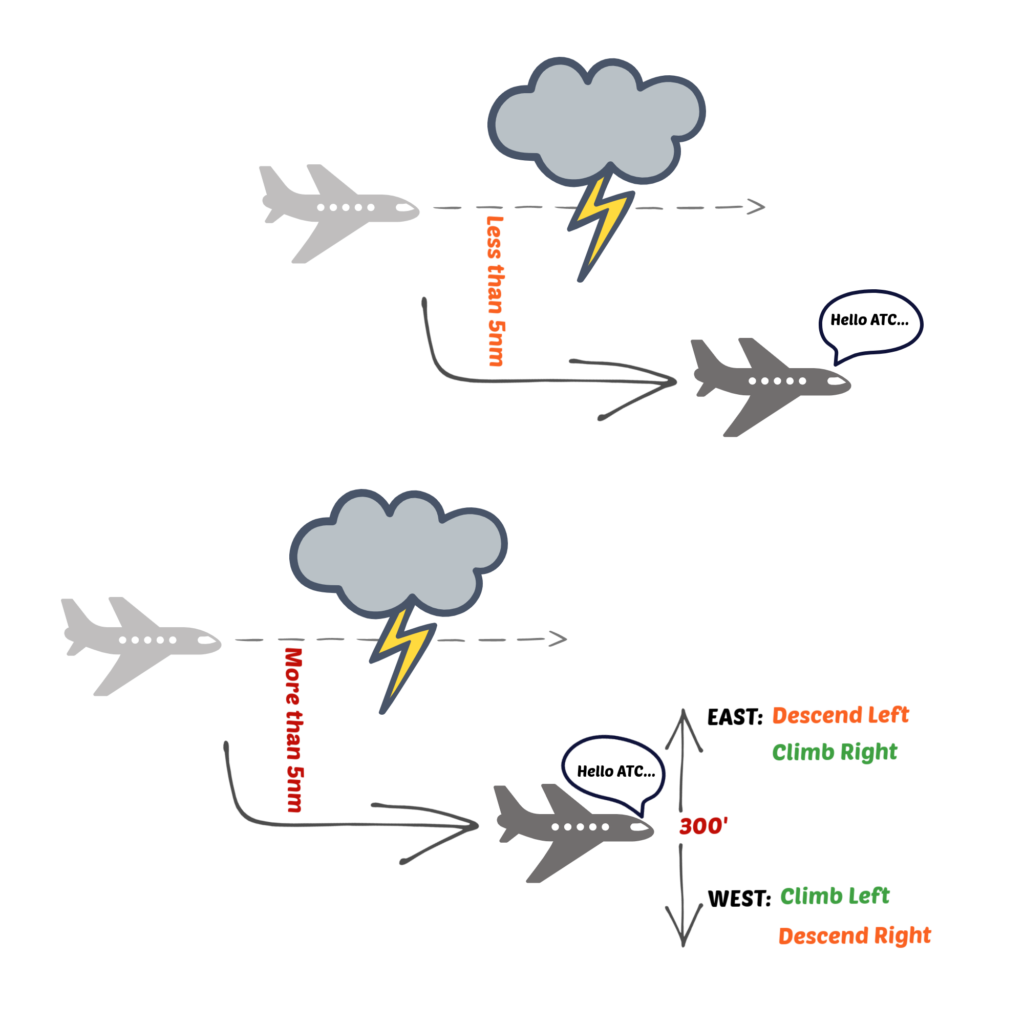
These came in back in March 2019. Check for convective activity early on, that way you have time to pull out the handy picture below and work out what you are going to do.
Also remember: if you have to deviate at all, then you need to tell ATC. Even if that deviation means a tiny little dog-leg around a storm that will move you off your track less than 5nm, you still need to tell them. They will see if you don’t and they will get angry. If you can’t get hold of them then that is when you will want to apply the weather contingency procedure.
Here is a picture to help.
SAND means South (of track) ascend, North descend