2025 Update: BizAv Ops to Israel
Key Points
- May 2025: Turkish airports have stopped supplying fuel to aircraft heading to Israel due to a trade embargo. BizAv flights will need to plan fuel stops enroute at one of Israel’s “approved airports.”
- Jan 2025: Israel’s new Electronic Travel Authorization system (ETA-IL) is now mandatory for pax from all visa-exempt countries. Plus we have a new list of approved airports from which international flights are allowed to enter or overfly the LLLL/Tel Aviv FIR.
- May 2024: Israel has tightened the rules for GA flights from the US, due to security concerns. Most flights will now need to either hire an approved security company to do screening in the US, or else make a stop en-route at an approved European airport.
- Check below for a summary of how to get an Israel landing or overflight permit, and what to expect on how that process works.
May 2025: No fuel for Israel-bound flights in Turkey
We’ve had confirmation from a local handler that Turkish airports will no longer supply fuel to aircraft heading to Israel. This is part of a trade embargo Turkey imposed on Israel following the Gaza war, but it seems like only recently they’ve started applying the rule specifically to jet fuel for BizAv flights.
So if you’re flying to Israel and were planning to tech-stop in Turkey for fuel – that’s no longer an option. You’ll need to plan a fuel stop at another airport enroute, and make sure it’s on Israel’s list of “approved airports” for international departures (see list below).
Jan 2025: New ETA Rules
Effective 1 Jan 2025, Israel’s new Electronic Travel Authorization system (ETA-IL) is now mandatory for pax from all visa-exempt countries. The ETA will be valid for up to 2 years, and lets people stay for up to 90 days. Visitors from non-eligible countries still need to get a visa, just like before. Operating crew are exempt (official word here).

For a list of visa-exempt countries, check here. Visitors from non-eligible countries still need to get a visa, just like before.
Jan 2025: New list of approved airports for flights to Israel
Israel has published a revised list of approved airports from which international flights are allowed to enter or overfly the LLLL/Tel Aviv FIR. Download it here.
Several airports have been removed from the list: EBCI/Charleroi, GMMN/Casablanca, LEPA/Palma, LEMG/Malaga, and KIAD/Washington Dulles.
Russian airports UUBW/Zhukovsky and UUWW/Vnukovo have been added.
You can still apply to operate from airports that don’t appear on the list – but allow extra time for processing.
May 2024: GA flights from US to Israel – 3 Options
Effective May 2024, there are some new rules for GA flights from the US. These have come from ASOC (Aviation Security Operations Center), the authority responsible for the security procedures for the arrival of aircraft into and through Israeli airspace.
You can read the ASOC announcement on this here. If you want to fly from the US to Israel, you now have three options…
1. Hire an ASOC-approved security company in the US to do pre-departure security screening and fly direct.
- You basically pay one of two companies to send their staff to whichever US airport you want to depart from, and they will do your pre-departure security screening for you.
- The two companies approved by ASOC are: Premier Corporate Security or Crisis 24. Contact deets for both can be found here.
2. Private flights can sign up to the Preferred Carrier/Aircraft Program and fly direct without any pre-departure screening.
- Charter flights (Part 135) are not eligible for this – only Private flights (Part 91).
- It’s quite a process – you have to pay for ASOC to come visit you, conduct interviews, train your crew, and the whole thing can take months. So this option is really only applicable to operators who do frequent flights to Israel or who have close ties to the country.
- You can apply by emailing asoc-dvir@int.gov.il
3. Land at an approved European airport en-route for a security check before continuing to Israel.
- Check this list of approved airports (published in Jan 2025). These are where you’re allowed to fly direct to Israel from. Ignore the US ones (KEWR and KJFK) as these no longer apply to GA flights.
- For flights coming from the US, there are plenty of viable options to consider in northern Europe. (BIKF/Keflavik isn’t an option though – that got removed from the list back in 2023).
What do I need to do to fly to Israel?
So now we’re talking about permits i.e. the standard stuff that’s been around for a while.
It’s the same process for landings and overflights, except for the thing about a ‘local sponsor’ – you only need this for landing permits.
- You must be departing from one of the approved airports in the approved list. (For overflights, your destination airport doesn’t matter.)
- For landing permits: You need a ‘local sponsor’ – a contact person in Israel who can vouch for you. This person must be Israeli, and personally acquainted with all passengers – not just a travel agent or hotel representative. They will be contacted by the security services before any approval is given.
- For overflight permits: You don’t need a local sponsor.
- Your crew/pax/plane need to be from Israel-friendly countries: You must provide passport copies of the crew and passengers, who must be nationals of countries that have diplomatic relations with Israel. The same rule applies to the country your aircraft is registered in.
- Fill in the permit application form, and send it back to ASOC at asoc@int.gov.il.
The next step is where it can get a bit confusing. Get ready for some jargon. Check out the full guidance on ASOC’s website, but here’s the lowdown on how it works and what to do:
- ASOC will check your permit request, and if approved, will reply to you with a Pending Permission Notification.
- The Captain must then call or log in to the ASOC website to submit an Entry Code. The Pending Permission Notification then becomes a Final Security Arrival Permit.
- You’re good to go! On entering Israeli airspace, you’ve then got to follow the Arrival Identification Procedure. This bit is easier than it sounds – ATC will basically just ask for your Entry Code to approve you for entry. ASOC have published an example of how you can expect that conversation to go.
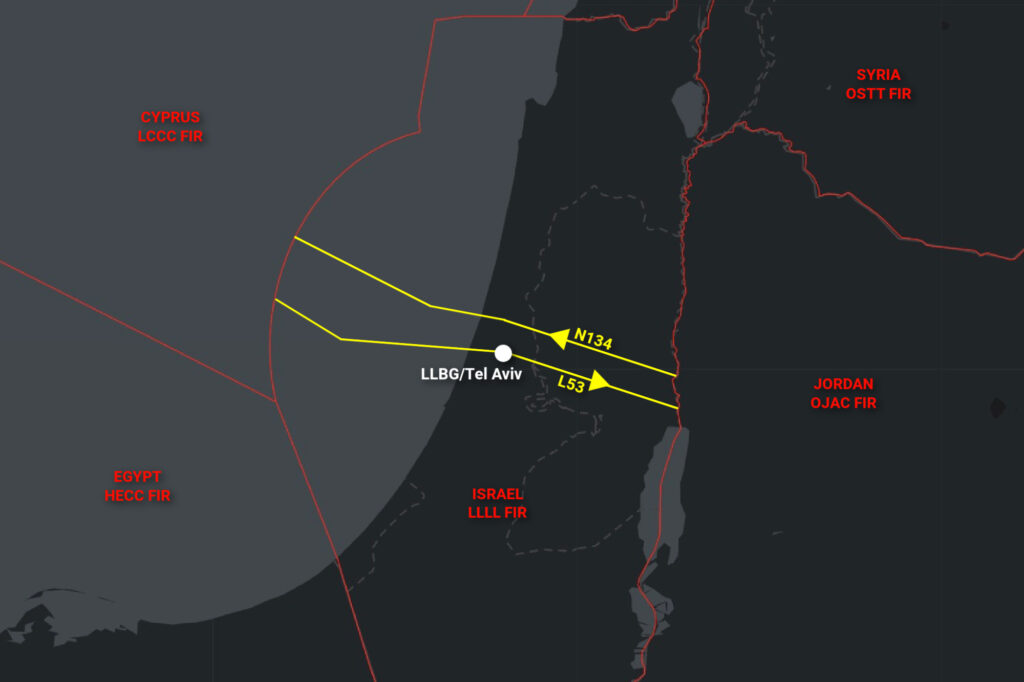
For overflights, there’s basically two options – N134 for westbound flights, and L53 for eastbound. Although check the Notams for the latest here, as they often only permit overflights at specific flight levels and times.
Security & Airspace Safety
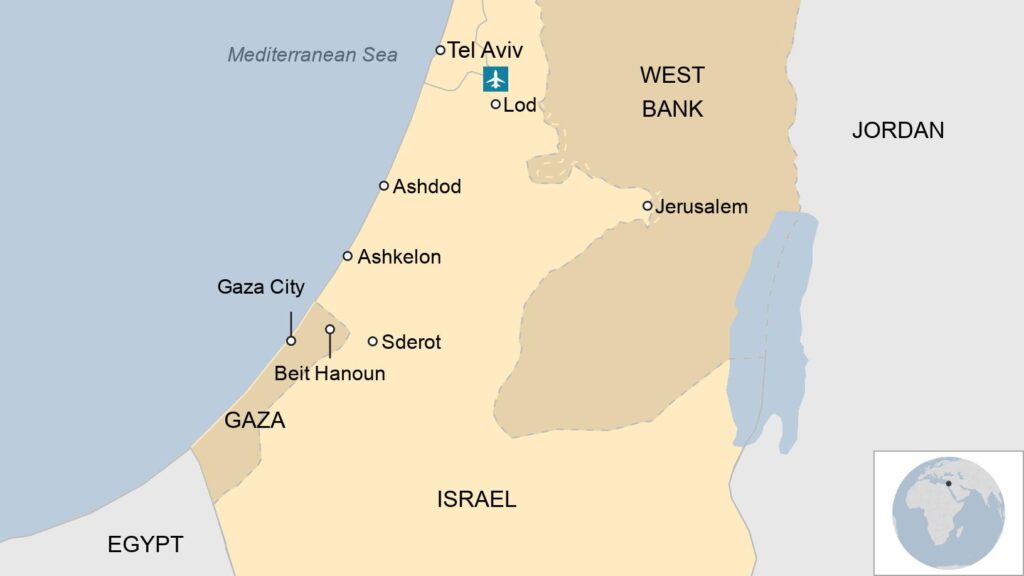
Ongoing GPS spoofing, sporadic attacks in the north from Lebanon, and the Gaza conflict create a hostile and non-routine environment. There remains significant risk within the Tel Aviv FIR from the ongoing conflict, and a day-to-day review of the current situation is essential prior to operating.
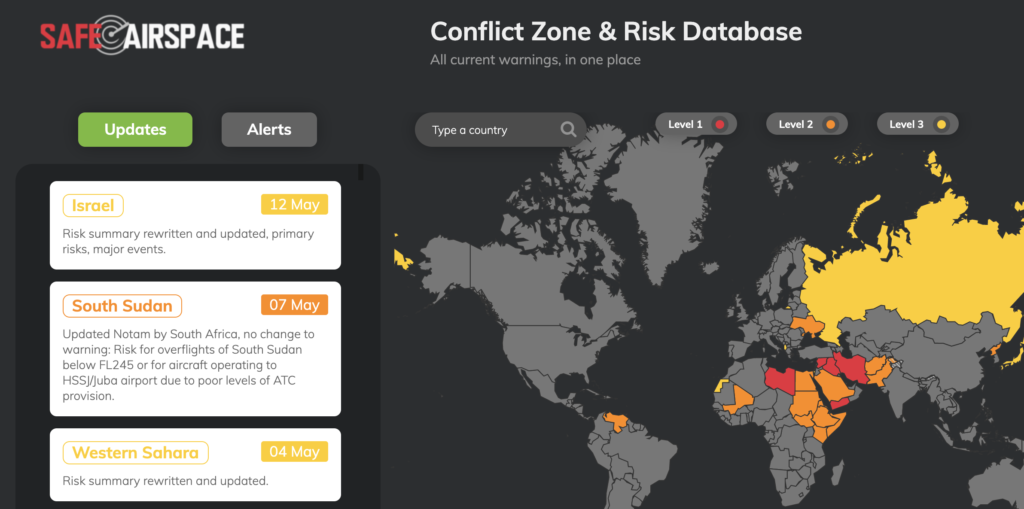
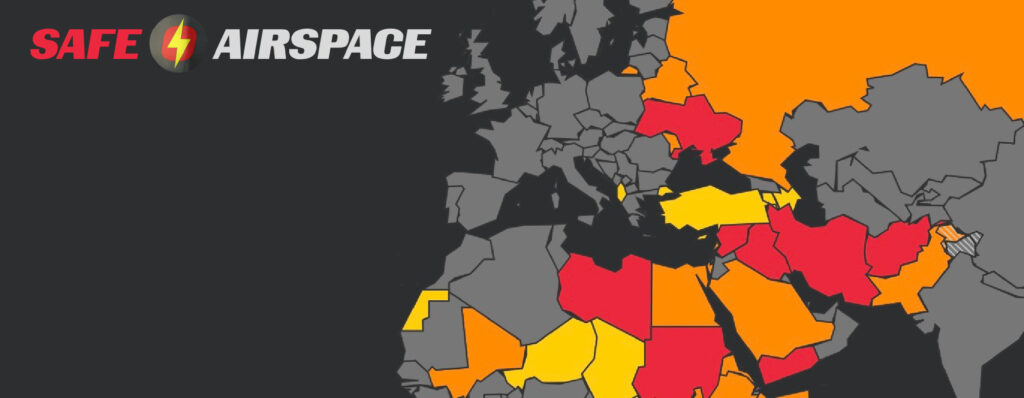
For more info, check safeairspace.net, which also includes a report about the recent Iranian drone/missile attacks on Israel that resulted in airspace closures across the region.
Most airlines stopped flying to Israel at the start of the conflict in Oct 2023, and many have been slow to return. To read OPSGROUP member reports on flights they have recently operated to LLBG/Tel Aviv, check Airport Spy.
For overflights in the region, almost none are going over Israel. Most operators are going via Egypt and Saudi Arabia – many are choosing to transit west of Cairo, fly south, avoid Sinai, and then continue eastbound over Saudi Arabia. The northern route via Turkey and Iraq is also an option, though warnings for Iraq remain below FL320.
Send us your reports!
If you’ve been to Israel recently (or anywhere else, for that matter) and can share some info on how it went, please file a quick Airport Spy report and we can update this article and share the info with everyone!


 Israel has an Air Defense System – “Iron Dome” which protects populated areas of Tel Aviv from rocket attacks by launching interceptor missiles to ensure rockets detonate prior to reaching the ground, minimizing damage. However, the sheer number of rockets launched resulted in several impacting the city.