Lithium Battery Fires, New Safety Alert: What Are The Rules For Part 91?
The risk of lithium-ion battery fires on aircraft is on the rise, with vapes, power banks, and laptops identified as the main culprits.

The FAA has reported a sharp rise in incidents, with some sources noting two thermal runaway events per week. EASA also raised concerns, issuing a new Safety Bulletin on May 27.

While rules are strict for Parts 121 and 135, private flights under Part 91 face fewer restrictions. Arguably, private jets are more at risk, and we’re doing less to protect ourselves.

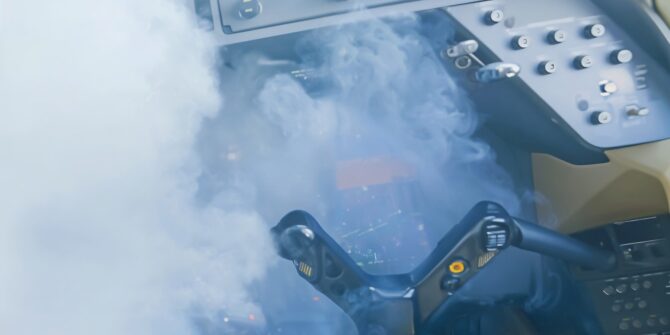
  • Business jets are smaller. A lithium-ion battery fire can quickly fill the cabin with thick, toxic smoke – up to 10 cubic meters from a single laptop battery in just two minutes. History has shown that smoke inhalation often causes the loss of an aircraft in a fire before the fire itself.
  • Fewer crew members.With only one or two pilots and often no cabin crew, response capability is limited.
  • The passengers we carry. Biz jet passengers often carry multiple personal electronic devices which increases fire risk. Some passengers may disregard or not correctly follow safety rules.
  • Less safety equipment.Compared to airliners, biz jets typically have fewer fire suppression tools and less protective gear on board.
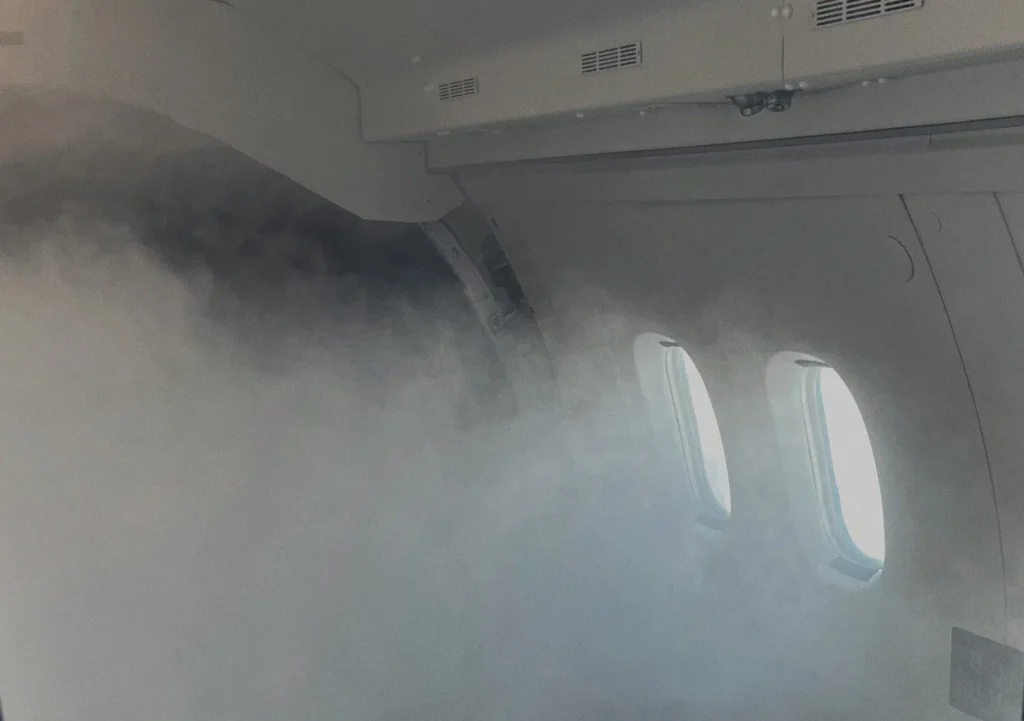
Lithium battery fire smoke contains an unbreathable mix of chemicals including corrosive irritants like phosphorous oxide and hydrogen fluoride.

It seems clear that for the few rules that exist for Part 91 operations, we must be aware of them, and stick to them. And it may come as a surprise to some operators that these rules are more strict when you fly internationallyeven privately.

So here’s a rundown of what you need to know.

A word about lithium-ion batteries

If you’re already familiar with a Wh rating, feel free to skip to the next section. But to understand the rules properly, it helps if you’re familiar with it first.

Watt on earth is a watt-hour (Wh)?

When we talk about how dangerous a lithium-ion battery could potentially be, we talk watt-hours. It is a measure of how much energy a battery can store and use. Think of it like the amount of fuel in a tank – it simply tells us how much power (watts) it produces over time (hours).

It also directly proportional to fire risk. If something goes wrong, all that energy can be released as heat and gas. The more in the tank, the bigger the fire.

The higher the Wh, the hotter the flames, the thicker the smoke, and critically – the harder it is to put out.
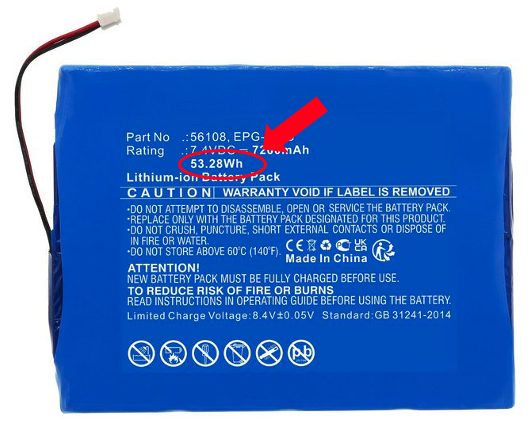
Check the battery label for its Wh rating.

Righto, onto the rules for US Part 91.

Part 91

For domestic flying in the US under Part 91, the rules for lithium-ion batteries are pretty simple.

If the batteries are being carried for personal use, Part 91 operators are (almost) entirely exempt from the US D.O.T. HAZMAT regulations that apply to commercial flights. But it’s not a free-for-all.

The PIC is still prohibited by law from carrying hazardous items onboard an aircraft in a way that might endanger people or things. This includes knowingly carrying defective batteries or packing them in a way that is dangerous or irresponsible.

Baseline safety guidelines still apply, including FAA Advisory Circulars (AC 91-78, AC 120-76D) -along with relevant Safety Alerts for Operators (SAFOs). Deviation from these can expose the operator/PIC to legal liability in the case that something bad happens.

Here’s a summary of those:

Installed batteries (in devices):

Carry these without restriction if they’re properly secured within the equipment, show no visible damage (like swelling or leakage) and are turned off.

Spare batteries:

These must be carry-on.

  •  Little ones (100Wh or less): There’s no limit on the number carried, but each one should be protected from short-circuits (case, sleeve, taped terminals or original packaging).
  • Bigger ones (101 – 160Wh): FAA guidelines say no more than two per person. These must be individually protected using the same precautions above.
  • Biggest ones (161Wh+): Not allowed without full HAZMAT compliance and operator approval. Requires UN spec packaging, shipping papers, training etc. BE CAREFUL – some higher end power banks exceed this limit.
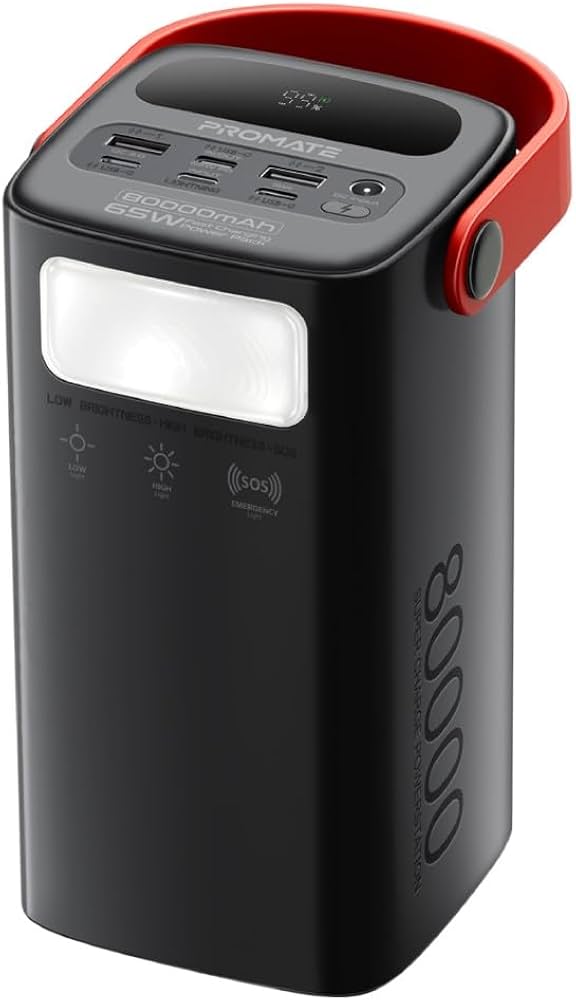
Power banks are treated as spare batteries – this unit is equipped with a battery that exceeds 290Wh.

International operators beware!

Here’s where things get a little tricky.

Once you leave the US, some authorities no longer recognize the distinction between Part 91 (private) and other commercial flights.

Foreign authorities may enforce local rules for the batteries you carry – regardless of your Part 91 status. These are usually based upon IATA Dangerous Goods Regulations. Reportedly, this includes China, Thailand, Korea, India and the UAE.

In other words, what was acceptable in the US may not be once you’re abroad.

Foreign handlers may refuse to load spare batteries that don’t comply with IATA standards, while customs and ramp safety officers may demand battery specs and proper packaging – especially for devices like power banks, drones, camera gear and e-bikes. Devices may be confiscated if they do not comply with local guidelines.

The best solution? Just comply with IATA standards from the outset.

Where do I find these regs?

If you want to get technical – they’re defined in ICAO Doc 9284 (ICAO Technical Instructions for the Safe Transport of Dangerous Goods by Air), and further refined under the IATA Dangerous Goods Regulations.

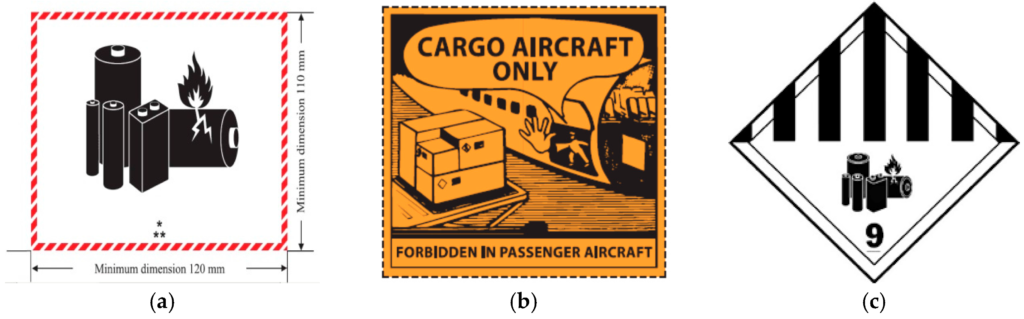
These include packing instructions, required documents, limits of watt hour ratings, the quantity of batteries, labelling and distinctions between passenger and cargo aircraft.

Three million pages of DG-related dread building? Worry not. We’ve put together a quick checklist of requirements/suggestions for Part 91 operators to help them stay out of trouble when carrying batteries outside of the US:
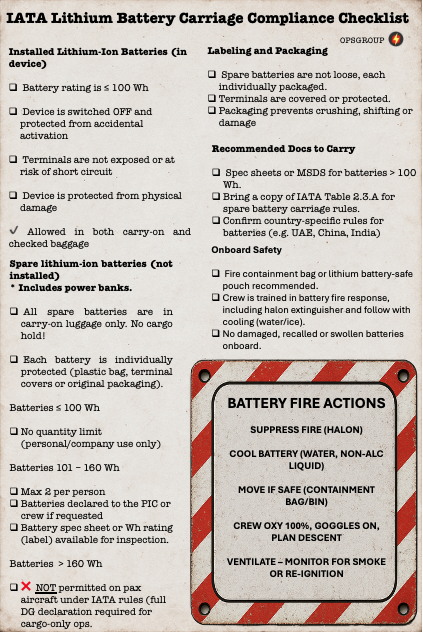
Click to download PDF.

Fire containment

You might already have fire containment bags onboard, but there are other types of containment devices worth considering.

Some of the newer hard-sided designs offer features like hands-free collection, blast protection for the user, and the ability to inject water to help interrupt thermal runaway. Check out this one!


These boxes aim to reduce the risk to crew during an incident and address some limitations of soft bags, which can be difficult to use safely without two people – a challenge on smaller aircraft operating under Part 91 or 135. With recent incidents showing how violent lithium battery fires can be, having an effective containment method onboard is increasingly important.

Don’t forget to report

For Part 91 private flights, the US FAA requires operators to report any case of battery fire, smoke, overheating or thermal runaway aboard an aircraft within 72 hours. The form for this is DOT 5800.1.

ICAO may also require a report if the event qualifies as a serious incident or accident. You are not required to report directly to IATA – it’s only voluntary.


Dangerous Goods: The Bad Ones

IATA recently ‘urged action’ over rogue lithium-battery shippers. Folk are apparently sneaking them onboard without proper notification or packaging, and this could turn into one big, hot mess for airlines.

So, here is a closer look at Lithium Ion batteries, what they are, what they can do, and how to better deal with them onboard.

What are they?

In big terms they are things that power a lot of our airplanes. In smaller terms, they are the batteries in our phones and portable electronics.

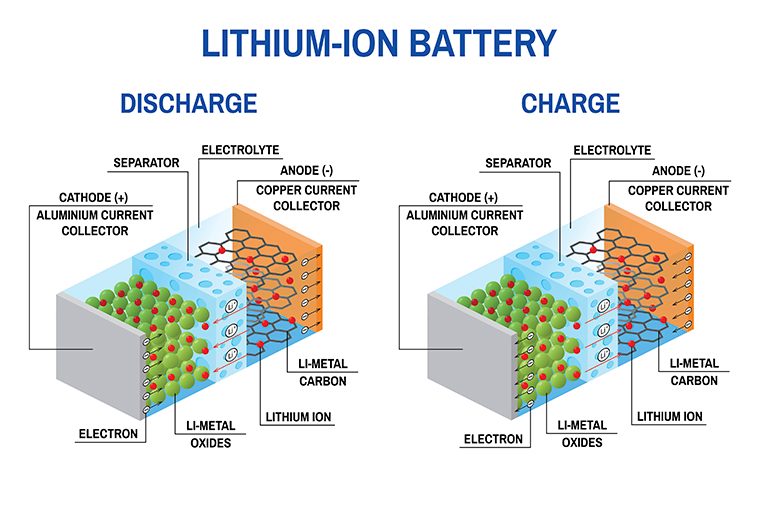
And in super simple terms (and with some creative licence thrown in) they are a cell that contains an electrolyte liquid. Lithium Ions get all charged up, and when they are feeling particularly positive, they dive into the electrolyte and swim through it. The movement of them gets the electrons all excited too, and they go zooming along from the current collector, through the device (your phone, laptop, airplane) which sucks out their charge, and then they get collected up by the negative current collector. 

They are different to regular Lithium (without the ion) batteries because they are rechargeable. They also have no memory effect (they don’t get lazy when repeatedly recharged) and they have good energy-to-weight ratios.

What is the risk?

They sometimes go into thermal runaway, usually when charging, but also if you bash them about (think iPhone stuck under business class seat, getting repeatedly run over by the chair mechanism as the passenger tries to pull it out again).

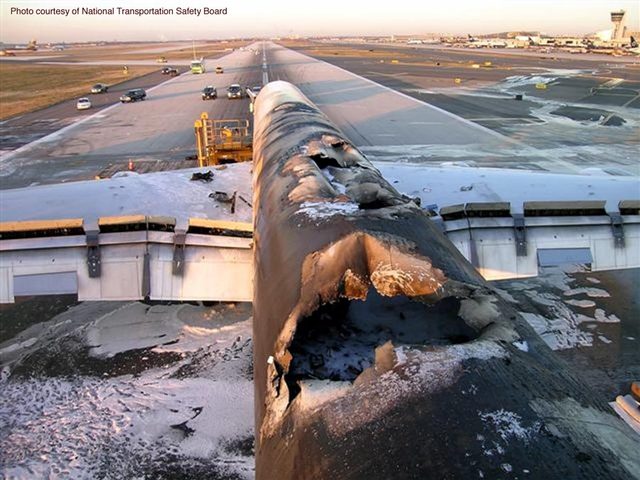
Thermal runaway, as the name suggests, involves them getting really hot – so hot it reaches the melting point of the metallic lithium and causes a pretty horrid reaction when it just keeps getting hotter and hotter until flame, fire, explosion…

You might think a small phone would not be much of a hazard but there are a lot of very flammable things in your airplane cabin. And there are a lot of things with lithium ion batteries in them that people bring onboard.

Then there are airplane batteries themselves. Boeing had an issue early on with their 787 Lithium Ion batteries leading to an All Nippon Airways 787 having a pretty serious incident with one before the problem was resolved.

The biggest risk though comes from those in the cargo bay. Particularly the ones that you don’t know are there, should not be there, and which you cannot monitor. A UPS 747 crashed in Dubai after LI batteries in the cargo hold caught fire. The report suggested the heat and smoke from the fire disabled the crew oxygen system and entirely obscured their view within 3 minutes of the initial warning.

What can we do about them?

Most airlines will have a procedure written into their manuals, but it is worth a quick recap because there are some important bits to note.

  • If it has flames, use Halon. If you are using halon (in the cockpit) make sure at least one of you puts a smoke hood on – the stuff is very bad for you.
  • If there are no flames and it is just smoking hot, then cool it down by pouring water or a non-alcoholic liquid on it. If it is a laptop or something fixed in the cockpit then have a little think before you go slugging water on it though, because there are other electrics around which might not like it that much.
  • Don’t try to pick it up (without gloves on). Don’t cover it with ice thinking this will help cool it better, because it actually just insulates it more making it hotter. Don’t put it in fire resistant bags for the same reason.
  • Once it is safe to move, use fire gloves and put it in a receptacle – things like waste bins are good. Fill with water and store it somewhere safe where you can keep monitoring it.

Getting your crew to be vigilant for phones under seats (and passengers not moving said seat until phone is retrieved) is a good plan too.

The Cargo Concern

Lithium Ion batteries in the cargo hold are a different matter. If you have Dangerous Goods approval then you will have manuals and info on this. If you don’t have DG approval then any mention of Lithium Ion batteries on a NOTOC should be concerning you.

Lithium Ion batteries are a Class 9 Dangerous Good. The ones to look out for are the UN3480 and UN3090 numbers:

  • UN 3090, Lithium metal batteries (shipped by themselves). These are are not rechargeable and are designed to be chucked out after their initial use. They are actually Lithium Metal batteries. These are prohibited for carriage on passenger aircraft.
  • UN 3480, Lithium ion batteries (shipped by themselves). These are the rechargeable ones found in your phones and things.
  • UN 3091, Lithium metal batteries contained in equipment or packed with equipment
  • UN 3481, Lithium ion batteries contained in equipment or packed with equipment

Lithium Ion batters are allowed to be carried on cargo aircraft so long as they have been handled properly. The proper handling, packing, labelling and loading (what they need to be separated from) is all covered by IATA in their massive DG Manual. You can get that here, and find some handy online while you’re at it.

Again, if your operator doesn’t have DG Approval then this is just for info. If you’re wondering whether they do have approval then they don’t – crew have to undergo a yearly Dangerous Goods refresher course and you would remember this (because it is generally quite boring).

So, the simplest thing is to not carry them…

That would be great, but unfortunately it is not that simple. Lithium Ion batteries are in everything nowadays. They come in all shapes and sizes. So the first step is ensuring your passengers know what they are in, and are aware that they shouldn’t be putting these in their checked baggage.

Here is a handy info brochure to give to passengers.

This is a general ‘heads up’ list of some of the things an LI battery might be lurking within:

  • First up, those luggage bags which have them installed in them – if the battery can’t be removed and is more than 0.3g or 2.7Wh it probably shouldn’t be carried. If the battery is under those limits, or if it is removable then it can come onboard but only in the cabin, not in checked baggage.
  • Any lithium ion battery that is under 2g or 100Wh can generally be brought into the cabin. There is often a limit here (20 per person) but this varies with different operators.
  • Mobility aids – electric wheelchairs – often cause problems because folk don’t always know what their battery details are, and it is the airport staff who have to deal with this. The battery on these has to be in an enclosed container to prevent short circuits, and it must be attached as per the manufacturer instructions, or removed if it can be. If it is removed then it must not exceed 300 Wh or 160Wh if there are two of them on the device.
  • Hidden batteries – A lot of devices contain batteries. eBikes. Drones. Things that passengers don’t always think about.

The Captain probably needs to know about the location of these, so if you see stuff being loaded on and haven’t been informed about it, ask.

Finally, rogue shippers. Because of the restrictions, people are sneaking them onboard hidden in incorrect packaging, and without declaring them. They key to stopping this is going to lie with the airlines, operators and ground staff who need to be vigilant. The crew cannot do much more than mitigate the situation if some are onboard, and do cause issues.

Here is the full note from the US Department of Transport and IATA

What to do if you have an incident

If you have a Dangerous Goods Incident, you need to report it, and usually quite quickly. The FAA info page is here to help.

Lithium Ion battery fires are extremely hot and burn incredibly fast. If you think you have LI onboard that might be compromised, get that airplane on the ground as quickly as possible, and get your passengers off.

Want to read some more?