Pilot vs Crew: ID Confusion in Nice

We’ve had a few reports from crews facing problems at LFMN/Nice because their ID cards said “PILOT” instead of “CREW.” In one case, a delay caused a missed slot. Other incidents have been reported elsewhere, such as LSGG/Geneva. The issue isn’t just a matter of wording—it’s about how rules are being applied differently to EU and non-EU operators.

Why the Confusion?

At the heart of this is EU security law:

  • EU-based crews: Under EU Reg. 2015/1998, airport authorities are right to insist on IDs that show “CREW.” Section 1.2.4.1 requires this wording in English, along with a validity date and other criteria. IDs showing “PILOT” do not meet the EU requirement.
  • Non-EU crews: These rules don’t apply to you. Instead, you must meet your own national crew ID requirements. ICAO provides guidance in Annex 17 and Doc 8973, but leaves specifics to each country. This means ID formats can vary widely, which sometimes leads to problems at European airports.

Reality at LFMN/Nice

Despite the legal distinctions, local security often applies a simpler standard—they just want to see “CREW” on the badge. If your ID lacks it, you could face delays, requests for extra docs (licence, passport), and additional paperwork from your handler (Signature advise that in the case of flight attendants, they will need to be listed as PAX on the Gen Dec if their IDs are not accepted).

Some members report that using IDs from services like IBAC or CrewID has avoided problems entirely.

Security may require an escort or additional security clearance if your ID differs from EU requirements.

What Should You Do?

  • EU crews: Ensure your ID meets EU requirements—“CREW” must appear.
  • Non-EU crews: Even though it’s not legally required, consider carrying an ID with “CREW” clearly displayed. It can save you time and hassle. And just brief your handler in advance if you think your ID might raise questions.

Have Something to Report?

We rely on member reports to discover these kinds of issues. If you have some extra info, chances are it will be a huge help to other operators.

Please get in touch with us on blog@ops.group around the clock.


France Summer BizAv Parking Tips

France is facing the same summer congestion we’ve seen in Spain and Greece: packed ramps, limited slot availability, and strict parking rules – both for location and duration. From the Côte d’Azur to Corsica and key inland airports, space is tight. But there are still some options if you know where to look. Here’s what we’ve found so far.

Common Themes Across France
  • Plan ahead. Most airports require advance notice for parking and handling – anywhere from 24 to 72 hours – usually via MyHandling.
  • Customs and Gendec: For international arrivals, most airports expect crew and pax lists to be submitted 24 hours ahead, even for Schengen flights.
  • Slots or PPR? It depends. Some airports like LFML/Marseille are slot- and PPR-free but limited by physical stand space. Others have strict PPR or slot rules, and some impose restrictions based on Schengen/non-Schengen status.
  • Nothing is guaranteed. Even with advance requests, parking isn’t always available – especially for longer stays. At LFMN/Nice, approval often comes just 7 days out. LFML/Marseille has only a few stands for 48h+ parking, and LFKF/Figari doesn’t allow overnight stays at all.
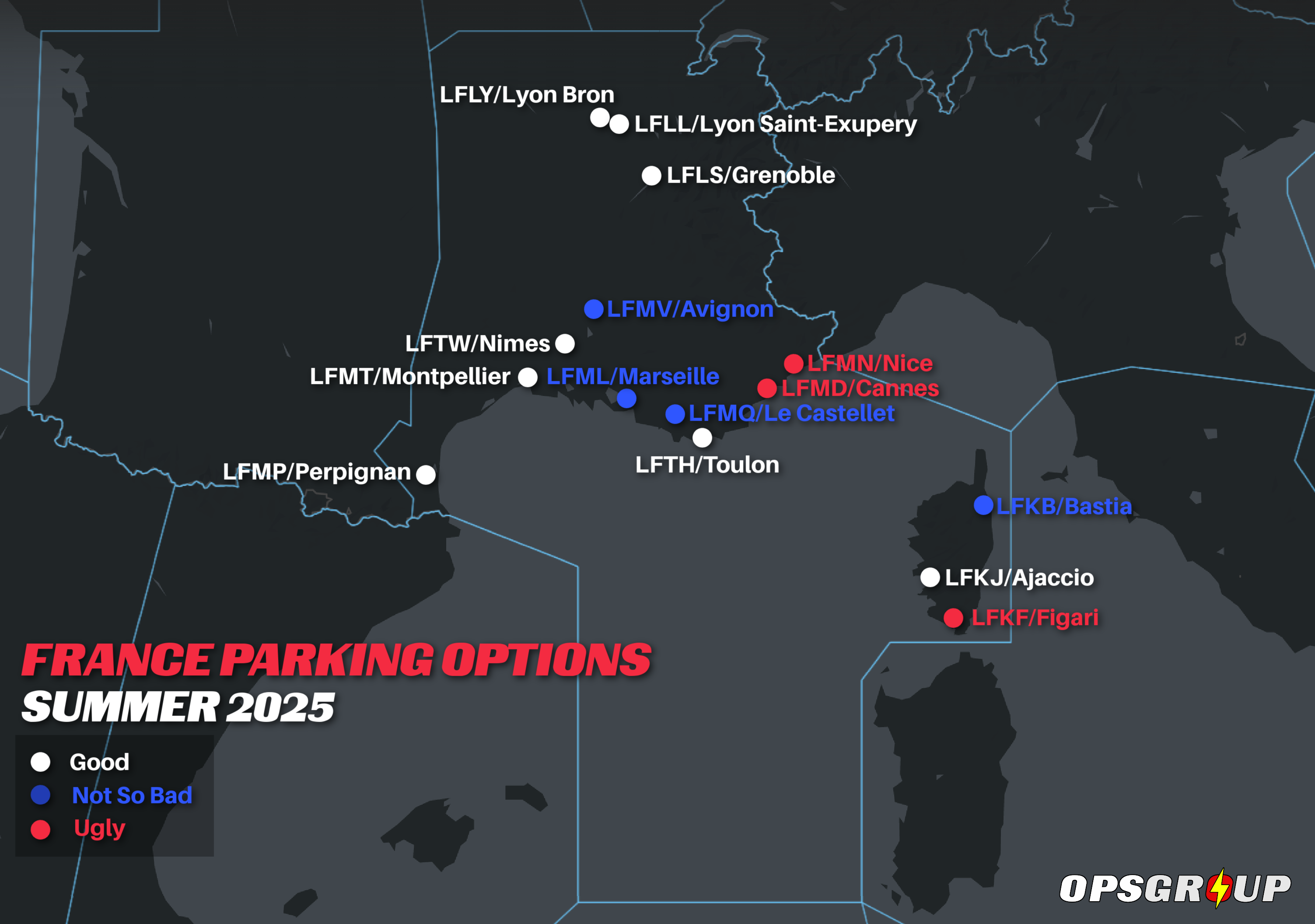
Riviera Airports – Busy, Tight But Accessible

LFMN/Nice

Nice has been very busy since May, and according to local FBOs, things aren’t getting any easier. If you’re planning to stay on the ground for more than 4 hours, expect a bit of a process. The airport is fully slot-controlled, and parking only gets confirmed once airport authorities approve your request – often just 7 days out.  Submitting a full schedule early gives you the best shot.

Slot tolerance is tight (+/–10 min arrival, –10/+15 min departure), and even small schedule changes can mean losing both slots and parking. Once confirmed, the slot ID needs to be in Field 18 of your FPL.

APU use is also limited to just 10 minutes before TSAT, and only after towing. Until then, it’s ground power only. But several OPSGROUP members have reported issues with GPUs and overheating, especially in high temps. For a deeper look, check out our article on heat damage in Nice.

Fuel delays are common too. Airline traffic takes priority, and BizAv can end up waiting. Crews must be onboard during refueling, so best to show up early before ETD just in case. Multiple fuel providers operate at LFMN, and availability can vary depending on the day and time.

FBO contacts:

LFMD/Cannes

Cannes may be scenic, but it’s not built for bigger jets. The airport has strict aircraft restrictions: no jets over 35T MTOW, and no turboprops over 22T. Slots are mandatory from May 12 – Sep 15, when the airport is fully coordinated for the summer season. The control tower is active from 0800 LT to sunset +30 minutes. Handling services may operate on a different schedule, so check with your local FBO directly. 

FBO contacts:

LFML/Marseille

Marseille offers a more relaxed entry point to the region, with fewer restrictions. The airport and customs are both H24. There’s no need for slots or PPR, and short-turn parking is usually available without much hassle. 

That said, longer stays are tricky – only four stands are available for 48h+, and they fill up quickly on a first-come, first-served basis. One or two nights might still be possible depending on traffic, but anything beyond that is unlikely in peak season.

FBO contacts:

Southern Coastal Options – Mixed Rules

LFTH/Toulon-Hyeres

Toulon is getting busier in the summer, but parking is still possible if you’re organized. The airport is open daily from 0800-2000 LT until Oct 28, with the possibility to arrange extensions. Customs hours are slightly different – available daily from 0800-1800 LT.

As a joint civil-military airport, LFTH has additional restrictions: according to the local FBO, flights before 0900 LT are currently not allowed due to military operations.

FBO contacts:

LFTZ/La Mole Saint-Tropez

The airport has restricted-use status, so only operators with special approval can use it. Pilots must meet specific training requirements depending on the aircraft.

If you’re thinking about flying into LFTZ, be ready for a bit of admin. The airport website and their AIP explain exactly what’s needed – from how to request access to the paperwork and pilot qualifications required. 

PPR is required and operations are permitted daily 0800-1900 LT in summer, with extensions available until sunset. Non-Schengen flights are only allowed July 1 – Oct 15, 0700-1700 LT, and any schedule changes must be re-approved.

FBO contacts:

Western Provence – Quieter Alternatives Inland

LFMT/Montpellier

Montpellier stands out as a dependable inland choice, even for heavier jets. While the airport can get busy at times, especially in peak summer weeks, it’s still worth considering if coastal airports are full. All non-based BizAv must request PPR at least 72 hours in advance. Handling is charged in full if cancelled less than 3 days before arrival and not charged if cancelled earlier.

FBO contact: Avia VIP: lfmt@aviavip.com 

LFTW/Nimes

Nimes is often overlooked, but can be a smart alternative if you plan ahead. The airport operates daily until 2000 LT. ATC is available until 1900 LT on weekdays and until 1600 LT on weekends. CIQ services are available daily from 0900-1800 LT.

FBO contact: Jetex: france@jetex.com 

LFMP/Perpignan

Perpignan is another inland option worth considering this summer. Local FBO confirms that parking is currently not congested and that the airport can accommodate larger bizjet like the G650. Parking availability is confirmed once a full schedule is submitted.

FBO contact: G-OPS: executive@g-ops.com

LFMV/Avignon

Avignon gives operators a welcome level of flexibility during the peak season. No PPR is required. The airport is open Mon-Fri from 0700-2130 LT, Sat until 1900 LT, and Sun from 0800-2000 LT. CIQ services are available daily until 2300 LT.

FBO contacts:

LFMQ/Le Castellet

Castellet remains a niche but functional option for those who can work with the limitations. Customs is available for Schengen traffic only – international (non-Schengen) flights are not permitted.

The airport operates daily 0900-1800 LT during summer. Extensions must be requested by 1600 LT the day before. Slots are required.

FBO contacts:

Corsica – Few Airports, Fewer Options

BizAv parking on Corsica is tricky during the summer too. LFKF/Figari is the most restrictive option with only quick turnarounds allowed and no long-term parking.

LFKB/Bastia may offer a bit more flexibility with some limits, but no PPR is required.

The best recommendation from local handlers goes to LFKJ/Ajaccio. Parking is more feasible here and while a slot and PPR are mandatory, availability is currently good.

FBO contact (covers LFKF, LFKB, and LFKJ): G-OPS: executive@g-ops.com 

Looking Inland – Reliable Summer Parking

If the Riviera is full, heading inland could be a smart move. LFLL/Lyon Saint-Exupery usually has parking available, even during peak summer, and can handle larger jets with ease. Just be aware of night noise restrictions between 2200-0600 LT for louder aircraft.

Nearby LFLY/Lyon Bron is smaller but also reports good availability for BizAv during the summer.

Further south, LFLS/Grenoble may be the most straightforward of the three. The airport is open daily from 0900-1800 LT, and services like handling, customs, and fuel are all available during this window. Extensions are possible upon request, but need to be arranged at least 8 days in advance.

FBO contacts:

Watch Your FPL Alternates

One final thing to note here for ops to the south of France – watch out for a common issue with flight plan alternates, as some airports cannot be used unless specific conditions are met, according to the AIP or Notams. We’ve had several reports over the years from members who have had this flagged on SAFA ramp checks.

Common ones to watch out for:

LFTH/Toulon – can’t be used as alternate without PPR.

LFMD/Cannes – can’t be used as alternate except for flights to LFTZ/La Mole.

LFMQ/Le Castellet – this sometimes gets used as an alternate for LFMN/Nice and LFML/Marseille. But LFMQ rarely publishes TAF/METAR reports, so if you want to use this, you need to make sure you select at least one other alternate with a weather report!

Do you know of any more? Let us know!

Help Us Keep This Info Fresh

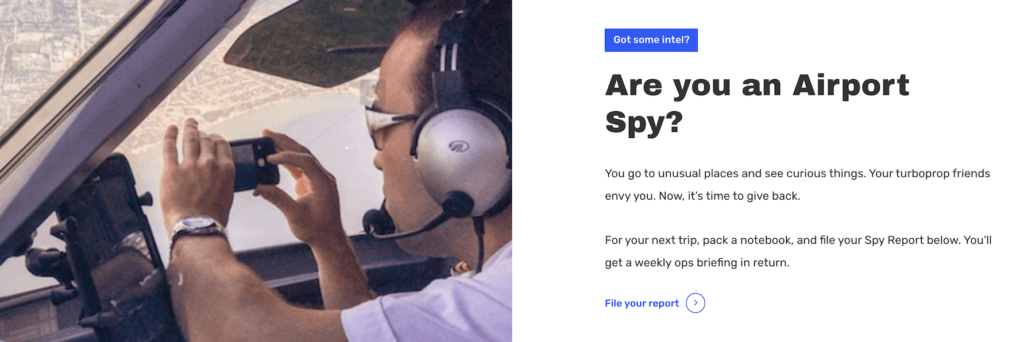
Things can change fast at French airports in the summer – what worked last week might not work today. If you’ve recently operated to any of these airports, let us know! A quick Airport Spy Report helps everyone stay ahead. It’s like sending a postcard with your notes, so others know what to expect next time.
Heat Damage in Nice: When APU Rules Damage Aircraft

Key Points
  • APU use is limited – only allowed 10 minutes before TSAT, and only after towing.
  • GPU reliability is shaky – some units failed or had to be replaced during operations.
  • Heat may be damaging systems – OPSGROUP member reports of aircraft experiencing electrical failures, suspected to be caused by overheating while waiting without APU or proper cooling.

Recent reports from OPSGROUP members highlight growing concerns over the strict APU restrictions at LFMN/Nice.

Like many French airports, LFMN restricts APU use – aiming to cut noise and emissions. But as summer peaks on the Riviera, enforcement remains rigid despite the operational challenges this creates in high heat.

Beyond hot cabins, new concerns have emerged: potential electrical damage linked to the airport’s fixed ground power units (GPUs). Reports submitted to the airport remain unanswered. Here’s what we know so far.

A Little Context

Private jet flights at LFMN primarily use the ‘Kilo Apron.’ This is the designated parking area for BizAv close to FBO facilities.

The rules for APU usage are found under the airport briefing in the French AIP. Specific guidelines apply to the Kilo Apron:

  • Arriving flights must stop on a designated line labelled ‘STOP ENGINE AND APU.’ From there towing to your parking spot is mandatory.
  • Departing flights must be towed to start-up stands fitted with 400Hz/28v ground power units, along with air. APU usage is limited to 10mins prior to TSAT (Target Start-up Approval Time).

Exemptions are very limited. You either need to be operating a medivac, state or cargo flight (carrying temperature sensitive payload). Or if the plug isn’t compatible with your aircraft.

Recent Member Reports

Here are three recent member reports received from OPSGROUP members there.

Report 1:

After towing to Stand 35, the crew connected to the fixed GPU. CAS messages flickered, followed by complete electrical failure and aircraft blackout. Despite heatwave conditions and an overheated crew, APU start was denied. A portable GPU was brought in – but it was dead. When permission to start the APU was finally granted, it was too late: navigation and communication systems had already failed. The aircraft departed under MEL and required expensive repairs at the next stop. The ramp agent advised us to file a report, which we did. According to them, this wasn’t the first time such an event had happened.

Report 2:

Another crew experienced a similar issue. One of two FMS units failed after GPU connection. While the cause wasn’t immediately clear, the symptoms matched those described in the earlier report. The unit was removed for repair.

Report 3:

The GPU caused a fault on our GVII upon disconnect. Our FA that understands French overheard ground personnel stating “it’s too hot” in reference to the GPU. Surface temp at time was 24C so it was the equipment. Had to shut down aircraft to dark and restart to clear fault and get a new CTOT 40 mins later.

Potential GPU Issues

While we can’t confirm the GPUs are the direct cause, it’s plausible. Aircraft systems are sensitive, and power issues — including frequency drift, incorrect voltage, poor grounding, or surges — can trigger serious failures.

Heat may be a compounding factor. Ground air units often underperform in high temperatures, especially if hoses are blocked or airflow is weak. Aircraft may exceed thermal limits before crews can start APUs or get adequate air.

The GPUs themselves may also struggle in heat – output may sag or drift, or thermal protection systems may shut them down.

All of this increases operational risk – especially when APU use is restricted with no flexibility for safety.

And, despite being mandatory, GPU usage at LFMN comes with a charge.

If you’re going to enforce the rules on APU usage in summer there needs to be some flexibility for the operational safety of multi-million dollar aircraft and their crews. Quiet airports are great, but it’s easy to forget we are customers. In fact, Nice is the second busiest airport for business aviation in France, second only to Paris Le Bourget.

Mitigators

Following an alert issued to the group regarding these reports, another member (also a fully qualified pilot and aircraft engineer) got in touch with some practical advice to operators.

Here is what he had to say:

I thought it would be prudent to post some operational hints and tips to avoid problems like this event in the future. Not just with LFMN, but with any hot weather destination with restricted APU use (i.e. most  of Europe).

Most biz jet hydraulic pumps demand very high KVA from the GPU’s – avoid/delay applying hydraulic power to test systems and parking brake until APU start is approved.

Keep all the shades/sun shields drawn until packs are available.

Dim all the display units in the cockpit until air conditioning is available.

Open cargo and main door to allow air flow throughout the cabin. Small fans can run off the GFI plugs.

Open gear doors on some models as the exhaust for the avionic cooling fans use the wheel wells as the exit point.

Has this happened to you here, there, or elsewhere?

Please get in touch with us via blog@ops.group. We’d love to hear from you.

For ops at LFMN, if you identify a GPU issue (malfunction, incorrect configuration, electrical hazard, emissions), report it via your handling agent to the airport’s operations or safety department, or directly to Aéroports de la Côte d’Azur: +33 4 08 20 42 333, or via this contact form.


Movie Stars and Racing Cars: Special Flight Ops in Southern France

The sun’s back out in Southern France, and so are the high rollers, race car drivers and movie stars.

That’s right – it’s that time of year again, with two major events stacked back-to-back – the Cannes Film Festival (May 16 – 27) and Monaco Grand Prix. It’s the jewel of the F1 calendar (May 25-28).

This means an influx of business jet traffic to two major airports – LFMD/Cannes and LFMN/Nice, where some of the world’s wealthiest will come out to play.

It’s not all caviar and roulette though – you’ll still need to be able to land there first. Three AIP SUPs have been published to help that happen. Here’s what you need to know about them.

LFMD/Cannes

AIP SUP 30/23 has the deets here.

The airport itself isn’t normally co-ordinated, but you’ll need a slot to go there between May 16 – 29. That info is found on this website. The apron is going to be chock-a-block too – a word of warning, you won’t be allocated a slot unless you have confirmed parking too.

If you like to manage things yourself on the ground, you’re out of luck. Handling services will be mandatory during this period, and it seems there’s only port-of-call:

AEROPORT CANNES MANDELIEU / SKY VALET
https://cy.myhandlingsoftware.com
E-mail: operations-acm@cote-azur.aeroport.fr
Phone : +33 (0) 4 93 90 41 10

You may not get your requested slot, so a little flexibility may help here. When you get an authorisation number, this will need to go into Item 18 of your flight plan. Without it, EUROCONTROL will likely refuse it.

Don’t be tempted to fly the hop between Cannes and Nice either, in either direction. These flights will be banned between May 26 – 29.

LFMN/Nice

AIP SUP 27/23 is the one to check out here.

Nice is co-ordinated year-round, so there’s less of a surprise. As above, you’ll need to co-ordinate a slot to arrive or depart.

Once again, hiring ground handling services will be mandatory. This time there is a little more choice though. According to the AIP SUP, roll the dice and pick between:

AVIAPARTNER EXECUTIVE
https://www.aviapartnerexecutive.com/nice
E-mail: nce.executive@aviapartner.aero
Phone: + 33 (0) 4 93 21 37 37

DC AVIATION G-OPS
https://www.dca-gops.com/
E-mail : nice.ops@dca-gops.com
Phone: +33 4 93 21 58 12

Monaco

Monaco itself doesn’t have an airport. In fact, it is the second smallest country in the world and is found on France’s Côte d’Azur – its south-eastern coast. Inside Monaco is the district of Monte Carlo, where the F1 race is taking place. Most fans and participants will enter via Nice.

If you’re looking for crew accommodation there, book early. Things fill up, and it becomes astronomically expensive – if it isn’t already.

Restricted Airspace

Info on this is published in yet another SUP – this one: AIP SUP 076/23.

From May 16 – 28, unless you are special traffic you will not be able to overfly the city of Cannes at low level.

Keep an eye out for intensive helicopter traffic. For IFR traffic departing on a SID, it is important to follow published climb gradients and altitude requirements. If you don’t think you’ll make it – let ATC know with your start request. You may get hit with a delay, but it’s better than the alternative..

We’re expecting another AIP SUP to be published closer to the F1 Grand Prix which may be more restrictive, and so we’ll keep this article updated.


Formula 1 & Movie Stars: Special Procedures in Southern France

In Southern France, two of the biggest events of the year are taking place almost simultaneously – and it’s the perfect storm for an influx of private jet traffic to the region’s main airports.

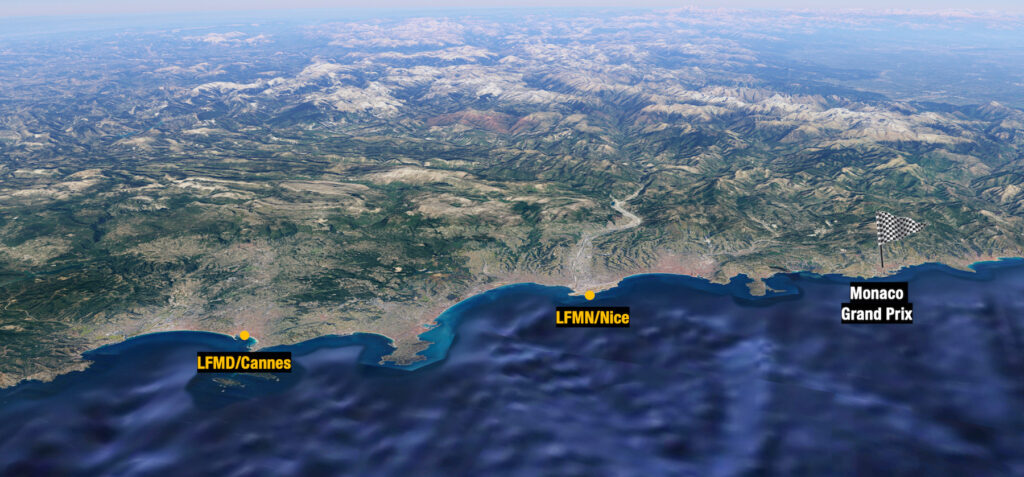
The Cannes Film Festival has just started, and will run until May 28. This is followed by the Formula 1 Monaco Grand Prix on May 29.  As one of the most famous events in motorsport, it attracts huge crowds. Both these events are happening within 50nm of each other.

As a result, the nearest major airports, LFMD/Cannes and LFMN/Nice will see much higher traffic volumes than normal – and both airports are heavily restricting operations.

Three AIP SUPs have been issued for the events . Don’t feel like delving into all of them? We don’t blame you. Here’s a quick summary of what they cover.

LFMD/Cannes

AIP SUP 052/22 has the deets here.

The apron is going to be full. The airport isn’t normally coordinated, but you’ll need a slot if operating in or out between May 17 – 30. You’ll get a slot ID that needs to go into Item 18 on your ICAO flight plan.

Even if you like to manage things yourself, the use of handling agents will be mandatory during this time.

Also, if you’re planning on a short hop to LFMN/Nice on May 28-30, no bueno. More on that below.

Monaco

Monaco itself doesn’t have an airport. In fact, it is the second smallest country in the world and is found on France’s Côte d’Azur – its south-eastern coast. Inside Monaco is the district of Monte Carlo, where the race is taking place.

The majority of passengers for the Grand Prix will enter via LFMN/Nice which is found around 20nm further west along the coast.

LFMN/Nice

AIP SUP 058/22 is the one to check here.

  • All arriving and departing aircraft operating at Nice from May 24 -30 will also need to co-ordinate a time slot. You can either request one directly, or ask your handling agent to get one for you.
  • You won’t be eligible for a slot unless your handler has guaranteed you a parking space when you get there – so make sure there is room for your ride first.
  • When filing your flight plan, commercial operators won’t need to include their slot ID number. But if your arrival or departure time is outside your allocated slot, your plan will bounce back.

Restricted airspace.

Info on this is published in yet another SUP – this one: AIP SUP 107/22

  • From May 28 – May 30, special restrictions will apply to all traffic.
  • All VFR ops will be banned, and IFR flights will not be allowed between LFMN/Nice and LFMD/Cannes, which is a little further west along the coast.
  • There will be intensive low level helicopter traffic to look out for. For IFR traffic departing on a SID, it is important to follow published climb gradients and altitude requirements.
  • If you don’t think your ride will make it, you’ll need to let ATC know with your start up request. In that case you may get hit with a delay, but don’t spring it on them at the last minute.
  • A temporary restricted area will be in effect which will primarily affect traffic over the event, and at LFMN/Nice airport, and will apply from surface to 3,500’.
  • If you’re operating on a valid flight plan, the impact will pretty minor. Just make sure you are in contact with Nice Tower on 122.375, and follow their instructions. You’ll need permission to enter it.

The big question, who will win?

Not only is he the championship leader, but Ferrari driver Charles Leclerc is also a local to Monaco. He’s the home favourite to top the podium on race day.

Some useful contacts.


LFMD/Cannes Airport Authority +33 (0) 4 89 88 98 28.

Handling

Skyvalet  +33 (0) 4 93 90 41 10, operations-acm@cote-azur.aeroport.fr


LFMN/Nice Airport Authority +33 (0) 4 93 17 21 18. If you’re looking to get a slot approval directly from them, email nice-caz-agta-ld@aviation-civille.gouv.fr.

Handling

Menzies +33 (0) 4 83 76 26 02, Florence.augustyniak@johnmenzies.aero

Signature +33 (0) 4 93 21 82 18, NCE@signatureflight.fr

Swissport  +33 (0) 4 93 21 58 12, nce.operations@swissportexecutive.com


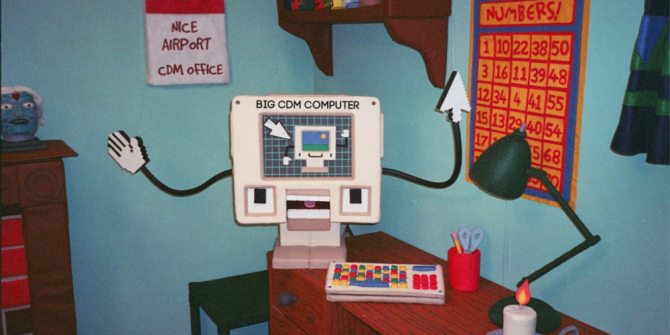
New Procedures at Nice: Beware the Big CDM Computer

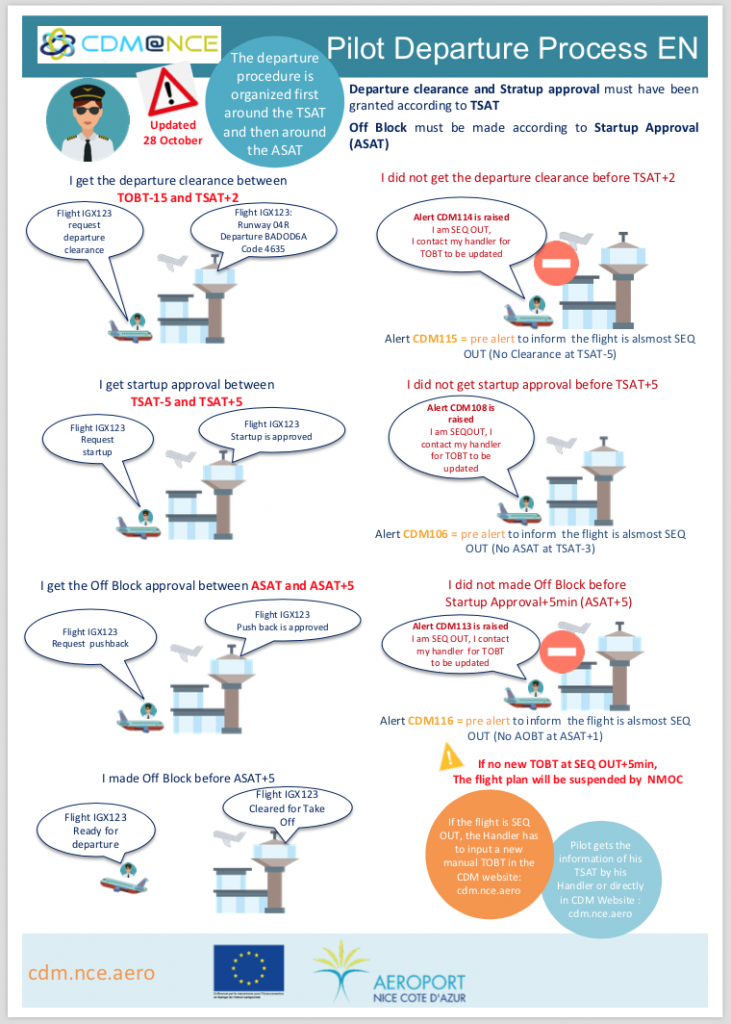
Nice Airport will launch Airport Collaborative Decision Making (A-CDM) on Nov 25. The main impact to operators will basically be that strict timings will have to be adhered-to for the entire start-up process: flight clearance, engines start-up approval and parking off-block will all have to be done within strict timeframes, otherwise your flight will drop out of the CDM system and you’ll likely get hit with a significant delay.

Top tips from local handler Swissport are as follows (we’ve paraphrased slightly):

Flight dispatch:

  • It is now compulsory to file the flight plan so that it exactly matches the Airport Slot booked by your ground handler. If the flight plan and the Airport Slot timings are not exactly the same, the Big CDM Computer at the airport will get terribly confused, your flight plan will get rejected, and you won’t be flying anywhere.
  • As a consequence, any time you want to change your schedule you must let your handler know first! They get a new Airport Slot for you first, then enter your flight into the CDM system, and then you can change your flight plan.

Flight deck crew:

  • Strict timings will have to be respected for the start-up process : flight clearance, engines start-up approval and parking off-block will have to be performed in due time, otherwise the flight will be SEQUENCE OUT and the CDM process will have to be reset, resulting in significant delays.
  • The TSAT (Target Start-up Approval Time) is the key timing since all the departure process is based on it. Your ground handler can provide you with your TSAT, and it can also be monitored directly by the crew on the CDM website (see the attachments below on how to do that).
  • The transponder is part of the process for the validation of some CDM milestones. The transponder should be switched on before taxiing and switched off once on-block. Switching the transponder on/off during taxiing generates wrong timings in the whole process management, and the Big CDM Computer doesn’t like that.

Bottom line, just make sure you keep talking with your ground handler throughout the whole departure process, so they can manage all these times for you in the system.

Swissport has provided a handy guide for operators on what to expect (click the image below to open the full version!):

Other things worth knowing at LFMN/Nice:

  • With the change to RNP approaches only (i.e. what would be known in the U.S. as RNAV GPS approaches), the airport is filing violation reports even if you request and get cleared for any other type of approach. The tip is to double check your FMS database before you fly to confirm all approaches are loaded, especially the RWY 04 RNAV-A and RWY 22 RNAV-D. See Airport Spy reports on LFMN for full reports.
  • From March 2019, any schedule change (ETA, ETD, flight number, provenance or destination airport) will generate a new PPR number – now called “Slot ID” – that will have to be updated in the FPL, still in field 18. Bear in mind that this process will take at least 10-15 minutes to have the new schedule validated by the airport and get the new Slot ID.
  • France has started a thing called CASH – Collaborative Aerodrome Safety Highlights. It’s basically a selection of briefing packages for certain airports, drawn from information supplied by airlines, operators, and ATC. So far, they’ve published ones for LFBK/Bastia, LFOB/Beauvais, LFKC/Calvi, LFPB/Paris Le Bourget, LFPG/Paris Charles De Gaulle, LFMN/Nice, and LFBO/Toulouse. More info


Aircraft security search now a requirement departing France

Update July 20th: Looks like this is not only happening in France, but some other EU countries too: we’ve had reports of the same procedure being required at some airports in Italy, Greece, and the Netherlands. If you have any further knowledge or recent experience to share, please let us know!

According to various reports we’ve had from Business Aviation aircrew and handlers, as of July 16, all aircraft departing specific French airports are now required to have completed a security search before departure, and to complete a form to be left with the handler. This applies to all aircraft unless the previous departure point was one of the following:

  • 28 countries of the European Union + Norway / Iceland / Switzerland / Lichtenstein
  • USA
  • Canada
  • Isle of Man
  • Montenegro
  • Faeroe Islands
  • Guernsey and Jersey

This new rule applies to all aircraft, no matter the country of registration or status (private, commercial or charter).

The security search is basically to check that no “prohibited articles” are on board (the usual things – guns, explosives, etc.). It’s common practice amongst airlines, but seems until now not to have been enforced as a rule for business aviation or private operations.

Once completed, this form must then be given to the ground handler, who will store it, in case the French authorities want to see it at some point.

It seems this new procedure is governed by an EU directive that was published in 2015, namely: the European decision (UE) C (2015) 8005 (Appendix 3-A) and the regulation (UE n°2015/1998 (Appendix 3-B32). Who would have thought that a new rule with such a tantalising name as this could go unnoticed until now ?

So it seems that all EU countries should be implementing this new procedure, but so far only certain French airports have done so – the ones we know about so far are:

LFMN/Nice
LFMD/Cannes
LFPB/Paris-le-Bourget

(Quite possibly the reason that it’s only French airports which have implemented the new procedure is that it was something that was cited in a French national audit conducted in Nov 2017!)

Can the handler provide the crew with a “security search” form?
Answer – Probably not. As the security search is done by the crew, it’s down to the operator to provide the form – the only responsibility of the handler is to receive it signed from the Captain and store it, that’s it.

What about flights that have arrived from the United Kingdom ?
Answer – You won’t need to do the search, as the UK is still part of the EU… for now! We will wait and see what their status will be once the “Brexit” happens, but until then, no worries 🙂

If a flight is operating PART 135 Air Ambulance, would they be subject to this search as well ?
Answer – Yes, if they arrived in from somewhere other than those countries mentioned above. The procedure is linked to where the aircraft came from, not to the aircraft reg or its status (be it commercial, private, charter, cargo, air ambulance, quick-turn, night-stop, fuel stop, transit flight, etc).

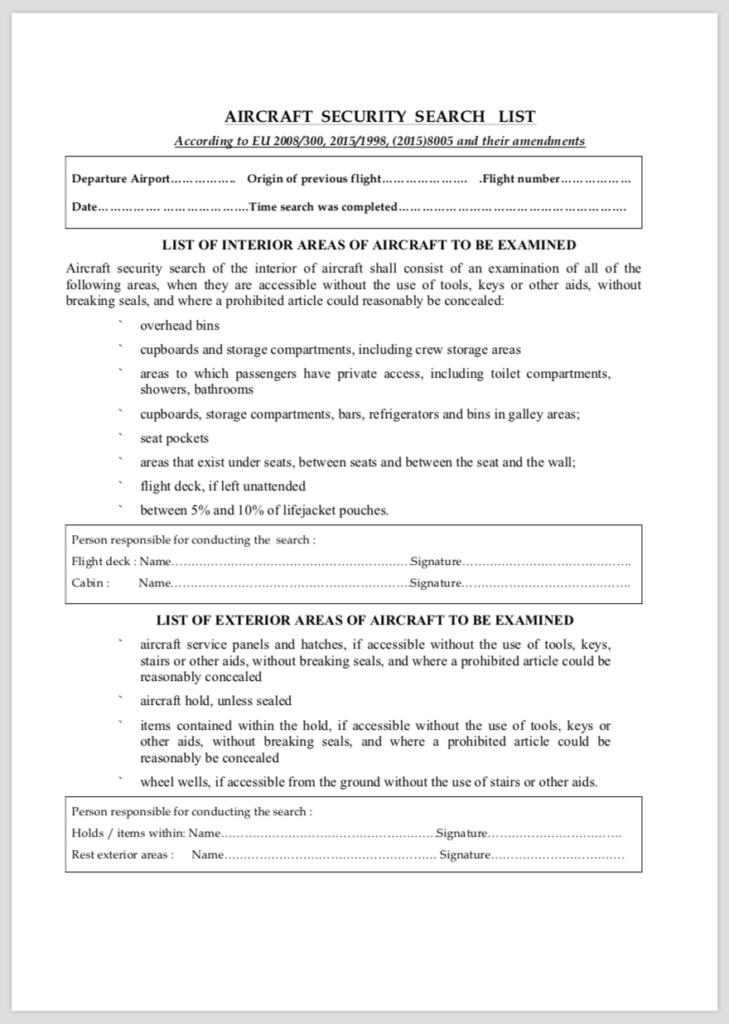
What kind of info should be in the form?
Answer – This kind of info:
Flight Information: Flight number / Date / Aircraft Number / Airport of Origin / Airport of Destination
Aircraft Interior: Flight Deck / Storage Area in the Galleys / Lavatories / Catering Trolley and Containers / Seat Pockets / Area Under the Seats / Area Between Seats / Area Between Seats and Bulkheads/ Jump Seats / Trash Bins / Overhead compartments / Pax and Crew Storage Compartment.
Between 5 and 10% of the life vest bags are to be checked as well.
Aircraft Exterior: Aircraft Holds / Service Panels / Bays / Wheel Wells / Fuselage / Engines / AOG Spare in Hold
Search Information : The search must be performed by a member of the cockpit crew. The name of the Captain must appear on the form as well as the date and a place for him/her to sign the document.

You probably have a standard form in your OEM for something like this. But if not, then fear not! The good folks at Signature have provided us with a standard template. Click the image below to download!

If you have any further knowledge or recent experience to share, please let us know!

Further reading:


No fuel at LFMN/Nice

Update July 9th: Following last week’s issues with a break in the fuel pipeline coming into the airport, local handlers are now saying there are no more issues with fuel supply and availability. However, some third-party fuel providers are warning they still cannot arrange fuel for BA/GA operators, and are advising them to tanker inbound. Do you know different? Let us know!

July 5th: Due a break in the pipeline into the airport, for most operators there is no fuel available at LFMN/Nice.

Check with your handler before operating if your uplift at Nice is essential, as many are now advising all ad-hoc operators to tanker-in.

Information is still coming in, but it appears this may affect operations for a few days. No word of other airports affected, and nothing has been published in the Notams yet.