San Francisco: Side-by-side Parallel Visual Approaches Banned
written by Chris Shieff | 7 April, 2026
On March 31, the FAA announced an important update for ops at KSFO/San Francisco.
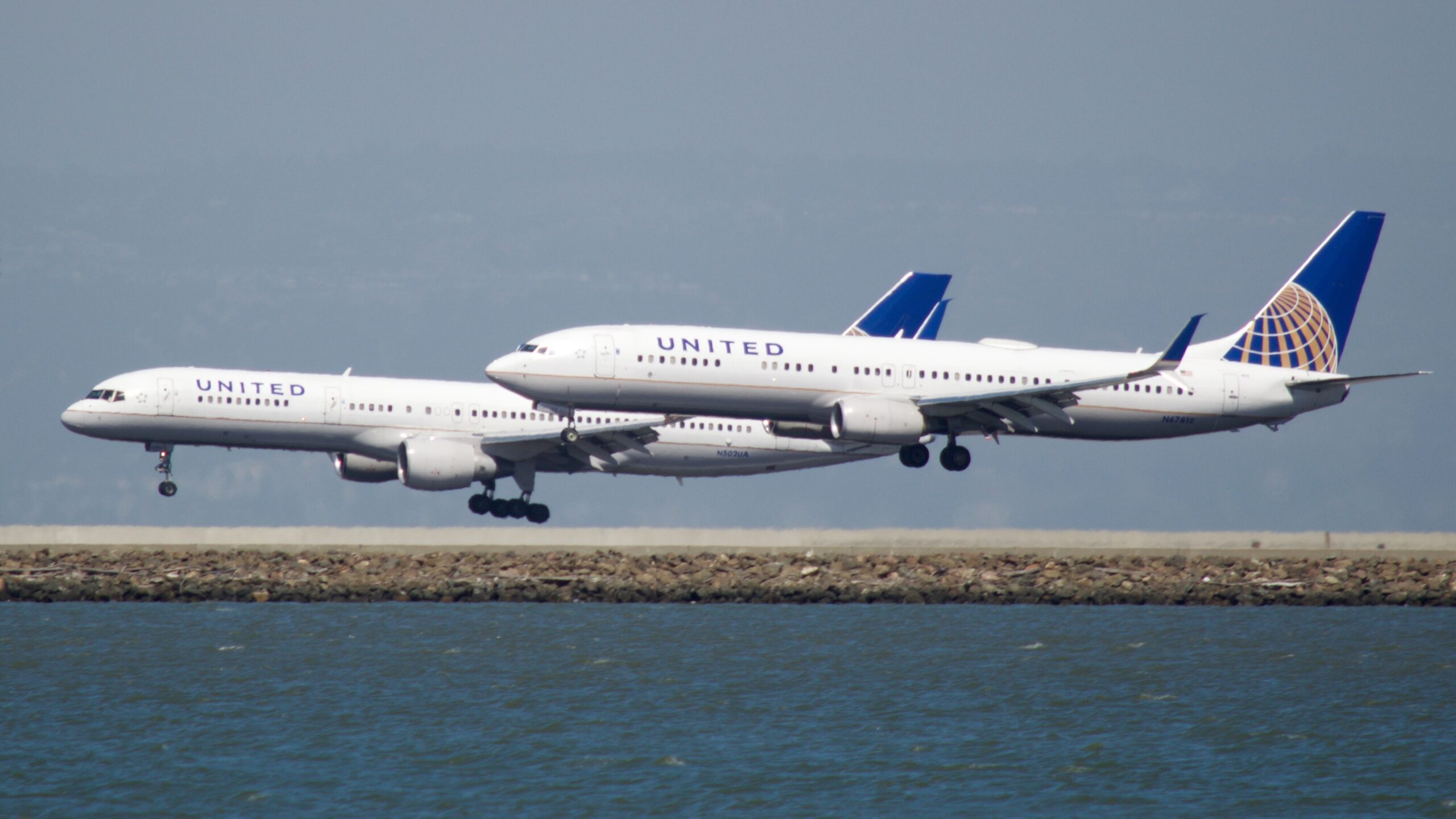
The big news is that once work is complete on Runway 01R/19L, side-by-side parallel visual approaches will be permanently banned due to concerns over separation.
In fair weather conditions, this will effectively almost halve arrival rates. If you’re used to carrying a little less fuel to the Golden City when the sun is out, now is the time consider more.
Here is the background to this significant change to NORCAL ops.
FAA warning.
A new statement issued by the FAA warns operators of airborne delays. The first reason is straight forward – Runway 01R/19L is currently closed until October due to repaving work.
But this isn’t temporary.
When re-opened, the FAA will introduce a new safety measure which will prohibit side-by-side approaches to the parallel east-west runways in clear weather. Even if pilots acknowledge having each other in sight.
From October, visual approaches to parallel runways will be staggered.
Instead, approaches will be staggered, with one aircraft offset from the aircraft on the parallel runway.
This will essentially reduce arrival rates in VMC conditions to those typically experienced in IMC – from approx. 54 to 36 per hour. It’s an issue the FAA concedes will persist, at least until safer solutions are found.
But why the change?
A spokesman for the FAA confirmed that the change of rule came about from a regular quarterly quality-assurance review.
The core issue is that the runway spacing is too tight.
The parallel runways are only 750 ft apart. That’s too close for independent parallel approaches under current FAA/ICAO standards.
So that leaves three options – space the runways out more (not practical), run precision monitoring systems (such as PRM) or, in the case of SFO, employ a workaround – the ol’ visual pairing trick – dependent visual approaches.
In other words, pilots maintain visual separation from the aircraft ahead and adjacent.
In good weather, ATC have historically run these side-by side. This boosts capacity but pushes separation responsibility onto pilots rather than ATC systems.
With its announcement, the FAA is finally saying that the workaround doesn’t meet modern safety standards anymore.
More broadly, the FAA’s safety philosophy is shifting away from ‘see-and-avoid’ in high-density terminal airspace towards more reliance on automatic ATC-based separation.
It seems that a human-dependent workaround to help mitigate struggling infrastructure is no longer an acceptable answer.
Under the new rule, VMC arrival rates will be akin to IMC rates.
What is the practical impact?
Essentially, this is the end of SFO’s visual ‘capacity boost.’
In good weather, expect things to slow down much more than you’re used to. This includes longer finals, lengthier vectors, speed control and a greater chance of holding.
These impacts won’t be evenly spread. Expect the biggest delays during peak arrival periods, late afternoons/evenings or adjacent to weather related disruptions as it will be harder for ATC to play catch up when the weather improves.
For planning purposes, the main takeaways are to carry more fuel in fair weather conditions, and not to underestimate potential for delays. This is especially relevant for BizAv ops that have historically relied on visual arrivals to ‘keep things tight.’
Where to from here?
In its statement, the FAA confirmed that it is actively seeking new ways to boost arrival flows safely – we’ll need to wait a little longer for those.
US Visual Approaches: lessons from the LH458 incident
written by Andy Spencer | 7 April, 2026
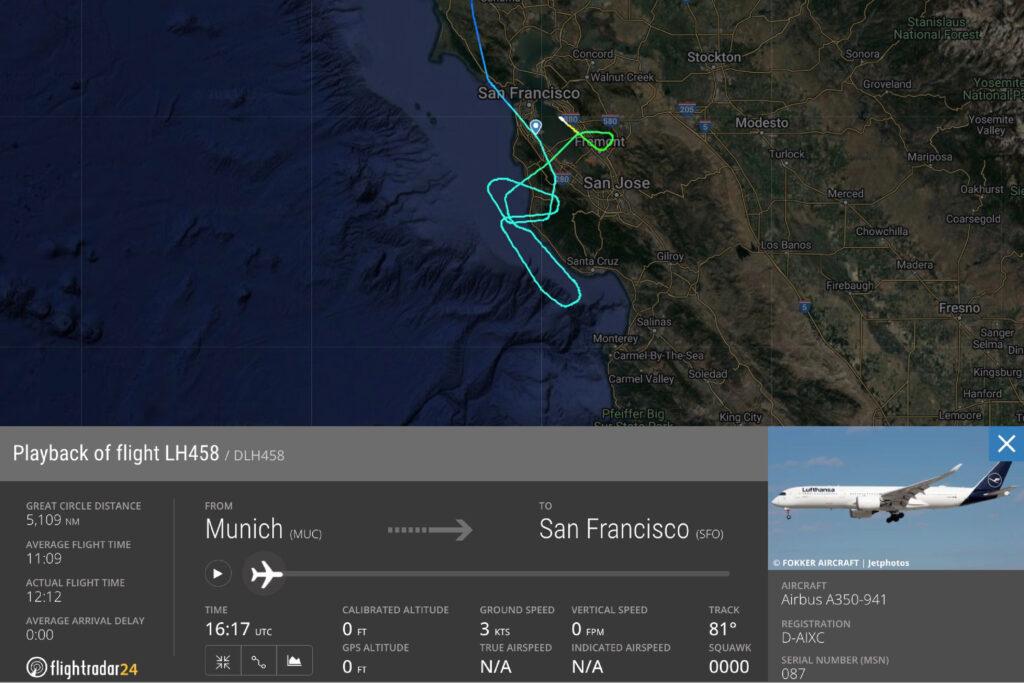
On October 16, the crew of a Lufthansa A350 inbound to San Francisco found themselves in an unenviable situation: a seemingly unnecessary last-minute diversion to Oakland after a long-haul flight. The diversion was forced by ATC, following the crews inability to accept a visual approach. The incident highlights issues with visual approaches in the US, particularly during late-night arrivals.
LH458 – What happened?
Here’s how it went down:
ATC:Expect a visual approach. CREW:We can’t do visual approaches at night-time due to company procedures. ATC:In that case, expect delays.
At this point in the story, instead of a visual approach on runway 28R, the crew were told to expect an ILS approach on runway 28L. They were then put into a hold – perfectly understandable for their integration into the approach sequence. After holding for 20 minutes, ATC advised there would be another 10-minute delay. 10 minutes go by.
4 minutes later:
CREW:If we can’t land soon, we’ll have to declare a fuel emergency. ATC: What’s your diversion airport? CREW: Oakland. ATC: You need vectors to Oakland? CREW: Er, no. What’s the problem here? ATC:I can’t have this conversation with you. Either divert to Oakland, or you can continue to hold, it’s up to you. CREW: Okay, you promised me 10 minutes, that ran out four minutes ago. So how many more minutes? ATC: Conversation is over. You want to divert? Or you want to continue with the delay? CREW: We’re diverting to Oakland.
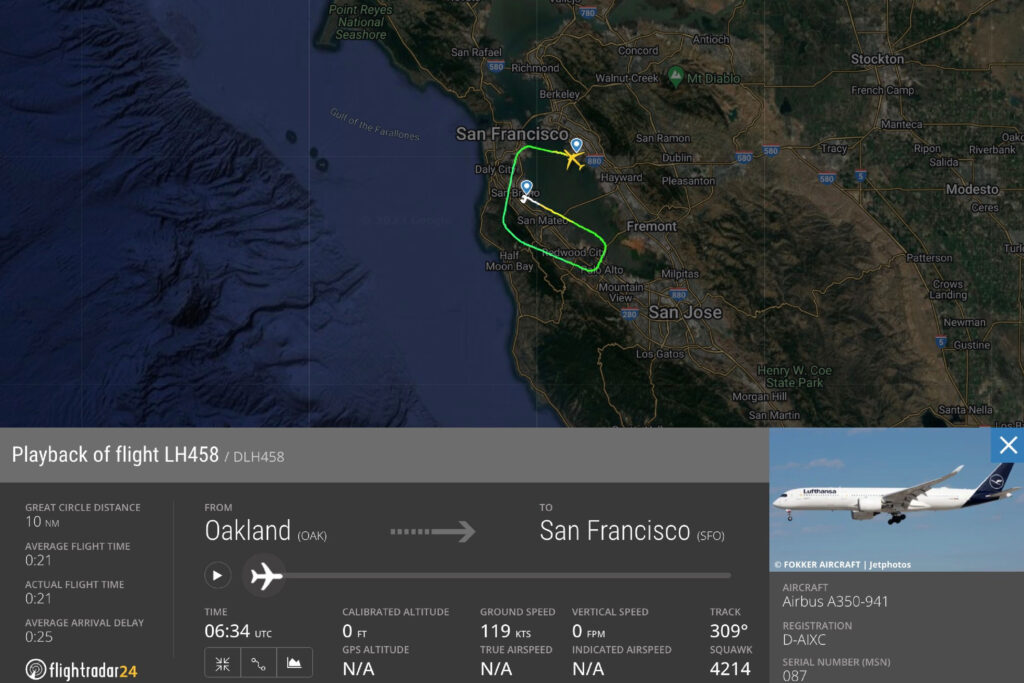
This resulted in a flight time of over 12 hours, landing in Oakland an hour after commencing the approach to KSFO (and at 7 am Munich local time – the crew’s local time). After one hour of turnaround, the crew resumed their flight to KSFO, which took another 45-minutes block to block.
The first flight: Munich – San Francisco (diverted to Oakland)
The second flight: Oakland – San Francisco
The delays are crucial to this story. It’s not uncommon for delays to occur, but ATC announcing a 10-minute delay (which is essentially treated as an EAT or Expected Approach Time), and then not adhering to it (especially after 30 minutes of holding) is not great. This significantly alters the situation and could have had more severe consequences.
A video of the flight path, including part of the audio between the crew and ATC is here:
What’s the problem?
In terms of flight safety, one can question the wisdom of subjecting the crew to signficiant extra fatigue after a long flight. Was it really not possible to create an additional two or three nautical miles of spacing between two aircraft for over 30 minutes to accommodate this flight?
Long Haul operations entail heightened risks due to extended duties and activities during circadian lows. While instrumental in facilitating aviation, the prevailing attitude within the US ATC tends to prioritize maximizing movements without seemingly adequate consideration for the nature of specific operations. It’s essential to recognize that not all arrivals are equal; when a pilot communicates inability, it’s not mere difficulty but a conscientious acknowledgment of the immense responsibility for the safety of hundreds on their shoulders. After a lengthy night of flying, we would all find it challenging to justify opting for a visual approach as the safer choice.
The FAA prohibits visual separation on an ILS. Consequently, questions arise about the request made to the crew in this regard, as well as the system that forces night-time visual approaches on all aircraft, regardless of the fatigue level of the crews and their unique circumstances.
This is a systemic issue. But it does feel like there is room to hope for a more comprehensive systemic approach to avoid putting a crew in a potentially safety-compromising situation.
Why was there a delay in the flight’s approach?
While a delay in air traffic is understandable, adhering to the announced duration (which clearly had the characteristics of an Expected Approach Time) is crucial to ensure safety. In this case, the crew experienced confusion when their EAT was not met, leading to concerns about fuel reserves and potential emergencies. Efficient coordination between ATC and crews is essential to prevent such situations.
Could the flight have been accommodated within the initially announced timeframe?
Considering that the flight had already spent over 30 minutes holding, it seems reasonable to think that they could have been inserted and provided with a few nautical miles in a thirty-minute sequence.
Based on the announcement of an additional 10-minute holding, this crew could have converted their diversion reserves into holding time, as allowed by regulations, and found themselves unable to divert and potentially facing a fuel emergency. This would have disrupted the sequence far more than adjusting a few nautical miles over 30 minutes.
Some aircraft, like the 777, may have to land with reduced flap settings in case of low fuel quantity, further diminishing margins. This outcome does not align with improved safety, and ATC should consider this for these long-haul approach flights.
It should be remembered that the pilots of this flight did all they could to communicate in a clear manner (sans the frustration at the end of the conversation) that they were unable to do what was initially conveyed. The fact that they were forced into a corner of a very near fuel emergency by the actions of ATC should highlight just how critical it is for us to get this fixed, pronto.
What can be done to improve safety and coordination in such cases?
Air traffic management needs to communicate effectively with flight crews, announce and adhere to EAT’s, and consider unique circumstances, especially for long-haul flights at night.
The FAA’s Safety Alert for Operators (SAFO) 21005 states that ‘it is the pilot’s responsibility, according to 14 C.F.R. § 91.3, to advise ATC as soon as possible if a visual approach is not desired.’ This SAFO recommends ‘Communicating “UNABLE” to ATC when, in the judgment of the pilot-in-command, compliance with a specific instruction, request, or clearance may reduce safety.’
Ultimately, a crew adhering to the FAA’s SAFO should not find themselves in a situation that compromises the safety of their flight by subjecting them to additional fatigue. The situation is even more concerning given the example of this flight and its implications for the crew, substantial financial consequences for the airline, and potentially for some passengers. This may make future crews hesitant about declining a visual approach, even when safety would necessitate it, as emphasized by the SAFO.
Why are visual approaches important?
Visual approaches allow for increased airport efficiency when weather conditions permit.
At KSFO/San Francisco, efforts were made in 2016 to enhance airport efficiency through new approach procedures, such as the RNP to GLS study. Being the seventh busiest airport in the US at the time, the airport could, during good weather conditions, sequence arrivals to runways 28L and 28R using visual separation, resulting in a peak arrival rate of 56 per hour. However, less favourable weather conditions necessitated instrument approach procedures, reducing airport efficiency to 28 to 36 arrivals per hour. This highlights the critical role of visual separation in maximizing KSFO’s capacity, despite runways being only 750 feet apart.
The visual approaches involve reducing the spacing between arriving aircraft, which can lead to higher traffic capacity and profitability. But they also shift some responsibility to the flight crew, particularly the captain, who must accept the risk of wake turbulence and become responsible for maintaining proper spacing to benefit the system.
This dual nature of visual approaches underscores the delicate balance between efficiency and safety in aviation operations.
How does the US differ from international standards regarding visual approaches?
The US aviation regulations do not strictly adhere to the ICAO standards regarding visual approaches. In the US, air traffic controllers may initiate a visual approach without the explicit consent of the pilot, unlike standard ICAO procedures, which require pilot agreement. This difference in approach procedures can lead to unique challenges. For more info, have a read of this IFALPA Bulletin.
Key Issues
This recent incident in San Francisco highlights several issues:
Crew’s Spacing Responsibility: Visual approaches in airports enhance efficiency but shift responsibility to flight crew for maintaining spacing and managing risks.
US vs ICAO Practices: There is a discrepancy between US aviation practices and ICAO standards.
ATC-Crew Safety Coordination: The incident shows the need for precise coordination between air traffic management and flight crews to ensure the safety of operations.
Night Approach Restrictions: Certain airlines have procedures that prohibit crews from conducting night visual approaches, and ATC needs to be aware of and accommodate these restrictions.
Managing Approach Delays: The delay in the flight’s approach raises questions about managing holding times and adhering to announced durations.
Risks in Night Approaches: Long-haul flights arriving at night using visual approaches might pose safety risks, considering crew fatigue and FAA’s SAFO.
Safeguarding Flight Operations: A comprehensive systemic approach is required to prevent compromising situations for flight crews, emphasizing effective communication, adherence to EAT’s, and crew judgment.
ATC Safety Guidelines: ATCs must be aware of safety guidelines (SAFOs) to ensure crew adherence and avoid jeopardizing safety.
Crew Safety Priority: Prioritizing safety over convenience is essential for flight crews.
This final point – ensuring flight crews are not hesitant to prioritize safety over convenience – is vital to maintaining the highest level of aviation safety. The KSFO incident serves as a reminder that aviation is a delicate balance of safety, efficiency, and coordination.
Red Sky at Night, Aviator’s Fright
written by OPSGROUP Team | 7 April, 2026
Summer in the Northern Hemisphere means a few additional challenges for aviation, particularly in the USA – Hurricanes (which we wrote about here) and Wildfires.
You probably read ‘Hurricanes’ and think yeah, I get that, but fires?
Wildfires do pose a fairly major risk to aviation though, so we thought we’d take a quick look at what those risks might be and what the forecast is for the 2021 Wildfire season.
Too hot to handle.
Wildfires are prevalent across the US during the hotter summer months, typically running from May through October.
Looking back to previous years, California saw 13 fires in 2019, but over 30 major ones in both 2018 and 2017. The 2018 fires led to over 1.8 million acres of land being burned. 2020 saw the first ‘rain free’ February (in San Francisco) since 1864 and the drier months, and warmer spring resulted in some of the worst wildfires in California’s history.
The outlook for 2021 is not much better.
There have been extended dry periods with over 90% of the West now in drought conditions. There have also been record high temperatures in the Pacific Northwest, Northern Rockies and northern Great Basin with warmer than normal conditions forecast for the summer. Add to that an increase in lightening activity and you are left with a recipe for significant wildfire risk.
In fact, the figures so far for 2021 are already at a ten year high.
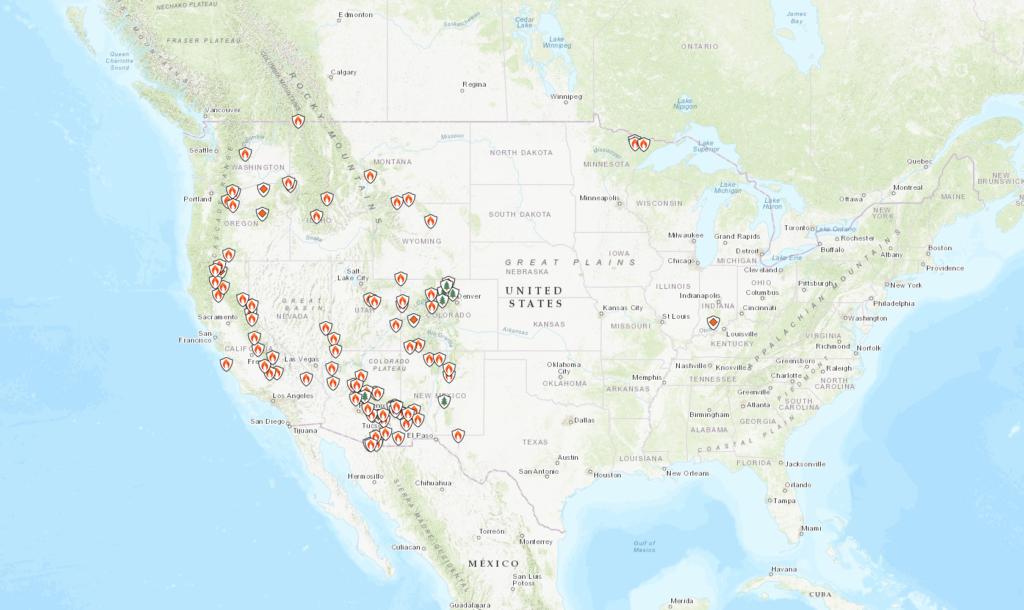
Where can you monitor the fires?
There are multiple sites which track and monitor wildfires. This is a particularly good one and will link to specific info on the major fires.
Map of fires as of July 5 2020
But the risk to aviation is often not from the fires themselves. The big hazards comes from:
Smoke
Increased traffic levels, diversions and ATC capacity
Changes to localized weather conditions.
Out of the frying pan and into the fire.
Major airports generally have good protection from wildfires, and are a distance away from areas which will readily burn. However, smaller and more remote airports may not and damage to infrastructure, or disruptions to ground transport has a knock on effect. Fires also lead to power outages which impact services at the airports.
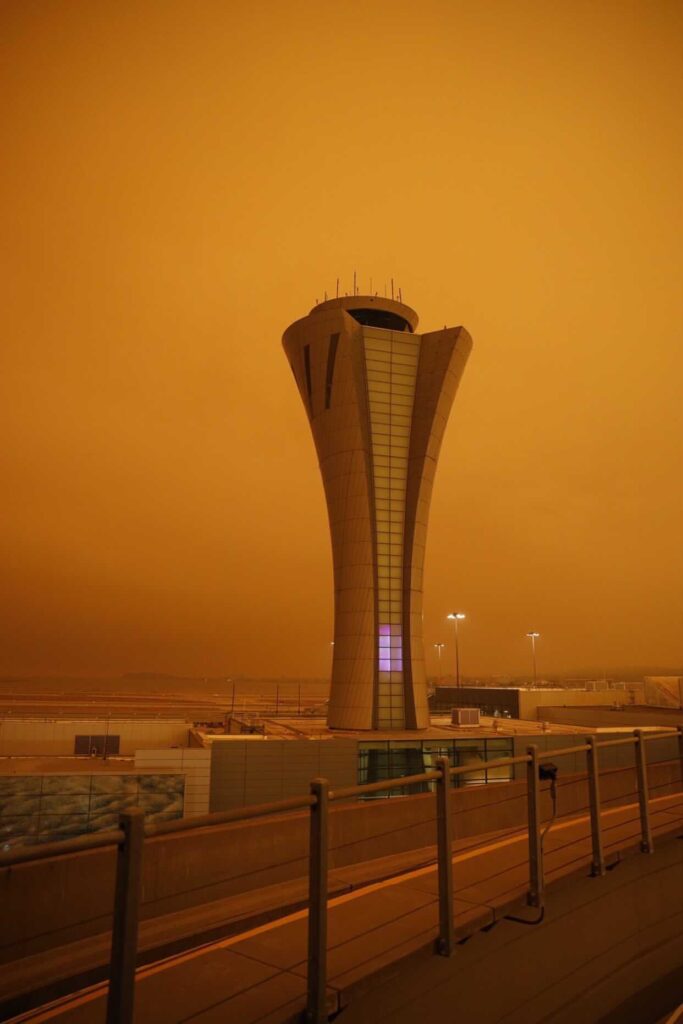
The major hazard comes from smoke though, and this can cause significant disruptions through reduced visibility.
Orange smoke haze at KSFO
Smoke has been known to reduce visibility to around 200m. In 2005 all four major airports in Honduras closed because of limited visibility from wildfires. In 2010, the visibility at KBOI/Boise Municipal Airport reduced from 10 miles down to 1 3/4 miles in just 9 minutes after a shift in wind direction carried smoke from nearby wildfires into the airport vicinity.
The health hazard this poses to ground workers means airports may find themselves understaffed and reduced resources lead to reduced services, which lead to more disruptions for aircraft and operations.
The smoke hazard isn’t just at ground level.
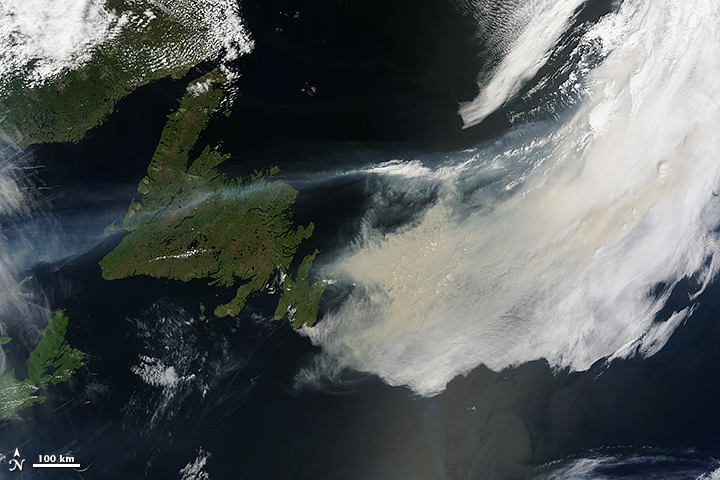
In 2013, a NASA satellite captured images of smoke from Canadian and Colorado wildfires which extended over the North Atlantic, and in 2020 an aircraft diverted into CYYT/St John’s after smelling fumes in the flight deck which were attributed to wildfires (again in Colorado).
Jetstreams carried smoke from wildfires past Newfoundland
What’s cooking.
Disruptions at airports lead to increased traffic levels requiring ATC support for diversions.
Smaller, regional airports have less capability for dealing with the impact of nearby wildfires, andwhen small regional airports in areas like Oakland, San Jose, Silicon Valley which have a high density of private jet traffic close, this can mean a lot of diversions happening very suddenly, and where they go can becomes an issue.
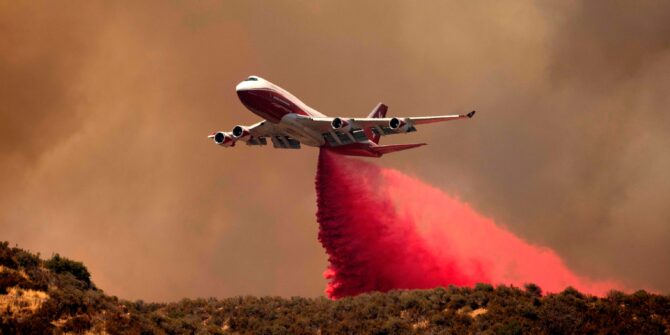
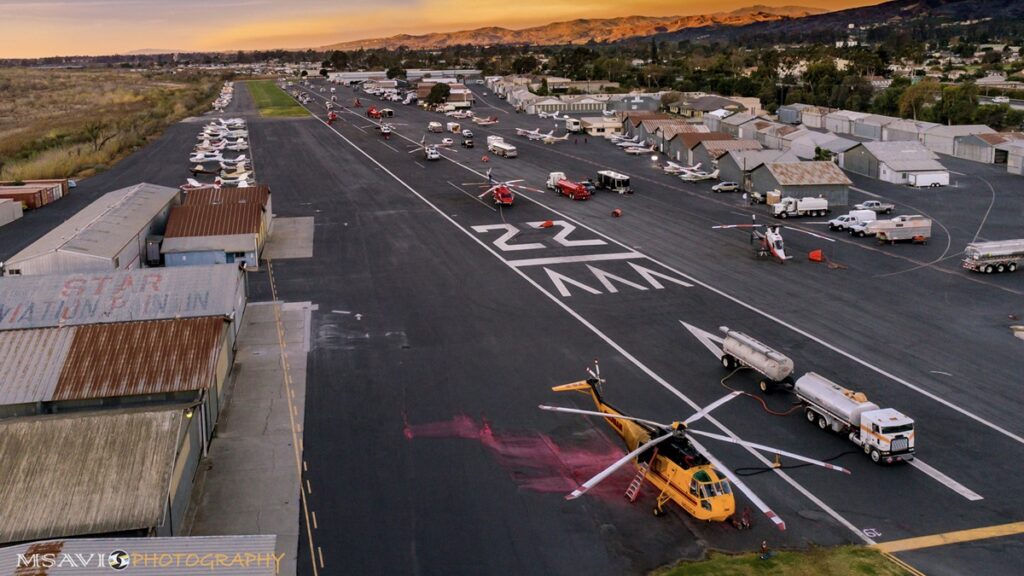
In addition to diverting aircraft, there is the firefighting aircraft to factor in as well. They might operate low-level, but they are not small and they need to operate from somewhere and this is added pressure for ATC.
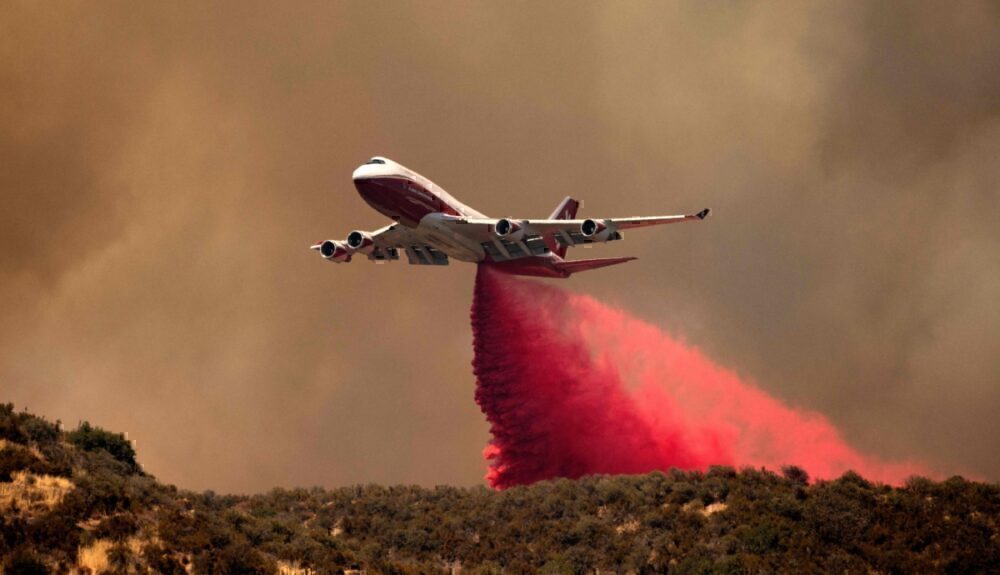
MD-10s and BAE 146s are commonly used. The world’s largest is a B747 Supertanker which can carry up to 19,600 US gallons of fire retardant or water.
TFR zones are set up for major fire zone areas to allow for safe movement of the firefighting aircraft. You can check these here.
Where there are fires, the risks of incidents increases and between 2000 and 2013 there were 298 wildfire firefighter fatalities in the US. 26% of these were caused by ‘aviation associated’ activities which occurred across 41 separate events involving 42 firefighting aircraft. Three of these were midair collisions.
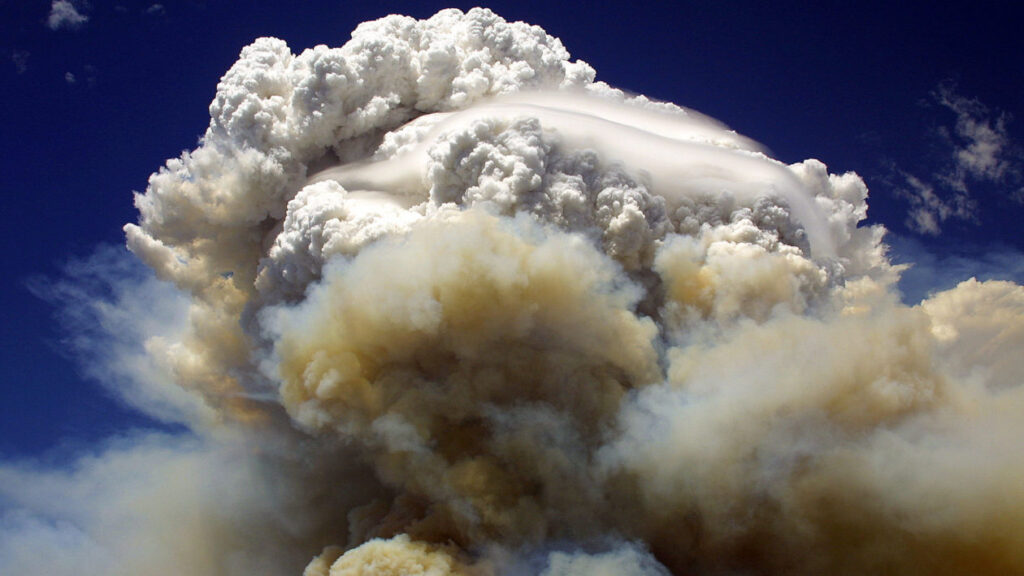
When large enough, Pyrocumulus cloud (also called Flammegenitus clouds) filled with rising ash and aerosols can build. These aerosols often carry a charge that increases the likelihood of lightning and with that an increased chance of fires spreading rapidly.
The “Station Fire’ of 2009, which burned more than 160,000 acres just outside of Los Angeles, also produced a convective column estimated to reach around 23,000 ft. Other majors fires have produced ones reaching as high as 40,000 ft.
These huge clouds are similar to cumulonimbus, only without rain. But they still contain significant up and downdrafts and can result in localized wind shear from gust fronts. The change in ground temperatures can result in significant thermals and large temperature gradients can result in significant localized vertical and horizontal winds.
Willow Fire near Payson, Arizona in July 2004. (Photo by Eric Neitzel)
There are ways to help.
Check those TFRs and check the wildfire maps. If you are operating into an area showing significant activity, consider how much busier ATC might be, and remember to check the capacity at your airport destination.
Report fires when you see them. Early notification of developing fires means the authorities can deal with them quicker, before they grow out of control.
Consider other ways to help. If you have an aircraft available, consider using it to help with evacuation flights.Airlines pulled together in 2016 following some major fires in Canada, and helped evacuate more than 80,000 residents. They also helped them bring their pets out safely. Be warned – you will have a tear in your eye after reading this one so open at your own risk!
Alaska has ‘normal’ fire potential through summer and into the fall.
The Northwest is expected to experience significant and above average fire potential into September.
Northern California and Hawaii also have above normal significant fire potential expected.
Southern California will be at high risk through September (although this is ‘normal’ for the region).
The Northern Rockies region is expected to be above normal through August and September.
The Great Basin is expected to see increasing fire potential through August and possibly into September
The Southwest is expected to remain normal.
The Eastern Area is expected to be normal.
The Southern Area is expected to be below normal.
Wildfires pose a significant risk to aviation operations. They also pose a huge risk to those living there, the infrastructure and the economy. The Fire Fighter pilots are an extraordinary bunch of aviators and we wish them the best for this year.