Yes. We’ve got a fresh set of common International Operations questions, together with their answers and references Test yourself, use as part of your next refresher training, or forward to a colleague.
Thanks to our OpsGroup member Guy Gribble for these; Guy is an international airline pilot and runs a training organization called International Flight Resources – read more at the end of the questions about what he does.
20 Questions – INTERNATIONAL OPERATIONS
1. What is the term ‘IFBP’, and where you might use it?
This is sometime referred to as an “IATA broadcast”. This is a specially formatted position report to enhance situational awareness in remote areas with poor ATC coverage. It is specifically recommended to be used in specific areas of Central Africa:
A) On 126.9.
B) When operating off airways.
C) For flight level changes only.
D) Throughout most of the continent, as a backup to ATC, and as an awareness tool for other aircraft. Broadcasts should be made in the format published on the Jeppesen Africa High/Low Enroute 1 / 2 en-route chart.
In-Flight Broadcast Procedures, IFBP can be found here, and Traffic Inflight Broadcast Area, TIBA can be found in Annex 11, Attachment B.
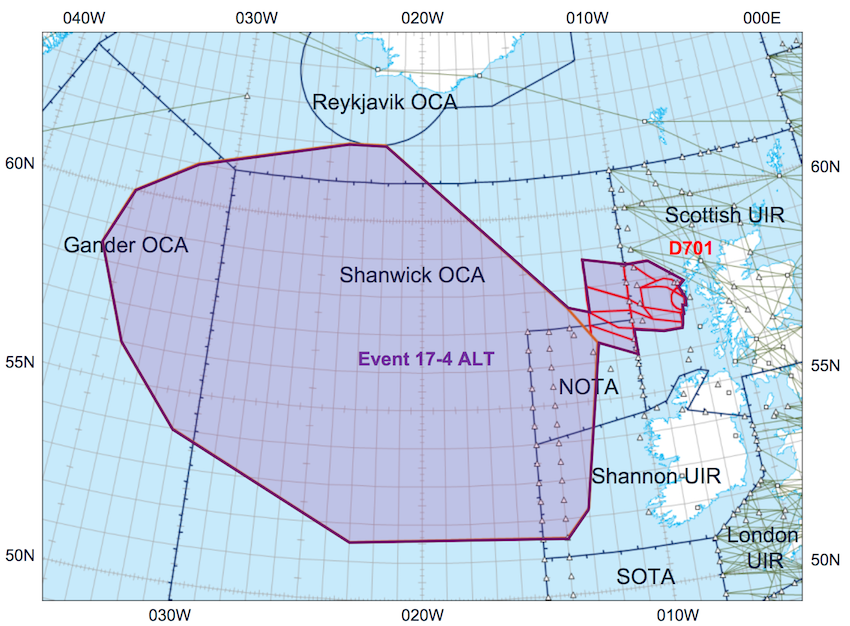
2. Is it possible to receive a North Atlantic oceanic crossing clearance via data link if sitting on the ground at an airport close to the oceanic boundary?
Yes. If less than 45mins to the OEP, request datalink (RCL) clearance 10mins prior to engine start-up.
NAT Document #007, Paragraph 5.1NAT Operational Bulletin, #2010-008
3. When are passengers entering the United States on a Private/Part 91 flight required to have a visa?
US Citizens do not require a visa. Non-US citizens require a visa if they are not a citizen of a country that the US permits a waiver from. The Visa Waiver Program (VWP) is administered by DHS and enables eligible citizens or nationals of designated countries to travel to the United States for tourism or business for stays of 90 days or less without first obtaining a visa. Examples of VWP approved countries are: Australia, Belgium, Chile, Denmark, Japan, Germany and the United Kingdom. Note that the Aircraft Operator must also be approved under the VWP.
http://www.cbp.gov/travel/international-visitors/frequently-asked-questions-about-visa-waiver-program-vwp-and-electronic-system-travel
4. I got a TCAS/ACAS Resolution Advisory on my last trip in the US. Do I have any reporting requirements?
Yes – if there was a substantial risk of collision. In 2010 the NTSB implemented additional reporting requirements. If an RA was received when an aircraft was being operated on an IFR flight plan, and compliance with the advisory is necessary to avert a substantial risk of collision between two or more aircraft – then a report to the NTSB is required.
NTSB 830.5 (10).
5. What defines a Gross Navigation Error (GNE)?
Lateral errors of 25 nautical miles or more from the aircraft’s cleared route. Note: The North Atlantic Systems Planning Group (NAT SPG), in its Conclusion 48/21 of 06/12, reclassified a GNE as a “lateral deviation from a cleared track by 10 Nautical miles (nm) or more.” The FAA is examining this new ICAO NAT Region definition for possible adoption.
FAA Order 8900.1 Volume 7, Chapter 3, Paragraph 7-81
6. Short of calling a service provider how do you determine which countries require an Overflight Permit?
Research the AIP’s from the overflown countries.
Search inside the “General” section, “National Regulations” and find the paragraphs titled “Entry, Transit and Departure…” Jeppesen provides excerpts from these documents in the “Entry Requirements” section.
7. I saw information that Russian ATC now has to speak “English Only” at all of their airports. Is this a fact?
Not quite. All international airports in Russia will pass information in Russian or English. The requirements for knowledge of the spoken English language will have to confirm the fourth level according to the ICAO scale. Six steps is the maximum.
Russia Federation AIP, Enroute ENR 1.7, Paragraph 6.1.3
8. Is there an HF frequency designated as “Guard” internationally (121.5 equivalent)?
Yes – 2182 and 4125, State the frequency in use, callsign, nature of distress/urgency, intentions of PIC, present position, altitude, heading
Annex 12, Chapter 2, Paragraph 2.6.5 “Note”, AC 91-70a, Chapter 3, Paragraph 3.4c, 3-10
9. Explain why you would expect a time-delay when transmitting position reports and requesting clearances from oceanic communications facilities.
It is important that pilots appreciate that routine air/ground ATS Voice communications in the NAT Region are conducted via aeroradio stations staffed by communicators who have no executive ATC authority. Messages are relayed by the ground station to/from the air traffic controllers in the relevant OAC.
NAT Document #007, Chapter 6, Paragraph 6.1 and AC 91-70A, Paragraph 9-3b, 14-3d
10. I have an aircraft heading to Australia in 2 days; our handler just informed us that we needed to have bug spray can with serial number on board. Where I can get this?
Disinsection procedure with 2% Permethrin and 2% d-Phenothrin aerosols are used with this process. Top of Descent has not been approved by the FDA/FAA for use or sale in the USA. The claim it is not safe for flight attendants. It comes from Sydney. Most of the Hawaiian FBO’s carry a good supply. Most operators opt for the “Pre-Embarkation and Top-of-Descent”
With approval from the Australian government on operator may conduct “On-Arrival” disnsection procedures. You do not have to empty the bottle. Spray rates are based on the cabin/cargo hold size. For example: A Challenger 605 only requires 15sec spray duration.
Full details can be found at: http://www.daff.gov.au/biosecurity/avm/aircraft/guidelines-operators
11. We all dislike ramp checks, but what kind of stats can be gleaned from the SAFA program in EASA?
The stats below are taken from the latest summary from the EASA folks. SAFA program has been in-place since 1996. A new “force” behind the program is Implementing Regulation, Authority for Air Operations (ARO)-Ramp. This went active 27OCT14 and applies to EU countries (ECAC has also signed on).
- 2012 had just over 11,000 inspections performed, over twice as many as 2005.
- Most frequent private operator’s country of registration inspected was USA, Isle-of-Man, Germany
- Frequency of inspections is almost evenly split between EU and Non-EU countries. Largest number of SAFA locations were France (71), Italy (34), UK (31) and Germany (30)
- On average, 40 of the 54 possible items were inspected each time with 46% of the findings labeled “Significant”
- “Significant” findings are reported to the operator and the registered CAA. These will also require “Corrective action” prior to flight Latin American/Carib operators had the most number of findings, USA and African operators were tied for second place
- Largest percentage of operators inspected, Germany (7.0%), Russian Federation and UK (6.8%), Turkey (4.9%) and USA (4.5%). France was 2.2%
12. When should a revised ETA be passed to ATC?
Position estimate time error of 3minutes or greater. Occurs when an aircraft’s reported actual time of arrival, ATA is 3 minutes or more before/after the estimated time of arrival, ETA.
NAT Doc#007 Paragraphs 5.1.7, 11.7.14. FAA ORDER 7110.82D, AC 91-70A Appendix 2, Page 8
13. Which Oceanic Control Agencies in the NAT Region have the ability to pass the crossing clearance via datalink ?
Via FANS/1A: New York OCA. Via ACARS/AFIS: Gander OCA, Shanwick OCA, Santa Maria OCA, Reykjavik OCA
NAT Document #007, Chapter 5, Paragraph 5.1.4 NAT Operations Bulletins #5,#6,#8
14. Is specific training required to be conducted in the area of Foreign ATC terminology and verbiage?
No. Recommended reading on this subject:
Annex 10, Volume 2, Chapter 5, ICAO Document #9432, UK’s CAP 413 and the FAA’s Pilot/Controller Glossary
15. What is the term “SLOP” and the procedure for applying it?
Strategic Lateral Offset Procedure. Aircraft can fly in automatic tracking mode 1 or 2 NM to the right of centerline of the cleared course. Position reports are given as if you are crossing the actual waypoint. When entering and exiting oceanic airspace you must cross the actual waypoint. In 2014 ICAO and the FAA have begun studying SLOP, offsets in tenths of a nautical mile up to a maximum of 0.5 NM. This is being considered where the lateral separation minima or spacing between route centerline is 6 NM or more and less than 30 NM.
ICAO Doc#4444, Chapter 16, Paragraph 16.5. NAT Doc#007, Paragraph 8.5. NOTAMS Domestic/International Part 3, Section 2, AC 91-70A, Paragraph 3-9 and Appendix 2, Page 8, FAA NAT Reference Guide, Page 5, FAA PAC Reference Guide, Page #6
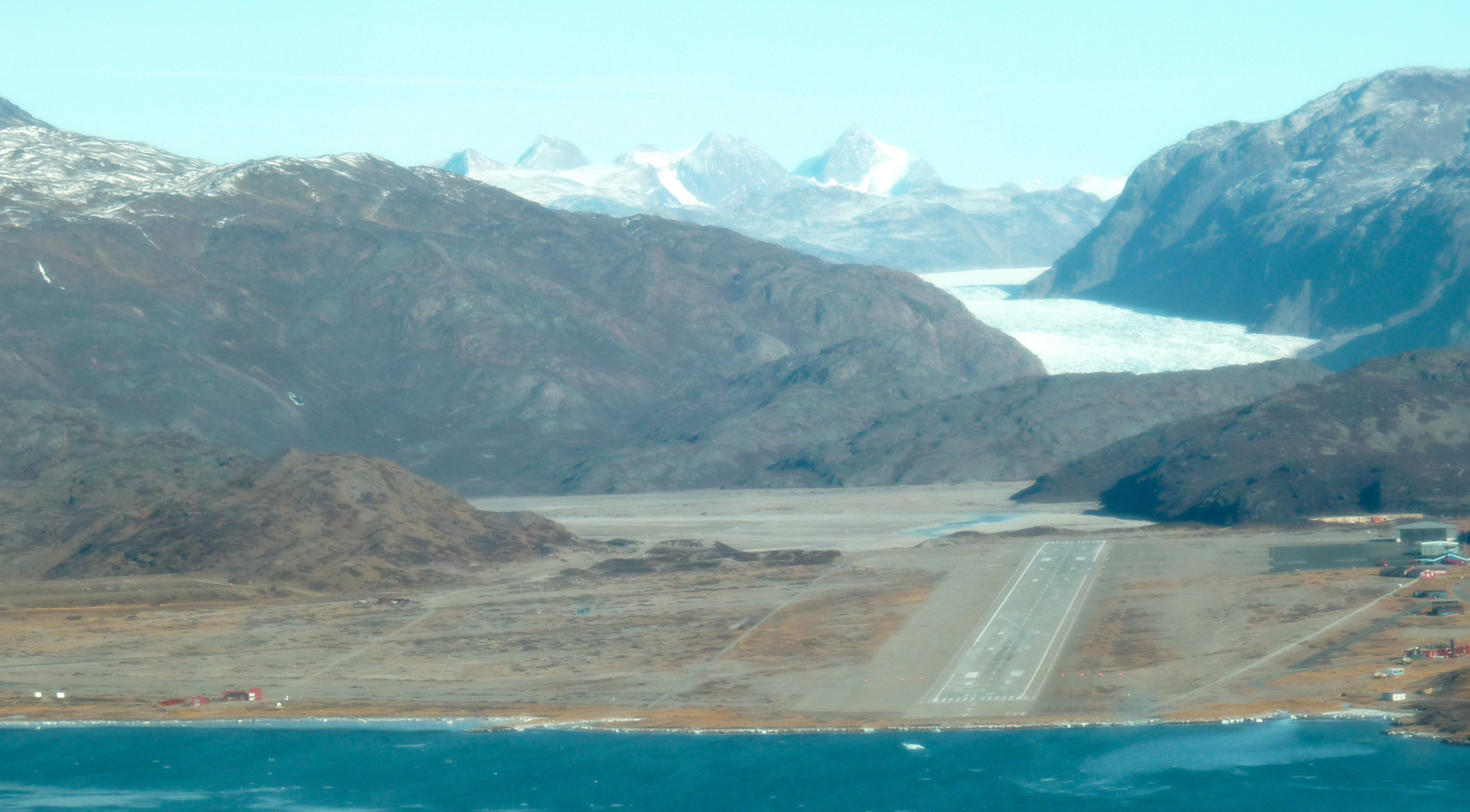
16. What navigation problems do I need to know about when operating at an airport such as CYRB/Resolute Bay, or BGTL/Thule Air Base/Pituffik?
Besides the extreme cold temps, ground based navigation facilities are reference to True North instead of Magnetic North. Aircraft FMC and Navigation displays will need to be re-configured to allow for IFR operations. This may be an automatic function or require manual selection. Individual AFM’s will contain the details. This is also correct for the Canadian Northern Domestic Airspace.
Canadian AIM Rules of the Air and Air Traffic Services Section 2.0 Para. 2.2.1 “Canadian Domestic Airspace”
17. If executing published contingency procedures in NAT airspace is it necessary to submit an Assigned Altitude Deviation Report?
Yes. Anytime you deviate from your altitude clearance including TCAS/ACAS, turbulence or contingency events 300ft or more an Altitude Deviation Report Form should be filed.
This form is found in NAT Document #007, Attachment 2
18. If SELCAL isn’t functioning in Oceanic/Remote airspace, can I continue the flight?
Yes, SELCAL meets the “Continuous listening watch” requirement of 14 CFR 91.511. If SELCAL is inoperative one of the pilots must listen on the appropriate enroute frequency for calls.
Annex 6, Part 2, Paragraphs 2.5.1 and 3.7.1
19. In Europe, what is a “Maintenance Release” and how do I get one for an FAA Part 91 Operation?
Very basically, the European inspectors are looking for an entry in an aircraft maintenance logbook (Technical Log) that reads something like, “Return to Service in Accordance with 14 CFR § 43.9. I certify that the work specified; except as otherwise specified, was carried out in accordance with FAA airworthiness regulations, and in respect to that work the aircraft is considered ready for release to service. Signed XXXXX AP#XXXXXX” The sub clause “except as otherwise specified” is intended for use with two types of deviations:
(1) The case where all required maintenance was not carried out. In this case, list the maintenance not carried out on the 14 CFR § 43.9 Return to Service and/or attachments.
(2) The case where the particular maintenance requirement was only EASA-approved and not FAA-approved. Example: an EASA Airworthiness Directive not approved by the FAA.
NOTE: In the case of maintenance carried out by a U.S.-based EASA Part-145 approved organization subject to the EASA/FAA agreement, EASA only recognizes the dual release FAA Form 8130-3 for component, engine, or propeller maintenance.
14 CFR 43.9, 43.11 and EASA 145.A.50, Rulemaking Interpretation # 13D51397 “Maintenance release of aircraft not covered by the Basic Regulation” and Annex 6, Part 1, Paragraph 8.8 and 8.4.1
20. I thought that with ADS-C the aircraft was sending position reports to a ground station (once logged on), Why do I have to make HF radio calls?
It depends on the OCA’s monitoring needs. If they state “Voice reports not required” then do not make routine voice reports. HF radios would be used to voice report position, maintain a back up to CPDLC. SELCAL would also have to be checked for functionality.
Global Operational Data Link Document (GOLD), 2nd Edition Chapter 5, Paragraph 5.6.3, NAT Document 007 Paragraph 6.1.22.
With sincere thanks to International Flight Resources. They are a pilot focused training provider emphasizing International Operations and Human Factors training with on-line and in-person training options. If you’d find a cost estimate, standard rate sheet and course outline useful, visit their website at www.InternationalFlightResources.com or email admin@InternationalFlightResources.com
Did you like these?
– Let us know: questions@opsgroup.co
– If you have a burning question that you’d like answered – let us know at questions@opsgroup.co. We’ll research it and include in the next round.
– If you haven’t already joined OPSGROUP, please do!