Winter Ops: Fun Fuel Facts

Fuel is to airplanes what coffee is to pilots – something you just cannot fly without. But just as there are different types of coffee, you’re going to come across different types of fuel as well…

The Menu

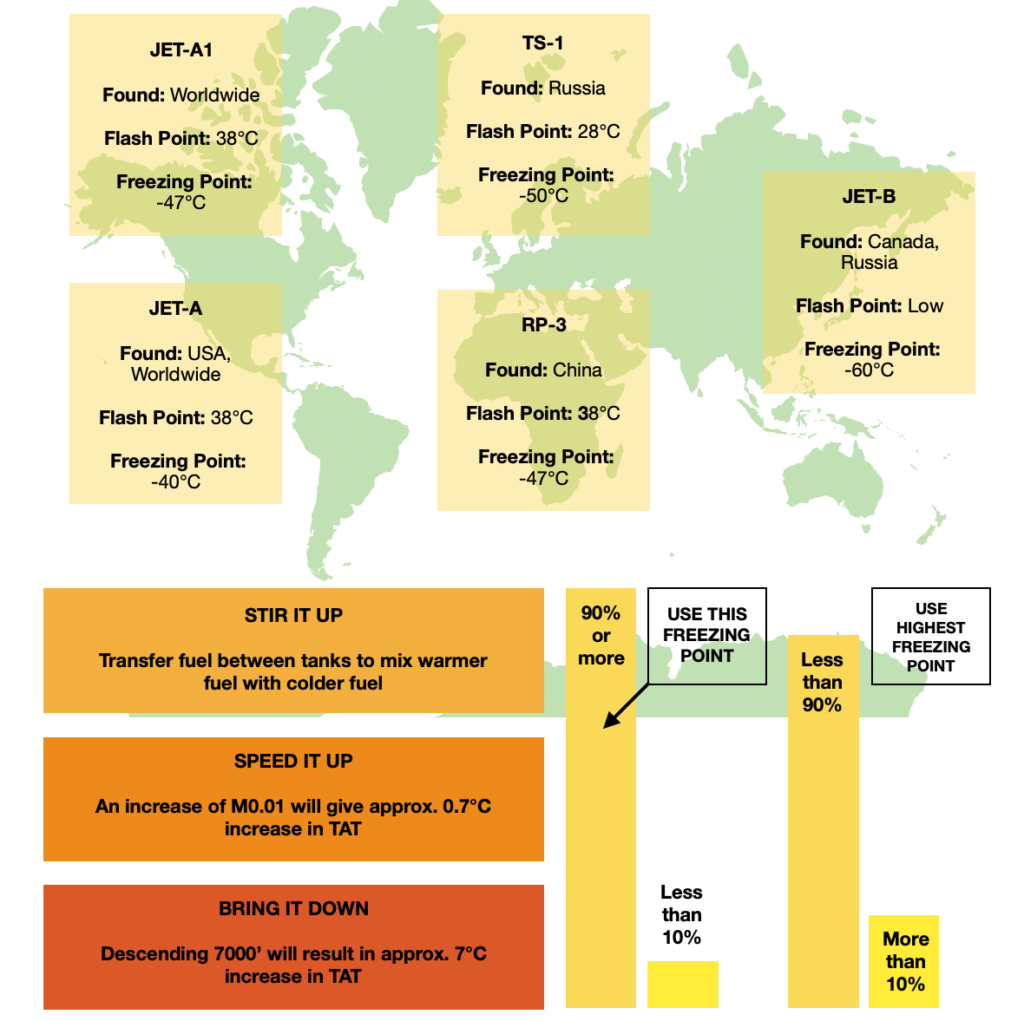
Jet-A1 – The most traditional drink, it is straw coloured with a flash point of 38°C (100°F), and a freezing point of -47°C.

Jet A – Another tasty kerosine grade fuel which will work just fine. The flash point is the same but this turns into an icy slushie at only -40°C.

Jet B – A delicacy from the Northern Regions. This is a cocktail of kerosine and naphtha – the stuff dragons produce out their nostrils (ok, that is not true, but it might as well be because this stuff is hard to handle with its higher flammability). Wide cut, and only really used in colder climates, with its freezing point of -50°C.

TS-1 – A Russian cocktail, more flashy than most at 28°C, but with a freezing point of -50 °C. It is also sometimes called RT (which looks like PT when it is written in Russian). RT is a superior grade TS-1, but not widely available.

RP – Brewed in China, the RPs come in a variety of styles. RP-1 has a freezing point of -60°C, RP-2 -50°C, but it is RP-3 we really recommend because it is basically Western Jet-A1 produced at export grade.

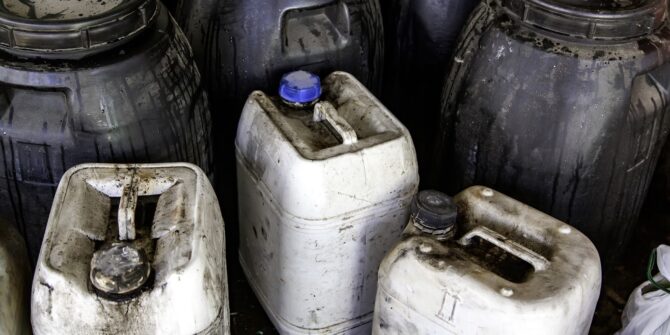
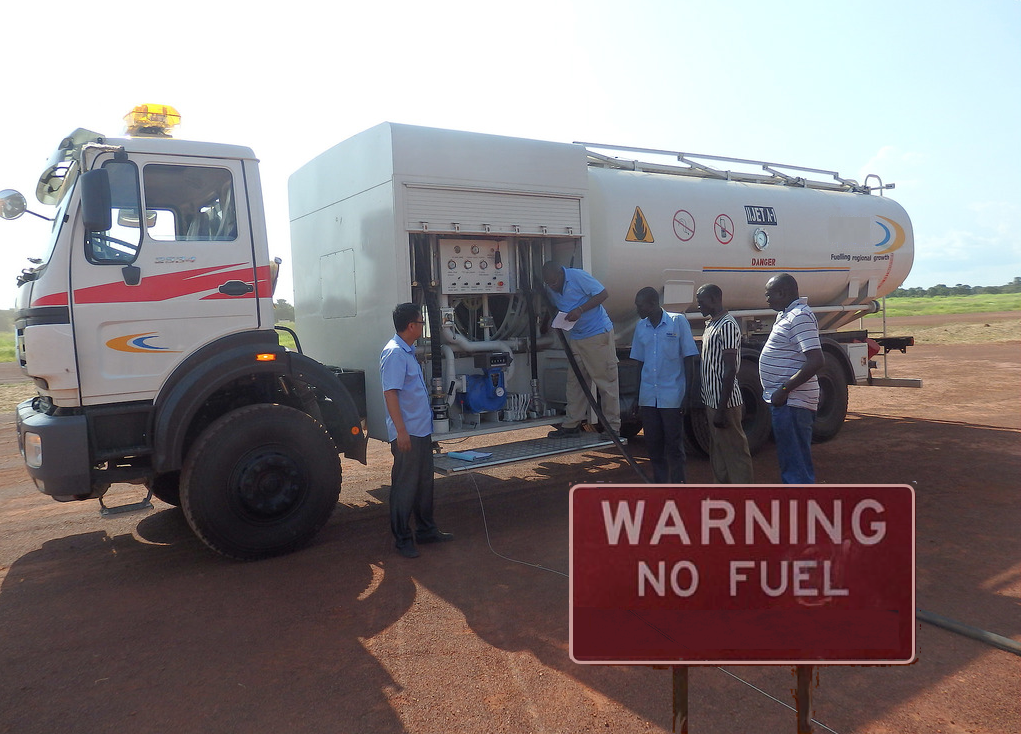
Chip fat oil – Not literally, but if you fly into a remote airport in some regions you might find fuel is not of the standard required. Look out for anything that isn’t straw coloured, doesn’t smell right, or has things floating in it.

Cutting it wide

Wide cut fuel is a mixture of kerosene and gasoline (Jet A1 in comparison is highly refined Kerosene). Wide cuts are not often recommended by airplane manufacturers because the quality and performance specifications are generally not as good.

If you are going to use it, there are likely going to be some pretty specific operational procedures involved because these fuels are much more volatile. Things like over-wing fuelling is generally a no-no, and the filtration system is going to appreciate a slow flow so it can keep up.

All those numbers

Fuel doesn’t freeze like water. It is not liquid one minute and ice the next. Instead it turns into a strange, slushy porridge consistency. 

What’s more, if you have a mixture of freezing points, the freezing point won’t be a nice in the middle -44.5°C so the only reliable way to work this out when you’ve mixed a load together is to take a measurement – assuming you’re carrying your own Fuel Freezing Point Measuring Gadget…

If not, the next best method to use is this –  

  • 90% or more of your fuel is one type? Use that freezing point.
  • 89% or less of your fuel is one type? Use the highest (worst case) freezing point.
  • You have 900 gallons of Jet A1 freezing at -47°C and 100 gallons of Jet A freezing at -40°C? Then call it -47°C and be off on your merry way.
  • You have 899 gallons of Jet A1, and 101 gallons of Jet A? Then take the highest freezing point which in this case would be Jet A at -40°C

Do we really care about freezing points of fuel?

Yes, very much so, especially if you are flying some long haul treks over the North Pole at high altitude in the winter.

With outside air temperatures lower than -60 degrees, freezing fuel can get you into some very hot water, (or cold fuel to be more accurate.)

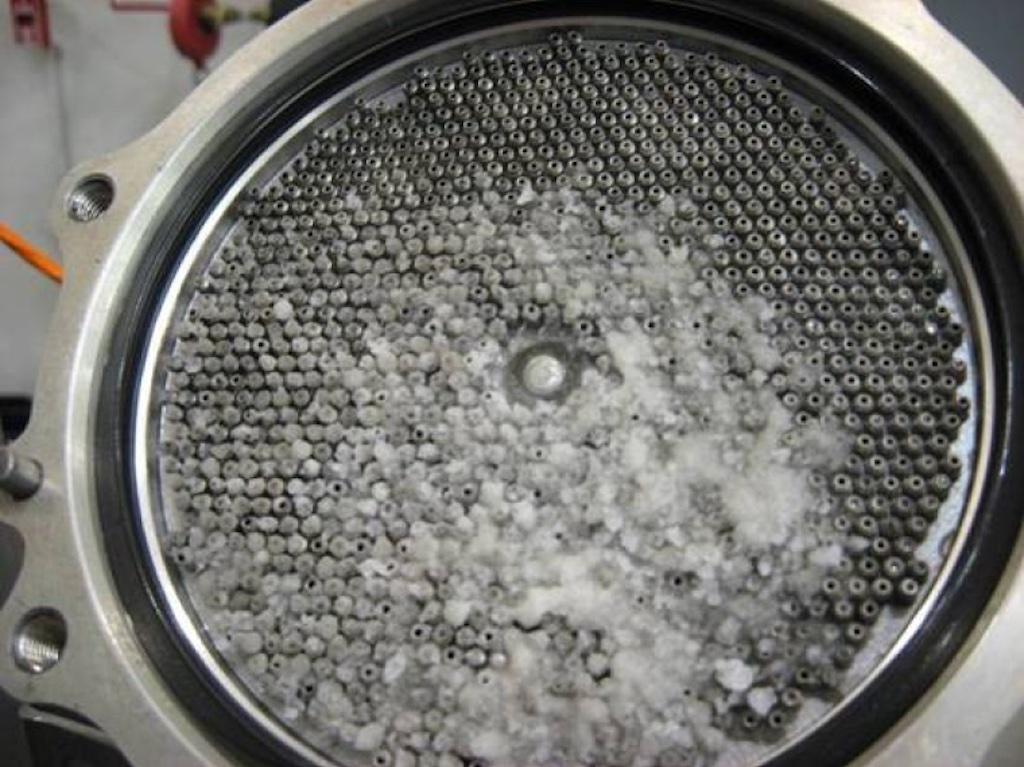
In Jan 2008, British Airways Flight 38 crashed just short of the runway at EGLL/Heathrow after flying from Beijing, China. They had been cruising between FL350 and FL400, with OATs reported to be between -65 to -74°C. While the fuel itself never froze, it did become cold enough for ice crystals to form in the fuel system.

These pesky little ice particles blocked stuff up and reduced the fuel flow, starving the engines, and causing a big loss in thrust right when the pilots needed it.

The temperature gets darn cold at altitude!

What can we do about it?

Ultimately, you need to turn up the temperature! There are only a few ways to heat your fuel up if it starts getting too chilly:

Stir it Up – Unlike Bond who preferred his drinks shaken and not stirred, mixing cold fuel with warmer fuel makes it better. Some larger aircraft with complex fuel systems do this automatically, but if you are able to do so manually there will probably be a checklist and following it to avoid turning off the wrong pumps might be wise.

Speed it Up – Flying faster means more drag which means more energy converted into hotness. Not much though… an increase in Mach 0.01 will increase the TAT by around 0.7°C, and increasing your speed also increases your fuel burn.

Bring it Down – Warmer air will help, and by descending 7000’ you can increase the TAT by around 7°C. In seriously cold air masses, descent to at least FL250 might be required, but this all means a much higher fuel burn.

Tanker? No thank ya…

Tankering fuel if you are operating into somewhere chilly might cause you some problems. The fuel is likely to get cold in flight, and up the likelihood of some frosty wings on the ground. So check the de-icing situation at your destination if you are tankering and it’s cold out.

Some other useful info

  • 1 imperial gallon = 1.2 US gallons.
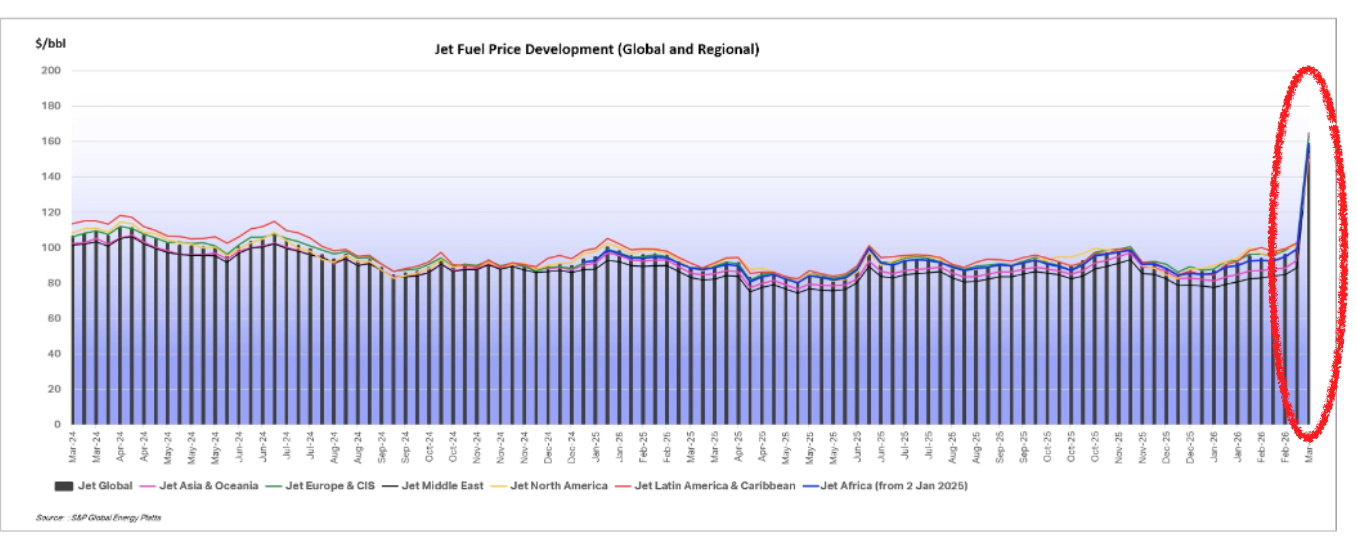
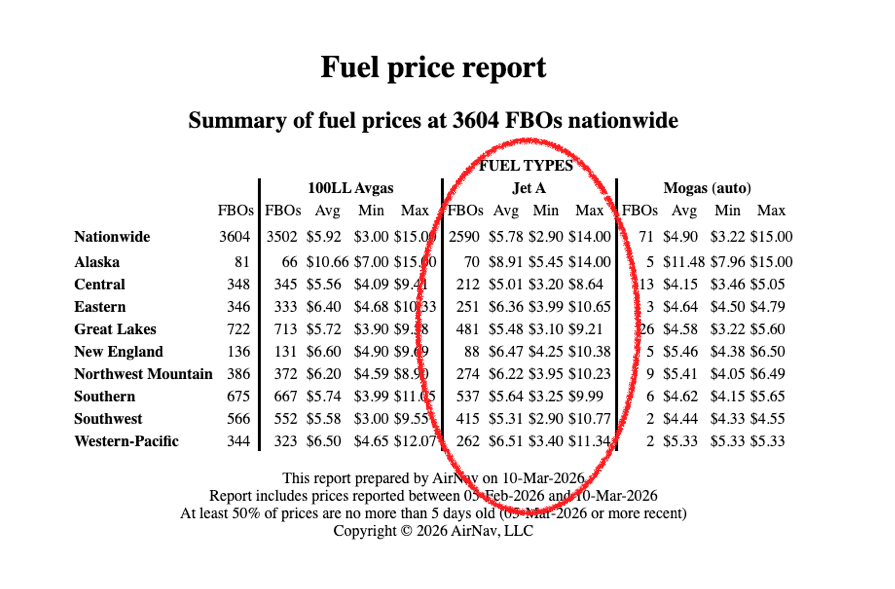
  • You can monitor the price of jet fuel here.


Contaminated Jet Fuel In Nigeria

Last week, a fleet of jet aircraft were grounded in Nigeria after significant volumes of water were found in their fuel tanks. One became airborne and suffered malfunctions in flight.

The Nigerian Civil Aviation Authority (NCAA) confirmed the issue was not confined to that one airline, describing the situation as ‘dire.’ Anyone uplifting fuel there right now should be seriously concerned.

The NCAA has issued an urgent All Operators Letter to refuelers and operators to follow the proper procedures – but with sixty days to comply. That’s over two months of potentially contaminated fuel still being used at airports in Lagos, Abuja, and Kano – without mandatory procedures in place to check it.

What do pilots have to do?

The NCAA note requires a thorough inspection of refuelling equipment, and testing of the fuel it carries or pumps. More notably, there will also be a mandatory requirement to take samples from fuel tanks before and after refuelling too. This will apply to anyone operating an aircraft in Nigeria.

The advice is sound though – be hyper vigilant of anything going into your tanks there at the moment. Of course, perhaps the best mitigator right now is not to refuel at all, and to tanker instead. 

Where is the water coming from?

Problems with infrastructure and how it is stored is likely to blame. Aside from particulates and fuel-loving microbes, there are multiple opportunities for water to accumulate. This can include water that gathers in low spots within pipelines, rain-water contamination, changes in temperature during storage or while being pumped and even the moisture content of air when tanks are unsealed to add or remove fuel.

A Little Vs A Lot

If you suspect contamination while airborne you should land immediately.

The impact depends on how much water is actually in your tanks. In small amounts, it can rust and corrode important components of your fuel system including fuel nozzles that can eventually fail. Water can also wear out fuel pumps that rely on fuel to stay slippery and cool.

You may also notice unusual engine operating temperatures, surging, and technical faults with your aircraft’s fuel system.

In larger quantities the issues become critical. Icing can restrict or stop the flow of fuel to your engines leading to flame outs (remember water freezes at just 0 degrees C, while pure Jet A1 can remain liquid in temps as low as -47 degrees C).

Also, water doesn’t burn, so if it reaches your combustion chambers in any significant quantities you can say sayonara to your engines producing thrust – in other words you could have a multiple engine failure on your hands.

Make Sure You Report

If you do detect fuel contamination in Nigeria, it must be reported to the NCAA. Their contact details are found in the above letter.

And make sure you let us know too so we can help spread the word, and keep everyone safe. You can reach us on team@ops.group or by submitting an Airport Spy report.


MOT for aircraft? It’s actually a tax

We had a question sent in about “MOT’ and three things crossed my mind.

One – I need to get my car’s MOT booked, it is due really soon, thanks for reminding me (possibly something only UK folk will get).

Two – Do aircraft have to have MOTs? I don’t think they do.

Three – Ah, they mean Mineral Oil Tax… of course… I’ve definitely heard of that…

What is MOT, and why do you need to know about it?

So, MOT (in aviation) stands for Mineral Oil Tax, which basically means a big tax on your fuel.

It also goes by the names TIPP, TICPE, fuel tax, excise tax, excise duty, fuel duty tax, oil tax… you get the idea.

It is usually added to the fuel price so you’re paying it without knowing you’re paying it. The MOT can be as much as 43% of your fuel bill, so if you don’t know about it you might want to.

Good news though – you might be able to reclaim some of it.

Can I reclaim it?

The rules seems to be that if you are one of the following then yes, you probably can:

  • A private air charter company
  • An executive airplane-leasing company
  • A business who owns its own private jet which is used for business purposes only

Some countries specify that you must be a ‘non-established aircraft operator’.

Great, I’m one of those. So where can I reclaim it?

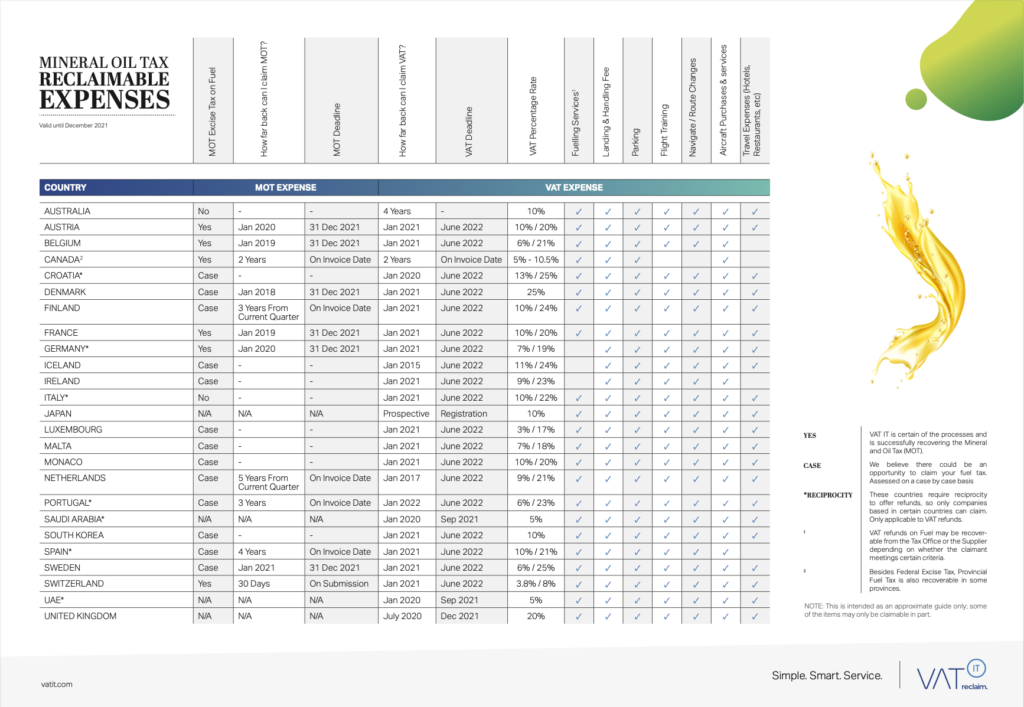
Here is a handy table to give you some idea of where you might be able to:

I don’t see a 43% in there, but a fair few in the 20% region. So some big savings to be had, if this does apply to you.

If I should be exempt can I just not pay it?

You can’t reclaim it everywhere – some places just don’t have an exemption at all, and in some places you can’t reclaim after paying, so you have to make sure it is taken off the bill before you pay.

So make sure: 

  • Your crew know about it, and to ask about it.
  • Make sure your AOC is available for crew to show to fuelers to confirm they are exempt.
  • Make sure the fueling company and customs have the right info on your flight so everyone knows you’re exempt.

Tell me more about all this.

Well, that is actually all we really know on it.

The cost, as we said, is often added in at the fuel truck, and the rules for reclaiming it seem to be a little ‘uncoordinated’ (messy!) This is particularly the case, it seems, for France, Germany and Austria.

So much so that the EBAA wrote this very thorough guide on the legal impact of the ‘European Energy Taxation Directive on Business Aviation in Germany, France and Austria’.

In case the word ‘thorough’ put you off reading it, here’s our little, much less thorough summary of it:

  • It is an analysis of the legal impact of the European Energy Taxation Directive on Business Aviation in Germany, France and Austria.
  • It says that states can exempt aviation fuel from excise duties (tax), provided aircraft are use for purposes other than private pleasure flying.
  • But it isn’t always consistently applied or understood, and operators have to provide a whole load of info which is often very annoying, verging on impossible.
  • It also takes ages to get the money back, so folk are missing out on interest which doesn’t seem very fair.

There is a lot of info in the guide (we won’t try and re-write it all out) but it is definitely worth a read if you are running into difficulties reclaiming your MOT in any of these three spots.

The main issue in France

France won’t let you reclaim it if the passenger is also (directly or indirectly) the owner of the aircraft carrying them, but of course it isn’t that simple. What they define as ‘commercial’ is often confusing, and it gets even messier for charters.

The main issue in Germany

No-one is entirely sure how it is all applied in Germany, it seems to be really inconsistent and dependent on where you file your reclaim. It is also very complicated when it comes to corporate flights.

And it hasn’t been decided whether to apply it to training flights, maintenance flights or positioning flights…

The main issue in Austria

Austria apparently have the worst ‘burden of proof’ on the operator of any country.

Basically you have to disclose loads of information, including stuff about your passengers, which could breach any NDAs you have. So it might be worth highlighting this to them and saying if we try and get you money off the fuel, we’re going to have to share loads of info about you, is that ok?”

OK, I know enough. How do I reclaim it?

You need to make sure you have your AOC to hand (to move you are worthy of exemption) along with the purchase invoice (showing the MOT levied) and fuel delivery notes (showing the correct aircraft registration, signed etc).

Some but not all countries allow for retrospective refunds which is why not paying it where possible is a better option. For those that do, you have to submit your claim to the local customs office (there isn’t a centralised claims office), and there are deadlines for this.

Gimme some links

We shall. We discovered VATIT who have the title of “world leading expert in aviation tax” (self-titled). We got a lot of this info, including that rather handy table, off their site so reckon they might be the folk to talk to. Here’s their website, and here is a very useful post they wrote on Canadian Excise Duties on Fuel Bills if that’s something you want to find out about as well.

The EBAA posted the legal guide we mentioned above so also worth getting in touch with them if you have some specific questions or concerns.


New Zealand Fuel Supply Issue

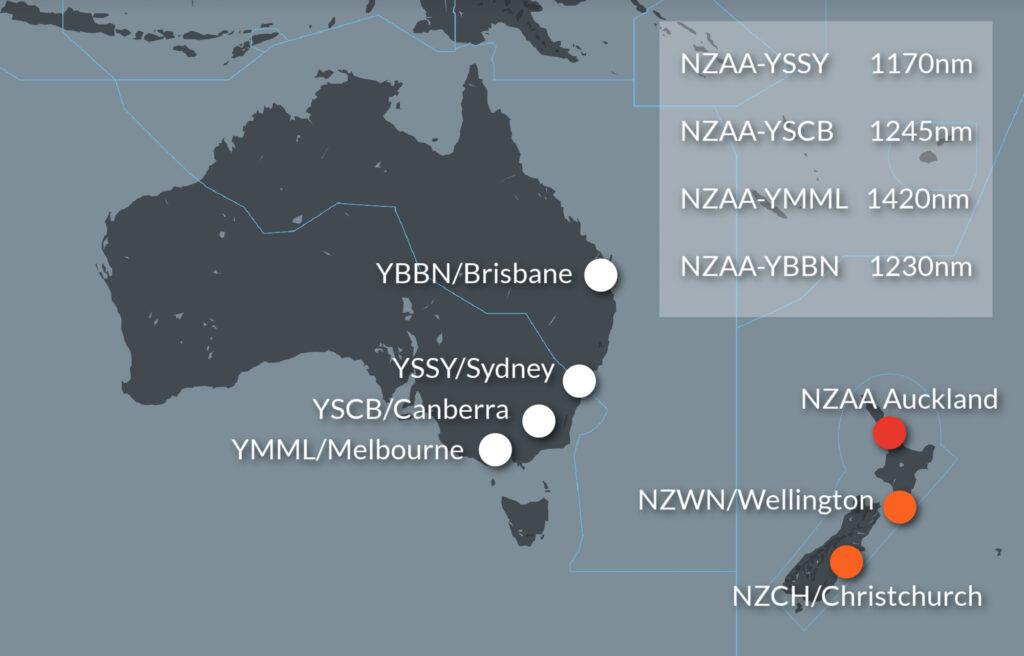
Update 19 Dec: The fuel shortage at NZAA/Auckland due the contaminated batch has been resolved now (they got more fuel delivered).


New Zealand is facing a (hopefully brief) jet fuel shortage after receiving a batch which failed quality control testing.

What is the current situation?

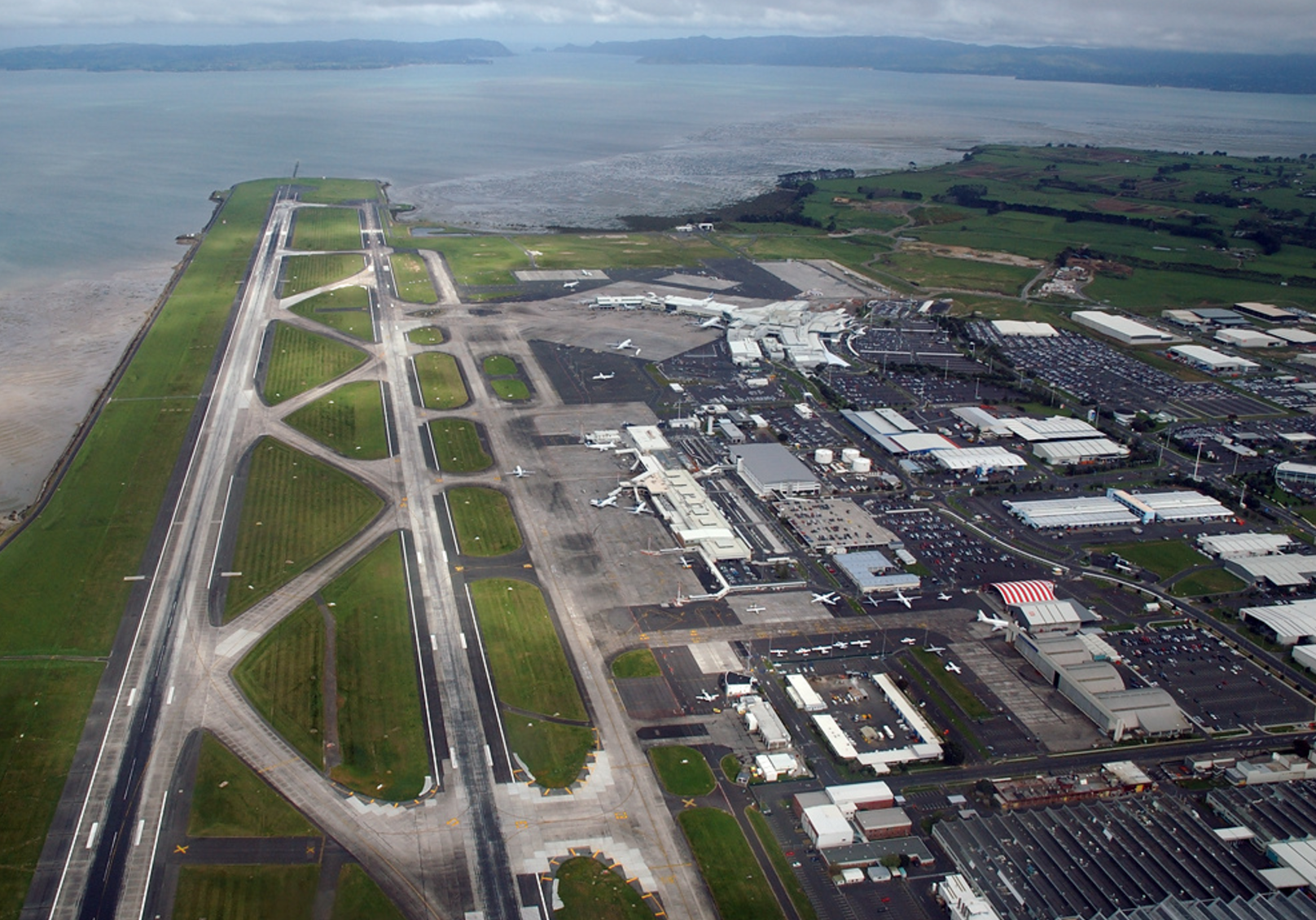
On December 7, a fuel shipment into the main import terminal on New Zealand’s north island failed a quality check. The fuel was bound for NZAA/Auckland, the country’s main international airport.

The next fuel shipment is expected on December 18 and will hopefully resolve the temporary shortage.

How short is the shortage?

Airlines have been told to expect rationing at NZAA/Auckland. Initial reports suggest uplifts will be limited to 75% of an operator’s usual allotment.

However, it is not clear if other airports will receive reduced fuel supplies, with some diverted to support NZAA/Auckland or if the only airport affected is the main international one.

Air Centre One FBO at NZAA/Auckland has told us that World Fuel Services (WFS) has canceled all releases due to the current fuel shortage. Uplifts are still available via the FBO’s account which will be invoiced with your handling charges, but they are recommending refueling elsewhere if possible. WFS releases are apparently still being accepted at other major airports in New Zealand.

Here are the Notams we’ve spotted so far:

NZAA/Auckland B7158/22 - AIR BP, EXXON MOBIL/CHEVRON AND Z ENERGY JET A1 FUEL 
RATIONING IN PLACE. CHECK WITH YOUR FUEL SUPPLIER FOR AVAILABILITY. 
08 DEC 01:56 2022 UNTIL 17 DEC 10:59 2022.
NZWN/Wellington B7097/22 - Z ENERGY JET A1 FUEL (WESTERN APRON) NOT AVBL. 
06 DEC 02:33 2022 UNTIL PERM. CREATED: 06 DEC 02:33 2022

What should you do?

Speak to your agent or supplier at NZAA/Auckland and confirm what the allocation will be for you prior to operating in so you can plan accordingly.

Check with other New Zealand airport agents in advance if you plan to make fuel stops at them, since the fuel availability is not currently clear.

Look at fuel tech stop options if you are operating long haul, or consider payload adjustments to manage the reduced fuel uplift.

Tanker fuel if you are able to.


Is the Fuel Pool Drying Up?

From Laos to Lima there is a growing fuel shortage and while the shortages (and fuel price hikes) have mainly been impacting road users, the problem is beginning to be felt in aviation as well.

So we figured we’d take a look at the situation.

What’s causing it?

The Ukraine Russia conflict.

Russia is the third largest supplier of oil behind the USA and Saudi Arabia, supplying around 12% of the world’s needs.

The conflict is seeing oil prices zoom up, recently hitting $139 a barrel (a 14 year high). Spot prices in New York Harbour went over $7.30 a gallon which is double what it normally would be this time of year.

But why is the USA short?

Good question.

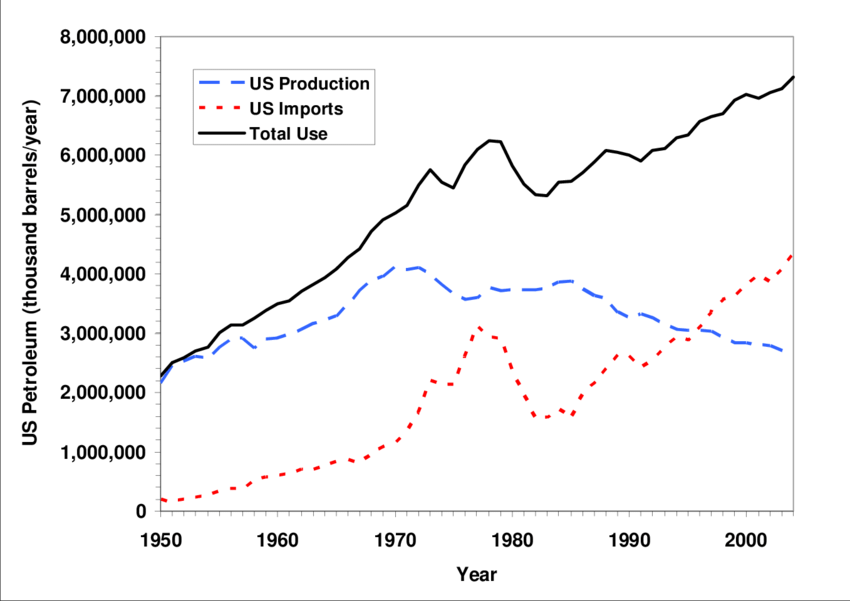
The USA gets its fuel from lots of places, predominantly domestically and from across the border in Canada and Mexico. What you might not realise though is it also sources almost 10% of its supply from Russia. It’s a big number when you consider 329 million people live in the US. Take into account that Europe is also feeling the pinch of this ‘tightening global energy market’, ‘ it’s no wonder prices are on the charge, and supply running thin.

Back in 2021…

Back in 2021 the USA suffered fuel shortages at a bunch of airports. This was actually due to a bunch of reasons:

  • There weren’t enough truckers to drive it around
  • The pipelines had all been shifted during covid and hadn’t been shifted back again
  • There was a cyber attack on one of the main pipelines disrupting the supply
  • Some supplies were diverted away from leisure airports and to airports where wildfire fighting aircraft needed it
  • Leisure routes were getting busier as Covid restrictions loosened

Fast forward to 2022 and while flying levels are around 95% of the peak 2019 levels, fuel production is still only around 80%. So there is, simply, a shortage.

Let’s talk about the East Coast.

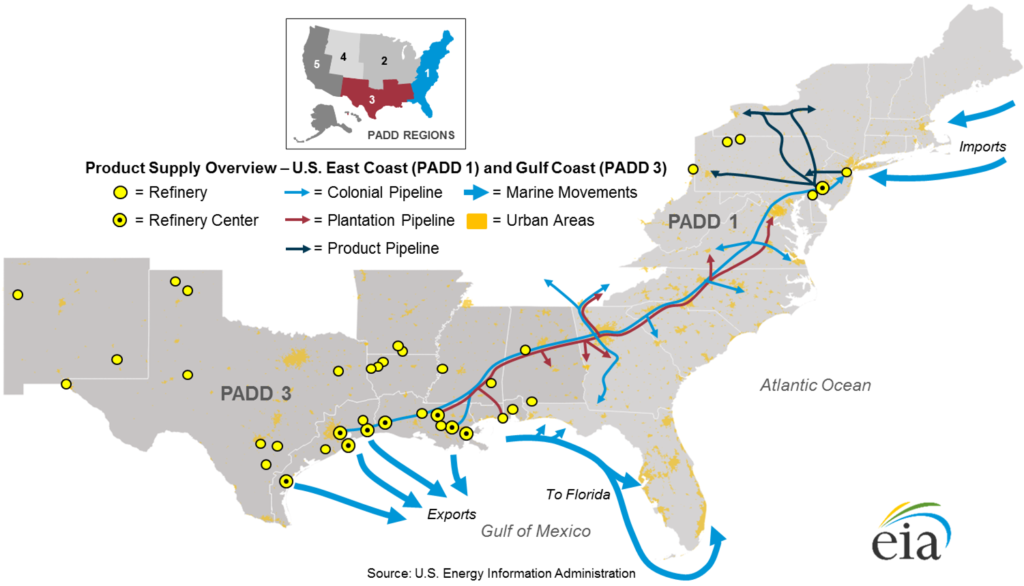
The East Coast has been particularly hard hit for two reasons:

  • One, because the California refineries suffered some technology issues earlier in 2022 and couldn’t make as much,
  • Two, because they receive their supply mostly from Texas and also Europe – and Europe ain’t sending much at the mo.
    • Distallite PADD 1 imports (the stuff a quick google search showed me is used for Kerosene – Jet fuel) is down 60%.

What are we seeing, where?

  • Smaller, regional airports are reporting shortages
  • Leisure routes are being cancelled due rising costs
  • International shortages/rising costs leading to security situations
  • Uncertainty as to ongoing availability
  • And of course, the rising costs globally…

In the USA

We have seen reports for several spots across the USA, and expect to see more particularly for the east coast airports.

  • KEYW/Key West has reported rising costs
  • KAUS/Austin has seen surge in passenger number and operators were asked to tanker where possible for at least the next few weeks.
  • KSDL/Scottsdale had a report from member of fuel shortages. One FBO confirmed their supply was ok, but other FBOs were running low.

If you have visited an airport recently which has fuel supply problems, or where costs are rising significantly, please let us know.

Elsewhere in the world

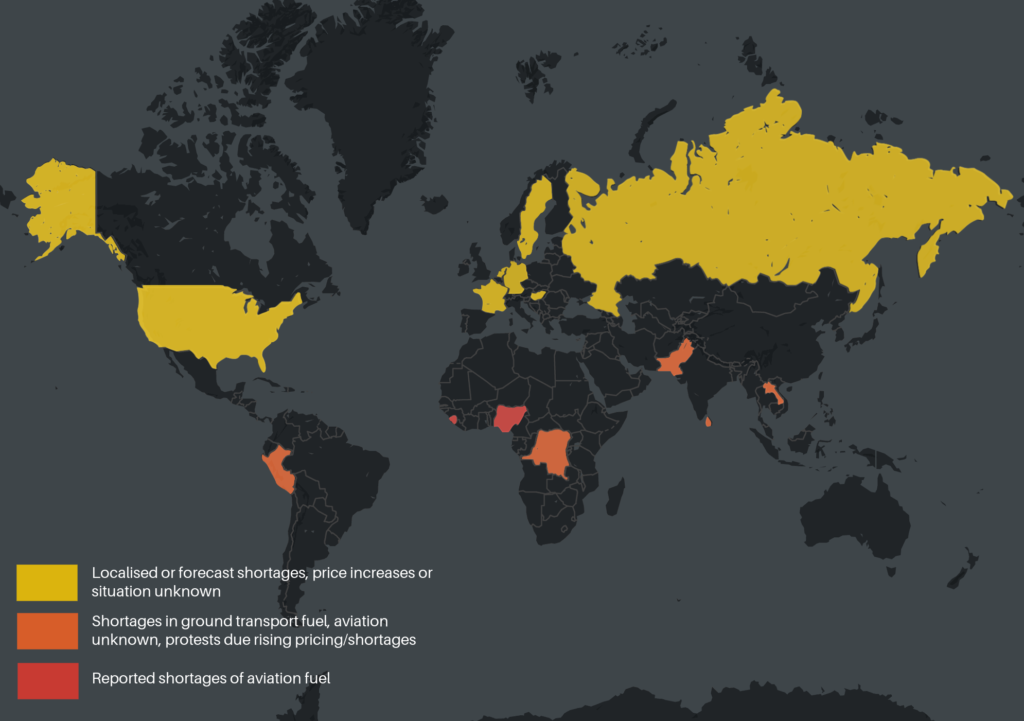
Nigeria and Russia have both had reports of aviation fuel shortages. The other countries on the list are seeing fuel shortages and rising costs leading to protests and security situations, however whether there is an impact on aviation fuel supplies is currently unknown.

  • Russia started to see fuel shortages around the start of March.

Whilst Russia are a major oil producer, much of their supply may be getting redirected for military operations. One major operator cancelled flights to UUDD/Moscow due being unable to uplift. With the current situation and lack of operators heading in, it is hard to get any clear picture of the situation though.

  • Nigeria have a big, ongoing shortage.

Although initially due to a batch of poor quality fuel, the situation has been growing as the costs of buying in more keep rising. This has been impacting domestic and some Interational airlines for over a month now. We wrote about it here.

  • Laos have a nationwide shortage but reports are not clear as to whether this impact aviation fuel as well.
  • Peru have seen protests and strikes in the transportation sector over rising fuel prices. There are no reports of this impacting aviation yet.
  • Sri Lanka has also been seeing an increase in protests over rising economic issues including fuel shortages. An FBO at VCBI/Colombo-Bandaranaike informed us that jet fuel supplies are good.
  • Pakistan are seeing rising demand, but are struggling to buy in fuel from their suppliers as Europe call in additional supply.
  • DRC has a shortage in ground transport fuel. No impact reported on aviation fuel, but significant security issues due protests.
  • Sierra Leone have a notam advising Jet A1 only available for scheduled flights at GFLL/Freetown until at least April 20.

What to do about it?

  • Keep an eye on notams
  • Confirm availability with agents prior to heading in
  • Consider signing up to services such as AvHopper that can keep updated on fuel costs and availability
  • Tanker where possible to maximise cost efficiency
  • When planning alternates consider fuel availability
  • Think about crew security on the ground if laying over, and crew transport issues
  • Share it if you operate to an airport or region and experience fuel issues.

You can let us know about it on team@ops.group and we will post an alert so others know about it as well.


The New EASA Fuel Policy: Does it affect you?

So EASA have changed their fuel rules and the ‘Decision’ they have published ain’t an easy thing to read. Here is what we think it says, in plainer English, to help you work out what it all means for you.

We are no pros on fuel planning through so this is more of a heads-up that things are a-changing. For the full regulations you will need to dive in yourself and try to fathom it out, but hopefully this gives some info on bits to really look out for.

First of all, in EASA’s own words…

…What the change is all about?

They also say:

Give it to me in plain English.

  • It will improve fuel efficiency.
  • It will be nicer for the environment.
  • It will apply from October 30 2022.
  • The big change in fuel policy applies to Commercial Air Transport (CAT) operators (but there are a lot of changes for other folk in there too)

If you want to jump straight in and read it all yourself, then here is the link.

What’s changed then?

Remember the old Fuel Policy that we all know and love?

The one where you have to carry taxi fuel, trip fuel, fuel to get to your alternate, contingency fuel (and some additional bits in there about whether that needs to be 5% or 5 mins at 1500′, or 3% or if you can use STATCON…) plus your final reserve and any extra you might want…
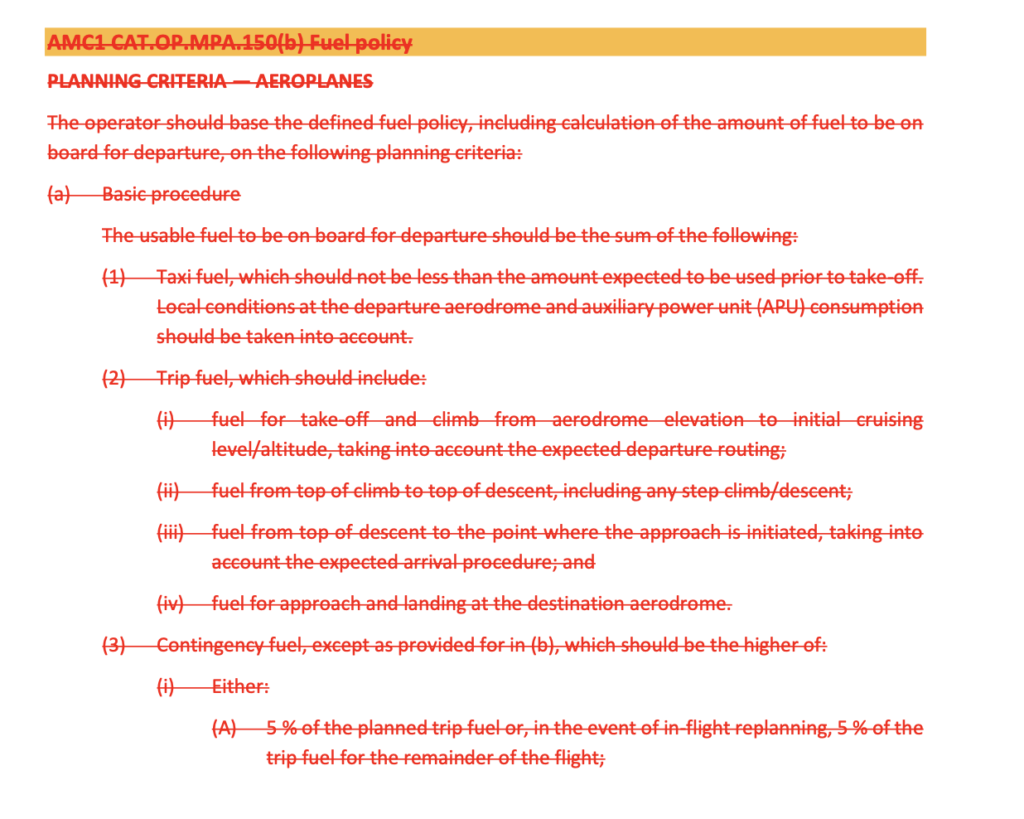
Well, that is out and in its place are three new fuel schemes –

  • the Individual.
  • the Basic.
  • the Basic, with variations.

So the old fuel policy is chopped and there are three new schemes instead. 

Here’s the deal with them. The first thing to know is that the individual and the basic + variations are both voluntary, meaning you’ll need to meet a bunch of criteria to opt for them. The basic is what you’ll be on if the other two don’t apply.

Oh, and should have said it earlier, but this only applies if you’re an EASA operator.

Any idea which fuel scheme to read up on?

If you’re not a CAT Operator (now that header picture makes sense, right?) then the Individual Fuel Scheme (and all the many, many pages of info referring to that) probably won’t apply to you. That’s not to say it isn’t useful to read and know about anyway.

If you know you don’t have particularly enhanced fuel monitoring capabilities then the basic scheme is the one for you, and this is not really different from the current fuel policy as we know it. There are however a lot of small changes which you will need to know about.

EASA say 

So let’s look at the schemes.

1. The Individual Fuel Scheme.

This applies to big operators with big fuel monitoring systems in place which let them say “I know how much fuel I need all the time because I fly there a lot, monitor it and know about all the possible changes and risks and all that stuff that might affect it!”

So EASA are all “well, if you meet all our criteria then we’re gonna trust that you do know better, and can take just what you need and that’ll be better for you and the environment.”

OK, there might be a bit more to it than that, but in a nutshell if you’re a big operator and think this might apply then dig in and read all the new blue and see if you can opt for this scheme.

If you know this doesn’t apply, then read on.

2. The Basic Scheme.

Ah now this is more familiar. It is basically our old Fuel Policy made simple.  5% for your contingency. Done.

Here’s the actual contingency bit for reference:

For contingency fuel, calculate for unforeseen factors either: whichever is the higher; (1) 5 % of the planned trip fuel or, in the event of in-flight re-planning, 5 % of the trip fuel for the remainder of the flight; or (2) an amount to fly for 5 minutes at holding speed at 1 500 ft (450 m) above the destination aerodrome in standard conditions,

This is not voluntary. The other two are, and if you don’t go for either of them then this is the policy you’ll need to apply.

3. The Basic with variations.

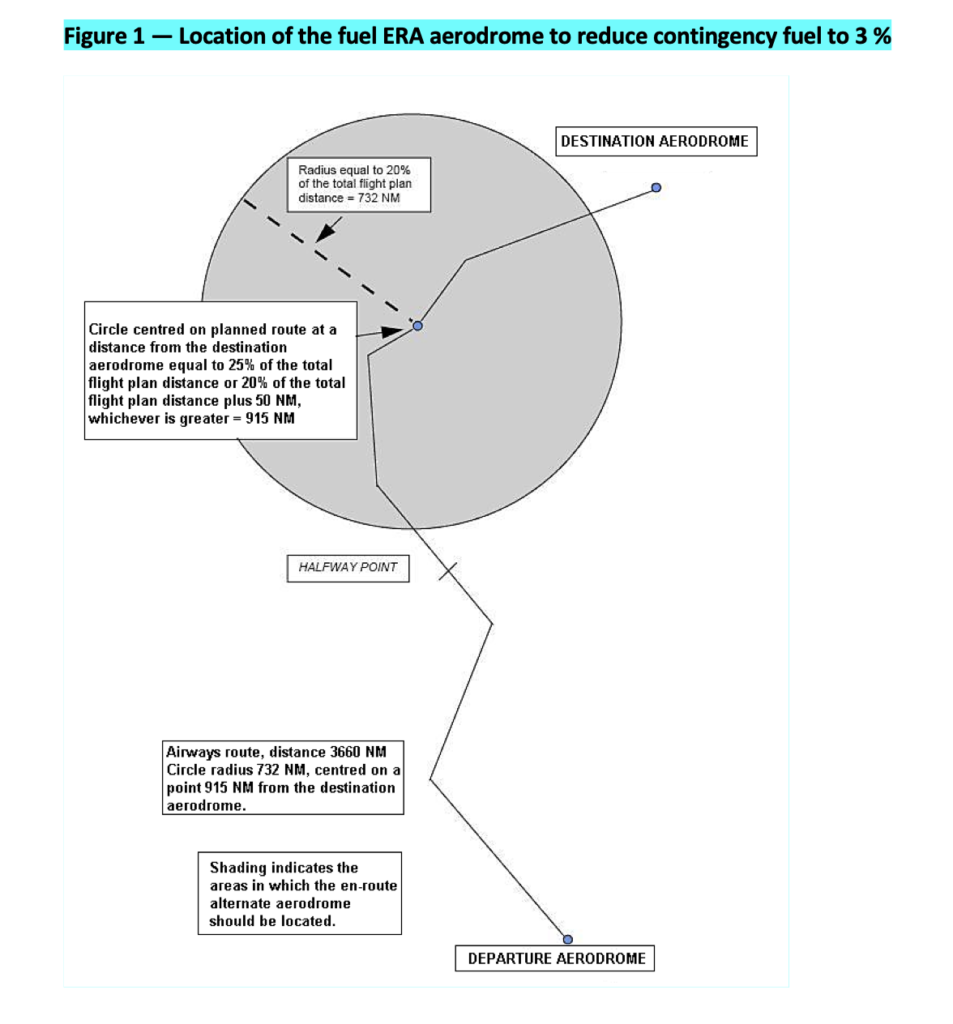
From what we can see, those variations really apply to the contingency and whether you can reduce to 3% or use STATCON, which is based on whether you have some sort of monitoring program in place, amongst other things.
Seems like a lot of blue just for that?

There is a lot because the two voluntary schemes have a lot of points attached to them which you need to know about if you’re planning on applying for one of those schemes.

Aside from the big policy changes, there are some changes and clarifications to definitions and what have you which are worth a read.

Do you need to read the Explanatory Note?

Not unless you really want an in-depth explanation as to why they need the new AMC and GM (acceptable means of compliance and guidance material) on fuel/energy planning, and a whole long list of references.

You can read it here if you do want to.

Annex I

This is the changes to the definitions annex. It is fairly short (they’ve removed acronyms) and made a few definition changes.

You can read it here, but you’re better off reading the full definitions annex here if it’s definitions you’re after.

Here’s one we found interesting:

  • Relevant safety information that might affect the safety of the flight: unforeseen hazards

They’ve published a nice list here of stuff to think about (which you were probably were anyway but just incase) it means stuff like unexpected ATC delays, met conditions which weren’t forecast, sudden obstructions on the runway, failure of some bit of the airplane that means you suddenly need a lot more runway. Sudden acts of nature that you didn’t expect…

The other Annexes

We jumped straight in to Annex IV because it is the Commercial Air Operators annex, and they did say at the start that most of the changes apply to this. If you are not a CAT Operator then take a browse through the annex that does apply. 

This contains all the info on the new schemes and the changes, criteria for opting for them etc. so this is what you need to read!

Some other bits worth looking out for.

  • Alternate Planning: We aren’t here to get into the nitty-gritty of the changes but someone very helpful and with more knowledge on it that us said that this “basically rewrites everything we learned” about flight planning. One of the big rewrites is on the Alternate Planning.
    • The old ‘step-down’ method of alternate planning doesn’t apply anymore. Instead it must be looked at individually each time.
    • Wind gusts also need to be considered.
    • Take a look at the tables (here’s the one for the basic + variations scheme) to get a better idea.
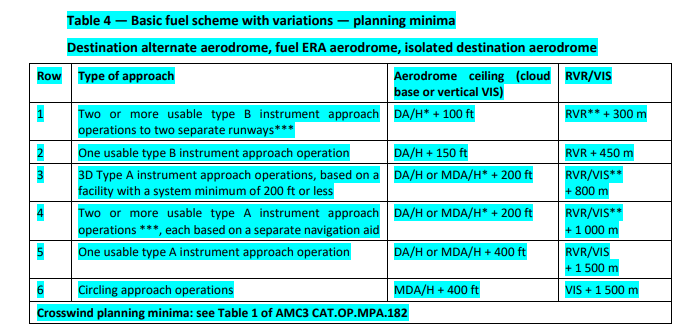
There are also some nicely updated or reclarified definitions throughout so even if the new optional schemes don’t apply to you, its good opportunity to remind yourself about certain meanings which apply to any fuel policy, even non-EASA ones.

  • Appropriate Meteorological information: There is a whole lot of blue here and they seem to have updated the definition on what this means and where you can get this weather from. Basically you can reproduce information from a reliable “weather man” source so long as you are just changing the layout, not the content.  
    • Reliable means it as some sort of quality assurance in terms of accuracy and integrity.
    • You can also use supplementary weather info – like some nice colourful charts.
  • Verifying weather conditions for adequate aerodromes: You have two choices, and the requirement for RFFS seems to have been removed from the adequate definition:
    • Adequate This means an aerodrome that you can fly to and use because its runway characteristics and anything else relevant meets your performance requirements. You don’t have to consider weather conditions to decide if an aerodrome is adequate.
    • Weather permissible You do need to consider the weather to determine if an adequate aerodrome is weather permissible for your planning purposes.
  • Minimum Fuel: This is worth a read, and because we think it is worth a read, we’ve recreated it here for you so you can just read that without everything else around it, if you so wish.

Is there a good way to read this?

It is a fairly unreadable document. The amount of blue and red makes it quite hard to work out what applies to you and what doesn’t. We suggest finding a way to separate the scheme that applies to you from the rest, and then read through the definitions and sections along side your current fuel policy to identify what has specifically changed.

Still totally confused?

We are too if we’re being totally honest. There are some big changes going on here and working out which fuel scheme applies to you is just step on.

EASA are holding a Webinar on this later in the year (Currently planned for July 7). You can register for it here. 

If you’re not already on it then it might be worth signing up to the EASA community network because they post updates, and folk have discussions on all things EASA on here so you might find more answers here.

There are some bits we were confused on so if you spot any errors or issues in this, please let us know at team@ops.group
Hitching a Ride: How To Save Fuel with Geese

Industry heavyweight Airbus is currently running an innovative new trial over the North Atlantic that has potential to change the way we fly in oceanic airspace – and ANSPs Eurocontrol, NAT, DNSA and Navcanada are all on board. It’s called wake harnessing, and it was invented by geese. Okay maybe not ‘invented’ – but certainly provided by nature.

Geese, you say?

Geese have already left their mark on aviation history in ways that that we’d probably like to forget. So, it seems only fair that they do something positive for the industry too.

And now it seems that they are (unintentionally, but we’ll still take it). When a flock of Canada Geese infamously downed an airliner over New York back in 2009, they were flying in formation.

They were doing that because they were going somewhere and using each other to make things easier. Geese are known fly 1500 miles in a single day. That’s only possible because they use very little energy doing it.

So why do we care?

One word: biomimicry. Or in more simple terms – copying nature. When we want to figure out how to do something that we don’t know how to do, it’s often worth looking out the window. Nature, it seems, always finds a way.

Enter aviation. When it comes to fuel, it is facing a couple of big problems. The first is that ICAO have set some seriously lofty goals for improving fuel efficiency and carbon emissions. While the other issue is dosh. Jet fuel is expensive and modern aircraft use a lot of it. Reducing fuel burn is big business, especially in an environment where profit margins are tiny.

There are solutions coming. Sustainable aviation fuel and next-gen turbine engine design have been making headlines recently. But behind the scenes Airbus has been turning to nature to help solve the problem using existing technologies we have today and by changing the way we fly – and it’s all thanks to geese.

The Flying-V

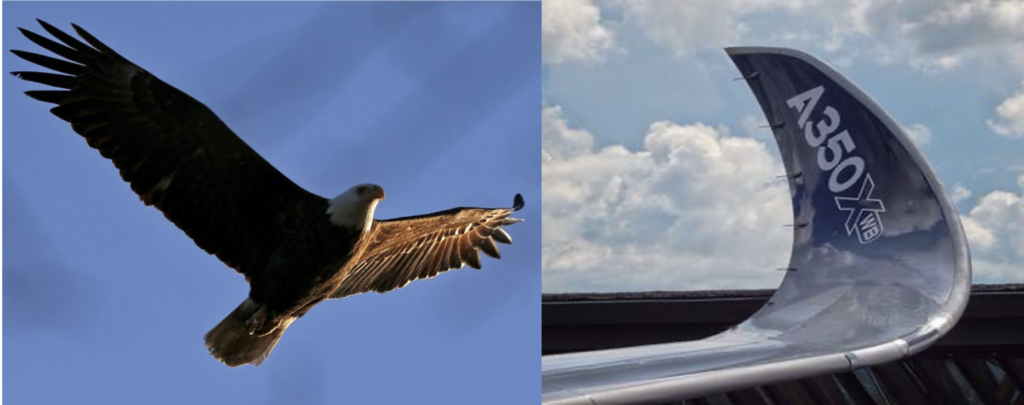
Geese fly long distances in formation. Have you ever wondered why?

It’s because they are using something called wake energy retrieval. It’s a really fancy term for riding each other’s wave. It’s the result of countless years of evolution and it may have big implications for airplanes.

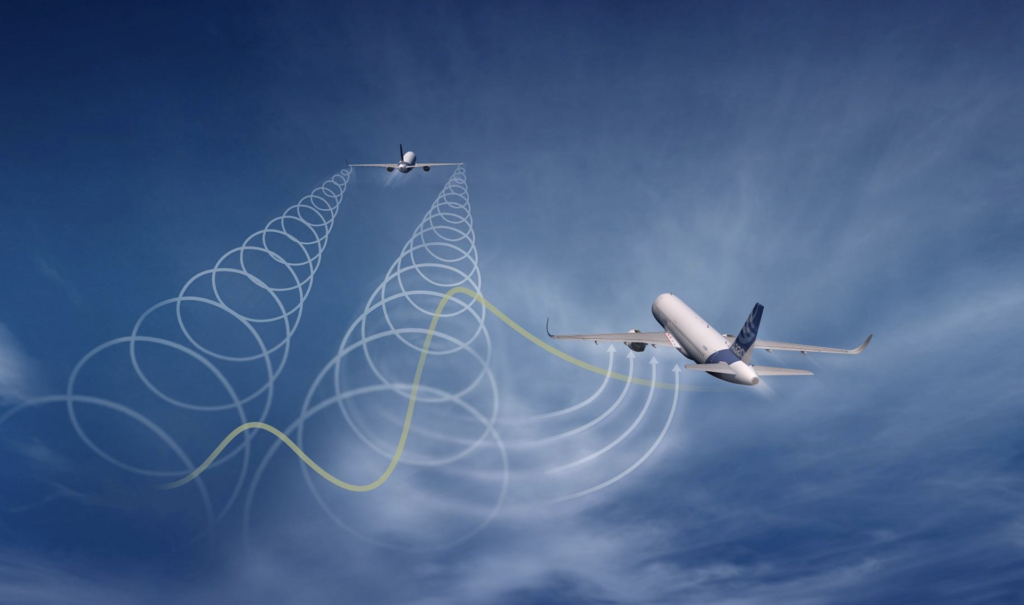
Here’s how it works: When a bird flaps its wings its tips creates vortices. In the same way that our man-made wings do. These vortices create a horizontal swirl of air – an outer upward component and an inner downward one.

The reason why birds fly in a V is because if they position themselves in such a way that their wings stay in upward-moving air from the bird in front, they can effectively fly in an updraft, constantly. Which means they flap less and travel further.

What if airplanes did the same thing (but with less flapping)?

Airbus thinks that’s a good question. Since 2016 they have been copying geese by flying large jets in formation so that the trailing aircraft ‘rides the wake’ of the one in front.

It turns out that if you find just the right spot, not only is it smooth for the passengers, but also very fuel efficient. Get this – Airbus have shown fuel savings of five to ten percent simply due to the effects of this phenomenon, and potential to reduce overall climate impact by twenty-five percent.

They’re heavyweight numbers. That’s because by flying in the upward component of the wake from the aircraft in front, we are essentially getting free lift. Or in other words, ‘harnessing’ energy we’d otherwise lose – which is why the concept is also known as ‘wake harnessing’.

It’s almost as though the trailing aircraft is flying in a gentle descent while level. That means less thrust, less fuel and less emissions.

But here’s the kicker – you have to get close. Like real close. Airbus have found the optimum distance between aircraft is only 1.5nm. That’s a fraction of the spacing applied by ATC. But with existing technologies like TCAS and ADS-C it’s not unreasonable to think that this can be achieved safely.

Airbus have called the project Fello’fly.

And here’s how it works.

ETAs would be used by ATC at feeder waypoints to set aircraft up for their ‘wake energy retrieval pairing’- i.e. formation. The aircraft will still be separated both horizontally and vertically, but close enough for the pairing process to begin.

Responsibility for separation will then be handed to the two aircraft. Using newly developed FMS software, the trailing airplane will slowly close in on the leading one until it is positioned in the optimum spot for wake harnessing. There it will stay until the two aircraft part ways again. The lead aircraft will be responsible for talking to ATC while in formation.

But it’s not all smooth sailing.

 While the idea has some serious potential there are some fairly obvious hurdles that would need to be overcome:

Wasting energy. The idea only works if aircraft don’t waste energy flying at sub-optimal speeds to make it happen. In other words, loitering or playing catch up. Which means it will be difficult to achieve for aircraft departing the same airport.

Instead the answer may lie in new software. For instance, German researchers have developed ‘MultiFly’ – a system that identifies jets that can be paired together based on type, location and how long they will be on the same route.

Different aircraft. Unlike a flock of geese, all aircraft types are different. 1.5nm may be optimal for a pair of A350s, but more testing needs to be done to find the sweet spot for all possible combinations of jets. Both aircraft would also need to have the same optimal cruise speed – otherwise all the gains would be pointless.

Then there is the raft of regulatory changes that would be required to make sure this can all happen safely.

Full Speed Ahead

Despite the obvious challenges that wake harnessing presents, if they can be overcome the potential benefits are obvious. Airbus is pressing ahead with the project and hope to make it reality in oceanic airspace by the middle of the decade.

Considering the growth potential of the industry in a post-Covid world, formation flight may be the next big step in cleaner and more efficient flying.

Who’d have ever thought we get there with the help of geese?


Is it time to lose a bit of weight?

Don’t worry, we are talking about your airplane, not you. Looking at whether you can reduce your aircraft weight is a good idea though because less pounds = less £/$/€ spent on fuel.

But how can you go about reducing your aircraft weight? Well, here are a few quick ’n’ easy methods to consider, because whether the motivation to reduce your burn is down to the environment, or down to money, we reckon both are good reasons.

Bath time

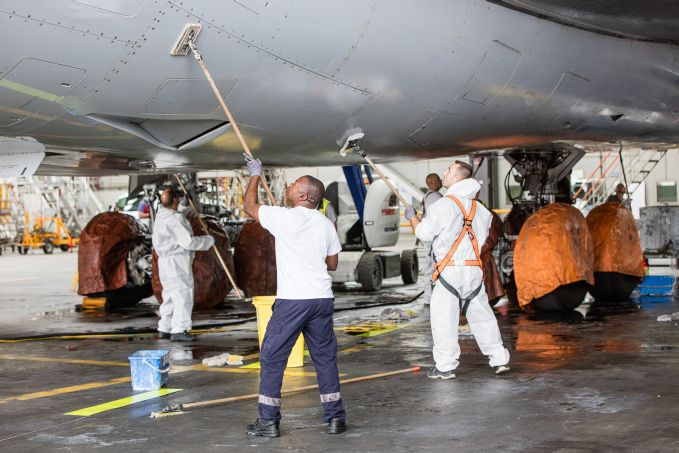
First up, give your airplane a good scrub. Operators are focused on Cabin Covid Cleaning, but there is more to be saved if you really clean out the muck from all the nooks and crannies. We rarely think about the accumulation of dirt onboard in terms of weight build up, but it can be significant.

  • The Outside: Your aircraft is designed to be clean and shiny so it can glide through the air with ease. Anything stuck to the airframe is going to disrupt airflow and increase drag which in turn increases your fuel burn. A study by Airbus suggested a clean airplane could save between 0.5 to 2% on fuel;
  • The Inside: Seat pockets and headrests are filthy, but we aren’t here to talk about what is festering inside your furnishings, but rather to think about the added weight. Given a mattress apparently gains a good 5lbs in dirt and dust through its general lifetime, just think how much those seats filled with dropped food and all the other people debris might mean in added mass;
  • The Cargo Bays: Giving your cargo bay a bit of an enema is also going to help reduce weight. The build up of dirt, ripped off luggage tags and probably a few mouse droppings is literally not worth its weight in fuel.

The Rain in Planes

(I stole that title from this article, but it is a great one).

Condensation is a problem in aircraft. A 747 can find an extra 700kg added onto its weight through liquid alone. That is the equivalent of seven non fare-paying passengers every flight, using your fuel without paying a penny in compensation.

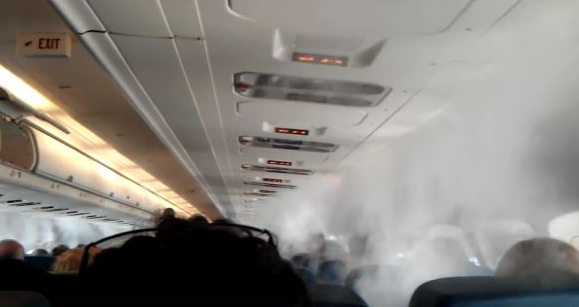
With the level of Covid cleaning and spraying of surfaces going on, the additional liquid content swamping up your airplane interior is going to be higher. Reducing this is not easy – much of it comes down to aircraft design and maintenance. However, there are options such as Sweden-based CTT Systems and their ‘Zonal Drying’ technology which feeds cabin air through a rotor filled with a desiccant of silica gel.

Boeing make some of their own recommendations too, so it is worth considering ways to reduce condensation and other unwanted fluid build-up because it not only helps reduce weight, but is good for general airframe lifespan too.

Go paperless

In 2018, United Airlines started using thinner paper for their in-flight magazines, reducing their weight by 1oz per copy. That might sound like not a lot at all, but if you think of how many magazines are onboard each flight then that’s a fair few ounces – and ounces mean fuel. Turns out it saved them around $15 of fuel per flight, which worked out at about 170,000 gallons of fuel over the year.

Now, you aren’t going to see savings like that unless you have a large fleet, but even 1% of that saving will add up over time.

And the paper savings don’t stop there – paperless cockpits can mean a big weight saving. Swapping from old school charts to a nice lightweight tablet, and digital flight plans instead of reams of Notam-riddled paper printouts can drop about 40lbs from your load.

It’s also so much better for the poor pilot’s back.

Water it down

The potable water tank is often overlooked as a potential saving spot. An A320 tank has around about 200 liters capacity but the amount you carry can be reduced based on the number of passengers.

Repaint

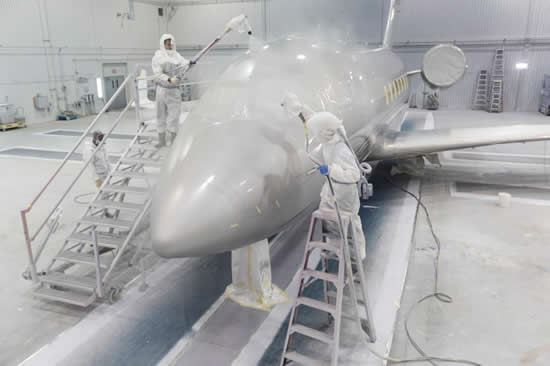
Paint weighs a lot. The coating and painting on an A380 weighs between 650kg and 1000kg. Ok, so your smaller jet won’t need quite that much, but there can still be a fairly hefty reduction for you if you opt to use lightweight paint.

Modern paint technology can also mean a lower drag profile, while using  new component coating technology can save 30 to 70% of the weight on 3-4m components.

Update your interior

You probably can’t rebuild the outside of your airplane with a nice lightweight composite, but you can take a look at what you’ve got inside.

There are pretty strict regulations on aircraft trolley design. Who knew. But designers have managed to bring the weight down while still ticking the regulatory check boxes and nowadays an ultra lightweight trolley can weigh as little as 15kgs.

A decade or so ago regulators raised safety standards. Excellent. But this also meant a requirement for safer seats which suddenly added around 5 tonnes to the average weight of an aircraft. Well, seat design has also moved on since then and slim line, composite seats are available, potentially reducing their weight by up to 25%.

Thomas Cook (sadly no longer flying) reckoned they averaged at 300kg savings per flight by using lighter seats.

Seats, air conditioning systems, carpets, oxygen bottles… there are a lot of new technologies out there and while a full retrofit can be a pricey process, if the savings outweigh the costs then it might be time to take a look at where you can update your cabin.

Passenger weight

Although some airlines have adopted this measure, we don’t suggest charging passengers based on their weight – it doesn’t make them very happy. That said, using actual weight versus standard ones can be beneficial (it might also be necessary if your aircraft relies on accurate data for its weight and balance).

Check out this EASA report into standard passengers weights and how actual passengers compared.

Cut the fuel directly

We definitely don’t mean reducing flight plan fuel and carrying the bare minimum on every operation, but there are ways to help reduce your flight plan fuel requirements over time.

Let’s take a step back though and look at our contingency fuel. If you are using statcon fuel then you are taking a statistical amount based on analysis of previous flights. So we can reduce this by reducing the fuel burn on “previous” flights.

Flying economically means more than just best altitude or airspeed. It also means more direct routings, using free route airspace better and achieving constant descent approaches.

Using a robust fuel planning system that takes into account all factors will also help produce a planned fuel that is efficient and accurate.

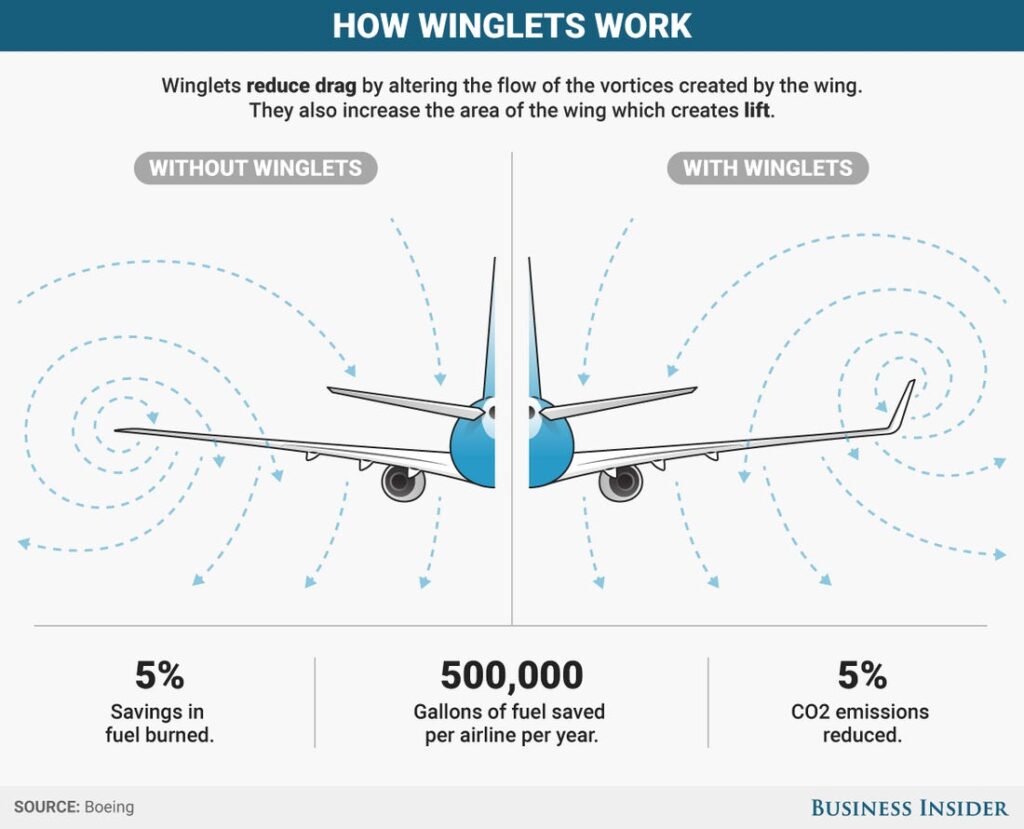
Whack on some winglets

Winglets improve fuel burn. Improved fuel burn means you don’t have to carry as much in the first place.

Do the math

Carrying an extra squirt of fuel is going to burn more fuel. You can easily go down a rabbit hole here of saying “I need an extra tonne, but that means an extra 250kg burned, so I’ll take 1,250kg, but that will burn another…”

The logic here is actually fairly simple though. If you need a tonne at destination, then take the fuel needed to carry it so when you get destination, that 1000kg is still there ready for use. If you think you might need “a bit extra” for the journey then you don’t need to carry more to carry this because you are carrying it to burn en-route anyway.

The Hidden Savings

Of course all these measures have to be balanced – the cost of fuel savings versus the cost of implementing the changes. But don’t forget – there are hidden savings too. Lighter aircraft mean less wear and tear on their poor old undercarriages.

So, putting your aircraft on a diet can mean a lot of savings down the line.


No fuel at LFMN/Nice

Update July 9th: Following last week’s issues with a break in the fuel pipeline coming into the airport, local handlers are now saying there are no more issues with fuel supply and availability. However, some third-party fuel providers are warning they still cannot arrange fuel for BA/GA operators, and are advising them to tanker inbound. Do you know different? Let us know!

July 5th: Due a break in the pipeline into the airport, for most operators there is no fuel available at LFMN/Nice.

Check with your handler before operating if your uplift at Nice is essential, as many are now advising all ad-hoc operators to tanker-in.

Information is still coming in, but it appears this may affect operations for a few days. No word of other airports affected, and nothing has been published in the Notams yet.


Cape Town – No Fuel!

FACT/Cape Town is facing a fuel restriction, no fuel available as of now (20 MAR 2018). The reason for the restriction is not known, but we have reached out to several suppliers who have all confirmed the same information.

We’re checking up to find the reasoning, as well as an estimated date of availability.

If you have any additional information, you can reach out at team@flightservice.org


FAA warns about fuel contamination

The FAA Safety Team have issued a mysterious new Notam today, about a possible fuel contamination problem at airports in the central U.S.

Update: The FAA has sent a follow up, seems things weren’t as widespread as they made it sound:

SPECIAL..NOTICE..

THE FAA CONTINUES TO INVESTIGATE A FUEL CONTAMINATION PROBLEM. SUBSTANTIAL EVIDENCE INDICATES THE CONTAMINATION HAS BEEN ISOLATED TO GENERAL AVIATION AND MILITARY AIRCRAFT AT EPPLEY AIRFIELD, OMAHA, NE (KOMA) DURING THE TIME PERIOD NOVEMBER 18-20, 2017. FAA RECOMMENDS THAT ALL AIRCRAFT OPERATORS CHECK NOTAMS FREQUENTLY FOR POSSIBLE CHANGES TO THIS ONGOING SITUATION.

FOR FURTHER INFORMATION CONTACT FLIGHT STANDARDS AIR TRANSPORTATION DIVISION AT 202-267-8166.

Here’s what they have to say:

FDC 7/4900 (A1362/17) - FL..SPECIAL NOTICE..THE FAA IS CURRENTLY INVESTIGATING 
A FUEL CONTAMINATION PROBLEM THAT HAS RECENTLY APPEARED IN JET FUEL WI THE CENTRAL U.S. THE EXACT SOURCE AND THE GEOGRAPHICAL SCOPE OF THE CONTAMINATION IS UNKNOWN. THERE HAVE BEEN REPORTS OF BLOCKAGES IN FUEL FILTERS, FUEL NOZZLES, AND FUEL TANKS. THIS HAS RESULTED IN SEVERAL ENGINE FLAMEOUTS AND OTHER ERRATIC ENGINE OPS. ALL OPERATORS ARE ADZ TO CLOSELY FOLLOW FUEL SAMPLING PROC AND REPORT ANY DISCOVERY OF CONTAMINATION OR ERRATIC ENGINE OPS TO THEIR FLIGHT STANDARDS DISTRICT OFFICE OR NEAREST FAA FACILITY. 30 NOV 00:20 2017 UNTIL 30 DEC 00:20 2017. CREATED: 30 NOV 00:48 2017

We haven’t seen or heard any reports about this issue recently. The FAA Safety Team say that this is currently still under investigation, and can’t provide any additional information just yet. We’ve also reached out to a few of the major suppliers, who are saying pretty much the same thing – no more info yet, beyond the Notam.

Several sources are telling us the NOTAM is related to a fuel issue at KOMA, limited to a single truck at a single FBO:

F0013/17 NOTAMN Q) ZMP/QFUXX/IV/NBO/A/000/999/4118N09553W005 A) KOMA B) 1711211550 C) 1712212359 E) [DEFENSE LOGISTICS AGENCY ENERGY ADVISORY] CONTRACT FUEL NOT AVAILABLE TRUMAN ARNOLD COMPANIES DBA TAC AIR IS HEREBY NOTIFIED TO CEASE REFUELING ON ALL U.S. AIRCRAFT UNDER INTO-PLANE CONTRACT SPE600-16-D-0066 AT LOCATION KOMA – EPPLEY AIRFIELD AIRPORT, NEBRASKA. DUE TO SAFETY OF FLIGHT ISSUES REPORTED ON TWO AIR FORCE AIRCRAFT REFUELED AT THEIR FACILITY 18 NOV 2017 THAT RESULTED IN EMERGENCY LANDINGS. REFUELING OF U.S. GOVERNMENT AIRCRAFT IS IMMEDIATELY SUSPENDED AND SHALL REMAIN SO UNTIL THE DLA ENERGY CONTRACTING OFFICER NOTIFIES YOU OTHERWISE IN WRITING.


If you’ve experienced any fuel contamination issues recently, we’d love to hear about it! Email us at team@flightservice.org


Ops normal at NZAA/Auckland

The fuel issue that has been affecting flights out of Auckland has been rectified and it’s back to business as usual.

NCRG/Rarotonga and NFFN/Fiji, which had also been rationing fuel have also resumed normal ops.

Hopefully that is the last that we will hear on fuel issues out of Auckland.


Cheapest Jet fuel on the Atlantic? $1.15 a gallon

The cost of a gallon of Jet A1 has been rather unstable lately. Over the last couple of years, we’ve produced several versions of our  North Atlantic Plotting Chart, and as we’ve done so, the price of Jet A1 has dropped each time across the Atlantic seaboard.

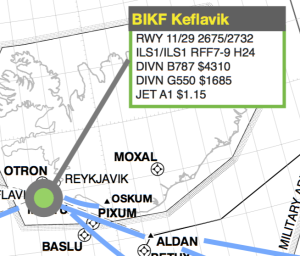
So, where is cheapest? Answer: Keflavik. $1.15 for a gallon of Jet A1 at the best available commercial airline rate. Now, that was six weeks back or so, when we did the research for the chart, and prices have been rising since (tracking the Oil price pretty well).

BIKF

Next best on the list is Shannon, Ireland – $1.37 USD/USG, thanks to the Shannon Free Zone, which strips out most of the taxes that the EU levies as standard.

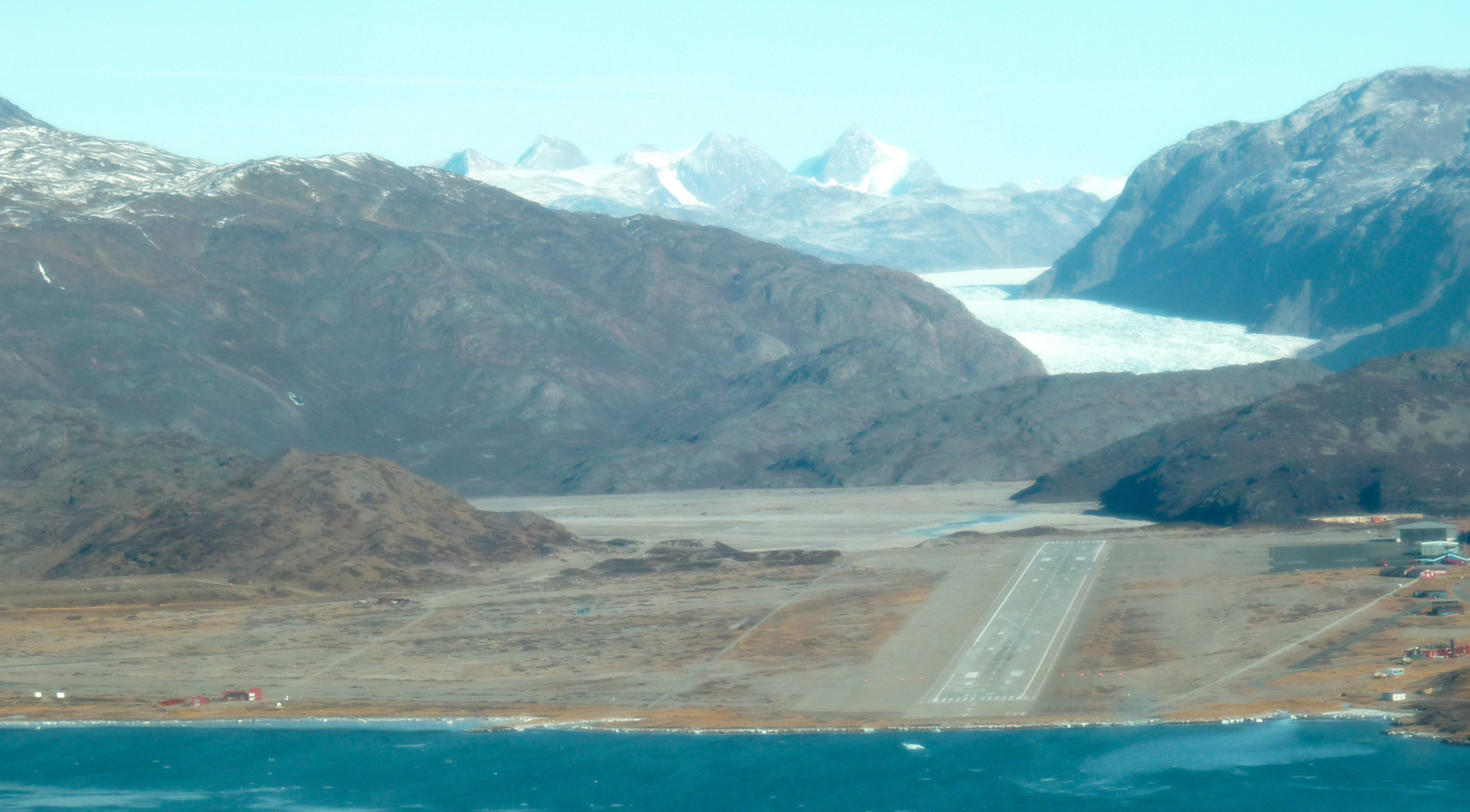
Next question, then: most expensive? Narsarsuaq, at $5.65 for a gallon. Why so much more? Primary reason: getting the fuel to BGBW is an awful lot harder than getting it to BIKF. The rest is down to the difference in government tax policy.

Fuel price is of course not the only tech stop or diversion consideration on the North Atlantic, but given that security, safety, and service quality is pretty much equal across the entire NAT region, it’s an important factor – along with the cost of handling.

If you look at the snapshot above, you can see that your G550 will cost around $1685 including Airport Fees; taking a B787 to KEF will run around $4300 all in.

The North Atlantic Plotting Chart has all this information for all the common North Atlantic ETOPS/Diversion Fields – namely: CYYT/St Johns, CYQX/Gander, CYJT/Stephenville, CYYR/Goose Bay, CYFB/Iqaluit, BGSF/Sondrestrom, BGBW/Narsarauq, BIKF/Keflavik, EGPF/Glasgow Intl, EGAA/Belfast, EINN/Shannon, and LPLA/Lajes.
Download NAT Plotting Chart