ReFuelEU: Europe’s new anti-tankering rules explained

Jan 2026 update:

ReFuelEU Aviation now also applies at LSZH/Zurich and LSGG/Geneva. Switzerland isn’t in the EU, but it has chosen to adopt the rules, which means both airports are treated just like Union airports. The official list is attached if you want to double-check. It does look like the Swiss ICAO codes are wrong, but it’s just a typo. Zurich and Geneva are clearly intended and this should be fixed in a future update.

Jan 2025 update:
  • New anti-tankering rules came into force on Jan 1 2025, heavily restricting large commercial operators from tankering fuel into or within Europe.
  • The first annual reporting deadline fell in March 2025, marking the first real compliance test for operators.

There’s a still relatively new framework in Europe called ReFuelEU, and it looks like it’s going to be a real headache for operators.

Since January 2025, the rules have applied to all large commercial operators (those doing 500+ flights from EU airports each year). Over the course of a calendar year, operators must ensure that, on average, 90% of the fuel required for flights departing from a specific EU airport is uplifted at that airport. The reporting is done annually, so it’s about maintaining compliance as a yearly average rather than for each individual flight.

These rules applies to all commercial operators – both EU-based and non-EU-based. Private flights and all non-commercial operations are exempt.

This whole ReFuelEU thing is being run by the EU. They claim it’s part of the general push to “make things more green”. Maybe. Or maybe these anti-tankering rules are actually more to do with the EU getting fed up with big airlines blazing into Europe with their tanks still half-full of the cheap fuel they brought from “home”. European airports, unable to sell as much of their expensive fuel, have been missing out.

But remember – the rules apply to intra-EU flights as well! So it’s not just all those Middle East to Europe flights that are affected. For example, a flight from Bulgaria (cheap fuel) to Germany (expensive fuel) will not be allowed to tanker either.

Politics aside, these new rules are going to be disproportionately tough on bizjet operators with unscheduled, last-minute flights. Whilst one could claim this whole thing might make some sense for airlines, it will make planning extremely tricky for other large non-scheduled commercial operators who don’t necessarily know what they’ll be doing next week, let alone across the entire year! Also, there’s really not so much value on the “make things more green” front either. 777s, A380s and A380s often tanker tonnes of fuel; Citations, Falcons and Gulfstreams – not so much. Then there’s the added complexities with reporting, reduced fuel flexibility, and even potential safety risks if operators start running tighter fuel margins.

Reporting rules for operators

Welcome to hell. We’re not going to dive deep down into this basket of snakes here, but just to give a rough outline of what operators have to do…

1. Prepare an annual report. 

This should include:

  • The yearly aviation fuel required (trip and taxi fuel for all flights departing from a given EU airport).
  • The yearly aviation fuel uplifted at that airport.
  • Any fuel shortfalls below the 90% requirement, with justifications (e.g., safety or other exemptions).

2. Pay to get the report verified.

The verifier will ensure the report is accurate, complete, and compliant with the rules. They will review the operator’s data, including:

  • Fuel uplift records.
  • Supporting docs (e.g. flight logs, fuel invoices, operational flight plans) to justify fuel usage, especially for exemptions.
  • Justifications for exemptions (if applicable). If operators want an exemption, they have to justify it with detailed reasons (e.g. safety concerns, operational difficulties) and provide evidence to the authorities.

Any discrepancies or missing data must be resolved before the report is finalized.

3. Submit the report.

  • After verification, the report has to be submitted to the competent authority of the Member State responsible for the operator, as well as the European Union Aviation Safety Agency (EASA).
  • The report must follow a specific format (specified in Annex II). This includes tables and fields for annual aviation fuel required, fuel uplifted, and justifications for exemptions.

Key dates for reporting.

The reporting period is the calendar year, from January 1 to December 31. So the key dates for this are as follows:

  • January 1 – December 31: Reporting period.
  • (following year) January – March: Verification by an independent verifier, with March 31 submission deadline to competent authorities and EASA.

The first annual report was due by March 31 2025, covering the reporting period from Jan 1 to Dec 31 2024.

What airports in the EU are impacted?

Not all of them!

The rules apply to “Union Airports” that meet certain thresholds – mainly those where pax traffic exceeds 800,000 passengers annually. Smaller airports that do not meet these thresholds are excluded to avoid placing “undue operational and financial burdens” on them.

Also, airports in “Outermost Regions” (e.g. the Azores, Madeira, Canary Islands, and French overseas territories) are generally excluded too, due to their geographic and logistical challenges. These airports can opt-in to the rules if they like though.

The EU publishes and updates an annual list of airports that fall under the scope of these rules. You can access it here.

Other concerns for Business Aviation

The European Business Aviation Association (EBAA) are currently working on presenting some of the issues to the EU. But ultimately, they highlight three big issues:

  1. Lack of flexibility. Business aviation’s dynamic and diverse operations require more flexibility than what the anti-tankering rule allows.
  2. Administrative Burden. Reporting requirements, including detailed fuel data, create significant workload and could divert resources away from safety-critical tasks.
  3. Safety Risks. Increased risks include in-flight fuel emergencies, crew fatigue, missed ATC slots, fueling-related hazards, and more. There are also concerns about compromised fuel quality and strained infrastructure due to increased refueling requirements.

For more info on all this, check the ReFuelEU website. It includes the list of airports affected, plus the official rules in full (Article 5) – check the docs at the bottom of the webpage.


EASA Safety Bulletin on SAF risks

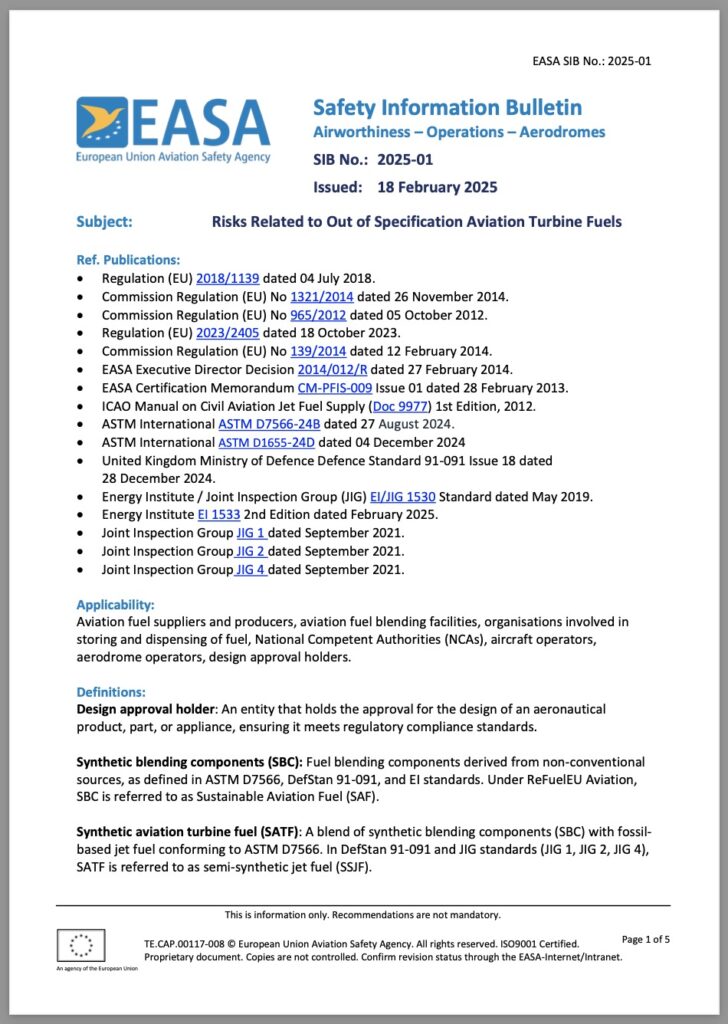
EASA has published a new Safety Information Bulletin for risks associated with the use of sustainable fuels (SAF) that do not comply with the proper quality criteria.

This is due to growing demand along with potential for fraudulent business practices trying to take advantage of higher prices.

Any uplift of ‘out-of -spec’ fuel could cause serious safety concerns. EASA’s advice to operators is to make sure your suppliers comply with the correct standards listed in their bulletin, and to be especially wary of new entrants to the market.

Download the PDF of the EASA Safety Information Bulletin here.


Schengen area expands to almost all EU countries

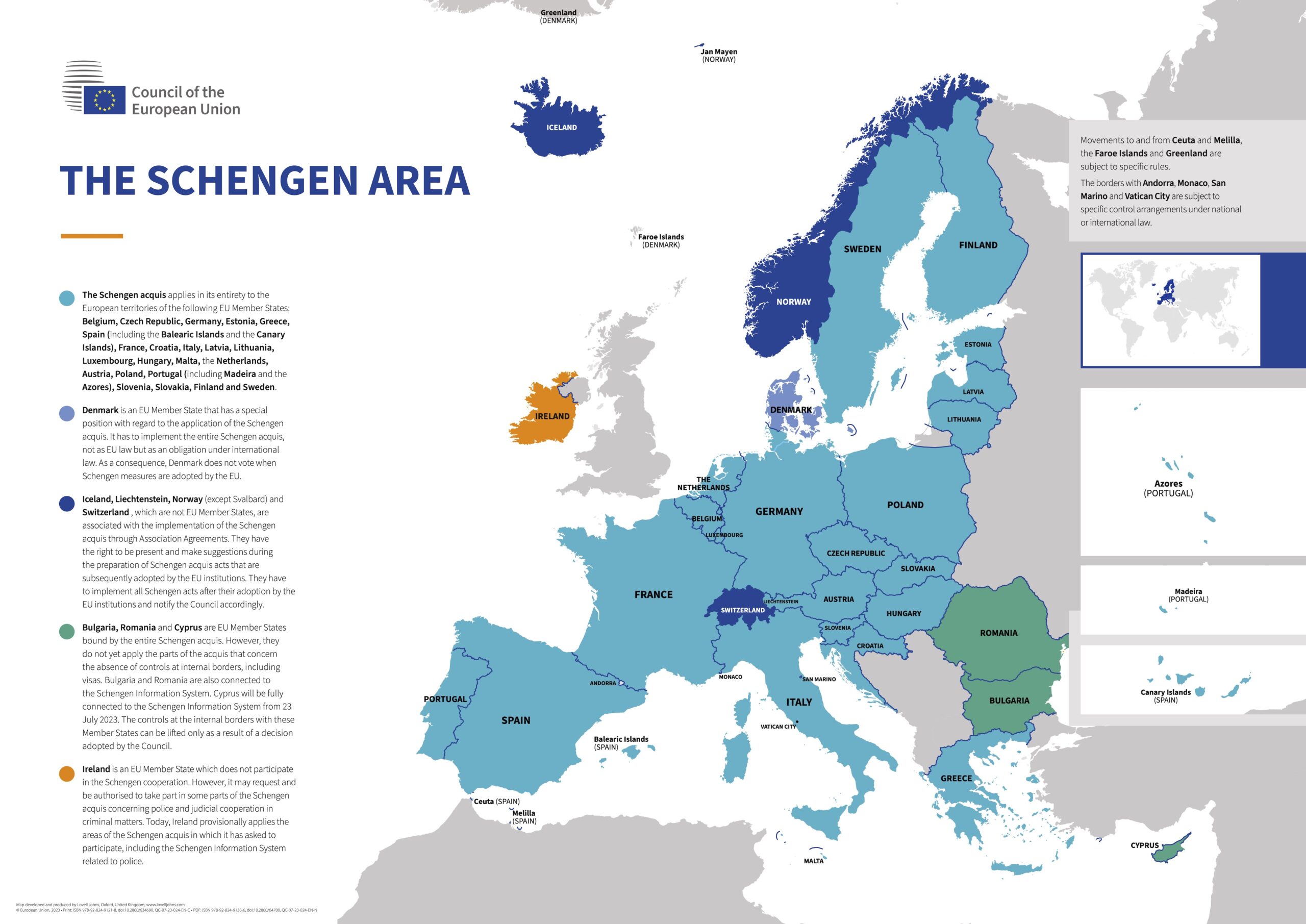
Effective March 31st, Romania and Bulgaria are now part of the Schengen area. This means that passengers and crew arriving in these countries are able to move freely within the EU (by air and sea) without any further immigration or border checks. “Schengen Flights” landing in Romania or Bulgaria are not required to clear customs.

The first “Schengen flight” landed at 0020L on March 31 at LBSF/Sofia, from Naples.

The Schengen Area was established in 1985. Before Bulgaria and Romania’s admission, it was comprised of 23 of the 27 EU member countries, along with Switzerland, Norway, Iceland and Liechtenstein. The only remaining Non-Schengen countries in the EU are Ireland (because Ireland has a common travel area with the UK, and the UK doesn’t like the Schengen idea very much), and Cyprus.

Schengen countries: Austria, Belgium, Bulgaria, Croatia, the Czech Republic, Denmark, Estonia, Finland, France, Germany, Greece, Hungary, Iceland, Italy, Latvia, Liechtenstein, Lithuania, Luxembourg, Malta, the Netherlands, Norway, Poland, Portugal, Romania, Slovakia, Slovenia, Spain, Sweden and Switzerland.

Non-Schengen countries in Europe: Ireland, the UK, Albania, Belarus, Bosnia & Herzegovina, Cyprus, Kosovo, Moldova, Montenegro, North Macedonia, Serbia and Turkey.

Non-Schengen countries in the EU: Ireland, Cyprus.


EU Temporary Admission of Aircraft – busting myths

Our friends at OPMAS put together this useful Myth-Busting lowdown on the process for “Temporary Admission” of aircraft within the EU. We saw it, we liked it, and so here it is for our OPSGROUP members!

There are still several myths concerning the usage of the Temporary Admission (TA) procedure when flying within the EU. Common to all these myths is the idea that TA limits operators when flying on internal EU trips with great consequences if not followed, but this is often incorrect, outdated or misunderstood.


What’s Temporary Admission?

Temporary Admission (hereafter TA) is meant to allow EU outsiders to be able to roam freely within the EU for a certain period. “Outsiders” means that the aircraft is owned, registered, operated and based outside the EU (all criteria must be fulfilled). Read the short story on Temporary Admission.


Myth #1: Temporary Admission cannot be used when carrying EU passport holders as passengers

This myth is busted because:

  • The EU Commission has – numerous times – stated that these restrictions are not meant to restrict having EU residents onboard as passengers. The restrictions are meant for the pilots who are, in customs terms, seen as the real user of the aircraft, meaning that there are NO RESTRICTIONS for carrying EU passengers. Thus, there is no need to appoint a main passenger or have a so-called authorization letter onboard.
  • The idea of a main passenger, authorization letter, and other strange demands when using TA has no foundation in the Union Customs Code. It is based on a wrong interpretation or outdated information.


Myth #2: Temporary Admission cannot be used for commercial flights, such as Part 135

This myth is busted because:

  • The EU Commission approved Part 135 traffic as correct use of TA in 2014.
  • Internal traffic was also removed as a restriction for TA in 2016 with the introduction of the Union Customs Code (UCC). The paragraph was originally intended to limit commercial traffic but has been removed for many years now.
  • The requirement for Traffic rights (also called charter permits) is often mentioned as another obstacle when using TA, yet traffic rights have absolutely nothing to do with the process of obtaining TA or full importation. It is strictly an aviation regulator issue.
  • US aircraft flying Part 135 may need to obtain traffic rights on some internal EU legs, but this is independent of the TA or full importation status. Any fully EU-imported US Part 135 aircraft will also need to obtain the exact same traffic rights. Having a fully EU-imported aircraft instead of a TA aircraft will not improve the situation. Full importation does not grant an aircraft “better” traffic rights than aircraft flying under TA or EU-registered aircraft.


Myth #3: The owner must be onboard or be present within the EU

The myth is busted because:

  • It has earlier been clarified that the owner is not needed to be present onboard or within the EU in the typical Part 91/135 scenario when flying within the EU. This paragraph in the Union Customs Code is meant to regulate a completely different scenario.
  • This issue can however be a bit tricky as aviation structures are complicated and not always easily or correctly understood by customs on the ramp, so operators should always ask a competent customs agency to approve the structure in advance and outline the correct understanding in the specific case.


Myth #4: Aircraft flying under Temporary Admission will most likely have problems when flying to Cannes, Nice, or Paris-Le Bourget

The myth is busted because:

  • Numerous aircraft are flying to these airports and other “dangerous” airports every day using TA and are ramp checked without having any problems because the crew onboard are well-prepared and able to explain and document why the aircraft is eligible to use the TA procedure. We have supported many of these operations, so we know how it works and what it takes.
  • Some aircraft encounter problems at these airports, but all known cases are based on operators either not being TA compliant or simply not prepared to prove compliance. These aircraft can remain on the ramp for hours or weeks and sometimes result in a full VAT payment.


There is a lot of noise when TA is discussed

It seems like some presenters have forgotten to read or understand the changes made to the Union Customs Code for the last many years as we see a tendency to, deliberately or not, denigrate the use of TA in favor of full importation using arguments that it is impossible or dangerous. In fact, the opposite is true.

The TA procedure has become a very well-defined customs procedure

Please note that TA can be used to fly privatelycorporately, and commercially within the EU without any problems and with EU-resident persons onboard, if applied correctly. Moreover, since 2014 the TA procedure has become a very well-defined customs procedure, especially for corporate and commercial aviation. This is thanks to the huge effort from, e.g., the EU Commission and NBAA.

More advantageous for many North American operators

The option of using TA is sometimes presented as second to full importation, with the latter presented as the only “safe and possible” option for North American operators. This is clearly NOT supported by the EU Commission. On the contrary, the use of full importation will be an extra burden and place risks on the owner and user of a corporate aircraft, also when flying outside the EU. This can be eliminated by using TA. In fact, the TA procedure is often more advantageous for many North American operators compared to full importation due to the limited scope of liability and the wide scope of use.


Thanks to OPMAS for this article! They provide importation services in relation to the EU; Temporary Admission, full importation for corporate owners and full importation for AOC holders and charter/commercial operators. That’s all they do! They do not charge for an evaluation of the particular set up you have – contact them here.


Noisy New Rule for EU Ops: The EASA Environmental Portal

There’s a new rule coming. And it’s about noise.

Both foreign and local operators of certain aircraft carrying out Part 91 and 135 operations to airports in the EU will need to register for EASA’s new Environmental Portal by the end of March 2022 (extended from Dec 31, 2021). They will need to upload important noise data about their specific aircraft.

Here’s a brief guide on what you need to know.

Who does this impact?

All foreign and local Part 91 and 135 operators using airports within the EU, with an aircraft that fits the following categories:

MTOW of 34,000kg (75,000 pounds) or more.

 OR

An aircraft with 19 passenger seats or more. Excluding crew seats. For this category, it’s important to note that EASA looks at the number of passenger seats as per the aircraft type’s certified ability, and not the number of seats actually installed on your particular aircraft – i.e. if you’ve only got 18 pax seats installed, but your aircraft is able to carry more, you’ll need to register for the Environmental Portal.

Yep, that’s us. What exactly do we need to do?

Submit this form via email to environmentalportal@easa.europa.eu.

There are two options for the information you’ll then need to provide:

Either:

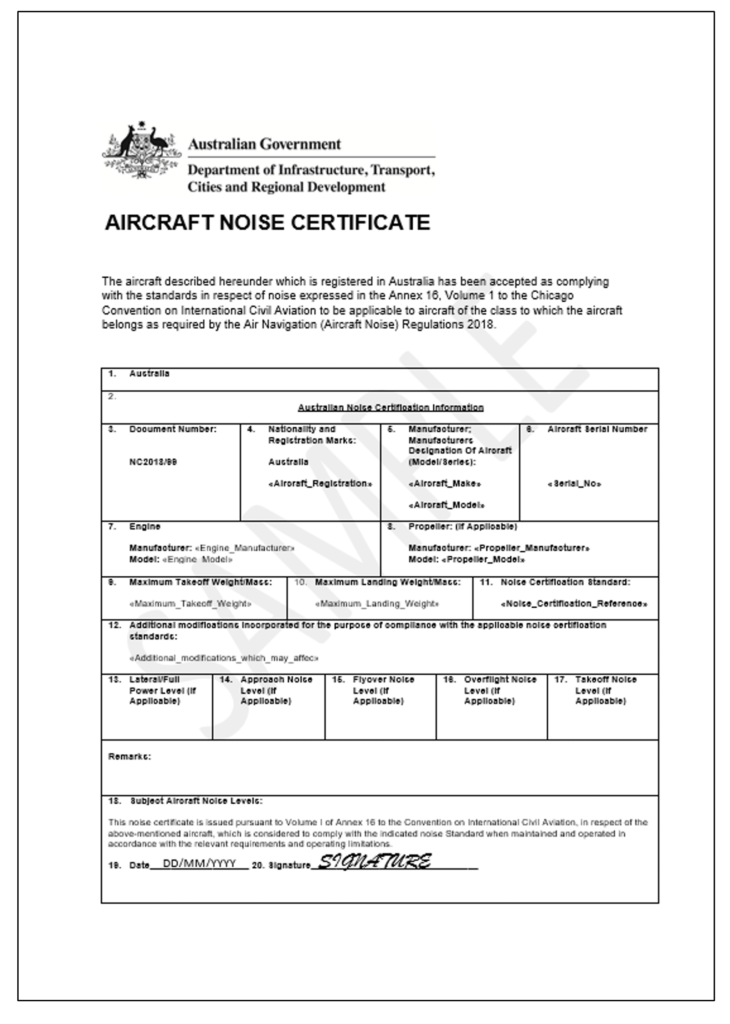
 A stand-alone noise certificate issued by a state of registry. It will need to include your aircraft’s reg, its configuration and noise levels.

Or

 Get that scanner warmed up. Pages from your aircraft’s flight manual which provide the following:

  • Registration
  • Serial number
  • Engine variant
  • Both MCTOW and MLW
  • Airworthiness certificate
  • Noise level data (stage/noise levels)

Isn’t this the same thing as the Third Country Operators Portal (TCO)?

Sadly, nope. The info is similar, but this is a separate requirement. The EU has nominated EASA to be the responsible authority tasked with collecting this info in a separate database.

A head’s up for ‘N’-Reg aircraft.

As the FAA doesn’t currently issue stand-alone certificates, that only leaves the second option. Make sure you also carry this information onboard in case you win yourself a ramp check.

What’s this all about?

The shortest answer is noise. The slightly longer one is this:

As traffic levels continue to grow at EU airports, noise is becoming more of a problem. The challenge is how to accommodate this growth in harmony with densely populated areas around airports – especially at night.

If sweeping noise restrictions were simply decided on a case-by-case basis, they could interfere with commercial competition or make the whole aviation network less efficient by under-utilising precious capacity.

Instead, ICAO suggests what they call a ‘balanced approach’ to noise. Or in other words, using a coherent and consistent method to measure noise across the board. From there they can use the actual data from aircraft operating in the EU to introduce consistent and fair operating restrictions throughout the EU.

The database is a big part of this. It’s about allowing aviation to grow in a sustainable way. Or in other words, without riling up the neighbours.

Who can actually view the data?

It’s not publicly available. Only the following groups will be able to access it:

  • Competent authorities (such as CAAs)
  • Air Navigation Service Providers (ANSPs)
  • Airport Operators
  • Aircraft Operators

They all have to apply for access first too.

Other things to look at (if you’re really keen)

ICAO Resolution A33/7 – a rundown on the idea of a ‘balanced approach’ to noise abatement.

EU Reg No. 598/2014 – skip to article 7. The actual EU regulation.

Speaking of noise – any guesses for the loudest commercial aircraft still in service?

The mighty 727 at 90 decibels. In comparison, when Concorde was flying it would hit 120 decibels – as loud as a clap of thunder.


UK: No more LPV approaches after June

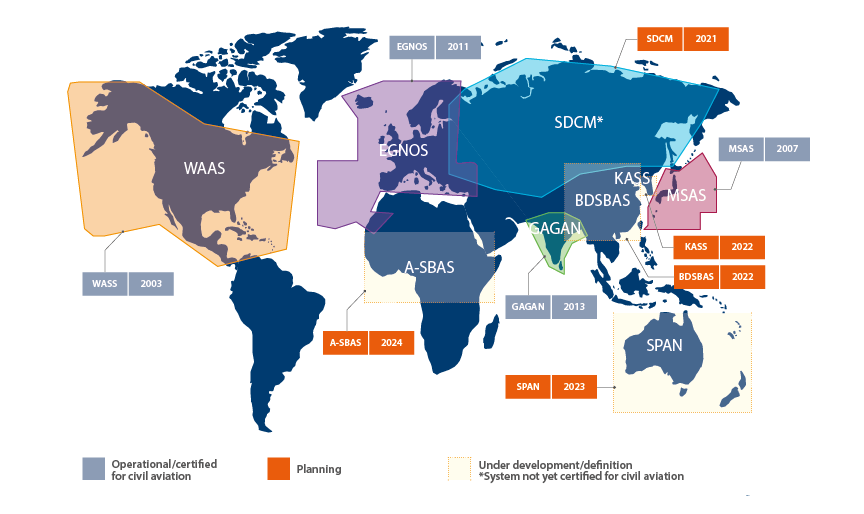
On June 25 the UK’s current EGNOS working agreement comes to an end, and they are not renewing it. This means their access to EGNOS will stop – which means LPV approaches at UK airports will no longer be possible.

So let’s talk LPVs. What exactly are they? What on earth is EGNOS? And what has Brexit got to do with all of this?

What is an LPV approach?

If you read this and are thinking “That isn’t something I’ve ever flown” then you can probably stop reading (unless you’re interested in a bit of aviation geekery), because this probably won’t have much of an impact on you. If you do fly these, and fly them in the UK, then read on.

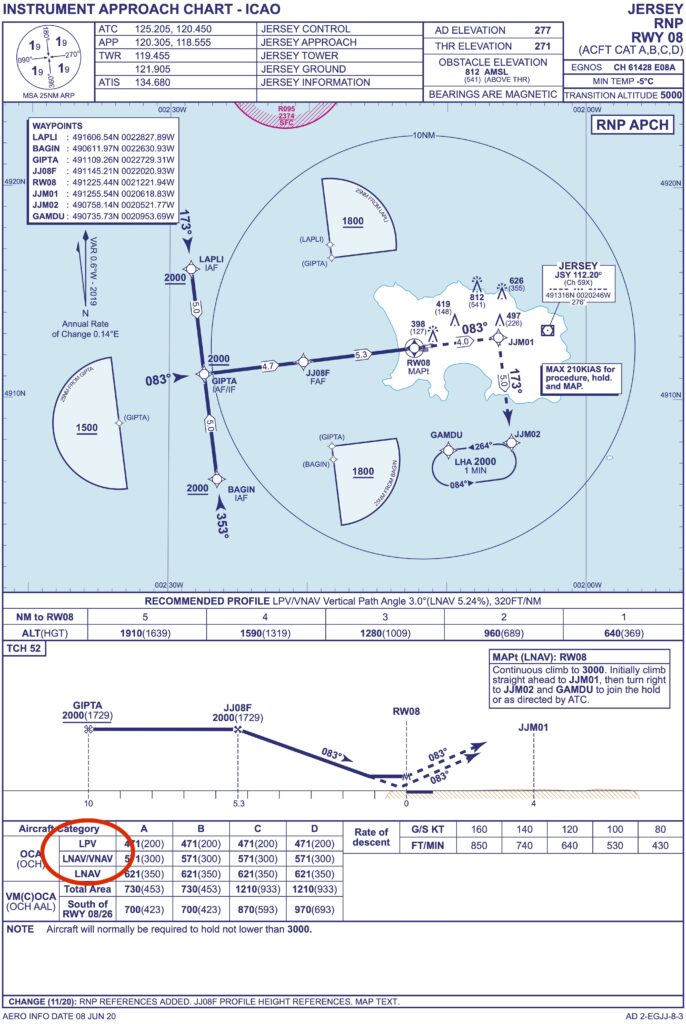
LPV means localizer performance with vertical guidance. It is a GPS based approach sort of like LNAV/VNAV but also, confusingly, sort of like an ILS.

More confused? Us to. Let’s dig deeper.

An LPV has vertical guidance but is not a precision approach (which your standard ILS of course is). Instead, it is classified as an ‘approach with vertical guidance’, or APV for short.

So an LPV is an APV? Yes, and the point of this distinction is that it’s a lot cheaper, quicker and easier to implement than an ILS because there is a lot less paperwork involved, but it still offers “nearly” the same precision as an ILS – meaning you get down low if you need to.

You might also see the term SBAS used in the same breath. SBAS stands for satelitte-based augmentation system, and is a generic term for the use of geostationary satellites which broadcast augmenting information.

That’s the basics, but how does it actually work?

They provide lateral and guidance down to a DA, just like an ILS. And just like an ILS, they get more sensitive the closer to the runway you get, which is what allows you to operate down to lower minimas than, say, your less sensitive LNAV option.

There are a few things you also need to know – first up, you need a special receiver on your plane for it (which is probably why a lot of folk are scratching their chins and wondering what on earth as LPV is).

Secondly, if you’re planning on using an airport without an ILS or some sort of ground based navaid as your alternate, then the FAA wants you to plan on LNAV minimas.

Why do we like them?

Well, because they get us nice and low so we can see the runway in not so nice weather.

They also use GPS, so the equipment you need is on your plane. An ILS needs a whole bunch of ground and plane equipment meaning there is a lot more that can fail on us. RNP and SBAS approaches are the future.

Okay, so what is EGNOS?

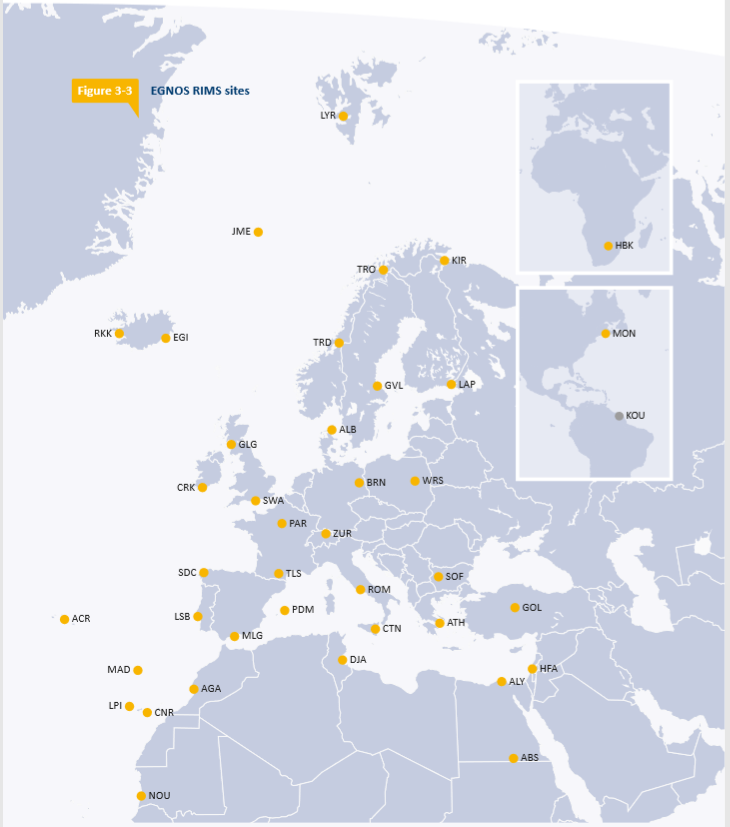
Not to be confused with the delicious Christmassy drink, EGNOS stands for ‘European Geostationary Navigation Overlay Service’. It is basically a bunch of European satellites, (actually just 3 out of the Galileo GNSS system, and a network of 30 referencing stations), that improves positioning measurements and gives much better accuracy than GPS alone.

In fact, it has 95% accuracy, which translates into the locating of a position to 1-3 meters horizontal accuracy, and between 2-4 meters vertical accuracy.

So EGNOS is what gives LPVs their precision.

Brexit…

Yep, we’re pretty bored of it now too. Brexit means the leaving of the UK from the EU. Not to be confused with Europe the continent – the UK is still part of that. But leave the EU it has, which means leaving all EU related programs including EGNOS (even though the UK’s NATS was one of the founders of EGNOS…)

Anyway, the EGNOS working agreements are not going to be renewed, so as of 25 June 2021, the UK will not longer participate in the EGNOS program and their LPV approaches will no longer have the accuracy assurance that EGNOS provided.

How many airports are affected?

The UK has 125 licensed aerodromes and out of these 69 have at least one instrument approach (surprisingly low given how miserable the weather often is in the UK.)

Anyway, ILS is still the most popular in the UK with 81 runways having an ILS approach available on them. Only 45 runways use LPVs and 20 of those have an ILS as well anyway, but that does leave a few airports where the other option is your old school, much higher minima non-precision approach.

Like poor old EGPL/Benbecula for example, which only has a VOR. A very old VOR which they are really hoping to retire. Or EGHE/St Mary’s which has a timed NDB…

The first LPV approach in the UK only went operational in 2014 at EGTE/Exeter airport, with Flyer magazine saying the country no longer needed to “hang its head in shame” because they had finally caught up with the rest of the modern aviation world…

The Impact

It isn’t huge – most airports have alternative approaches. However, there are a few points to think about:

  • Where there is an ILS, the minima will be the same, but the redundancy for approaches is now reduced.
  • Where this is only an LNAV, or non-precision approach, the minima will be higher so watch out for that poor weather.

The official word on it all

Here are the official FAQs on the UK leaving the EGNOS program.

The FAQs have the following statement in them –

If EGNOS or an alternative SBAS SoL service becomes available before 31st December 2021, the LPV may be notified subject to the following:

  • An impact assessment to confirm nothing has changed since the time of approval before implementation.
  • IFPs shall be safeguarded against the latest obstacle data to ensure the procedures are obstacle clear.

Alas, unless the UK renegotiate the EGNOS Working Agreements (EWAs), or are able to find a replacement solution, then from 25 June 2021 the LPV approaches in the UK will stop.

Up for some further reading?


Flying to the EU: Everything you never wanted to know about customs regulations

If you are a non-EU operator, you are probably already using the Temporary Admission customs regulation when flying to the European Union – whether you know it or not!

It’s always been generally accepted that you trigger the use of this regulation just by filing a flight plan and crossing the external border into the EU, but in July 2020 the EU Customs Code was updated to explicitly ratify this practice.

As we were looking into this latest change and what it meant for operators, we quickly got that sinking feeling you get when you realise you’re about to be engulfed by a world of bafflement and overwhelming complexity. EU customs rules and regulations will do that to you.

So we asked our pals over at OPMAS to break it down for us. What is the Temporary Admission? How does it work? Who does it apply to? What follows below is their quick overview, giving you the essentials of what you need to know in less than 10 minutes.

To start, watch their quick explainer video, and to continue your journey check out their more detailed info below.

The Basic Rule: Any aircraft must come under customs control
Any aircraft flying into the EU will fly under EU customs control either using the Temporary Admission (TA) regulation or full importation. There are no other options. If the aircraft is not already fully imported, the aircraft will automatically be considered as flying under the TA regulation even though the owner or operator have not themselves taken any action to activate the TA regulation or realize that their aircraft is actually flying under the TA regulation. Non-compliance with the TA regulation will most likely activate a direct payment of the VAT (ranging 15-27%) and customs duty (7.7%).
KNOW MORE: See what is actually needed when arriving within the EU?

Who can use Temporary Admission?
Temporary Admission (hereafter TA) is meant to allow EU outsiders, which means that the aircraft is both owned/registered/operated/based outside the EU (all criteria must be fulfilled), to be able to roam freely within the EU for a certain period. TA cannot be used by EU insiders where the aircraft is either owned/registered/operated/based and mainly used inside the EU (just one criterion must be fulfilled). Mandatorily, EU insiders must use full importation.

Advantages
Most EU outsiders will practically have the same flying privileges as given under full importation as the few limitations do not influence the typical flight and will even give the typical operator more flexibility and extra advantages, such as: unrestricted personal/family/guest use without consequences; and no tax, VAT (Value Added Tax)or duty liability anywhere. Many of these points are often a problem and burden when using full importation.
KNOW MORE: See the quick overview: What you can and cannot do

Disadvantages
There are a few limitations:
1. Flights where the aircraft will be used for passenger transport subject to an individual and personal ticket fee or direct payment
2. Commercial freight items are not allowed
The below descriptions also include other matters that must be handled the correct way.

The basic preconditions for EU outsiders
TA can only be used if the aircraft is 
owned by and registered to a non-EU entity and further operated by a non-EU operator. The aircraft must also have its normal fixed base outside the EU. The term ‘non-EU’ relates to anything other than the 27 EU member states and related customs areas as the Isle of Man and the Channel Islands (at least until Brexit has become a reality).
KNOW MORE: The 27 European Union member states and special member state territories

Private or commercial use
The TA regulation distinguishes between private use and commercial use; where private use in general offers more privileges and flexibility than commercial use. There has been some earlier confusion about these forms of usage under TA, but the 2014 working paper from EU Customs Code Committee gave some clarification of these definitions where upon the modern use of TA is based. This description only describes private use of an aircraft.
KNOW MORE: See the quick overview: Private or commercial use of aircraft

When do the restrictions start?
Any EU outsider can fly to one EU destination without any consequences, if the next following flight is to a destination outside the EU. The restrictions are only related to internal flights within the EU.

What about the VAT and the customs duty?
Both the VAT and the customs duty is suspended as long the preconditions for TA is fulfilled. A violation will activate a full payment of these taxes.
KNOW MORE: See the quick overview: Customs duty and end-use exemption

When is TA used?
Any aircraft flying within the EU must somehow come under EU customs control using either TA or full importation, there are no other options. So, if the aircraft is 
not already fully imported, the aircraft will automatically be considered as flying under TA.
KNOW MORE: See the quick overview: What to do?

When is TA activated?
The use of TA regulation is activated (knowingly or not) every time an un-imported aircraft crosses EU’s external border on an entry and is terminated again when the same aircraft is crossing the EU’s external border on the way to a non-EU destination.

The grey zones – owned by?
Most aircraft used or indirectly owned by a high net-worth individual are directly owned by non-EU SPV. This is basically fine as long as this individual does not have their official place of residence or their centre d’affaires within the EU or is registered as a tax resident.

The grey zones – EU entities involved?
We recommend that no EU entities are part-owners or a part of a leasing structure (like a sublessee) for an aircraft using TA.

The grey zones – EU base, long-term parking or not?
The aircraft must have its fixed base outside the EU and spend the majority of time outside the EU, but certain facts can indicate that the operator or aircraft has become ‘resident/domiciled’ in an EU airport even though an official home base is established outside the EU. The TA regulation cannot be used as a circumvention of the import for free circulation by predominately using the aircraft within EU as opposite to outside the EU.
KNOW MORE: What is the limit for multiple continuous stays at the same place?

Which entity is actually ‘using’ the aircraft?
The users of the aircraft are actually the pilots (read: the operator of the aircraft) according to the 2014 working paper from EU Customs Code Committee. Most lay persons would probably think that the user of an aircraft would be the owner entity or the passengers, but the pilots are actually considered to be the users in a customs context.

Which entity must be the declarant?
The declarant must always be the entity who is truly operating (physically piloting) the aircraft. No other entities are allowed to be the declarant. If the aircraft is managed, the management company is normally considered to be the correct declarant in customs terms. Please be aware, that the ‘operational control’ definition related to the use of TA in the EU is not the same as the FAA’s definition which means that the typical entity with the FAA’s understanding of operational control is often not the correct declarant when using TA in the EU.
KNOW MORE: See the quick overview: Entity responsible for flight in the European Union
KNOW MORE: Which entity is allowed to be the declarant?

How can the aircraft be used?
The aircraft can be used for any business or non-business purposes (as Part 91) according to the 2014 working paper from the EU Customs Code Committee.
KNOW MORE: See the quick overview: Aircraft usage

EU resident passengers on flights within the EU
EU resident passengers are allowed according to the 2014 working paper from the EU Customs Code Committee.

EU resident pilots on flights within the EU
EU resident pilots are allowed according to the 2014 working paper from the EU Customs Code Committee but only if the pilots are directly employed by the declarant.

Non-EU resident passengers and pilots on flights within the EU
There are no restrictions.

Does the owner of the aircraft have to be on board or present in the EU?
According to Danish interpretation and the 2014 working paper from the EU Customs Code Committee, an aircraft under TA is used by the person who acts as the pilot and not by the passengers. Accordingly, the presence of the aircraft owner/registered party is not needed in most cases unless the aircraft is occasionally borrowed and used by an EU-resident person, who acts as the pilot. This rule is meant for smaller aircraft without hired pilots. Furthermore, the EU Customs Code Committee have also confirmed in one of its earlier minutes/summary records that any restrictions for EU residents only refers to the pilots on board.

What is a non-EU aircraft registration?
Aircraft registered in the 27 EU member states and related customs areas are not eligible for TA, but any other aircraft registration will work. This disqualifies aircraft registrations from the Isle of Man (M) and the Channel Islands (2/ZJ) at least until Brexit has become a reality.
KNOW MORE: See the quick overview: Aircraft registration
KNOW MORE: SURVEY 5: Does the nationality of the aircraft registration matter?

Period of stay within the EU
A stay is limited to a maximum of 6 months per entry. Multiple continuous stays are allowed as long as the aircraft is roaming around within the EU. We will advise any operator to check whether or not the preconditions for TA are still fulfilled, if the aircraft often tends to stay at the same location – or stay close to or more than 50% of the time within the EU. Please also see the above paragraphs about grey zones for owner entity and base.
KNOW MORE: See the quick overview: Period of stay in the European Union
KNOW MORE: SURVEY 7: How is the 6 months period of stay practically interpreted?

Demand for documentation?
The operator must always be able to document the flight pattern within the EU.

How to document a flight?
A form called the ‘Supporting document for an oral customs declaration’ can be used to document the entry and the exit. The operator should also document the flight pattern within the EU with EUROCONTROL records and the operator’s own flight records. Furthermore, the operator should always have records of all relevant EUROCONTROL charges and a total flight list. The use of the ‘Supporting Document’ can be beneficial but is not mandatory.
KNOW MORE: BREAKING NEWS: See what is actually needed when arriving within the EU?

What is the function of the ‘Supporting Document’?
A customs stamp on the ‘Supporting Document’ only serves to acknowledge that the aircraft has arrived and/or eventually exited the EU. The stamp does not mean that customs have accepted any use or the aircraft set-up as TA compliant. It is a common misunderstanding that the use of this form gives the operator/aircraft some kind of free circulation status for the next 6 months or a carte blanche to fly freely within the EU without meeting any preconditions. Even though the form is used, the operator is still obligated to comply to the TA regulation continuously when flying within the EU.

What is the validity of the ‘Supporting Document’?
The form is only valid as long as the aircraft has not left the EU, and for a maximum of 6 months. A new form must be stamped upon the next entry (even though there is still some time left within the 6 month period). The 6 months mentioned here is
the maximum stay of the specific entry whereupon the form is stamped (in customs terms = period for discharge). Again, it is a common misunderstanding that any future entries into the EU can be endorsed in advance by using this form.
KNOW MORE: Is a Supporting Document valid for one EU-trip or multiple EU-trips within 6 months?

Commercial group charters
This is allowed according to the 2014 working paper from the EU Customs Code Committee as long as the aircraft is used in the EU for passenger transportation without a ticket fee/direct payment. This means that a commercial group charter (as Part 135) is treated in customs terms as private use as long as the mentioned preconditions are met, even though the same flight is treated as commercial use according to the aviation regulators.

Traffic rights
Commercial non-EU operators will still need traffic rights where they are normally needed. A customs handling like an importation/admission will not influence any of the demands for traffic rights anywhere in the aviation regulation.

How to be ready to use TA?
Here’s what to do:

  1. Check that the basic preconditions are fulfilled
  2. Understand the limitations and subjects that must be handled correctly
  3. Have the relevant paperwork ready on board the aircraft in order to document the correct use of TA
  4. Instruct the pilots so that they are ready to handle a customs ramp check

How can an operator secure all positions?
OPMAS can help non-EU operators to check whether or not an aircraft operation is complying to the TA regulation. The important matters are simply to secure compliance and thereafter set-up a system to document that the preconditions for the TA regulation are fulfilled continuously and that the pilots have the correct paperwork ready for a customs ramp check.

Always ask first
Our advice has always been to ask the local tax authorities for a binding advance tax ruling prior to any importation/admission in order to eliminate any doubt about the outcome. All cases have different details and a binding advance tax ruling will also consider all new European Court of Justice (ECJ) judgements. Even if you have a fully working set-up, we believe, an importation/admission without a binding advance tax ruling from the EU member state into which the aircraft is to be imported, is too great a risk to take. Many of the above-mentioned points/uncertainties could easily be covered by simply asking and you should walk away from any service provider that refuses to provide a binding advance tax ruling.

Tax havens and the Paradise Papers
A few EU member states handle aircraft admission/importation differently. These states do not follow the EU standards or guidelines, and this is often sanctioned by their local tax/customs authorities in order to offer a better business environment or to create local gateways for certain industries. These jurisdictions are known to bend the rules in favor of local companies often by only implementing a light version of any new regulation or by simply ignoring or delaying the required implementation. The Paradise Papers have highlighted some of these EU tax havens. These jurisdictions and related industries will without any doubt have the full attention of several national and EU authorities in the future. We will see many changes and audits of the regulation in the future, thus no one should import an aircraft without a binding advance tax ruling.

Denmark as a jurisdiction
Denmark has the very best reputation both within the EU and worldwide and is the number one on the Transparency List over the least corrupt nations in the world. We are known always to implement all EU-directives promptly and 100% by the book without any bending of the rules in favor of local companies. Denmark is the only EU member state that is known to facilitate aircraft importation and admission for non-EU operators where the member state is not considered a tax haven.


Thanks to Frank Hansen at OPMAS for this post. To get in touch with OPMAS for more info on any of the above, contact: info@opmas.dk


European ADS-B Mandate Postponed

There was supposed to be a European ADS-B mandate coming in June 2020, but the deadlines are being pushed back.

Here’s the nutshell version of the amended requirements:

  • Any aircraft with a CofA from between 1995-2020 (i.e. pretty much everyone) won’t have to be fitted with ADS-B until 7th June 2023, but they will need to have a “retrofit program” established before 7th Dec 2020 (more on that below).
  • EXEMPT: Aircraft with a CofA before 1995; aircraft ceasing operations within the EU airspace prior to Oct 2025; aircraft doing maintenance or export/delivery flights.
  • One requirement that’s staying – all aircraft need to be equipped with Mode S ELS before 7th Dec 2020.

All of this has been published on the SESAR ADS-B webpage as one nice, neat little image:

On 29th April 2020, the EU approved and published these measures as Regulation 1207/2011 – the full text is available here.

And for guidance on exactly what your retrofit program should look like, check out the guidance here, as well as the FAQs here.


EUROPE: Third Country Operators (TCO)

A TCO is an authorization issued by EASA to any third-country operator wishing to perform commercial air transport in any of the following European countries:

  • 28 EU Member States
  • Iceland, Liechtenstein, Norway, Switzerland

Plus the following territories:

  • Gibraltar, Aland Islands, Azores, Madeira, Canary Islands, Guadeloupe, French Guiana, Martinique, Reunion, Saint-Martin, Mayotte

Applications are made directly to EASA using their application form.

https://www.easa.europa.eu/document-library/application-forms/fotco00160

You will need to provide the following documentation:

  • AOC
  • Operating Specifications
  • Insurance

Contact details for applications are made to:

European Aviation Safety Agency
Applications Handling Department
Postfach 10 12 53
D-50452 Köln
Germany

Fax: +49 (0)221 89990 ext. 4461
E-mail: tco.applications@easa.europa.eu

Should EASA deem the application in order the operating authorization process is completed in approximately 30 days.  Some flights can avoid this requirement, such as Air Ambulance or Humanitarian flights.

Please note:

  • Overflights of the above states do not require a TCO permit.
  • EU member states cannot issue a permit for their country if the operator does not already hold a TCO operating authorization.

If you plan to operate to these areas, we’d suggest getting your TCO right away, even if you don’t have a planned flight at the moment.  They can take some time to obtain.


US and Canada may lose EU visa right

The European Commission published warning on 12APR that visa-free travel by US and Canadian citizens to Europe is at risk, due to the lack of a full reciprocal arrangement for EU citizens.

The core of the issue is this: Although US and Canadian passport holders can travel to Europe for stays of up to 90 days without requiring a visa, citizens of some EU countries are not eligible for the same privilege in return. Specifically, citizens of Bulgaria, Croatia, Cyprus, Poland and Romania require a visa for the US, and citizens of Bulgaria and Romania require one for Canada.

The deadline for US and Canada to include those citizens in their own visa-waiver programs expired yesterday, on 12APR2016. Consequently, the EU is obliged, under their own policy document, to take steps to remove the visa-free travel privilege for US and Canadian Citizens.

The United Kingdom and Ireland do not take part in the development of the common visa policy and would not be bound by a visa waiver suspension.

No change has yet occurred, and any decision to limit travel would have a lead time (most likely 90 days). For further background see the full EU press release.