Niger Military Coup: Airspace Reopens
Update: 25 Sep 2023

Updated Notam for overflights – the airspace of Niger remains open at all levels for international flights following a coup back in July. However it now excludes French-registered aircraft, or those chartered by French interests due to a political dispute. DRRR Notam A1168/23 refers.

Update: 4 Sep 2023

Niger’s airspace officially reopened for the first time since early August, following a military coup in July. The Niamey FIR is now available at all levels – as long as your transponder stays on. Security on the ground is still a problem. The US continues to advise against all travel there.

Major airlines flying between Europe and West Africa have resumed overflying the DRRR/Niamey FIR.
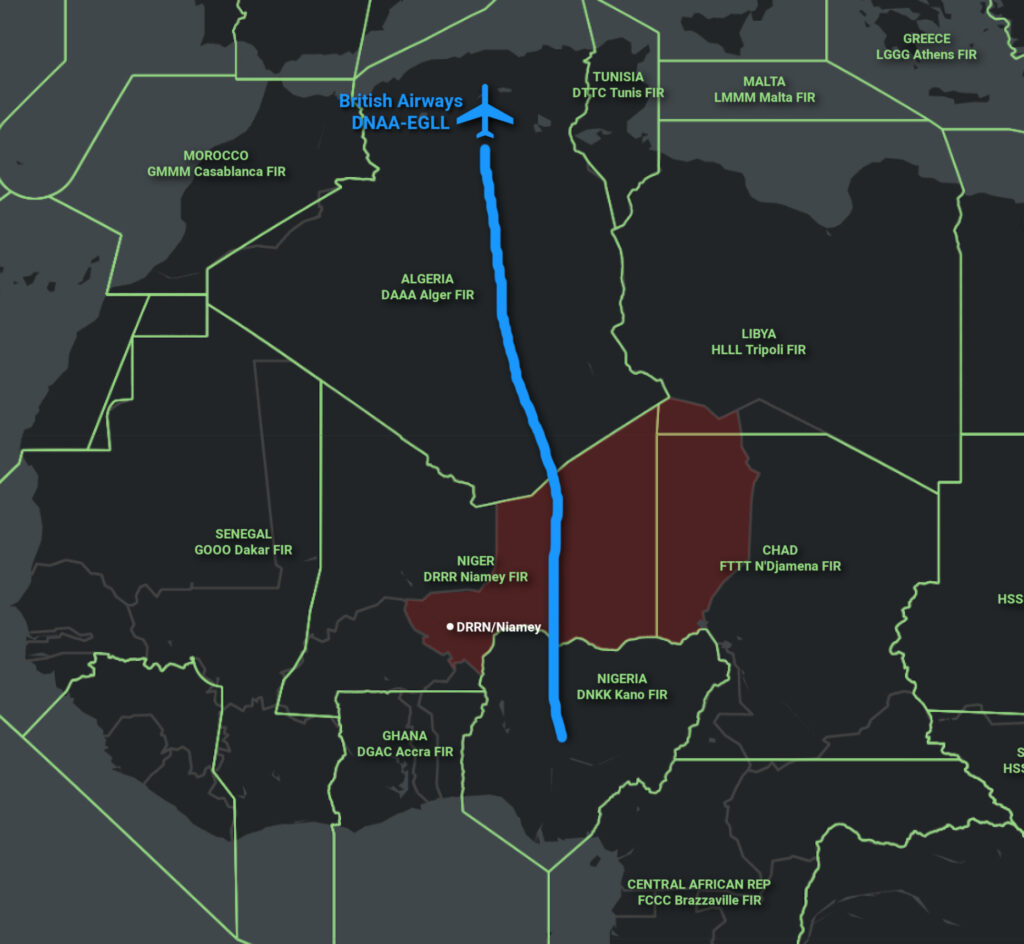
BAW82 DNAA-EGLL: 6 Sep 2023

Timeline of closures:
  • 4 Sep: Airspace reopens
  • 7 Aug – 4 Sep: Airspace closed.
  • 31 July – 7 Aug: Airspace reopened.
  • 26 July – 31 July: Airspace closed.

Background

Niger’s airspace and airports were closed to all flights on July 26, following a military coup.

Troops announced a coup on national TV after detaining the president. They said they had dissolved the constitution, suspended all institutions and closed the nation’s land and air borders. Soon after the announcement, the several Notams appeared advising that the airspace over Niger was closed, along with all airports in the country.

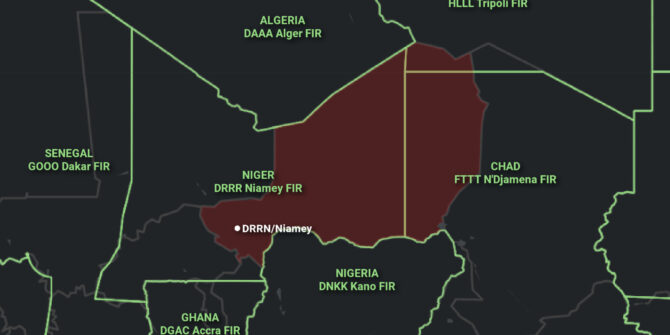
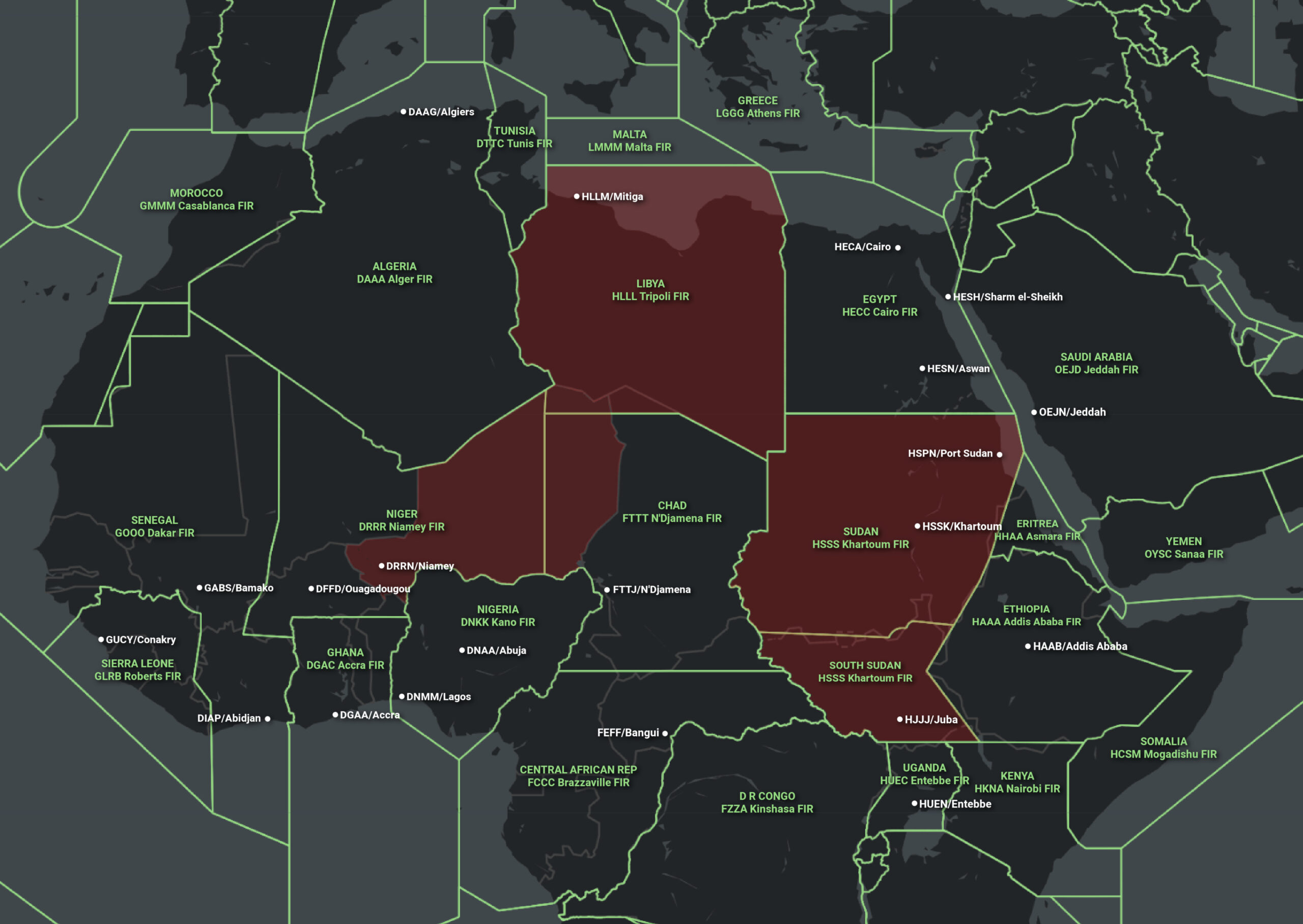
Niger straddles two FIRs – DRRR/Niamey (controlled by Niger) and FTTJ/N’Djamena (controlled by Chad). But it was just the territory of Niger itself that was closed, not the whole DRRR/Niamey FIR:
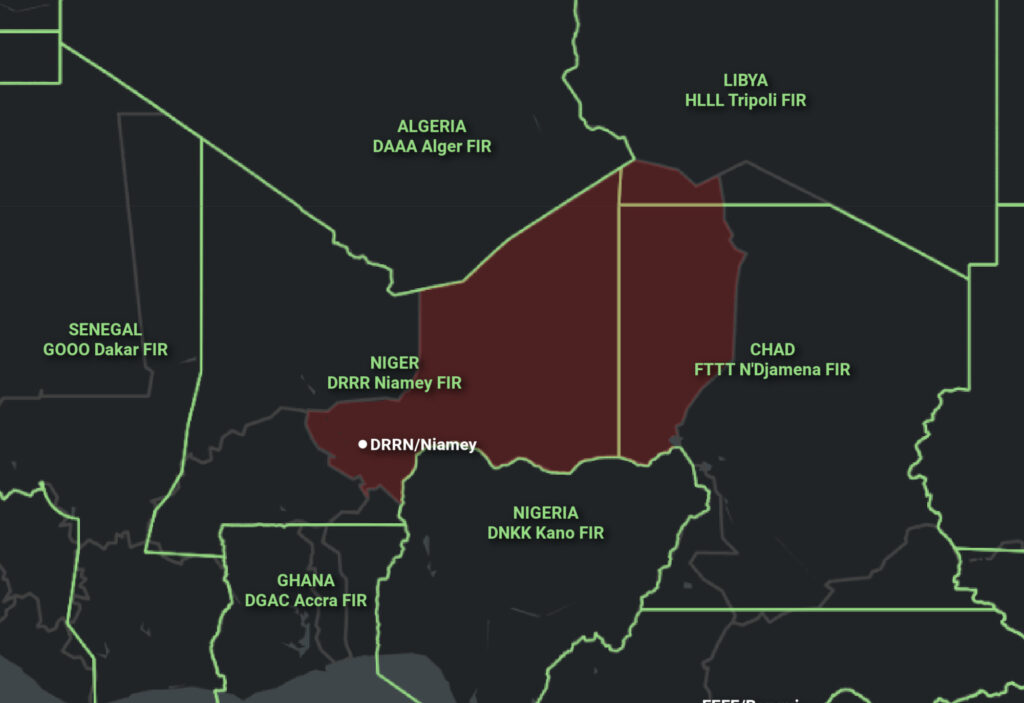
Red shaded area = Niger country boundaries. This is where the airspace was closed, not the whole DRRR FIR.

This closure made African routings quite challenging – a region already plagued with various airspace closures and risk warnings:

  • Sudan: Airspace remains closed to all civilian flights following a military coup in April 2023. More info.
  • South Sudan: Air navigation services remain suspended above FL245 following the coup in Sudan. More info.
  • Libya: Flight ban for US and UK operators (several other countries have warnings in place) due to risks associated with the civil war that has been ongoing since 2014. More info.

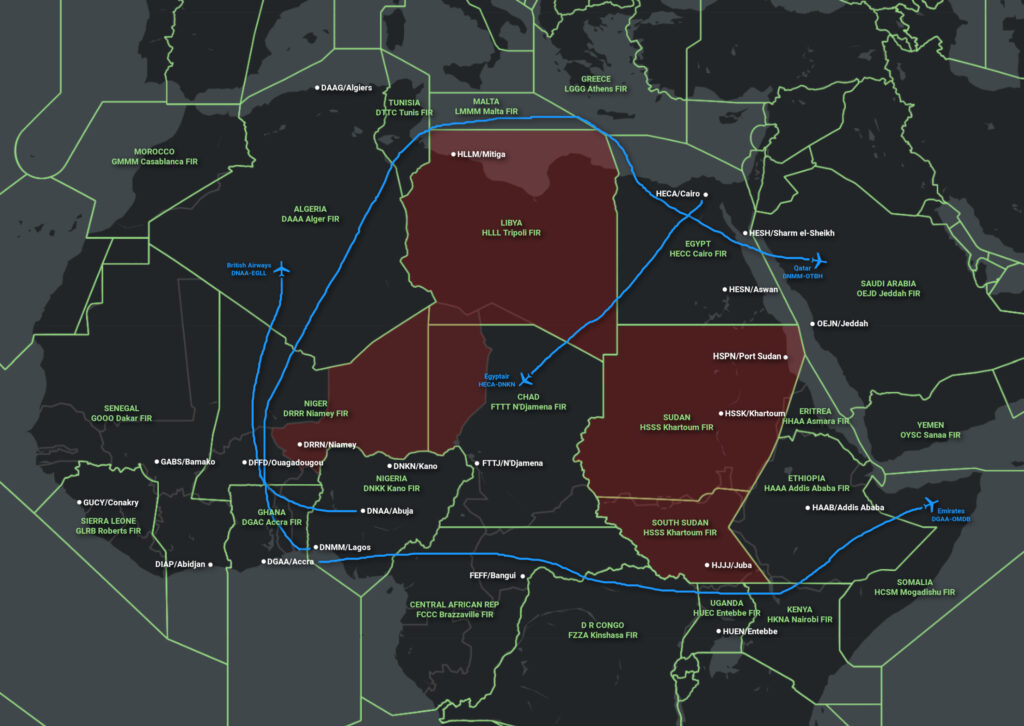
The map below shows the issue:
Flights from Europe to West Africa and beyond had to route around Niger, via Mali and Burkina Faso in the western part of the DRRR/Niamey FIR, or via the GOOO/Dakar FIR (British Airways DNAA-EGLL in the map below).

Flights between West Africa and the Middle East also had this extra dogleg around Niger if electing to fly the northerly route across Africa (Qatar DNMM-OTBH) or else chose the southerly route avoiding Sudan and Yemen (Emirates DGAA-OMDB).

And yep, there were still the likes of Egyptair overflying Libyan airspace on some flights!
We will update this article with further info as we get it. If you have anything to share, please let us know.
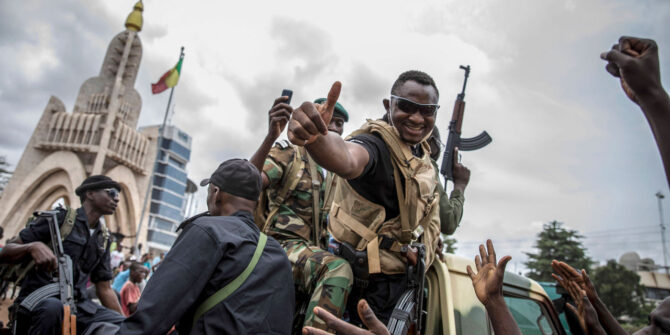
Bamako Airport reopens following military coup

Bamako Airport has reopened following last week’s military coup which overthrew the government, though monitor GOOO/Dakar FIR and GABS/Bamako Airport Notams for further – it may change.

The Bamako TMA (which sits under the GOOO/Dakar FIR) remains operational with overflights unaffected.

ICAO is actively monitoring and ensuring that there is a timely flow of information on continued airspace/ATC service availability. MedAire have given us a local situation update: with the continuing uncertainty they recommend against overnights until things settle. There is likely to be a high demand for emergency/evac flights in the coming days, and they recommend those to be quick in and outs for now.

Meanwhile, the Northern Mali conflict continues, and there have been no improvements in stability. The US, Germany, France and the UK all have airspace warnings in place, advising to operate FL250/260 or higher, and avoiding GATB, GAGO, and GAKL airports. We would suggest, as usual, that a higher level closer to FL300 is more sensible.

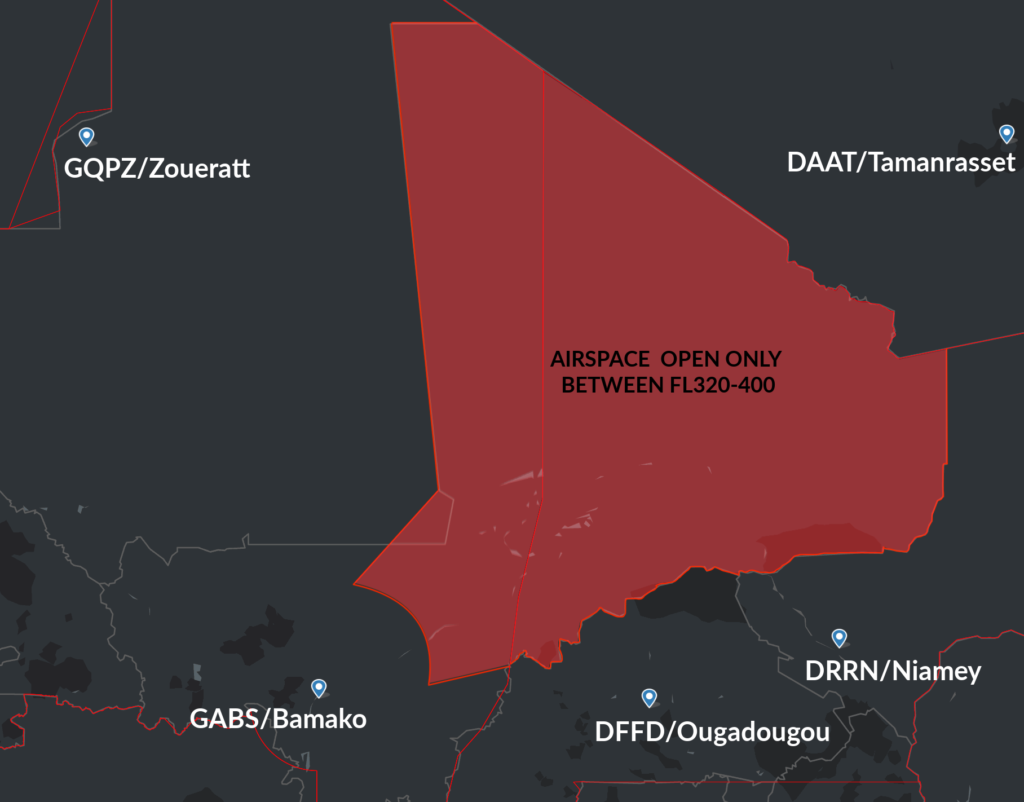
Senegal and Niger control the airspace over Mali, and they have long-standing Notams (published under the GOOO/Dakar and DRRR/Niamey FIRs) warning that you can only fly between FL320-400 through the entire airspace in Mali north of the GABS/Bamako TMA due to military ops across the region. Here’s what that looks like:

The UK recommend against all travel to northern Mali, and against all but essential travel to the south of the country, including Bamako. The US advice is more straight-forward: do not travel to Mali due to COVID-19, crime, terrorism, and kidnapping.

For more info on operating in this region, check out SafeAirspace.net


Africa: Hajj 2019 routes in operation

The Hajj routes for 2019 will take effect from 18 Jul through to 9 Oct.

What are Hajj routes?
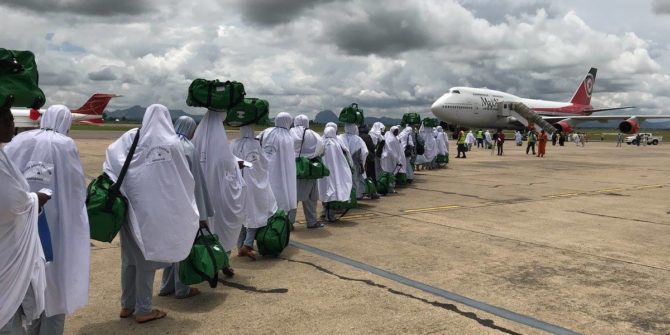
Every year, millions of pilgrims travel to Mecca and other sites in Saudi Arabia – and this changes the predominant traffic flow over the African continent. ATC in the FIRs most affected put in place standard routings to help flow that traffic.

Normally, traffic is very much north-south predominant, with Europe-Africa flights being the main flow. When Hajj operations start up, a good amount of traffic starts operating east-west (ie. Africa-Saudi Arabia and vice versa), and this is something to be aware of when cruising along at FL330 with spotty HF comms.

So, in addition to the normal IFBP belt and braces on 126.9, keep an eye out for a much higher amount of crossing traffic during the coming months.

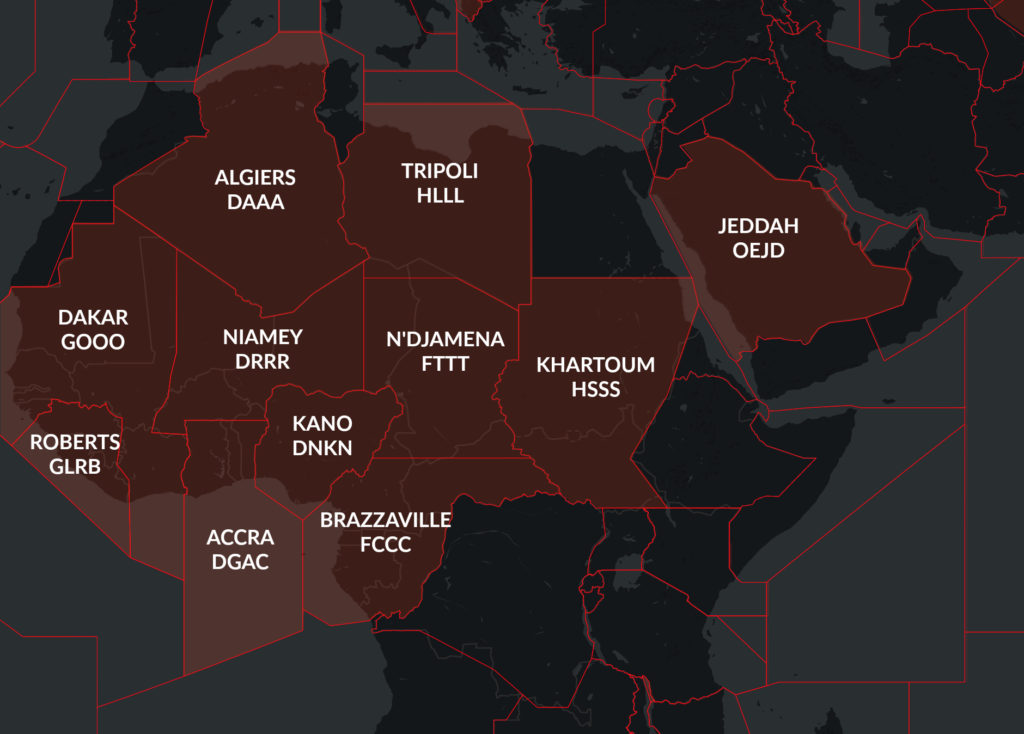
The FIR’s affected are: Algiers, Accra, Brazzaville, Dakar, Jeddah, Kano, Khartoum, N’Djamena, Niamey, Roberts, and Tripoli.

Of these, watch out for Tripoli – risk remains high across Libyan airspace at all flight levels, and multiple countries have “do not fly” warnings in place. There are daily airstrikes taking place, severe limitations in ATC services, and massive areas of the FIR are without surveillance and communications capabilities. Malta FIR is currently managing all east-west routes in this airspace, and operators can contact them for additional information on email: airspace.cell@maltats.com

The Hajj routings are contained in this ASECNA AIP Supplement.

Further reading:

  • Read IFALPA’s information on recommended procedures when operating in the African region here.