EASA Removes CZIBs: Middle East Risk Gets Harder to Read
Earlier this year, EASA withdrew its CZIBs (Conflict Zone Information Bulletins) for Israel and Iran, citing de-escalation. At the time, we wrote that the move seemed premature.
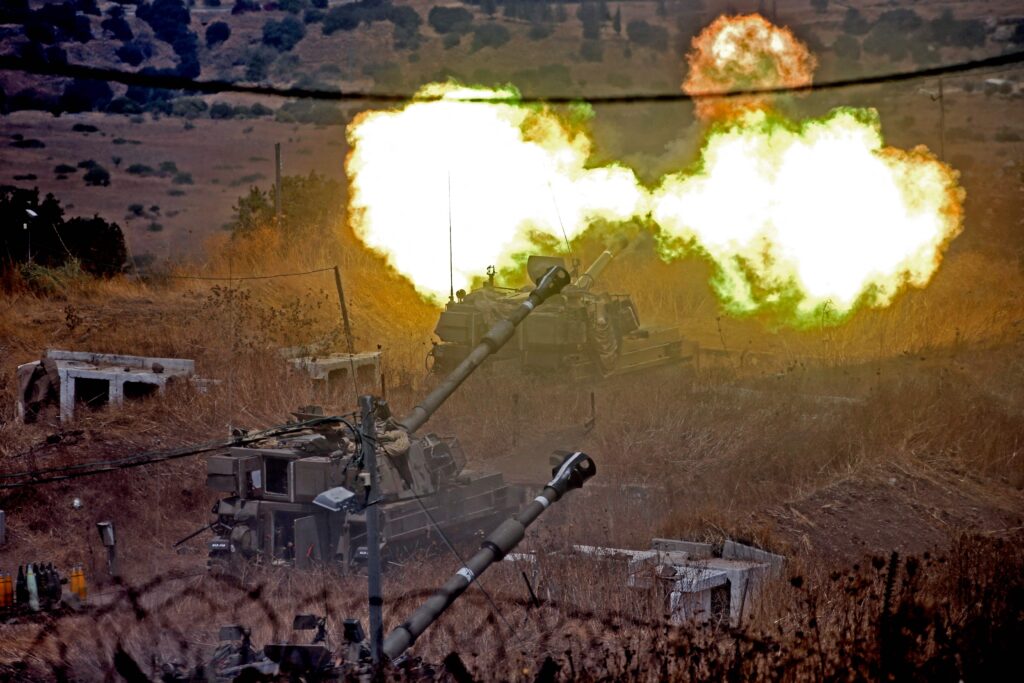
Then in June, the region saw one of its worst escalations in decades, with Israel and Iran trading missile strikes, the US and Gulf states scrambling to protect airbases, and most of the Middle East airspace system grinding to a halt.

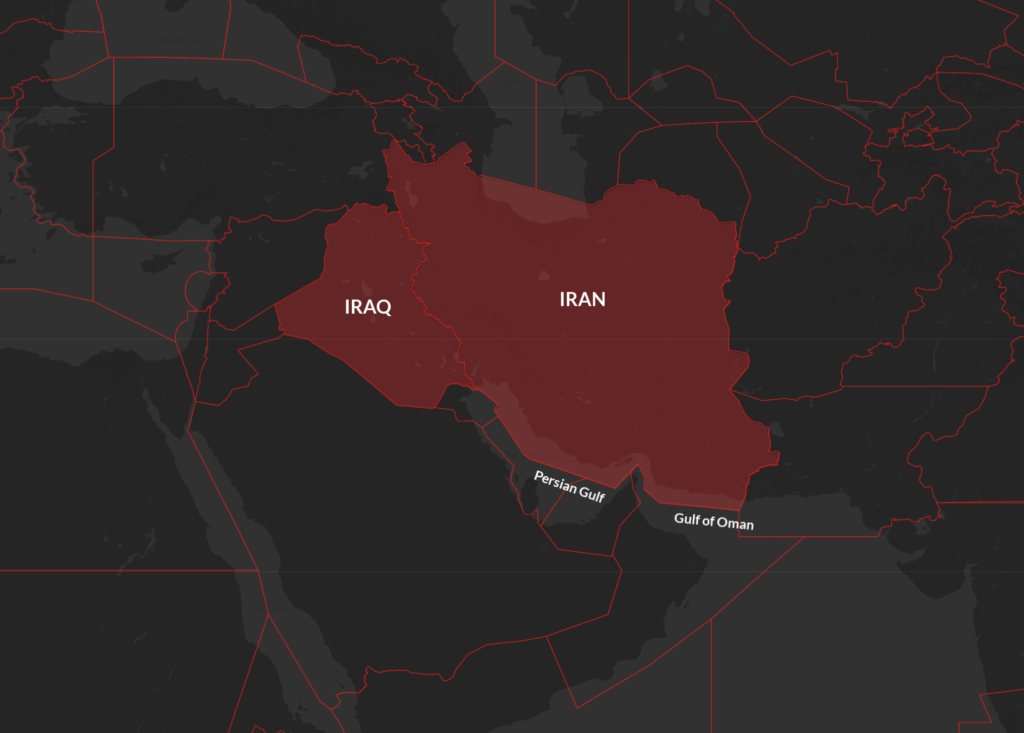
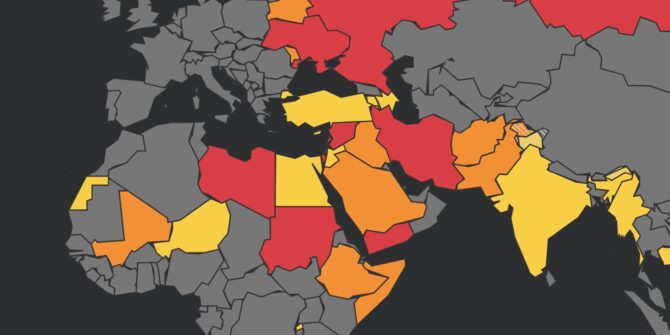
EASA responded by reissuing updated CZIBs advising operators to stay well clear of Iran, Iraq, Israel, Jordan, and Lebanon. They also flagged the risk of spillover into parts of Egypt and Saudi Arabia.

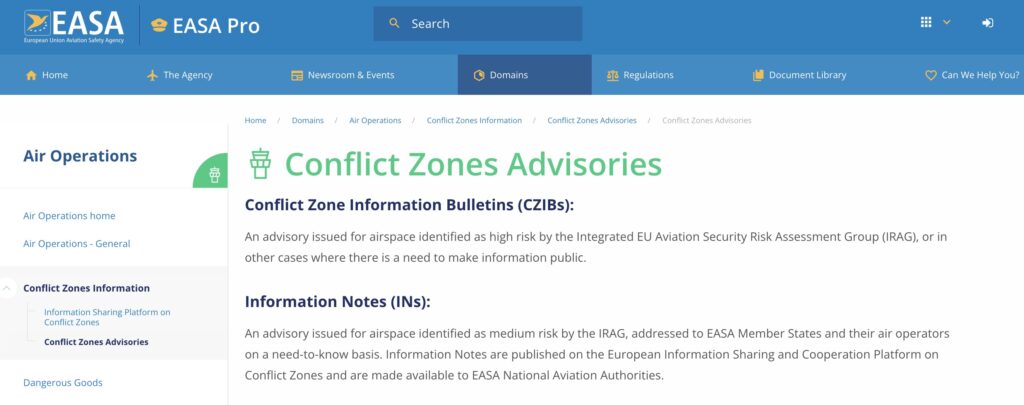
Now, just weeks after that guidance, those CZIBs have been withdrawn again. And once again, they’ve been replaced by vague and inaccessible “Information Notes” — only available to EU-based commercial operators, civil aviation authorities, and EU agencies. Everyone else (mainly biz jets and non-EU carriers) is locked out.
What’s changed?

To recap: Following a ceasefire in early July, most FIRs across the region reopened. Iran reopened its OIIX/Tehran FIR in stages — first the east, then limited use of the west, and finally full ops. Israel began accepting traffic to LLBG/Tel Aviv on specific routings. Iraq reopened its airspace. Syria and Lebanon reopened too, albeit amid some brief re-closures. OPSGROUP members can access a full briefing here.
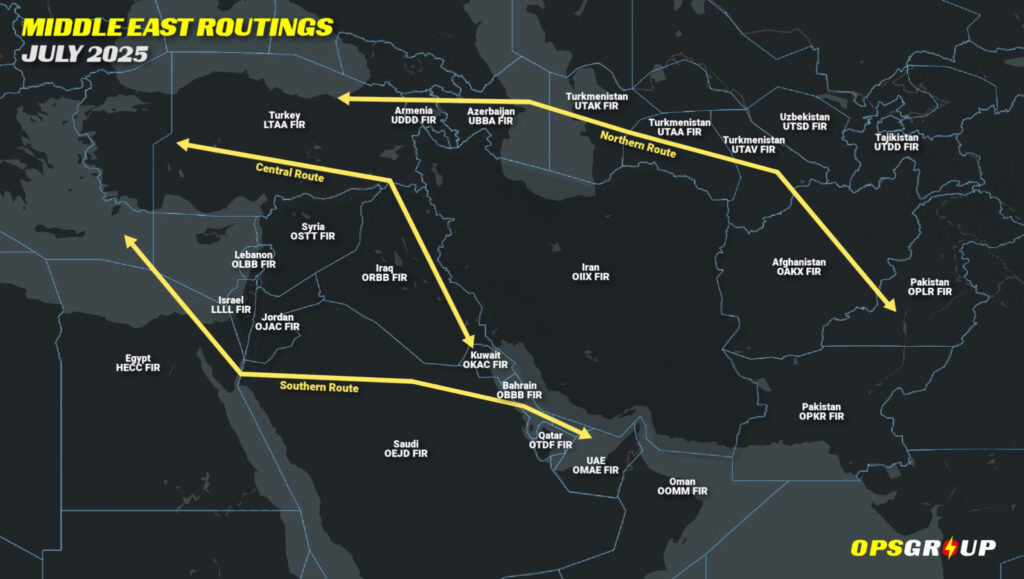
But the risks haven’t vanished. Most carriers are still avoiding direct routings over Iran. GPS spoofing remains widespread. FIRs across the region are fragile — especially the corridor between Israel and Iran, which could close again at short notice if the conflict resumes.

The CZIBs are gone, again.

EASA’s logic for removing them now appears to mirror their reasoning back in January — improving conditions, a reduction in active hostilities, and a belief that risk has subsided enough to no longer warrant a public advisory.

But here’s the key problem: the new “Information Notes” replacing CZIBs are not public. Unless you’re part of the inner circle of EU-based airlines or national regulators, you don’t get to see them. And the publicly accessible version doesn’t contain any detailed analysis, routing recommendations, or clarity on thresholds for escalation.

CZIBs were never binding, but they were visible — offering a common European position on conflict zone risk. The shift to restricted-access notes marks a change in how EASA communicates that risk.

A continuing need for caution

The removal of CZIBs shouldn’t be interpreted as an all-clear. The ceasefire between Israel and Iran remains fragile. Regional tensions persist. GPS interference continues to impact operations across the eastern Mediterranean and Persian Gulf. Routes through Athens and Nicosia FIRs remain congested as many operators still choose to avoid overflights of Iran and Israel altogether.

EASA’s risk assessments will of course evolve as the situation does — but for operators outside the EU system, the reduced visibility makes it more important than ever to consult a variety of sources: state-level airspace warnings, Notams, real-time airspace activity, and third-party guidance.
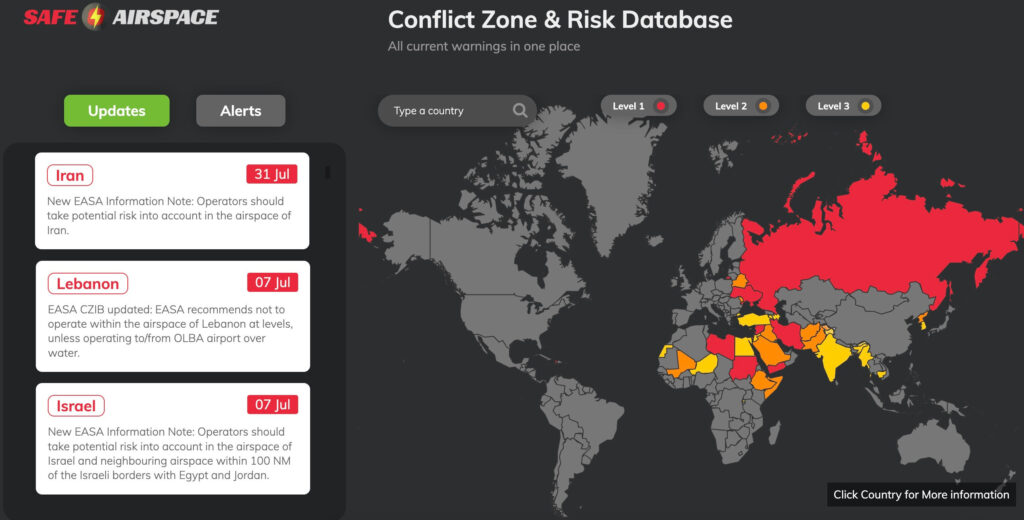
We maintain a full database of state issued airspace warnings at SafeAirspace.net, freely accessible to everyone.

The bottom line

While EASA’s decision to withdraw its CZIBs reflects improved conditions in parts of the region, the underlying risks remain dynamic. Operators should continue to treat Middle East operations with care — especially in and around Iran and Israel — and stay alert to changes that could result in rapid airspace restrictions or closures.

In short: just because EASA has stopped talking about it doesn’t mean the threat has gone away.

Why EASA has Withdrawn Airspace Warnings for Iran and Israel

On January 31, EASA withdrew its CZIBs for both Israel and Iran.

But the question remains – what does that actually mean for the safety of civil aviation there?

A word on EASA CZIBs.

A little context here helps.

  • CZIB stands for ‘Conflict Zone Information Bulletin’ which EASA puts out when required using a combination of publications issued by worldwide states, and risk assessments performed by their own team called the Integrated EU Aviation Security Group.
  • EASA shares information on conflict zones to help operators and member states make an informed decision whether to enter risky airspace or not.
  • Unlike some state-issued airspace warnings, CZIBs are not legally binding. They are just recommendations. You can find a list of them here.
  • On January 31, EASA made some changes to this list – namely, they cancelled the CZIBs for both Israel and Iran.

Why the change?

EASA has published a brief explanation here, but it doesn’t give much away.

Ultimately, they cite an improving risk environment due to ceasefire agreements between Israel, Hamas and Hezbollah along with a reduction in short-term regional tensions.

The CZIBs were originally published in November 2024 in response to unprecedented regional hostilities. It now seems EASA believes the situation has sufficiently come back off the boil.

Those in the know

While quick to re-affirm that some risks to aviation in the region are still present, the CZIBs have been replaced by Information Notes distributed to those on a ‘need-to-know’ basis – their words, not ours.

Existing State Warnings

EASA CZIBs (and their removal) have no direct effect on existing state-issued airspace warnings. This falls into the hands of policy makers who may wish to follow their advice.

With that in mind, you can find a full list of current state-issued airspace warnings still in effect for Iran here, and Israel here.

We still think Iran is potentially risky

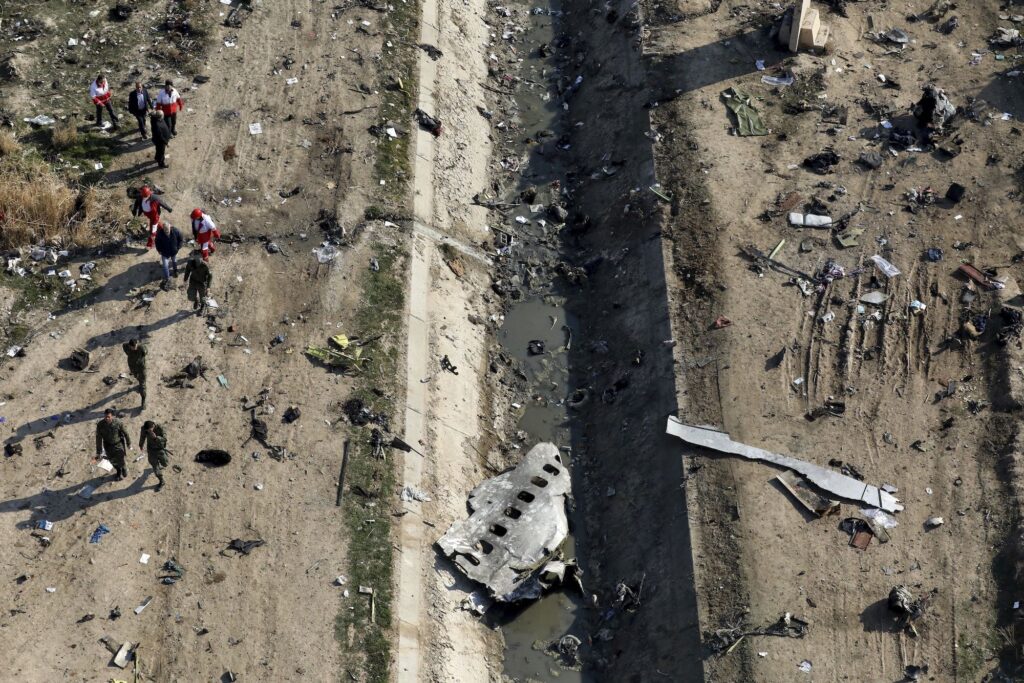
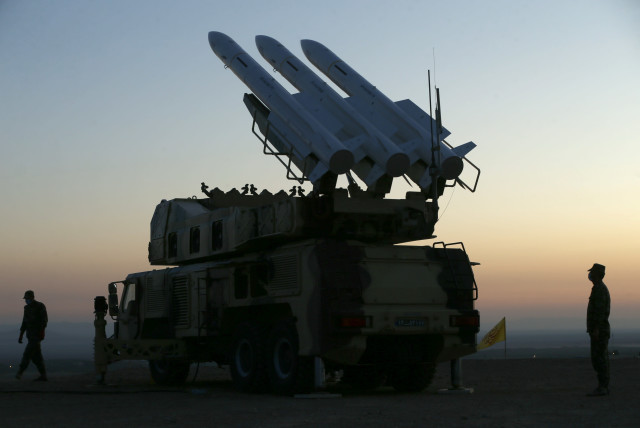
Five years have passed since PS752 was misidentified and shot down by an air defense system near OIIE/Tehran airport. The country still possesses the same arsenal of advanced anti-aircraft weaponry today.

The sudden closure of the entire OIIX/Tehran FIR last year is proof of how quickly the risk picture can change for overflights.

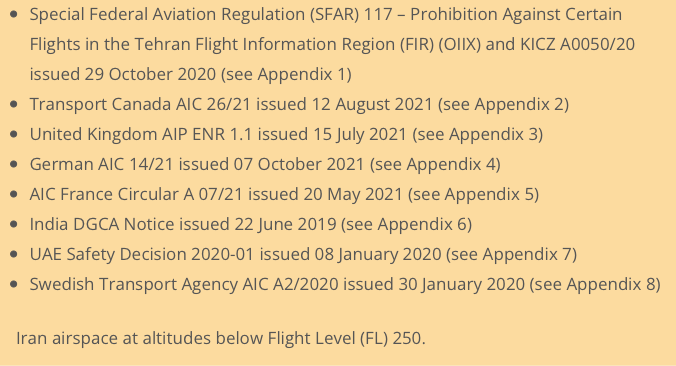
While there may not be an intent to target civil aviation itself, agencies such as the US FAA continue to warn of the danger posed by unannounced military activity and mistaken identity – so much so that its existing airspace prohibition (by SFAR) has been extended all the way to 2027.

Operate to Israel with caution

In line with EASA’s advice, we have seen improving airspace safety in the LLLL/Tel Aviv FIR. Just recently we reduced our SafeAirspace.net risk rating for Israel from ‘Do Not Fly’ to ‘Danger Exists.’

This was in response to the same ceasefire agreements and a proven track record of maintaining airspace safety in close proximity to active conflict zones. This also reflected the decision of several major carriers to resume scheduled flights there.

However, the long-term outcome of these agreements remains unpredictable – along with potential for rapid escalation in risk to previous levels should the agreements fail. Recent events have proven they remain fragile.

For that reason, we advise operators to heed existing warnings and prepare for short notice airspace closures or reroutes in Israeli airspace.

What about Lebanon?

There was another change to EASA’s list of CZIBs that was easily overlooked.

Rather than withdraw it, EASA has extended its existing guidance for the OLBB/Beirut FIR until end of March 2025.

EASA explains that the country has not sufficiently proven capability to address existing risks – including the potential for renewed escalation between Hezbollah and Israel.

Without appropriate mitigating procedures to fall back on, the airspace should still be considered dangerous. Interestingly, EASA expressed similar concerns in its recent airspace warning for Western Russia following the downing of Azerbaijan Airlines 8243 on approach in Grozny.

As such, EASA continues to advise aircraft not to enter Lebanese airspace at all levels. Over at SafeAirspace.net, we also maintain a ‘Do Not Fly’ warning for the same skies.

Need more info?

We maintain a full database of state issued airspace warnings at SafeAirspace.net, where a full global briefing is available with a single click. You can also reach us on team@ops.group around the clock.


EASA withdraws Iran airspace warning. Why?

EASA has withdrawn their Iran CZIB, so what does this actually mean for the safety and security of air operations there?

What is an EASA CZIB?

First up, a CZIB is a Conflict Zone Information Bulletin (if you aren’t familiar with the term.)

These are put together by EASA based on aeronautical publications issued by worldwide states, and an assessment of the overall known risks and threats which EASA do via their Integrated EU Aviation Security Risk Assessment Group. Quite a mouthful. The point is they are sharing info on conflict zones to help operators do their own risk assessment on whether to head in there or not.

OK. So, when we take a look at EASA’s CZIBs they actually are more of a summary of references to other state and authority warnings. EASA CZIBs do not in themselves, appear to make an assessment of risk. They just share what everyone else says and contain a recommendation which more often than not goes something like this –

“Operators should take this information and any other relevant information into account in their own risk assessments, alongside any available guidance or directions from their national authority as appropriate.”

If you want to check out their active ones you can do so here.

EASA updated a large number of them in October 2021. 10 in fact, which included the likes of Iraq, Libya, Mali, Afghanistan, South Sudan… interestingly, they did not update their Iranian CZIB.

Instead, they withdrew it.

Why did they withdraw the Iranian CZIB?

That’s the big question.

Given that the EASA CZIBs do little more than summarise actual risk statements from other states, and considering other major states still have valid warnings for Iran, it does seem rather odd.

EASA have suggested their decision to withdraw this CZIB is based off an agreement from a recent meeting in which they decided that the situation in Iran has positively improved allowing to withdraw the current CZIB and to issue as replacement an Information Note shared within the European commercial aviation community on a ‘Need-to-know’ basis.

So, when EASA withdraws a CZIB, this does not mean individual states have also withdrawn their own warnings. We have not seen the ‘Information Note’.

You can click below to read the (now withdrawn) EASA CZIB.

We think the risk remains.

In 2020, Ukraine International Airlines flight PS752 was shot down in the vicinity of OIIE/Tehran, by the Iranian Air Defense system when it was misidentified. Iran possess significant anti-aircraft weaponry. This weaponry is in place due to ongoing conflict within Iran, and that has not changed.

As with all risk, likelihood is dependant on capability (they have that), and intent.

Intent is an interesting one. The didn’t intend to shoot anyone down with their Air Defense systems, and they don’t usually fire their anti-aircraft weaponry without good reason, which means a risk of misidentification is far higher during times of active attack, when enemy forces are being targeted.

But the situation in Iran remains volatile, and so the risk level remains.

What is the risk?

A fair few airlines do overfly Iran. The ones that don’t generally have political reasons not too – this doesn’t mean the risk isn’t there. The political tensions between some countries and Iran mean the risk of being targeted or experiencing security threats on the ground is far higher.

If the state your aircraft is registered in is on relatively good political terms with Iran then overflying the country above a safe flight level poses less risk if you remain at that level.

Descend below FL260-ish and it is a different situation. And if you overfly anywhere, there is a chance you will need to descend and even divert in for certain emergencies. So your risk assessment when “just overflying” needs to take that into account.

Remember – just because you only want to overfly and don’t plan on going into Iran does not mean the risk does not apply to you. If there is a possibility you might have to divert in then the risk must be taken into account.

This is why operators who do fly into Iran generally have “TOD” checks – a SATCOM call, for example, to their company to confirm the security situation on the ground prior to heading in below that safe altitude. Basically, a check to ask if stuff is kicking off or not.

What do other states say?

The UK CAA Notam EGTT V0012/21 was issued in July 2021. This covers a “general” airspace security warning for a whole bunch of countries, including Iran, and suggests you go check the UK AIP En-route 1.1 section 1.4.5 for more info.

1.4.5 says there is a “potential risk to aviation overflying this area at less than 25,000ft” because of “dedicated anti-aviation weaponry”. France say don’t go below FL320. The US says don’t go at all.

The risk is still there, and that risk was actually summed up pretty well in the now withdrawn CZIB – “due to the hazardous security situation, and poor coordination between civil aviation and military operations, there is a risk of misidentification of civil aircraft.”

If you want a summary of all the current warnings and details, visit our Safeairspace page.

The current situation in Iran.

The situation is volatile. There is significant political conflict between Iran and some of their regional neighbours. There is also internal conflict. The primary risk remains the potential for misidentification from the air defence systems, or surface to surface missiles targeting rebels. There are secondary risks from ballistic missile tests (often tested without Notams) and GPS jamming.

Safeairspace Summary

Our view is that the removal of the EASA CZIB does not signify any change to the threat level in Iran. States have not removed their own warnings and so our Safeairspace warning remains the same until such time as further information is provided on how Iran have positively improved the situation.

Want a full briefing?

Just click here. SafeAirspace  is our conflict zone and risk database run by OPSGROUP. We continually assesses the risk to operators the world over. It presents that information in a way that will always be simple, clear, and free. You can also sign up to our new fortnightly risk briefing that contains only what you need to know, simply by subscribing.