Venezuela: FAA Restriction Lifted
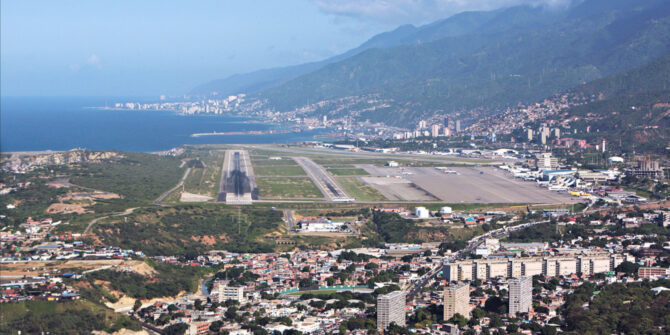
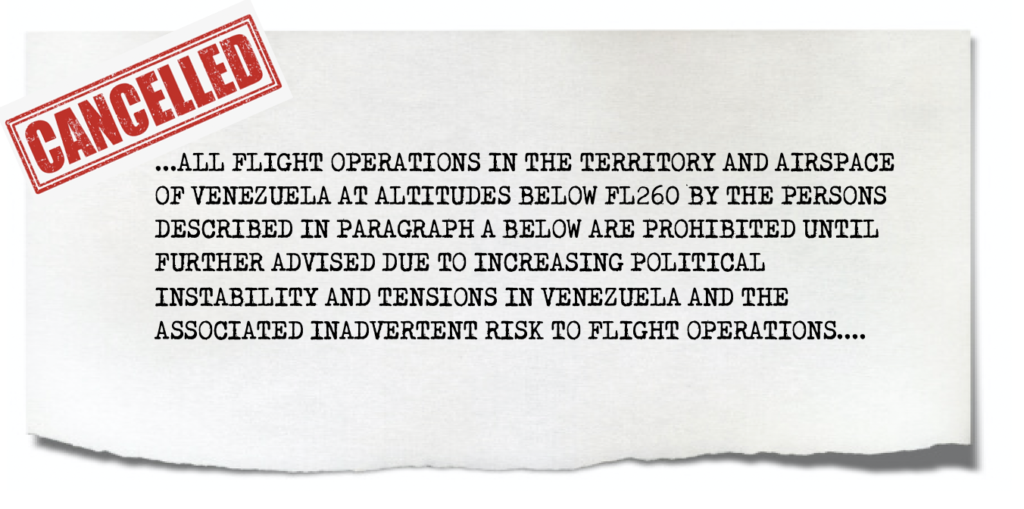
The US FAA has cancelled a long standing Notam which prevented US operators from overflying Venezuelan airspace below FL260.

KICZ Notam A0013/19 expired in June, and hasn’t been renewed. This effectively means that there are no longer any restrictions on the enroute use of the SVZM/Maiquetia FIR.
In fact, there are no active airspace warnings issued by any other states either. Here’s a closer look at the airspace, why there was a restriction in the first place and what you should know now if you want to use it.

The Maiquetia FIR

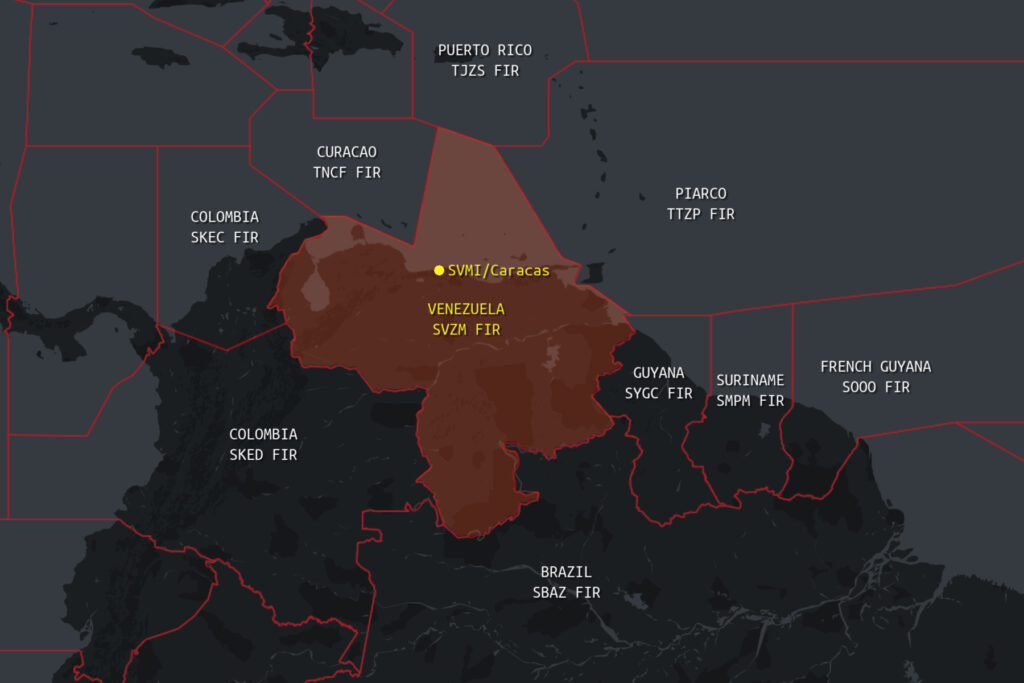
Venezuela controls its own skies – the SVZM/Maiquetia FIR. It’s a large chunk of Class C airspace that sits squarely on top of South America.

From a geographical perspective it provides a handy gateway between the US, Caribbean and destinations further south down the continent – especially Brazil.

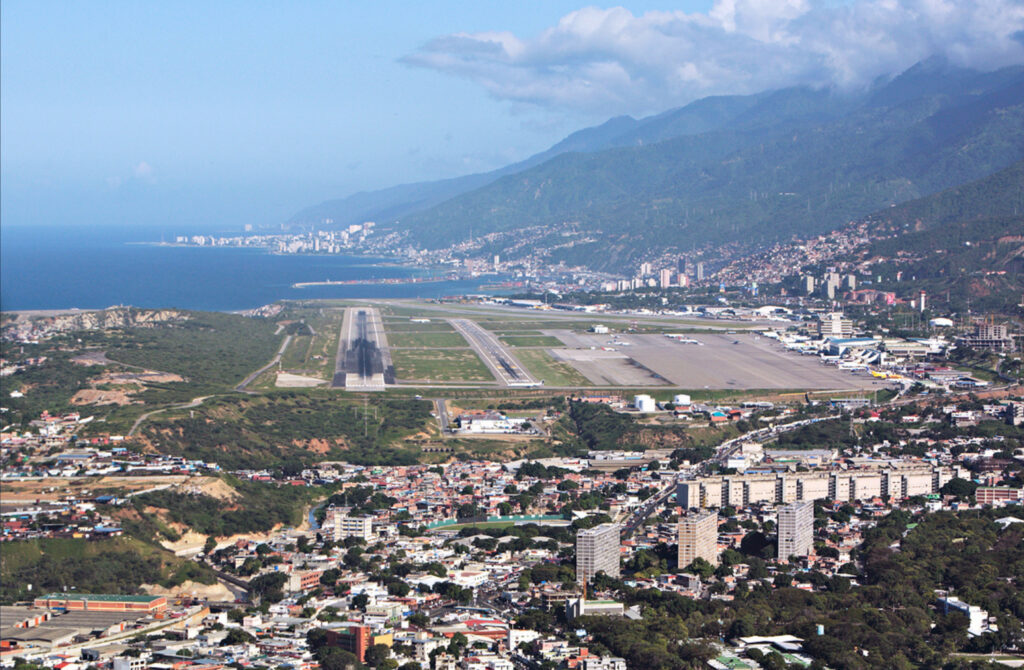
It is also home to the country’s largest airport, SVMI/Caracas. Here’s what that all looks like on a map:
If you’d like to know more about Venezuela’s airspace, here is a link to the online AIP.

Why was there a US restriction in the first place?

Back in 2019, the US FAA issued the above Notam which banned US operators from overflying Venezuelan airspace below FL260, citing political instability.

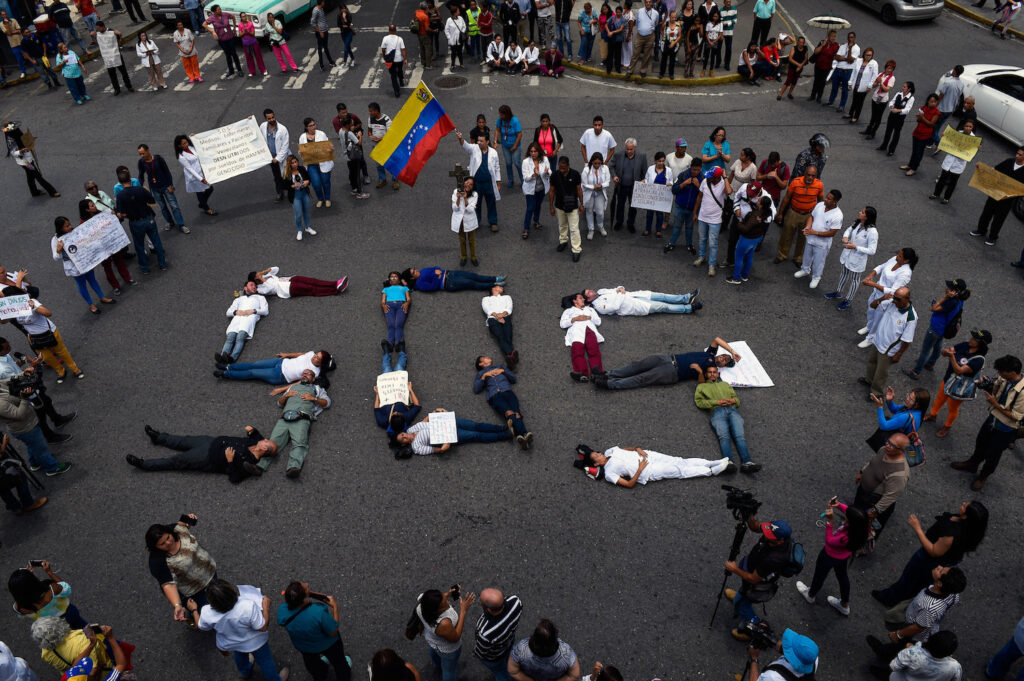
The (extremely) short story was that after years of steady decline, a political power struggle led to an attempted uprising. Widespread civil unrest followed while people suffered from economic collapse, inflation and shortages of food and medicine. This has continued to the current day. Here is what we had to say at the time.

The FAA had multiple concerns for the traffic above.

There were two major worries. The first was that the military may fracture and begin fighting against each other. Additionally, there was the known presence of mercenaries who had been employed to augment the military and police force.

It was known that the Venezuelan armed forces had large stockpiles of advanced man portable air defence systems (MANPADS) capable of targeting aircraft as high as FL250.

While there was no obvious intent to target civil aircraft, the FAA were worried that extremely high tensions may lead to inadvertent firing which could endanger them indirectly. They were also concerned that some of the MANPADS may find their way into the hands of non-state actors who were less predictable, and had less training.
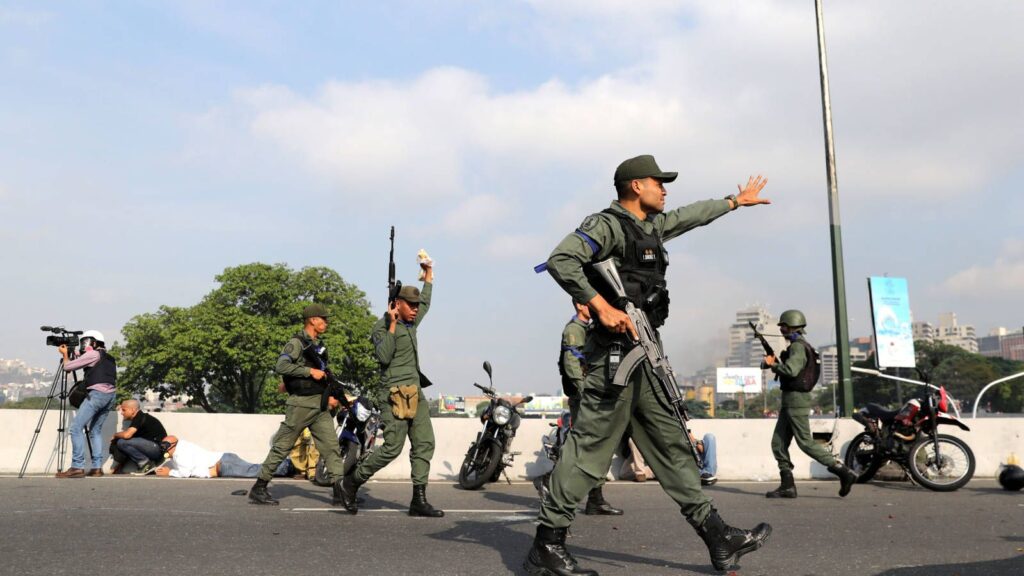
There were FAA concerns about military rivalries and an abundance of surface-to-air weapons.

As such US operators were banned at lower levels out of an abundance of caution while the situation evolved.

If you’d like to know more, here is a copy of the Background Information note the FAA published at the time.

So, have things improved?

It would be a logical assumption given that the flight restriction has been lifted, but the short answer is that we don’t know. And the FAA hasn’t (yet) provided any explanation as to why the Notam has been cancelled.

The situation in Venezuela is at a standstill. It remains in the middle of an unprecedented social and humanitarian collapse. Although there’s news lately of high-level talks to try and improve the situation, right now, it’s just that – talk.
It’s possible that the immediate threat of active fighting and the intentions behind the issue of the original Notam have subsided sufficiently that the risk to civil aircraft from anti-aircraft fire is now considered extremely remote. Although this is purely speculation.

The safest course of action until we know more would be to remain above FL260 – although this is no longer mandated.

Beware the diversion

If you do overfly Venezuelan airspace, the most important consideration is crew and passenger safety in the event of a diversion. The security situation on the ground in Venezuela isn’t great – in fact it is among the twenty most dangerous countries in the world, while Caracas itself has previously been ranked as the most dangerous city of all.
The US Department of State maintains a ‘Do Not Travel’ warning (its highest alert) for Venezuela citing risk of kidnapping, crime, civil unrest, terrorism and unlawful imprisonment. All to be avoided. If you’re looking for the latest information, the US Embassy website is a good place to check – keep an eye out for any new security alerts.

Does this mean I can now fly between Venezuela and the US?

At this stage, no. The FAA restriction was purely to protect traffic transiting Venezuelan airspace below FL260. Another (more political) restriction remains in place, issued by the Department of Transport. It’s a heavy read, but basically the commercial transport of passengers or cargo between airports in Venezuela and the US remains banned.

We’re unsure at this stage whether there is an intention to drop this rule too, and have reached out to both the FAA and the DOT for more feedback. We’ll keep this article updated as more info comes to hand.
Venezuela: do not travel

Amid an escalating crisis in Venezuela, on Mar 11, U.S. Secretary of State Mike Pompeo announced via Twitter that the U.S. Embassy in Caracas will be withdrawing all of its remaining diplomatic personnel from Venezuela by Mar 16, citing the “deteriorating situation.”

Power outages continue in at least 16 states across the country. The opposition says there has been sporadic looting, and at least 17 people have died as a result of the blackout.

On Mar 9, there was an attempted armed robbery of Air Europa airline crew. Armed assailants on motorbikes chased the vehicle of the crew from the airport to their hotel, where they engaged in a shoot-out with hotel security staff before escaping. None of the crew was injured, but refused to stay at the hotel, and instead were escorted back to the airport by police convoy and returned on the flight back to Madrid. Air Europa has reportedly now decided to add a stopover to its Caracas service and crew will now layover in Punta Cana in the Dominican Republic.

On Feb 21, the barely-still-president Mr Maduro banned all general and private aviation. But reports from Opsgroup members on Feb 28 suggest that this has now been cancelled (although the ban on flights to/from the islands of Aruba, Bonaire and Curacao, as published by Notam, still stands). One member reported: “Our permit to operate in and out of SVMI/Caracas next week was approved. However, I would still NOT recommend any crew remain there overnight.”

Local handling agents we have spoken to in Venezuela have also said that the country’s airspace is open again, although nothing has officially been published to confirm this.

Our advice remains the same: you don’t want to go to Venezuela at the moment. The official advice of both the US and Canada couldn’t be clearer, they both say the same thing: do not travel to Venezuela due to risks posed by the ongoing unstable political and economic situations and the significant levels of violent crime.

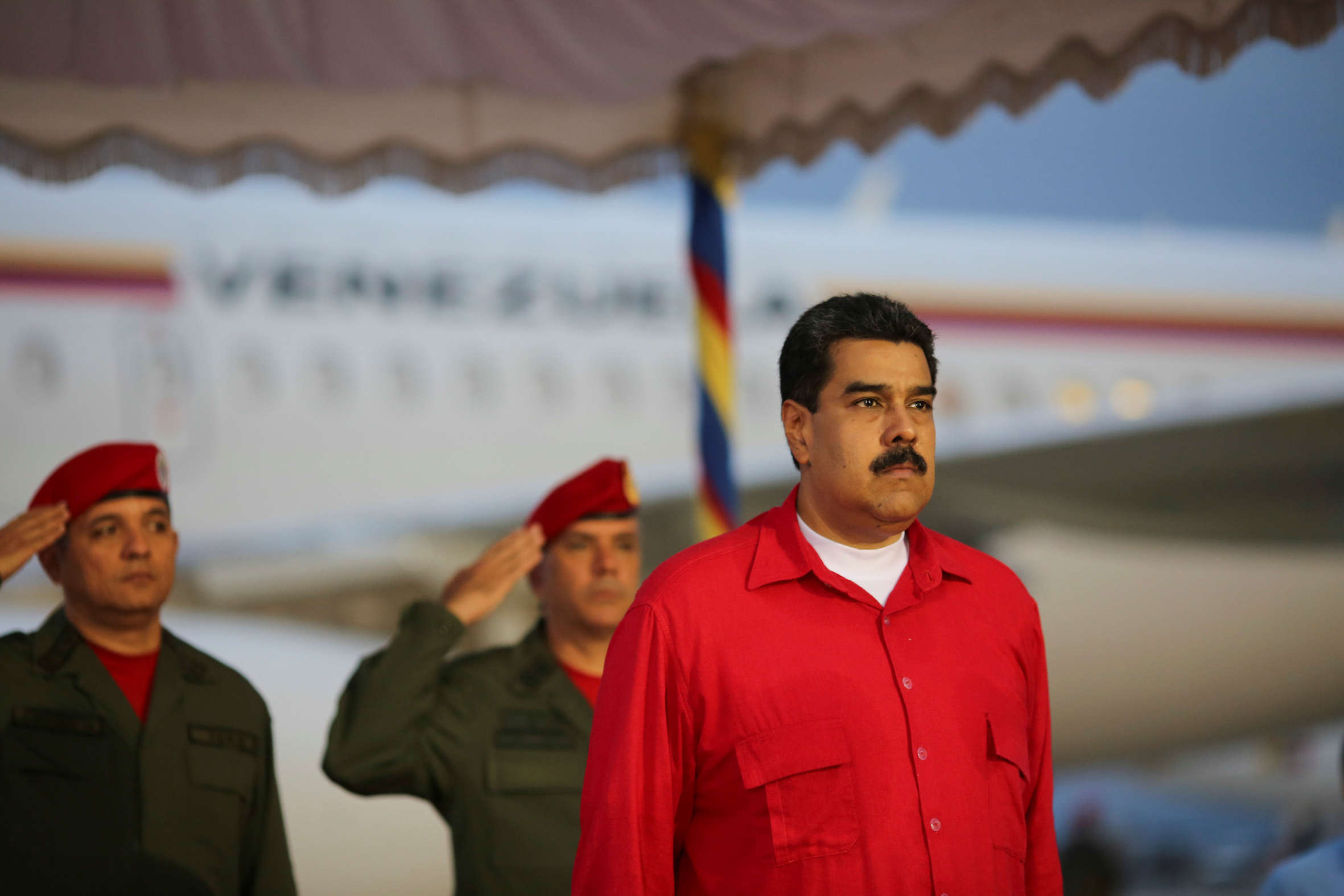
The Maduro government has closed Venezuela’s borders with Colombia and Brazil, and has reportedly positioned one of its air defense missile system near the border with Brazil – within range of Brazil’s SBBV/Boa Vista airport, as well as overflights of most of Guyana’s airspace (SYGC/Georgetown FIR).

The US FAA has also published a new Notam and Background Notice warning operators to exercise caution when operating in the SVZM FIR below FL260 due to potential hazards to aviation associated with ongoing political instability in Venezuela.


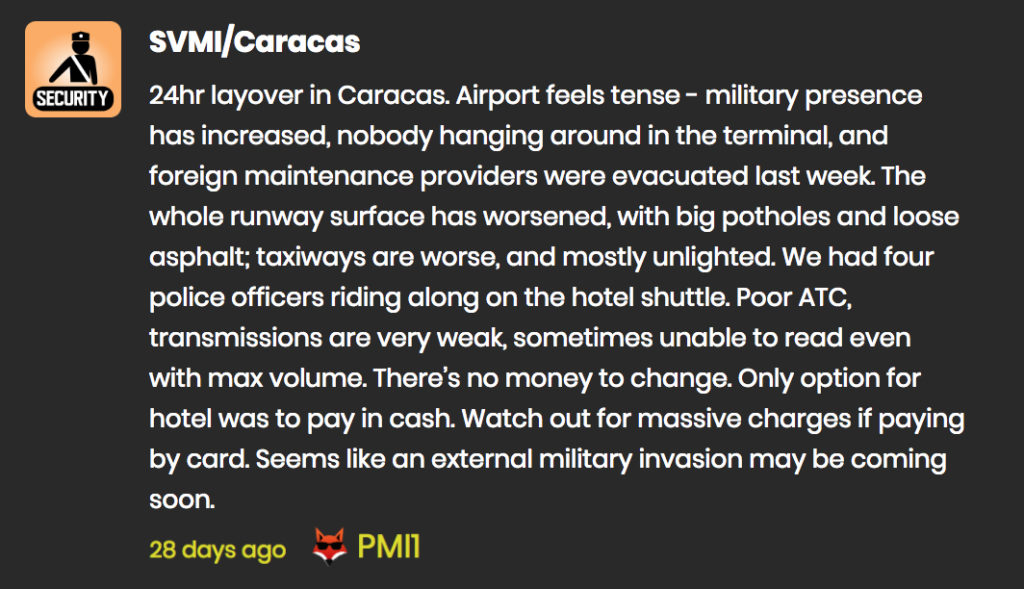
Background info on SVMI/Caracas Airport   

The most recent Opsfox reports for SVMI are not encouraging:

    • The airport is located in an extremely high-risk area for armed robbery and kidnappings. Before suspending all flights to Venezuela in Aug 2017, Avianca hired bodyguards after shots were fired during a robbery of a bus carrying its crew. Some other carriers took to flying crew to spend the night in neighbouring countries, rather than risk staying overnight anywhere in Caracas.
    • On Aug 8, 2017, a Venezuelan lawyer was shot dead at a ticket counter at SVMI/Caracas airport. In 2016, an Egyptian visitor was killed walking outside the airport between terminals after arriving on a flight from Germany.
    • In Feb 2018, Ecuadorian state airline Tame joined Avianca in a long list of airlines that no longer operate to the country, including: Aerolineas Airlines, United Airlines, Aeromexico, Lufthansa, Alitalia and Air Canada. Most reports estimate that international traffic in Venezuela has dropped by around 65-75% since its peak in 2013.
    • Colombia’s pilots’ association says its members who have flown to Venezuela have had to deal with contaminated fuel and hours-long delays as the National Guard pulls suitcases off flights to loot them. More info. 


Monday Briefing: Security in Caracas, Tripoli, UK Permit rules

Security issues rule out Venezuela, Libya Mar 23: SVMI/Caracas, Venezuela, and HLLT/Tripoli, Libya, should be off your tech stop or charter lists for the foreseeable future. Both airports have been subject to rising security risks over the last months, reaching a climax last week with a bomb attack on RWY 09/27 in Tripoli and increased civil unrest in Caracas.

New rules for UK Permits Mar 23 : Significant changes to the approval process for Landing Permits for the UK will take effect on 06 APR. CAA will take over the responsibility for issuing approvals from the Department for Transport (DFT). Also, previously, a cabotage objection could be raised by a group of UK Charter Operators – this is removed. A fee is likely to be charged by the CAA for permits from this point forward.

SVMI/Caracas, Venezuela Public unrest has raised tensions in the capital to the point where several airlines have suspended service, including Air Canada this past week. Coupled with the security issue is a payment issue, with the Venezuelan government not releasing ticket payments. SVMI remains open and operational, but not recommended. For tech stops, consider TNCC/Curacao just to the north.

Uxxx/Crimea Region. Following the referendum on 16MAR, Crimea is now officially Russian Territory. This places the Simferopol FIR under Russian Control, but service is still provided by Ukraine. Simferopol Sectors 3,4 and 5 are now controlled by Odesa, and Sectors 1 and 2 are controlled by Dnipropetrvosk. UKFF/Simferopol and UKFB/Sevastopol are closed to civil traffic. No decision has yet been made by the Russian CAA as to whether permits will be required to overfly Crimea. It seems unlikely that there will be any change to the present ‘no permit required’ situation in the coming weeks at least, though when Simferopol Airport reopens we would anticipate Landing Permits being required through Russia.

VTSP/Phuket – International restrictions due to construction until 31MAR. Slot and PPR require 48HR PN, Landing Permit requests should allow 10 days.

LIxx/Italy ATC Industrial action announced for 30MAR 1030-1430Z. For this and subsequent strikes, ENAC, the Italian provider, will accept a limited number of pre-arranged flights from each AO.

EHAA/Amsterdam FIR Due to Nuclear Summit in the Hague on 24 and 25MAR, most of the FIR is accessible by Prior Permission only, including all flights to EHAM, EHRD, EHEH. Contact nss.ppr@minienm.nl or +31 (0) 577453696.
LLOV/Ovda, Israel will be closed to all flights 01MAY-07MAY

DGAA/Accra, Ghana Until 23JUN, The main runway (03/21) is open daily from 0500-2300Z only; no traffic accepted outside these hours.

YPXM/Christmas Island is closed and unmanned at present due to a Cyclone.

HLLT/Tripoli, Libya was subject to a bomb attack on Friday. The device was placed on the centerline of RWY09/27 overnight and detonated with a timer. Most regular operators cancelled flights immediately, with no set date to resume operations.

OSDI/Damascus FIR – For those still overflying, Syria has closed airway L513 from BURSA to LEBOR UFN.
UK Charter Permits. Significant changes to the approval process for Landing Permits for the UK will take effect on 06 APR. CAA will take over the responsibility for issuing approvals from the Department for Transport (DFT). Also, previously, a cabotage objection could be raised by a group of UK Charter Operators – this is removed. A fee is likely to be charged by the CAA for permits from this point forward.

Turkey. Effective 10APR2014 Visa on Arrival is no longer available at Turkish Airports. Visitors must apply online through https://www.evisa.gov.tr/en/ for an e-Visa.

Australia. A reminder to all operators who are not ADS-B equipped, of the restrictions when operating into Australian Airspace effective from 15DEC13. If you not ADS-B equipped you must file with CASA, a Form 208 exemption application 14 days in advance of proposed operations into Australian Airspace. Then operations will be confined to the SSR radar coverage area extending from 200 nm north of Cairns down the East coast to 200 nm west of Adelaide. This is commonly referred to as the J curve. If you intend operating into the Brisbane or Melbourne FIRs from the west and north west of Australia, and are not ADB-B equipped you will be required to operate at FL290 or below.

URSS/Sochi Starting from 20JAN, including period of XXII Winter Olympic Games and XI Winter Paralympic Games 2014, airlines are obliged to send the passenger manifest with exact Name, Surname, Passport number and series, or other ID, Ticket number, 24 hours prior to departure and no less then 4 hours prior to departure – passenger manifest changes, when operating to Sochi International airport (IATA code-AER). Information should be sent to the following e-mails: Checkin_DIsp@aer.basel.aero, Chief_smena_SAB@aer.basel.aero. See NOTAM A3075, A4018.