UK: No more LPV approaches after June

On June 25 the UK’s current EGNOS working agreement comes to an end, and they are not renewing it. This means their access to EGNOS will stop – which means LPV approaches at UK airports will no longer be possible.

So let’s talk LPVs. What exactly are they? What on earth is EGNOS? And what has Brexit got to do with all of this?

What is an LPV approach?

If you read this and are thinking “That isn’t something I’ve ever flown” then you can probably stop reading (unless you’re interested in a bit of aviation geekery), because this probably won’t have much of an impact on you. If you do fly these, and fly them in the UK, then read on.

LPV means localizer performance with vertical guidance. It is a GPS based approach sort of like LNAV/VNAV but also, confusingly, sort of like an ILS.

More confused? Us to. Let’s dig deeper.

An LPV has vertical guidance but is not a precision approach (which your standard ILS of course is). Instead, it is classified as an ‘approach with vertical guidance’, or APV for short.

So an LPV is an APV? Yes, and the point of this distinction is that it’s a lot cheaper, quicker and easier to implement than an ILS because there is a lot less paperwork involved, but it still offers “nearly” the same precision as an ILS – meaning you get down low if you need to.

You might also see the term SBAS used in the same breath. SBAS stands for satelitte-based augmentation system, and is a generic term for the use of geostationary satellites which broadcast augmenting information.
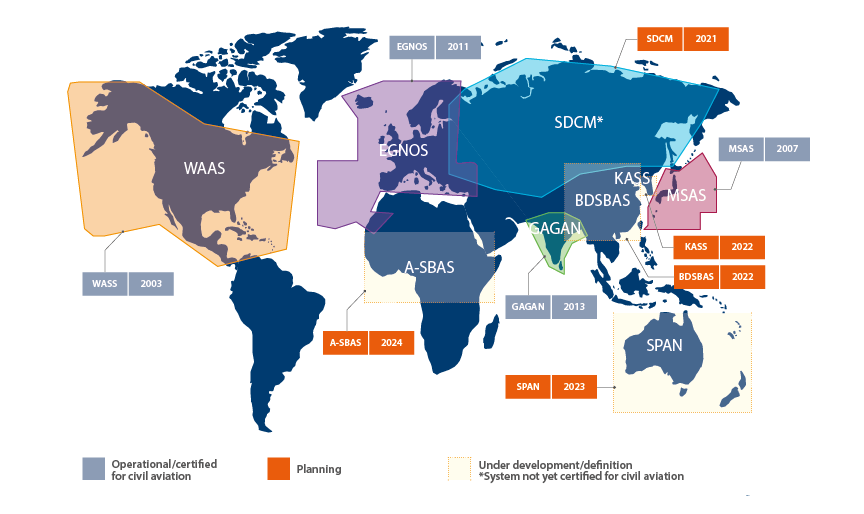
What uses what and where

That’s the basics, but how does it actually work?

They provide lateral and guidance down to a DA, just like an ILS. And just like an ILS, they get more sensitive the closer to the runway you get, which is what allows you to operate down to lower minimas than, say, your less sensitive LNAV option.

There are a few things you also need to know – first up, you need a special receiver on your plane for it (which is probably why a lot of folk are scratching their chins and wondering what on earth as LPV is).

Secondly, if you’re planning on using an airport without an ILS or some sort of ground based navaid as your alternate, then the FAA wants you to plan on LNAV minimas.

Why do we like them?

Well, because they get us nice and low so we can see the runway in not so nice weather.

They also use GPS, so the equipment you need is on your plane. An ILS needs a whole bunch of ground and plane equipment meaning there is a lot more that can fail on us. RNP and SBAS approaches are the future.
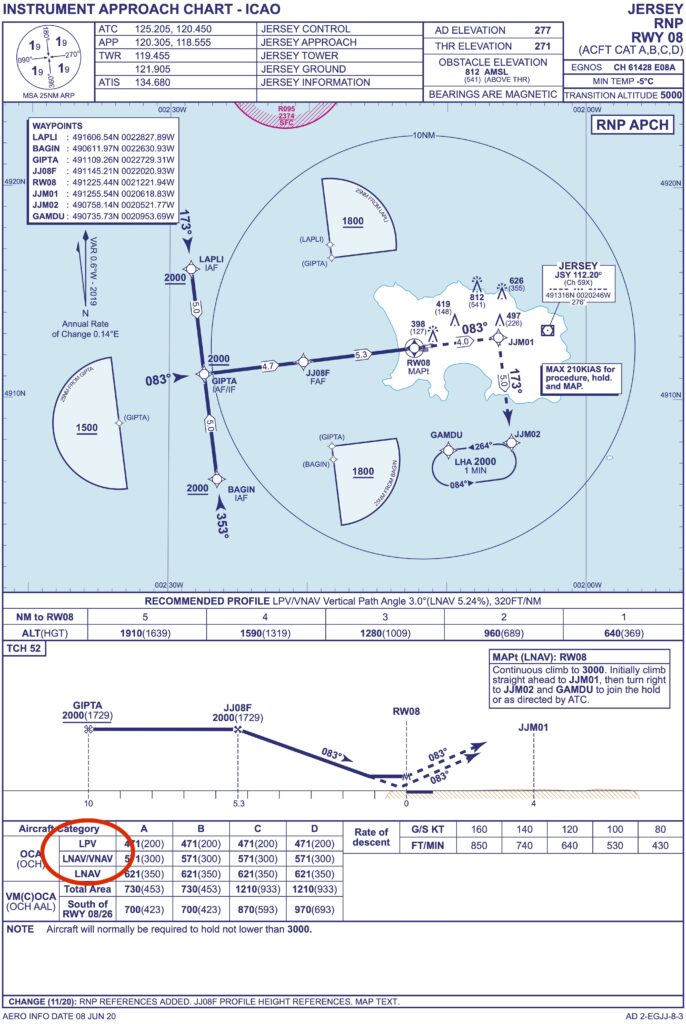
The LPV minima is the same as the ILS Cat I minima

Okay, so what is EGNOS?

Not to be confused with the delicious Christmassy drink, EGNOS stands for ‘European Geostationary Navigation Overlay Service’. It is basically a bunch of European satellites, (actually just 3 out of the Galileo GNSS system, and a network of 30 referencing stations), that improves positioning measurements and gives much better accuracy than GPS alone.

In fact, it has 95% accuracy, which translates into the locating of a position to 1-3 meters horizontal accuracy, and between 2-4 meters vertical accuracy.

So EGNOS is what gives LPVs their precision.

Brexit…

Yep, we’re pretty bored of it now too. Brexit means the leaving of the UK from the EU. Not to be confused with Europe the continent – the UK is still part of that. But leave the EU it has, which means leaving all EU related programs including EGNOS (even though the UK’s NATS was one of the founders of EGNOS…)

Anyway, the EGNOS working agreements are not going to be renewed, so as of 25 June 2021, the UK will not longer participate in the EGNOS program and their LPV approaches will no longer have the accuracy assurance that EGNOS provided.
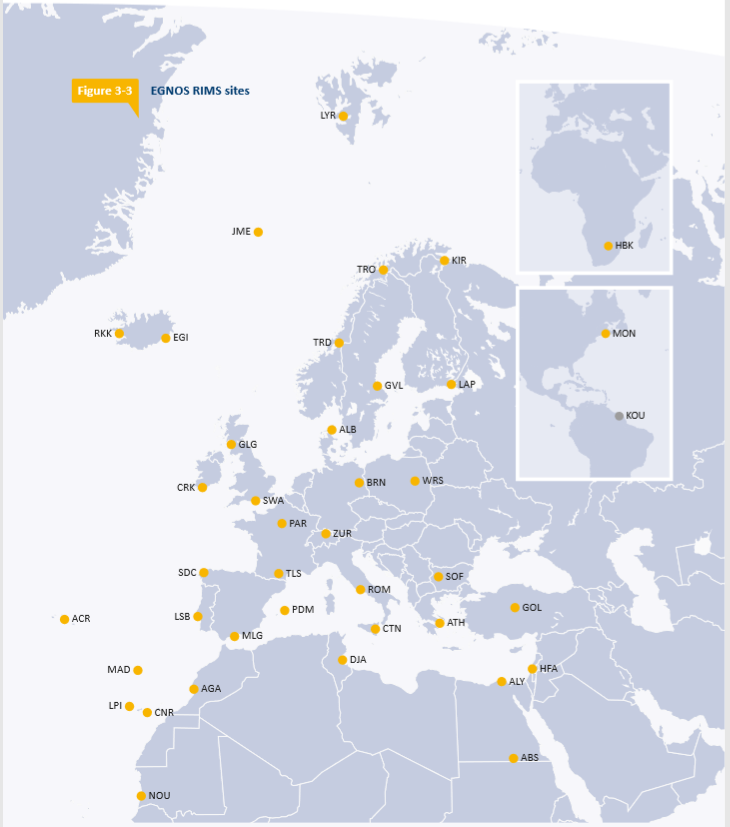
EGNOS RIMS stations (Ranging Integrity Monitoring Stations)

How many airports are affected?

The UK has 125 licensed aerodromes and out of these 69 have at least one instrument approach (surprisingly low given how miserable the weather often is in the UK.)

Anyway, ILS is still the most popular in the UK with 81 runways having an ILS approach available on them. Only 45 runways use LPVs and 20 of those have an ILS as well anyway, but that does leave a few airports where the other option is your old school, much higher minima non-precision approach.

Like poor old EGPL/Benbecula for example, which only has a VOR. A very old VOR which they are really hoping to retire. Or EGHE/St Mary’s which has a timed NDB…
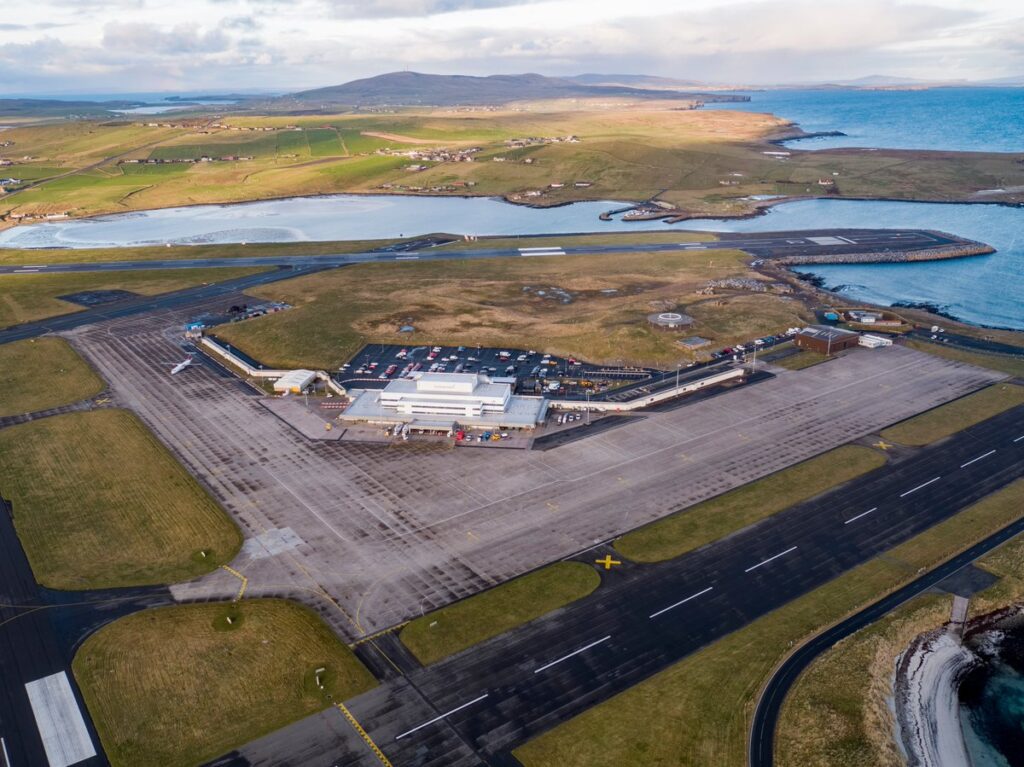
Benbecula airport out in the Outer Hebrides

The first LPV approach in the UK only went operational in 2014 at EGTE/Exeter airport, with Flyer magazine saying the country no longer needed to “hang its head in shame” because they had finally caught up with the rest of the modern aviation world…

The Impact

It isn’t huge – most airports have alternative approaches. However, there are a few points to think about:

  • Where there is an ILS, the minima will be the same, but the redundancy for approaches is now reduced.
  • Where this is only an LNAV, or non-precision approach, the minima will be higher so watch out for that poor weather.

The official word on it all

Here are the official FAQs on the UK leaving the EGNOS program.

The FAQs have the following statement in them –

If EGNOS or an alternative SBAS SoL service becomes available before 31st December 2021, the LPV may be notified subject to the following:

  • An impact assessment to confirm nothing has changed since the time of approval before implementation.
  • IFPs shall be safeguarded against the latest obstacle data to ensure the procedures are obstacle clear.

Alas, unless the UK renegotiate the EGNOS Working Agreements (EWAs), or are able to find a replacement solution, then from 25 June 2021 the LPV approaches in the UK will stop.

Up for some further reading?


UK to make permit applications tougher for EU operators

From April 2021 onwards, most European operators wanting to do commercial flights to the UK will have to apply for landing permits on a trip by trip basis.

After Brexit finally happened back in January, the UK government continued to issue Block Permits to EU operators – essentially just permits which last several months and cover any number of flights. These get renewed after three months, conditional on each EU country giving the same deal to UK operators.

Here we are, three months later, and with a number of EU countries still not providing these reciprocal deals, the UK government has finally got fed up!

So from April onwards the UK will only issue Block Permits to operators registered in countries which provide reciprocal deals to UK operators. According to the EBAA, so far these reciprocal deals have been agreed with Italy and France – more countries may follow, but the UK CAA say it’s not looking likely at this late stage in the game.

Important to note: it is operators who are registered in these countries (i.e. France and Italy) who can still get Block Permits, not operators flying to the UK from these countries. The EBAA explains it like this:

“For example a flight from Munich to London, the UK CAA would allow for it to be operated by a French operator with a UK Block Permit, under a reciprocal understanding between the UK and France that an equivalent system is in place for UK airlines. In parallel, a German operator would have to apply for a permit for each individual flight on the same route if no reciprocal understanding on a similar approval for UK airlines had not been reached with the German authorities.”

EBAA is advising all affected EU operators to contact their respective aviation authorities to raise awareness on what the withdrawal of the UK Block Permit scheme would mean for them.

How to get a UK landing permit

So, all non-UK operators wanting to do commercial flights to the UK need to get a Foreign Carrier Permit beforehand. That’s your landing permit. If you’re applying for a Block Permit, you use form CPG3201. If you’re applying on a trip by trip basis, you use form CPG3200.

If you’re operating a private flight, or just overflying the country – no permit is required (unless you’re doing some kind of delivery or maintenance flight with non-standard airworthiness).


For more info on Brexit’s impact on ops, check out our article from Jan 2021 here. There have been a few semi-important-to-know-about changes, but ultimately, the big ticket items are all still the same, and life goes on much the same as it did before – you still need a permit to do a commercial flight, the UK is still part of Eurocontrol, slots are still needed for busy airports, and nav charges are still expensive.


Brexit is here: What’s the impact to ops?

The UK officially left the EU on Jan 1st, 2021. Although it’s still a part of Europe (the continent), it’s no longer part of the European Union (the trade and political bit). Whereas before, the UK fell under EASA and all their rules and regulations, the UK CAA is now in charge of all things aviation in the UK…

So, what does that mean?

It means a raft of changes to the rules for operators flying between the UK and EU states. A new agreement has been drafted which applies from Jan 1. Here are the main changes:

  • Essentially UK operators will no longer be considered as EU carriers, and will instead be ‘third country’ carriers, meaning they will lose their special treatment. Flights between the UK and EU will continue, but passenger cabotage flights will no longer be allowed. Or in more human terms, UK operators will not be able to carry fare paying pax between two EU states (and vice versa). Cargo cabotage will still be okay as long as the two countries involved have an agreement.
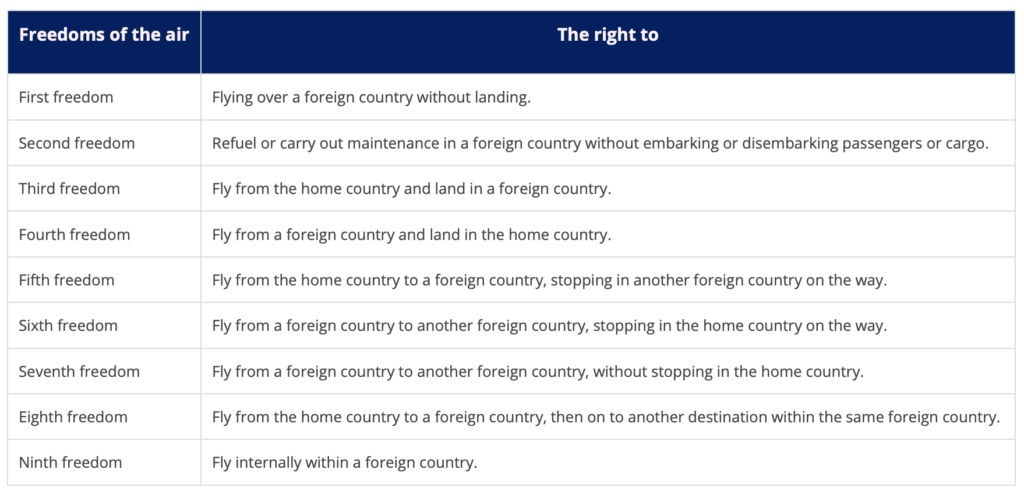
  • Both sides will still have the right to overfly each other’s territory, make technical stops, and to operate third- and fourth-freedom passenger and cargo flights between any point in the UK and any point in the EU. The fifth-freedom rights beyond the EU will continue, but only for a five-month period and with a new capacity cap.
  • UK and EU airlines can also continue codesharing, and UK airlines can continue providing wet-leasing operations.
  • There are other changes coming too, which EBAA cover here.

But what about laws, licences, rules and regulations?

All existing EASA certs, approvals and licences valid for UK registered aircraft will be good for another two years. For UK operators of EU-registered aircraft things are more complicated. The UK CAA have set up a useful website to help you get your head around what you need to do to stay compliant elsewhere in Europe, and it’s a great place to start. There is also a helpful flow chart to keep things simple.

With Brexit complete, the UK CAA is now in charge of setting the rules, but they’ve basically said that they’ll be sticking to pretty much all of the aviation law, rights and obligations that were in place before. You can read that statement, and a bit more, on the UK CAA’s main regulations site.

The heads-up for passengers

Things may get complicated. UK citizens will likely lose their special EU travel privileges which means it may become harder to move around Europe thanks to everyone’s favourite elephant in the room, Covid.

As a general rule, pax from the UK to Europe will need to make sure their passport has at least six months validity in it if they want to visit any EU country, Iceland, Liechtenstein, Norway or Switzerland. They will also need to check their health cover – the EHICs (European Health Insurance Cards) are still valid if issued before January 1.

If they are entering as a tourist, they can stay for 90 days – and they can do that twice a year. But if they are entering for business purposes, they might need a visa.

All of this is on the UK Gov website if you want to take a look.

The Question of Covid

Not being part of the EU anymore means that flights from the UK to the EU will no longer have the same Covid entry restrictions applied. “Luckily” no-one was really letting UK flights in anyway, what with their virus mutation running rampant, so right now, any change for flights originating in the UK (and passengers for that matter) is not really relevant.

The entry rules for UK nationals in the rest of Europe are changing fast, and every country is different but in most cases it will be harder for UK travellers to avoid Covid related rules for non-essential travel. Don’t know where to start? We don’t blame you. The best place is the UK FCO website which has the most up to date entry requirements for UK nationals for every country around the world.

CO2 much?

One extra little snippet of info to know about Brexit is that the amount of emissions small, non-commercial operators can produce as “improved”. If you already have an EU-ETS (emissions trading scheme) exemption then your allowance has now been doubled.

Instead of 1,000t CO2, you can now produce 2,000t CO2 – half in the EU and half in the UK. 

Don’t think you can get away with puffing about and no-one watching though. The UK are setting up their own scheme, and France will be monitoring the EU bit of it (apparently they won the task because UK operators tend to spend more time there than anywhere else in Europe).

If you are trying to work out what 1,000t of CO2 coming out your aircraft looks like, then there is a handy calculator you can use (but its roughly 103,400 gallons or 391,500 litres of JET A1 burned).

The news for N-reg’ers

Well, to be honest, not a lot at this point. The main thing to know is that the UK no longer falls under EU (EASA) rules and law, so if you have any problems you’ll now be dealing direct with the UK CAA… but currently their laws aren’t actually any different to what they were at the end of December.

If you are carrying passengers from Europe to the UK (or vice versa) then there will be different passport and entry procedures for them now.

That’s about it.

So, the really important bit… can you bring food?

Always one of the big questions for crew who want to stock up on all things delicious. Basically, no meat, milk, or dairy stuff into the EU from the UK. The UK is a bit more chilled, but you do need to declare things, and a suitcase filled with Camembert and wine probably won’t go down very well.

Of course, the real good news is all those juicy duty free goods which travellers between the UK and EU will now be able to buy!