Keep an eye on Shiveluch

Shiveluch is a 70,000 year old volcano with quite a bad temper. We thought we might introduce you to this hot headed fellow because it might have an impact on aviation in the not too distant future.

It has been reported as ‘extremely active’ since November 20, and an eruption is expected imminently.

Say hello to Shiveluch.

Or Шивелуч to give him his Russian name since he is, after all, Russian.

Shiveluch lives on the Kamchatka Peninsula (the far east bit of Russia that sticks out into the Pacific Ocean, and the Sea of Okhotsk). Shiveluch and Karymsky are the most active volcanoes on this bit of land.

What’s the eruption history?

He’s been blowing his top for about 10,000 years, but the current eruption period started in 1999 and he’s kept it up with a fair few explosions, frequent ash cloud spitting along with ‘incandescent block avalanches, and lava dome growth’ since then.

In February 2015 the ash cloud (which is really the bit we’re worried about in aviation) shot up to 30,000′ and crossed the Bering Sea and into Alaska.

In June 2022 it hocked up a dense ash plume which reached about 7 km in altitude.
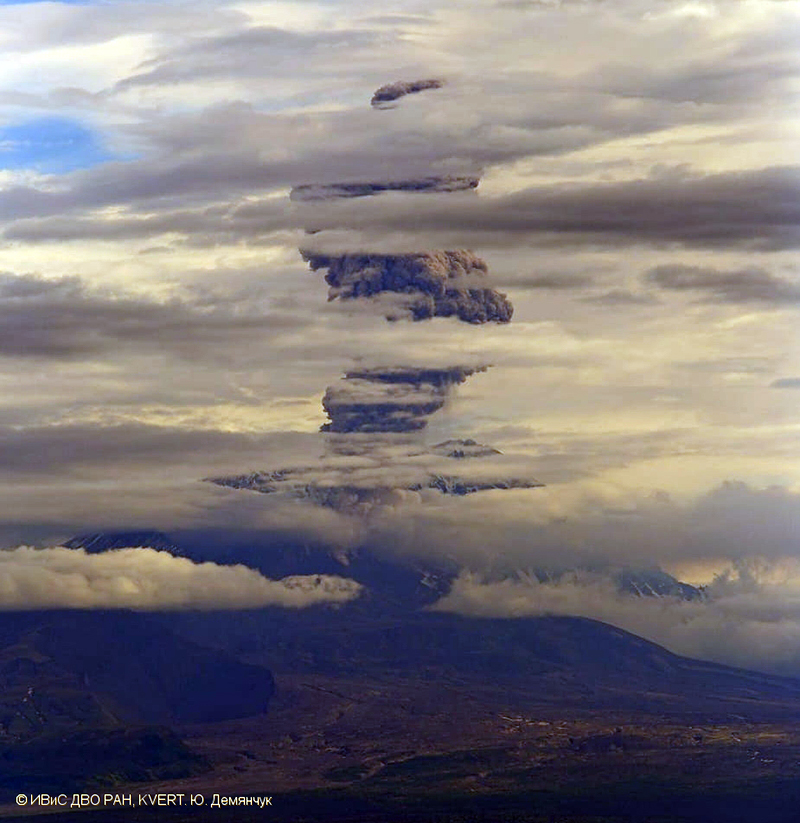
The mega plume

Where will a big ash cloud potentially affect?

Unfortunately this is dependant on how much ash he coughs up (historically quite a lot), and which way the wind blows:

  • UHPP/Yelizovo Airport (Petropavlovsk-Kamchatsky)

This airport lies south of the volcano, on the peninsula, and is popular fuel/tech stop for BizAv aircraft but is currently not available anyway due prohibitions against operations into Russia airspace.

  • Alaska

Alaskan airspace was affected back in 2015 and more recently in April 2022. Ash reached 32,000′ and moved across the Pacific Ocean, impacting traffic routing over the northeast region and the Gulf of Alaska.

PANC/Anchorage could be affected, along with smaller airports such as PADK/Adak and airport along the Aleutian Islands currently used as fuel/tech stops while Russian airports are unavailable.

  • North Pacific/Bering Sea

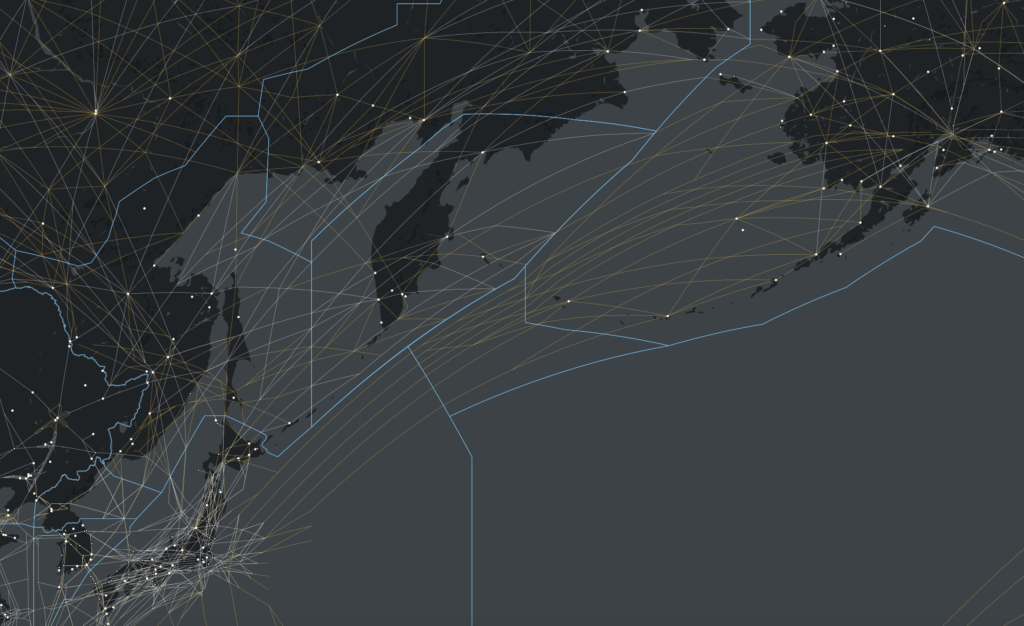
Aircraft heading between the USA and Asia utilise routings here which may be impacted by large ash clouds.

  • Japan

Winds don’t predominantly blow this way, but ash could potentially still disrupt airports and airspace in this direction.
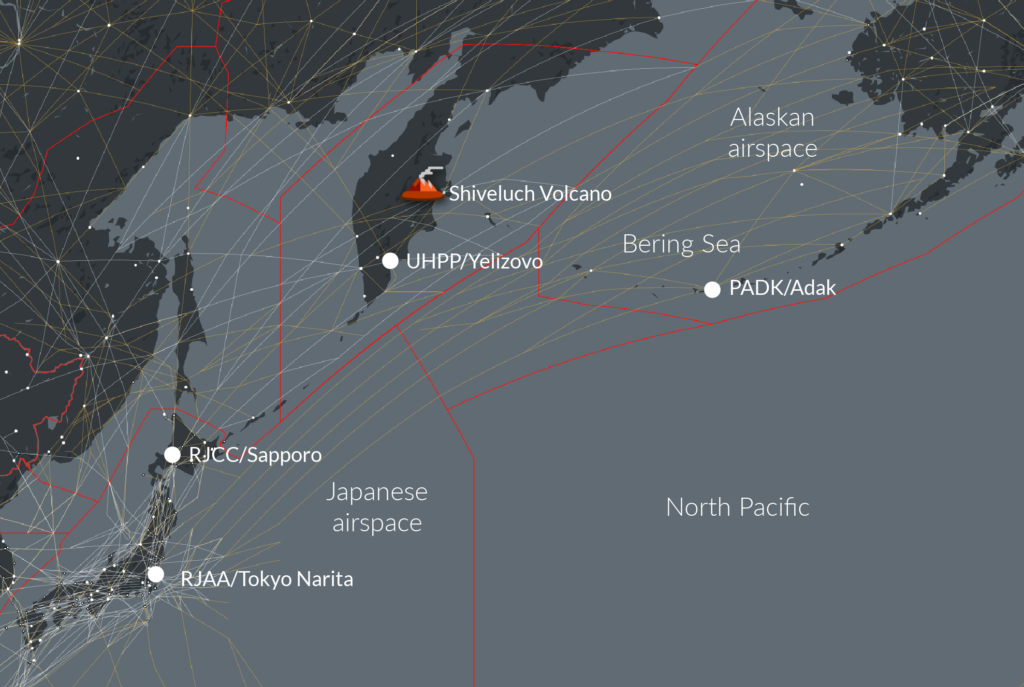
Shiveluch ash impact areas

Keep an eye on him.

You can read his full history here. They post regular bulletins and reports on the ongoing action.

The Tokyo and Anchorage VAACs monitor this volcano. You can find links to their sites here.

Volcano Discovery also provides some handy info on volcanoes and their current action.

Look out for ASHTAMs and SigWx information for the North Pacific and Alaska region.

Russia Reroutes: Alaskan Airport Options

With Russian airports and airspace now off limits for many operators, what airports across Alaska (and also Asia) are available, suitable, and useable for things like ETOPS alternates, fuel stops, and tech stops?

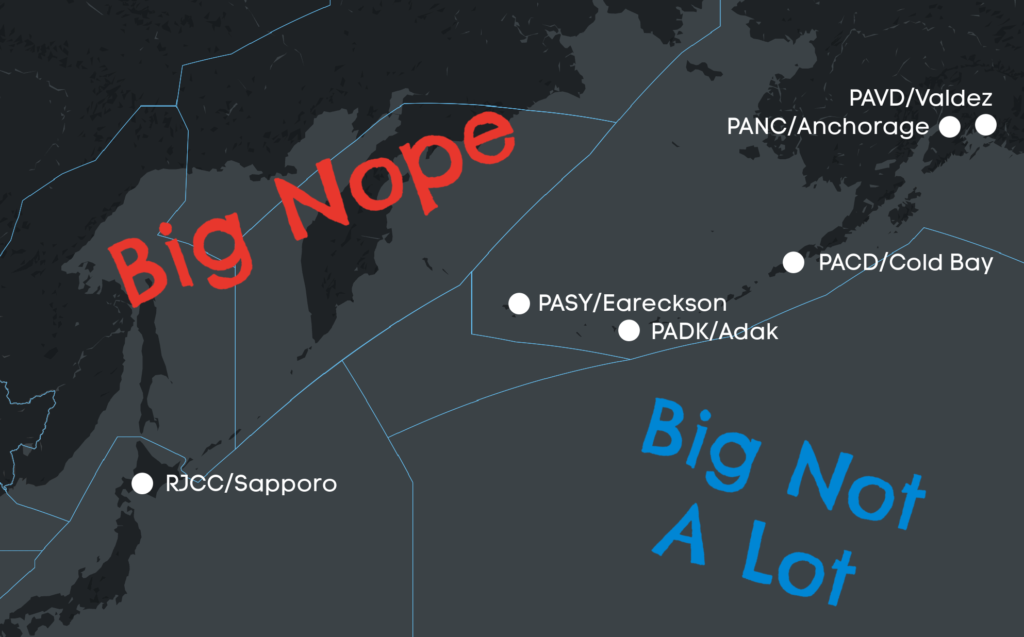
To be honest, very few! Once you cross into the Bering Sea you are extremely limited in the westerly direction, and probably looking at a far more southerly route initially because of the awkward “extra chunk” of Russia that sticks out the bottom.

Why is Russia off limits?

As part of a range of political sanctions imposed on Russia, several countries have now banned Russian aircraft and operators from their airspace – The European Union along with some non-EU countries, the US and Canada. In response, Russia has banned aircraft and operators of many of these countries from Russian airspace.

The exception, at present, is the US –  Russia has still not officially banned US aircraft/operators from its airspace. However, some local agents are saying that they are not able to provide Russian landing and overflight permits to US registered aircraft/operators, and we’ve had similar reports from some locally based OPSGROUP members. Major US carriers are already avoiding Russian airspace, which is sensible action to follow given the uncertainty.

This is affecting a lot of operators at present, who are now having to route around Russian airspace.

The Alaskan Options

A report on a recent routing from Anchorage to India considered the following airports as possible options.

  • PASY/Eareckson Air Station 
    • 10,004’/3050m x 45m
    • ILS 28 / RNAV 10
    • Fuel and maintenance support unknown
    • More an emergency option that a fuel or tech stop option
    • Talk to them on +1 907-552-3443 / +1 907-392-3361
    • ARFF Cat 7
    • PCN 132/F/A/W/T
  • PADK/Adak
    • 7790′ / 2374m x 60m
    • ILS 23 only
    • Some pretty mean terrain around and windshear warnings
    • Fuel available, maintenance support unknown
    • Talk to them on +1 907-269-0751 / +1 907-592-8026
    • ARFF Cat 01
    • PCN 49/R/B/X/T
  • PACD/Cold Bay
    • 10,179′ / 3102m x 45m
    • ILS 15 / RNAV 33
    • High terrain to the south
    • Gets some serious fog!
    • Fuel available, efficient services here
    • Talk to them on +1 907-532-5000 / +1 907-465-1788
    • ARFF Cat 06
    • PCN unknown
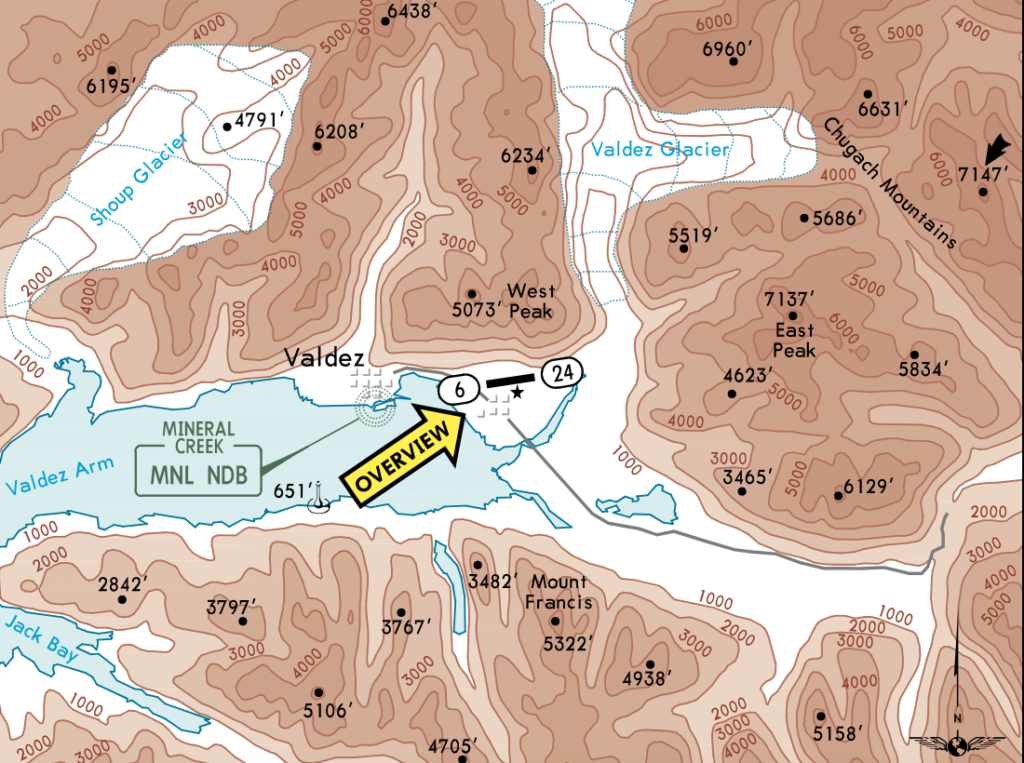
  • PAVD/Valdez (if routing from further east and you don’t fancy Anchorage)
    • 6500′ / 1981m x 45m
    • There are no straight in approaches of 05/23 because there is some serious mountainous terrain here. You need to have trained for this spot before you try it!
    • Talk to them on +1 907-451-5217 / +1 907-835-5658
    • Fuel and minor maintenance
    • ARFF Cat 01
    • PCN 54/F/B/X/T

The major international airpots of Alaska lie further east and aren’t so useful range-wise if routing westbound.

PANC/Anchorage to PADK/Adak is approximately 3:15 hours flying time, or 1900km. PASY/Eareckson Air Station lies further east.

The Asia Options

With Russian airspace now off limits for many operators, aircraft attempting to route westbound from the US (via Alaska) are most likely going to have to take a more southeasterly route initially, bringing them over Japan before routing further into Asia. Past Japan, another southern dogleg (albeit it smaller) is needed to avoid North Korean airspace as well.

The following airport has been recommended by other operators:

  • RJCC/New Chitose (Sapporo) 
    • Multiple runways 9843′ / 3000m x 60m
    • ILS CAT II/III available
    • Major international airport with all the facilities
    • RFF Cat 9
    • Talk to any of the many agent and handler options

The direct distance between PADK/Adak and RJCC/New Chitose is approximately 3,300km

For the pilots and planners

Range, suitability and availability are all going to be a bit of a problem with routes heading this direction. Considerations on weather conditions are probably one of the major things to think about. Your only real option if you need fuel or tech support is Adak airport and then onto Sapporo, depending on aircraft range.

There are limited options available to you if you have an emergency. Plan, prepare and monitor.

Where else?

The full list of airports we’ve heard suggested are as follows:

  • PANC/Anchorage
  • PACD/Cold Bay
  • PASY/Eareckson
  • PAFA/Fairbanks
  • RJCC/Chitose
  • RJAA/Tokyo
  • PADK/Adak
  • PABE/Bethel
  • PAKN/King Salomon
  • RJSM/Misawa
  • PAOM/Nome
  • PASN/St. Paul Island

If you are operating westbound and have been impacted by the Russian airspace bans, let us know what airports you considered at team@ops.group


Russian bombers intercepted off Alaskan coast (again)

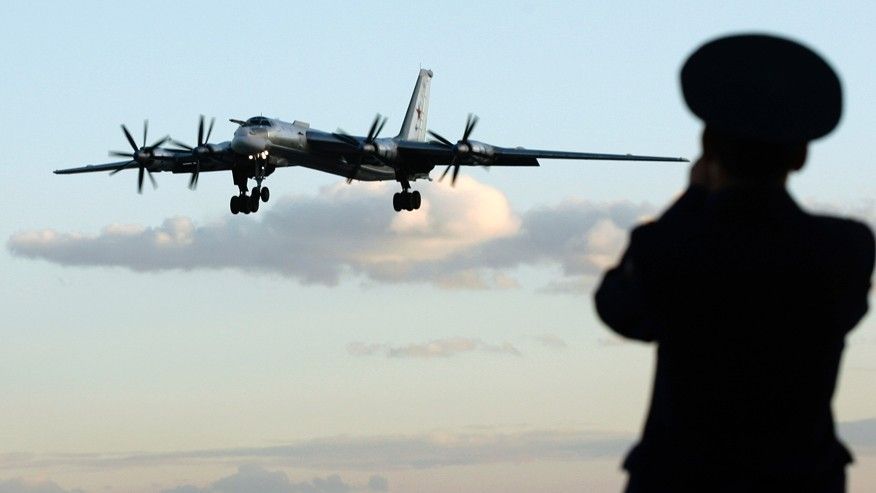
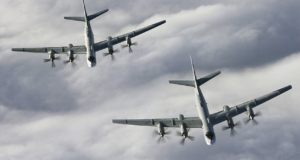
Reports this week of two Tu-95 Russian bombers being intercepted by US F22 fighters off the coast of Alaska.

The Tu-95 bombers were flying in the Air Defense Identification Zone in the Bering Sea north of the Aleutian Islands, where they were visually identified and shadowed by the U.S. jets at 10 a.m., said Navy Capt. Scott Miller, a North American Aerospace Defense Command spokesman.
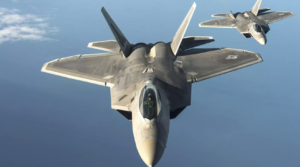
The bombers did not enter North American sovereign airspace, he said in a statement. Miller declined to say how close the bombers came to U.S. land. Some outlets reported they flew as close as 55 miles off Alaska’s west coast.

Friday’s encounter was the first of its kind in just more than a year, Miller said. A similar incident occurred off Alaskan waters in April 2017 in what U.S. officials have described as routine if not tense encounters between adversarial aircraft where territorial lines meet.
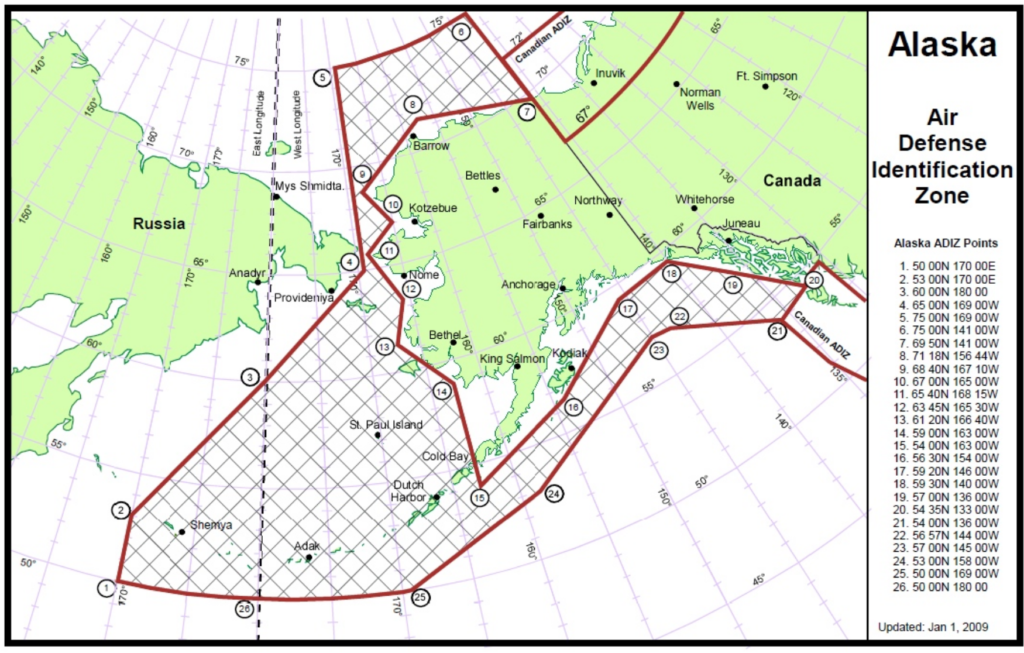
The ADIZ extends about 200 miles off the Alaskan coast and is mostly international airspace, Miller said, though Russian military activity will often prompt an in-kind response for U.S. warplanes. Intercepts in the zone occurred about 60 times from 2007 to 2017, The New York Times reported last year.

Extra Reading: