Where is Zika? Here’s a map

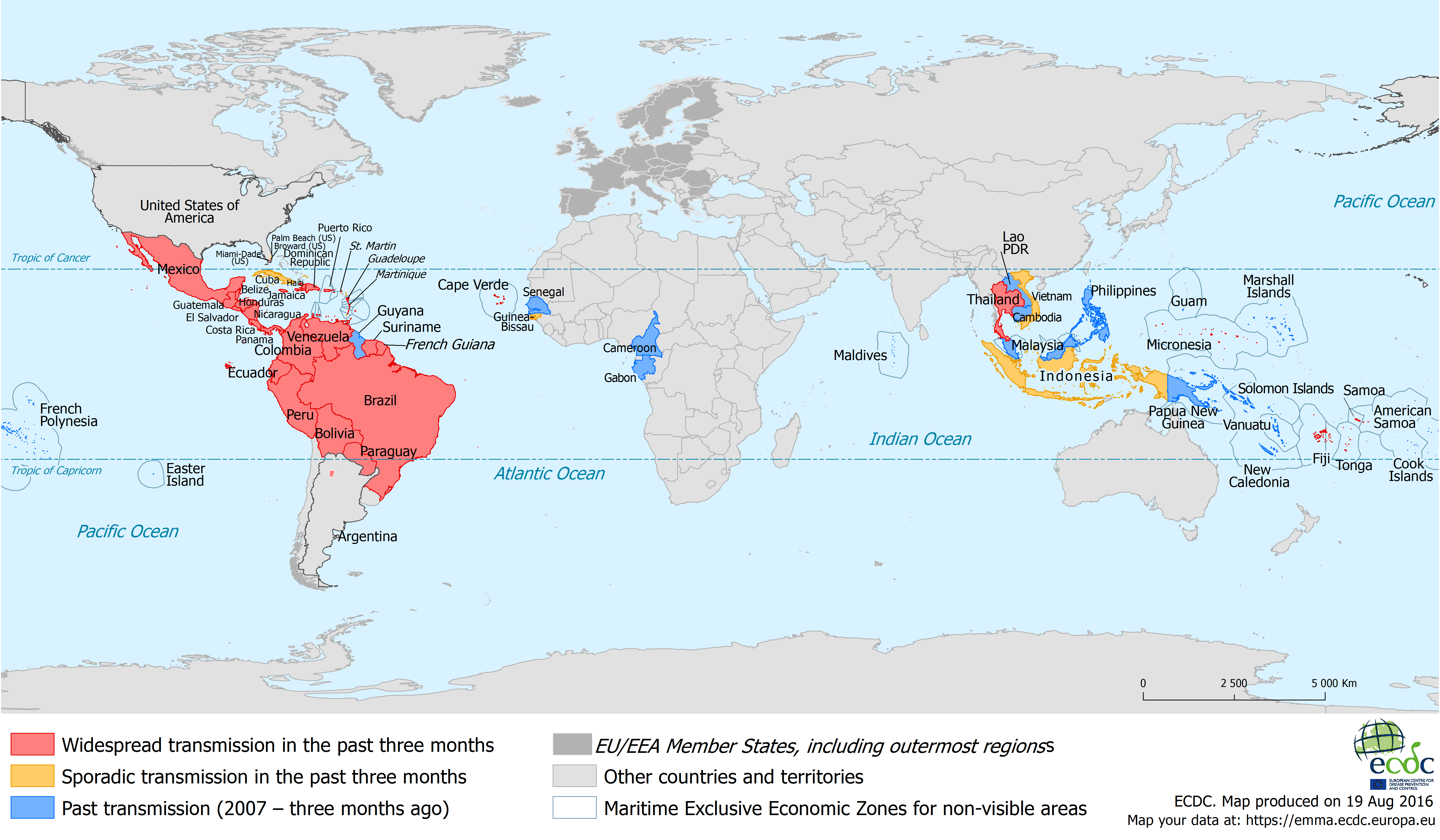
We just came across this – and it’s a very useful, current map, of where the Zika virus has been  found. A few weeks back, we reported that Zika was on the decline, thanks to winter in South America and a declining mosquito population. Turns out, that optimism was premature.

This map shows where Zika is, as of 19 August 2016.

 Sporadic transmission: No more than 10 locally transmitted cases have been reported in a single area within this time period.

 Increasing or widespread transmission: More than 10 locally transmitted cases of Zika virus are reported in a single area, OR at least two separate areas report locally transmitted cases of Zika virus, OR Zika virus transmission is ongoing in an area for more than 3 months.

 Past transmission: Local Zika virus transmission has been reported since 2007 – but not in the past three months.

Zika-map-past3months-historical-worldwide

References:


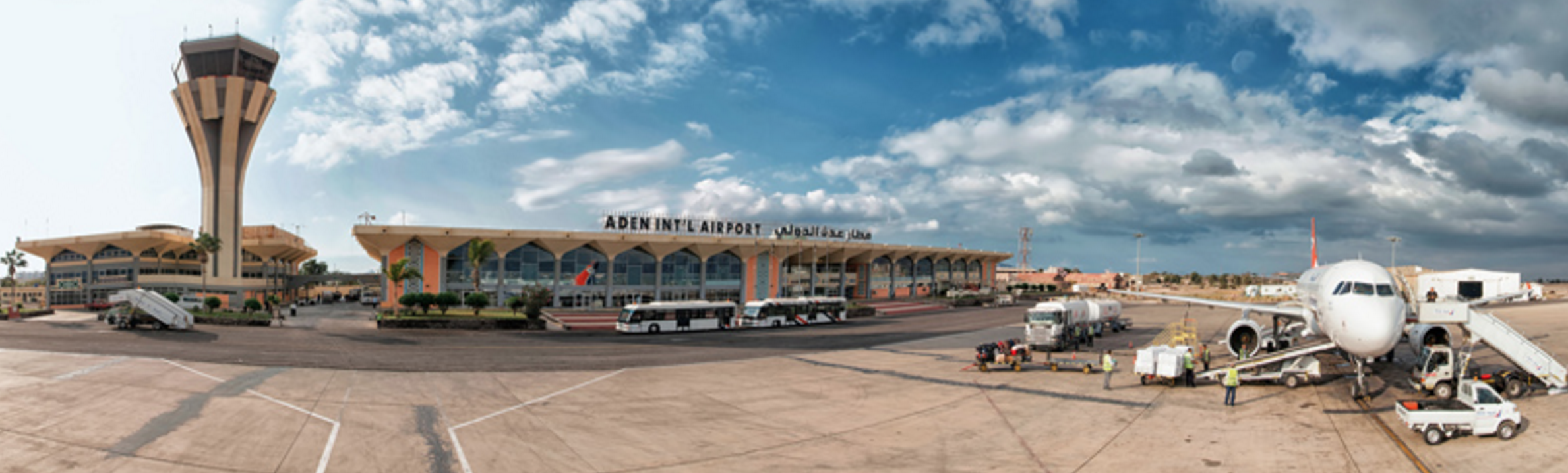
Aden Airport reopens

Aden Airport in Yemen (OYAA) is open to traffic once again following a closure caused by intensified Saudi Coalition activity. The airport has been intermittently closed during the conflict, which began in March 2015.

Except for some specific agencies – the UN, Red Cross, and MSF, any flights operating to Yemen must first land at Bisha (OEBH) in Saudi Arabia for an inspection – in accordance with the UN arms embargo in place. Further, all flights must coordinate with the Saudi Coalition before operating.


North Korean Missile Threat

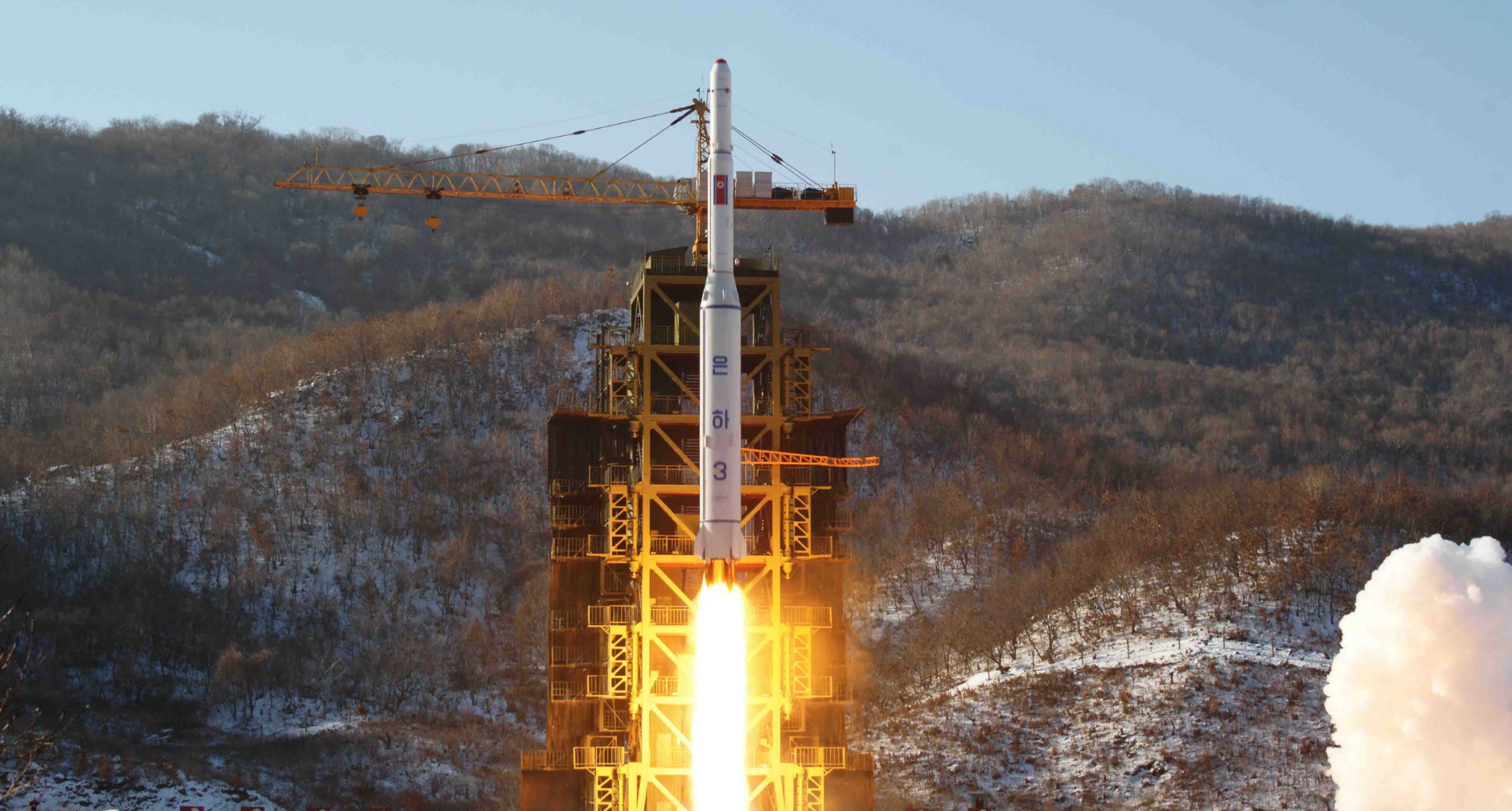
In the past, when the DPRK (North Korea) has planned a missile launch, airlines and aircraft operators have, as a rule, been informed of the details through a warning from the DPRK to ICAO. Of concern to airspace users now, is the fact that the most recent launches this month were not notified in advance.

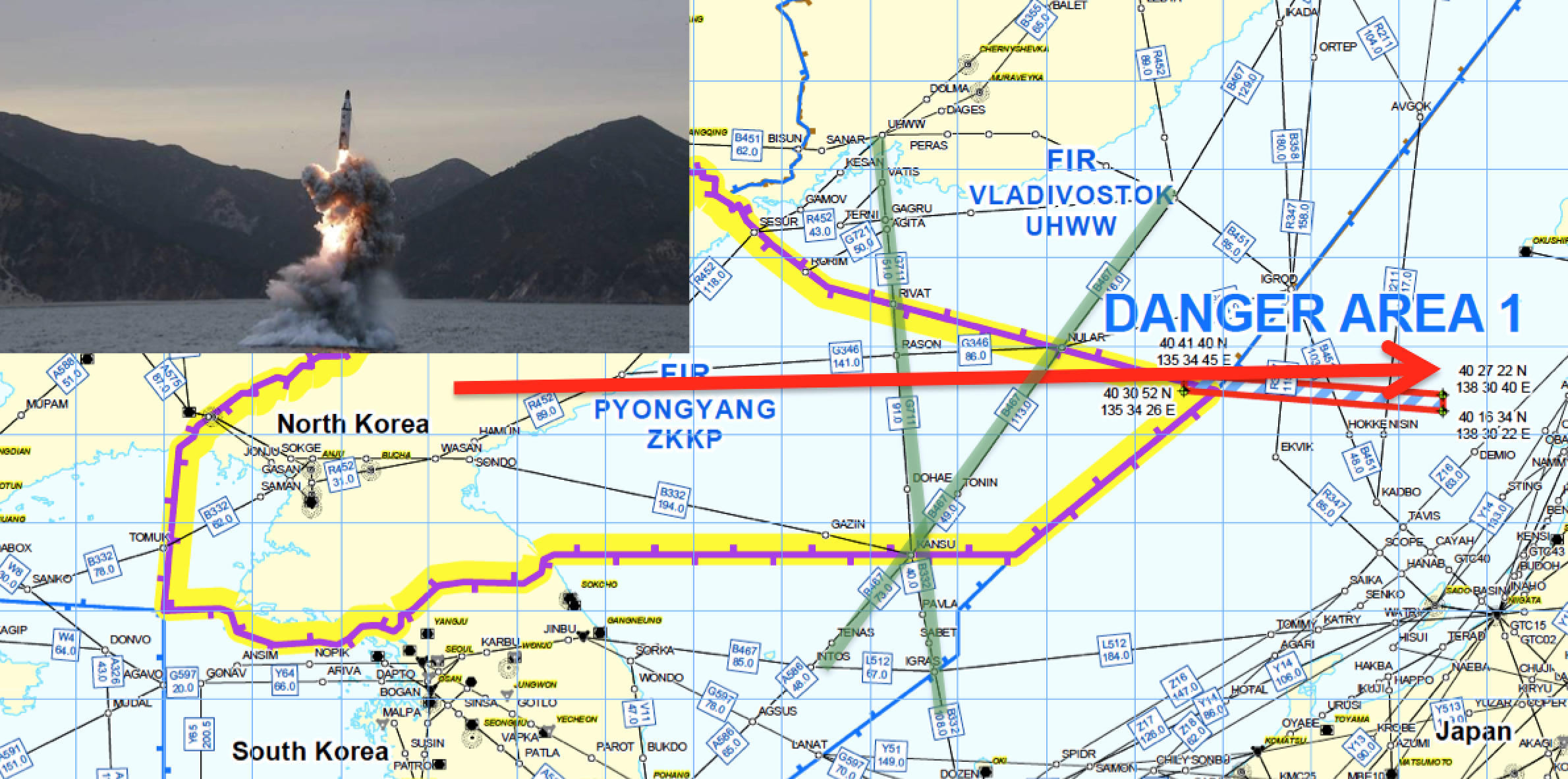
The two most common airways through DPRK airspace, G711 and B467, as depicted on the chart below, are in regular use by International Operators.  The increased frequency of ballistic launches of late, coupled with the failure to notify, has created heightened concern.

Further, GPS signal jamming close to the South Korean border, has led to over 1000 individual reports from operators in 14 different countries since May.

A number of airlines and operators have already made a blanket decision not to enter the Pyongyang FIR, even for that overwater portion on G711 and B467.

Pyongyang


Intercept Avoidance and Missile Evasion

One of our OPSGROUP members, James Albright, has kindly provided us with this informative piece on Intercept Avoidance and Missile Evasion. James will be familiar to many of you as the author of the amazing Code7700.com – an endless archive of useful information for the International Pilot. James has also published several books, which are available on Amazon.

AVOIDING INTERCEPTION

  • Intelligence. The best way to avoid being intercepted, fired upon, and shot down is to avoid areas where they do that sort of thing in the first place. Unfortunately, the list of “bad actors” is increasing and ever changing. It really pays to have someone on your payroll who keeps track of this in real time. I use the Flight Service Bureau (www.fsbureau.org). They send emails, almost on a daily basis, letting you know where the trouble spots are (subscribe via OPSGROUP). ( The “trouble” can be more than just a country throwing missiles into air routes, it can include volcano eruptions, ATC strikes, or anything else that would ruin your flight in international airspace.)
  • Fly Common Well-Traveled Routings. There are some countries in the world where flying off airways can get you in big trouble. Just because a country’s ATC gives you direct to your destination doesn’t mean the country’s air force will be informed that you mean no offense to anyone. Consult your aeronautical information publications to be sure. But when in doubt, stick to the roads most frequently travelled.
  • Stay on Course. Once en route, keep the navigation needles centered. There is a school of thought that preaches using a Strategic Lateral Offset Procedure (SLOP) in domestic airspace in countries where some of the air traffic may not always be at the correct altitude. Very few countries permit SLOP in non-oceanic or remote airspace.
  • Light Up, Squawk, Transmit. Let everyone know you are a civilian, unarmed, passenger or cargo carrying aircraft – not a spy plane. Fly with as many lights as your aircraft permits without performance limitations. Squawk the appropriate ATC code. Clearly annunciate your call sign to make it clear you are a civilian aircraft. If you have a company assigned call sign that sounds hostile (Killer 21, for example), change it to your registration number. (Make sure your Mode-S and data link agree.)
  • Monitor Guard. Very few countries require you to monitor a guard frequency except when flying oceanic. An interceptor, however, is taught to try that frequency first. It is a good idea to monitor guard frequency anywhere in the world where there is even the slightest chance you might be intercepted.
    • 121.5 MHz – this frequency is ‘guarded’ by many ATC stations and many military aircraft, in some countries it can be given other names, such as the “Distress and Diversion” frequency.
    • 243.0 MHz – this frequency is ‘guarded’ by many ATC stations and many military aircraft

MISSILE EVASION
It has been said that firing an AIM 9 Sidewinder missile at an airplane is the same thing as saying “I wish you were dead” because it was almost a certain kill. But nothing is 100% certain and if you find yourself with a missile headed your way, you do have a few options.

A fighter pilot friend of mine elaborates . . .

Interesting Q regarding a missile defense on a transport jet. To be blunt, there’s very little a pilot can do flying a limited maneuvering jet against a Mach 3+ missile that can make 22G+ turns. With that said, there are 2 schools of thought, try to out run/out maneuver or take the hit from a stable platform. First some academics . . .

Missiles from the surface or aerial adversary are generally one of two types, radar or optical guided. Optical can be of various sorts but most are tracking a heat source (engine exhaust if behind, skin friction if in front). Heat seeking missiles are typically smaller, accelerate faster and are harder to see. Radar guided missiles are typically larger leaving a larger smoke trail and many have booster section that jettisons just before a 2nd stage motor fires.

Time of Flight (TOF) for heat seeking missiles are usually shorter than radar guided. Unless a pilot can recognize the missile trajectory, booted phases, smoke trail, etc, it is common practice to be in idle to minimize heat signature (assume the missile is heat seeking). Otherwise, keep the power at max to minimize airspeed loss if maneuvering to avoid a stall.

Back to the 2 schools of thought, maneuvering can possibly generate an acceptable miss distance to reduce the missile’s selective probability of kill (Pk). Downsides are overspending or overstressing your aircraft (over-G). If the missile does impact causing damage, having excessive speeds or G-loading may exacerbate aircra damage from the missile. A slower and stable (wings level) platform would likely absorb the e ects of damage better from the missile impact. Ultimately, it comes down to the pilot’s assessment of the situation. Basically, if a missile is fired with a short TOF (<10 sec) and it appears out maneuvering is very unlikely, it would be best to stay stable, in idle power and ~5 degrees nose down.

Otherwise . . . A pilot attempting to out-maneuver a missile must respect the aircraft’s limits, mostly airspeed and G-loading (i.e. take it to the edge but not past). When an air-to-air missile is fired from a great distance, the easiest way to recognize it are contrails that appear to be arcing in the horizon. All missile shots at range typically loft and will make contrails. Surface-to-air missiles tend to be shot inside their max range to reduce TOF and detection. The first thought a crew member may have is “Holy cow, is this country launching a rocket into space?”

To me, the SA-2/SA-3 looked just like a Space Shuttle launch (seen both in person). The good news is there is time; their TOFs can range from 30-90 seconds. There are several types of guidance modes for radar missiles. Most common are command guided, proportional or semi-proportional and appear to track differently on your windscreen. To keep it simple, lets describe a trajectory like skeet or trap shooting. Most guided missiles will initially aim for where you are flying and “meet halfway.” In all cases, how a pilot maneuvers can greatly reduce the missile’s energy.
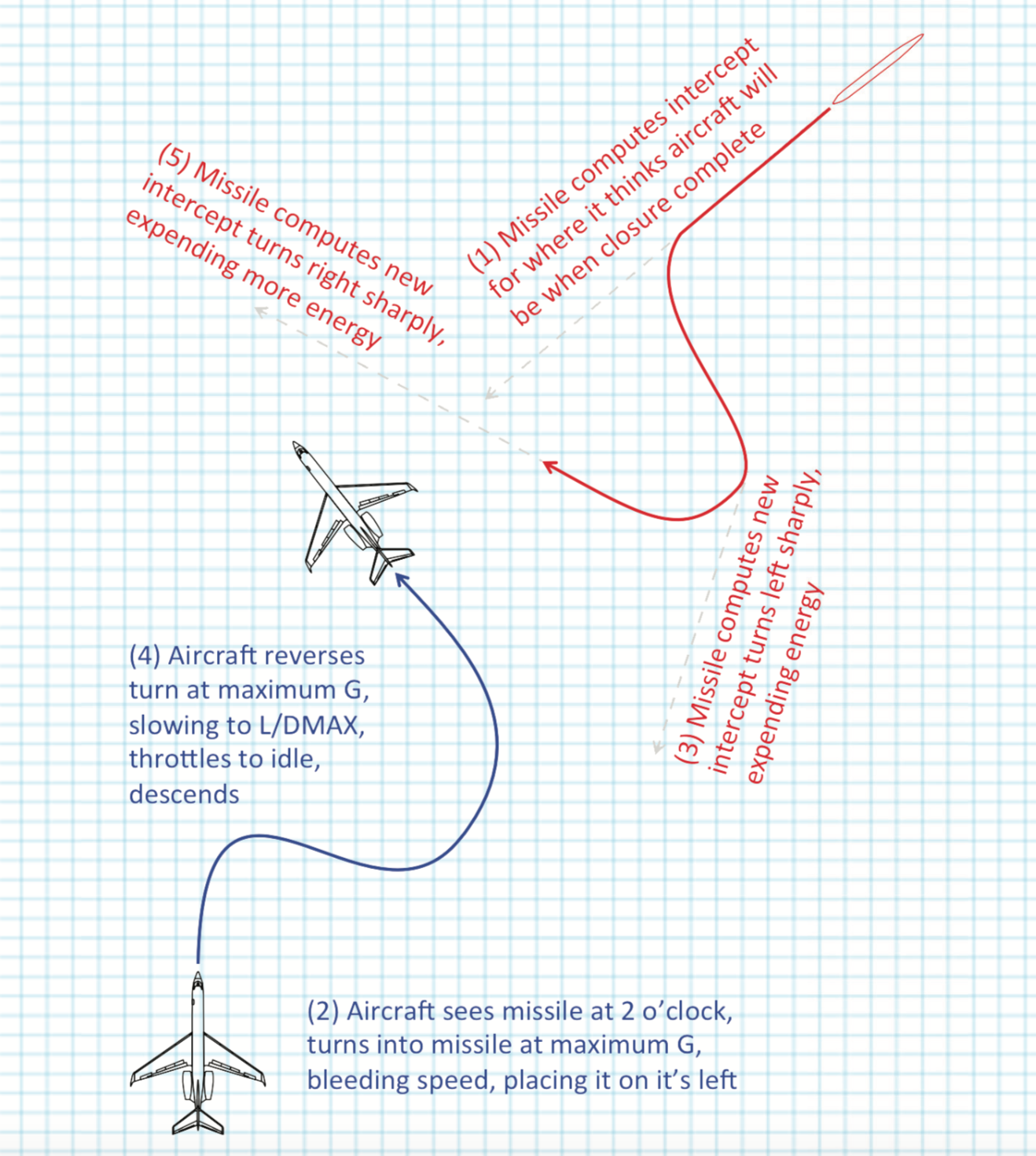
 

Missile Avoid

Lets describe a scenario. If you see a missile fired at you from RIGHT 2 o’clock, position, it will be aiming for an intercept ahead of you of your nose.

To deplete the missile’s energy, make a hard RIGHT turn past it and put it at your LEFT 9:00-10:00, roll out then descend ~15 deg with idle power. It will force the missile to turn harder (b/c it’s going so damn fast), correct it’s intercept point and deplete energy (watch out for your overspeed). After you see the missile correct it’s course, reverse hard LEFT turn to put the missile back at your RIGHT 2:00-3:00 position and roll out with full power and ~5-deg climb (watch out for over-G).

Again the missile must make a correction. These maneuvers can be accomplished at level flight but adding the 3rd dimension of alternating descent and climbs (at any +/- pitch) will add to the missile intercept problem.

Maneuvering properly and assuming a long missile TOF, you may see the missile stall before impact (best case) or the missile avoiding impact during its final turn correction (less than best case). Keep in mind, most missiles have proximity fusing. They are smart enough to detonate at the closest point of intercept if the missile determines impact is impossible. So if you feel impact (or near miss) is imminent, strive to return to wings level and ~5-deg nose low.

Turning into the missile will be a hard thing to do if you’ve never done this for a living (like Chris) and you are likely to be frozen with shock for a while. But you need to do it. Using the maximum G your airplane has available will do two things for you: it will force the missile to make the largest correction and it will bleed o your cruise speed. Once the missile is on your opposite side reverse the turn.

Because you will have lost some speed your turn radius will be tighter but the missile will be closer, so once again apply maximum G. For this turn, keep an eye on your angle of attack. Most aircraft will have a maximum lift-to-drag ratio at 0.30 angle of attack and this is a good number to shoot for. You can also look at airspeed (if you have a instantaneous VREF readout, use that) but keep in mind your stall speed goes up with G-force. Your objective is to end this maneuver as slow as the airplane can fly with adequate controllability. So if all this maneuvering failed to shake the missile, you will be in the best condition to survive a missile impact and/or detonation.
[Chris Didier, Lieutenant Colonel, USAF – Retired F-15E Instructor Pilot, interview 6 August 2016]


Resources:


Elevated Warning for Kenyan Airspace

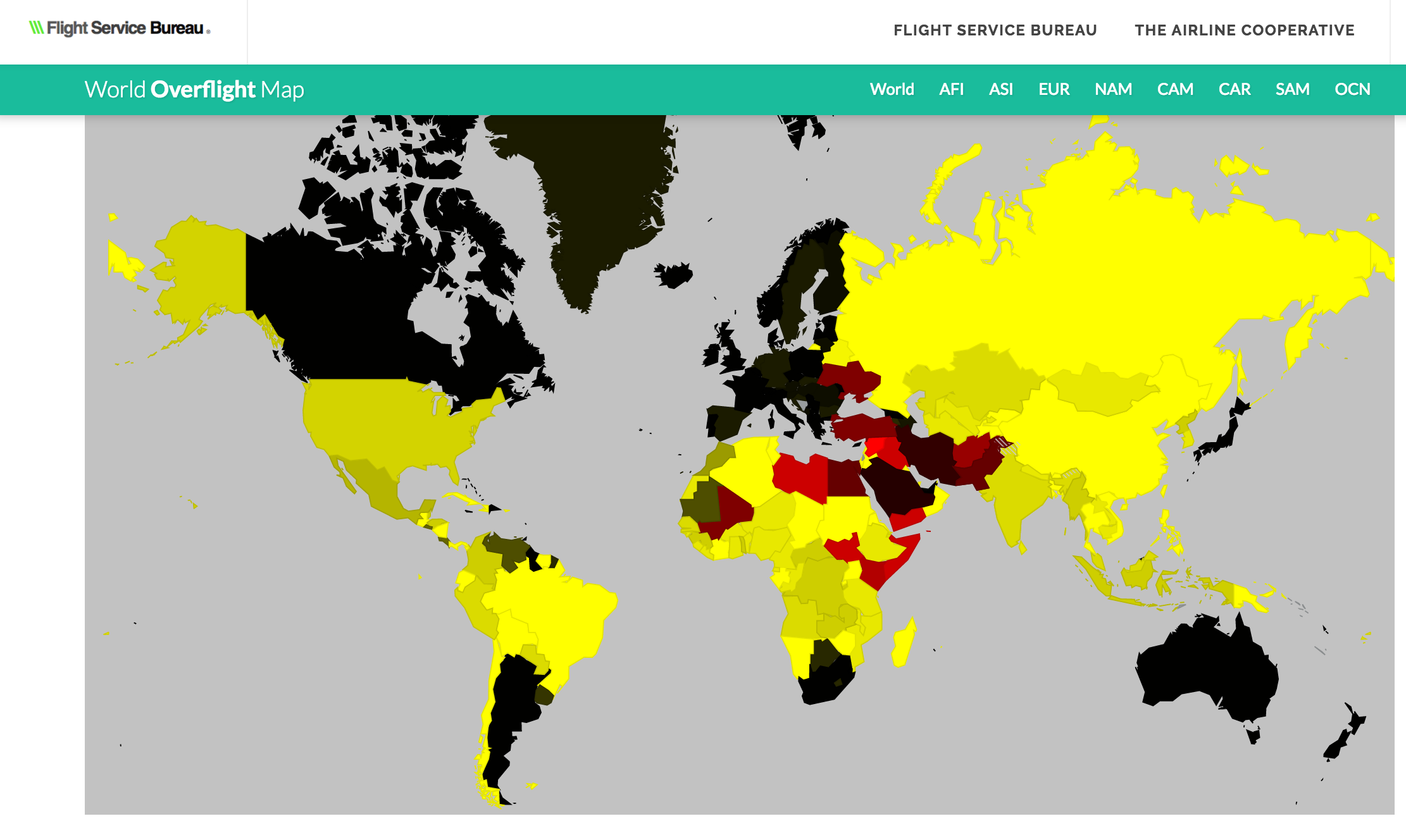
We have changed our guidance for Kenya from Level 3 – Caution; to Level 2 – Assessed Risk. Flight Service Bureau publishes a regularly updated guide to Unsafe Airspace for Airlines and Aircraft Operators.

Until today, the only Airspace warning for Kenya had been the FAA KCIZ NOTAM 05/2016, but a NOTAM issued today by the UK Department for Transport has now added Kenya to the list of countries with guidance. Coupled with Al Shabaab airstrikes by the Kenyan Air Force 2 days ago, and increasing numbers of attacks by the group, the situation may be growing increasingly unstable.

We recommend all operators to monitor events closely.

Updated guidance material August 12th:

World Overflight Security Map


Ukraine ban on Russian flights extended

Ukraine has extended the ban on Russian registered operators until November 10th, 2016. In an operational notice issued by each of the countries Flight Information Regions on August 9th, Ukraine has extended the closure of it’s airspace to Russian airlines and commercial operators.

The original ban was issued in November 2015, when  Ukraine’s Prime Minister Arseny Yatsenyuk declared during a cabinet meeting that “Russian airlines and Russian aircraft are not entitled to use Ukrainian airspace anymore”

The ban is in response to a similar edict by the Russian State authorities, banning Ukrainian flights from operating to and through Russian airspace.


Turkish airspace: Air Ambulance Flights

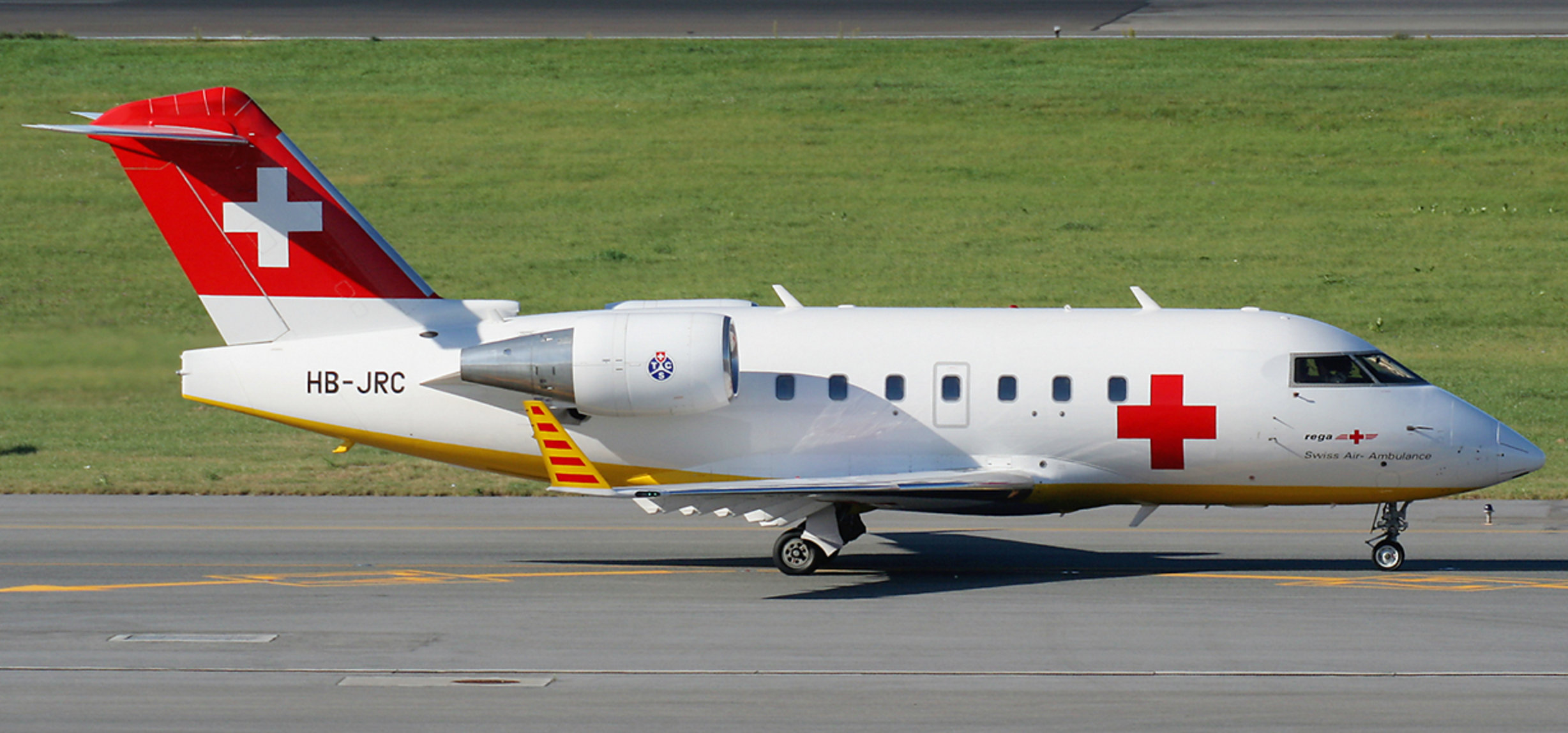
The Turkish DGCA has issued a notice relevant to Air Ambulance Operators planning to operate in Turkish Airspace.

All active ambulance flights  should, on first contact with Air Traffic Control (Istanbul/Ankara), both landing and overflying Turkey, specifically declare that they are operating as an “Active Ambulance Flight“.

This procedure is implemented with effect 09AUG2016, and in place permanently.


Heading to St. Kitts? Don’t go to Guadeloupe by mistake

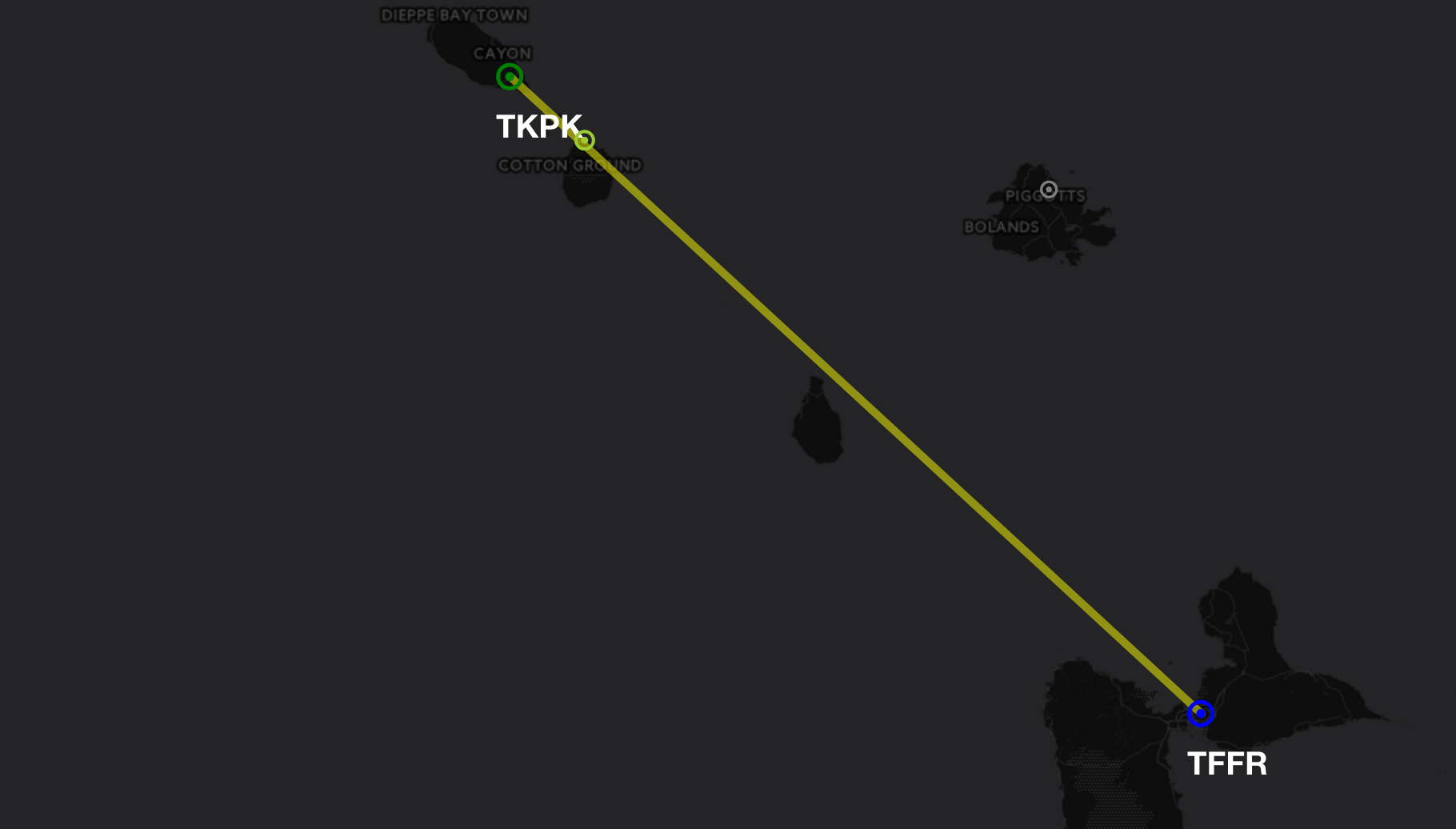
An unfortunate naming conflict has been discovered by ATC Authorities in the Caribbean, where the waypoint LOMPA is the approach fix for RWY07 into St.Kitts, but also the approach fix for RWY30 into nearby Guadeloupe.

The first LOMPA is the IAF for the RNAV Approach to RWY 07 at TKPK/St. Kitts.

The second LOMPA is the IAF for the RNAV Approach to RWY30 at TFFR/Le Raizet – Guadeloupe.

St. Kitts are going to back down and change theirs to a different name, but in the meantime, watch out!


Renewed Vanuatu Runway concerns

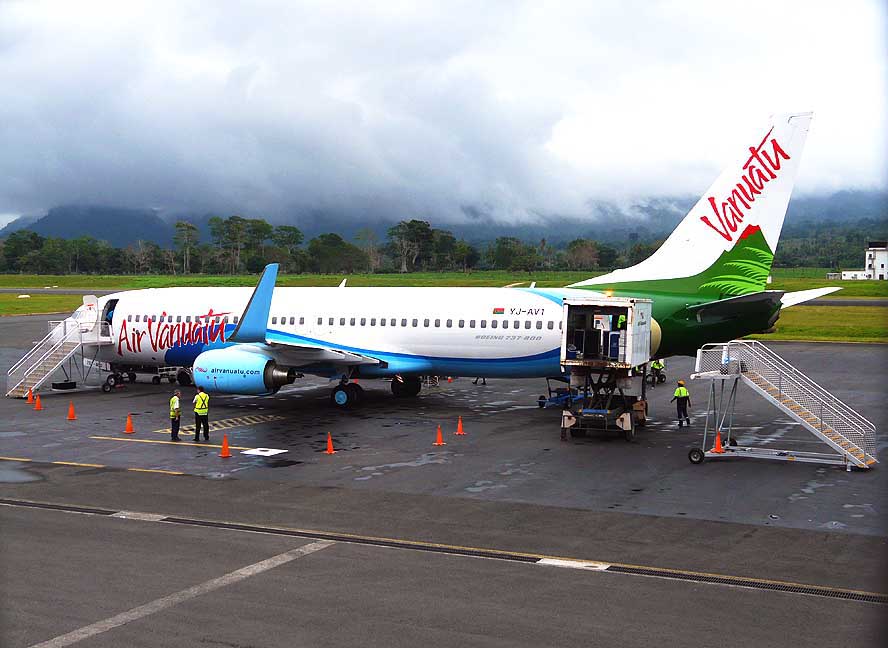
Following interim repairs to the runway in Port Vila (NVVV/VLI) earlier this year, concerns have been raised once again about the condition of the runway. On Monday, the Airport Authority notified an issue with some loose pieces on the runway, and repaired those – but some operators have chosen not to operate. Inbound flights were diverted. Currently, Air NZ is not flying to Vanuatu and awaiting a comprehensive upgrade to the runway.


Typhoon Nida – or is it the End of the World?

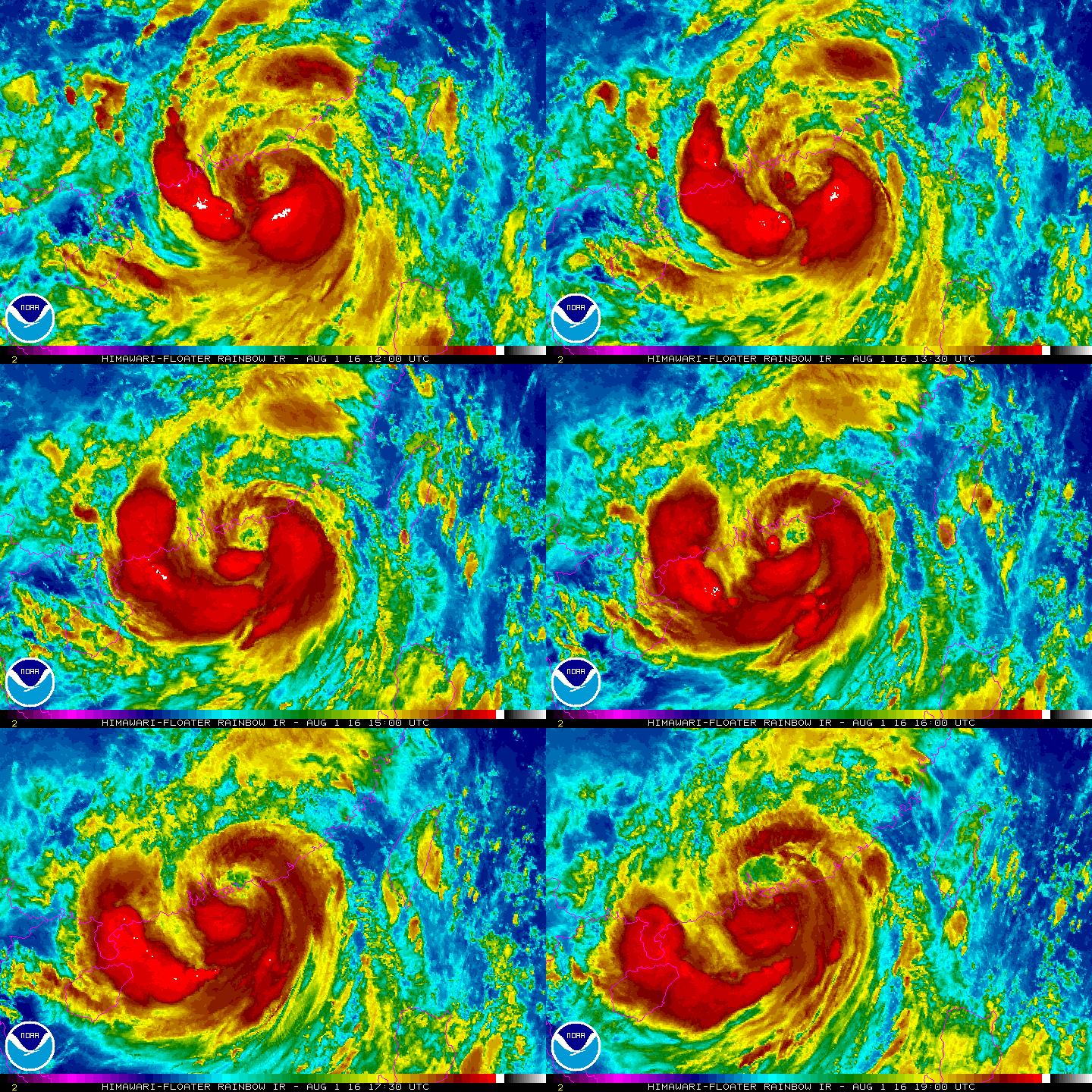
Typhoon Nida is enroute to Hong Kong, and will make landfall early on Tuesday morning. Now, we know that The Weather Channel and other mass media outlets enjoy exaggerating the picture somewhat, but the below NOAA graphic seems disproportionate as well.

With forecast average winds of around 40 knots (that’s a wet Wednesday in Ireland), and maximum maybe 70 knots – the impending doom depicted in the graphic below seems overstated. Has NOAA fallen victim to sensationalism? We wonder.

rb-animated


Iceland ATC Strike Over

We say the words with trepidation, because it’s been promised a few times over the last few months but then closures continued – but what we can tell you is that:

  • There was an agreement on July 18,  that appears to be holding
  • There have been no closures of BIKF, BIRK, or BIRD in the last week or so.

With that in mind we think it’s safe to say that the strike is over, and it should be Ops normal through Iceland from now on.


US Customs and TSA fines higher

From August 1, fines and penalties for getting your CBP Arrival/Departure manifest wrong will increase. That means, screw up the eAPIS and you are looking at a fine of $1,312 instead of $1,100.

Similarly, the fee for non-compliance with landing requirements at designated ports of entry for aircraft transporting aliens (yes, they still use that word) was $3,200, and the penalty will now be $3,563.

Penalties for certain Transportation Security Administration (TSA) violations have also increased, from $10,000 to $12,865.

As usual there is an original source document published in Russian, available here: https://www.gpo.gov/fdsys/pkg/FR-2016-07-01/pdf/2016-15673.pdf


Brazil Olympics – Ops Update

The opening ceremony of the 2016 Olympics in Brazil is on August 5, in Rio de Janeiro.

From July 19 – Sep 23 (because the Paralymic Games follow), there are a ton of airspace restrictions, slot controlled airports, and changes. So here’s the shortest current summary we can manage:

  1. The primary info doc is Brazil AIC 07/16. 122 pages and tough to read, to be honest.
  2. Slots: Airports:  SBBH, SBBR, SBCF, SBGL, SBGR, SBKP, SBRJ, and SBSP – but that may change according to traffic. ANAC (The Civil Aviation Authority) will allocate ATC slots for airlines and commercial aircraft. CGNA (The ATC Command Centre) will allocate slots for GA and private flights: centralslotsuporte@cgna.gov.br.
  3. Host cities: Belo Horizonte, Brasilia, Manaus, Rio, Salvador, Sao Paulo.
  4. Restrictions: Different colours, a multitude of restricted airspace all stemming from the AIC above. Nevertheless, apparently no changes to SID/STARs.
  5. Zika: Seems not to be the big deal it was before. Less mosquitoes in winter.
  6. Visas: June 1 – Sep 18 – US, Canada, Japan, Australia: no visa required for tourists. No change to crew visa requirements ( not required if on Gendec, in uniform)

Reference Links:

  • Main AIC: https://ops.group/blog/wp-content/uploads/2016/07/Brazil-AIC-0716-Olympic-Games.pdf
  • ANAC – http://www.anac.gov.br/
  • CGNA Portal – http://portal.cgna.gov.br/?l=en_uk


Runway Damage at Manila

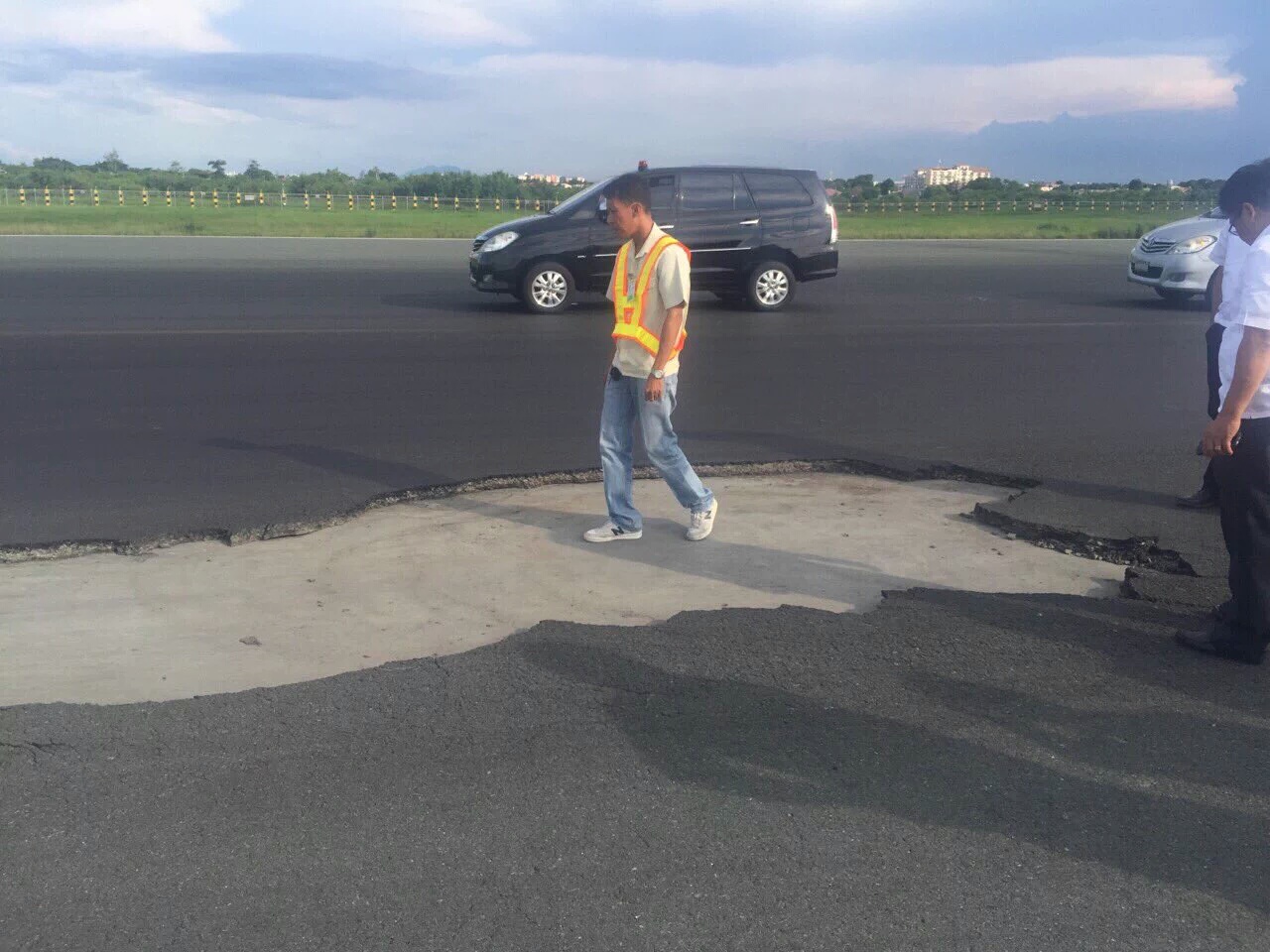
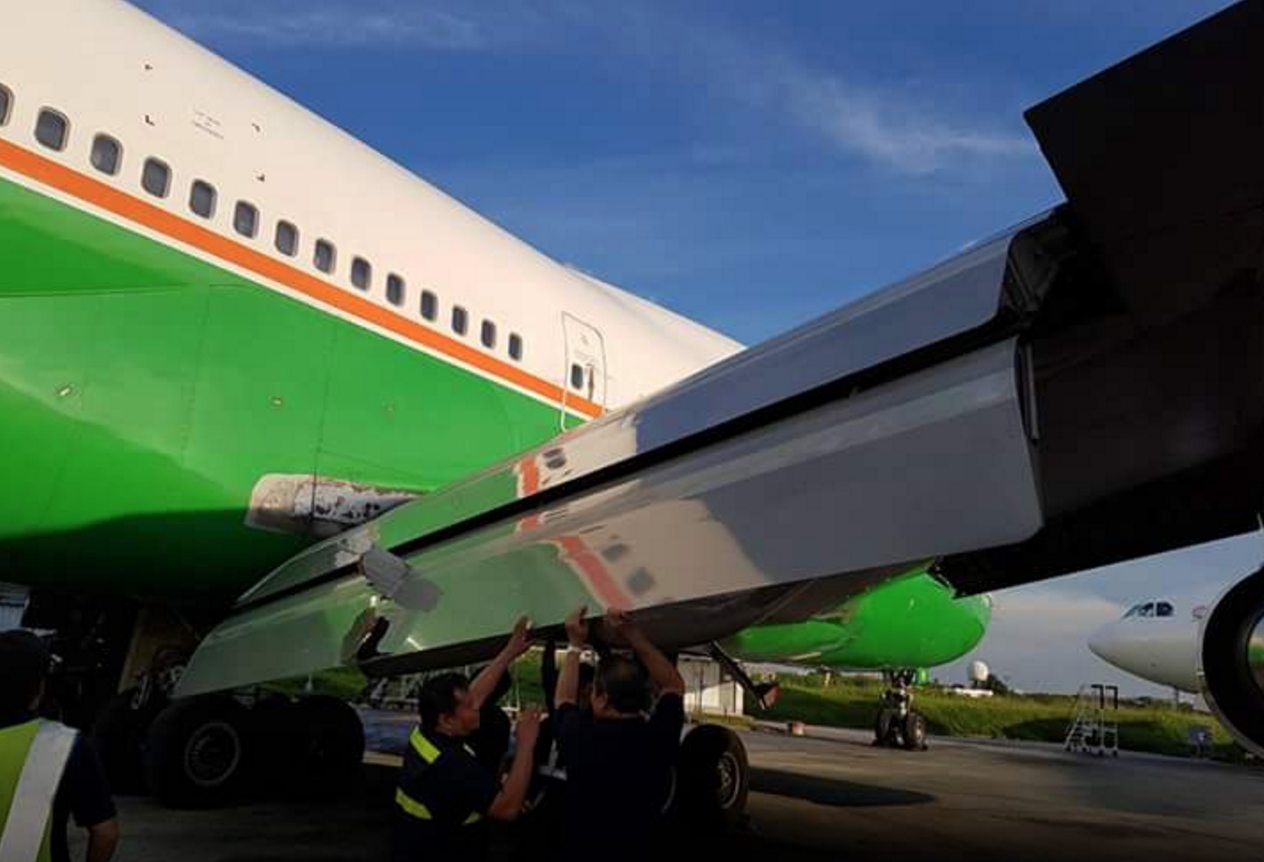
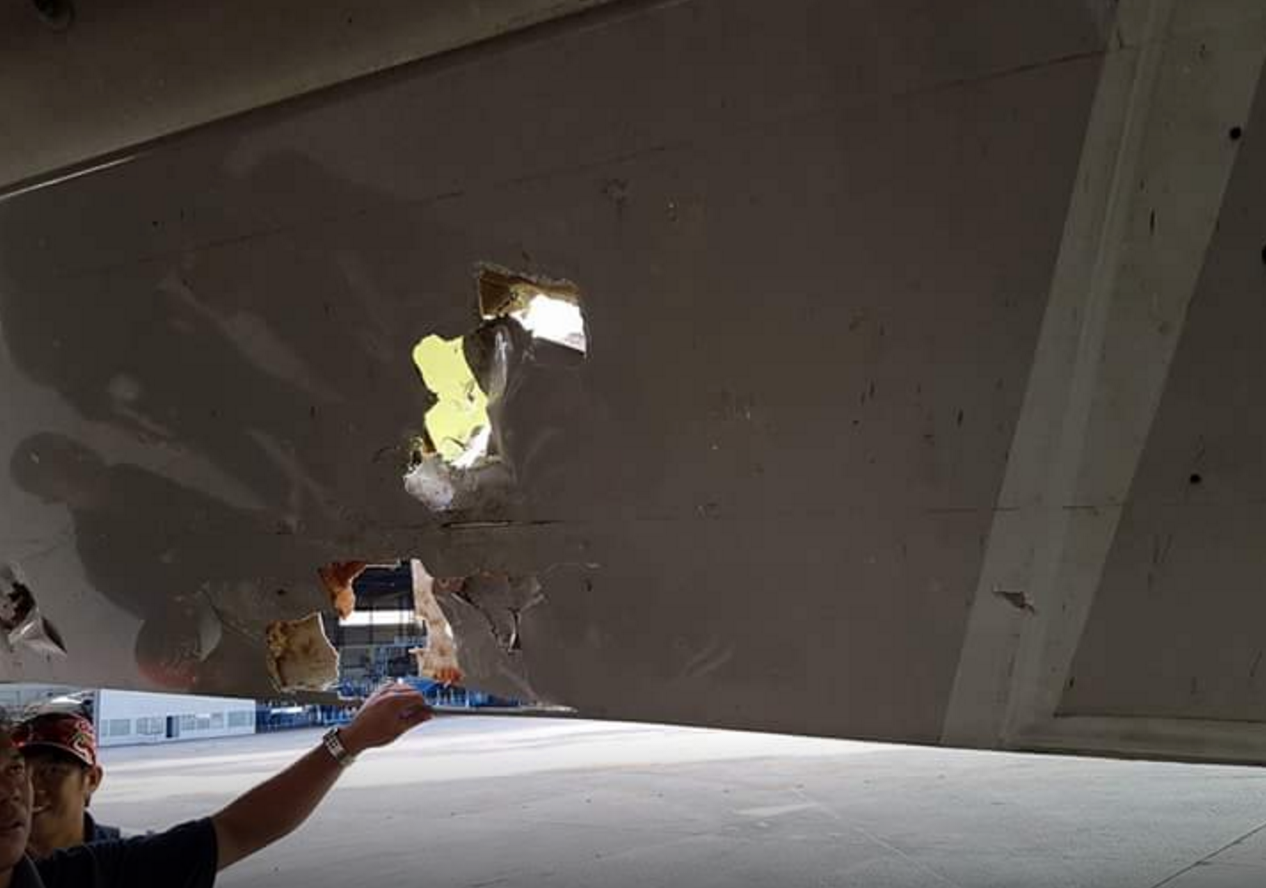
The main runway at RPLL/Manila, RWY 06/24, was closed on Monday 18JUL after heavy rain caused large chunks of asphalt to disintegrate. One of the last aircraft to land, shown below, suffered damage to an inboard flap section.

At least 10 flights diverted to Clark International Airport (RPLC/CRK), 50nm northwest of the city.

The runway was tentatively reopened on Tuesday, but consideration to future similar issues should be given, if further rain occurs.

Flaps Damage


FAA rescinds Turkish ban – ops normal

Update: 18JUL - KICZ NOTAM cancelled, the restriction mentioned below is lifted ...

This article contains restricted content … full article available to OpsGroup members. 

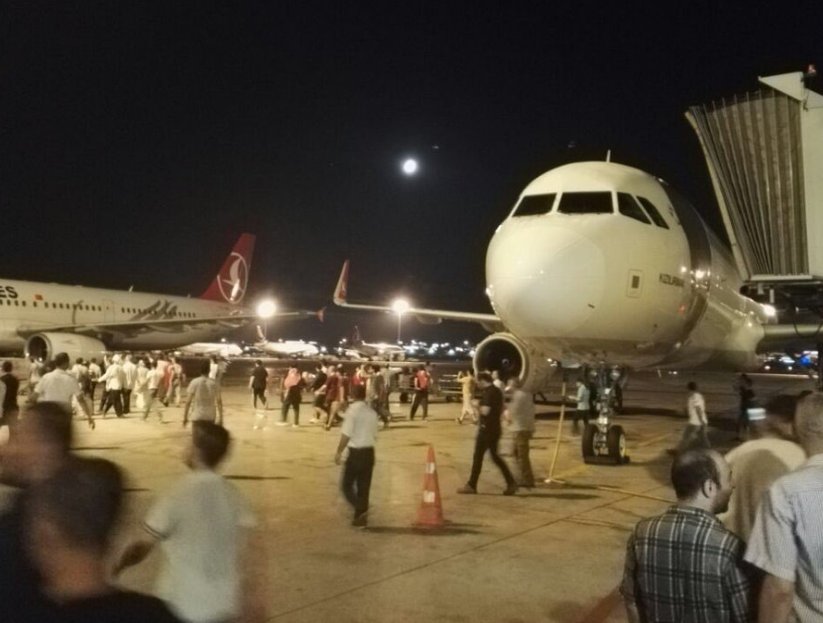
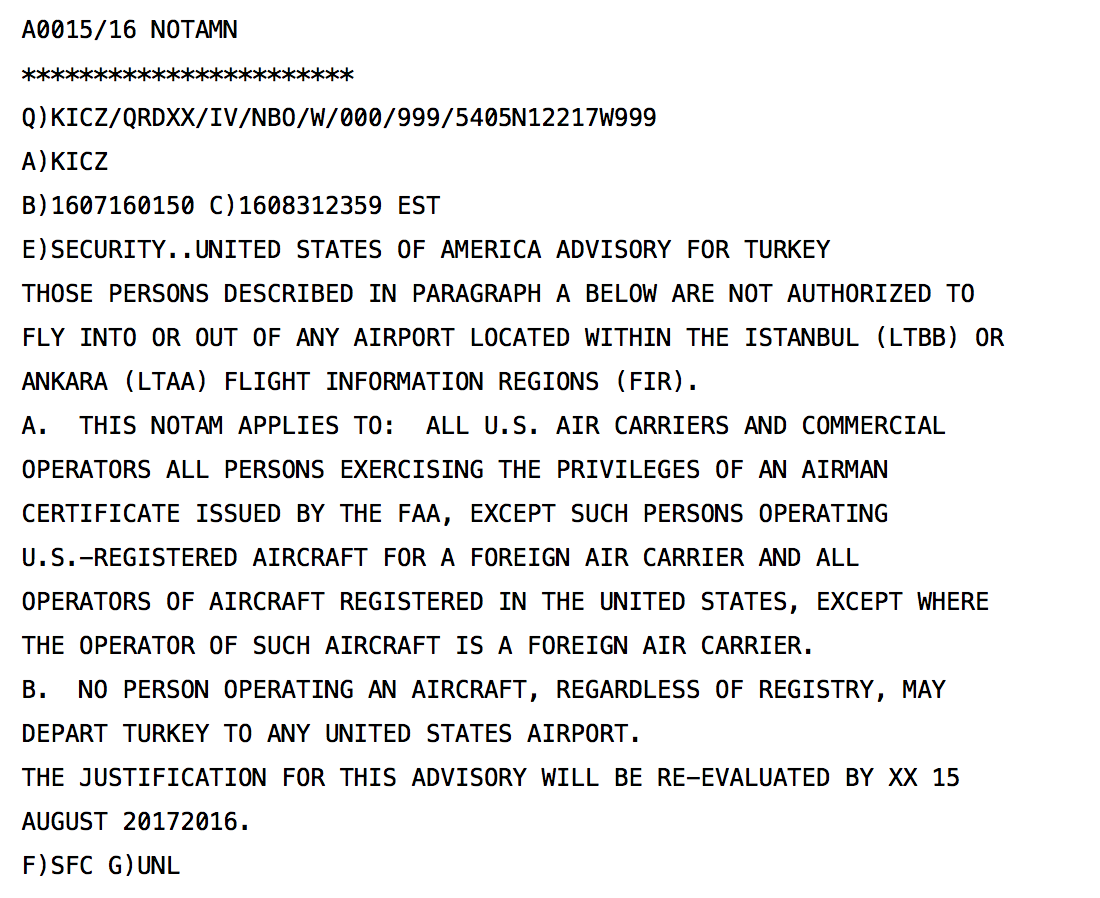
Following the attempted coup in Turkey on 15JUL, the FAA has banned all US airlines, commercial operators, and pilots from flying into Turkey until the 1st of September, and says it will review that position on August 15th.

The ban applies to all airport within the Istanbul (LTBB) FIR and the Ankara (LTAA) FIR – which together cover the entire country, but does not prohibit entry into the FIR’s or overflying Turkey.

Further more, no direct flights are allowed between Turkey and any US Airport. This is independent of the country of registry of the aircraft, and so applies to all operators, N-reg and others.

Specifically, the ban affects all US Airlines and Air Carriers, US commercial operators, and private operators in that anyone using an FAA license may not operate to Turkey. The only exception applies to US pilots working for a foreign airline.

The ban was issued quickly in response to the Coup attempt, and because of the unstable situation in Turkey. We suspect that it may be removed more quickly than August 15th, but that depends on further developments there.

These are the primary international airports affected by the ban:

LTAC ESB Ankara
LTAF ADA Adana
LTAI AYT Antalya
LTAJ GZT Gaziantep
LTAN KYA Konya
LTAT MLX Malatya
LTAU ASR Kayseri
LTAZ NAV Nevsehir
LTBA IST Istanbul
LTBJ ADB Izmir
LTBR YEI Yenisehir
LTBS DLM Dalaman
LTCG TZX Trabzon
LTFE BJV Bodrum
LTFH SZF Samsun
LTFJ SAW Istanbul


The original NOTAM from the FAA, issued on Saturday morning,  is copied below.


Screen Shot 2016-07-18 at 01.13.36


The annual Greece v Turkey NOTAM battle

If you’ve got some time on your hands, have a look at the Greece-Turkey great NOTAM argument of 2016. This is an almost annual performance, the equivalent of a street argument between two kids.

If you’re busy, just skip all of it when they appear on your Pre Flight Briefing for Turkey or Greece (which they will). Some of the highlights are below.

Obviously, this is a squabble that would be best for everyone to be kept out of the NOTAM database, but someone started it …


LTBB/ISTANBUL/SEHIR-CITY A2999/16 11JUL 0414Z
- NAVIGATIONAL WARNING TO ALL CONCERNED:
THIS NOTAM IS ISSUED TO CLARIFY THE A1490/16 LGGG NOTAM ISSUED BY 
GREEK CAA.

AS REGARDS THE GREEK NOTAM A1490/16, TURKEY DOES NOT ACCEPT THE 
DEFINITION OF THE SEARCH AND RESCUE (SAR) AREA WITH REFERENCE TO 
ATHENS FIR. THE AREA REFERRED TO IN THE SAID GREEK NOTAM FAALLS 
WITHIN TURKEY'S MARITIME SEARCH AND RESCUE REGION (SRR) AS DECLARED 
TO THE IMO AND INCLUDED IN THE IMO'S GLOBAL SAR PLAN. THEREFORE, ALL 
SAR EFFORTS/ACTIVITIES WITHIN THE TURKISH SRR MUST BE COORDINATED 
WITH THE RELEVANT TURKISH AUTHORITIES. 11 JUL 04:00 2016 UNTIL 14 JUL 02:30
2016. 

LGGG/ATHINAI A1496/16 11JUL 1201Z
- 
FURTHERMORE THE SAID ATHINAI/ISTANBUL FIR BOUNDARY WAS DEPICTED ON
CHART NUMBER 7 ATTACHED TO THE REGIONAL AIR NAVIGATION AGREEMENT
WHICH WAS REACHED IN THE THIRD REGIONAL AIR NAVIGATIONAL CONFERENCE
(PARIS 1952) AND SUBSEQUENTLY APPROVED BY THE ICAO COUNCIL ON 23
JUNE 1952.
ACCORDINGLY, GREECE HAS BEEN ASSIGNED RESPONSIBILITY FOR ALL ATM
SERVICES AND ICAO PURPOSES AS WELL AS FOR SAR OPERATIONS WITHIN
ATHINAI FIR/ HELLAS UIR, AS IS CLEARLY DEPICTED IN THE ICAO
AERONAUTICAL CHARTS, AND IS THE ONLY COMPETENT THEREIN NOT LEAVING
SPACE FOR MISLEADING OR MISINTERPRETATIONS.
CONSEQUENTLY, THE REF (B) TURKISH NOTAM A3009/16 LTAAYNYX (111139
EUECYIYN JUL 2016) HAS NO GROUND, CANNOT PRODUCE ANY INTERNATIONALLY
LEGAL EFFECT WITHIN ATHINAI FIR/ HELLAS UIR AND IS CONSIDERED NULL
AND VOID.
THE ONLY VALID AND EFFECTIVE NOTAM WITHIN ATHINAI FIR/HELLAS UIR
IS THE REF (A) A1495/16 LGGGYNYX ISSUED BY GREECE.
END PART 2 OF 2. 11 JUL 11:55 2016 UNTIL 14 JUL 02:30 2016.


LTBB/ISTANBUL/SEHIR-CITY A3022/16 12JUL 0740Z

- NAVIGATIONAL WARNING TO ALL CONCERNED:

THE VIEWS EXPRESSED IN TURKISH NOTAM A3009/16 REMAIN UNCHANGED AND 
IS VALID AND EFFECTIVE. THE GREEK NOTAM A1497/16 IS NULL AND VOID.

TURKEY ALSO WOULD LIKE TO EMPHASIZE THAT NO FURTHER EXPLANATION WILL 
BE GIVEN TO ANY OBJECTION RAISED TO TURKISH NOTAM A3009/16. 12 JUL 07:30 2016
UNTIL 14 JUL 02:30 2016. 


LGGG/ATHINAI A1497/16 12JUL 0545Z

- 
ACCORDINGLY, GREECE HAS BEEN ASSIGNED RESPONSIBILITY FOR ALL ATM
SERVICES AND ICAO PURPOSES AS WELL AS FOR SAR OPERATIONS WITHIN
ATHINAI FIR/ HELLAS UIR, AS IS CLEARLY DEPICTED IN THE ICAO
AERONAUTICAL CHARTS, AND IS THE ONLY COMPETENT THEREIN NOT LEAVING
SPACE FOR MISLEADING OR MISINTERPRETATIONS.
CONSEQUENTLY, THE REF (B) TURKISH NOTAMS A3012/16 AND A3009/16
LTAAYNYX (111250 AND 111139 EUECYIYN JUL 2016) HAVE NO GROUND,
CANNOT PRODUCE ANY INTERNATIONALLY LEGAL EFFECT WITHIN
ATHINAI FIR/ HELLAS UIR AND ARE CONSIDERED NULL AND VOID.
THE ONLY VALID AND EFFECTIVE NOTAMS WITHIN ATHINAI FIR/HELLAS UIR
ARE THE REF (A) A1495/16 AND A1496/16 LGGGYNYX ISSUED BY GREECE. 12 JUL 05:26
2016 UNTIL 14 JUL 02:30 2016. 


Comms problems in the Kabul FIR

Aircraft in the eastern sections of the Kabul FIR can expect some radio issues, as a comm unit (VSAT at Ghanzi) is out of action.

Frequencies affected:

  • 118.3
  • 128.5
  • 126.325

Airways

  • M696 (between GIDOG and LAJAK)
  • A453
  • G206
  • N644
  • L750
  • M875

The advice from ATC in Afghanistan is to keep trying the assigned frequency until within range of a different transmitter; in the meantime, a bit of SLOP, IFBP and TCAS should keep you out of trouble.


South Sudan off limits

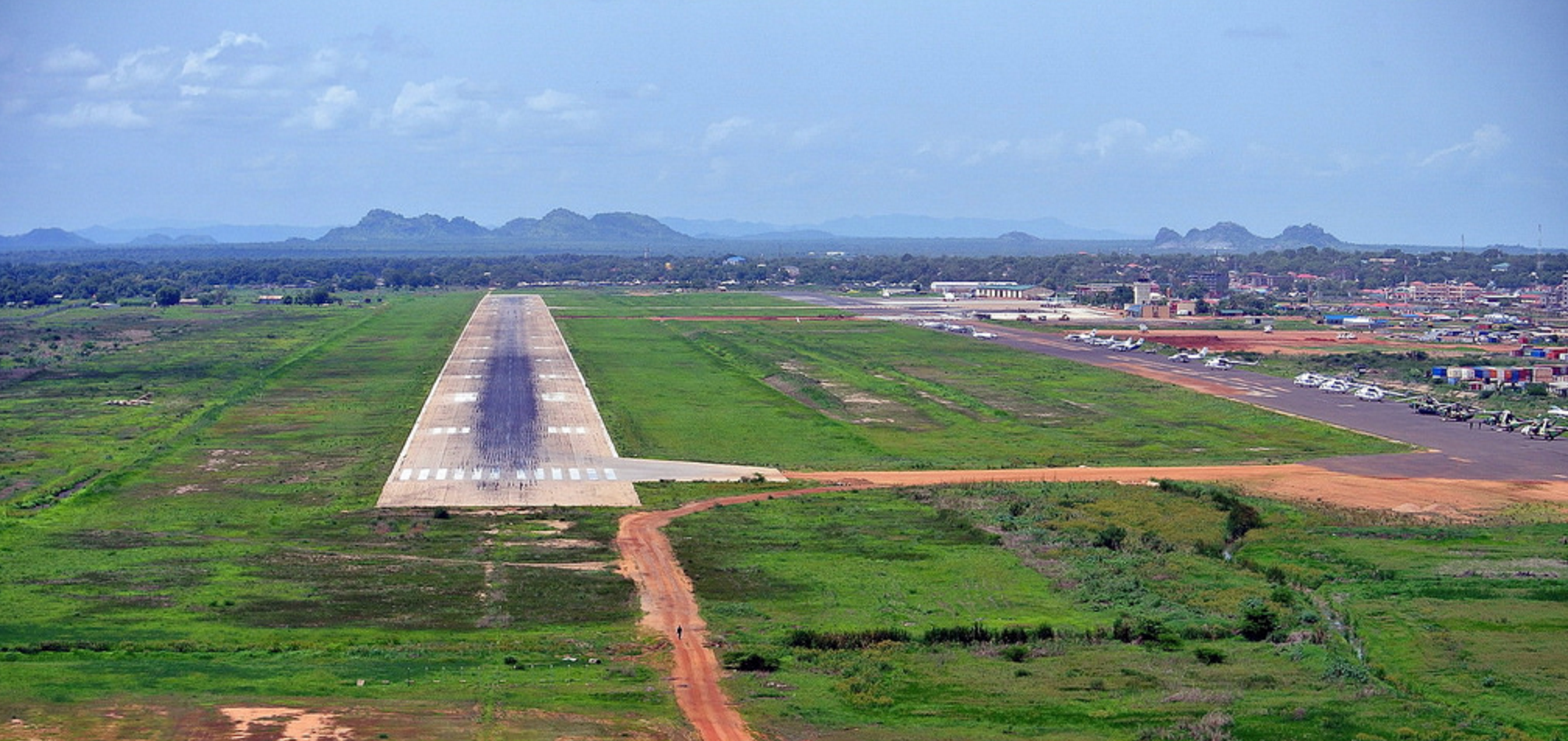
The security situation in Juba, and South Sudan, has deteriorated in the last week, with HSSJ/JUB becoming off limits due to fighting.

The ceasefire announced on 11 July is holding; Juba International Airport (HSSJ/JUB) is open to charter operations; however, commercial flights have yet to resume.

U.S. government aircraft evacuated personnel on 12 July –  a security message issued by the embassy later in the day advised U.S. citizens to continue to shelter in place and not attempt to travel to the airport.

Meanwhile, other countries, such as Japan, Uganda, and Germany plan to send military aircraft to evacuate their nationals.


New Zealand strike called off

A planned strike by Aviation Security across airports in New Zealand, which would have led to wide scale disruption, has been called off at the last minute.

The press release from AvSec follows:

Auckland, 6.00 pm Wednesday 13 July 2016.

New Zealand’s Aviation Security Service (Avsec) has reached agreement with two unions which will prevent strike action across New Zealand next week.

Urgent top level mediation was held all day in Auckland today with representatives of the Civil Aviation Authority, Avsec and their Board working out a ‘reasonable’ deal with PSA and Etu union officials.

Unions will withdraw their strike action effective immediately. Avsec management will withdraw their lock out notice to enable unions to formally ratify the pay offer with their members. This should take 4 – 5 weeks.

Chairman Nigel Gould and Director of Civil Aviation Graeme Harris led the Avsec/CAA negotiation team. “We are pleased we have been able to find some common ground and hope the offer made today, which will be recommended by unions to their members, will lead to a formal settlement and in time a new collective agreement.

The traveling public can be assured we all wanted a constructive outcome and neither Avsec nor unions wanted to reach the point where strike action would cause any disruption to travellers during the school holidays. We have made a lot of progress today.” Mr Harris said.

No further details or comment will be made until 11:00 am tomorrow, Thursday 14 July.


Hijack: It’s dark and we’re scared

Earlier today, a BAe 146 in South Africa squawked Hijack – by mistake; the rest you can imagine, and the global media are enjoying the non-story, complete with the usual file pictures of heavily laden A380’s and general panic.

A very similar incident occurred in 1999 – this one never made it to the newspapers. A 747-400 belonging to one of the US majors was enroute from the US to Amsterdam, and approaching Gander VOR, typed 7500 into the box before coasting out. Around the same time, the crew sent a routine ACARS message to Dispatch, with a P.S. “It’s dark and we’re scared”.

That was just a funny, unrelated, quip, and the 7500 was an inadvertent error – but the two combined set off a full scale alert on two continents.

Because of the time lag between coasting out, and coasting in to the north of Ireland, where VHF comms were re-established, ATC and Company had to figure out ways to find out whether this was a real event, or not – it certainly seemed to be.

By the time the aircraft reached Amsterdam, the airport was fully prepared for a huge hijacking event – and the aircraft was directed to an off-airport parking position, surrounded and eventually boarded in sequence by every government organisation imaginable.

This article contains restricted content … full article available to OpsGroup members. 


Iceland ATC strike bigger than ever

We had some really positive hints at a resolution of the Iceland ATC strike last week, but it’s not over yet – by any measure. Today sees another long list of airspace and airport closures. Oceanic Eastbound, Westbound and landing traffic all affected.

BIKF/KEFLAVIK A0454/16 06JUL 1007Z

(NOTAMR A0453/16) – DUE TO STAFF SHORTAGE BIKF TWR SERVICE LIMITED
TO SCHEDULED COMMERCIAL AND INTERNATIONAL
FLIGHTS, AMBULANCE AND EMERGENCY  FLIGHTS.
NO TOUCH AND GOES OR LOW APPROACHES FOR VFR
TRAINING FLIGHTS, ONLY DEPARTURE AND ARRIVAL.
TWR BIKF SERVICE LIMITED TO AMBULANCE AND
EMERGENCY FLIGHTS ONLY DURING THE FOLLOWING
HOURS: 09:00-09:30, 11:30-12:00 AND 14:00-14:30. 06 JUL 10:05 2016 UNTIL 06JUL 21:00 2016.

BIRD/REYKJAVIK OACC A0452/16 05JUL 2146Z

(NOTAMR A0451/16) – DUE TO STAFF SHORTAGE IN REYKJAVIK OACC WESTBOUND
TFC PLANNING TO ENTER BIRD FROM ENSV VIA GUNPA,
VALDI, IPTON, INGAL, ISVIG AND EGPX VIA LIRKI, GONUT,
OLKER, MATIK AND RATSU AND THEN PROCEEDING INTO EGGX
OR CZQX SHALL REMAIN SOUTH OF BIRD CTA. 06 JUL 11:00 2016 UNTIL 06 JUL 20:00 2016.

BIRD/REYKJAVIK A0450/16 05JUL 1518Z

– DUE TO STAFF SHORTAGE IN REYKJAVIK CENTRE,
OPERATORS SHALL FILE TO COMPLY WITH THE FOLLOWING:
1. EASTBOUND TFC WILL NOT BE ACCEPTED FROM CZQX AND
EGGX EXCEPT  TRAFFIC WITH DESTINATION IN ICELAND,
SCANDINAVIA, BALTIC STATES AND RUSSIA.
2. EASTBOUND TRAFFIC FROM AERODROMES EAST OF 105W
WITH  DESTINATIONS IN THE MIDDLE EAST SHALL REMAIN CLEAR OF
BIRD CTA.
OPERATORS ARE URGED TO KEEP REQUESTS FOR LEVEL AND
SPEED AMENDMENTS WITHIN BIRD CTA TO A MINIMUM.
FOR FURTHER INFORMATION CALL REYKJAVIK SHIFT
MANAGER +354 424 4141. 06 JUL 02:00 2016 UNTIL 06 JUL 08:00 2016.

BIRD/REYKJAVIK A0452/16 05JUL 2146Z

(NOTAMR A0451/16) – DUE TO STAFF SHORTAGE IN REYKJAVIK OACC WESTBOUND
TFC PLANNING TO ENTER BIRD FROM ENSV VIA GUNPA,
VALDI, IPTON, INGAL, ISVIG AND EGPX VIA LIRKI, GONUT,
OLKER, MATIK AND RATSU AND THEN PROCEEDING INTO EGGX
OR CZQX SHALL REMAIN SOUTH OF BIRD CTA. 06 JUL 11:00 2016 UNTIL 06 JUL 20:00 2016.


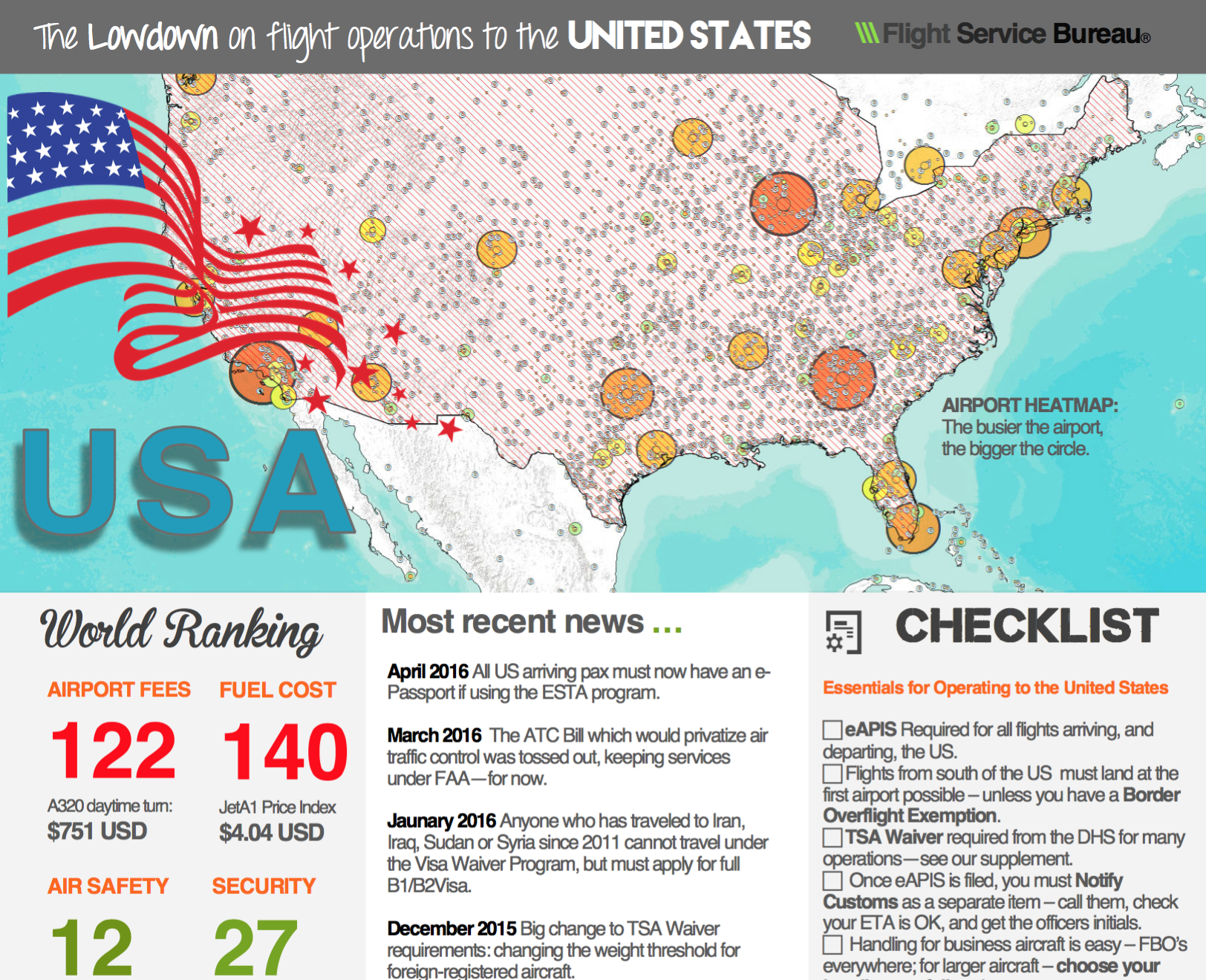
USA – the Lowdown on Flight Ops

We just published our latest Lowdown – this one is for the USA. Heaps of good information on eAPIS, new TSA Waiver rules, Border Overflight Exemption, Customs Notifications, Importation, Special Route Clearances, ESTA, Visas, and Special Flight Authorizations.

You can get these Lowdowns by joining OPSGROUP – you can get a single or team membership. If you’d like the US Lowdown, we’ll gladly send a copy your way, just email us.


US Entry requirements updated

The US has updated entry processing through ESTA (the online visa system for countries using the Visa Waiver Program).

The system now reflects the designation of Somalia, Libya and Yemen as countries of concern, a change made under the Visa Waiver Program Improvement and Terrorist Travel Prevention Act of 2015.

In addition to the country-specific travel restrictions, a request for ESTA applicants’ Global Entry Program Numbers was also added.

The Visa Waiver Program allows foreign nationals from designated countries to enter the United States for business or tourism for up to 90 days without the need to obtain a B-1/B-2 visitor visa from a U.S. consulate. VWP travellers must register and obtain approval to travel from the ESTA and carry an e-passport.


Santa Maria Strike: Four Routes

Update: 1730Z/Weds – we have received notification that Portuguese Industrial action may be being withdrawn. We will update and confirm when certain.

LPPO/Santa Maria Oceanic has published four special routes for use during the upcoming “July Friday Strike Series” ATC Industrial Action.

If you happen to be crossing the LPPO FIR on a Friday morning in July, then expect a hefty reroute if you didn’t file per the plan.

The Strike Time Period is : 0700-0900Z, during which time only these four routes will be accepted.

ROUTE A– 45N020W 40N030W 37N040W

ROUTE B– DETOX 39N020W 36N030W 34N040W

ROUTE C– LUTAK 36N020W 33N030W 29N040W

ROUTE D– ULTEM 27N040W

The cutoff time for these routes is when you enter the LPPO/Santa Maria FIR

Traffic entering prior to 0700Z: unrestricted

Traffic entering the FIR between 0700-0900Z: Must file and fly one of the four Routes above.

Traffic entering the FIR after 0900Z: unrestricted


Summer of ATC Strikes: This weeks update

European Air Traffic Controllers are striking in a fight against changes emanating from labour reform and the Single European Sky initiative. Curiously, Greece – normally a big fan of ATC strikes during the summer – has remained off the radar.

Here’s the latest, and it’s a growing list:

France
– Ongoing ATC Strikes – the latest ended on 06JUL at 0400Z. Nothing else on the horizon – for now.
– French overseas territories are also included in these strikes – so Tahiti, New Caledonia, Martinique, Guadeloupe have all joined in the action when it takes place.

Italy
– Strike announced for 23JUL, affecting Area Control Centre’s and Airports in Italy. Normally Italian strikes permit overflying traffic without restriction.

Iceland
– Ongoing sporadic strike action affecting BIKF, BIRK airports, and BIRD Oceanic FIR. Occasional entire closures of the airspace except for Emergency and scheduled flights. Eastbound Traffic from the US/Canada to Europe not accepted during these closures unless destination is in Scandinavia, the Baltics, or Russia.
– Since first week of July, westbound traffic is also not accepted in BIRD during strike periods. Check BIRD Notams.

Portugal
– Strikes announced for every Friday in July were cancelled last week

We’ll keep this page updated as we get updates.